


flanagaj
-
Posts
1349 -
Joined
-
Last visited
-
Days Won
5
Everything posted by flanagaj
-
Hard graft, but can see the finish
flanagaj commented on flanagaj's blog entry in Contemporary Ball Ache
Yes. LABC manual stated that it needed to be encased with concrete. -
Block and beam? No! Ground bearing slabs. A decision that has given me sleepless nights and resulted in some serious hard graft. We had 60 ton (that’s what we were told 🤔) of Type 1 MOT delivered and had to then proceed to get into the bays and levelled up, before compacting it. The brickie was an arse as he should have stopped building and said “get your hardcore in and laid”. His work was rather shit, so I knocked some of it down to enable me to get a dumper in distribute the piles to make levelling it quicker. Building control were fine with me using grano dust as the top layer. This compacts nicely and gives a much harder surface than sand. Below are a few pictures. Hoping to get everything finished by tomorrow. I’ll breath a sigh of relief that it’s done and dusted.
-
Thanks @saveasteading that was my exact thought process as well. I can then lap up the DPM on the inside of the inner leaf which can then potentially be placed under the bottom seal rail of the garage door. This will stop damp from being able to make it's way through into the garage. I always that that whilst taking the slab and mesh through the opening gives a solid base for vehicles going into the garage, the top will be exposed to the elements and if you have a garage door that sits behind the inner leaf, you have a visible 350mm slab of concrete that if not finished well when poured will look a bit naff.
-
Ground bearing slab curing
flanagaj replied to flanagaj's topic in General Self Build & DIY Discussion
I appreciate that you guys have been doing this for a long time and I suspect that you are all very fortunate to have created a 'goto' list of trades for certain jobs. Most of my questions are around using the forum to either get validation on a specific process or where I simply cannot find the detail I require. I shoulder blame partly there by not choosing a decent architect who in theory is the person who should detail every aspect. -
Ground bearing slab curing
flanagaj replied to flanagaj's topic in General Self Build & DIY Discussion
It's not that simple @Gus Potter unfortunately, we moved to an area where I have zero connections. Previously, I knew many, but it's too far to travel. The downfall was in thinking that I could find reputable trades who would do a good job. This has been an absolute mare and it's akin to the Wild West. Shysters who are either shit or think they can take you for a ride. Our last bricklayer was exactly that. As soon as I picked him up on his levels being out, I'm convinced he binned us off, but continued for 5 days before walking off site and onto a new house build for a builder. In hindsight, a single contractor for a shell would have been the best option, but I'm here now and I've just got to get slabs done and then the next lot of bricklayers can start mid August. Unlike many on here, we are not blessed with deep pockets and have to watch every penny. This build is being done on the basis of keeping to the Estimators QS and that means me managing trades. The question I have for everyone is what is this site for? I ask questions, because either they are not specified in the LABC manual or the trades person I'm dealing with does not fill me with confidence, that they know what they are doing. Just for the record, the concrete company is a large Southampton based outfit and not some bloke who happened to overhear a conversation in the pub. So by that very nature, I'd expect them to be professional and make sure the slabs are done to industry standard and protected from shrinkage post pour. I also don't know what you mean by 'big boy hat'. Am I to start getting violent with these people when they deliver substandard work? I've already sacked two bricklayers, so it's not as if I cannot have the conversations. It's finding reputable individuals. -
I have found a company to come and pour and 'finish' the concrete slabs next week. As always, everything is vague and nothing is done with a formal contract. Just been told the job has been booked in. Should the company be responsible for applying a curing agent as they have already said that they don't provide polythene sheeting to cover it to aid curing.
-
Overlapping rebar mesh sheets
flanagaj replied to flanagaj's topic in General Self Build & DIY Discussion
I don't think I can start cutting sections out, as then it won't be connected to the other sheets. I might ask building control to comment -
I purchased 4.8m x 2.4m A242 mesh sheets without flying ends. the way the sheets have to be laid means that there are some areas with 3 sheets overlapping. We are having a 150mm slab and the chairs raise the mesh 40mm off the bottom. I don't suspect that it is an issue, but just wanted to check as I don't want BC failing the inspection on Thursday and then having a mad panic to try and come up with a solution to fix the problem.
-
One other question. Do I finish the slab at the back of the inner leaf blockwork or should the slab come through the opening and finish level with the exterior leaf. If I do the later, do the bricks that close the cavity just sit on top of the lean cavity fill (left image) or should they sit on the concrete slab (right image) Eg, if you were looking at eye level from the front would it be the left or the right image below

-
Garage is attached. You are most likely correct that the cold bridging will be negligible and I can close off as per the diagram.
-
But how do you thermally break with PIR. Do you have a drawing or an image that shows this?
-
Can someone cast there eye over the image below and tell me whether this is the correct way for building the garage reveal. I want the garage door to sit behind the opening, but unsure how the internal block leaf will tie into the returning brick course and whether the cold bridging will be problematic. My plan was to then use a granite setts between the two reveals and up to the garage slab / DPM upstand.

-
Unfortunately, the brickie the groundworker recommended has retired and the JCB driver who dug the footings just keeps his head down and doesn't recommend trades.
-
Basingstoke
-
That is my concern as well. I think I have talked myself out of it already.
-
I've concluded that a combination of being height of summer and a job half finished is enough of a reason why those who come around to view our project never come back with the quote that they say they will. We have had 5 now, who have chatted for nearly an hour and left saying they'll have a quote to me in a few days, to hearing nothing more. Very frustrating, as I'd prefer a "not interested ..." I have just received a quote with respectable QS aligned numbers from a company that on closer inspection is nothing more than a intermediary contractor that must simply have bricklayers on their books that they subbie out. It's akin when I used to IT contract, the service was provided through an agency. We may have no choice on this as before long the mortgage company is going to start asking questions. Has anyone gone down this approach and if so, what due diligence can I do to ensure that whoever does the brickwork does it to a good standard. It does make me nervous.
-
I can vouch, that even living on site. Trying to project manage a build whilst holding down a full time job is very difficult. We are struggling to find trades and I suspect this is down to trades getting nervous when they see the project is being managed by me. As a result I have spoke with my employer and am fortunate that once the masonry work is completed up to plate, I am going to a 3 day week. I hate using trades as it is, as my experience is that a great many are xxxx and as it's not their property, they are not fussed about doing a great job, lke you would. If you really want a good start, I would advise that you get your plans quantity surveyed. I used estimators as they also provided a schedule of works. Although you will struggle to probably achieve the build in the same timescales as they indicate, it certainly helps you to understand estimated timescales for each stage and which trades will overlap. For example, the brickie will not be pleased if he gets to first floor and you haven't got anyone to get the floor joists in and the Cabodek flooring down. Same goes for having the materials for each stage ready too. Good luck and nobody said building a house was easy (unless you have deep pockets and just write the cheques and occasionally pop a hard hat on)
-
In that case, it will look utter xxxx
-
Given I have been probably wasting far too much time and energy worrying about getting the detailing right in relation to our required 'Basic' Radon protection, I am now wondering whether I should scrap the proposed purchasing of Visqueen pre formed corners and instead just adopt the good old tape approach. I am not sure whether many people use the pre formed corners and given that the garage door opening pair and garage side door pair are ~ £240, I am struggling to justify the expense. If I can adopt an approach of cutting DPM pieces and overlapping and jointing with tape, does anyone know of a resource that shows how you can form internal and external corners.
-
Sorry, but what are kerb units?
-
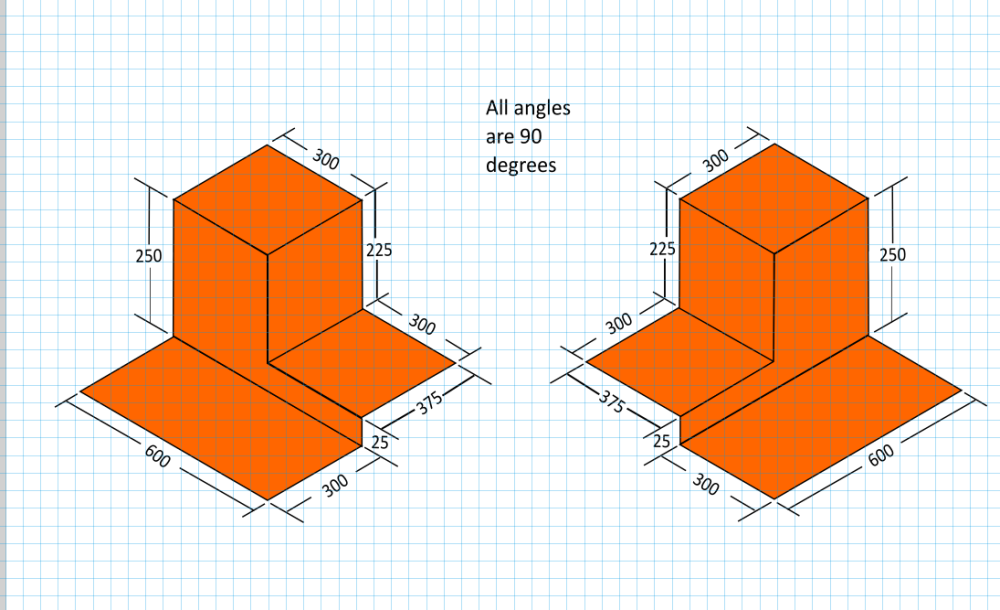
We are having a Radon membrane (but I suspect the same applies for a simple DPM) and am just about to put my order in for pre formed Visqueen units. As the floor slab protrudes across the 350mm wide inner leaf/cavity and outer leaf, I am confused as how you stop the slab getting damp from rain water falling on the outer part of the slab which sits outside the garage door, which then creeps internally inside the garage. Below is an image of the pre formed corners, but even if you did not have pre formed corners and cut and taped the DPM around the opening, you still have the issue of the slab running continuously through the opening and outside. Do you simple cast the slab in two sections and have a dpm upstand on the inside and have rebar mesh poking through to the 350mm wide opening section?
-
Principal Designer and completion certificate
flanagaj replied to flanagaj's topic in Building Regulations
I am not worrying about this now. I did further reading and it appears that your architect can only sign as Principal Designer if they oversaw the works. As a self builder who is managing all trades, then it becomes your responsibility. I see now, why taking lots of photos and always referencing the LABC manual is crucial. As you become the Principal Designer. -
I was looking at the SE calcs for the lintels and they have only done loading calcs for the 4.4m patio doors and that for the double garage. There are obviously loads of other lintels for cavity wall and internal. Is this common practice or have they done half a job?
-
Principal Designer and completion certificate
flanagaj replied to flanagaj's topic in Building Regulations
Considering the TA we used didn't visit site and won't come to site, that's going to be an interesting conversation. -
Principal Designer and completion certificate
flanagaj replied to flanagaj's topic in Building Regulations
If you have a physical copy of the LABC regs that you refer to for required works, then surely that must satisfy part of the requirement. Still, good to know that I can sign it myself. What is the actual point of the signed document though?



