


Ferdinand
-
Posts
12213 -
Joined
-
Last visited
-
Days Won
41
Everything posted by Ferdinand
-
Thanks @JSHarris. Useful.
-

The Joy of a Brick Garden Wall
Ferdinand replied to Ferdinand's topic in Landscaping, Decking & Patios
Diaper work is nice though. http://www.building.co.uk/bond-patterns-in-brickwork/3046522.article -
The Joy of a Brick Garden Wall
Ferdinand replied to Ferdinand's topic in Landscaping, Decking & Patios
The Brickie who is building it for me went "Nooooooooooooooooooooooooooooo!" (roughly) when I suggested the dog. My concern for neighbours would be if it became a feature, and had people coming to gawk. I love the idea of making it slightly more fun for the kids from the local Primary School in the morning, or people out for a walk on the footpath that runs close by into the country park .. but it would be easy to disturb a quiet lovely road eg if we had a few Tonka-Tanks visiting during the day to gawp after a Facebook feature. -
Is there any wisdom on attaching fence panels to the top of a small wall for extra privacy? I have seem this done by people drilling down through those concrete copers that are everywhere, or by buying (or making) a bracket which is screwed down to the copers, Highly bodgy or somehwat bodgy - asking for ingress of water down the middle of the wall, and require repair in under a decade. In my case it is a 3ft wall with coping bricks which are 45 degrees each side. I think I am inclined to use 3x3 tanalised posts attached to the back of the wall for perhaps the top 18" to 2' attached using concrete screws or concrete screwbolts, using 3 per post section, then attach the 2ft high or whatever panel to the front of the posts. If I can find any I will add brackets to let the panel rest on the wall with no mechanical attachment. Can anyone see any issues or suggest better methods? (I am OK wrt fencing facing the highway and height regulations, because it doesn't). Cheers Ferdinand
-
Horizontal to vertical flue run possible?
Ferdinand replied to 8ball's topic in Boilers & Hot Water Tanks
I think your only answer here is going to come from your gasman. I think that garage installations should be reliable if it is a reliable boiler. I would certainly prefer it to a loft installation (bl**dy things). Will 26kw be enough output for your DHW? I am about to have a Vogue 32 fitted. Ferdinand -
The Joy of a Brick Garden Wall
Ferdinand replied to Ferdinand's topic in Landscaping, Decking & Patios
I am wondering about putting the silhouette of a large sitting dog in my wall in a contrasting brick colour just to give an interesting twist to the road, but I do not know if I have the nerve . F- 25 replies
-
- 1
-

-
- garden wall
- brick wall
- (and 1 more)
-
The Joy of a Brick Garden Wall
Ferdinand replied to Ferdinand's topic in Landscaping, Decking & Patios
Decision made. I am going all blue engineering brick, with a double row of red tiles to be a dripguard at the top. I will probably have a couple of details - say diamonds - using a small number of the bricks I have in honey-cream matching the house. Materials ordered to arrive tomorrow just in case my builder decides to work Saturday or Monday. Ferdinand -
Airbricks are below the desired finished ground level
Ferdinand replied to daiking's topic in Brick & Block
In a level patio clearly you need some sort of well to allow access to your airbrick, which could be filled with stones a la @ProDave and have a patio slab on top, or a slab supported on whatever the edgings of the well are. Or you could use something like Adjustable Support Pads - perhaps four in your well: Cost about £4-5 each. My entire patio is on them, but I have a slab underneath. I think in your case I might lay a chunky paver below the airbrick level, then put pads on that to support the top slab. Access to the void is simply by raising the one loose slab. You need to keep your under-patio material out of the well, and that could be bricks or breezeblocks around the edge, but I might be tempted to use strips of paver dug in as retainers, as you could for a raised bed. The problems then are what to go under the patio to keep it rat free, and how to keep the air-brick-wells drained. Both seem soluble, but need careful thought. Alternatively could a periscope vent be built into a hard garden feature? Ferdinand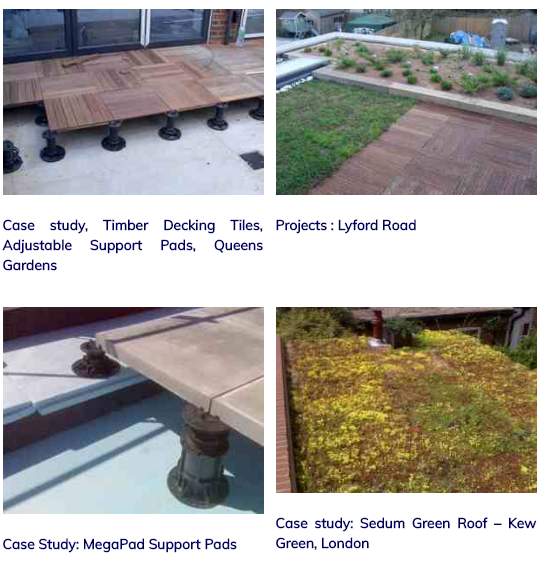
-
Airbricks are below the desired finished ground level
Ferdinand replied to daiking's topic in Brick & Block
What is your patio surface material? -
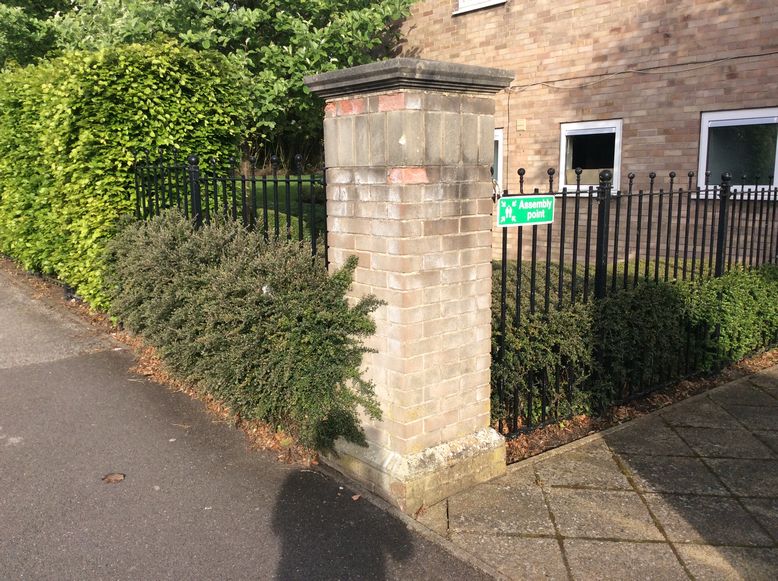
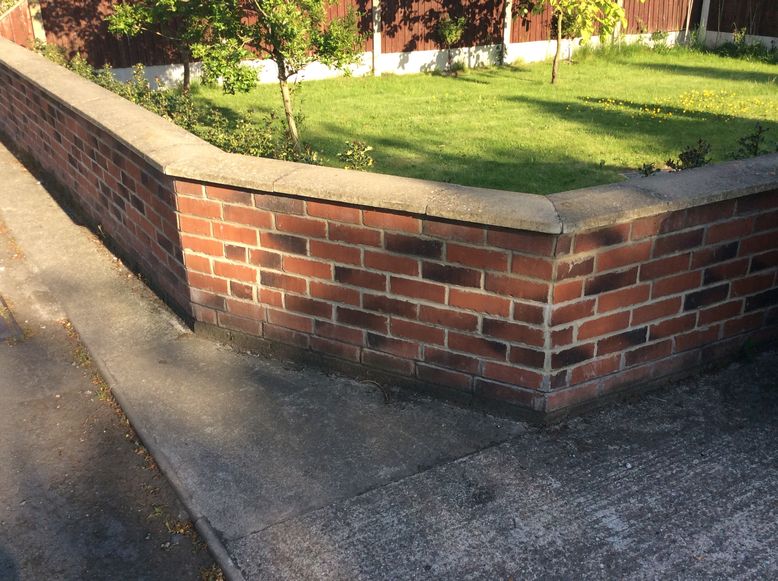
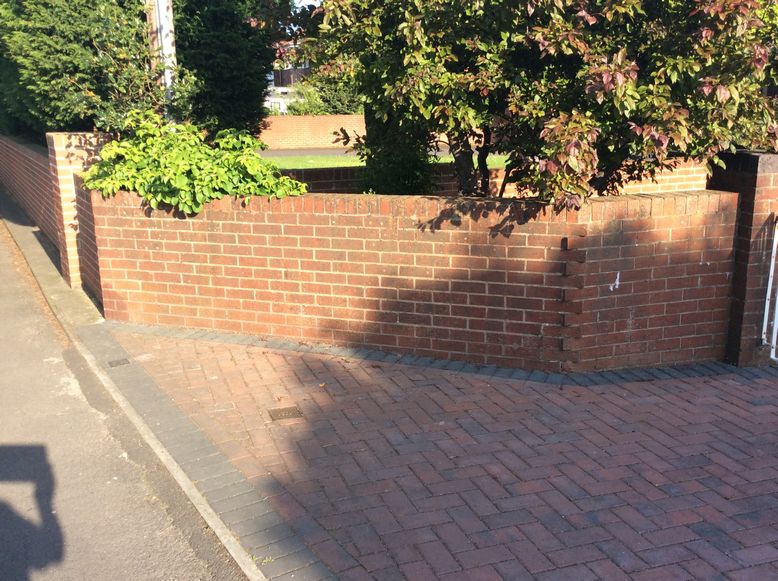
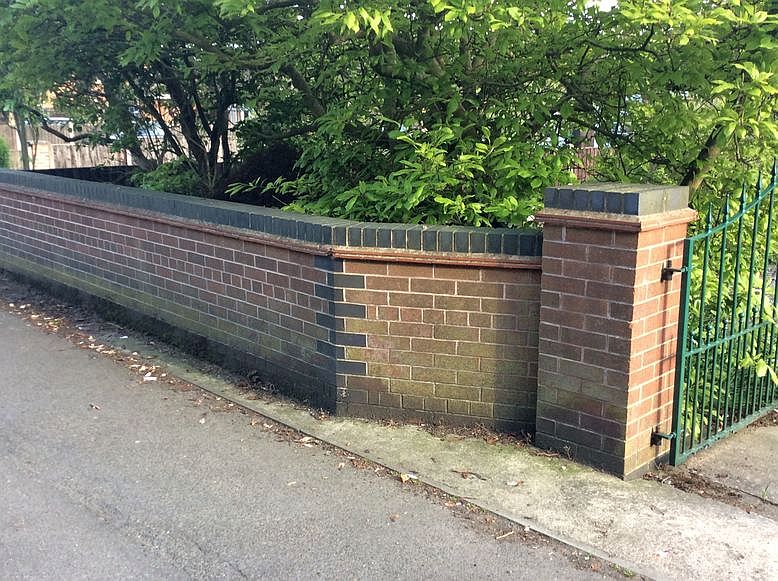
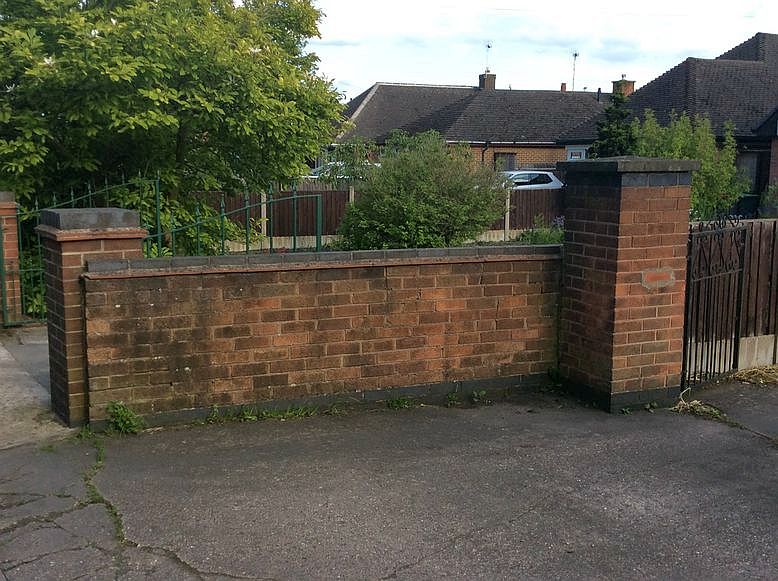
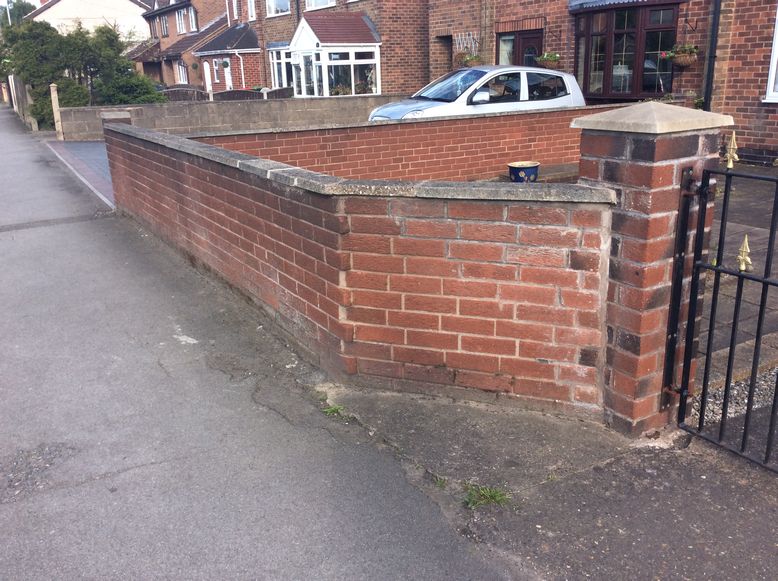
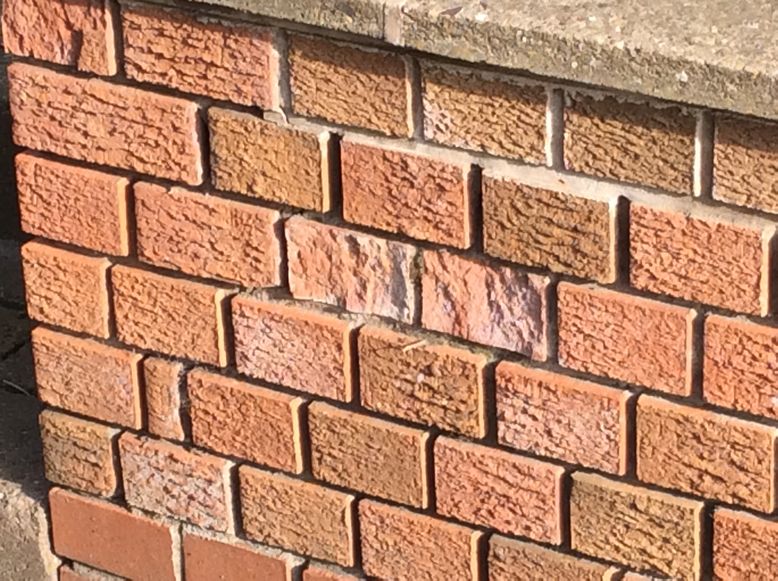
(This thread is about brick walls - please do not invade it with fences, and hedges - except as garnish for the brick). In a few days I will be having a small front garden wall built ... about 5m x 1m high so 500 or so bricks, in a street of small 1960s bungalows. I did a little wander up my street to crib a few ideas, and these were a few of the walls I have locally. It is a former lane lane which has been absorbed into the near town centre and has buildings from approx 1830 to present. There will hopefully be a longer blog post, but these are a few examples off the type I may be having built. I am looking for comments. The surprise for me is how quickly these deteriorate, especially with the wrong choice of materials - some are looking shoddy after only 25-30 years. IMO brick walls should easily last a century unless there is a requirement not to do so. Here we go. A Nice looking wall, made with facing bricks (like my house) and copers, and basic engineering bricks as DPC. B But it has spalled badly. Do not use facing bricks for a garden wall. C I like this combination of red and blue. 40-50 years old and suffering a little? On the main road with the traffic. D Posh gatepost. Inadequate materials as used in the flats behind. Now badly deteriorated. E Yep.Like it. Recent, and they have trees in the right place, too. But are those facers and will it spall later? F As above, but two or three decades older and now careworn: G Similar with added decoration from blue engineering bricks. English Garden Wall Bond, I think. H Again, with blue decoration included in the paving: I Another variation. Someone did not like the postbox in the gatepost. J A very carefully done piece of architecture imo. That stone wall style used to be the dominant note on the road, and is still the background. What have you done or seen? What will wear best? Feel free to post lots of pictures of garden walls from your area. If there is one fault with the above imo, it is that there is no discernible vernacular in this selection. Ferdinand
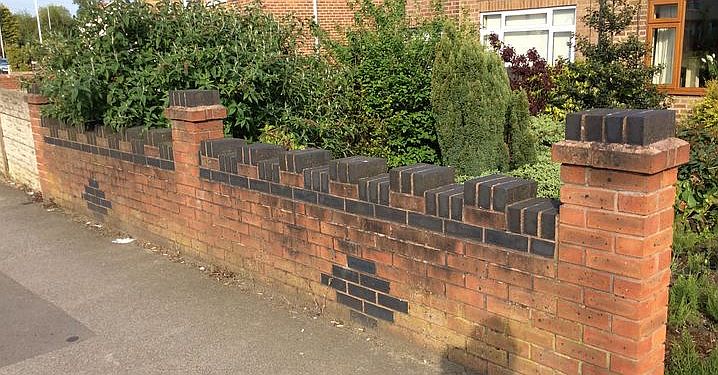
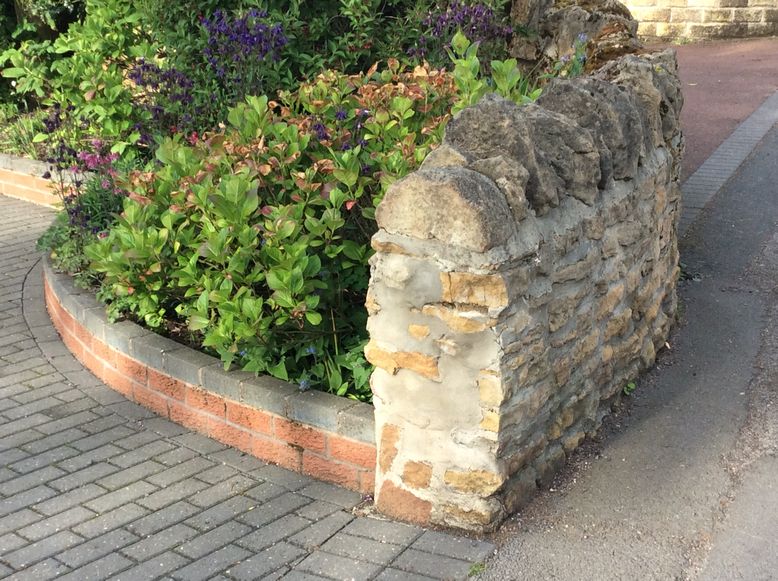
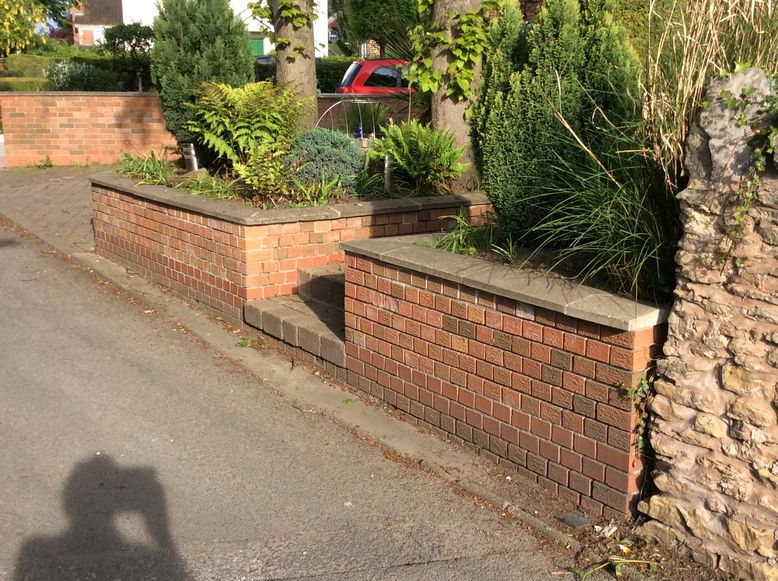
-
They are not secure enough, they are not universally compatible between different companies, and they potentially give outside bodies the power to control my electricity without me being able to do very much about it easily or necessarily knowing what is happening, or consenting, That is why I refused one.
-
So, what would you do differently next time?
Ferdinand replied to Kuro507's topic in General Self Build & DIY Discussion
Answers in the thread title posted on Ebuild here: (Some of these views may have changed, but it is still all useful grist for your mill. @Declan52 @ProDave @JSHarris @JSHarris @Stones @jack @jack There is another thread buried deeper in Ebuild, which I aim to have a look at later.- 25 replies
-
- 2
-
-
- lessons learnt
- self-build lessons
- (and 4 more)
-
Yes, that was Mr Blair in 2003. This being the UK, I seem to recall the media taking the P and his being accused of grandstanding, however there seems to have been a serious report behind it: http://www.telegraph.co.uk/news/uknews/1422243/Blair-sent-in-tanks-after-chilling-threat.html TBH I always viewed it as posturing, but it seems I was wrong. Ferdinand
-
Some waste you can burn, I expect, as a normal bonfire. And you may be able to burn a few extra bits depending on neighbours (if any), location and visibility from the street. I think that would relate to eg untreated wood. Really it is horses for courses. If you choose to push it it is for you to decide, but if you receive a visit (fire brigade, council) then imo it is game over for slightly bending any rules. If you are genuinely domestic then I expect that the initial intervention could be less severe. One thought is that a marginally larger skip may not be that much more expensive. There is also that Waste Transfer Regulations are a bit of a dog's breakfast as to what is "waste" and what is not, and the License you may or may not need, and what is accepted at the domestic tip from whom. I would welcome advice on this, as I do not really understand the system. I do not particularly wish to shell out for a Waste Transfer License if in fact I am moving topsoil from one site to another where it will be reused. I have never explored this one but I think it probably revolves around the correct documentation. Ferdinand
-
Would appreciate some thoughts on plans please :)
Ferdinand replied to Kuro507's topic in New House & Self Build Design
+1. Love the defenestration window for Czech visitors. A pond and a plank must be tempting. -
So, what would you do differently next time?
Ferdinand replied to Kuro507's topic in General Self Build & DIY Discussion
Reading those threads, we have permission from about 80% of the people to copy posts across, so I will have a look at doing that later. F- 25 replies
-
- 1
-
-
- lessons learnt
- self-build lessons
- (and 4 more)
-
Would appreciate some thoughts on plans please :)
Ferdinand replied to Kuro507's topic in New House & Self Build Design
Don't underestimate salami-slicing-pricing either. Eg with a Trade Account and Gift Cards bought via many people's work Employee Benefit Programmes it is possible to get a routine 20% off at Wickes, plus whatever discounts and sales they are doing at the time. We have a couple of threads in the General Discussion area. A couple of weeks ago a new member appeared quoting a price for insulation for a new self-build that could be halved without difficulty. Ferdinand -
Would appreciate some thoughts on plans please :)
Ferdinand replied to Kuro507's topic in New House & Self Build Design
That all sounds encouraging (for a successful build process) - you have some scars of experience . When you have been round the block enough that you have worn a groove in the ground to create your own block, then you become an official HOG (= Hoary Old Git). -
8>< Snip.
-
A father-in-law who visits for the winter? *Gets coat* What is one of those, then? Is that when Clarkson talks about feeling things through the seat of your pants?
-
I think you *may* be underestimating the numbers of rocks and ruts normally encountered on the smooth road of self-build, and the time required to circumvent them or prove they are mirages. Trying to do things too quickly *can be* (sometimes) a very good way of spending more money than you may actually need to do. Ferdinand
-
Would appreciate some thoughts on plans please :)
Ferdinand replied to Kuro507's topic in New House & Self Build Design
(Revised) I think it is a good thing to start throwing ideas around, as long as you do not get *too* attached to specifics. At this early stage I suggest exposing yourself to as many ideas as you can, and try to focus on the generalities as well as the details. It is the broad knowledge and background you are missing my not using an architect - and you need to compensate by creating your own broader perspective. That is important, because the joy of self-build is that you design something that works for you and suits the site, rather than taking a preconceived idea of your house and plonking it down wherever. That is in some ways no different from taking a developer's pre-conceived idea of what you house should be. What are your key requirements? (ie your postcard-length summary of what you want from your house) Do you know which area (approx) are you in, and what the vernacular style is for that area? I recommend: 1 - Reading this design e-book written by one of our former architect members: http://www.ebuild.co.uk/index.php?app=core&module=attach§ion=attach&attach_id=4333 2 - Visiting as many different interesting houses as you can on Open Days, via Estate Agents, for weekends away on AirBNB and so on, with a notebook and an eye on what you like. And I mean 20 or 30 not 2 or 3, 3 - Starting to look for details of the things that make houses work. Where is the light coming from at different times of day, as well as what sort of finishes has it got. I find it helps to start from all three of "what is the site like", "what do we need" and "what will our house look like", and meet somewhere in the middle. Ferdinand -
An attack on the most vulnerable by party or parties currently unknown. Not good, and I am thinking about people who have still not found their families, friends and relatives. And for those whose role it is to help. My hope is that - since to me this seems to be an attempt to cause disruption to our life during an Election - our response will be what it usually is. That is, a pause for respect and acknowledgement of the victims, and then a continuing of normal, daily life. And of course a hunt for the perpetrators, whoever they are. Ferdinand
-
Composting wood fibre board
Ferdinand replied to Triassic's topic in General Self Build & DIY Discussion
Perhaps use the woodfibre boards to line raised beds? And yes, they should chip, subject to any poisonous addiditives they contain. It may be a surprise just how quickly they will be chipped by a large chipper. They should compost too, but may be better chipped where they will eventually be needed. Cedar