Marvin
-
Posts
2382 -
Joined
-
Last visited
-
Days Won
3
Everything posted by Marvin
-
Bu&&er all. 6kWh so about 2kWh discharge.
-
Yes the top and side are ok but the bottom a little different....
-
I needed a large delivery. Self installed. DNO approved, (I have the bill) electrican finished.
-
PV power to the batteries but no way for power from the batteries to go to the grid.
-
Not directly.
-
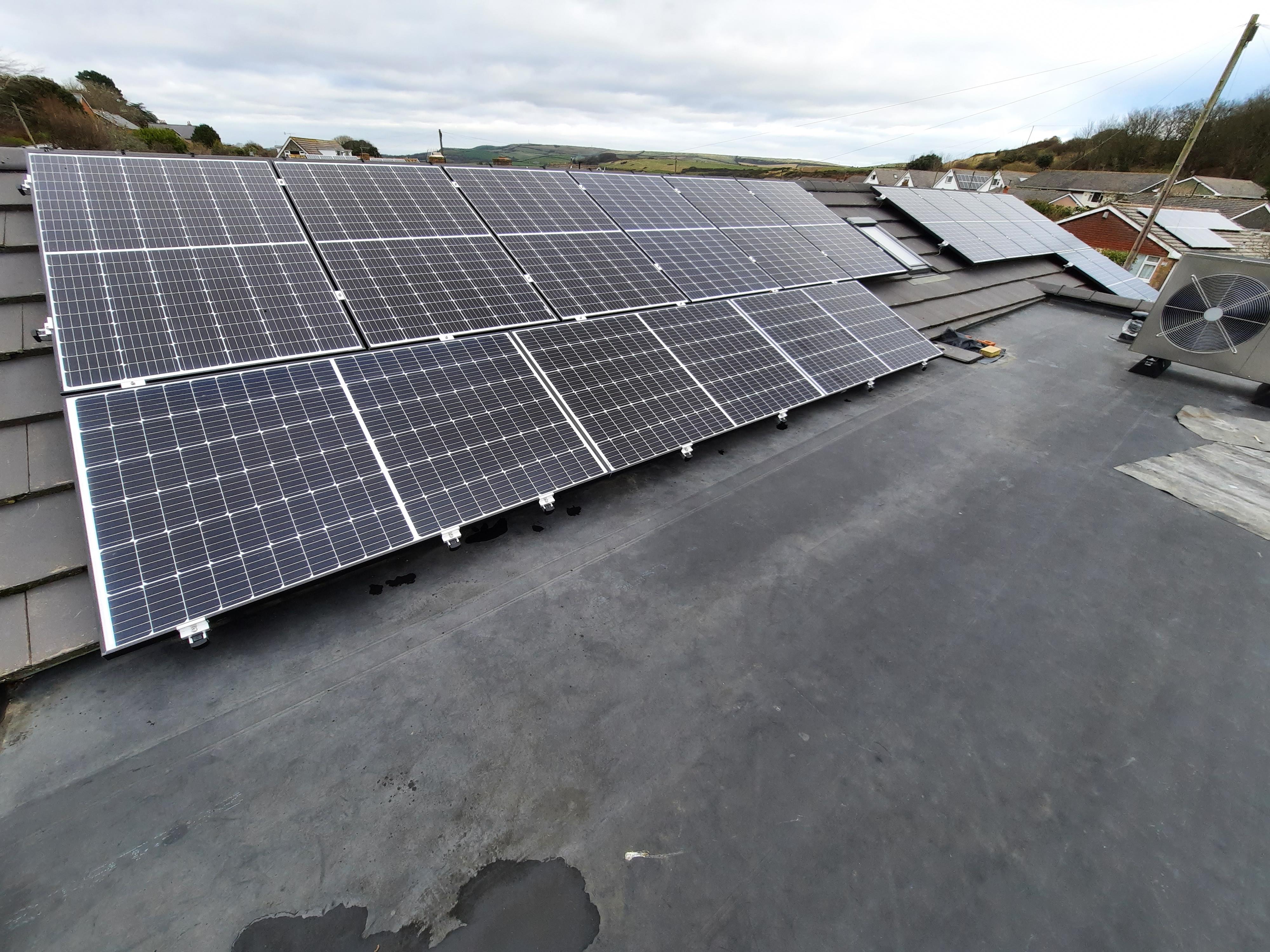
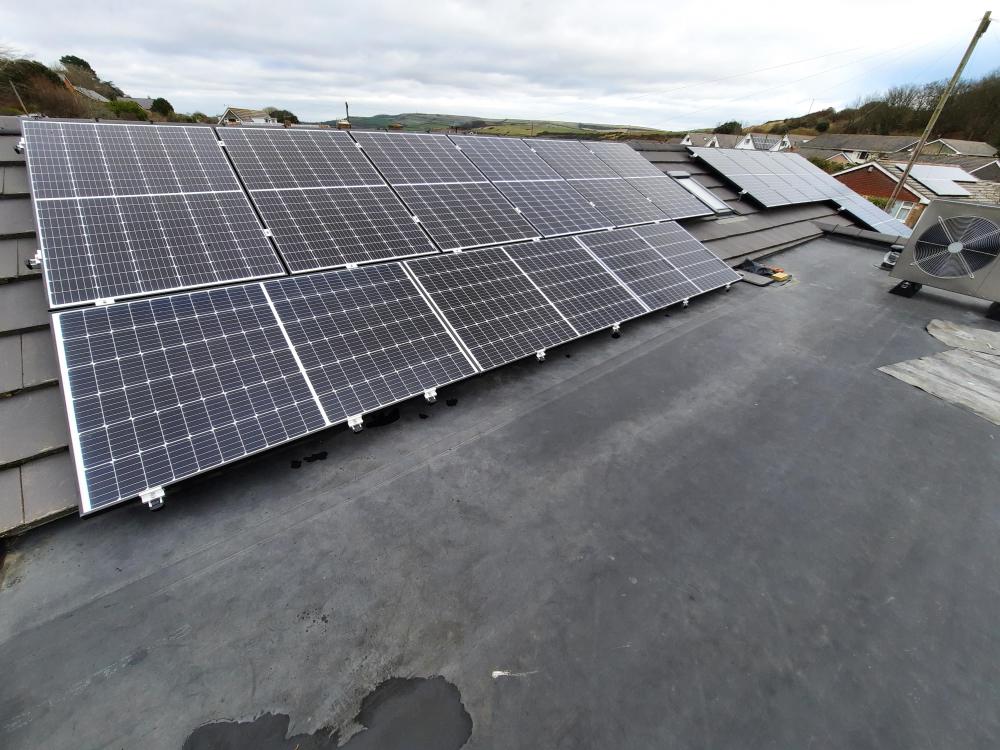
The good thing for us is the PV power (when available) direct to the ASHP. And in the summer ASHP cooling when we get LOADS of power.
-
Yes
-
Oh f...! Yes your right I meant AMPS not WATTS.
-
I don't know much about PV panels and the different costs or outputs of roof integrated ones, but I would use the ones that replace the tiles on a lovely new build.
-
What pitch is the roof?
-
Think I'm going to change my name to Slayerofdreams.
-
I also think the peak demand is a BIG price concern. Out hob usually uses about 21kW when 3 rings on. So I think there are alot of unknowns from @SBMS causing caution in my costing. 30kW sine wave inverter price?
-
Yes I messed up. I have revised figures. Searched for 80kWh but given price for 10kWh storage
-
Hi @SBMS I had to revise the battery costs in my last post
-
Hi @SBMS What is your peak demand in amps? Generally you should only discharge a battery down by 40% Converting power costs power. It think losses of about 15% can happen. You would need to check the equipment specification. So you want to use 28kWh over 20 hours you will need to discharge say 20% more to convert from DC to AC so you need to draw from the battery array about 31kWh which is only about 40% of the battery capacity so batteries need to have about a 78kWh capacity. To charge about 31kWh you will need about 20% more so about 34kWh which is about 9kW output for 4 hours. The lost power is basically converted into heat. Many inverters indicate the max power conversion rate which is actually only for a limited time. I think one of the deciding factors for us was coping with our peak demand. If you are mixing the battery supply with the mains supply you will find you do not use the power evenly. My guesses: Inverter anywhere between £1.5k and £3k for a 10kW! Batteries anywhere between £10k and £50k Cabling, switches fuses housing and installation costs (not sure about the main grid permissions/costs if any) Basic set up cost say £6k ( I'm sure someone will correct me if I'm wrong... ) 34kWh at 7.5p is £2.55 a day. Normal power rate say 25p per kWh so 28kWh at 25p is £7. Therefore saving per day £4.45 if battery system fully used every day. So final money guess: Basic system installed total cost £25k System used fully 60% of the time so saving about 60% of £4.45 each day is about £2.67 £25,000 divided by 2.67 is break even in about 26 years. As @SteamyTea says will the 7.5p price lasts? In conclusion, in my humble opinion, the whole problem with PV is not the production of power but the storing and subsequent use. We use batteries on "isolated from the mains low power continual demand systems" charged through our PV and hope to include the MVHR this year. Our 5.12kW system supplies ALL the power we use in the year, just not exactly when and at what rate we need it. Good luck. M
-
Hi @SBMS I think your thoughts above open up a whole load of questions. The first would be about the use of the energy: What do you hope to run from the batteries? Our fuse box (Consumer unit) has a 100amp fuse and some times we require 60amps all at the same time for cooking, washing, heating, etc. So when I looked at running the house on battery storage I realised that I would need a system to be able to handle the peak loads and gave up. I assume you have taken into account the following in your calculations: The maximum power you can draw from the batteries: Ours are about 40% Each time you convert the power you loose some. So AC to DC and then DC to AC again. Yes a 5kW system charging for 4 hours would give 20kW, less the energy lost converting, but the link info doesn't seem to be saying that is what it does. Are you saying you require 28kWh of power over the 20 hour period? If so you would need about 80 kWh storage depending on the loss converting DC to AC. Other bright sparks will correct my thinking I'm sure.... M
-
It's a bit difficult to comment without knowing a bit more detail. Extent of the removal... Extent of the making good... Plastering Carpeting Ceiling works Decorating. and so on, although it's always worth getting a couple of prices for comparison. M
-
Tile Edging Options - Metro Sage Tiles
Marvin replied to canalsiderenovation's topic in Floor Tiles & Tiling
Waterproof tile adhesive Mapei grout, tile spray protector all from either screwfix or toolstation should be fine. Silicone between countertop and bottom of tile. Would not use premixed grout myself. Make sure you apply the spray as soon as the grout is completely dry and before being made dirty. Leave to dry. Second coat. This should protect grout from staining. Yes I know spray not cheap... -
As long as they take the metal bits out before using the microwave. (Assuming metal racking etc is still used)
-
Hi @Trillip If I was renting a building out I would not supply a combi microwave/oven. I think people could not be bothered to take on board how to use it properly. Yes we've had one a few years ago and it all seemed like to much messing about, which is why we ended up rearly using it as an oven. Perhaps things have changed. I would want to read the instruction manual before buying.... M
-
Tile Edging Options - Metro Sage Tiles
Marvin replied to canalsiderenovation's topic in Floor Tiles & Tiling
I would suggest going for large tiles with dirt coloured grout.... If you stick with the sage green, I would go with the same colour grout and spray with grout protector. There are many edge choices. Go to any tile shop and they will show you all sorts of colours, shapes and materials. -
1930s Bungalow part-reno / loft / extension in Twickenham!
Marvin replied to -crashd's topic in Introduce Yourself
And anything going through the floor. The amount of soil stacks I have seen with a big hole through the floor and the wind blowing through..... -
Yes. What, about 150mm joists at the loft floor and 170mm insulation and plasterboard at the top? Not enough height in my opinion. And to agree with @joe90 the W frames use thiner wood but every piece counts like one of those bridges. Also, I don't think the dormer roof can be higher than the original roof without planning... Good luck M
-
1930s Bungalow part-reno / loft / extension in Twickenham!
Marvin replied to -crashd's topic in Introduce Yourself
Hi @-crashd Remember to decide if you are going the MVHR route to not install trickle vents in the windows. Our main air leakage was at the wall floor join. Seal around the inside and outside of anything going through the external walls BEFORE covering with insulation or plaster or anything. I cannot speak about budgets as I did all the work myself. Good luck M -
1930s Bungalow part-reno / loft / extension in Twickenham!
Marvin replied to -crashd's topic in Introduce Yourself
Hi @-crashd The full EPC says that the building has solid external walls and suspended floors with no insulation to both. As a basic, it's worth considering all the AIM APE elements at this stage, before making decisions. That is Airtightness, Insulation, Mechanical Ventilation with Heat Recovery, and Air Source Heat Pump, Photovoltaics and Electric Vehicle. You may not consider all of these, but when talking about saving energy on heating the first three make good long term choices. However as @Nickfromwales pointed out the AIM works will only be successful if applied to the whole building ( not just to an extension for example) Some of these will not work properly without the others: A MVHR will not work properly without good Airtightness. An Air Source Heat Pump will have to compensate for the lack of Airtightness and Insulation to the degree that the benefits become questionable, especially during winter, without them. Some work very well with others: The first 3 together make an impressive difference! An ASHP uses electricity and Photovoltaics can supply a little during winter and a lot during summer when cooling can be a problem and an ASHP can supply cooling. PV can supply a little to an Electric Vehicle during winter and plenty during summer if your vehicle is at home during sunny days. So if finances cause you to have to consider only a few in my humble opinion AIM first and go APE later. I think you can sensibly work on airtightness, insulation, and mechanical ventilation with heat recovery on the existing building to great benefit. We insulated our suspended timber floor to our bungalow successfully. We extended ours to 100m2 floor but with no upstairs. We have timber frame with block work exterior. We have gone past AIM and gone to the APE stage. Our ASHP uses about 10kWh of electricity a day (Including any from PV) at the moment for all our heating and hot water. Now we are starting to see the hot water heated via the PV during the day. The actual truth about ASHP is that installed in an inefficient way, in a poorly insulated building with poor airtightness, trickle vents, open fires, extractor fans no MVHR and so on, it is a poor choice. If the entire system is sized big enough to take all this into consideration it WILL heat up the building but the running costs would shock you. An ASHP is promoted by its efficency: The Co-efficient of performance (COP) is an expression of the efficiency of a heat pump. Not by how much it costs to run or by how suitable your property is for an ASHP or how efficiently a full system installed in a property works. Because of the different experiences of people with ASHPs there are many views. Ours is, we love it. I wish you luck. Marvin