


saveasteading
-
Posts
11094 -
Joined
-
Last visited
-
Days Won
98
Everything posted by saveasteading
-
I think occupants will want to hear the cooling. It's a luxury and the sound will remind everyone that 'something is being done'.
-
Be aware that the house will be moving a lot seasonally. So going too deep would make the new foundation too much stronger than the existing. Your SE should tell you exactly how to do this. Width, depth, length, and how to ensure that the new concrete is jammed tight under the existing. Presumably the new extension will go before the bco. Your SE will need formal calculations for all this. What will the new foundations be?
-
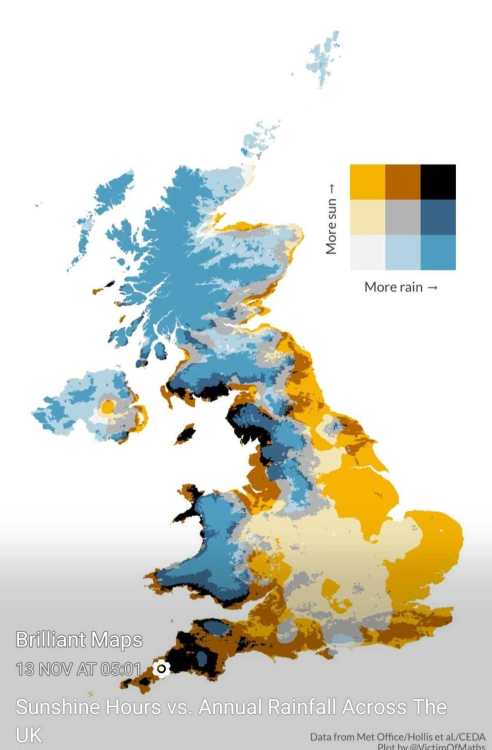
I look at the weather forecast time- related charts for your area with interest, and so often see the rain stopping after the eastward moving weather front passes the Cairngorms. But on a newspaper simplified forecast it will show rain. Don't tell anyone how good the climate is though or there will be thousands more white box estates. Bracing tomorrow though as Norway sends its unwanted weather south? The light blue produces the peaty water to go with the barley from the yellow. Mmmm.
-
This appeared in my Facebook stuff today. An ad for maps. Perhaps you will find it as interesting as I did. Eg the vast area of blue which is mostly uninhabited. Of course we all look at our location. What struck me was how tiny and precise some shaded areas are, especially where the brown which is showing as a long strip but very narrow. I haven't yet looked to see if there is any geographical feature coincident. Ahhh the quality has diminished in copying. But eg see Morayshire where I'd guess the brown band is 30 miles by 3 miles. Is black best for solar panels... sunny and regularly washed.
-
 I prefer to catch leaves here.
 -
Installation of a Clenviro STP In a High Water Table
saveasteading replied to Arrenite's topic in Waste & Sewerage
It appears to be a requirement in owning an outdated but legal treatment system, that you explain it in basically a house maintenance manual. It makes sense to do the same for any quirky design decision like this one. This chapter is then displayed in a fuse cupboard so that it doesn't go missing. So @ProDave could do this re the tank and rest easy for any future owner or contractor being fully aware. -
Installation of a Clenviro STP In a High Water Table
saveasteading replied to Arrenite's topic in Waste & Sewerage
I don't like the idea of a massive concrete surround for a tank. Cost of corse and that it is not usually necessary. Beautiful work in the pic above btw. Tying it down to a slab will need reference to the tank chosen but should be easy and controllable. This is key. There is no reason why you can't put a notice up on your tank explaining this. And another one under the extract cover. If it's tied down anyway, this shouldn't matter, but better to be safe. In reality a good tank doesn't often need emptying so wait for a dry summer. -
Underpinning is hard work and done in stages. Dig access trench along the wall to the bottom of the footing, then as far beneath that, as instructed. So you are quite deep. Tunnel under the footing locally, about 1m wide. Mining. Fill under the wall with concrete and wedge up. Repeat. Backfill. Commercially this would be many hundreds£ per metre. Anything is better. Is the ground that poor in bearing? The point of letting the existing wall take the load is to use the existing bearing capacity.
-
It has cracked some time ago, then been painted over. And stayed that way? If the key only fits in one place then that is not an overall crack of that width. Plus if the materials change in each leaf the weakest will crack with any shrinkage or movement. Helical bars would only move the stresses elsewhere. The outside leaf may have stronger bricks than mortar, so have moved gently.
-
Data centre garden shed
saveasteading replied to saveasteading's topic in General Alternative Energy Issues
BBC News - Tiny data centre used to heat public swimming pool - BBC News https://www.bbc.co.uk/news/technology-64939558?app-referrer=webview Not such a new idea then. This is from 2 years ago. I researched seriously, a few years ago, into capturing waste heat from chill-stores, as we were building a few. Standing close, it is amazing how much energy is being pumped away. None of the installing companies knew / were interested at all. -
Data centre garden shed
saveasteading replied to saveasteading's topic in General Alternative Energy Issues
the electricity that's generating that heat is paid for by somebody else". ie not the homeowner. it seems from the flag that the King is visiting. -
What a good idea. And build new data centres beside wind farms. Data centre in the shed reduces energy bills to £40 BBC News - 'I heat my Essex home with a data centre in the shed' - BBC News https://www.bbc.co.uk/news/articles/c0rpy7envr5o
-
Agreed. And better yet, and easier diy, batten and board. @kyran what does the other side look like? BTW how wide is the crack at the widest point, excluding flaked away bits. What is the widest coin that would push in? I suspect none, so no worries.
-
I'd need to see it in life, but that looks more like a rough extension or rebuild, due to seeing the change in materials, and that cracks go through bricks not mortar. My worry would be that in any future sale, a surveyor would flag it up.
-
Detailing insulation / VCL below internal stud walls
saveasteading replied to andyscotland's topic in Heat Insulation
I hadn't noticed! -
Detailing insulation / VCL below internal stud walls
saveasteading replied to andyscotland's topic in Heat Insulation
I'm late to this. I wouldn't do it but would fix the sole plate to the concrete. I agree that the loading capacity looks OK but it's an experiment. Buildings move. I've seen pir shrink, whatever the spec says. Levelling the sole plate on concrete is going to be (can be) a precise job whereas pir can't be adusted, other than with screed. But your detail requires a precise slab anyway... beyond normal construction standards. The heat loss through the normal sole plate detail is tiny, especially as distance increases from the outdoor perimeter (earth is a half decent insulator). Sometimes normal is best. -
Mats look good for upstairs, pinned onto board decking and providing sound insulation. But at £10/m2 it's pointless on the ground floor .. except for discipline on the layout. I've forgotten who posted the other day, the very rough layout. I'm not rating ufh upstairs for cooling. I notice some suppliers are hyping it while others encourage caution. Hot air rises, so chilling the floor by 2° isn't going to help much.
-
So you must assume this will happen but have plan B ready. Have you this agreement in writing? If not then email a friendly thank you confirming the date and asking him to make sure the area is completely cleared and safe/clean/ made good as appropriate. If he doesn't perform, then you have to give him say 5 days say notice after which you will.... let's wait and see.
-
That looks familiar. We kept as much as we reasonably could, otherwise it's just another newbuild. Did retaining anything said money? If it is hands on then yes as you can pause and adapt. If using mostly outside designers and main contractors then no...
-
Agreed. I was fortunate to get a long discussion with a senior fire officer. There had been arson, burning lots of very flammable stuff stacked against the warehouse we had newly handed over. I was there to see the damage. The building was intact, it being metal cladding. The paint was gone as were the plastic screw heads. Otherwise intact. The officer explained that they had rules about working too close to materials that could hurt them. Thus in this case they were very nervous about composite cladding falling off the wall. He couldn't explain why it might fall but they knew it happened. So they had stood well back, and this had slowed their work. Ours was built on site with metal panels outside and in, and a fibreglass infill.. which we later saw had turned to sand. He said he wasn't permitted to praise or condemn any product. He said our product was brilliant but he could not say that officially. This makes sense esp after we see how Grenfell had false fire tests from a cladding manufacturer. Could a ceiling of eps behind plaster- board or plaster fall down through melting? I think not, but who is qualified to say?
-
Another dumb SuDS question.
saveasteading replied to Alan Ambrose's topic in Rainwater, Guttering & SuDS
The LPA loves to hear nice things about newts. Other than that they are seldom skilled enough to know good from great, from greenwash. Unfortunately they are confronted with loads of the latter. Do it anyway. -
Readying screed for engineered flooring
saveasteading replied to paro's topic in Wood & Laminate Flooring
What does that mean? There are definitions for flatness and super-flatness. Flat can include being on a slope in one direction. It is usually measured, if at all, by placing a 3m straight edge on the floor in all directions, and measuring gaps. Up to a 3mm gap at any point is 'flat'. Or do a survey on a grid. The spec is whatever you want it to be. For better than that , a super-flat floor, the top needs grinding off. So I can't advise, and I suspect the manufacturers are quiet on it too. But thick glue will be the answer. -
Today's word. I must not use BH too late!
-
Farmstead renovation Dumfries and Galloway
saveasteading replied to Nump'ead's topic in Introduce Yourself
It looks as if the walls have varying constructions. -
I'm not sure this has been gomoletelh answered. As always, read thd regulations to grasp the full requirement of thd green bit.. ie the regulation itself. For each area there are.ninum requirements but they can be averaged. Eg on the steading we have a small area of wall in the original exposed stone. It has some insulating property being 600 thick, but of course it is poor. Extra elsewhere satisfies the regulation, and the bco agreed that the heritage was worth showing.



