
saveasteading
-
Posts
10890 -
Joined
-
Last visited
-
Days Won
93
Everything posted by saveasteading
-

Workshop build using shipping containers - Electrical Advice
saveasteading replied to Walrus's topic in Introduce Yourself
trudgen noun a swimming stroke like the crawl with a scissors movement of the legs. -
You will save a lot if you can take bulk sand rather than bags: even big bags where you are paying for the bag. Cement also if by the pallet, although wastage is worse when they see a 'limitless' supply. If brickwork is the finished face, then getting bulk is very important. You then have one source of sand (it varies in colour through a sand pit and tomorrows could be different). Cement varies dramatically in colour between brands, so never change it.
-
Workshop build using shipping containers - Electrical Advice
saveasteading replied to Walrus's topic in Introduce Yourself
Beware their trudgens. -
Yes that's what I meant. Looking forward to your model. The journey of unit of energy through a longish linkage of materials, to earth. Variables: indoor and outdoor temperatures, general temperature of the earth by season. Time lag day and night? Does that heat woozle end up not quite getting outdoors and start moving back in on a warm day? Do you need to know the composition of the ground and the location of the property? I did once calculate heat loss through cladding screws into steel purlins, thinking it might be quite a lot (10 screws/m2 extending from outside hex, to an exposed point into and through purlins. It was tiny though as the actual c/s of the screw is inside the thread.
-
Workshop build using shipping containers - Electrical Advice
saveasteading replied to Walrus's topic in Introduce Yourself
Back to using containers. I'm not against this, and adapted a couple for storing sports equiment, just by putting a slab down, and cladding with battens. but it is horribly hot/cold depending on the weather. It is that these are designed for slinging about on lorries and ships, and any cutting of holes requires stiffening and framing. Where I have seen them used as 'sustainable' (often a glowing article in the Architectural Press) it has been just a gimmick and ends up costing a lot more than a proper building. It is a different matter if you can buy one cheap at 'end of life' and use it as a store......but they get so hot and cold. -
Workshop build using shipping containers - Electrical Advice
saveasteading replied to Walrus's topic in Introduce Yourself
Just a little then. The building was to have contents that the police were keen stayed locked up. Loss adjusters have standard tests for security, such that skilled criminals bringing with them a tool kit of hammers, heavy cutters and various persuaders, couldn't get in in 30 minutes. Plus all doors immune to ram-raiding and tools. After we were gone, there were other systems installed, and I was informed that anyone who got in would be disabled by various noise, smoke, strobes etc, and be pleading with the police to arrest them. The building looked like a slightly superior industrial building, and had simple metal cladding that could be cut or unscrewed. We didn't even remove the plastic hex heads. Had GRP skylights too, which would have been my suggested means of entry....but apparently your criminal doesn't know that, plus they would have been trapped inside. The police progress inspections involved a man with leather jacket and shades, and an impressive 'have you heard of us' identity card. -
Me too. It can be compressed to sit snugly between joists with no gaps. Pir is a pain to cut, and to fit and will inevitably have some gaps. Then some insulating board, however thin, over the top before boarding.
-
Simple and pragmatic. Nobody sits or stands at the perimeter. Some insulation can be contrived too.
-
Workshop build using shipping containers - Electrical Advice
saveasteading replied to Walrus's topic in Introduce Yourself
Not really, although i guess it deter those who can't think how to get in. I had the poorly paying interest of repairing a few metal clad walls. 1mm steel usually. They had come with snips and nail bars....now there would be battery tools. In all cases they removed a section of steel, but then encountered either block or timber or plasterboard inner facing and insulation. Something must click in the criminal brain that this wasn't planned for, and they abandoned, just leaving expensive damage to secret fix cladding. Even when there were visible fixings, they cut the steel. Storage shipping sheds on site, we fitted cheap padlocks rather than get the expensive damage of them cutting through the walls, which are perhaps 2mm thick? Also designed and built a warehouse designed to deter or catch any criminal. Getting in would have been a mistake. The flying squad were occasional clerks of works. Fascinating and challenging....but I can't say much more. -
Ok. Unfollowing the topic.
-
Workshop build using shipping containers - Electrical Advice
saveasteading replied to Walrus's topic in Introduce Yourself
For my interest, if you don't mind. In hindsight would you do the same again? It seems a lot of work to create the box which remains uninsulated, and with unstable fronts that need infilling. -
Which was about the neighbour's house not yours. Is this query also about the neighbour's?
-
Our supplier started including plastic caps with all foundation bolts. Easy to use and protected against splashes and dents. Prior to that we used plastic bags and tape, or just tape. Vaseline bandages were good protection but messy to use and remove. The other option is to fit the nut and leave it at the end.
-
Any joiners who can explain how this door is made?
saveasteading replied to saveasteading's topic in Doors & Door Frames
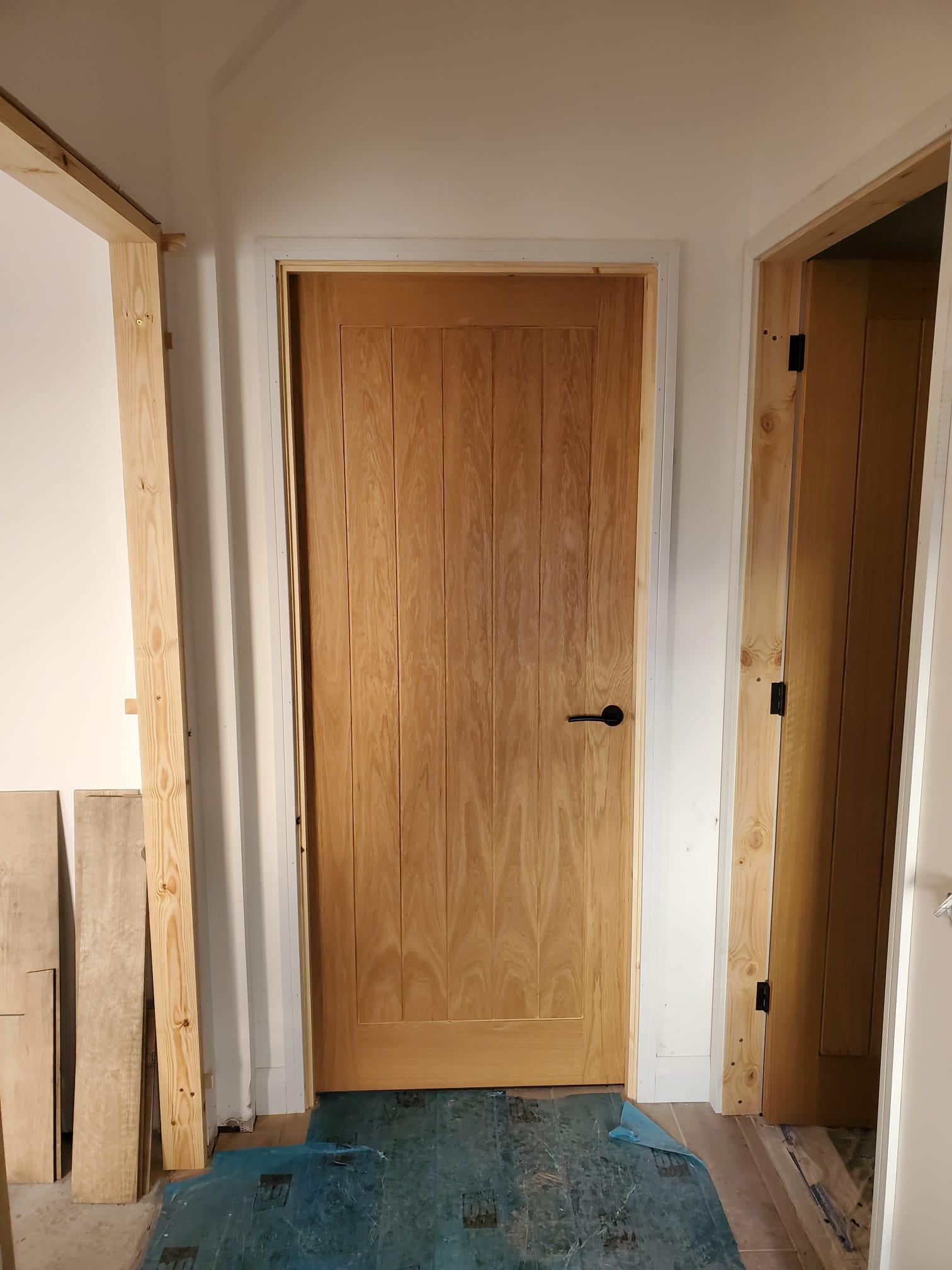
Howdens. They seem to be identical from BM's. Annoyingly there were none in stock to examine, having been impressed with them in a b&b and wondering if all were that good. But yes, they are nice. -
Any joiners who can explain how this door is made?
saveasteading replied to saveasteading's topic in Doors & Door Frames
Bookmatched. A new term for me. The backs of violins are done like this, I think mostly to get acoustic symmetry. Also wall panelling or marble tiling in very expensive fit-outs. I was surprised to see a £90 door with it. The veneer seems to be about 4 to 5mm thick...again a surprise. When the rest of the doors go in, we will see if the bookmatching is standard or by chance. -
Further sound insulation through bookcases?
saveasteading replied to Garald's topic in Sound Insulation
You are I think. I have nothing to add. If you need a quiet room you have the wrong room. Prob my last comment on this. "I'm out". -
Your way works of course, but usually needs some clamping kit. It is still worth checking all the ends accept a nut before starting the work. Once you have had to fettle a bolt end in an icy hole, with a crane idly holding a column above it, you get more organised next time, and also protect the ends.
-
Insulhub Isotex Voluntary Liquidation
saveasteading replied to Surfiejim's topic in Insulated Concrete Formwork (ICF)
No, shifting assets sounds dodgy, although that money would be in the company now gone could be seen as a means of keeping solvent. So that's a lot of cash to lose. -
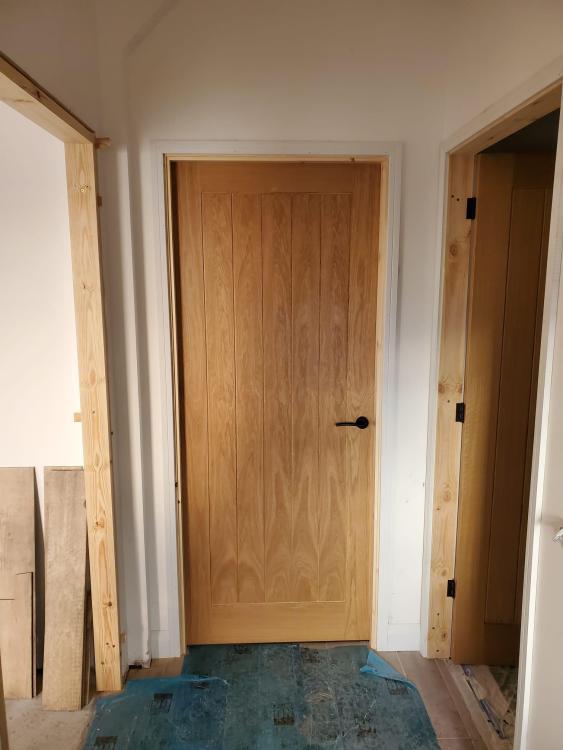
Doors going in now. This style appears ubiquitous at present. All seem to be made in US using American oak veneer. The quality is very high and it appears to be quite a thick veneer and to be made of veneer strips not the usual moulded method. I was surprised to see such distinct grain, and the mirror effect resulting from splitting a timber and folding them back. Anybody know how these are made? Are they going to a lot of trouble to create this effect or is it just the way the veneers come off a pile?
-
Insulhub Isotex Voluntary Liquidation
saveasteading replied to Surfiejim's topic in Insulated Concrete Formwork (ICF)
Good point. It is correct to go into voluntary liquidation when the situation is hopeless. Different to being wound up by a creditor. It is very easy for the owner to be optimistic until a more independent person points out the hopelessness. That tender about to be accepted, the slow paying client about to cough up etc... So yes, maybe they can work out some compromise. If they are well enough thought of they may get time to pay debts, etc. It is possible of course that they have had a big hit from a bad client or a big financial claim, and have done the right thing . On the negative side..what can a solicitor do? Spend your money. But if there was any naughty shifting of funds, then perhaps that could be recovered from undividuals or associated businesses. Unfortunately the tax man then the bank get preference. The suggestion of keeping contact is sensible. Angry but reasonable -
Doesn't take much looking. They are at toolstation and screwfix, any DIY and builders merchant. For a lot I buy them online from a specialist (not ebay), where they offer plain steel, galvanised or stainless, and the fittings. Get 1m lengths and put nuts on before cutting into 3 or 4 (I'll explain if you go ahead with this). Rod, nuts, washers, angle grinder.
-
Further sound insulation through bookcases?
saveasteading replied to Garald's topic in Sound Insulation
There is only so much you can do with your fixed circumstances. The advice is all good. Pick and mix whst suits you. Don't obsess about the book-case. Settle for some improvement anc accept that there will still be noise. Good luck, and please report back when it is done. -
Or stone , or insulation?
-
Further sound insulation through bookcases?
saveasteading replied to Garald's topic in Sound Insulation
You need mass and separation. Heavy vinyl is expensive and ugly. My suggestion remains heavy curtains....blackout probably to seal the fabric. Worth a few dB at most, so it has to be your decision. -
Insulhub Isotex Voluntary Liquidation
saveasteading replied to Surfiejim's topic in Insulated Concrete Formwork (ICF)
That would have been criminal damage, even to our own property., and 800m2 is a big thing to chop. But we did turn up at 6 am with a hiab to at least take away the 15T of unfixed cladding. A gang somehow soon turned up with chains and threats. Police came, then stayed and allowed us to load up. Well done her. Well done them. It would be helpful if they can offer security of ownership. That is easy and cheap for a big company. They perhaps have the material schedules for most orders.