


saveasteading
-
Posts
11094 -
Joined
-
Last visited
-
Days Won
97
Everything posted by saveasteading
-
That is what I meant, but they may have to differ in geometry, and perhaps have added bearers/infill pads, to suit each particular panel. I really meant that the panel suppliers should be more engaged in advising on the subject. The clamps shown will grip very tight to whatever is between the jaws but might damage it. Plus will they rip a lightweight material (aluminum)? It would be easy for the panel manufacturers to design or recommend an appropriate clip. I feel they are deliberately avoiding the issue. Then there is the issue of how the panels themselves are fixed. It is usually a clip-on to an upstand cleat. How are they fixed down and can they withstand uplift? Were the designers advised to allow for solar panels? Or did they ask? My other issue is why one would pay a large premium for standing seam, then cover it. My experience of this is second hand. Having built a multitude of metal roofs, none had standing seam because I advised clients of the pros and cons. But our supplier, who had many options including SS, was very nervous about the number of buildings throughout Europe, Standing seam especially but also profiled, that were being solar panelled without consultation on dead weight or uplift.
-
Check the deeds, but it is very likely that the verge belongs to the council. Note the pole already on the area.
-

Aerobarrier air tightness product/process
saveasteading replied to thaldine's topic in Heat Insulation
Quality guttering as on @Captain Scally yesterday? -
The ones I have seen have a fan and louvre. This blows room air over the cold plate. Presumably they have published noise figures but I think most people accept, even welcome, the confirmation that cooling is happening. Because we spend as appropriate to budget and needs. It's easy to spend more.
-
Aerobarrier air tightness product/process
saveasteading replied to thaldine's topic in Heat Insulation
It doesn't change the location or the general layout or build quality. It would be part of a list of merits on the sales particulars, and not near the top. Some other target will have become fashionable by then, or the criteria will have changed. And you need some fresh air. So keep the money. A passing few thoughts. Will aerobarrier still be performing in 40 years? Will dust gradually filling these pinprick do the job for no cost? Are greater leaks appearing over time due to weather, deterioration of seals and other erosion. -
They are made for cooling. The ones I've looked at do heating but not very efficiently: better than an electric heater still.. but maybe not much use if it's minus 10 outside.
-
That looks great. I was admiring the gutters and dp's. Nice and big, and multiple outlets and the splays will get the water away super fast. Was this to do with the circumstances or simply good practice.. Then I noticed the comment from @Square Feet Sorry ft2 I completely disagree as I want shot of water asap and any leaks that may occur to be visible. And I think they look good. I'm a philistine who thinks that a building is there to keep us safe, warm and dry. The rest is secondary. I detest secret gutters, valley gutters, hidden pipes and afterthought drainage.
-
Any thoughts on the Mediterranean method? It seems simple and very diy-able with the inner and outer units, and only the small pipes and a cable to drill through a wall. The outputs aren't huge so it's one per room probably.... that is what seems to be the norm domestically and in hotels. I wonder if the different climate types make any difference to spec because they seem to be available here but at twice the price. Not that I'd buy an unknown brand like this.
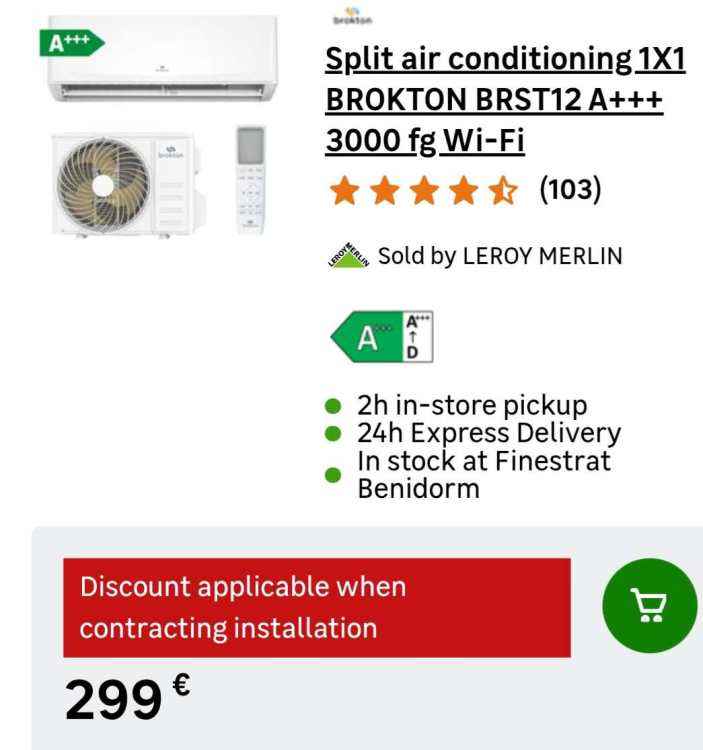
-
I prefer to see that. These people used neither laser nor tripods ( I like to call them triffids) for the ground floor and just a stick to measure minimum thickness. Hence it simply followed the lumps and shapes above the pir layer. We wrongly assumed they understood levels. On the first floor, as shown, they had to use the laser as they had messed up the underlayer: we have a 5mm acoustic mat and they chose to lap the edges in some places. The downside of letting people work unsupervised at the weekend. So we pointed this out but that raising it all to the highest point would compromise our door frame heights. Hence it's not all one level, but to several zones. They aren't used to being checked on and managed I feel.
-
For anyone who hasn't seen it, pumped screed is incredibly fluid and that's why we have to seal all possible escape routes. The reality is that, although it looks almost like water, this material is mostly cementitious and gritty. Nearly all the water is absorbed in chemical reaction and it is solid-ish within an hour. But any gap can be disastrous. This went well. A few dribbles of water emerged through plasterboard below but that's OK. 20260618_142707_1.mp4
-
'Where We Live' - a survey of the decline in British housing.
saveasteading replied to MAB's topic in Housing Politics
I was in the W Highlands recently and discussed this with a local. There are areas where many people have become alone and isolated. Apparently a large proportion / majority from England. They retire to having affordable housing with amazing locations. In time, things change and the remoteness changes from idyll to loneliness and vulnerability. 20 miles to town was a perk and becomes a sentence. The weekly Morrisons delivery may be the only contact. The original homes are usually in at least clusters for community. New ones are isolated with perfect views. Hence communities ask for volunteer drivers and befrienders. I saw several notices on the lines of this.... a nerdy photo: you can tell it was on my mind.
-
'Where We Live' - a survey of the decline in British housing.
saveasteading replied to MAB's topic in Housing Politics
I don't know if it was much reported outwith the area. 2 weeks ago, a large area of Kent had the water turned off because the pipe system couldn't cope with demand. Yes there is a huge shortage of water, as reservoirs have not replenished. The aquifer will likely never be replenished until use is drastically reduced. But this was the pipework not coping with use on a hot day. I forecast this becomes the norm. Yet new developments are approved on the same system. -
I meant beam to post.
-
'Where We Live' - a survey of the decline in British housing.
saveasteading replied to MAB's topic in Housing Politics
That's what governments are for. Cities are much more efficient than spread out houses. -
'Where We Live' - a survey of the decline in British housing.
saveasteading replied to MAB's topic in Housing Politics
Not everywhere. House prices are falling and some construction is paused due to drop in demand in SE. Still not 'affordable ' . -
Standard single skin steel cladding and the right screws for timber. There will then be considerable wind uplift so check the fixings to the posts. Likely to need some L brackets. I think I'd leave a gap at the house wall and just let the weather through.
-
'Where We Live' - a survey of the decline in British housing.
saveasteading replied to MAB's topic in Housing Politics
I don't agree. Social and affordable housing us needed. In towns and cities, not the countryside. What we get is suburbia in the countryside, without services or transport.... or water. This is driven by developers. These are bought by emigrating townspeople and country locals still can't afford to stay. Alright I do agree that change is needed. -
You know most of it because it is mainstream thought now. Factories are more efficient than craft works. Collaborate. Maintain networks. Wikipedia for a quick cram, then you'll be able to drop it into conversation too.
-
'Where We Live' - a survey of the decline in British housing.
saveasteading replied to MAB's topic in Housing Politics
It's a big issue in the countryside everywhere. No new housing should be allowed without public transport. We get older, may be alone. An option if you have a community, is a minibus to town or to where a bus can be caught. Obv it costs money but that could come from high charges for planning gain (S106 etc) or from levies on wind and solar locally, with a ring-fenced fund and conditions. I've seen village signs in the Highlands asking for drivers. -
I'm not even opening the links as am suspicious. You are appointed by some councils? Which? On what basis? You will provide a voucher? What for? That sounds suspicious. What status will any responses have? Who are cogworx? Do they know you are doing this? And more detail while you are at it.
-
And sometimes I don't even read the site for a day or so. Other times I'm sitting at an airport, bored and maybe write too much. Excuse me in advance please. And look, we are wandering off-topic.
-
UFH under show tray?
saveasteading replied to Super_Paulie's topic in Bathrooms, Ensuites & Wetrooms
I can't see any good reason to put ufh under a shower and several against. Trap drying out adds to the list and is a good point. -
That's what we do. We don't know the full background or your experience. We may have forgotten what you explained earlier. I've been in the design and construction business 50 years and get people telling me things I know or am even very expert in. I don't mind. Because there are some valuable nuggets in there. And because others reading behind the scenes might gain from the info. Looking forward to following your progress and teaching you how to suck eggs.
-
There should be clamps designed for every standing seam product, allowing you to use standard solar panels. The downside is you lose sight of your expensive roof.
-
I think you know more about this than the solar people. The sales people have seldom been on a ladder. It's clear you will keep control. Having been working with tyvek lap tape today, I'd suspect it could pull off some plastic coatings OR be impossible to remove at end of life.





