saveasteading
-
Posts
10100 -
Joined
-
Last visited
-
Days Won
82
Everything posted by saveasteading
-
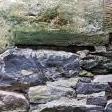
Found in toolshed - any ideas, please?
saveasteading replied to TheMitchells's topic in Tools & Equipment
When you start to make your own textiles or ropes in your spare time, remember to show us. I saw a basket being made from yucca (or was it aloe?) leaves, first shredding the leaves with a comb version of these. -
Just started a self-build in Dorset. Exciting times!
saveasteading replied to NailBiter's topic in Introduce Yourself
But beware of signing off too early and not getting the VAT reclaim on the rest. They only accept a single claim. AND remember the VAT for cashflow if the project is done in stages. The BCO may well be sympathetic and find a way to let you live in a bit of it without giving full sign-off. -
I did top end land surveying for several years. But I haven't used a theodolite or its descendants for decades. For a straight forward building I use two tapes and pythagoras. Pegs are good, measured a set distance (offset) from the line so it isn't dug up. For concrete I like a pin in the ground to show the finished level, then no mistakes are made.
-
Just started a self-build in Dorset. Exciting times!
saveasteading replied to NailBiter's topic in Introduce Yourself
A false trilemma in my opinion, invented to market expensive products. With the right design in the first place, you get the optimum result. The right design requires a knowledge of design and of the construction process (weather and all) from the outset. An integrated process. Not the linear process of client , Architect, Engineer, builder. -
Just started a self-build in Dorset. Exciting times!
saveasteading replied to NailBiter's topic in Introduce Yourself
When I have looked really seriously at similar products ( there used to be many competing in a new market) I couldn't make it stack up commercially against other methods (mostly using frameworks.) However, that may be different now. Also I can see that it suits diy, as it doesn't need specialist skills, and may suit a small general builder, even groundwotker. -
Just started a self-build in Dorset. Exciting times!
saveasteading replied to NailBiter's topic in Introduce Yourself
I met them on Sunday. £72/m2 he said. I wouldn't be likely to specify it but there is nothing wrong with it and I can see the attraction. -
Just started a self-build in Dorset. Exciting times!
saveasteading replied to NailBiter's topic in Introduce Yourself
That will reduce risk massively, allow you to tweak the design, ad it generally suits trades to have smaller tranches of work. -
-
Just started a self-build in Dorset. Exciting times!
saveasteading replied to NailBiter's topic in Introduce Yourself
We are here to help it be £2.5M and not £3.5M. When the time is right, what construction methods do you intend? What stage are you at? Too big for much self build I imagine. -
My immediate thought is no. Air bricks are there for a reason. I'm confused though. You say it is a raft, which means ground supported, and which no need, or scope, for vetilation.. But suspended.
-
Zteel for ultra accuracy. Big brand fibre tapes are OK too. They have the advantage of being more robust. There is an EU standard for accuracy. NOT silverline. I had two that were out by 100mm in 30m. They obviously had zero quality control. An expensive error.
-
Foul waste through insulation layer
saveasteading replied to JohnMartin68's topic in Waste & Sewerage
Foam isn't very controllable. You would have to position the pipe very precisely, on supports and load it down. Then squirt foam slowly so that it doesn't force the pipe up as if expands. Check the pipe all the while. And repeat. How would you prop the pipe? Not on anything hard, so gravel at intervals. There will be plenty of instances of people using crumbled pir, or expanding foam. Mostly it works, presumably. But perfection is worthwhile. -
Seems they collaborated, pinched ideas, then went after them. Add that to celotex fire test cheating....not a nice company. What can we do? This spreading of the word. Don't say celotex when meaning pir, and only buy any other brand. They own British Gypsum, Isover, Ecophon, Pasquill, and lots more. Perhaps materials enquiries could state to the BM..."do not quote for any St Gobain products". This is from the Grenfell inquiry almost three years before the 2017 disaster, colleagues alerted her that a safety test had been rigged with fire-retardant panels to boost the insulation’s fire performance, but the modifications were left out of marketing literature used by architects and specifiers.
-
If it works, the world will benefit.
-
Foul waste through insulation layer
saveasteading replied to JohnMartin68's topic in Waste & Sewerage
That attention to detail will ensure that you deal with it as you progress. Perhaps slightly lean on the gravel that lies under the pipe, to press it into any gaps. -
Foul waste through insulation layer
saveasteading replied to JohnMartin68's topic in Waste & Sewerage
Pea gravel.. it is more important to lay the drain to be stable and run efficiently than the small heat loss. The air gaps in the gravel will add some insulation. The air in the pipe is the main loss of insulation and can't be prevented. Gravel up to the top of the pipe, then lay what eps you can over it. I wonder what insulation pea gravel provides. 30% or so air pockets, and lots of very tiny gravel to gravel contact. Much better than sand. -
Yes. Over a tiny area the effect is minimal and directly proportional. So if a 100mm x 50 mm bit of block was sticking up 10mm, the pir could crush there and so you hsve still 90mm of pir. A small reduction, and heat is still retained. Meanwhile the remainder has the full thickness of pir instead of screed. Perhaps put down 10mm or 20mm of eps first as it will crush more readily and make full use of what depth you have. "About 100mm", could be 100 pir on 20 eps for example. Great to be thinking of other solutions but they don't seem practical so far....i have thought through adding insulaton underneath before but discounted everything to date. It would be great to find a solution, and a big market opportunity.
-
Recommend me a ceiling extractor
saveasteading replied to Martin-W's topic in Kitchen & Household Appliances
If it is fitted high enough to be clear of a tall persons forehead, then it needs a powerful fan, otherwise it won't do its primary job. It could also be noisy. Ever heard them in a commercial kitchen? -
Struggling to see how you fix pir under this floor. If the block levels are only very locally high, then pir may crush locally and so save you the screed and increase the pir thickness. That's all I would do as eps beads underneath is rather experimental.
-
Other news of greenwash, misbehaviour. BBC News - Drax: UK power station still burning rare forest wood https://www.bbc.co.uk/news/science-environment-68381160
-
Timberlok vs Coach Screws. is there a difference?
saveasteading replied to Thorfun's topic in General Joinery
As I've said several times, as have others, the pullout isn't a problem but the rotation and aluminium hardness might be. I'm not saying it again and will drop out of the conversation. -
Timberlok vs Coach Screws. is there a difference?
saveasteading replied to Thorfun's topic in General Joinery
what do thy say should be used into concrete? the fixing into timber isn't my concern, rather the aluminium and the underlay. Engineer/ ingenuity. You've asked for a way to do this without removing the floor covering...spacers is his answer. -
Yes. talk to them all. Some are sentimental and don't like development. some relish their authority. some like making lots of money. but some are pragmatic and accept that there are other ways to do things / real life. BUT if you've bought a plot with bats on it, then they are your responsibility.
-
Timberlok vs Coach Screws. is there a difference?
saveasteading replied to Thorfun's topic in General Joinery
I am nervous about fixing it over a flexible surface. It will rock if shaken, and crush the underlay. Then it moves even more etc. I've had a steel barrier come loose (rawlbolts to concrete) through repeated pushing by children, because once it starts to rock it becomes a game/ challenge. Perhaps if tightened down hard enough the floor will compress and resolve this. I would do this by fixing the whole system, then repeatedly tightening from end to end That brings us back to the weakest link being at the nut to aluminium interface. It needs hefty steel washers or plates. I've seen steel cladding sheets ripped off screw fixings. The sheet fails before the screw. Aluminium is much softer. I am rather shocked that the manufacturer doesn't specify how to fix your rail in any way. On a positive note, If the ends are also fixed into walls or at returns then this issue will be much reduced. @Gus Potter sometimes looks at my input so I'll @ him too, but he is probably busy doing paid work. Don't panic though. steel coach screws n every fixing hole, with washers, tightened up til the floor compresses and the screws stop tight, and all is probably ok. Fixing direct to the floor board is best though. -
I recall that a nut should go on and leave 3 turns of the bolt thread exposed, because the start is tapered and the others not full strength. So you could work out how far a normal nut would go on, and thence how far this connector should fit on each rod, and pack accordingly. Or get 70mm connectors. It is odd though. Isn't there instruction? AHAA! the notches mimic the shape of the other face of a normal nut. That is how much (plus 3 threads) should be on each rod as a minimum...probably. I've seen that such connectors are always (?) 3 x the diameter. Therefore, by default, you need half on each stud and that must be sufficient.