


saveasteading
-
Posts
11094 -
Joined
-
Last visited
-
Days Won
98
Everything posted by saveasteading
-

Recommendations please for “quiet” chimney pot top
saveasteading replied to joe90's topic in Ventilation
Ahhh...most chimneys have redundant fireplaces....I made a rather huge assumption. -
Recommendations please for “quiet” chimney pot top
saveasteading replied to joe90's topic in Ventilation
No. But a polythene bag stuffed with fibreglass will stop your heat disappearing up, and also mute the noise coming down. -
Green / moss roof - wall on roof terrace
saveasteading replied to Lesgrandepotato's topic in Flat Roofs
Yes, you need to weed it and remove dead things, and infill dead areas. The loading from wet moss isn't significant, unless with gravel , but it is from turf which will develop. The roof membrane is a different spec to resist roots, but I recall that it is not UV proof so there is a lap. I did a calculation once to prove to planners that a green roof was not the optimum for sustainability. The effect of the load on the steel building added tons of steel and concrete. Plus it kept water back from the rainwater harvester. And then there is safety and access. -
Poly Iso Rate Not logical
-
Heating / Construction type.
saveasteading replied to Ryan 2023's topic in General Self Build & DIY Discussion
From my observation of stick build in the Highlands, it was very quick and good value. It's what they did, and was second nature. There was no factory element just a stack of 4 x 2, another of osb and some glulam for the ridge and hips. I wouldn't expect that in SE England though. And the reverse applies for brick and block. -
I'm going shopping apparently. I'll read all that clever stuff later....thanks all.
-
Yes that's the plan. I was hoping for such an obvious bit of damage so it's good news. I need advice now on an acceptable way of patching in a repair, eg the boxes. They seem appropriate to me as I can fix them to the joist to avoid any trailing cable. I did, including after the visitors left, taking multiple chargers with them.
-
I'm down this way, nearly France, but electricicles behave the same. Good reminder. It was Wagos that the electrician didn't like. I had done cabling on another daughters old house and asked him to do the final connections but he replaced them all. I will take advice from @ProDaveor other experts if they would please advise.
-
I'm hoping that someone is going to say, yes that's obviously causing the issue. Or otherwise. And why this shorts when only one core seems to be damaged. Then I'm thinking I replace that portion of cable, preferably without taking down the lamp fitting because....it all makes work.... Can I sensibly cut out 1m and join with a box or a connector each end? I know one electrician who refuses to use sometimes, especially the push fit type.
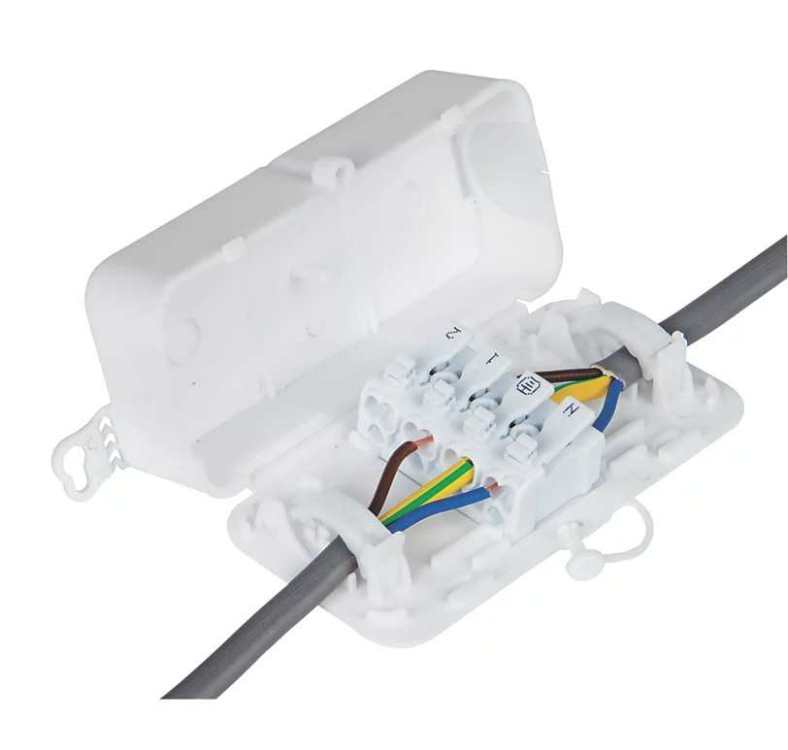
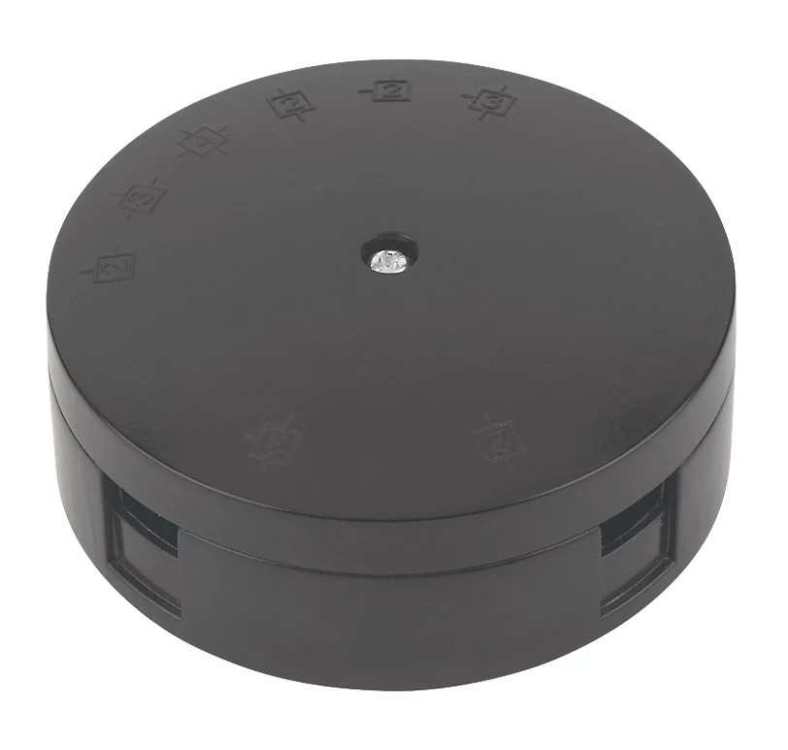
-
I've done it. I fought through the cobwebs like Prince Charming, but the good news is the absence of clutter in that remote corner. There is rodent damage. Also a strange brown crud on the cables there. on the first photo we see both the lamp and switch cables. They run to a large connection box. The black wire is exposed over about 30mm but does not look to be nibbled itself. There are some more mouse nibbles near, to the left, but very shallow. I actually see more clearly on the photo than I could up close, but should have snapped it further back to get the focus better. The near, out of focus, bit looks worse than it did in real time. I'm thinking the brown stain might be wood resin dripping from above, perhaps in summer heat or from occasional leaks. Thus attracting nibbling. Then that water now gets into the cable? There was no sign of dampness but it has been very wet and windy and this is under the ridge and one drop might do it....or some of that resin has built up inside. I'd have thought that I'd have to see copper for any short but I don't know. No dead things. Lots of historic mouse (and some rat) droppings But the second dose of bait is untouched so there weren't many around. I didn't look in the connection box. Well, I lifted a loose corner and nothing was apparent. The cables simply drop through the lath and plaster ceiling. Nothing dead visible in the holes. The grey cables are long redundant. I'm guessing and welcome any expert or other input.
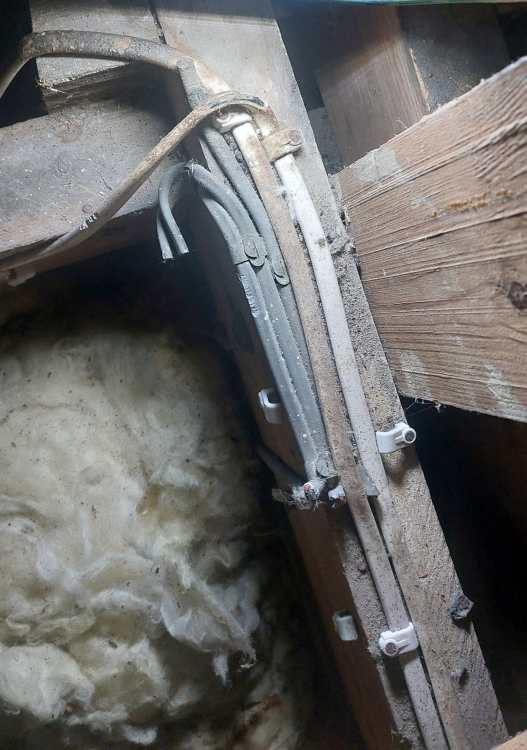
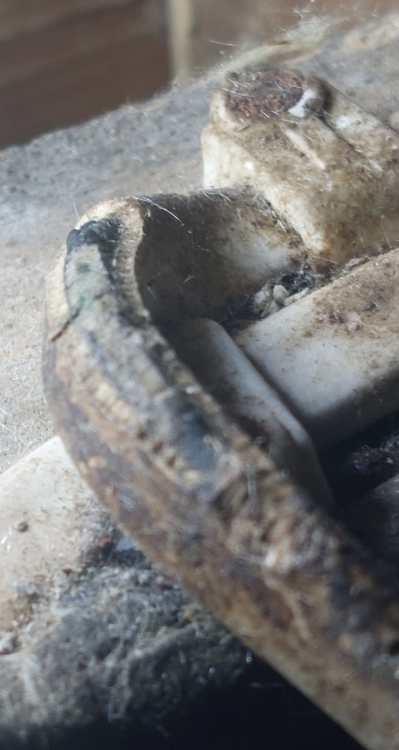
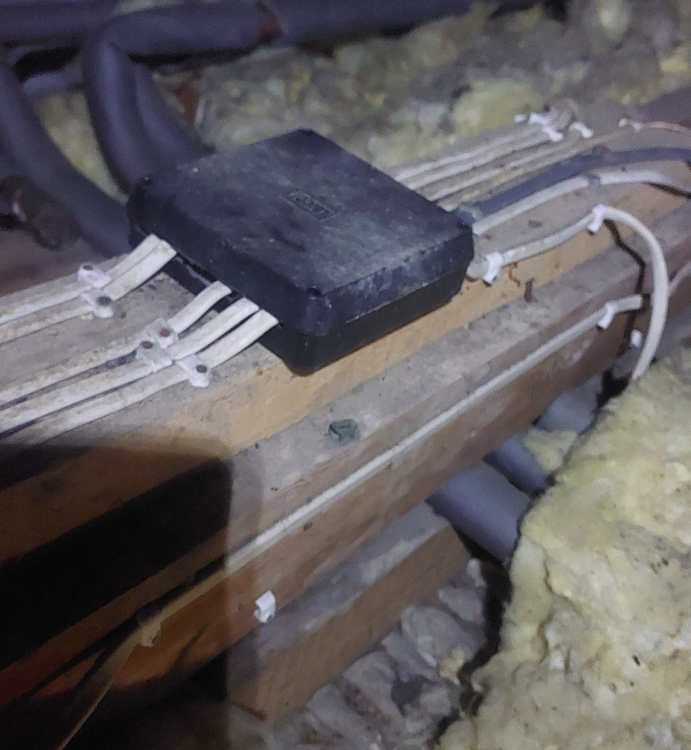
-
I just want to emphasise that. The people that sell them tell outrageous lies about them. Think of them on yachts. There is always a brisk breeze and they can only trickle charge a battery and run a few lights. Inland the wind is many factors less. Nobody fits them on high office block roofs any longer, even to tick a sustainability box. I'm remembering construction exhibitions 20 years ago where there would be ten stands with the things, and Architects started specifying them. I refused to price them into jobs and it was an awkward argument. All these companies have gone. Solar and very big batteries ok, esp if you design the building for minimal demand. But if it's £20k for mains, take it.
-
planning permission Need planning permission for side fence driveway?
saveasteading replied to claire99's topic in Driveways
I respect your correctness. 1.6m or 1.7m would be unambiguous. I suppose the lesson here is that non- tech people are not necessarily going to use standard terms. -
Any roof will lift off if not fixed one way of another. Straps aren't needed on a steel portal frame for example. But most houses are walls with a roof laid on top, and need tying, and straps spread the load nicely down the wall into timber or masonry.
-
They are having an overview in limited time, and will often miss something. They are not your quality control manager. Also they may assume that eg ties are still to be fixed. First impressions of your building are good and that may give false assurance that everything is done properly.
-
I've thought (and been reminded) of 10 other things I have to do first. Finish 'wordle and connections', compost heap, visit the big project, get cat food.....
-
Can you give us a sense of scale? It may be a very heavy construction with a huge glulam and oversized rafters.
-
Scary Gap/hole in stone built walls
saveasteading replied to sb1202's topic in General Structural Issues
I forgot to look at the walls when I saw the view. -
Scary Gap/hole in stone built walls
saveasteading replied to sb1202's topic in General Structural Issues
Which is what we built on purpose. The stone wall has a recognised U value (0.6 springs to mind) , as does the gap, but not a lot. We built a stud wall of 100mm with membrane on the back and insulation in the gaps, then a plastic inner sheet. then the service gap helps too. A recognised solution and working really well. -
Memory failed on the colour, but it was that side so was the left hand black one. The switch to the right that is off may be confusing things (The one with the tag against it) It is another matter altogether. An outside light circuit that pings in wet conditions. so it is turned off. Helpful. I would be looking for such, but why would that short? Exposed wire but the top one is not touching or near any other conductor??
-
Scary Gap/hole in stone built walls
saveasteading replied to sb1202's topic in General Structural Issues
It is a standard construction and cracks are normal. You pack the gap with stones in lime mortar, using as big stones as you can fit in , then smaller so that the mortar is minimal. Must be lime, with the grade selected to be just softer than the stone. Granite/ limestone/ sandstone?? removing the mud and replacing it with masonry is advisable, as long as it remains stable all the time. Do you think the crack was there when they hid it behind the stud? The absence of rubble on the floor suggests it was. Is there a crack on the other side? -
It needs long straps by Simpson or equal. These. And lots of them tying the roof down to the walls. Not that the wall looks very strong either, so the ties must go down to the cross beam/ lintel and then that needs fixing down at the ends. Someone should have specified them by type, location and fixings. Worrying that nobody seems to have done so. Wind uplift forces are scarily high and you genuinely could lose that roof. Do Not take any brackets off.
-
I like the buckets analogy. Struggling with the hill though. Isn't heating or cooling the same process of bucket passing? Downhill for poor insulation, uphill for good? You mean that it can be woven from rock or glass or paper or oil, but the gas or air bubbles and maze of conductive routes are what matters?
-
No It's been ok for 30 years....and nowhere near my recent overflowing header tank (resolved 3 weeks ago anyway). Also nobody has been near that area. The switch is well clear of any water source....the fitting I will check when I venture up. Tomorrow is always a good day for unpleasant things. Removed without benefit. correct It is 30A. As 4 family members have just left along with many chargers, I've checked again but it still trips. Anyway, they would be on the sockets ring main not the lighting circuit. Much confused though as 2 switches tripped at the same time. Isn't that like a rope or chain snapping in 2 places? surely one part breaks and the other doesn't? DB3 the left switch, along with the red switch on the distribution board (or am I misremembering already and it was the adjacent black? ) I put some special food in the attic a week ago, and then more. There was scampering until 2 days ago. There is no smell of rotting rodents but they may have gone elsewhere to be tidy. Mice smell 3 days, rats 5 days. So tomorrow I will put on my new favourite wooly hat with lamp in front (highly recommended) and get up there. I believe I am checking the ceiling connection for damp or dead things, and the cable from light fitting to switch, looking for teeth marks????
-
Coldwells Passivhaus Turnkey Houses.
saveasteading replied to TheMitchells's topic in New House & Self Build Design
A normal sized house doesn't need one, and the ancillary heat from pumps and tanks etc is in the house, so not wasted. If you do want one it never has to be as big as plumbers and electricians say...it's nice for them at your cost. -
Take this photo to your local builders' merchants or plumbers' merchant. Not screwfix, toolstation, b and q. They will sell you the necessary few parts including flexi hose.





