


saveasteading
-
Posts
11094 -
Joined
-
Last visited
-
Days Won
98
Everything posted by saveasteading
-

Boiling and banging pipes
saveasteading replied to saveasteading's topic in Boilers & Hot Water Tanks
Radiators all have thermostats plus there are room controllers in 2 distinct circuits, each with a hot water tank. Port valves? I don't know. On further investigation, I half recall that the radiator nearest to the boiler is on its own loop, for some reason of keeping a circuit open during maintenance????? may be wrong. That was the hot one. Others seem to be on and off without issues. Since my first post and turning the room heating (only) back on it has been working nicely. I haven't touched the controls. I will continue this for completeness and only turn the water heating on when necessary and then after a decent test period. -
well done, that is always the best. it is liquid running water you are looking for. you have a leak. Imagine the cost of such multiple inspections, and the additional premium for being responsible for all workmanship and all consequences. That red circle does look favourite as a problem. I don't like the gutter chucking uphill and clashing with other running water downhill. But there is definitely regular extreme wetness at the left end of the bottom gutter. If not from the gutter then from the confluence as you neatly describe it. In looking for leaks I start from the end point. so that is the left gutter end and support. water generally takes predictable routes following gravity, so straight up the slope is likeliest. My kneejerk solution is a metal flashing from gutter left, to underside of the flashing above it. And another catching all the water from the red circle confluence. Plus the red circle gutter could do with being cast away from the circle onto an area of complete tiles, using an additional downpipe and shoe. This will also m ove it slightly from the lower confluence.
-
MF ceiling grid - hanger distance from walls
saveasteading replied to Thorfun's topic in General Construction Issues
With a soppy sentimental story on the side. My great Aunt Gertrude rescued me from the slums. Her greatest wish was that some day I would fix a ceiling grid using self tapping screws into concrete. This is in her memory. But will I manage it?. Music "Dih dih daaaah! Fortunately a helpful group of blog members hear of this and offer advice. -
Boiling and banging pipes
saveasteading replied to saveasteading's topic in Boilers & Hot Water Tanks
In case its relevant: The header tank recently had issues which I resolved. The balcock valve was leaking so I changed the whole thing. But along with the leak, it was coming through the ceiling which is why we noticed it. So I found that the overflow was not sealed, and never had been....that was put in 30 years ago. I've sorted that too. I think I may have been overcautious in setting the balcock float so the level could be an inch higher, if that might reduce the temperature. I also removed the insulation, because that seems unnecessary in the SE. I topped up the additive but rather a guess. -
Boiling and banging pipes
saveasteading replied to saveasteading's topic in Boilers & Hot Water Tanks
Thanks. Not the immersion. It wasn't on: never is. It is an oil burner. I vaguely remember this happening before, and the little thermostat on the tank was an option...and that it's just in round number clicks. The boiler temperature is an uncalibrated knob, currently at mid point. U haven't twiddled them yet. Should I do one rather than the other? I've turned the CH back on and left the water off, for domestic harmony. No banging yet. -
I think it is called kettling? Lots of banging and it will be spluttering into the header tank. It's not all the time though. Does this need a heating engineer? Can I turn something down for now?
-
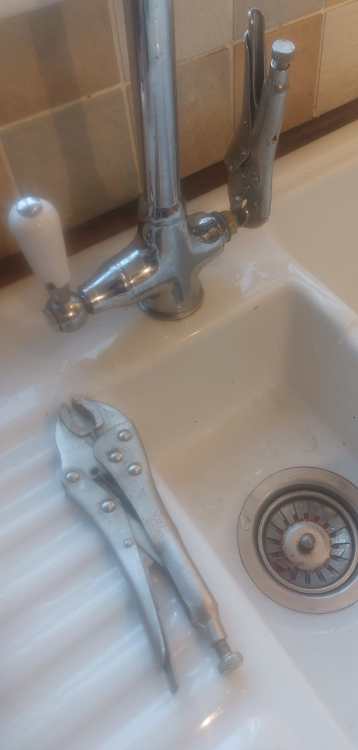
Never let it be said that I don't take advice. Smaller mole grips fitted. Anyway it's sorted now. The lever and screw lost their lime buildup in the vinegar. The screw and washer lost their chrome too, and seem to be made of copper. The screw went back in nicely but didn't sort the handle....it seems the serrations have worn or rotted off. So I've epoxied it on , and it seems OK. The 3 days estimate was correct, but it was a half hour twice and no cost. I seriously expect the hot side to fail soon.
-
You are correct. Flashband and sealant is more for repairs than newbuild. You should be channeling the water away from the interface using metal flashings. These should underlap the cladding, say 100mm or more. You do need sealant. It should be a tape of silicon that is screwed tight at the joint. It should be a specific to cladding product that does not harden in time.
-
MF ceiling grid - hanger distance from walls
saveasteading replied to Thorfun's topic in General Construction Issues
Are you sure it is an sds bit? They rattle about, deliberately, as a cross between drill and breaker and I'm not sure they drill precisely enough for this purpose. The screw has to cut itself into the concrete. Might be wrong. -
MF ceiling grid - hanger distance from walls
saveasteading replied to Thorfun's topic in General Construction Issues
These are specifically for concrere I hope. If so, then I'm sorry but there is something dodgy about structural fixings without instructions. These are hitech products and will have precise requirements. Too big a hole and they won't grip...expensive collapse? Too small and they won't fit and may damage the thread. Perhaps buy some new ones. -
MF ceiling grid - hanger distance from walls
saveasteading replied to Thorfun's topic in General Construction Issues
It will say on the package and needs to be exactly right. It's worth getting a new, big brand, bit. -
Thanks but the plumbing is working fine, it's the lever that came loose. I may need a new screw if the thread is damaged, and /or or have to glue it back on.
-
That would be tidier but not a statement. You don't know where my smaller molegrips are do you? The fixing screw was loose but won't tighten again. It's all soaking in vinegar to lose the lime crud...not a problem you get in N Highland. I'm told the very nice sink came with the tap for a very cheap cost..much the same as a branded tap would cost on its own.
-
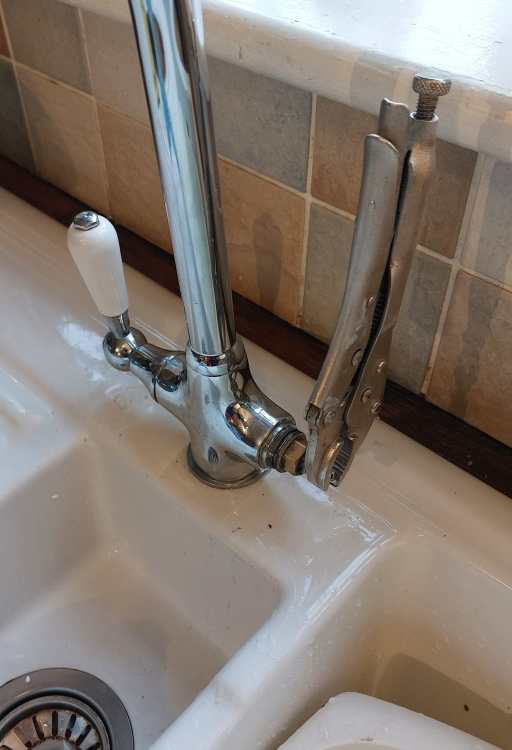
The kitchen tap broke last night. Q. Must be fixed today. How long will it take? A. Between 10 minutes and 3 days depending on where the mechanism has broken and what shops are open and have stocks. 20 minutes later it is solved with a new lever. I think this qualifies as Art as well as plumbing.
-
Householder application form question
saveasteading replied to Deejay's topic in Planning Permission
Yes, spell it out. Bullet points make it easier to read and absorb. -
Householder application form question
saveasteading replied to Deejay's topic in Planning Permission
Their official email address will be public knowledge. An easy cut and paste from the above. The parish council are an advisory role only. The district Councillor has clout. -
I understand that multiple electric car chargers can also sort themselves out in some way.
-
Householder application form question
saveasteading replied to Deejay's topic in Planning Permission
Planning officers aren't always great at technical stuff, even such as whether something fits. And they tend to leave traffic stuff to the highways dept.....who only care about main road safety. If in any doubt, send them accurate and annototed sketches showing why it doesn't work. Some planners arrogantly ignore the parish council. If you can get your borough/ district councillor to back you then the planners have to respond (officers report to elected representatives.) -
You need someone with more experience then. Do you have a schedule of the power needs? Ask for it. You don't just add it all up. I think the term is divergence, for not all toasters, hairdyers etc being on at the same time.
-
OK thanks team. I'm having a few days off the subject, with family visiting I have other priorities and don't want any unforeseen consequences of a job half done. I'll still be dealing with other people's problems on BH which is much easier.
-
I think we know the answer. A gutter and dp to a recognised design and properly installed will not overflow. An old one might, because of recent changes in rainfall. This one is sortable but needs some technical skill. @Paene Finitur can we have your thoughts and response to whats above? The answer is probably in there. It's OK to acknowledge and say , let's have a few days off the subject.
-
We wanted 3 phase because it was adjacent. £40k upgrade. Fortunately someone explained that the existing transformer provided plenty. That is for a big house, all electric. That probably applies in this case.
-
OK that is normal. The project has gone for costing and been costed and sent to you. That person doesn't assess whether the installation would then, or may perhaps, be used to supply other customers. You must assess the likelihood of this and ask them to charge you only a proportion. A different party will decide. Is it likely? If not, then it will be all your cost. I've done this successfully for a 200k transformer, which very clearly was oversized and would be used again....and it was. But I think we engaged a specialist.
-
My thoughts, additional to the good advice above. Usually rain is fairly vertical and not severe. The water will run nicely down the slope and not go in. In very severe storms and especially with wind, it might drive up between the tiles, but it is unlikely as the overlap is considerable. Then there is the membrane to catch it. We cannot know if the membrane is intact and lapped properly. The eaves and gutter is a mess. For now I would cut out an overflow from the stop end so that any extreme flow can escape...into a butt perhaps. An additional downpipe may solve it. More on that if requested. It is a plastic gutter. They often distort. Can you check if it is in a straight line or twisted....the lowest point will shed water, perhaps inwards. Is the gutter on a slope downwards to the pipe? Downpipes work very much better with flow from 2 sides. You have the additional pipe shedding onto this roof....lots of water at the wrong end from the downpipe. PLUS the flashings are random here....extend the lead fiwn to the gutter and complete the longitudinal flashing. LABC would say that this was built incomptetently and they don't cover that.....unless they had checked it....had they?
-
Recommendations please for “quiet” chimney pot top
saveasteading replied to joe90's topic in Ventilation
Vents up the chimney via a slinky duct? Then you can pack around it.




