markocosic
-
Posts
979 -
Joined
-
Last visited
-
Days Won
1
Everything posted by markocosic
-
I'd also store at 50C unless you know there's a requirement for more. (in which case you can probably go up to 60/65 with these propane based heat pumps before you give up and pop the immersion on) Incoming mains cold water will be your limiting factor / costly item I suspect.
-
You're the one who wanted 900 litres of stored hot water. 😉 A more reasonable option might indeed be something like: - 7 kW Arotherm (still turns down low enough to do your space heating; but offers a usefully higher output to the DHW reheat) https://www.vaillant.co.uk/for-installers/products/arotherm-plus-7kw-146561.html https://www.theheatpumpwarehouse.co.uk/shop/heat-pumps/air-source-heat-pumps/vaillant-arotherm-plus-7kw/ - An off the shelf 500 litre cylinder from Telfords (which at 710 x 1850 isn't stupidly big; and at 3.3 m2 has a coil just about big enough for the 7kW Arotherm) https://www.cylinders2go.co.uk/shop/renewable-energy/500-litre-telford-tempest-heat-pump-cylinder-twin-immersion/ - A direct electric backup heater for that odd occasion when it's actually cold outside (and your heat pump is busy doing nothing but space heat) or you otherwise need to refill that 500 litre cylinder in doubletime https://www.cylinders2go.co.uk/shop/stainless-steel-unvented-cylinders/indirect-unvented-stainless-steel-cylinders/telford-tempest-500-litre-stainless-steel-indirect-unvented-cylinder-fitted-with-2-x-6kw-titanium-immersions/ (I'd ask Telfords to do you a heat pump type cylinder with the big coil and 2x 6 kW immersions - expect plenty of change from £2k) Overall cost not too silly. It's a fairly standard heat pump (for an existing old stock building) with a slightly larger but not in the least bit complex cylinder. Idiot proof. 🙂
-
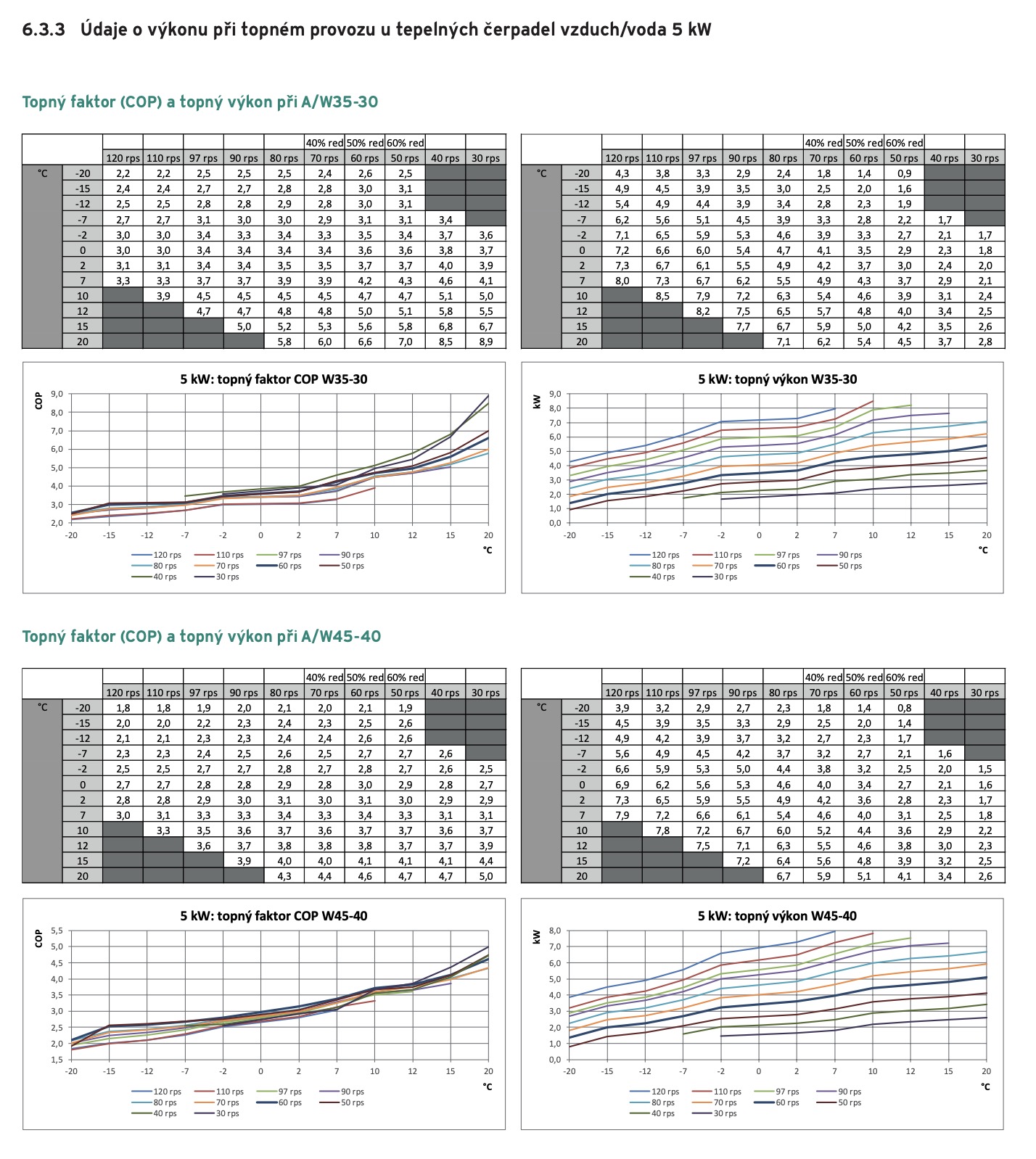
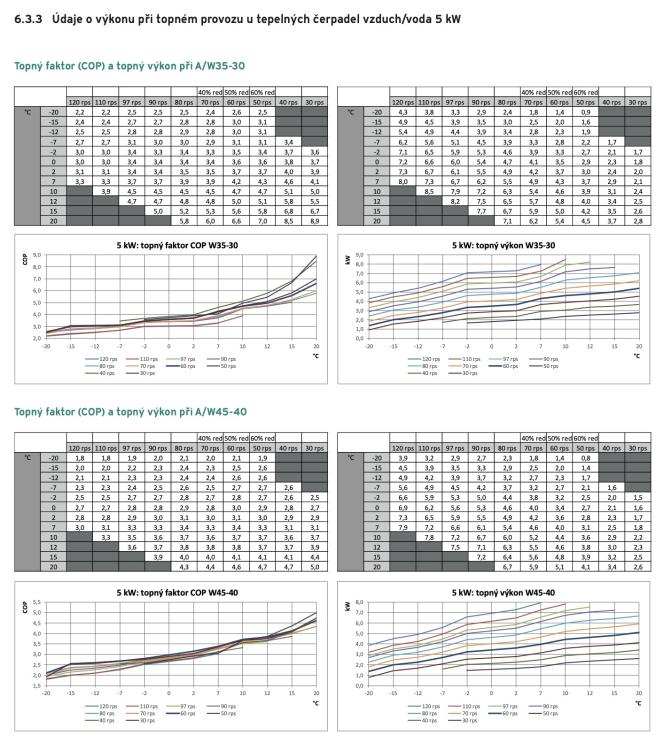
The requirement is daft. If you really must then buy a commercial cylinder with a decent sized coil for the heat pump to dump heat through: https://www.vaillant.co.uk/specifiers/products/unistor-500-and-800-litre-cylinders-38080.html And plumb it in exactly the same way that you would a usual pre plumb for a heat pump: https://midsummerwholesale.co.uk/pdfs/unistor-datasheet.pdf Your issue will be the mismatch with space heating. The heat pump that you'll need for space heating will be small (their turndown is limited; so a hulking great big one for silly DHW production will struggle to turn down low enough for mild season space heating) The "5 kW" Vaillant unit will do 7 kW at -2C external and 35C flow temp (with a COP of 3 at that) and turns down to about 2.5 kW in milder conditions. (with a COP over 5 at that) It comes with decent heating controls too. That'll suit the space heat side of things. For the hot water you can get away with something bigger / dumber / optimised for higher temperatures. Samsung's "HT" scroll compressor units would do the trick. Crap heating controls on those but you're literally only using them as an on/off immersion heater so...meh? https://midsummerwholesale.co.uk/buy/samsung-heat-pumps/samsung-stealth-12-heat-pump Fit hulking great PV array and just time the hot water heating for when the sun is shiniest and the air is warmest. You'll be sucking your PV dry with the amount of water you use / invariably importing something so screw trying to be too clever about diversion. Battery handles passing clouds?
-
Ok. We're getting somewhere. 🙂 Yes. For heat pumps you really want no thermostats. The flow temperature is set so that the heat into the building matches the heat leaving the building. If you have underfloor heating you can usually just set the slab temperature ~1C above room temperature. Slab at 21C room at 20C then "1C worth" of heat goes into room. Slab at 21C room at 19C then "2C worth" of heat goes into room. Slab at 21C room at 21C then "0C worth" of heat goes into the room. This will usually self-regulate pretty well without any thermostats whatsoever. If you find that you need slab at 23C in the cold and at 21C when it's mild then you can use the heat pump flow temperature to achieve this. It looks like your system doesn't need 40C+ at design condition if the air state were never calling for heat downstairs. Try 35C at coldest outdoor temperature / design condition then drop to 20C at 15C. Ah, ok! If there's airtightness and 150 mm of celotex you'll be ok. 10-15 degC is far too high fr a heat pump setup. Aim for perhaps 5C dT on your loops at design condition. If you find certain areas are a touch cool and others are a touch hot then you can narrow / widen the dT on those. Narrowing the dT increases average slab temp. Widening it reduces average slab temp. Actuators should be...ideally in the bin along with the air stats and the mixer pumps. You do the whole lot direct off the heat pump. Buffer can probably go in the bin or be taken out of circuit too once you've sorted your UFH setup. Then you can stand the DHW cylinder upright in the remaining space to resolve that issue. 🙂
-
The buffet will be cooler than LWT if heat is being drawn faster than it is replenished. Timing (run 24/7 with weather comp to set heat input to dwelling; rather than running for short periods with air temperature thermostats to set heat input to dwelling) is the main change here. I fear there may be no effective insulation in the roof space here if magic quilt is the only thing present.
-
Apart from superquilt (a gimmick AFAIK) what else is in the roof insulation wise?
-
You shouldn't be freezing the ground. You're pulling too much heat out for the size of the boreholes that you have. Or perhaps your boreholes have hit water and the grout/ground around them has washed away leaving just a tiny bit of ground at the top for the heat pump to pull the heat from. Original installer says...?
-
I assume by "flow rate" you mean flow temperature out of the buffer vessel You have tried this already? With the heating on 24/7? It should, yes. Try that. Limit what the slab can draw on startup by limiting the flow temperature to the slab. You can / should / must heat both at the same time. But it looks like you're got systems designed for different flow temperatures which is unhelpful. Your mixer suggestion is better. Heat the whole lot at the minimum temperature that the highest temperature zone can get away with. Blend down where you have to. Yikes. What a load of spaghetti vomited into the attic space. Is that space supposed to be insulated at rafter level? It isn't. Not with those gaps in the insulation for the air to stack effect up through. If the insulation between the habitable space and the attic is similarly poor then your issue might also be that upstairs simply isn't insulated well enough for the underfloor to deliver enough heat into it. When it's cold out it'll need to run 24/7 at the comfort temperature When it's less cold out you can get away with a modest setback at night When it's mild out you can get away with running it on the time clock Who designed this setup and to what spec? That's gibberish to me sorry. I don't speak LG. You want say 42C when -4C and 20C when 18C? If that's how you set it in LG speak then yes. 🙂
-
My read: Downstairs is a hulking great slab that's rinsing the buffer vessel. Upstairs has almost nothing.
-
ASHP - LG Therma V Water flow issues - Plumber vs Installer
markocosic replied to Woze's topic in Other Heating Systems
Is your pipework buried in cement floors/walls? Is it insulated first? You may be heating up the floors/walls before e water is hot. What is the temperature at the hot water tank? Are your outlets thermostatic mixers? Shitty mixers sometimes need incoming hot water to be 10C above the delivery setpoint (e.g 40C) before they work properly. Are your hot/cold feeds pressure balanced? Gravity pressure hot water and mains pressure cold water is stupid; for example. -
A 16 kW OUTPUT heat pump will never draw 16 kW electrical input. I'm surprised that you're seeing 10-12 kW during DHW production. Are you running an immersion at all? If the heat pump is not reaching the design output in space heading mode I would be looking at what the system flow rates are. Primaries to top up that buffet vessel that all is fed off may be too small. If you're using a time clock for the heat pump then stop. The poor thing will not be able to keep up with the buffer vessel demand because you're sucking it dry by trying to reheat a giant concrete slab from cold each time. I would ditch all mixers; set the maximum heat pump flow temperature to the maximum that your floor can dissipate without damaging it (e.g 35C); set the weather compensation on the heat pump so that flow temperature reduces to say 23C at 15C external; and allow it to run 24/7. A 16 kW unit won't work with a 13 kW design heat loss if you're trying to run only a couple of hours a day. It's not crazy to try to do that and to rely on charging a big slab on the cheap rate electricity; but it will only work if your best losses are low enough that the slab can keep the whole house warm (yours is to unbalanced) and if your heat pump is oversized enough to deliver 13*24hrs of heat in say 8 hours. 1ph 16 kW > 3ph 40 kW would be needed to do that.
-
That duo pipe is terrible; insulation wise. You want the pir foam stuff rather than the mickey mouse foam. Bending it is even more of a fag though. The ends need to be above ground to keep the insulation dry enough to have value in all versions. I'd do a short length of pipe horizontally through a wall for new builds where the units are right next to the house. (best place for them)
-
Installation of Vaillant AroTherm Plus - DIY
markocosic replied to BartW's topic in Air Source Heat Pumps (ASHP)
Loads of room under IKEA cabinets for flat pipework unless you're a midget settings worktops at 850. Waste pipework on a fall less so. eBus (and the similar M+Bus) at the data rates they run at are idiot proof when it comes to noise IME. I would consider NOT insulating primaries under a plinth depending on heat loads in older builds. It's like adding a radiator without taking up the space of a radiator. Run hours in summer will be low (DHW only) and windows van be open if too toasty. In new build this insulation can be fairly pants too. (i.e. no phenolic) as the only job is to reduce gains in summer or avoid hitting condensation if used for summer cooling. Definitely don't insulate on the space heat side of the 3-port valve. You want all the emitter area you can get there. -
How big a a zone? Danfoss FJ-VR return temperature limiter on the return set to slightly above room temperature will work for a small zone connected in parallel with the radiators.
-
Why not use slab temperature control instead of air temperature control? Output from slab is proportional to difference between floor temp and air temp. Compensate the slab temperature proportionally to the weather above the desired setpoint. You should be able to do this by weather compensating the heat pump output down BUT might find that this isn't discriminating enough between rooms. Air temperature based control is always going to fail on a high mass slab I think.
-
Anyone with experience of. Honeywell evohome system
markocosic replied to magunn's topic in Central Heating (Radiators)
That's shit service 😕 -
Two ways to hear water cylinders: Fully stirred vessel (heat the whole lot up gradually) Plug flow (heat a small part directly from cold to finish temperature) Conventional cylinders are designed as fully stirred vessels. Combi boilers do plug flow heating so can benefit from list returns. Some big commercial water heaters are heated using an external plate/pump in plug flow regime for efficiency, for power density, and for cleanability of the plate hx. The YouTube "urban plumber" chap has an example of a cylinder heated by a combi in this manner. It's all moot though. You'll be binning the cylinder and replacing with one that has a larger coil and it heated as a fully stirred vessel when fitting a heat pump. Unless you decide to convert the existing one into a fully stirred vessel heated via high flow rate external plate hx and pump. Probably not worth the hassle though!
-
Can you range rate it whilst in there? (limit the max output to only what the house can possibly use; rather than having it whang the flow temperature up to setpoint at the maximum possible firing rate) That helps extend cycle times and reduce operating temps for longer even with dumb hysteresis stat controls.
-
AFAIK when they do DHW on the continent the boiler has a probe in the dhw tank and the boiler controls both the pump and the valves. This boiler will be "coded" as space heating only so doesn't expect sudden changes in heat demand. So squeeze the flow down slowly / open the dhw valve before you close the space heat valve? Or swap it for a diverting valve rather than a pair of two ports and move it quickly; such that the return doesn't have time to cook between the switchover?
-
Vaillant caps? Sub 10 year life expectancy if you're expecting them to drive eBus thermostats etc. Replace all the LV caps as a first pass - HV caps seem to last ok. FWIW "Storage temperature" on my Ecotec 824 combi is the "keep warm" temperature of the hot water plate. It can be set to maintain a certain temperature on a schedule just like a space heating zone. Gobbles an awful lot of gas in doing so. Do not reccommend.
-
M16 grade 8.8 threaded rod every 600 mm has always worked for me. Resin fix into brick (single; drilled full depth and relying on resin for airtightness) or screwed into timber (195*45 studs though!). Fixed into 45 mm thick softwood shelves or slight thinner scaff boards. Limit load case is the wife checking the tops of kitchen units and hanging off then whilst they're completely filled with wine. M12 will bend imo. Especially hollow eBay grade 2.cheese material. The less these form the more they spread your load onto 100 mm of support not 50 mm. If the depth into the (solid wood) shelf and the wall are equal it's fine IMO. 380 mm is deep though. 250 mm more normal for books etc.
-
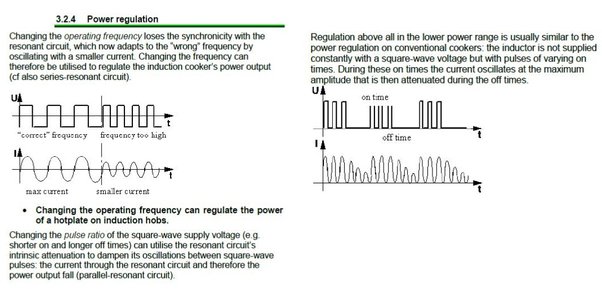
Perhaps limits on high frequency field strength force the switch? Can't crank up the frequency because fail field strength >90 kHz? https://www.aceee.org/files/proceedings/2014/data/papers/9-702.pdf http://www.emfservices.co.nz/resources/emf-measurement-examples/induction-cooktop This one seems to say it's flicker EMC vs the milk and supports ~3 sec cycles: https://www.infineon.com/dgdl/Infineon-AN2014_01_Reverse_Conducting_IGBT-ApplicationNotes-v03_01-EN.pdf?fileId=db3a30434441da19014445a1e7560135 "The minimum operation frequency of the burst mode has to be set high enough to avoid any non-uniformities of heat distribution in the vessel, and at the same time to avoid noticeable fluctuactions of the temperature in the food, which would end in unefficient cooking processes. On the other hand, the maximum operating frequency is usually limited by the EMC requirements. Usually, a burst frequency of 0.2-0.3 Hz is used." Clashing frequencies explain some of the squeaky harmonics with multiple pots on the go too. Deliciously complicated things are these!
-
Spendier IGBTs = faster IGBTs = more modulation? Efficiency of induction hobs is in 70-80% range AFAIK. Quite a bit pishes off out the bottom. Limited by regs? https://www.nutwooduk.co.uk/archive/old_archive/990619.html The slower you go the bigger the flicker you're allowed. 20 changes a minute for 1% voltage change? Does switching a couple 00 watts really have such an impact? If only we could tell which hobs allowed you to warm milk without incinerating it before buying them...
-
Hitting max frequency perhaps? https://efiling.energy.ca.gov/GetDocument.aspx?tn=234914&DocumentContentId=67776 Doesn't explain why the PWM is so effing low frequency though. Boiling water is fine. The buggerance occurs when trying to do things with milk etc that respond differently to running 100% for 1 sec then nothing for 2 secs. Heavy pans would fix is but SWMBOs don't like them.
-
There's something more subtle going on. For the same make/model of hob and the same pot the behaviour differs between rings of differing dimensions. At high power all the rings PWM "quickly" (no discernible change in heat input to pot) At lower power (say <50%) some rings switch to a low frequency PWM (of the order 3 second cycles) whereas others continue to do high frequency PWM all the way to the minimum setting. This image from a Quora post seems to describe the behaviour. What's the technical limiting factor that forces a ring to switch from "FM" to "PWM" though? https://www.avdweb.nl/Article_files/Tech-tips/Panasonic-HV-inverter/Technical-Guide-Microwave-Ovens-with-Inverters.pdf