WWilts
-
Posts
782 -
Joined
-
Last visited
Everything posted by WWilts
-
An electricity supplier contracted to provide 3 phase supply ("dual phase 46kVA" actually) for a stated fee. They fixed a date, turned up, and installed their cutout in the client's kiosk. Then they discovered that their mains had 3 cables but all on the same phase. So left without connecting to any of their cables. Is there a simple way to convert the 3 single phases into a 3 phase supply? Perhaps with something like a phase converter? Want to understand enough of the technical background to have an intelligent discussion about ways forward (short of them reneging on the contract and asking for loads more money)
-
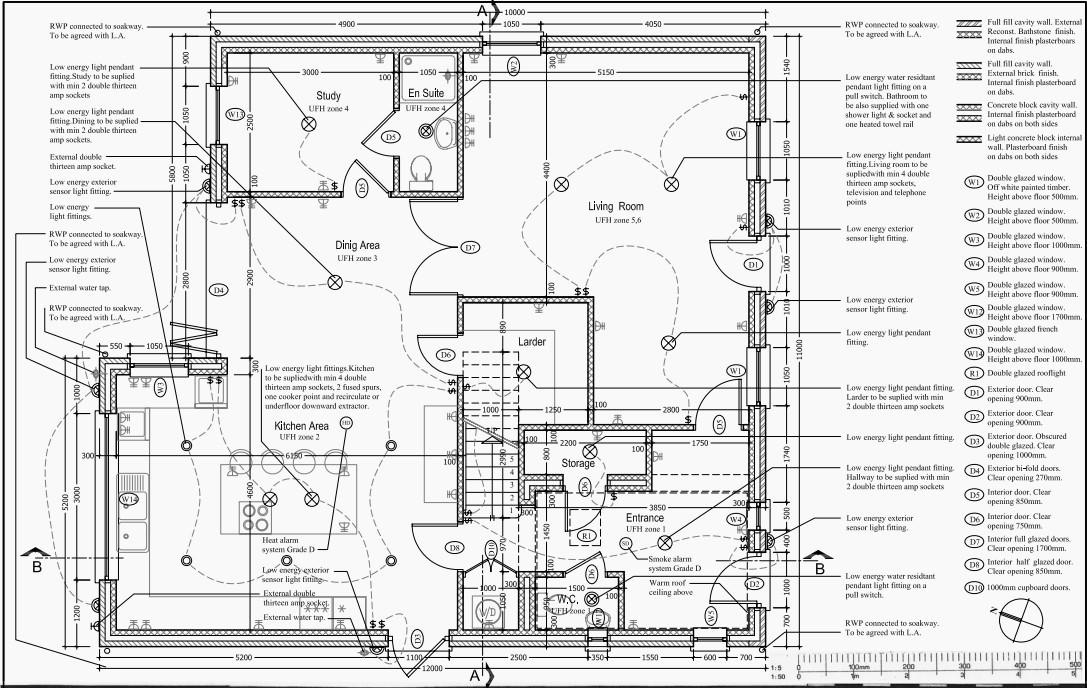
Did you drill through the walls? We have concrete blocks for structural inner walls. Finished floor level exactly at top of a block. Awkward to get UFH pipes through that. How is it usually done?
-
Some might find this info useful https://www.beama.org.uk/static/8a453c69-defb-47c1-85af891729e44abe/BEAMA-UNDERFLOOR-HEATING-GUIDE-TO-TYPES-OF-UFH-PIPEWORK.pdf Tradeoffs involved
-
PEX AL PEX PERT PERT AL PERT Which pipe type is recommended for UFH and why?
-
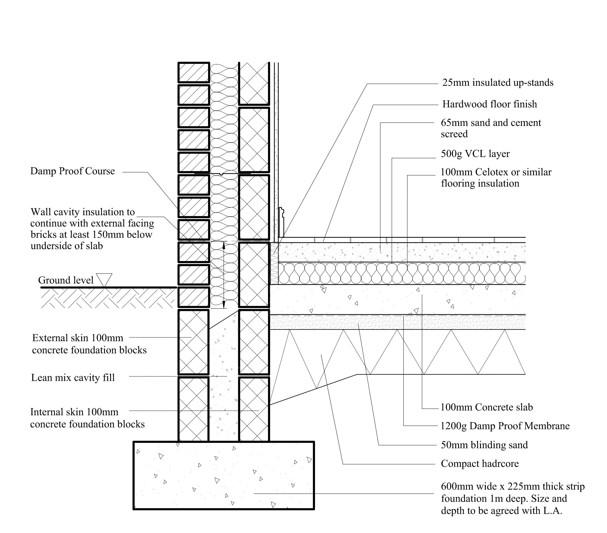
Our experienced architect pointed out that foundation masonry to support partition walls often used, because ceiling joists might eventually sag and bear down on the partition wall. However, the advice was that mesh reinforcement in a concrete ground floor slab can overcome that problem.
-
Load bearing free draining brash under the topsoil, and free draining bedrock under that. Ideal for relatively shallow excavations. Shallower the required excavation, lower the foundation cost. Minimising load bearing walls allows further economies in the foundations.
-
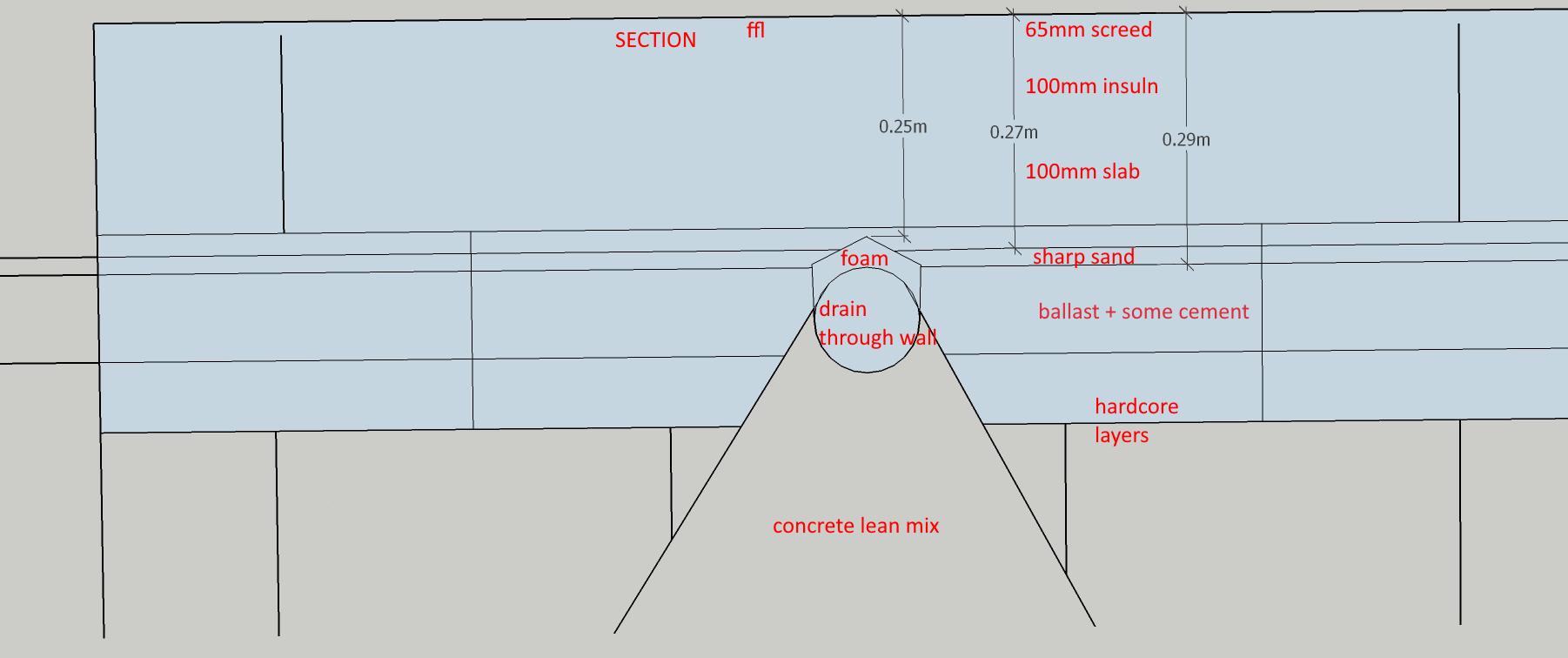
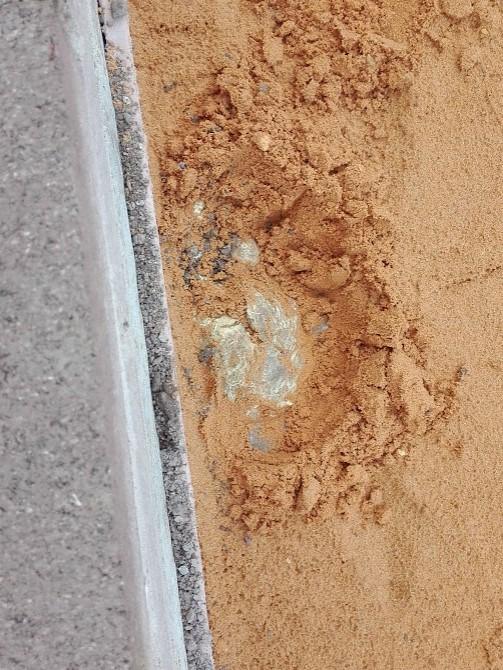
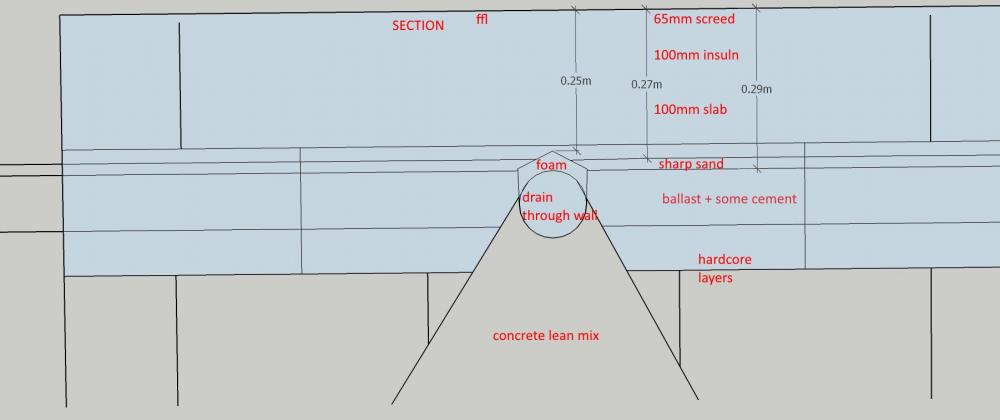
Drain through wall haunched in lean mix concrete. Birdseye pic & section shown. Foam above drain projects higher than the intended DPM level. DPM yet to be laid on top. Slab will have mesh reinforcement above drains. Question: Shave the foam to surrounding sharp sand level? Else have visions of the slab bearing down through the foam projection and crushing the drain like an eggshell. However, not keen on pushing builder on details unless unavoidable.
-
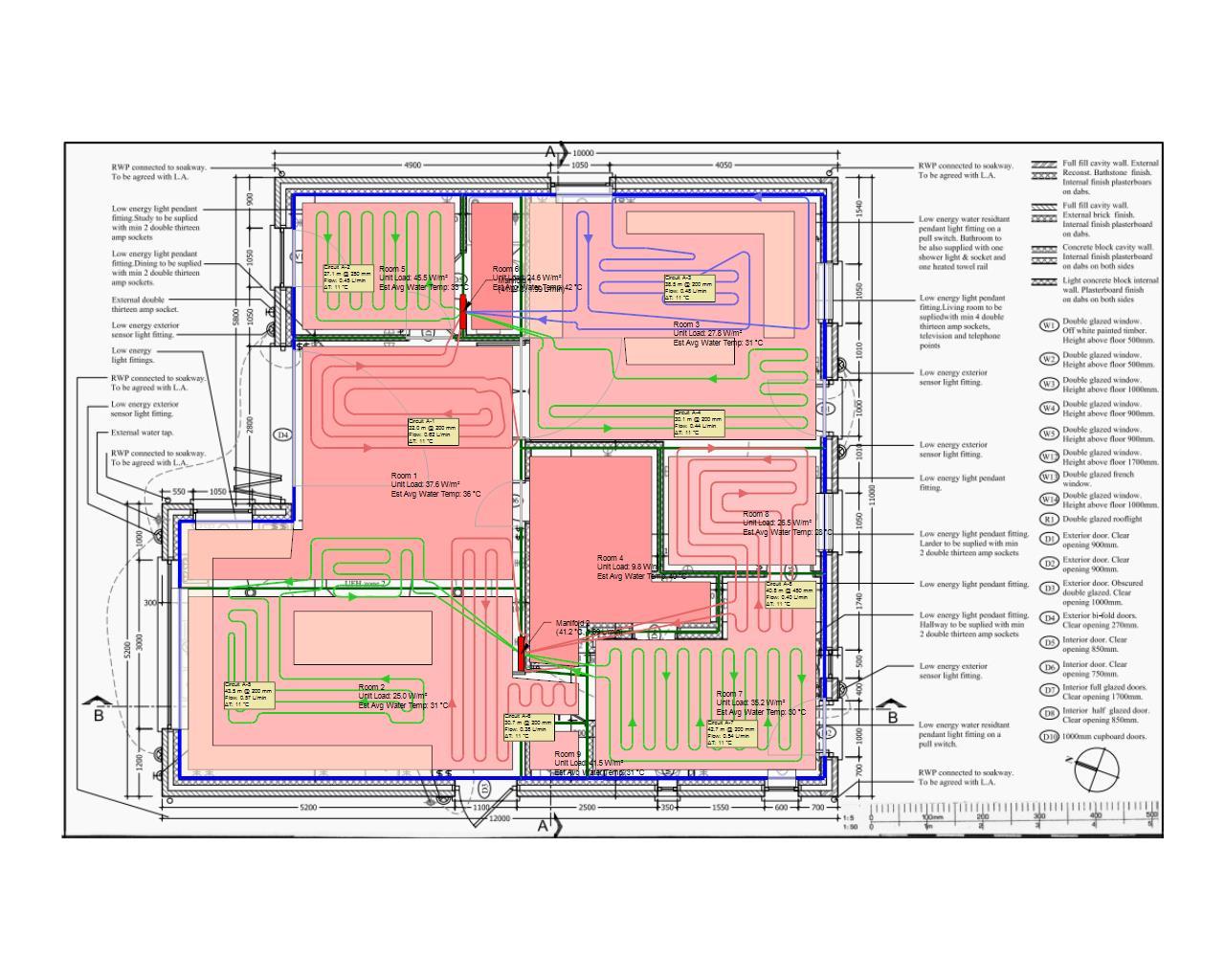
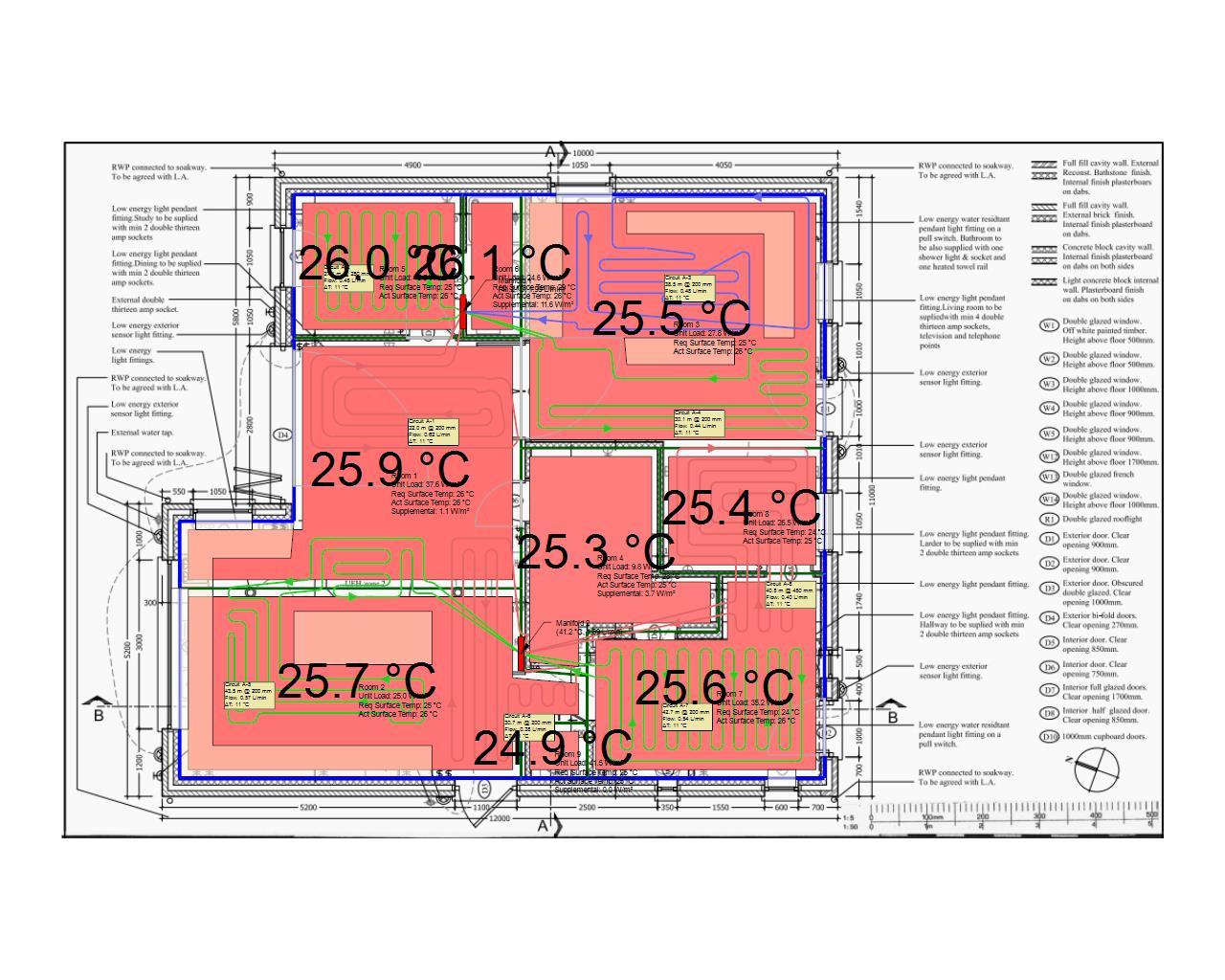
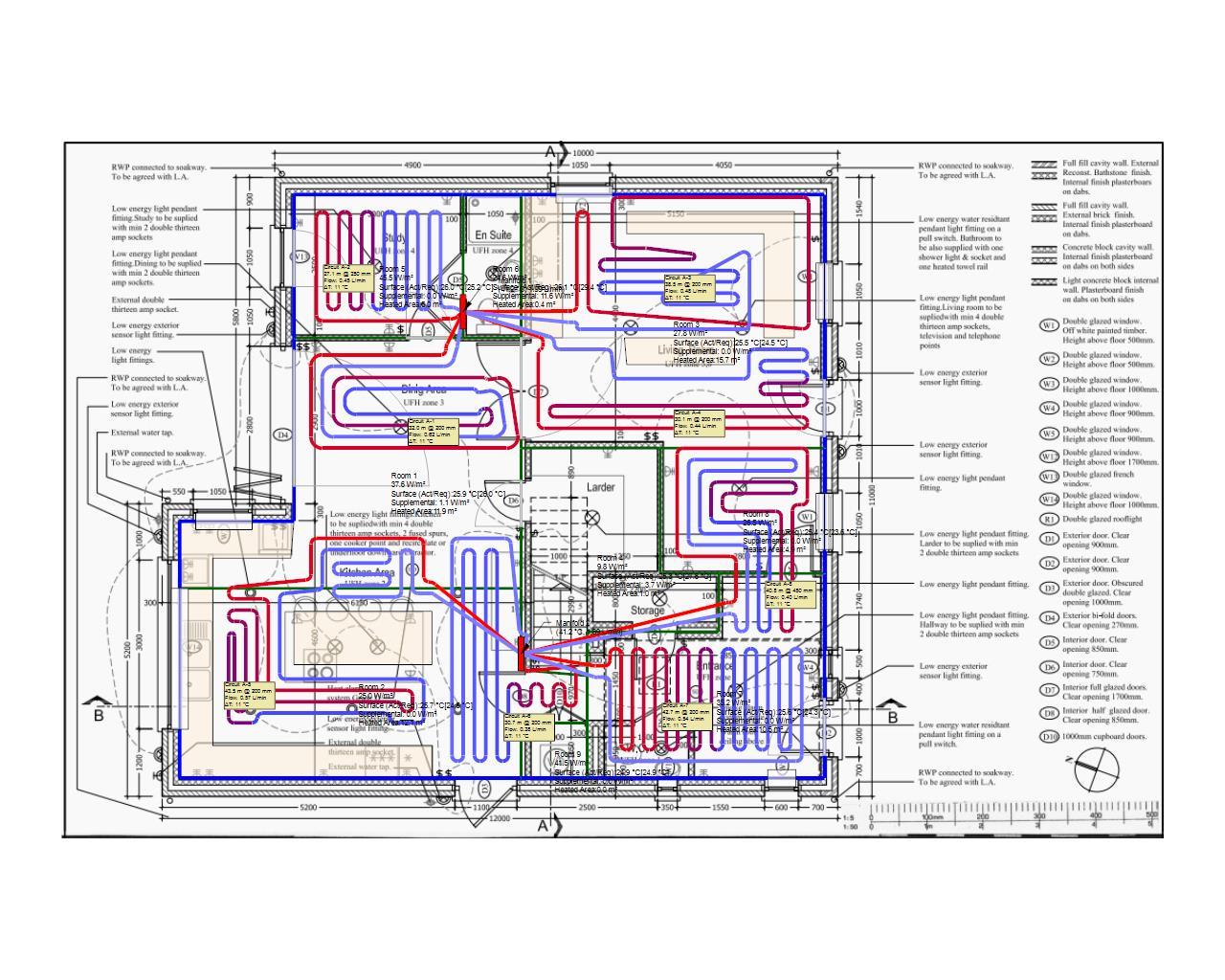
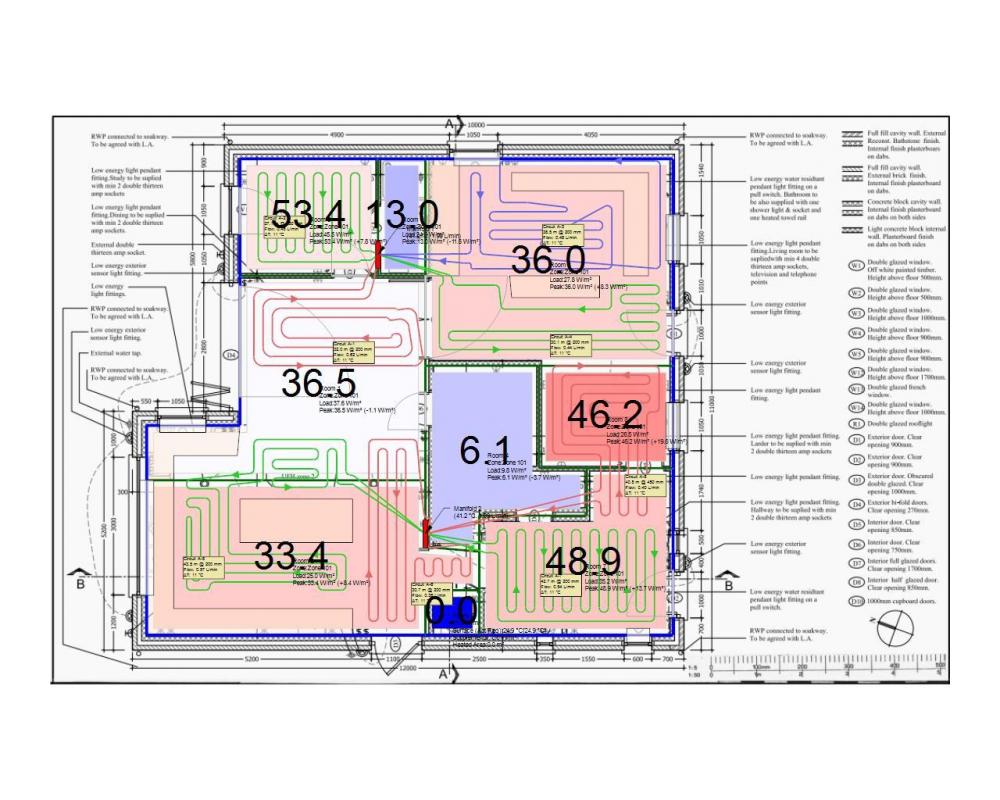
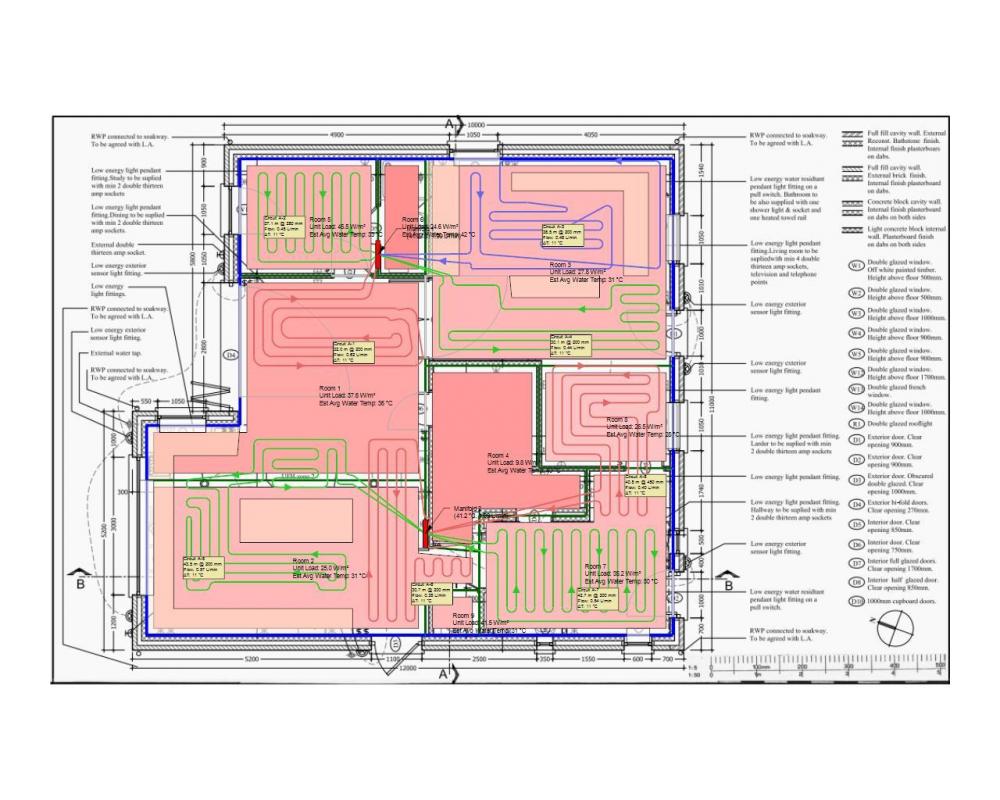
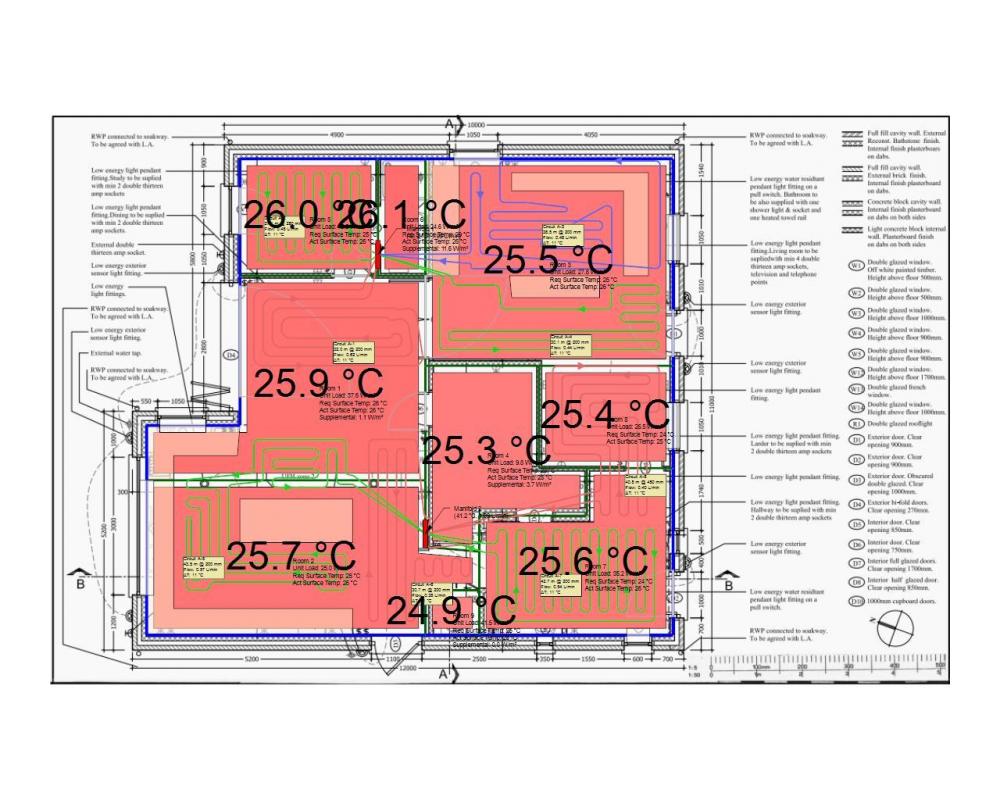
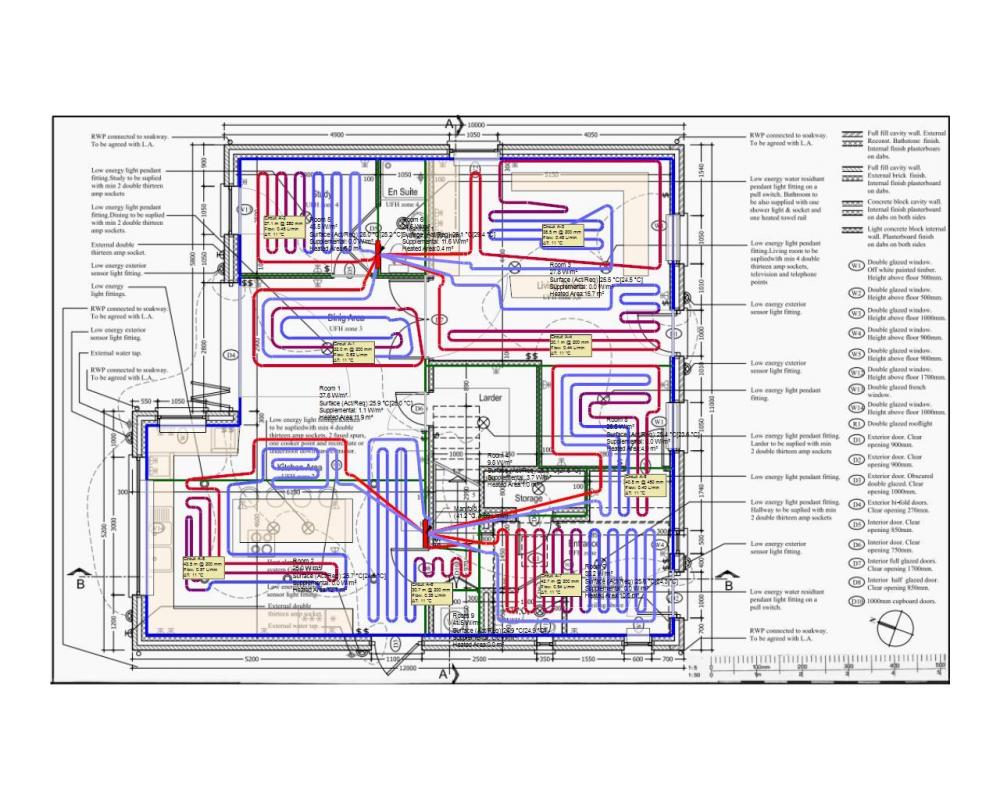
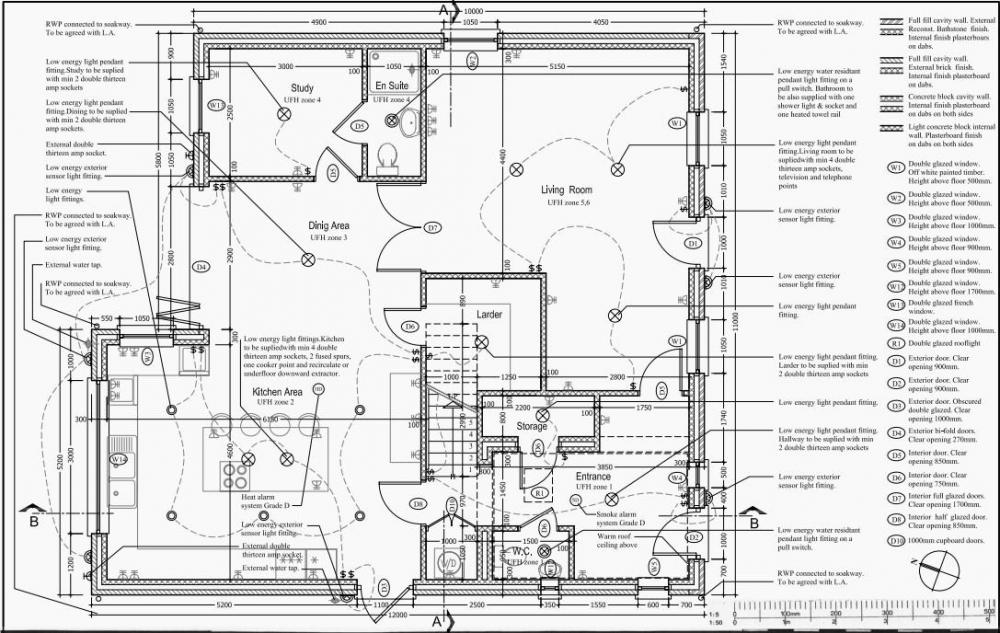
Had a go with LoopCAD. Probably some obvious rookie errors there, grateful for advice. If I can get the right end of the stick, then can discuss things intelligently with the professionals. 1. Peak capacity 2. Water temperatures 3. Surface temps 4. Circuit temps
-
Considering known names Wunda NuHeat or the bigger retailers who also offer a design service
-
Builder's plumber subbie said to be a heating engineer too. Price from builder (main contractor) excluded UFH design. Options for design 1. Builder's plumber 2. Some renowned supplier Which is likely to be more cost-effective? (Not wishing to be penny wise pound foolish nor to over-spend) PS I have also started playing with LoopCAD to try and understand a little about this. Not yet worked up the courage to have a go at the detailed design
-
Underslab drains already haunched & encased in concrete (lean mix). Covered by hardcore. Slab yet to be poured. Is reinforcement necessary to the parts of the slab directly above the underslab drains?
-
How much of 1 meter depth trench to fill with concrete
WWilts replied to Paul Alan's topic in Foundations
Not clay. Load bearing limestone brash -
How much of 1 meter depth trench to fill with concrete
WWilts replied to Paul Alan's topic in Foundations
225mm thick strip foundation was what our architect drew. BCO found that ok. -
Sympathies. We gave up on trying to get everything running neatly and on time. For us it helps to tackle whatever is do-able on our list and pretend that everything else will sort itself out. Sometimes does too. Can't be fun paying massive rents during delay upon delay. But in the worst case scenario of delays, something less than a fight with the builder might help mitigate losses. Downsizing or staying with relatives/friends or whatever is do-able. You would know the amount of hardship that you find tolerable. Good luck. You deserve it.
-
Proper rest bend vs 90 degree bend with concrete
WWilts replied to WWilts's topic in Waste & Sewerage
Does the radius of the bend make a difference? Currently fairly short radius bend put in at what will be the bottom of a stack. -
Builder inclined to make do with 90-ish degree bend at bottom of soil stack from first floor WC/shower. Supported / encased in concrete (lean mix I think). Is a proper rest bend with foot absolutely necessary in this case?
-
Is new hob /oven connection notifiable electrical work?
WWilts replied to WWilts's topic in Kitchen Units & Worktops
Trying to discover whether we will need to have our electrician make a special visit after kitchen is fitted. Good carpenter available & interested in fitting kitchen. Other option is to get a kitchen fitter who is part P qualified. -
Kitchen will be fitted by kitchen fitter (not electrician). Electrician will do general 2nd fix, leaving wires for kitchen fitter to connect up the appliances. Is connection of appliances notifiable electrical work in England?
-
Great idea. Will help cushion the underslab drain too, at its highest point. Is the blinding still necessary if EPS used?
-
Sulphate resistant concrete* was recommended by geologist for a site within about a mile, which (unlike our site) has clay. But water can probably carry sulphates to our site. So we don't dare omit the DPM below the (ordinary) concrete slab. Sulphates swung it, together with the issues highlighted by some. Sulphates might be a problem for others, especially those excavating deep for basements. For those interested in the technical details re sulphates & soils, & the damage possible in the presence of water, there's a detailed (free) report. Here. Lots of big words. Pg 70 or thereabouts was a sufficient dose for me. *"Sulphate Design Class DS-5; Aggressive Chemical Environment for Concrete (ACEC) Class AC-4s"
-
DPM over slab? Or under slab?
-
Yes, but found this: "Typically, a DPM is a polyethylene sheet laid under a concrete slab to prevent the concrete from gaining moisture through capillary action" and this, re sulphates + limestone https://www.constructionnews.co.uk/archive/limestone-ban-targets-sulphates-28-05-1998/ Have limestone, cannot exclude presence of sulphates in the small amount of other soil
-
Is there some reason why not everyone does that?
-
Blocks in pic are 215x440mm. Largest stones at least 100mm. Scale as in pic of foundation masonry On top of this stone, builder intends scalpings (compressed) topped by blinding sand. Top of floor screed will be at top of visible block. From screed surface down: 65mm screed 100mm insulation 100mm concrete DPM Top of underslab drain opening is about 280 mm below top of floor screed

-
Tks. How important is it to level out any undulations in the hardcore before putting down blinding & then DPM?