


WWilts
-
Posts
782 -
Joined
-
Last visited
Everything posted by WWilts
-
Yes, but frame and dab. So in addition to dots there will be a continuous frame of adhesive all around the perimeter of the plasterboard lining. Intended to reduce the amount of cold air that drops down into the room. Does drylining allow any kind of membrane to be used as a continuous air barrier?
-
How to reduce thermal bridge / draughts with RSJ beam
WWilts replied to WWilts's topic in Heat Insulation
plan view. Problem areas marked in red. Unfortunately column is in already. Cannot undo without vast expense. But can try to squeeze something in the very tiny spaces around the column.

-
SE specified steel column in cavity wall, with an internal steel beam resting on it. Blown in bonded EPS beads will be the cavity insulation. Yet to be built. Only the steel column (100x100x5) is installed so far, but walls going up quickly. Steel beam will be 203x102x23. How to minimise thermal bridging & draughts around that area?
-
Cannot see how a VCL can work with drylining (plasterboard on adhesive frame). Where would it go? Intention is to boost airtightness a bit. Else it will be taped plasterboard.
-
Ridge height permission for 6700 from ffl. Hipped roof 19 degree slope. Trying to squeeze in what is possible. Perhaps vaulted ceiling in master bedroom. Open to imaginative ideas that don't cost too much more.
-
Did the vaulted ceiling upstairs add much cost compared to the usual trusses?
-
Is a 2.3m ceiling height upstairs (bedrooms) too low? Downstairs will be 2.55m, for a sense of spaciousness.
-
My neighbours are stupid AND completely mad
WWilts replied to Adsibob's topic in Party Wall & Property Legal Issues
Are they doing the neighbourly thing? They could be encouraged to reflect on that. What would they do if they were in your position? Sometimes people feel a sense of entitlement to tell others what to do. The less encouragement they get the better. One worker at a site was said to have called a meddlesome neighbour an unspeakable name. Since then, no more open meddling. But such strong action is probably best left to workers who are here today and somewhere else tomorrow. Bullies keep bullying until someone turns around and makes them reflect that there is more than one perception of facts. -
Designing for blown beads at the cavity bottom.
WWilts replied to epsilonGreedy's topic in Heat Insulation
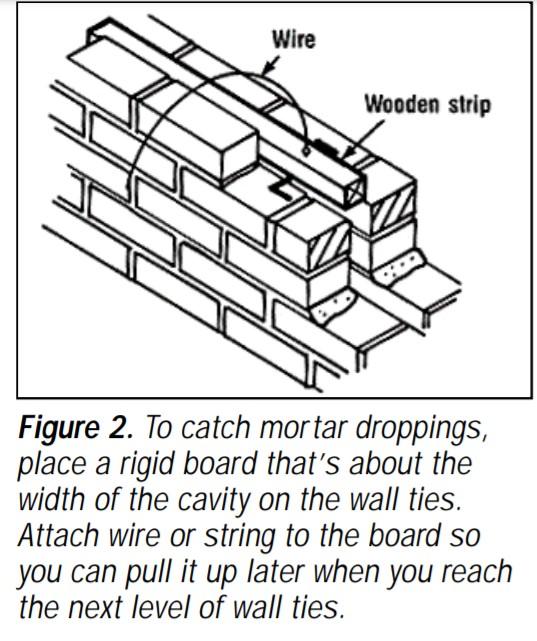
Pls say how these can be made/used? Plenty of mortar droppings happening daily. Worried that a) the weepholes will be blocked up b) the insulation will not extend low enough in the cavity (bonded EPS beads blown in) And how does one clean out mortar droppings, now that every 4th brick has not been omitted at the base (Brickie's brilliant idea)? Can one knock out bricks from the base of a wall that is already over 1.8m high? PS At right, note also the external leaf of the doorway. DPC turned up rather than down. What will that do to any rain that bounces up above the second DPC? Or is the >150mm height of that enough to allay any concerns about bouncing rain?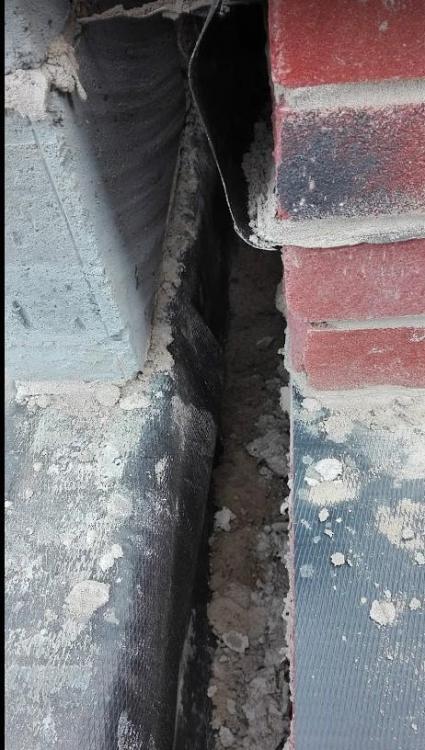
-
Yes that air will be colder than room temperature. But hopefully the bonded EPS in the cavity will help that air to retain some of the room heat. And the beads will hopefully keep the wind out, when it penetrates the brick. Air is reputed to be a decent insulator (EPS beads are 98% air). All this to console ourselves for using drylining rather than wet plaster. Still trying to draw the details so that I can explain clearly to the builder. Danger is that my drawings will become the problem rather than the solution.
-
Plasterboard with taped junctions intended to be the airtight barrier. Tray taped to plasterboard.
-
further attempt Might frighten the poor builder off
-
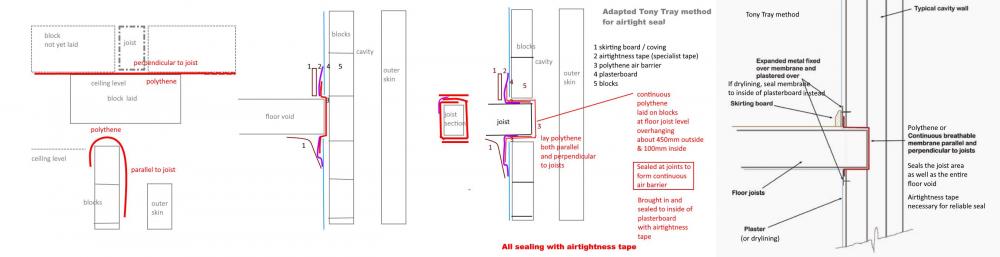
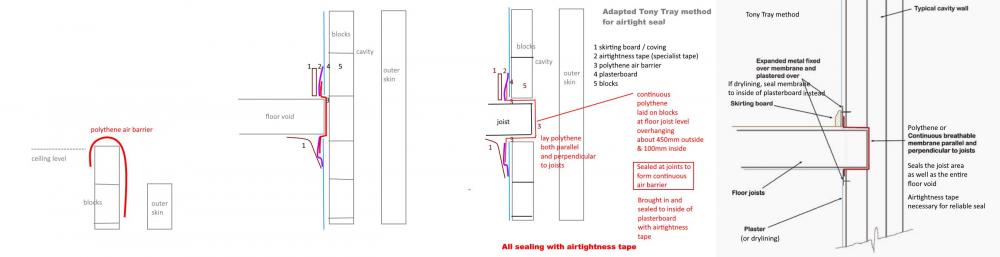
For various reasons constrained to use drylining of external walls. Trying to achieve as much airtightness of first floor void as possible, on a budget. Apologies in advance to Tony for taking liberties with a perfectly good concept. Qus: 1) How can the Tony Tray concept be made to work with plasterboard on adhesive frame? Builder not familiar with this approach. Trying to draw polythene version for him (see pic) 2) How does the polythene airtightness barrier cope with the weight of blocks above? (3.6N aircrete holding up large roof trusses) 3) How would you draw the junctions between the polythene in the joist openings and the polythene over the infill blocks? 4) Is a DPC used below and/or above first floor joists? If so, below or above the airtightness barrier (visualising piercing of the polythene by rough mortar)
-
did a bit of research. Perhaps a spring-loaded backdraft damper would improve slightly on shutters. There must be UK versions of this US product https://www.homedepot.com/p/VENTS-US-6-in-Galvanized-Back-Draft-Damper-with-Rubber-Seal-KOM-150-U/205715170
-
Brick and block. 110mm cavity to be insulated with bonded blown EPS beads. For penetrations (eg extractor fans) what is the sequence of installation? Blown beads last? How is the thermal bridge reduced, if at all, when there is such a huge penetration through the insulation? Context: limited budget. Keen but not desperate about thermal efficiency
-
Mockups of 2500mm floor to ceiling vs 2600mm Trying to decide how much more wow factor comes with the additional 100mm
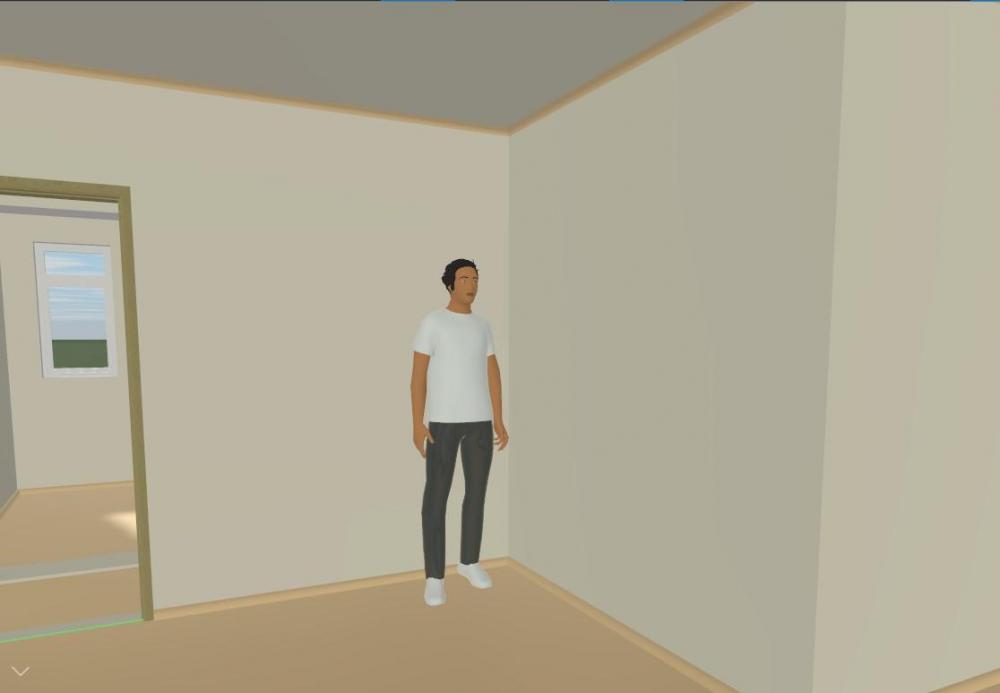
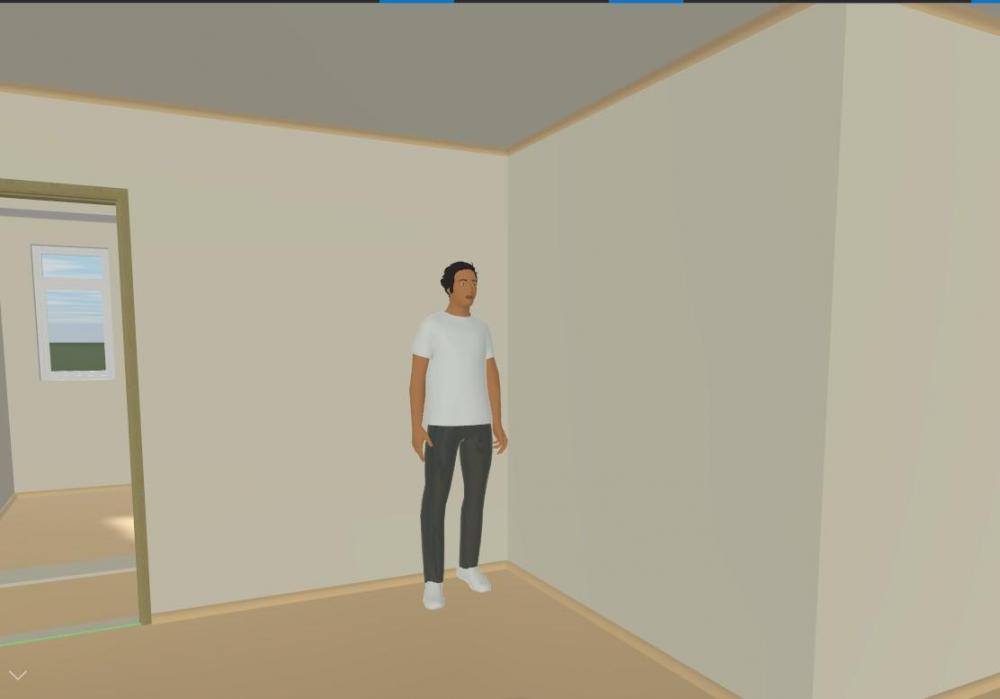
-
Yes, foundations are in place for the wall that has the double doors. Structural wall moved by 180mm from plan. However, 40mm of that is attributable to the increased width of the blocks from 100mm to 140mm, as agreed. Of the 140mm remaining error, 100mm has been clawed back by another error. So, on looking carefully again, there is 40mm shortening of stairs required. 14 stairs in all incl landing Original plan ground floor to ceiling 2600 (above 100mm Celotex & 65mm screed, hard wood flooring) Flooring to flooring 2830mm in original plan (over 14 stairs)
-
Yes
-
ground floor
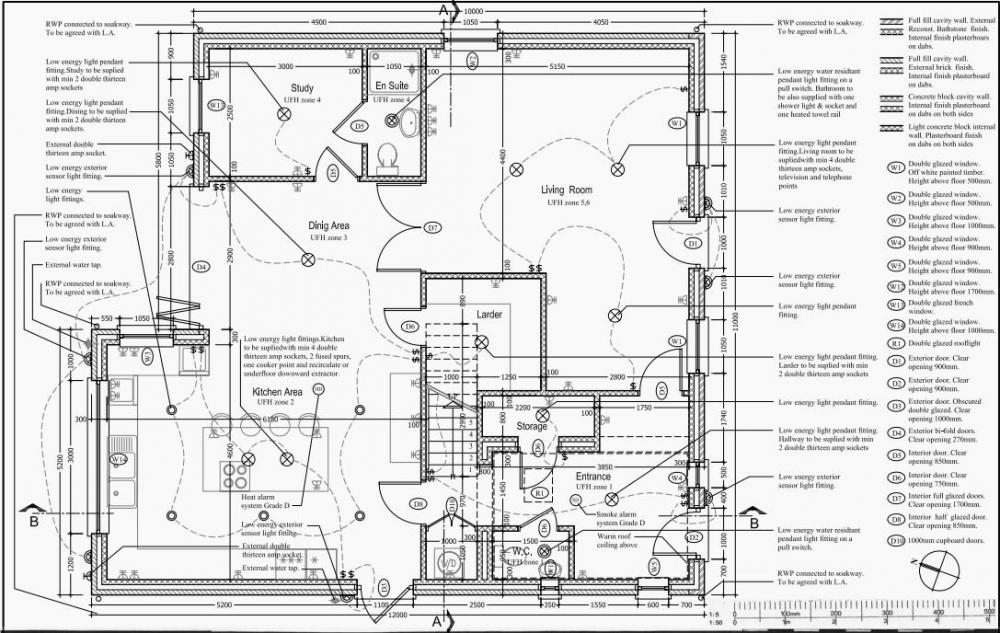
-
Structural wall, holds up joists. So probably constrained to avoid studs.
-
Might never get permission, so only 50% chance of it happening Using the loft storage as a summer bird's nest is a point in favour of reducing ground floor height to 2500mm. (Trying to find silver linings for this cloud)
-
That particular wall is in 140mm wide blocks, to allow the option of an additional storey above.
-
Plenty wide footing.
-
One wall (fat red arrow) moved in error by builder during internal setting out. Goes down to foundations (concrete slab on hardcore on trench fill). Has consequences, as highlighted in pic. Esp stairs vs bedroom door. Brainstorming for options to set things right (short of digging up slab and redoing the wall). That internal wall is still only at finished floor level, nothing atop DPC yet. For various reasons, digging up would be the very last resort. Suggestions?
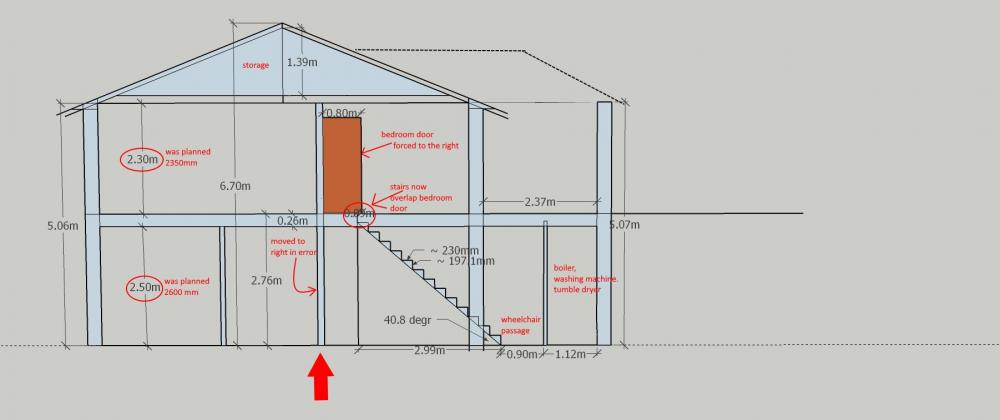
-
This. EPC improvement






