


WWilts
-
Posts
782 -
Joined
-
Last visited
Everything posted by WWilts
-
Yes. Walls have U values (thermal leak values) of 0.25 or even much lower. Glass has U values generally several times higher than 0.25. Airtightness helps a lot. Our SAP expert advised that solar panels would improve the energy efficiency much more than insulation improvements (especially in a house with passably good insulation).
-
It may be that the design of the UFH does not permit any greater heat in the downstairs rooms, in winter. Supplementary heating might be the answer, or turning up the water temperature as @Declan52 said
-
Which pipe will bend sufficiently & easily for 100mm spacing?
-
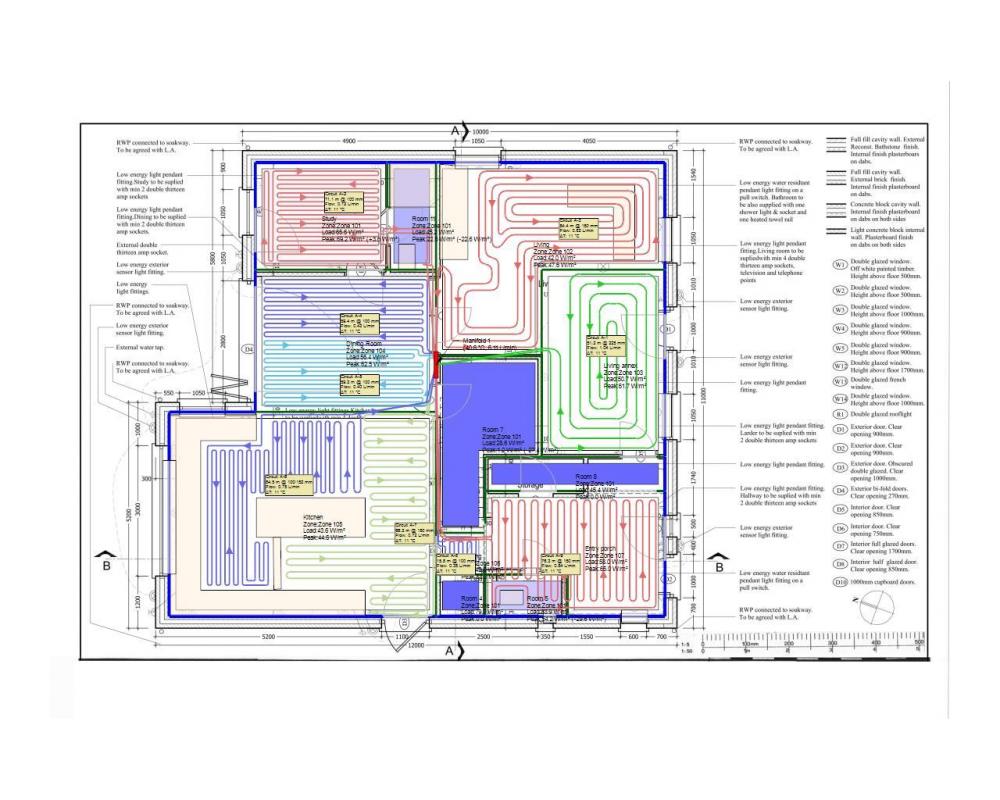
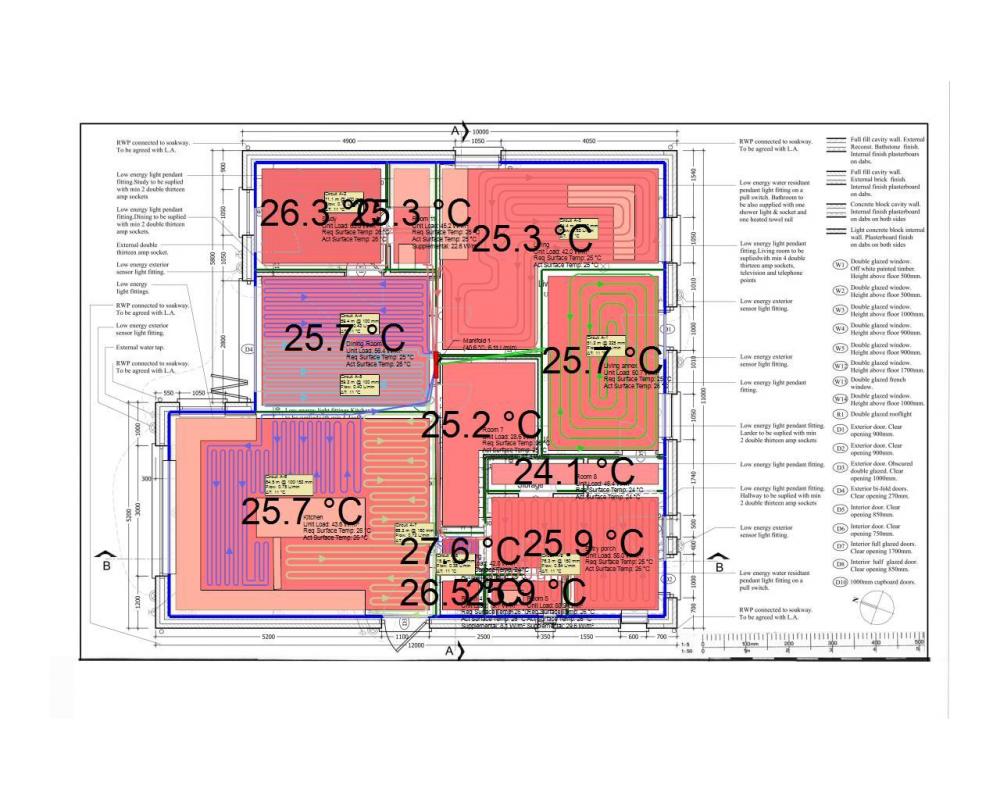
Scrapped all heating from first floor (except bathrooms). Took on board comments. Now UFH downstairs design looks more normal. Landing at foot of stairs is its own zone in case need heat to go upstairs. 7 zones, 9 circuits. Temperature of water 41 degr C. Design to take 0 degr C externally, maintain 20 degr C internally. Any obvious problems?
-
Thanks, understood.
-
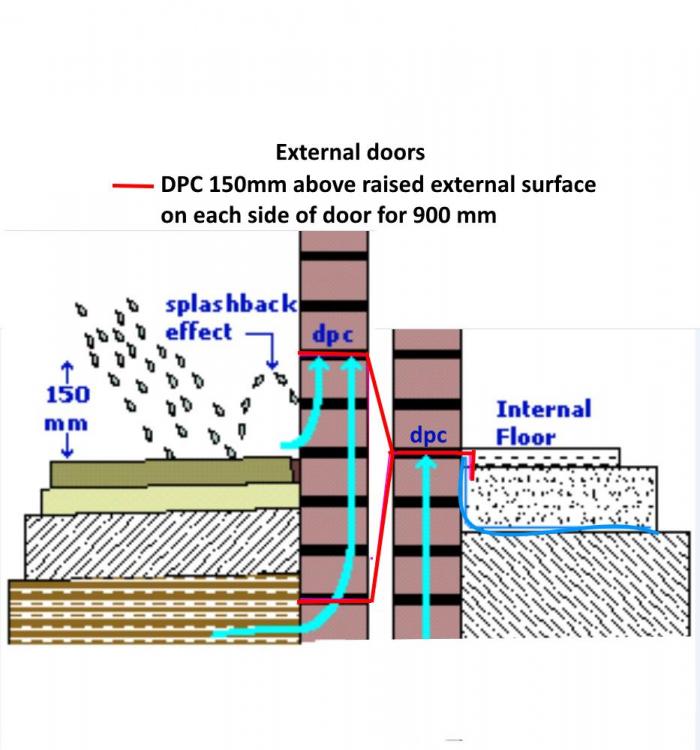
Own drawing, tweaked another. Not familiar with the term lapped out. Does the pic now show lapping out? Sorry to be so ignorant.
-
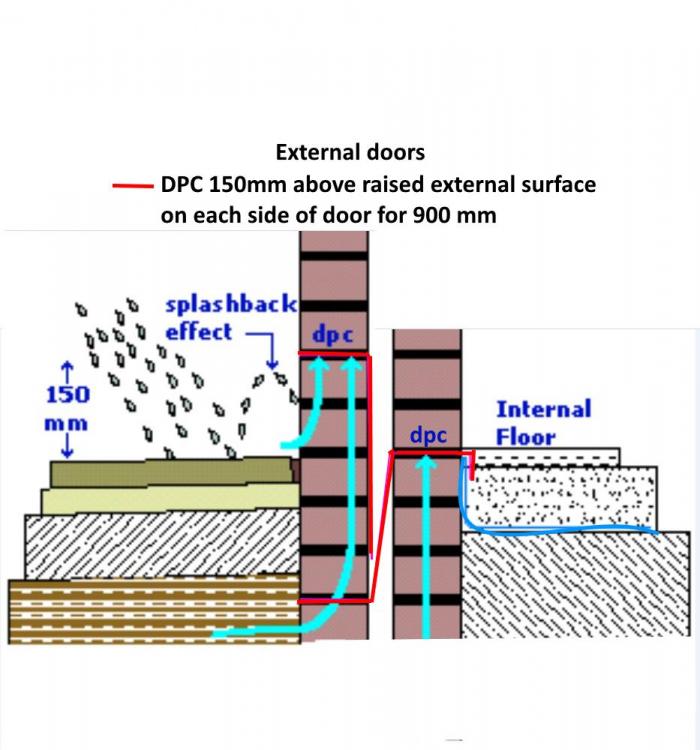
Something like this? Our brickie is not familiar with this, but it is included in the spec notes.
-
Great stuff. If an approachable brickie / PM were not available, this is what any sensible person would do.
-
Just realised that the small voids in the perpends of the inner leaf cavity face will likely be filled by the bonded EPS beads. Doesn't contribute to airtightness of the inner leaf, but improves thermal insulation a bit, compared to air.
-
Is this second DPC on the outer leaf only?
-
"DPCs to be set at least 150mm above external ground level and second DPC to be set 150mm above this to 900mm either side of entrance door accesses." Why is this second higher DPC specified on either side of external doors?
-
Very true. Makes the quality of dabbing and taping critical if drylining is inevitable for various reasons. Preference for wet plaster is well understood, just not possible here for various reasons.
-
Noted. Sealing the internal face of the inner leaf seems doubly important, for airtightness. I'm told concave jointing is best for air tightness. Hope that's true. Thermal conductivity of air at room temperature is reportedly 0.028 W/(m*K) [even lower at 0 degr C]. Mortar much higher thermal conductivity, over 1.000 W/m*K, even higher if saturated.
-
Yes, very
-
Part of me has the idea that the cavity face of the inner leaf is better off with a bit of air as additional insulation in place of mortar. As long as the internal face of the inner leaf is air tight. Concave joints best for that? Perhaps that idea is nonsense.
-
Makes sense. Overall good co-operation, good service. Don't want to be over-fussy unless it makes a real difference.
-
Yes
-
External face. Still worth asking for pointing (perpends)? PS Celcon plus 630mm long
-
Understood. Anticipating kitchen/family room will have most occupancy. Don't mind having cold rooms, using thermostats, if nobody is in there. Not very nice for guests, I know, unless they go into the kitchen.
-
Triggered an idea for an extension of that detail to protect the non-joisted part of the first floor void. In addition to polythene or similar to replace joist caps, drape another length of membrane across the top of the wall from one joist to its neighbour. Overhanging the inner leaf on both faces. Then after ceiling board and floor board installed, pull the overhangs in and tape to the respective boards, as well as to the airtight membrane or tape at the respective wall junctions. Treating the entire floor void as a quasi-joist. For those who are constrained to have no more than plasterboard on dabs.
-
Kitchen/family room north facing incl big window. Same target temperature 21 degr C as other rooms. Higher surface temperature in kitchen probably needed to heat the spaces where pipes are omitted. Also to allow heat to waft up the stairs. Living room south facing, relatively less openings in walls. Individual room thermostats should help regulate the actual temp. But yes, design needs a careful second look before being finalised. Installation still some way off. Suspect installers will be glad to be allowed wider spacing (less work) if that is found satisfactory by a client. But the client does indeed need to look again and be absolutely sure.
-
I don't pretend to be an expert, but the professionals advised no UFH under kitchen island. Hopefully heat will rise and heat the whole space including those parts of the room where UFH pipes are omitted
-
He's serious. http://tonyshouse.readinguk.org/tonytray.pdf What a legend. Pardon my ignorance.
-
?
-
Is there a detail that protects the first floor void when plasterboard on dabs is inevitable for various reasons? Is there a way to seal the gap between joist hangers, where plasterboard is absent?


