SimonD
-
Posts
1941 -
Joined
-
Last visited
-
Days Won
10
Everything posted by SimonD
-
Having gone through all this myself, my first piece of advice on this is to talk to some of this architect's previous clients. Don't decide just on your personal interaction. The architect we eventually used (see below) who we 'clicked' with turned out to be a nightmare when it came to delivering on the content of the project - e.g. the actual drawings and doing the admin stuff. He could definitely talk the talk...OMG. In addition, our architect was terrible at producng the construction drawings often trying to avoid producing the stuff by telling us that the builders will just change it all anyway so there isn't any point.. not entirely untrue but you do need an appropriate balance! Since our frustrating experience I've got to know some other local architects who run or work in medium to large practices and some who are one man/woman bands and the general flavour is that it's unusual to get one that does both the design and technical stuff well - often they'll have strengths on one side or the other. The architecture practice can balance this by passing the work on to the right person. We found it impossible to find someone who was willing to work with the existing drawings to provide the construction/technical detailing but maybe that's just a feature of where we're based. The other side of the coin is that the first designer we went for, an architectual technician, we decided more on the price and as a pragmatic choice - he was very technical but we didn't like any of his designs. This cost us a couple of grand and a good 6 months of wasted time and effort. Depending on the design of the house, the technical detailing could be a lot more than the design. Overall, I'm still happy we went for the inspiring choice, despite the frustrations we experienced Not sure if that directly helps you but hope it does provide some food for thought.
-
Yes, Bath area is generally a really nice place to live, we certainly like it and everyone we've so far met who's moved into the area has been really happy with the move too. Property prices are a bit silly mind you.
-
Ah, what a shame, it did look amazing. We're located outside Bath and there was a development recently up on one of the hills just south of the city centre where they had the side of the hill collapse on them after digging iit out, lots of rain, and insufficient retaining wall (according to local heresay) ?
-
Brick filling a partition stud wall
SimonD replied to SimonD's topic in Bricklaying, Blockwork & Mortar
It may be in your opinion, but I don't think it's a silly idea at all. It would be silly not to play with the options and check them out, but ideas, just like questions, are never silly in themselves? You may well be right that a stud wall with acoustic insulation is easier, but it won't be cheaper given I've got all the existing materials I need for free and it may also not suit the outcome I'm looking for; to do it properly will take a lot of space from what is already a tight galley area. Whatever I do it with this will have to be an infill wall because it all sits within a steel frame. -
Sounds like the perfect self-builder plot then! ?? Some of the plots I saw on my long search were similar - nobody else wanted to touch them. However, it's always worth exploring these things as a self-builder as developers do tend to have a narrower view on the sites they buy and there may be hidden opportunities. Assuming it didn't sell, have you taken an architect and/or builder friend down to the plot the have a look?
-
Brick filling a partition stud wall
SimonD replied to SimonD's topic in Bricklaying, Blockwork & Mortar
Thanks, yes sealing it all up to enusre there are no gaps will certainly be key here. -
Brick filling a partition stud wall
SimonD replied to SimonD's topic in Bricklaying, Blockwork & Mortar
Not exactly what I'd planned... I was actually going to build a proper wall using mortar. Perhaps building the wall up from the sleeper wall. A solid wall is going to outperform the acoustic insulation, will it not? I've seen this done in other places where the stud wall had been load bearing and wall bricked up within the studs. -
The designs for our project were for basic stud walls between some rooms on the ground floor. I've got suspended timber floors. I've got a couple of thousand bricks left over from demolition and thought that filling a couple of these partitions wall with masonry could be a useful acoustic solution as they'll be for bedrooms next to the utility room. The walls I'm thinking of filling sit exactly over sleeper walls which have sufficient foundations to deal with the load. The buildup is foundations, sleeper wall, dpc, 75 x 100 treated timber, floors joists filled with insulation, osb3 subfloor, partition stud wall. Any suggestion about how best to go about this? Is is feasible to simply build up this brick infill from the partition wall sole plate, or do I need to consider a different approach? Neither of these walls are load bearing. Thanks!
-
What cost per m2 can we REALISTICALLY achieve?
SimonD replied to Mulberry View's topic in Costing & Estimating
Here are some other hopefully useful tips that can save you money without reducing the quality of your build. 1. put together a complete material list for the whole house and then add a resonable contingency - you can then send out this list to all your potential material suppliers, but sometimes you may need to separate out types of materials for specialist supplier - e.g. timber only merchant versus masonry. 2. When calculating materials, don't just go by lengths and area. Why? Because if you walk into a builders merchant and say you need 647 meters of 47x175 c24 carcassing, they'll likely chuck a load of timbers the same length, like 4.8 or 6 meters. This can end up really inefficient for your build and more expensive as sometimes longer length timber can be more expensive than the shorter ones per meter. Instead I suggest you sit down with a spreadsheet and calculate the lengths you need for each part of your build, including noggins etc. So for example, if you're building an intermediate floor at 400 centres with a span of 3.2 meters, a 3.6 meter length will give you the span and the noggin (you can see the potential wastage here if you're working with 4.8 or 6 meter lengths. You'll end up with something like a list of 32 @ 3.6m, 24 @ 4.8m, 28 @ 6m. Same thing with the flooring - lay it all out across the building rather than simply taking the square meter figure, you'll get a more accurate number of boards. 3. You draw down on the material list as your build progesses at that agree price. Sometimes the price may change simply due to timescale but you have a better starting point for that negotiation. It's time consuming but will save you money and will reduce waste. I filled less than half an 8 yard skip for the entire superstructure of the build and I've used thousands of meters of timber. And where we are skips cost a lot of money too! I completely agree with other comments about buying plant and machinery where you can. I bought a digger and small dumper and within a few months calculated than if I'd hired the same stuff it would have cost 3k more. I also sympathise with your frustration about estimating build costs. Neither my wife nor I could fathom this inability of anyone in the construction industry we spoke to to be able to predict the outcome build costs. Now I understand a bit more, it's in part due to the dysfunctional and inefficient way the UK construction industry works, including I think a signficant portion of the professionals associated with the industry. I've found that those per square meter figures are pretty meaningless in the grand scheme of things and it seems costing is more down to licking the index finger and sticking it up there in the wind - but as has already been meantioned it's also down the building design, site location, specification etc. etc.. One things that caused us trouble was that finding local builders with the experience of working with the materials we chose were non-existent so suitable builders would have to travel some way which has a big impact of cost. With our build we'd assumed we could squeeze it in at about £1200/m2 but local prices meant we'd more likely be looking at around the 2k/m2 if not more ( we had one quote that was 2k/m2 to shell only!). If I get it in at the price I think I can manage, I will have build it myself for about 900 and that will likely include many sacrifices along the way in terms of spec. -
What cost per m2 can we REALISTICALLY achieve?
SimonD replied to Mulberry View's topic in Costing & Estimating
You clearly have the advantage of serial scaled projects. I approached our build in the same way that I would have approached projects I used to manage in a large firm, which mirros exactly what you suggest. However, I've found that if you're building a one-off, which suppliers easily sniff out in discussions, they may not give two hoots what they've previously quoted (unless you buy within the quote window). My architect warned about this - as an architect he got better responses from some companies than I did because they're after the repeat business. For example, I've had several suppliers hike their prices when I came to ordering. I often wonder whether they do this because they know you're committed at that point. Here are some examples: Insulation: price for ground floor wall insulation originally quoted at just over £42/square meter for the full system at order the proforma invoice came to £71/square meter (maybe they were hoping I wouldn't notice). The company refused to negotiate. Roof cover : Original price at just 4300, wanted over 12000 at order then reduced is to just over 8k Windows: went from 22k to 29k even with significant reduction in glazed area as we had to reduce this due 'overglazing.' I've also experienced the wonderful tactic of the builders merchants to give you a good welcome discount only to follow up with awful prices worse than the local diy centres. And be warned if you want something not on your initial materials list you'll have to haggle for each item. That's not to say I haven't managed some major discounts by finding the right supplier and doing the negotiation. Even tricks like not buying throught a supplier's website but instead picking up the phone to speak to someone - many times I've received discounts of up to 30-50% on the web price. Now that I've got some building experience under my belt, when reps ask me I always tell them I'm a developer rather than self-builder. I've even registered a new domain name so I have an email that looks like a company. As I'm self employed, it's also allowed me to order direct from suppliers who don't deal direct with the public. This can save some pretty pennies too. All in all, I've found it to be like one big hustle and not surpised so many trades simply use Wickes and B&Q. -
That's brilliant!
-
Well, if you read the book Self-build Simplified by Barry Sutcliffe, you can do it all in about 12 weeks apparently. That is for a bog-standard, no frills simple house design with pretty much everything off the shelf. I'd love to see that as I don't even see professional developers do it in 12 weeks around me, not a single one of them. Not that I'm jealous or anything ?
-
Nice one, there's not a chance I could have done this with a full time job. My wife and sister like lists - I refuse to do them ? I know that one!
-
I think your architect is designing in some tolerance for typical building site practise! Recent experience and research myself suggested design to 1 in 60 for the 1 in 80 minimum. What tends to trump both is the opinion of your BCO I reckon ?
-
Oh indeed, that's what I keep on saying to myself - it can only get better ? Thanks!
-
Haha ?, the cladding is local grown knotty western red cedar. I didn't want to clean knot free variety as I prefer the rustic look. It'll silver fairly soon too. That depends on how to measure it. In September 2018 I started with a lot of the prep work talking to builders and then individual trades to see how I'd approach the whole build. Tried to get quotations. I bought a load of plant and machinery, made up a garden office, and also tendered for the major structural items like the steel frame and glulam beams etc. Dealt with the utility companies re temorary supply and moving meters etc. Had some minor work done January 2019 to test out a potential contractor but then decided against that. The building work started in ernest about May 2019 when once we'd moved out of it, I began demolishing the existing bundalow.
-
Lucky you to have moved in! That describes our situation fairly well too. I'm self employed and thought I could keep going with my work while also building the house. I've had to let most of that work go and just do some part-time business now. The reason for our delays are multifaceted including; 1. I've never done this kind of thing before so apart from some diy projects I'm learning everything as I go. The only help I've received is my nephew labouring for me part-time outside of his school; 2. Despite paying for professional services and advice, we've found quite a lot of it was pretty poor quality which has caused us some problems; 3. The project doubled in size, in part because of the poor standard of professional input we received - e.g. I've had to create all the constructions details as my architect was awful and what he did do was totally unworkable; 4. It's not a straight forward 'rectangle and triangle' building project so everything is bespoke and non-standard; 5. The winter during which I was constructing the superstructure was one of the worst on record for rain followed by a month where we were hit by consecutive storms. 6. I've been let down by two major ticket suppliers necessitating re-designs and alterations to the building. The first was the insulation system where the supplier almost doubled the price compared to previous quoted prices during specificaation so I changed supplier but had to modify the timber frame. The second was our roof supplier doing the same and then this required alternations to the roof structure, both costing me a lot of time; 7. We were hit by COVID. My wife works for the NHS so I had to take the slack and try to homeschool the boys while dealing with major supply chain issues etc. and now I'm still having to do all the school runs. I've been lucky to spend 2-3 hours a day working sometimes. Sounds like a disaster doesn't it but we are where we are and I'm really hoping for a good run of it soon - windows are due to arrive in a matter of weeks and that will be so major ☺️
-
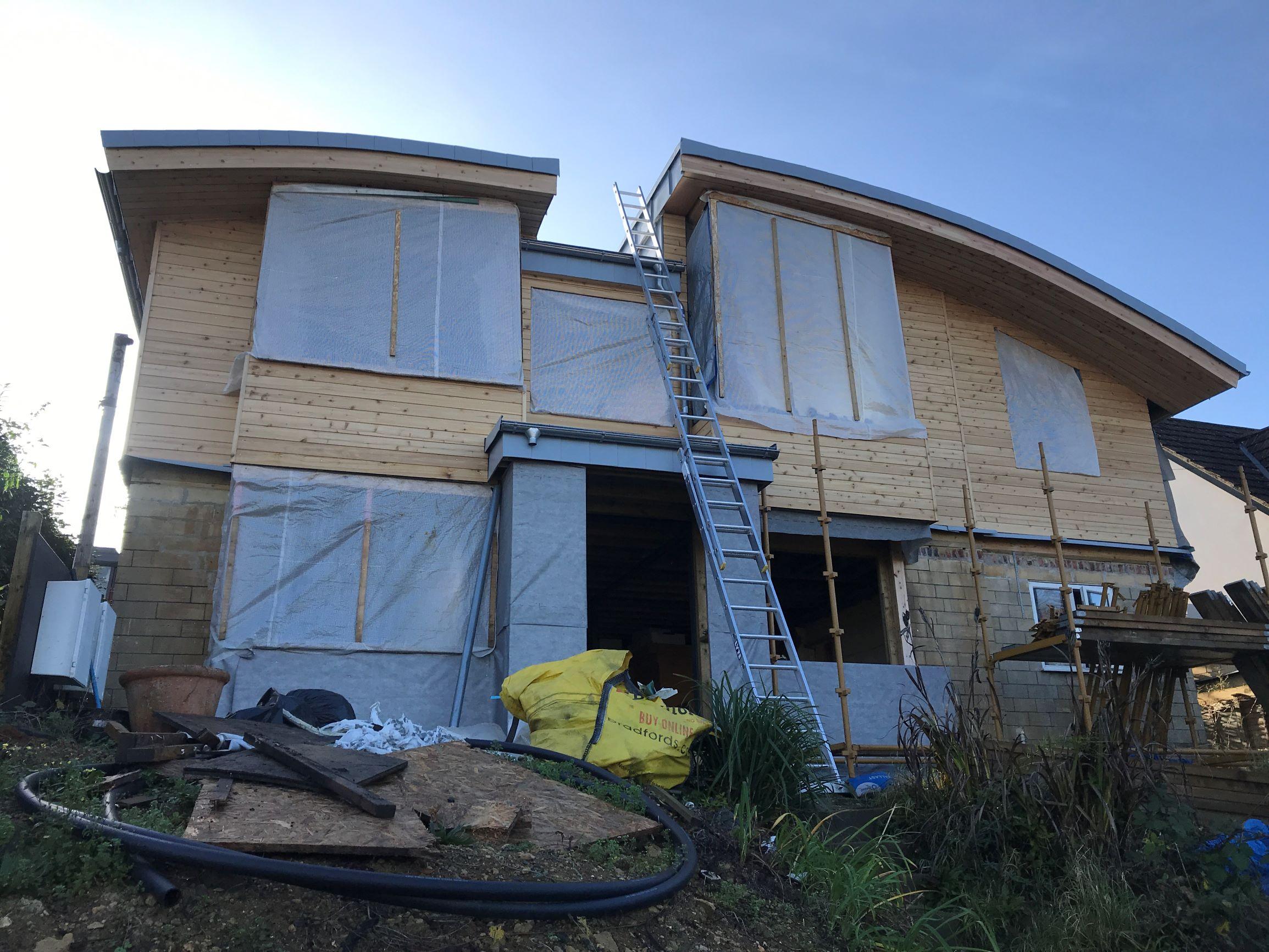
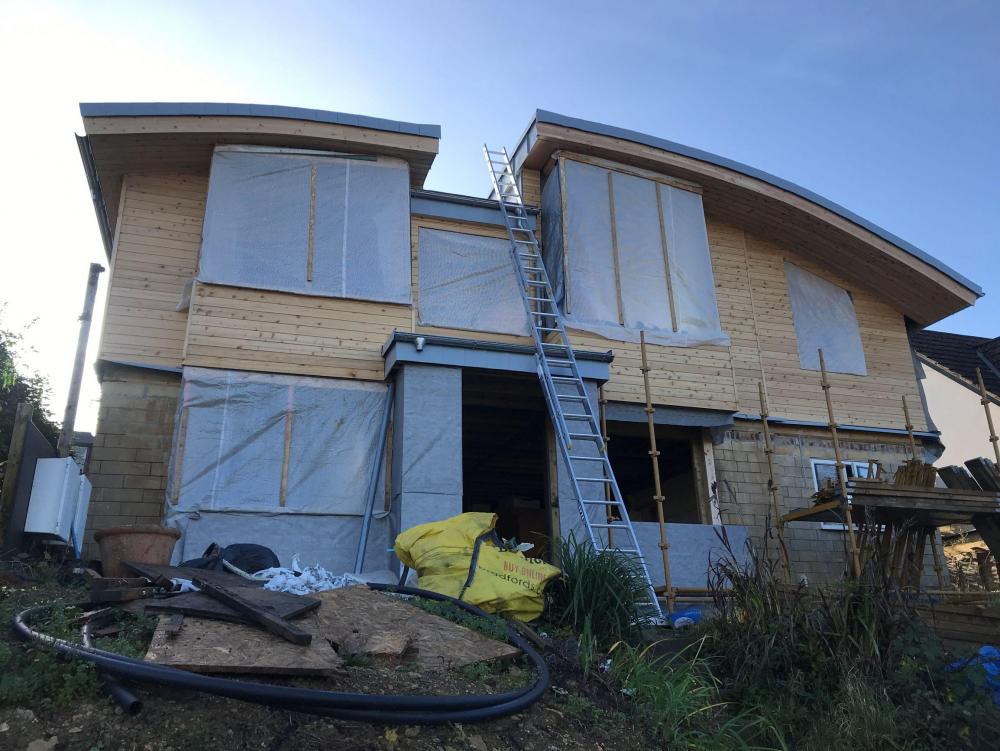
Thanks for all the replies and reassurance, it's strangely comforting to know I'm not completely alone in this ☺️ It's also good to hear your stories, the similar issues and experiences with the whole thing. We also took this route because of finances (but something in me also strangely really wanted to do it) as we got some designs done by our architect who knew from the very start what our budget was and not at any point did he raise any concerns about whether we could do what he designed for the money. It was only once we got planning granted and spoke to builders we found out the reality of the situation (there is also a local premium in building we weren't aware of when we bought the original house). From a financial perspective, luckily for us I'd already decided to take it on when we found out that the build wasn't going to be a simple 'remove and raise roof on existing dwelling, and add a new floor,' but actually demolish a large percentage of the existing dwelling, thus doubling the size of the project. We then found that the existing house needed a lot of remedial work to make it good for the additional 1st floor. I still remember the day when my wife came home from work to see most of the ground floor gone only to ask - 'didn't our architect say this was all staying in place?' There were also silly things like the new steel columns were supposed be installed inside an existing wall but the arichtect got the dimensions wrong by 100mm so yet another wall had to come down! So in essence the project went from a large scale loft conversation totalling 100sqm to a 200sqm almost new build. When the BCO visited to inspect the pad foundation trenches I'd dug he looked at it all and asked if we shouldn't just have demolished the whole thing and started from fresh. We did seriously consider it for a moment but couldn't bear the thought of taking it all back to planning etc. Blimey, I've just reread through that paragraph and it already sounds like a proper drama from Grand Designs or something, resonating with those warnings from books like the Housebulder's Bible and Self-build simplified of why you shouldn't do it all yourself!!! ? It's taken me just over two years so far when I started to prepare us and the site for the journey ahead. Then in January 2019 I had a small team of builders in to build the walls for a ground floor infill extension. It was after having them in as potential builders for the whole thing that I made up my mind to do it all myself so started in earnest Feb 2019. It feels like an age since then. Re dealines and timelines - oh, yes, I'd put those in place along with my building schedule and project management chart - that lasted a whole few months after which I threw it away and just got on site and did what I could each day. I think one of the worst things is when people constantly ask how the build is going and do we have a move in date; when will it be finished? Overthinking has definitely been my problem too. I managed to find a way to avoid it when building up the walls and timber frame, but when it's come down to more detailed and important stuff I slip right back in there with that. One of the things I've found to be both a blessing and a curse is the flexibility of doing it myself. We can make and change decisions as we go which obviously does have ramifications. However, it pays major dividends like when I came across how all the steels were designed to sit inside the walls leaving major cold bridging issues - I simply moved all the walls so the steels now sit inside the external fabric. This has also paid dividends when I've had to switch big tickets suppliers like the whole insulation system and the roof cover due to supplier problems. I do have to admit that despite doing some difficult and challenging jobs in my career so far, this is up there as the hardest thing I've done yet. As you've all said, despite the grind it's all going to feel great when it's done and there are also the the many intermediate moments like yesterday when I took down my kwikform scaffolding from the front of the house to see the newly clad facade - it good to see the ugly billowing tarps gone from the walls. Gotta keep the perspective. It's actually starting to look like a house ?
-
Who on here has built, or are in the process of building, their house themselves with very little help? If so, how often have you had that experience where everything seems to progress at a snails pace, you don't seem to make progress however much effort you put in and it's all just a grind? For me this feeling seems to have persisted for most of this year, covid obviously hasn't helped, but I'm wondering if it's just me?
-
Making OSB air tight
SimonD replied to MikeSharp01's topic in Environmental Materials & Construction Methods
Having sheathed up my build using OSB as the vapour and air control layer internally, and according to standardised details I've also been informed of the risks with osb. Here's an article that discusses the issue: https://richardpedranti.com/news/musings-energy-nerd/ It think the options are to either go for an osb sheathing product developed and tested for airtightness, or install and additional membrane to the inside of the osb (if using it that way). However, the question remains whether this is actually an issue post construction to the performance of the house, especially if you're not seeking passivhaus certification? -
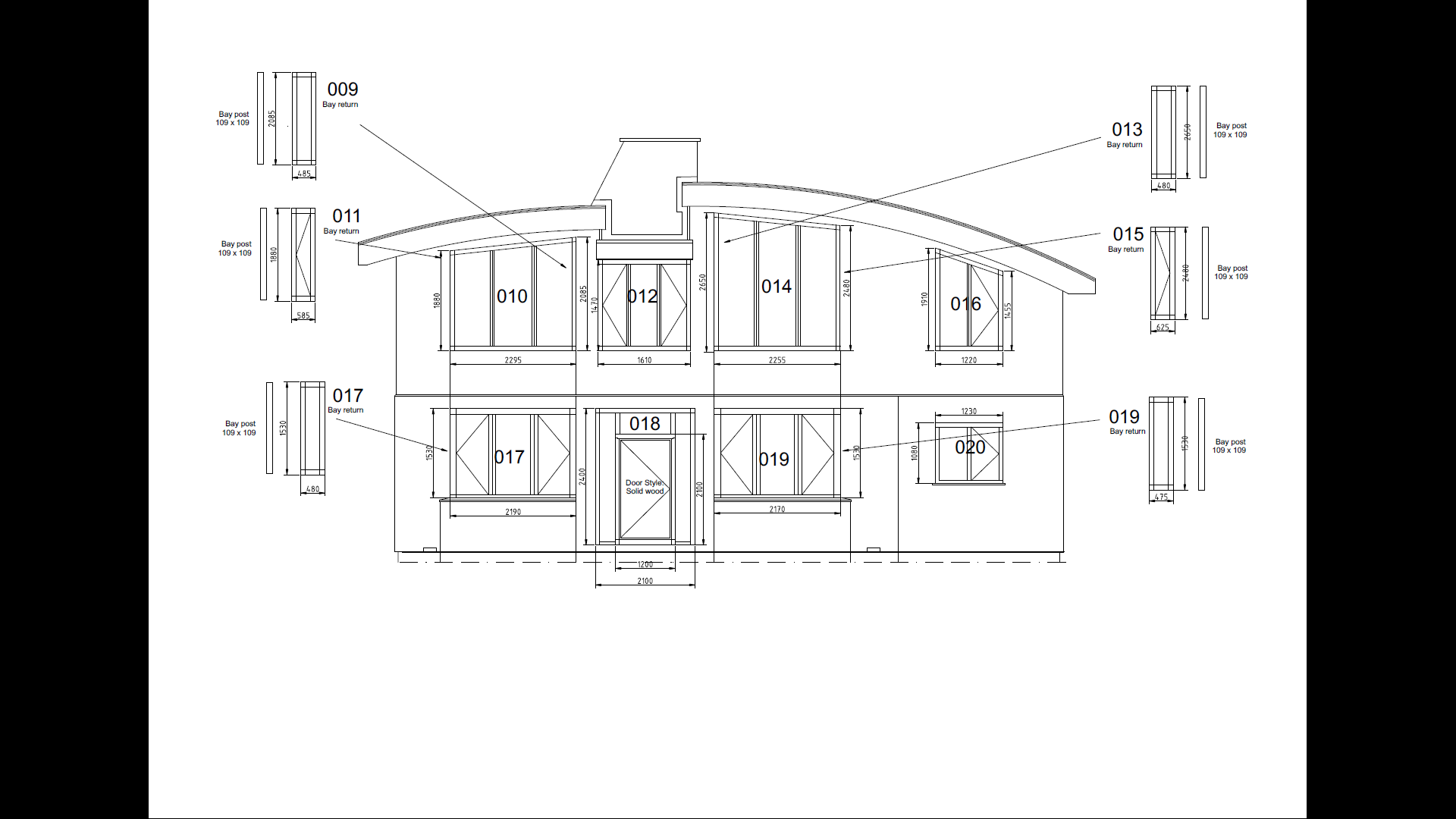
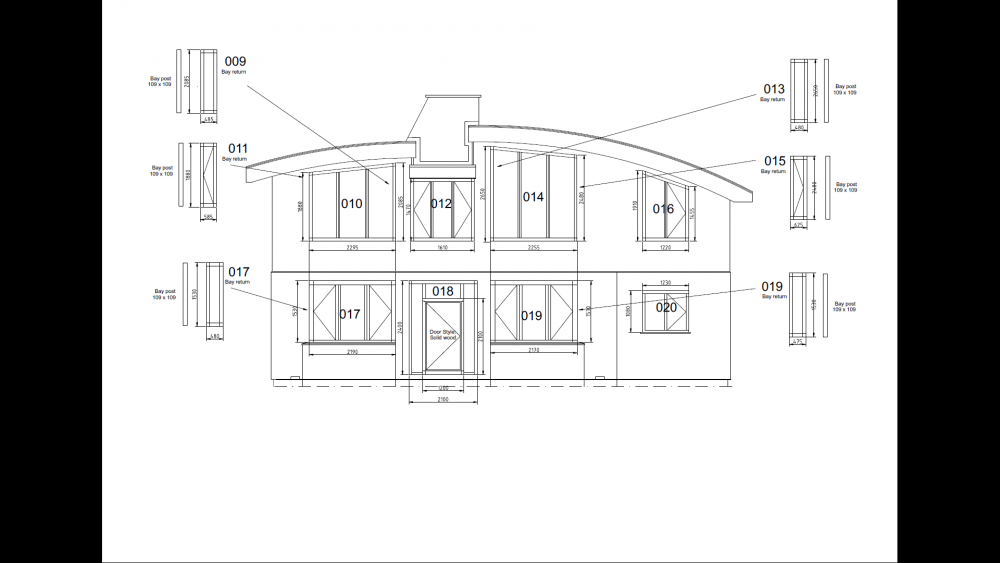
FWIW WWilts, I think it depends on your priorities and perhaps whether you're building a 'development' house or house for yourself to live in. I think that will probably drive some of the decisions. Personally, I would try to retain as much glazed area as possbile rather than reduce the open areas - nothing worse than finding it a little dark on those winter days. And northerly light has a really nice quality to it, apparently it's the best kind of light for artists to paint with. Take advantage of the views as that will help when you do come to sell. If you stick to standard window sizes, that will save you some money compared to bespoke sizes too. The other thing to perhaps consider is to put a draft window schedule together to go and get some comparative quotations for the various options such as upvc, timber and aluminium together with their various whole of window u-values. You'll then be in a much better position to make an informed decision. And if you're worried about the amount of glazing you've got facing to the north, here's my window schedule, almost exactly to the north. We did go for 3g.
-
FWIW, I did do an epdm flat roof completely on my own and it's not a terribly difficult thing to diy. However, as mentioned above, I used the water based adhesive as when I was finishing around upstands and completing corner finishes, I did need to pull it up and re-do a couple of times. I also needed to resolve some bubbles when laying the full sheet. In my experience, it's not the general laying of it but the detailing to make it neat and tidy that are the major challenges. As for your drawing, there's obviously been a lot of comments about the build-up so I'll just chip in with the metal. What metal cladding are you using? If it's a standing seam type cladding you need to ensure it's fully supported by plywood or osb. Your ventilation gap at the top is too small and should provide 25mm ventilation gap along the top. The metal capping should have a slope and the down turn should be 60mm to the side of the flat roof and at least 75mm to the clad side. You also meed to make sure you have a weather check at the top of the metal cladding. The 50mm wall battens should be installed vertically. The detailing for metal cladding and coping says the parapet should be 150mm in height with, as @Big Jimbo already said, the epdm installed up and over the parapet. hth.
-
I can attest to the Ikea standard of kitchens whch I'd assume haven't gone down in quality. In our last place we installed a new one when we moved in. 12 years later when the estate agents came round they all remarked on how sensible we were to have just put in a new kitchen for the sale. It survived two young boys bashing it around too.
-
If you're using Simpson Strong-Tie restraint straps, the data sheet says: 'Where straps are fixed to masonry, hardened nails Ø4mm x 75mm long or wood screws into plastic plugs Ø5.5 x50mm long should be used. The lowest fixing should be located within 150mm of the bottom of the vertical strap.' The data sheet also has all the recommended spacings and length. HTH
-
Obviously none of this constitutes advice, but as I have some history working in the tax practice of a large professional services firm many years ago and having sat on on a local planning committee, I'd hazard a guess you'll need to tread carefully on all counts as you're bordering on some questionable activities here, especially by asking your builders to post date invoices in order to pretend you're not building when you are. With respect to the idea of building one structure and step by step changing use, the planning committee I sat on were pretty aware of this approach and certain schemes were denied due to this approach being fairly obvious as a strategy from the outset. My view is that if you want to avoid the VAT and prevent sleepless nights and potentially more, you need to get yourself a proper tax specialist to advise, maybe even a good planning consultant. I do suspect, however, that the answer may be simpler than it seems at the moment as often trying to circumvent rules and practise becomes harder and more complicated than jumping through the standard regulatory hoops in the first place.
- 19 replies
-
- 2
-

-
- vat refund
- vat exempt
- (and 2 more)