SimonD
-
Posts
2215 -
Joined
-
Last visited
-
Days Won
13
Everything posted by SimonD
-
Well, if we're to sensible about it ?, I'd suggest a sincere apology together with a promise never to do it again and just ask her how she would like it to be put right?
-
Hell hath no fury like a woman scorned..... I don't know about you lot, but I've been married 15 years now and I still get it in the neck for sh1t I did wrong well before we got married! £1500 is a cheap fix. I'm with you.
-
I've got to say I'm with SWMBO, the rendered look is better. Maybe now SWMBO will make that long overdue decision about your architect and show him the door, he does like causing you problems, doesn't he?
-
Passivhaus window suppliers to UK - recommendations
SimonD replied to markharro's topic in Windows & Glazing
I'm not sure Norrsken make their own windows, or at least I know they don't make all the windows themselves. I got in touch with Viking Windows and they referred me to Norrsken as their UK partner. The Viking windows website has changed a bit since I last visited and it now has a get a quote link and sales telephone number so maybe things have changed. -
Passivhaus window suppliers to UK - recommendations
SimonD replied to markharro's topic in Windows & Glazing
Timber but with the alu-cladding on the bottom rail. -
Passivhaus window suppliers to UK - recommendations
SimonD replied to markharro's topic in Windows & Glazing
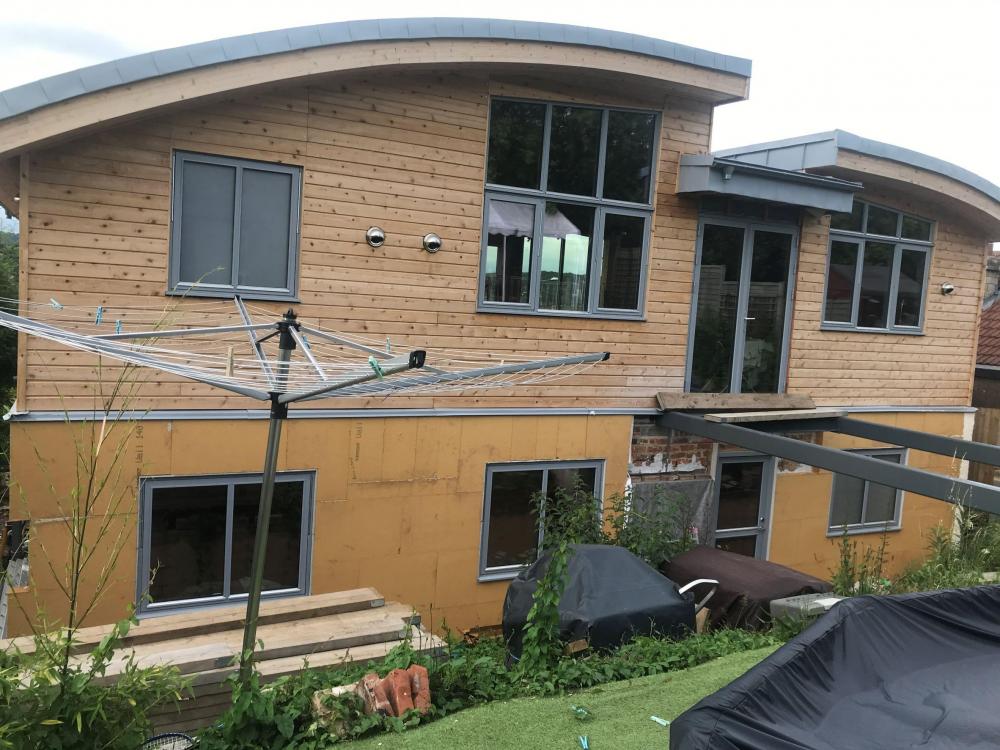
I got as close to like for like quotes as I could from the list of: Norrsken Nordan Rationel Green Building Store Jeldwen (priced direct with them rather than through a merchant) and a couple of others. ages ago I'd also got a quote from Velfac but this was for Aluminium windows the architect spec'd rather than timber we eventually went for. They were competitive price wise and rather than relying on a ridiculous negotiation process for the sake of it, just gave us a good price up front. About 7k or so less than GBS for 3g windows that had a whole window average u-value of 1.05 including the doors (We weren't looking for PH performance in ours so didn't spec this) . The Nordvest windows were slightly better on G-value (we've got lots of south facing windows shielded from summer sun with large overhang but wanted the winter gain - and can attest now that this works well). Rationel was the best quote on base price but Rationel couldn't do our 1st floor egress window as designed, nor could they do our front door IIRC, nor did they include the sills or transport in the quote. With Nordvest they quoted including timber sills, pretty much everyone else wanted extra for the sills of course, especially the aluminium ones. Nordvest also included transport in their quote so you basically knew everything was covered. What really made the difference with Nordvest is that they actually looked at the designs and window schedule and instead of just quoting for what was on there, they came back and suggested alternative arrangements for window openings etc. So, for example, they suggested tilt and turn windows at some places and fully reversible top swing in others etc. With the front door, I think only one other company could do our size and Nordvest said they only supply front doors with an Accoya external face and it was to be steel reinforced due to the size, which was reassuring. I also like their window profile which was 109mm deep x 56mm. This helped because with their frames I was able to bring them out further from the timber frame to cover the 50mm insulation installed externally and not have to use deep aluminium sills. I only needed 65mm timber sills rather than the 120 + mm aluminium ones. There are also some other neat additions to the design. For example, even on the timber only windows they include aluminium profile as cladding on the top of the bottom rail which clips on just above the bottom bead. As I understand it, this is one of the weaker areas of a timber window and this profile provides better protection. We ended up spending more with them as we decided to increase some sizes, like for the french doors and up the spec of a few bits and bobs but we still ended up paying marginally less less than Rationel would have been with sills and transport included. In total it was just over 20k plus VAT. Can share full schedule so you can see all the details if you'd like. Windows & doors not long after installation. Bays have fully glazed returns: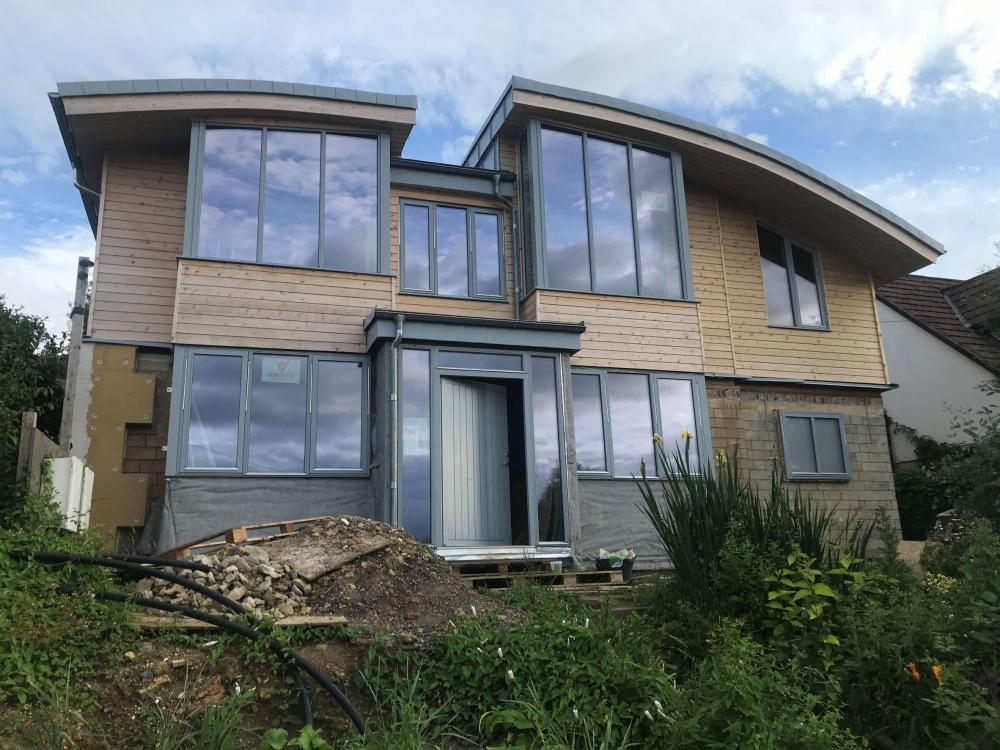
-
Passivhaus window suppliers to UK - recommendations
SimonD replied to markharro's topic in Windows & Glazing
I can recommend Nordvest windows - https://nordvest.co.uk/ - very flexible re designs, PH level where required and bang on re delivery timescales. When I ordered mine, they gave me a delivery week and delivered that week absolutely as promised and this was in the middle of Covid. They were the only window company that could provide all my windows and door sizes without any compromises. -
Insulating a 1967 timber framed bungalow
SimonD replied to esalglop1945's topic in Introduce Yourself
What boards are they proposing? -
I know, I should hang my head in shame
-
Do you possess any evidence to suggest it wouldn't work for countries with larger populations, and particularly re a nation benefiting financially from its natural resources and reinvesting that benefit back into the nation for its population and economic health? Oh, actually that concept sounds rather Keynesian, doesn't it? Maybe you sit on the classical side in your view?
-
What is perverse about this is that the UK privatised north sea oil and gas and we're actually exporting gas right now. Because of the financial arrangements the government has with the oil conglomerates, we don't even benefit finanically from this natural resource. Norway at least has a much better long term strategy by investing its returns into a national wealth fund. All we've done since we found our resources in the north sea is squander it and sell it off for short term one off payments while at the same time paying large subsidies to bank roll decommissioning etc. The volatility and fuel poverty we're experiencing is fundamentally down to poor policy, short termism, value extraction, etc. not fuel and energy resource. Further extraction won't benefit the larger population at all, certainly not long term.
-
Insulating a pebbledash solid wall and damp concerns
SimonD replied to Ben Weston's topic in Heat Insulation
Interestingly gypsum plaster has been used on the ground in places like Italy since Roman times for its moisture buffering capabilities which demonstrates properties of breathability. I now believe that gypsum has been blamed in many cases incorrectly and that it was more the full wall buildup that caused the problem, for example the common use of PVA and also an incorrect categorisation of all gypsum plaster being the same. However, it's also important to understand how gypsum plaster may absorb more moisture following wet-dry cycles due to a change in its structure, whereas lime reduces sorption rate following the same cycle. This points to using the materials where appropriate and in the right environment as well as evaluating materials according to their compatibility with each other as part of a buildup - hence why you might not want to use gypsum plaster directly on a solid damp granite wall that's subject to wind driven rain, but as an internal layer which is removed from this wet/dry cyclicle damp it may very well possess useful moisture buffering properties that benefit air quality within the home and still allow the building to 'breathe.' These are some of the reasons I don't feel the term 'breathable' is particularly helpful. Here are a couple of links to full downloadable PHD theses on the subject: Understanding moisture buffering effects in the indoor environment: https://researchportal.bath.ac.uk/en/studentTheses/understanding-moisture-buffering-effects-in-the-indoor-environmen Measurement and modelling moisture transport processes within porous construction materials: https://uobrep.aws.openrepository.com/handle/10547/622114 -
Which parts did you DIY?
SimonD replied to BadgerBadger's topic in General Self Build & DIY Discussion
I had no specialist building experience but had done some renovation projects. In this project it's easier to list what I have not done: Infill extention blockwork wall (at the beginning just before I decided to do the rest of it myself) Steel frame erection Is this the most efficient way? Definitely not. From a cost perspective it turned out to be the only way we could get anything close to what we wanted - we're not that far off and are so far at about 1/3 of the price we'd had indicated by builders. Round here, builders just seemed to want to fleece us. I reckon that by the time we finish we'll be at about 1/4 of builders cost. -
Our BCO has just asked for certificate of treatment using a product like Envirograf or Flametect (there are others). I will most probably be using Flametect https://www.fireproofspray.co.uk/ What you basically need to do is call the company selling the protection product, explain your plans and they will provide the right product and corresponding certificate for BC. I'm not sure whether that will be ok? It was explained to us that the fire treatment is primarily to prevent flame spread which this may not do?
-
Insulating a pebbledash solid wall and damp concerns
SimonD replied to Ben Weston's topic in Heat Insulation
That is true. Impervious is a bit of an exaggeration with cement mortar. It's similar to the popular belief that gypsum plaster isn't breathable where particularly recent research shows that it is both vapour permeable and hygroscopic and more so that lime plaster. As such it performs better as a moisture buffer and allows the whole house to breathe (with the right buildup). I suspect that the historical problems we see are more down to material compatibility within a building system and the common use of other layers that are for all intents and purposes impervious. For example, the airtighness liquid membrane Soudatight LQ I'm using has an Sd value of just under 11m, my primer for porous materials for clay paint Sd value is 10cm. I wonder whether at some point we might eventually see the equivalent to an Sd value for wall buildups and their respective layers. -
Insulating a pebbledash solid wall and damp concerns
SimonD replied to Ben Weston's topic in Heat Insulation
I'm sure you've done extensive research on this and may already have consulted this stuff, but generally speaking SPAB recommends the removal of all impervious materials used on wall in old buildings. Interestingly, in the linked technical advice by SPAB, it mentions damp rising up a wall due to this kind of material; https://www.spab.org.uk/sites/default/files/SPAB Technical advice note-Need for old buildings to breathe.pdf I think your ventilation strategy using an independent inner wall is the sensible choice as it will allow the wall to have its full breathing space without the bitumen. I can't think of why the bitumen needs to be there - what useful purpose does it serve other than to create a barrier against which the wall cannot breathe? Interestingly SPAB has introduced some guidance to the opposite effect where they suggest using capillary materials: https://www.spab.org.uk/advice/breathability-and-old-buildings I also don't think you need any holes in the wall, you just need to give it potentially a few years to dry out. -
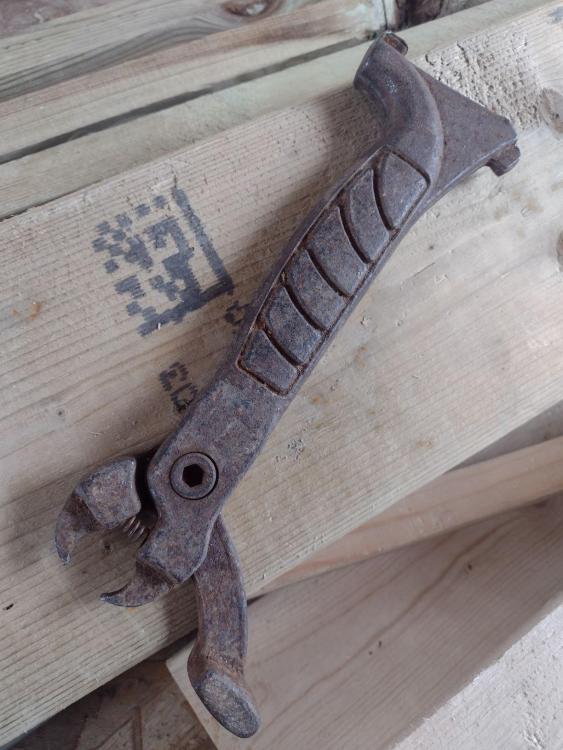
Just came across mine - battered and well used. Works well with square twist nails and with the one I've got, you can smack the handle even with a lump hammer to get those stubborn nails out.
-
The critical detail here is that you are an affected party to the order yet the court has failed to provide you with a statement of your right to make an application concerning the order. Therefore the court has not followed CPR. However, you may find that the court has decided to give the opportuity for the claimant to re submit a different form only for that to be dismissed as either out of time, or on consideration without merit - they're not beyond these shenanigans of getting claimants to jump through hoops and pay for the privilege. I would in any case still be writing to the court to question the order and ask for it to be set aside.
-
This whole thing stinks to high heaven. @oxoGiven your confusion over the order you received, I suspect you did not receive a statement from the court of your right to make an application to have the order set aside, varied or stayed? If you didn't the court has erred from procedure. See https://www.justice.gov.uk/courts/procedure-rules/civil/rules/part03#3.3 paragraph 4. Or as to quote here: (4) The court may make an order of its own initiative, without hearing the parties or giving them an opportunity to make representations. (5) Where the court has made an order under paragraph (4) – (a) a party affected by the order may apply to have it set aside(GL), varied or stayed(GL); and (b) the order must contain a statement of the right to make such an application. (6) An application under paragraph (5)(a) must be made – (a) within such period as may be specified by the court; or (b) if the court does not specify a period, not more than 7 days after the date on which the order was served on the party making the application. However, what you need to do is contact the court in writing immediately to question the order and lack of direction as per the above paragraphs as then the court cannot then claim you were out of time. I fail to see how you can be defendant in relation to a decision you did not and cannot make which is probably what you need to take up with the court in relation to this order. You are merely an interested party, because you cannot defend the decision!
-
Insulating a pebbledash solid wall and damp concerns
SimonD replied to Ben Weston's topic in Heat Insulation
None of the above, just busy building and sorting out some of my own building related questions ? But you may not have been asking me.. My initial sense is to question the purpose of the bitumen and whether it is really needed given the ventilation and cavity. Also, is the ventilation between the suspended floor and iwi cavity a continuous gap along the junction, similarly at the ceiling? -
You'll need to know the gauge for the roof tiles, assuming that's what you're using as roof finish.
-
Insulating a pebbledash solid wall and damp concerns
SimonD replied to Ben Weston's topic in Heat Insulation
As it currently stands for us, we're ahead on financial costs, but way overdrawn on headaches, PIAs, and time... I really do want my life back. ? -
Insulating a pebbledash solid wall and damp concerns
SimonD replied to Ben Weston's topic in Heat Insulation
Try 3 years and still counting ! ??? Only two boys and I've done everything myself mind you. Not too far off now. As the labour is entirely mine, we're still below that VAT/build cost advantage especially once I take into account the estimated costs of demolition, new foundations etc. -
Absolutely, it took me 3 months to get a load of 25 x 50 battens earlier in the year. Because I wasn't a regular trade customer, the local suppliers just said they couldn't supply me because next weeks supply was already promised to the regulars. When I did finaly get some the lad on the phone asked for £1.16/m and I reminded him who I normally dealt with along with how much I'd spent with them the last year and they dropped the price to 76p/m and that was up from 42p. For me, it's not just the product price inflation, but also supply. I've been having problems with everything from silly things like not getting the stainless steel screws I need for several weeks, to many larger things being out of stock so I'm either having to change design to get on with things, or just wait it out. I know some others near me building who ordered some materials for their project last May and have been given estimated fulfilment this coming May, but that's still uncomfirmed. Re labour rates around us, the large developers have had to up their day rates to equivalent of retail rates to get the trades in for their projects, which tightens supply for everyone else, but this has actually been going on since before COVID and Brexit but has experienced an extra squeeze. A mate of mine based in London who does foundation work said business is absolutely booming because so many builders have left the country now.
-
Insulating a pebbledash solid wall and damp concerns
SimonD replied to Ben Weston's topic in Heat Insulation
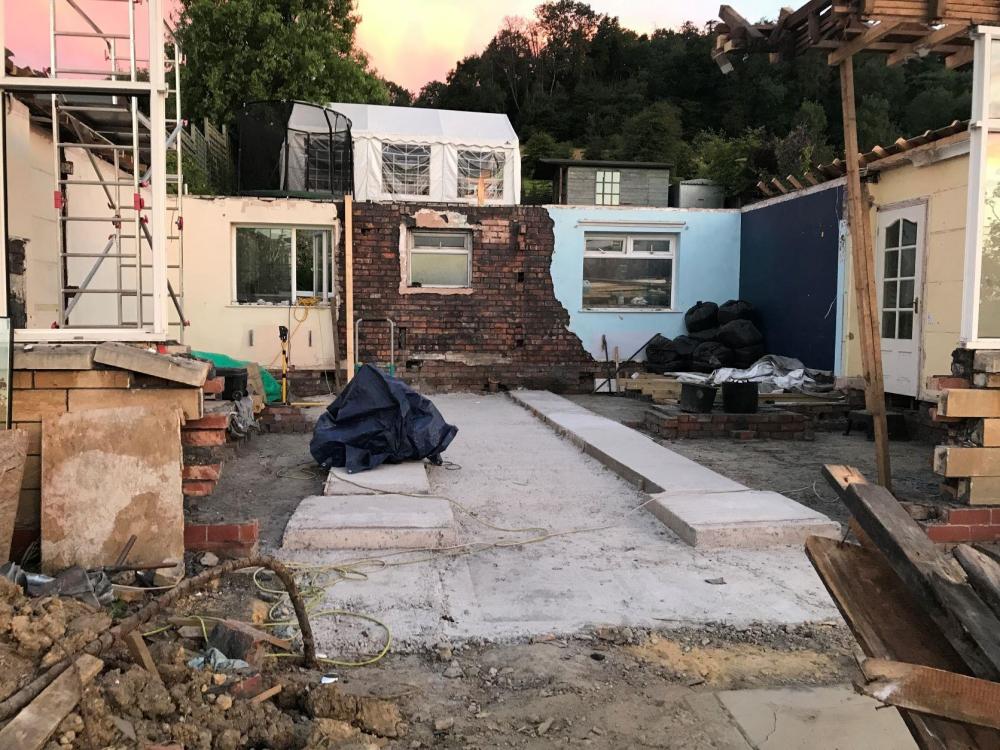
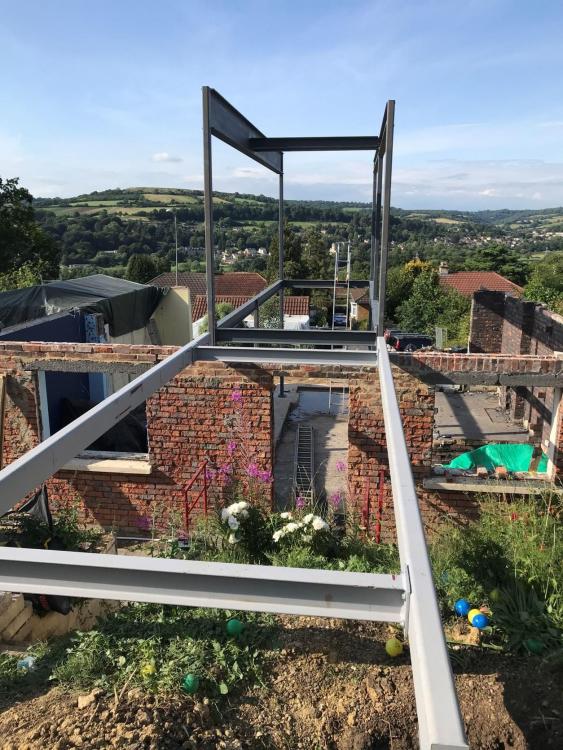
I do have to say @Iceverge's suggestion is spot on. Having never taken on the scale of building work we're doing, we sought advice and received it from several professionals; surveyor, architects (2), and an architectural technologist. All of them said, don't demolish, extend instead (partly due to the planners). We followed this advice and the architect supposedly designed all the new stuff to keep almost the entire bungalow - we were only supposed to be adding a small infill extension, raising the roof and adding a 1st floor. Yeah, right. When I started demolishing, it just went on and on and on and got to a point where so little was left that I seriously think all the advice we recieved was totally wrong and we should have demolished but by that time is was just too late. It's be a pain to say the least and has ended up taking far longer than it needed to. I think our architect ran away and hid smewhere because he knew he might end up in the new pad foundations otherwise, or hanging from the new steels ? I did tell him so when he finally came for a visit! Sit down and have a really careful think... Here's what was left our our bungalow including the day the new steels went in. And you can see how much I had to repair even of the existing walls. I've learnt a lot, that's for sure!