


SimonD
-
Posts
2215 -
Joined
-
Last visited
-
Days Won
13
Everything posted by SimonD
-
No connection on boiler to receive wiring centre - what to do?
SimonD replied to sb1202's topic in Underfloor Heating
TBH the installers could have made their life easier by just using a heatmiser UH-8 as that can also control rad ch and dhw, and then no need for the abovementioned Navien wiring centre which I assume is just like the widely used Honeywell and Drayton standard wiring centres. It would also be a lot tidier I think. -
No connection on boiler to receive wiring centre - what to do?
SimonD replied to sb1202's topic in Underfloor Heating
Yes this. I'm really confused. The installation manual clearly shows switched live from wiring centre to boiler terminal 4 on CONM4. This is connected to the two orange switched lives that come from dhw and ch 2-ports, which is standard in the wiring centre. So to add ufh, there will be a switched live from the ufh 8 zone wiring Centre, which is sometimes volt free and just needs a bridge to com on the wiring Centre itself, and Bob's your uncle. Given the thread, this seems too simple. Or am I missing something? Some electricians too 😉 A customer of mine had new ufh installed while I was away last summer and then emailed me when i got back to say that neither the heating engineer nor his very competent electrician could get the ufh calling for heat to the boiler. It took 10 minutes 😁 I was tempted to say it was a very complicated and expensive call out but went easy on the electrician, who was there when I sorted it 😀 -
It could just be the fan. When you switch on ufh fan speed increases slightly to compensate for addition load.
-
Yes. Like the figures I posted earlier, this provides the best output. Radiator manufacturer figures are usually based on Top and Bottom Same End. But remember that rad output depends on the air temperature differential too. So for example with a flow temp of 70 with return of 50 you have a mean water temp (mwt) of 60. Mean water - air temp differential is then mwt - air temp so output differences between 21 degrees and 16 degrees are as follows: 60-21 = 39 60-16 = 44 To get the actual radiator output you then divide this by the manufactures delta, usually 50 so: 39/50=0.78 44/50=0.88 This means that with a room temp of 21 the radiator output is 78% of catalogue and with 16 degrees it's 88% Which clearly shows that even just 5 degrees has a big impact on output. You then take these results and multiply by the connector emissions factor which for TBOE is 1.05 or 0.96 for BOE Plus there are other factors used for the whole calculation.
-
Boiler short cycling with low flow temperatures
SimonD replied to seanblee's topic in Central Heating (Radiators)
Yes, but is it useful to believe its all down to delta T, even for general public and enthusiasts without also understanding the implications this has on heat output and mass flow rate and how this impacts the function of the system as a whole? By definition a lower delta T distributes less heat and therefore requires higher flow rates for the same output, some of which are impractical. And then with radiators heat transfer is based on Mean Water Temp to Air Temp differential as shown by the spreadsheet above so many radiator systems just won't work at low flow temperatures. Yep, maybe it's a sheesh post......😉 -
Boiler short cycling with low flow temperatures
SimonD replied to seanblee's topic in Central Heating (Radiators)
yes, they must be, but like most Heatgeek blogs, the nuance of all factors required to get a heating system working are missing, giving what I think is a misleadingly simplistic account, even if the principles are fairly simple. A lot of the figures above simply won't work very well with radiator systems without impractical modifications. -
Sounds like the system needs purging which could also account for poor flow through some of the loops. Then a need to balance the loops. If this is a new/ish system is there a technical manual showing the theoretical flow rate through each loop? Setting them to this would be a great start.
-
Doesn't instill much confidence, does it? But yes, Opentherm is supported with the 050-W and 100-W which are plusbus, weather comp or opentherm, or relay. With the 200-W it's plusbus or canbus and you'd probably go weather comp. You can even add opentherm to many older 100-W with an X21 wiring harness for less than £10.
-
I can't speak for ATAG but you'd be far better off with a Viessmann 100-W or 200-W than a Worcester. 4 pipe out of the box PDHW with directly connected cylinder stat. then you just have to worry about heating control. They're also 12 year warranty out of the box if registered through the Viessmann installer portal. Too many fudges and system compromises (as well as unnecessary costs) doing it with a Worcester, whose system control implementation strategy is terrible IMHO. Edit: BTW poor system control, heating not working very well in new and newish builds with Worcesters installed with UVC and combined rads/ufh is one of my common jobs to sort out!
-
What we're you using for Opentherm control? This is entirely possible within the protocol - the master simply asks for relevant flow temp from boiler when the dhw cylinder calls for heat and you wire in a relay for any external valves.
-
yes, Opentherm does work in reality, but like all things heating, it depends on the boiler and or controller implementation as well as the heating system overall. The Opentherm protocol specifies a certain amount of information to be available but quite a bit of it is optional. Boiler cycling again depends on the setup. I'just installed Opentherm on an Ideal Vogue Max 18kW system boiler. House has a calculated heat loss of 7.35kW and the size of boiler was selected for DHW reheat times. The controller has a default minimum flow temperature of 45 C on opentherm. At this temp, even on a fairly cold day like today, the boiler will short cycle, and even worse with minimum flow temp set to 40C, which is what I set it to first. As soon as I increased this to 50, with a 55C max flow temp, the boiler ran constantly for well over an hour, with an almost constant return temp of 39.5C, increasing and then maintaining room temp nicely. On another recent install with a Viessmann 100-W into a very large, very old place with a very old heating system, I had to set the max flow temp to 80C and minimum at 45C. With Opentherm the boiler would run at 80 to get towards target but then ramp down as it got closer, so when I checked, it had dialled back to 53C to maintain temp at setpoint. It certainly can be used with UFH and rads. I work mainly with gas systems so always use mixers with ufh. In terms of controls, I like EPH because I have access to set max/min flow temps together with dhw temperature and its also possible to run pdhw on an s-plan system with these controls. I've even done this succesfully with Worcester boilers using the Nefit opentherm ems converter. Savings wise, research suggests between 10-15% although Tado in Germany has at some point suggested 25% iirc. Whilst it is two way, when I've had discussions with Viessmann technical when fault finding control problems, they confirm that the boiler becomes slave to opentherm and just passes info to the controller. However, the boiler doesn't necessarily pass all info across and will continue to manage some aspects like pump modulation relative to fan speeds etc. These will be managed by the boiler when it is simply responding to Opentherm's instruction for flow temp. HTH.
-
Boiler short cycling with low flow temperatures
SimonD replied to seanblee's topic in Central Heating (Radiators)
Yes, I saw that. Good modification you made. Something I warn all my customers about when they buy them but most don't listen. -
You would have thought since we moved over to metric over 40 years ago but go onto sites like screwfix and they're all listed in BTU. One of my suppliers and radiator manufacturer recently republished their catalogue in BTU changing it from kW - I phoned the manufacturer up to ask what was going on and they replied as if I had gone mad! So I asked them what unit is used to complete heat loss calcs and they still were blank. It's just bonkers....
-
Boiler short cycling with low flow temperatures
SimonD replied to seanblee's topic in Central Heating (Radiators)
Yes, that's pretty much what seems to happen and thus no heat distribution either. The 38CDi classic should theoretically be able to run 40/30 flow and return, so I think there is a control issue. Would be interesting to test the system on relay control only and then set flow temp at boiler with system all open. -
Boiler short cycling with low flow temperatures
SimonD replied to seanblee's topic in Central Heating (Radiators)
In my conversions, the nefit opentherm ems converter works well, but when boilers are more closely matched to heat loss. The Evohome system may be a problem here too. In this regard, I have to apologise to both @PeterW and @Nickfromwales because I now agree with them that it isn't great - well actually it's shite, especially for the price. I've seen problems, and have one installation I'm dealing with where it also has the tendency to short cycle the boiler under certain circumstances and its temperature management of the house is rubbish. I'm about to throw it in the bin and use EPH controls that will support proper pdhw and opentherm too. At least with EPH you've got access to the Opentherm configuration settings, unlike Evohome which likes to hide everything away. Do keep in mind that some boilers may not like running at low flow temperatures, which means that settling for 65 degrees if that is the minimum you've found the boiler to happily run at. I've found a few where this is the case because of the boiler and system design. As long as you're getting a low enough return temps, try it out for a while to see what happens. As a note currently I have exactly this problem with an Ideal Vogue max that will not run below 55 flow Temp without short cycling. With your tall rads, it's worth also double checking that they do indeed have a 20degree drop - I've come across many that due to their design can't be properly balanced because flow & returns short circuit. And this in turn plays havoc with the boiler. So a few things to ponder -
Thoughts on warranty claim for a defective roof
SimonD replied to Paene Finitur's topic in New House & Structural Warranties
So just the throw in a curve ball, in our last place we lived in, which was an old cottage the roof slates, which were beautiful old welsh slates btw, and had last been intalled as far back as the 1970s were laid way below the recommended minimum slope for slate. Not only that, when I took them up I found they had nowhere near the minimum lap either. The only leaks we encountered came from a flat roof area and poor detailing of this. Like others have recommended, I'd suggest having someone properly investigate the damp being experienced as it may well be a detailing issue that can be remediated without reroofing. Even if you don't think its down to the portion of the roof below the downpipe it's amazing how far water can track and the length of time it takes to do this and then build up to a problem. The other thing to keep in mind is the manufacturers given minimum slope will always have a generous margin in their favour. Just some thoughts. -
Joinery question. how best to make stick-build frameworks.
SimonD replied to saveasteading's topic in Timber Frame
As @ProDave says the standard off the shelf boards from BMs and most TMs is usually 2.44 x 1.22m unless you order in specifically 2.4 x 1.2. Although often assumed this is just a remnant of imperial measures, it's a function of being able to square off and remove the factory edge from things like sheets of plywood as they're rarely square or in good condition. I had a carpenter in recently to do some work for me and he had never heard of trimming and squaring up plywood sheets when I told him to make sure it was done. Only when doing so did he realise how out of square they were - which would have ruined the finish. Additionally, are you using 4 x 2 carcassing which is regularised or are you using 4 x 2 cls? The finished sizes of these are different! Personally, I just trim the sheets and studs where needed - the losses are marginal on 2.4 cls. Joined up thinking all this stuff does not represent 🤔 -
The leak is on the return connection of your central heating. This fitting is the isolator and boiler drain down point. To isolate this you turn the valve which sticks out the bottom of the connection. You also need to isolate the flow side. You then need to depressurise the boiler, drain it down and then probably just replace the fibre washer. However, even though this connection is outside the boiler, it is part of it and there's no telling if there's more of a problem inside. Get a gas safe registered person in to have a look and repair it as they may have to order more parts too. It's not unknown for those valves to need replacing entirely every so often.
-
Is that a drywall specific shadow gap bead or a plastet skim one? Ive come across the Trim-tex stuff when considering finishes earlier in out build. Apparently made specifically for drywall. https://www.profilestore.co.uk/c/drywall-bead/trim-tex/shadow-gap-beads
-
Yes, indeed. I've only ever managed bits of all those, maybe that's my problem...
-
Quite difficult to tell not standing infront of the boiler, but has anyone checked the condensate trap and drain? You can get a very similar sound on ignition if it's blocked and there's condensate backed up into the hex. You probably also mean mBar rather than mV. If gas pressure is too high you will see larger flames on a hob - how much larger at 27-28mBar is the question. Water gauges are about as accurate as you can get as long as there isn't a kink of obstruction on the gauge/hoses. A digital gauge is very accurate too as long as it has been calibrated as it should be annually. I use a digital gauge all the time and it's spot on, and the Network provider has never questioned my measurement when I call for a replacement regulator because of either low or high supply pressure. What were the measurements after replacing the regulator? As that should have been tested given the questions.
-
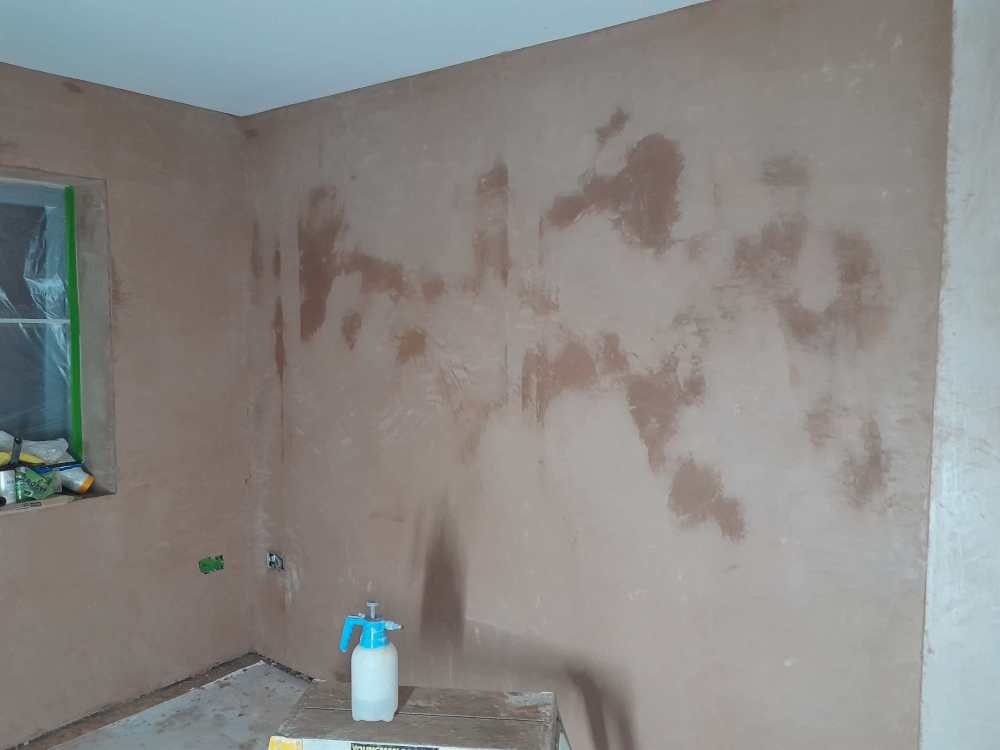
So yesterday I had a busy day dot and dabbing and thanks to the guy on On the Trowel Youtube channe, I skimmed my first ever walls as I need to get this room finished in the next week or so to give my younger son a bedroom - it was supposed to be in September. The wall was straight, plumb and the plastering was not a halloween horror show - just a few minor imperfections. I'm most pleased about the clean top corner to the primed ceiling:
-
I'm the east side, but Salisbury is still about 1.5 hours away. Thanks for the offer though, I'll check out my local suggestions and then ping you a message if needed!
-
What causes new skim plaster to crack in stud walls?
SimonD replied to SimonD's topic in Plastering & Rendering
Ah yes, thanks. I've investigated only to find that this appears to be the case. Where two cracks they're along the lines of a cut down board that only spans 600mm so it's only on two half studs. No wonder it's cracked around the joints. Now I have to figure out what to do about it. Just fixing the cracks is going to do the job really. Do I take the drastic action to cut this out, make a bigger whole and reboard to span several studs? It's a big wall 3.1m high by 7.4m long so not really practical to do the whole thing. Studding is pretty spot on as I did all that myself and its been in a long time so perfectly acclimatised to the house now. Yes, the third crack is at a joint that has missed the stud - thankfully one side of the wall is open so I can fix this easily! -
What causes new skim plaster to crack in stud walls?
SimonD posted a topic in Plastering & Rendering
Further to my earlier post I'm trying to understand why I've experienced cracking in the skim on new plasterboard on stud walls. I've had a look and it appears that skrim tape has been used at these joints. Can someone shed some light on other reasons this might happen? And is it fairly common for cracks to appear in new plasterwork as snagging?


