


SimonD
-
Posts
2215 -
Joined
-
Last visited
-
Days Won
13
Everything posted by SimonD
-
Looks like the party is over....
SimonD replied to Beelbeebub's topic in Air Source Heat Pumps (ASHP)
Not any more they don't if you want them to be efficient - all manufacturers provide their own controls for this too. Some of them are Opentherm or can be used with opentherm alongside their own controls, like Viessmann , which do allow third party opentherm controls, but unfortunately not all boiler maufacturers implement Opentherm in the same way so the same level of control may not be available. -
Looks like the party is over....
SimonD replied to Beelbeebub's topic in Air Source Heat Pumps (ASHP)
Good question! But with all the manufacturers I've trained with and some I'm going to train with, there's remote access so no need to re-visit to tweak, unless there's a problem with the system that needs someone on site. I've only just skimmed the thread but there is quite a bit of misunderstanding and, dare I say it, ignorance about heat pumps, the market and how much decent installers make even with the BUS grant on here. -
Looks like the party is over....
SimonD replied to Beelbeebub's topic in Air Source Heat Pumps (ASHP)
All decent heat pump manufacturers provide their own control systems and any decent installer buys the heat pump and control kit from the manufacturer. It really is as simply as that. They're not really that complicated to set up during commissioing either. -
Looks like the party is over....
SimonD replied to Beelbeebub's topic in Air Source Heat Pumps (ASHP)
You don't really need that. The manufacturers now have apps with online access so they (installer or manufacturer)) can tweek the WC curves, or change room influence factors remotely if customer says they're too cold or too hot. Some are now locking this function away from the customer coz they don't want them playing with them. All part of the ongoing customer service... For better or for worse, depending on how you view things. -
We just had fibre rolled out to us. Signed up. Had connection for 6 out of 14 days. Cancelled the contract within the 14 day cooling off period. It was with Virgin Media. I have to say I haven't experienced worse customer service since we were with BT broadband. Now using National Broadband on 5g which has been pretty good so far. Forgot to look at Starlink.
-
Take it from someone working in the industry that if anyone, and I mean anyone, including a person from MCS, say MCS says this, ask them specifically where it says that in the library of standards they've got. 99.9% of the time they'll go silent a crawl back to their hole. For example, in the last month I've had an MCS umbrella dictate installation requirements that MCS publish. I lifted exactly what MCS says - in fact - to tell the umbrella they're wrong. the umbrella immediately changed their mind. I've also just had to submit a complaint to a competent person scheme because they refused to certify an installation of mine because of what 'MCS requires.' I then quoted exactly what MCS requires and it's the opposite of what the competent persons scheme assessment people told me. Funnily enough they've gone completely quiet since my complaint. Unfortunately there are a lot of people in this industry who haven't got a clue what they're talking about ☹️
-
Nobody wants to touch my roof for solar and alternative location
SimonD replied to SimonD's topic in Photovoltaics (PV)
I spoke to my solar people about this and they're not keen - apparently they don't like the potential heat build upon the system with the metal roof. Unfortunately I can't comment as I just haven't had the time to do the research myself and form a view on it! -
Nobody wants to touch my roof for solar and alternative location
SimonD replied to SimonD's topic in Photovoltaics (PV)
Thanks! And thanks for sharing your experience. I'm going to have a good think about what we can use instead and see where we go with it! -
Wow, incredible. Shame they're not a plc as you could then apply for an arrest warrant for the directors. I had to do this years ago in a claim and it woke them up. They said they'd posted the original cheque to the wrong address! Right. Good luck I hope they're forced to pay up with sufficient costs applied too!
-
Nobody wants to touch my roof for solar and alternative location
SimonD replied to SimonD's topic in Photovoltaics (PV)
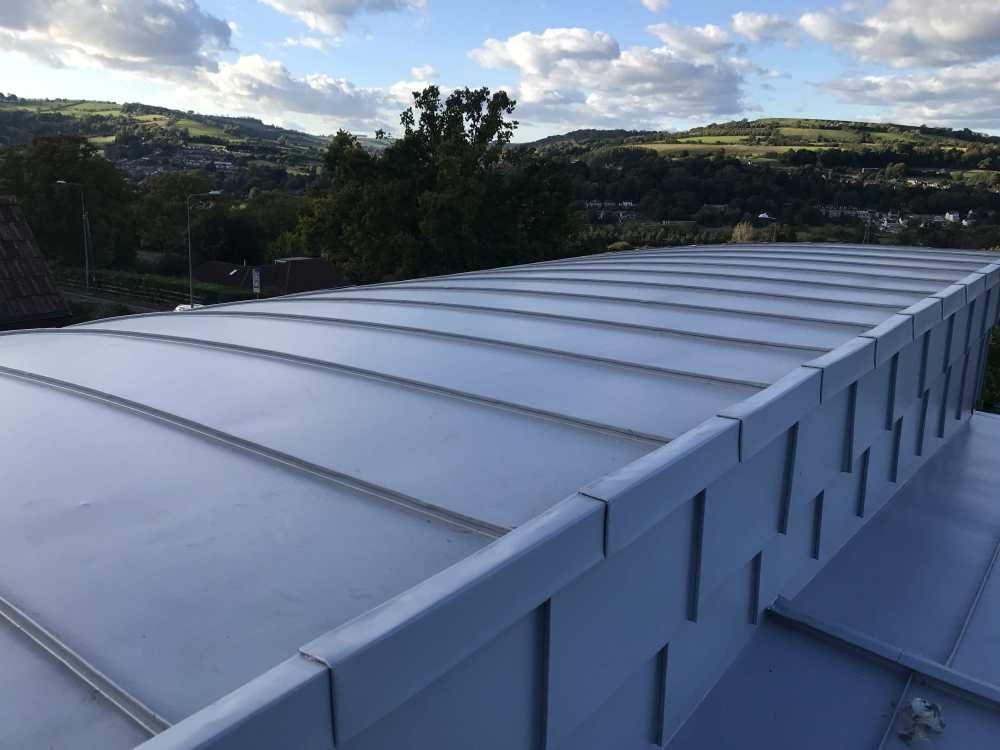
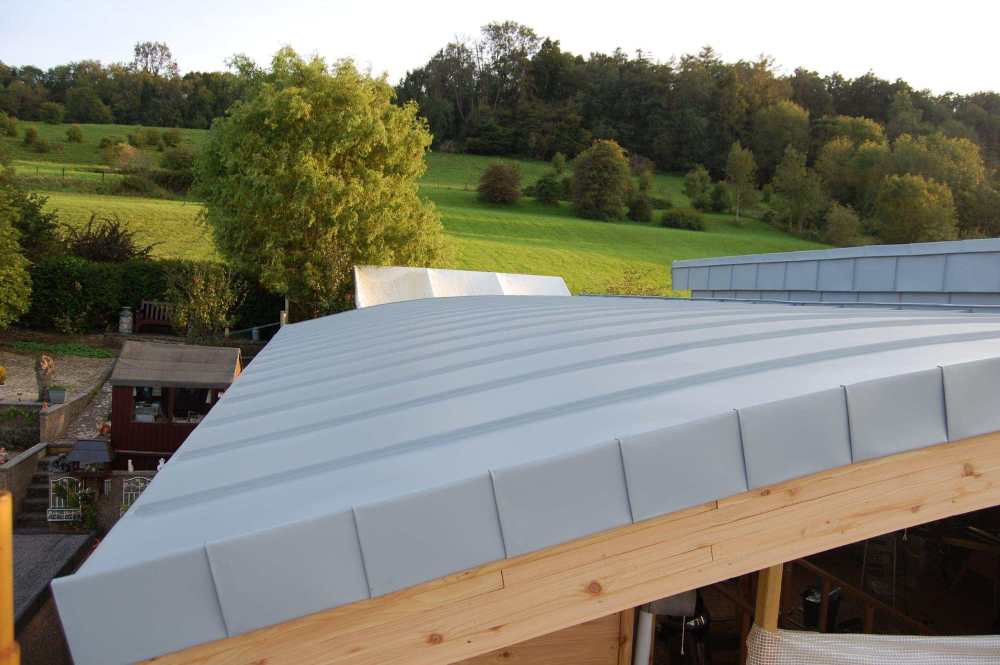
Thank you! Yes, I've just been tied up with a manic work week and your earlier post also sent me down a rabit hole to dig out and digest the original structural scheme, which I realised had been completed by 2 structural engineers. The 1st was regarding the whole house design, in particular the steel frame and founds, but also the wind uplift on the connection between the masonry ground floor and the upper floor timder frame. They then passed on the structural design to the glulam beam manufactureres who also completed there own uplift and load calculations for the beams spanning approx 7m on the longest side. I know the first onces erred on the side of caution, but know quite know the other - I will have to look through their report too. However, as I digest all this, I'm erring towards the alternatives suggest because: Yes, this is what the smaller side of the roof looks like - I completed the flashings pretty robustly by making a series of smaller single welt panels. Ridge and eaves went a little ott too. It's a 'proper' standing seam, hand folded with a double lock, so it has floating clips to allow expansion and contraction and this is significant as the panels are over 8m long on the longest side. Exactly, could agree more! This is now rapidly becoming my conclusion given all the input here. Yes, the solar panel side of things wasn't covered off at design stage at all, unfortunately, but it alos comes about because the solar designs sees a surface and just wants to use it all - doesn't see the risks until there's silence from the roofing contractors. For me, I'm feeling lucky that I didn't get a cowboy outfit that said they'd happily do it. And now I'm rapidly concluding that we should go in a different direction with this. I don't like the look of the fixings I've found, particularly given the curve as they won't sit completely flush to the seam and therefore may not be able to fully lock onto it as intended and I like even less the small ones with one grub screw that will inevitably damage the surface coating. All in all, I so appreciate the input here as it's been invaluable, thanks!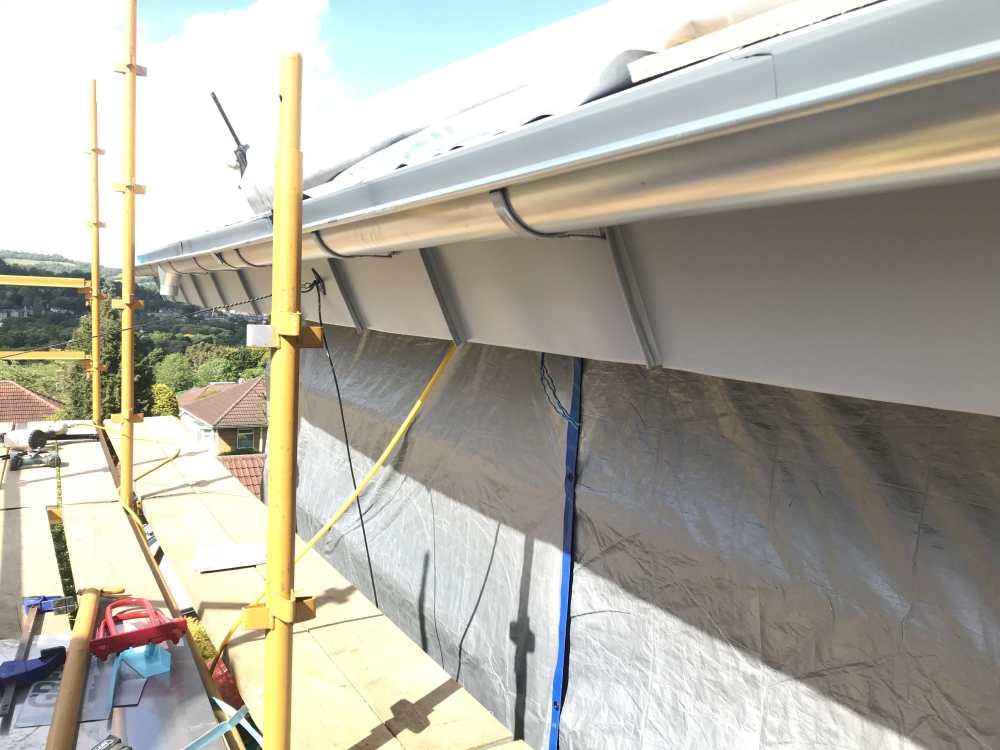
-
Nobody wants to touch my roof for solar and alternative location
SimonD replied to SimonD's topic in Photovoltaics (PV)
That's a good point. The solar designer wanted to lather the entire roof with panels and I was less keen. Due to the aspect of the house sitting on a hill together with the curve of the roof, we can get away with some of the roof without it being visible. For solar gain, it's definitely the best place for it, but there's a long way to cable to the garage. I've clearly got to have more of a think about it. -
Nobody wants to touch my roof for solar and alternative location
SimonD replied to SimonD's topic in Photovoltaics (PV)
Not at all. It's fascinating. This is another of your stunning posts Gus, so thank you for taking the time. I'm going to enjoy digesting it. Ah yes, nobody mentioned that when we started our project, which was supposed to be removing the roof and adding an additional story, as soon as the existing roof with conceprete tiles was removed the walls could just be lifted apart, do I had to rebuild significant portions of it. Yes, like this: 2350D 8 Detail Front Elevation Rev B.pdf Thank you I'm quite relieved to read this. I raised the question during the initial solar design meeting as my experience from the standing seam roof design raised my worries a bit. Haha, yes, will do! No, thank you 🙏 -
Nobody wants to touch my roof for solar and alternative location
SimonD replied to SimonD's topic in Photovoltaics (PV)
Thanks for this. Really useful to know your experience of North facing panels. I'll check out the modelling. We could do fencing. Would quite give us the surface area of the roof but would be directly south facing and without shading during low winter sun. -
I had a friendly solar designer put together a design for me, but when he went out to his usual roofing people he didn't get any joy. Even the electrician he works with that does a lot of solar installs with others hasn't had joy with his contacts. The problem is that I have a roof with 2 curves and it's a standing seam metal roof. The issues are partly: 1. The curvature 2. Calculating wind uplift loads to see if they're an issue I installed the roof and know my clipping distances which is fine so I'm going to ping the manufacturers a question and also get in touch with the se who original did the designs, including wind uplift calcs. The next issue is to deal with the curvature which nobody seems to be able (bothered) to model. And also the issue and cost of scaffolding they want - unfortunately nobody likes my kwikstage scaffolding. If i just went ahead and did this myself, my thoughts are I could use the portion at the top of the roof where it's almost flat together with a flat portion of the roof between the curves. However, I was actually thinking that the easiest solution would be to use the existing garage which has a standard tiled roof. The only problem with this is I've been told there's no point putting solar on a North facing roof (which would be half the installed area). The second is that the south facing roof is quite shaded by the house during the winter months. I'm not so sure this is as much of an issue any more? I really don't know what the current understanding is about shaded and North facing walls for solar and would really like to understand this better. Can someone explain? The advantage of this is that the batteries and infrastructure are going to go in the garage anyway so I think it might be better to have the panels there anyway. Thoughts?
-
In most systems I work on and commissioning, I find anything between 5 -9 is okay. Start on minimum pump speed and only if necessary up the speed. Don't worry about playing around with it. You can up the pump speed and see what happens and then leave it for a few days to see how it performs. And then if necessary reduce pump speed back to where you are now.
-
I know that, I've read enough of your posts to know you'd never go near one 😉 Exactly and that was who my question was for. Because this is where design starts: What is the problem and how am I going to solve it? Therefore logic states you need to ask why you want it (and that doesn't mean you, exactly) You don't just follow the level 3 heat pump training and follow up your heat loss and emitter sizing with a blind buffer sizing calc. You need to know what you're doing it for. Yet it's common in the industry to use the term interchangeably, so probably a good thing to clarify this in a terms of reference rather than make assumptions. I should've had my 2nd coffee first 🙄
-
I've just sat down with mine😀 Oh, you've gone and started Saturday morning by opening up a whole new can of worms here! What side of the bed did you wake up on 😉 So 🤔 My first question to ask is why do you want the buffer? Is it for batch charging/dumping excess heat or is for hydraulic separation, or a mixture of both. Is it perhaps to supplement open system volume. Are we making a distinction between buffer and volumiser? This is more important that I used to think it was because I've now seen manufacturer design strategies and schematics that use a 2 port volumiser which then becomes a buffer/bypass to increase run times when heat demand is lower, all controlled by the native controls, which then releases its stored heat back to the secondary system when needed. This apparently reduces many of the drawbacks of both 4 and 3 port buffers. ChatGPT obviously makes a preferrential decision for a 4 port, but 3-ports are used very commonly, again because they provide advantages. Because I rarely touch buffers, the design strategies and calcs are shelved somewhere in my brain I can't access very easily and don't have the time to dig out my guide to buffer selection somewhere in a pile of dusty papers! I'll revisit when it's at the forefront of my mind and instead go and rip a gas boiler off a wall ☺️ Coffee done...
-
I think the main strand in the op is that @Post and beam asked the installer for 2 zones and 35c flow temp and didn't receive it. It's not @Post and beam' s fault, it's that of the system designer and installer because @Post and beam doesn't seem to know what he got. The designer and installer whether the same person or different people should have fully explained the plan so he knew what he was actually getting. (E.g. from a flow temp perspective, I can fully understand why you would choose 40C v 35C because the rad size difference there is significant). Unfortunately it is very common for designers and installers to do what they think/want to do with or without a customer's understanding. But then there are also too many idiots in the game that barely have half the required understanding and as a result cause these kinds of issues! (I know this very well as I've just had to explain manufacturer's installation requirements and MCS installation standards to a company operating an MCS umbrella scheme and didn't know what they were talking about!) All of this should have been conveyed by the installer in advance - discussed in depth with the op and confirmed a mutual understanding. As it wasn't they should be on the doorstep ready to get the system working properly!
-
Not necessarily. The heat outputs curves of radiators versus ufh are different - rads are calculated to the power of 1.3 and ufh to either 1 or 1.1 so it depends on multiple design factors and the thermal properties of the building, including the balance of area between rads and ufh. Because this differential may often result in different flow rates, especially at higher mean water to air temperature differences, a mixer is used to offset this by adjusting flow temperatures to each zone.
-
I did ask...
-
Vaillant Ecofit Pure Modulation Question 18kW
SimonD replied to Mattg4321's topic in Boilers & Hot Water Tanks
As @JohnMo suggests it's down to flow temps and latent heat when condensing. 1:5 modulation ratio ain't that good. Better go with a Viessmann if modulation is important to you. Personally I'd also lean to a system boiler unless you've got particular system issues that make it impractical. -
I seriously suggest you ask (instruct them in no uncertain terms) your installer to install one of these as it provides weather compensation across different zones. As standard tmv & pump arrangement won't do that and will essentially have relay control. https://professional.vaillant.co.uk/for-installers/products/vaillant-mixing-module-vdm-69824.html Given your installer doesn't appear to understand open loop, even if they think they do, you might want to suggest they contact Vaillant to get the schematic for this system and make proper adjustments.
-
But they have them on the wall in their training centres and sell single and dual valve insulated esbe kit. The schematics and wiring diagrams are available. 3 mixers are supported by vr71 connectors r7 through r12 But as you say, not many seem to rtfm, or pay attention during their training, if they've been to it at all? And you're unlikely to get this from many of the big installers I suppose? It's weird they don't make it more obvious.. Grant on the other hand provide an installation kit for the aerona 290 that includes an electronic mixer for combined ufh & radiator circuits and the schematics and wiring diagrams are 1 of the standard one in the manual. What a comparison...
-
Have you not received a design from the installer? You probably have got the weather comp curve set too high and should have been told by your installer that it takes a while to set the system up properly. Has the installer arranged follow up visits to balance the system when it gets colder? What we really need to know is what mean water to air temperature difference the radiators have been specified to. That way we can tell if there needs to be a flow temperature differential between the radiators and ufh. In 2025, a 2 zone system with rads and ufh needs to have an electronic mixer to properly deal with weather and load compensation within the heatpump and both the zones.
-
Panasonic aquarea - dual zone cooling @ diff temps possible?
SimonD replied to SBMS's topic in Air Source Heat Pumps (ASHP)
Don't hold your breath there are still schematics abound for HP systems for micro zoning with thermostats in every room. Vaillant have a few that include 3rd party controls too. According to the powers at be, this is what customers want... so the brainwashing continues. I wonder whether Heat Geek zero disrupt cheap version includes keeping any micro zoned systems or whether they'll propose chucking it all in the bin? Personally, I'm counting my blessings I don't have to deal with 3rd party controls any more...




