SimonD
-
Posts
2215 -
Joined
-
Last visited
-
Days Won
13
Everything posted by SimonD
-
Wow, yes! Why has your transformation not been recognised with moderating power?
-
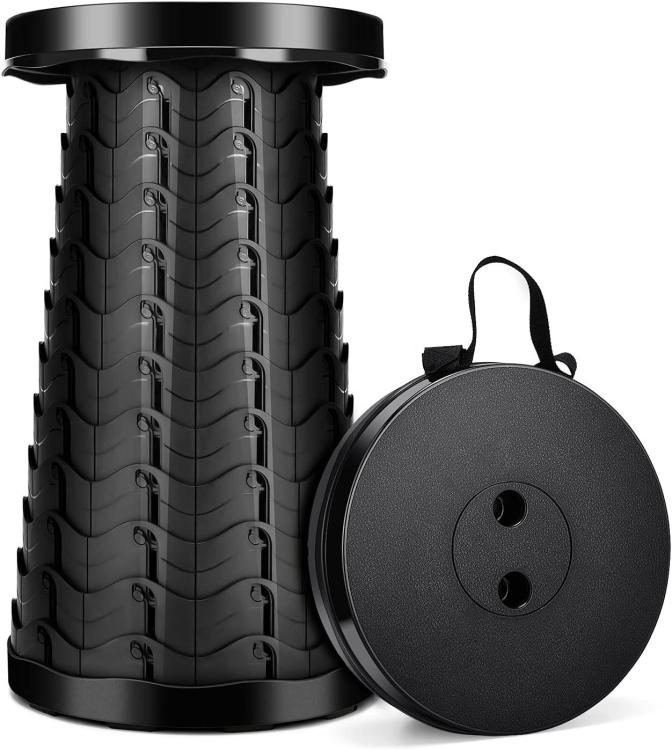
Not that I think I'm a short-arse but I already find myself on one of these a lot of the time. One of the best tools I have. It hangs permanently on my service bag:
-
I'm so glad to hear what must have felt like eternal solitude resulted in such deep enlightenment. I obviously can't speak from any experience of how this must have been for you, as I have yet merely experienced the deep shame that comes from a public shaming by @Russell griffiths that a question is just 'silly' which I'm sure pales into insignificance compaired to your brutal treatment!
-
In my mind, it isn't about how often you expect to go in there but whether you have access when something goes wrong. I recently did a repair in a newbuild with full UFH throughout. I was searching and searching for both the ground floor manifold and wiring centre only to eventually find they were sitting right behind a 500l cylinder. The clever builder had clearly put the cylinder in place before finishing the framing for the door so the cylinder wouldn't fit through the doorway. So I explained to the customer that any repair would require fully removing the cylinder, but first the whole doorway would have to be demolished. A plumber really shouldn't be ignoring the plans without first talking to the customer and it shouldn't be for the customer to ask the plumber what the alternative plan is going to be. It should all be done in advance before any work commences.
-
Blimey, that's like a C1 my kids get at school, then it goes to C2 & detention, and then they get banned. How long have you been shut out for then?
-
Surely I can't have trumped @Pocster? I wish I knew... imagine one of them hanging from a Crucifix and the filth gets even worse!
-
I'll tell you when it arrives and is plugged in - I'm not allowed to get it yet....must do more hard labour to deserve it 😉
-
You should have seen our electricity bill for heating our garden office that is insulated and used by my wife for work - it cost £1600 the winter before last and before I could move here into the house!
-
If using a panel shed as your base. But I did say: "If you had say 38mm slotted timbers to make the building, it might be a different matter entirely." With the Polhus designs once stacked, the timbers are bolted at each corner to press them together to prevent drafts. And 44mm will be fine.
-
Well, it's a bit like having that 3 tonne V8 of yours and upgrading it to a 4 tonnes EV SUV just to drive around Chelsea and drag race the Ferraris in front of Harrods? Saves the planet just a tad 😁 I still wouldn't convert an uninsulated shed into an outdoor sauna without insulating and pannelling the inside.
-
Only if you use it as a dry sauna, which is not the usual way to use them as you'll usually be tipping spoons full of water onto the hot coals. Dry saunas aren't very nice in my view and the wave of heat when you pour the water on is one of the best bits!
-
Must be getting a bit hot under the collar..... You're the wrong side of the Baltic Sea! Maybe these instead? Or even ?



-
Usually 6mm is recommended, it just makes for a better substructure.
-
It's more down to whether the kit comes with pre-fabricated panels like cheap sheds. Here are some good examples available off the shelf from a company that started just up the road from where we had a summer house in Sweden when I was a kid. https://www.polhus.co.uk/sauna
-
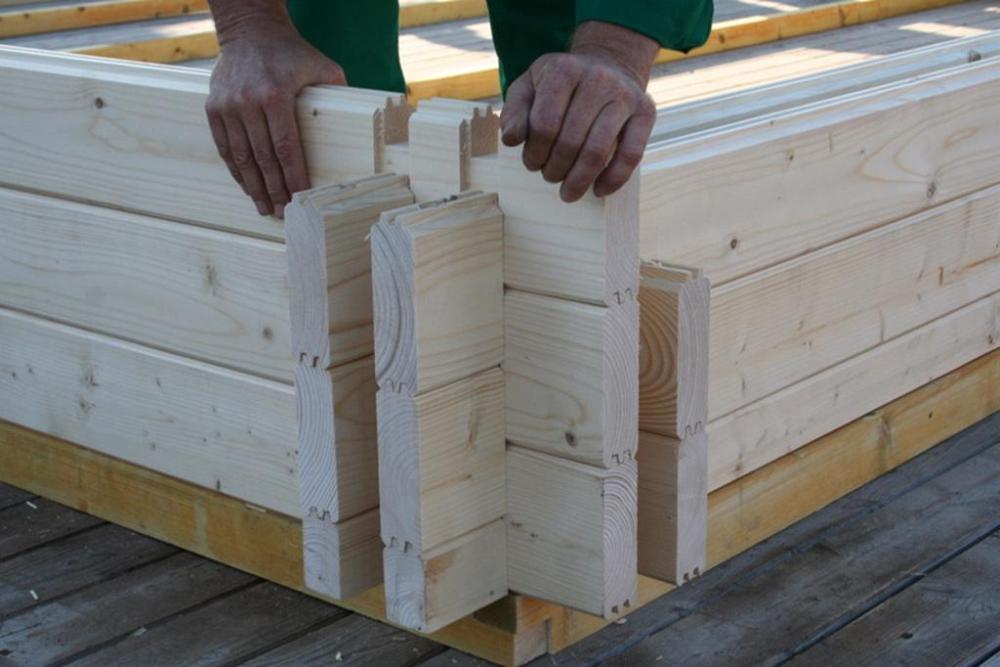
Definitely not talking about a panel sauna. Neither would I. You can get the slotted 'logs' at a minimum of 38mm like these, which is what I was referring to:
-
So is your current design going to be just a normal shed with visible studs to the inside? By the time you've built up seating and decent back rests so you're not leaning against a stud or the exterior wall, I'm not sure it's going to double the materials. Also, you'll get a lot more condensation if you just have shed like cladding and you're going to have difficulty making it reasonably airtight, which means less overall control over the temperature environment. If you had say 38mm slotted timbers to make the building, it might be a different matter entirely. To me, if you're going to do something like this, you may as well do it properly and make it an environment you really want to spend your time in.
-
Yes, thet are really that simple for an outdoor one. If you want to go a bit more energy efficient, then you can use either Kingspan Sauna Satu insulation or Finffoam Sauna insulation within the frame - if I was going to the cost of making a sauna with resistance heating, that's what I would use. I'm putting in a sauna in my house and decided against the outdoor version because as I'm of Swedish heritage, you should be naked and have at the very least a cold shower just outside the sauna so that you have intermittent cold showers while using the thing. Indoors, I highly recommend using the insulation and making sure there is a vent directly to outdoors. Personally, I've chosen to go the route of an IR sauna that just gets delivered as a self assembly pod that you can plug into a standard wall socket and will be just next to a shower room.
-
Not quite. With the Worcester controls, you'll use something like the EasyControl with the Worcester smart trvs to achieve modulation. In this instance you'll get the Easycontrol to turn the boiler on/off with modulation and just use the trvs to control room temp via flow control to rads not boiler control. As soon as you try to add multi-zoning using 230v relay on a Worcester you lose the modulation capability. IMHO the whole design of Worcester controls is pretty flawed and technical support for the controls is a bit random. You can't use Tado or Nest with a Worcester unless you're happy with relay control, which defeats the whole purpose. You'll also need the hot water diverter kit to be installed to provide priority hot water with the 4000. With regards to Glow-worm, it's essentially a Vaillant, so you're better off considering Vaillant/Glow-worm controls as they're ebus - they're better than the Worcester, but you're stuck with what they've got. TBH, just like @JohnMo says, there are plenty of other boiler options out there that can do a better job. ATAG are now offering 18 year warranties on boilers, so well worth a look. Even an Ideal Vogue Max will be opentherm with 12 year warranty with a max accredited installer, so can be set up PDHW with the EPH priority hot water kit and the Ideal own brand Halo Heat & System also supports PDHW (but as I've found with a couple of installs the Halo is a bit buggy and tech support doesn't fully understand it all). Otherwise Viessman is a good option too.
-
It completely depends on the roof and the required detailing. Installing a traditional standing seam roof is very labour intensive because everything is literally made by hand from a coil. Your other option is to follow the path of quite a few on this site where they've bought the prefab versions that are delivered ready profiled on a lorry and some of which you can then diy after a little training. There's also the company Metal Solutions that can supply all the types of Standing Seam but also have a prefab service, so worth getting in touch with them.
-
I need to install a suspended ceiling and tiles in our utility room. Can someone recommend where to get them from - framework and tiles? Also, any links for actually designing and installing the framework correctly? Many thanks.
-
Bless the politicians, so they're doing a similar thing to how they classified wood pellets and subsidised their use only to find out the cost was the massive loss of ancient forest and biodiverity around the whole of Europe. So the farmers will be forced to sell their waste product but buy more fossil fuel derived products to replace the natural co-product?
-
You'll be surprised how even the smallest drip will cause pressure loss in a sealed system. Given it's a new system, this could be in any multitude of places which you can very carefully inspect. The other option is to pour some CT1 miracle seal into the empty radiator before you re-pressurise next time. Then see if it solves the problem.
-
Absolutely. At my recent pre-plaster inspection, the BCO commented on the high standard of workmanship and detailing on my build and said it was a breath of fresh air. He said I should have seen some of the developer and contractor stuff he'd been inspecting earlier - which was along the lines of a dogs dinner, the lot of it.
-
Now that's a sublime piece of carpentry there! 😁
-
This is why self-builders always move onto another build...eventually...even when they say they won't 😉 Just watch it, you've started down the slippery slope. Next it'll be a two-bed tree house in the forest somewhere and then before you know it,it's another passivhaus 😁