


SimonD
-
Posts
2214 -
Joined
-
Last visited
-
Days Won
13
Everything posted by SimonD
-
Because this is an implementation of the CIBSE reduced method, these are really the only choices for this particular version. However, when I get the full BS EN 12831:2017 method tested and run, there will be full freedom for proper and complete fabric inputs for the calcs. The CIBSE method covers pretty much 90% of projects we see, which is why I went for the quicker win to begin with. The tool will still give you a pretty good result right now as fundamentally this gives you a conservative result as that's what all the methods tend to do. However, to get around this now, you can select the tab to the right of SAP Estimate and select the Measured/Tested air permeability and then add your SAP design figures, that completely gets around the problem and is the better approach right now.
-
It is, and applied well and in the right place, it produces an extremely good finish. I've been in many houses where it looks stunning. A lot of the other paints like the trade ones are developed I think to go on easily and hide a multitude of sins.
-
Absolutely, they are all about the surface area, which does dictate output. The app just uses the shortcut of the Delta T 50 and then applies a correction factor for the system design temps, so we don't need to worry about the surface area being involved in the app. We could, but it was enough to resolve the UFH output calcs as they are calculated based on the variables input for each room and those took some effort to resolve and get right - or at least in the ballpark. If there is enough call for it, I may add a calculator based on surface area for rads as I know the question comes up a lot with older existing panel rads with no fins. It's in my backlog. Yes, that's what I should have said ...
-
Thanks for letting me know. That's my fault. I was playing around with users and authorisation earlier to create the new beta engineer test and in doing so seemed to break how radiators are saved to specific users - it was saving fine for anonymous but not any registered users! Anyway, it should be fixed now 😊 Yeah, the width is actually termed length in catalogues so you always have dimensions = height by length e.g. 600x1200 or 1800x445 Glad to hear you're getting on with it okay!
-
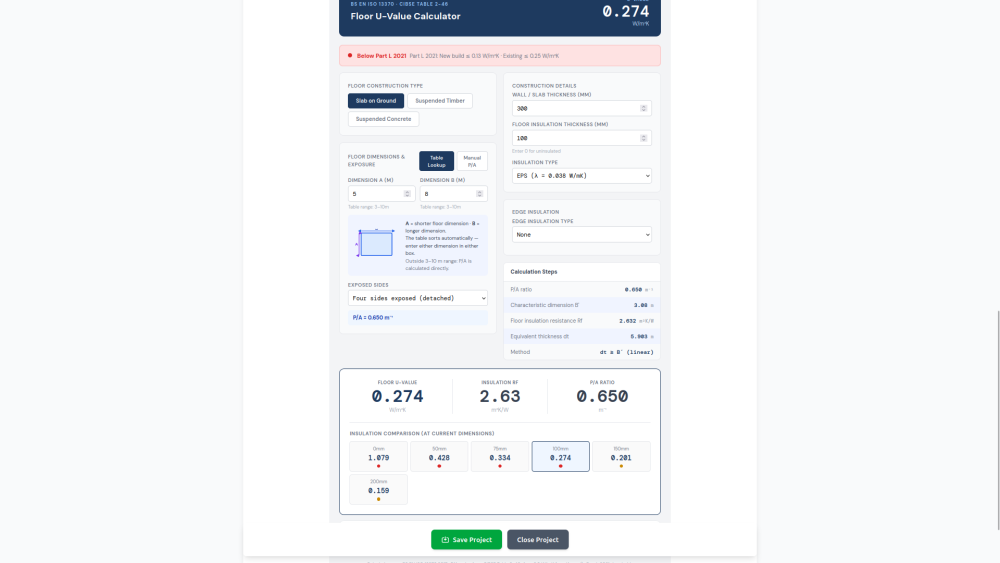
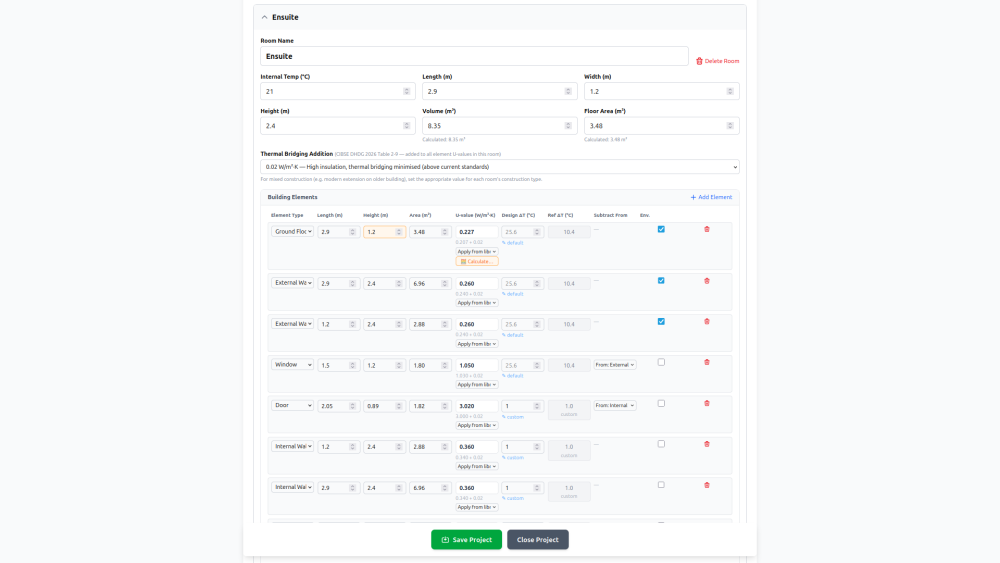
Any radiators you add go into your own 'company' radiator database linked to you as a user, so if you had several projects, you'd build up your own database of radiators. Nobody else has access to those or can edit/change them, they're yours. In the wider version for managing several projects, there's even a project settings page where you can add edit and delete you own database. If you want access to this wider version with multi-project capability, ping me your registered email address and I'll change your settings to 'beta' test engineer in the system. I'll add flat tube radiators to the type as a system addition, but for now, two column would work fine - the type doesn't really matter that much, it's more for your own reference. The important bits are output at DT50 and water volume really. And then size if you're putting a new one into a space... Not at all, I've done that to check volume on existing rads myself, but luckily most rad manufacturers now provide l/m figures in the tech spec. Stelrad actually even provide Kv. To get the l/m min take your total measure volume and divide by length in meters - so in your case the 0.578m Best thing to do in the workflow is add all your standard elements into the U-value tab and create your U-value library. Do this especially for all your floor U-values by using the Floor U-value calculator as floor U-values vary according to the Perimeter/Area ratio. Once that's in you'll get an automatic drop down when you add an element in the rooms tab. These will then auto-populate and add the thermal bridging addition. I've been back and forth on the editing of value directly in the room as if you skip creating the U-value library and you're working on a large project, inputing into individual room elements gets very tedious, which is partyl why I locked it to force users back to the U-value library. I ought to put a user hint in there about this. The other bit to bear in mind here is that if you add a door or window to the room, you'll get another automatic drop-down where you can select which element area this door or window needs to be subtracted from. So if you have an external wall added, this will be listed in the dropdown and you just apply it. The reason to do this is because this will apply the correct calculation for fabric loss, but at the same time used the full external element area for the ventilation & infiltration calculation. To make things easier to follow, I tend to add the wall element, then add any corresponding window or door to that element and subtract it. Then move onto the next element. Then in the elements also remember to change any internal element's Design Delta T (e.g.partition wall) to the difference between the two adjacent internal spaces and not leave it at default. Elements roof, ground floor suspended, external wall are all automatically added to exposed envelope so if you have a ceiling that is the external envelope, then you need to add this to exposed area by selecting Exp. I have on my to do list a load of videos to walk new users through the tool. If you spend a lot of time inputing this stuff, it follows pretty much a normal design workflow but it's not obvious at all for someone not in the industry.
-
Ah okay. The finished Readme is now up on Github so should contain all you need to know for Linux install: https://github.com/OpenHeatLoss/OpenHeatLoss You'll notice in the Readme that while the UI is completely functional there is room for improvement especially for mobile and accessibility. With the amount of input for a design, I'd hesitate to use it on a phone unless I was just accessing it for reference and using the survey checklist. But obviously it's all ready to go with the hosted service
-
Is this for installing locally from Git or using the hosted version? If installing locally, it's currently designed to work as a web stack using React/Express/Postgresql, so you'll need to install those and access it through your browser. Initial development was on windows, so it can be installed on a windows machine, but the majority of the development has been on Linux as that's what all the hosts use. The hosted version is best through PC & browser, but it will work on both tablet and phone through browser. I'm currently completing the Readme for Git which will guide you through the setup for self-hosting.
-
yes and with some controls they're intelligent enough to balance load between 2 units to keep them both in more efficient operating conditions, or separate dhw from ch.
-
Either or, whichever is easier for you. I'm happy to be fully transparent about any issues or problems as well as suggestions for improvement but email certainly helps me to collate them into relevant patterns. Thanks!
-
Yes, a cascade is 2 or more units connected together. An advantage of a cascade in a large domestic situation is modulation as a very large single unit may not be able to modulate down low enough and therefore cause short cycling during mean temperatures. But this is entirely decided through design of the system and what your typical outdoor temperature is compared to the coldest design temperature. There are obviously other considerations to cascades v single units, but this is a big one. Some manufacturers like Nibe design their cascade systems so you can add new units onto to older ones etc. over time, or even run ASHP with GSHP and pool heating. There is more complexity in the commissioning and control of a cascade. 3 phase shouldn't really be an issue for the heat pump installer. The 3 phase units I've seen are very easy to wire up and it's really up to the electrician (I get my electrician to do all the mains connections because he's got the necessary crimping tools for the terminal connectors and testing tools etc.) including then balancing the phases.
-
Plenty of those around on 3 phase. In fact some of the larger units are only available in 3 phase (e.g Panasonic M series over 12kW), but it all depends on the system design and whether single big unit or cascade is the better way to go. You need a good designer to look at it and justify the decision.
-
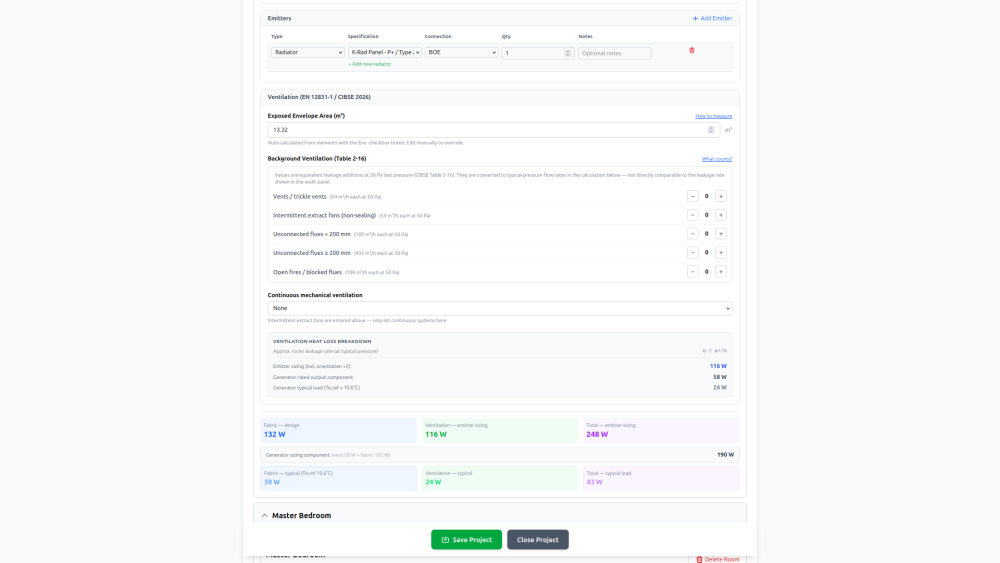
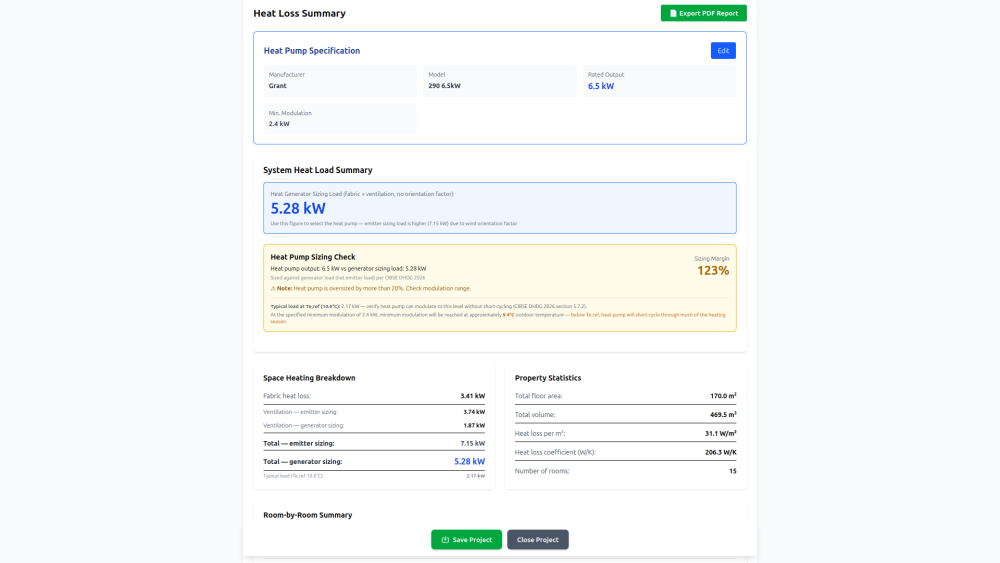
I'm actually not sure where the best place is to post this but as it's primarily about heat pump system design, I'll put it here. @marshian and @mads ,and maybe @MikeSharp01? you've expressed your interest so mentioning you here too. I hope the admins don't mind me putting this up here, but maybe if it is found to be useful, could be pinned to help so many of the people who come here struggling with poor heat loss calcs and designs and want to complete their own. I've finally deployed the tool I've been working on for initial public use. It's available free and open source, so repository on GitHub if anyone wants to host locally. It's currently in a bit of a test mode so I can get some feedback and bug reports to refine it and add further important functions. Just bear in mind I've been developing this myself along with everything else in life and it's been quite a major piece of work since last summer. It is now based on the CIBSE 2026 Domestic Heating Design Guide implementation of BS EN 12831:2017 and BS EN12831:2017 so complies with MCS design requirements. I have been using this tool for MCS heat pump projects in house that I'm doing. It's at https://openheatloss.com Important user notes: At the moment when you arrive, you can complete a whole project anonymously without logging in but this persists only for 48 hours or until you close the browser. The save a project, just register using name and email, nothing else. If you want to remain largely anonymous, you can just add the post code prefix to the installation address to set outdoor design temperature and Typical reference temperature. No need to put in loads of personal information. The workflow design is to work you way from left to right across the app tabs. Current limitations: I have not populated the database with standard wall build-ups and U-values. If you're a self-builder or doing major diy hopefully you'll have this info already for your project, otherwise you'll need to look it up manually. There is, however, a comprehensive floor u-value calculator and a simplified one in the room elements input too, so these can be calculated for you. Same thing with radiators - no standard sizes or outputs in a global database yet. I will do a scrape at some point. All outputs entered should be the Delta T 50 catalogue values and if you want system volume calcs, also input the radiator water volume. The UFH sizing calculates volume automatically based on your set pipe diameter, spacing and room area. Text based design - I've tried some of the design tools that are trying to be like cad design software, so you've got do draw your project. Having used cad software, I didn't warm to any of them because they're not proper cad software but in house bespoke design. As I also found out they have limitations so you have to fudge some shapes - roofs in particular. Text based means you can input elements more flexibly according to your needs. Well, I hope so anyway. What you will find different if you've used other tools, although I'm sure they'll either be doing it already or soon, is that the tool provides 2 different heat load figures. is for the heat generator which calculates the whole house fabric and normal ventilation includes a full fabric air infiltration calculation and is usually higher than the generator load To explain this, the new heat loss calculation methods according to BS EN 12931:2017 and specifically those implemented in CIBSE 2026, with wind load under certain conditions, parts of the building and rooms may require higher heat outputs, whilst other parts may need less. This 'total' value comes to a higher result than the generator. In my own test projects that I've run through the new software, I can attest to this working quite well. For example, in one design and installation project of mine, one particular room in the house was designed for 23C but over the winter, whilst never cold, the room never managed more than 21C. I had thought it was a balancing issue, but no. When I ran this project through the new software it predicted that I would need larger radiators in this particular room, base on the new ventilation infiltration calculation, so that is what I will be installing before next winter. Anyway, please have a go and let me know what you think, and ask any questions you have here, or email me at the tool - [email protected] Does anyone need a user guide to the design workflow and inputs? Let me know..
- 59 replies
-
- 14
-

-

-
It's funny you should raise this difference between heat pump installer and electrician. The electrician I use as part of all my heat pump installations called me a while ago pretty p***ed off. He'd completed a new house wiring installation plus solar & batteries on 3 phase. The heat pump people came along and just installed a single phase heat pump cascade, causing a bit of a headache. At least yours are talking about it. What is the size of your heat pump? And I'm guessing it's been confirmed the model is available on 3 phase? Probably a silly question. I've had a similar experience with solar design for my place where the designer didn't seem to understand modular and phased approach. It's a bit infuriating. With the right system design there should be no problem scaling up if you need to, just as @JohnMo suggests.
-
That's an annoying problem. I can't really help other than for others to say that as far as I can, I avoid gate valves and other valves that require turning like these as they always seem to foul and stiffen up. I use full bore lever ball valves nowadays, even they are sometimes stiff to close.
-
You have been round the block haven't you! 😊
-
Slightly more than that, not only do they prevent too much flow at full load like a flow regulator, they are differential pressure controllers so they also ensure required flow rates are maintained under partial load conditions, which is essential for efficient modulating systems - obviously within their design Delta P range.
-
Isn't that a bit like plumbing in a heat exchanger the wrong way round?
-
PITRVs are your friend here. I don't know why more people don't use them, but both Screwfix and Toolstation now stock and sell the Danfoss ones - great for gas systems but less so for really low temp heat pump systems with very large radiators . Flow rate is more linked to the difference in temperature between flow and return. As highlighted above, the problem is that many column rads don't have baffles so you get flow straight through the radiator if the valves are both at the bottom of the rad. This then provides a bypass through the system. I still get customers who ignore me when I tell them to make sure they're baffled when they order them. Better then to connect them up top-bottom-opposite-ends, but sometimes not pretty. The thing to do is get some cheap clip on pipe thermostats to measure the actual flow/return temps, but first you could test by shutting down your trvs upstairs to see if the temps of these new rads is better. That'll tell us a bit more.
-
I'm the same, it's like having a splinter that has to be removed. I'm dealing with 2 heat pumps at the moment that look like the bottom panel is hitting a resonant frequency that's making them both very loud. The manufacturer's tests have been rubbish. I'm on a mission with that at the moment....
-
Yes, the Viessmann heat only boilers are a completely different beast compared to the system boilers - no opentherm/room compensation available. Even on the system versions of the 100-W return temperature is not available to Opentherm - or at least not some Opentherm controllers where you can interrogate what information is available for control. Whether it is available to Viessmann ones would be interesting to check.
-
What numbers do I need to size a heat pump?
SimonD replied to Selfbuildsarah's topic in New House & Self Build Design
Oh, nice, hopefully you can give me lots of feedback! -
What numbers do I need to size a heat pump?
SimonD replied to Selfbuildsarah's topic in New House & Self Build Design
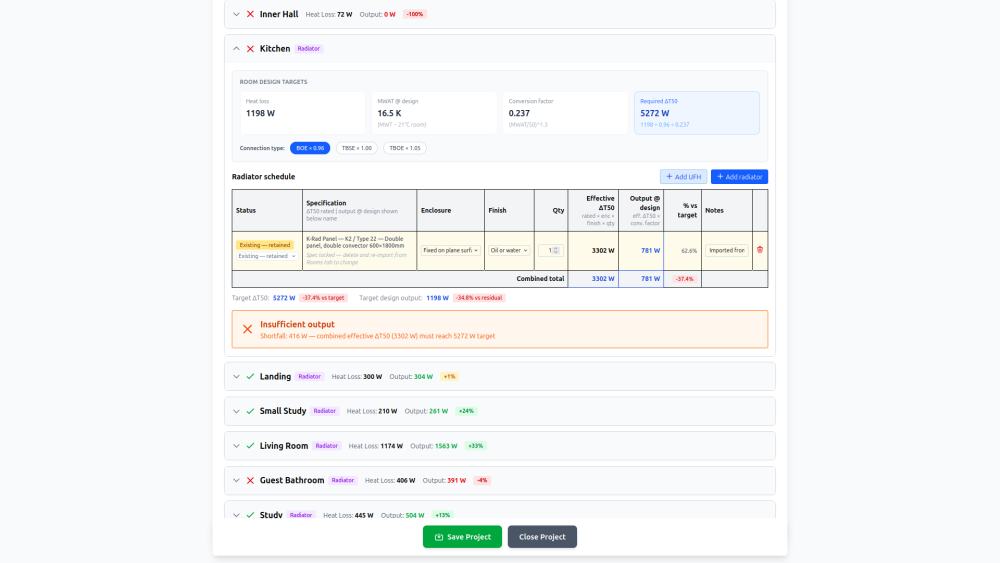
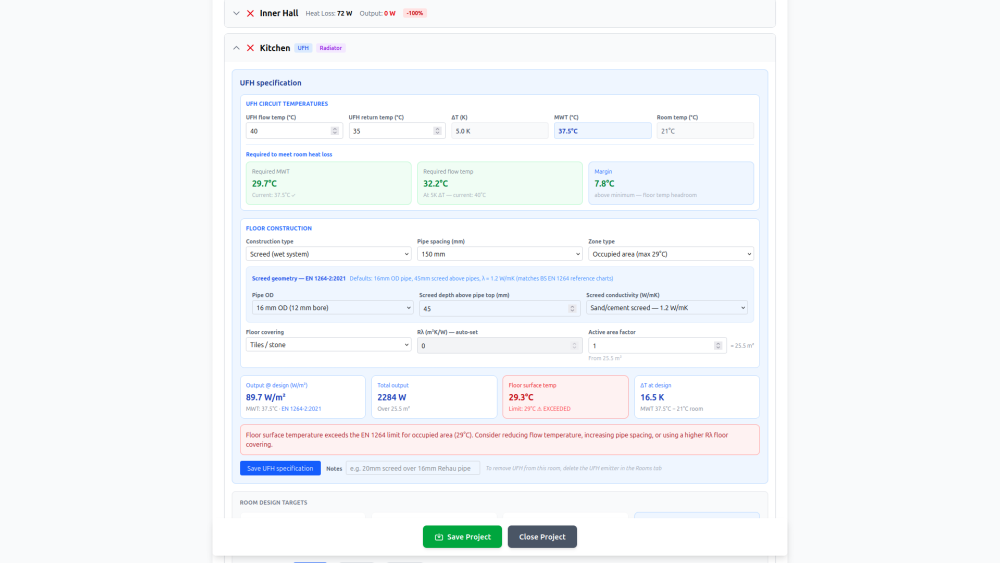
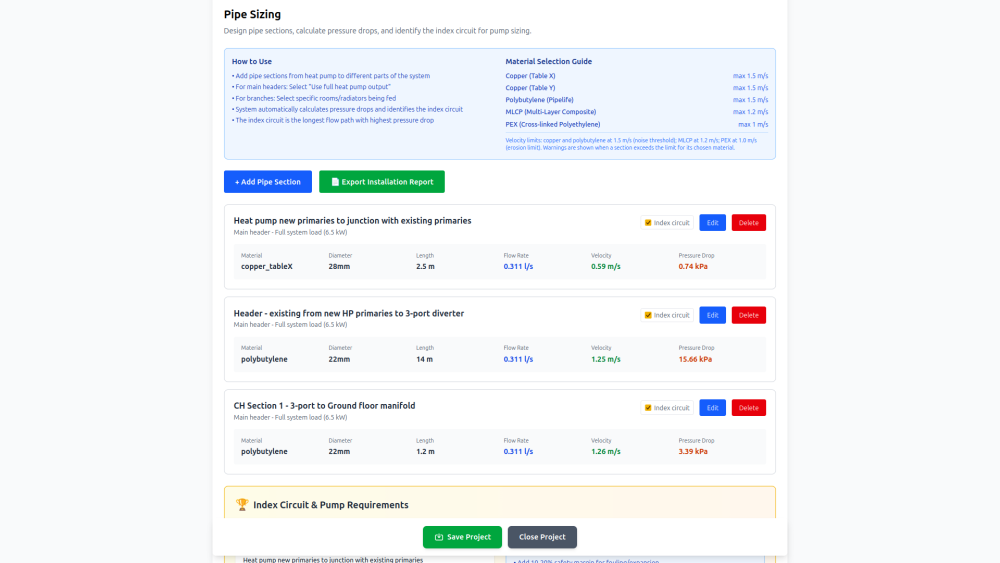
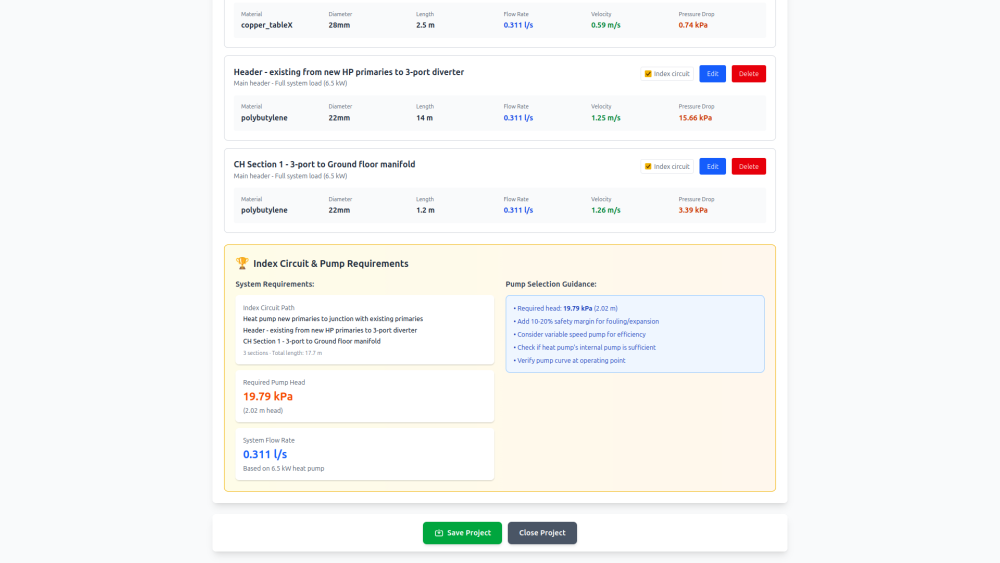
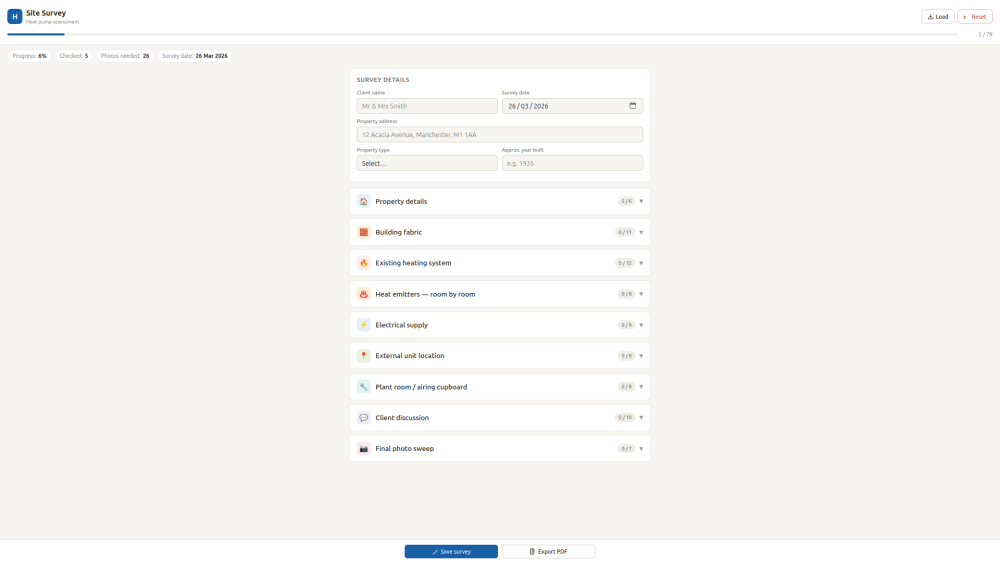
I don't want to hijack this thread, but here are some screen shots. The app will be open source with repo on GitHub of course. Problem is I keep on thinking about additional functionality and adding that after customer questions so I need to be more disciplined and release a version 1 I can then build on rather than continuously develop!




-
What numbers do I need to size a heat pump?
SimonD replied to Selfbuildsarah's topic in New House & Self Build Design
Better if you can send a dimensioned copy of the floor plans and elevations together with all the U-values for the elements - windows, doors, internal/external walls, floor, ceiling, roof, etc. - and the design air permeability or test results in q50 and any MVHR specs. Then privately share your postcode. If I have all these details I can run a fully BS EN12831 heat loss calc to current MCS standards which not only provides a heat generator loading, but also the room loading based on calculated air permeability. I can then also provide initial figures for any underfloor heating design and requirements together with flow temps & floor surface temps assuming that's what you're having. I have a tool that will soon be available free for self-builders, but I'm currently working through final bug fixing and hosting, so it's going to take a few weeks until it's online. Please feel welcome to send me a PM. -
That's how the Huepar works for self-levelling. As @Nickfromwales says they're very sensitive to any vibrations and can wobble around like anything.
-
Yes, Huepar are great as is their warranty support. I had a lazer go on one of my units, they asked for a video, and then immediately shipped out a replacement for me. I've now had three! But I will warn you that although they're robust, don't kick them off the top of a roof so they bounce all the way down the ladder - they're not designed for that I found out, but the unit still worked for a couple of years without the protective screen over a lazer!



