


Bramco
-
Posts
796 -
Joined
-
Last visited
-
Days Won
1
Everything posted by Bramco
-
We've been in debt to Octopus for about a grand since last winter and they've never asked us to increase our £50 monthly charge. We've paid it off now but I wonder how long they would have let us keep building up the debt. Simon
-
On the Sunsynk, critical loads are a separate connection - there are 3 ac connections on the Sunsynk Ecco inverters: grid which is bidirectional, critical loads and one for a generator/wind turbine. We've just fitted one of the 5kW inverters with 3 of the 5.1kWh batteries and are very happy with it - so far..... The instructions for setting up how the power flows are a bit crap though, took a few tries before we go all the right boxes ticked. We have a 6.5kWp solar ground mounted array (with planning permission, we're green belt, so had to apply). Our sparky also advised a DC cable for the array to the garage which is about 60m distance. So as per @JohnMo's post above 4 core armoured cable. Simon
-
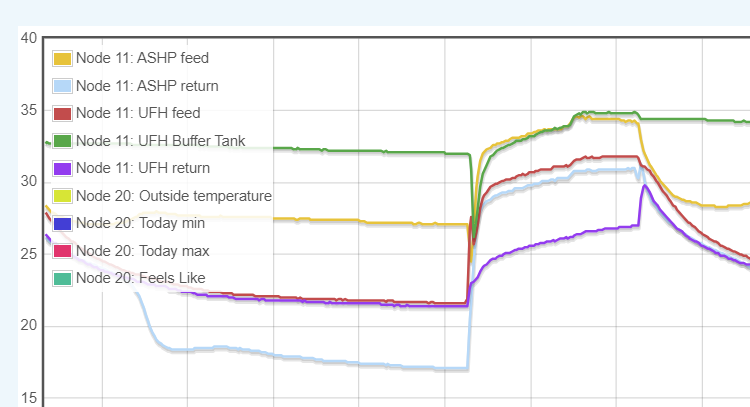
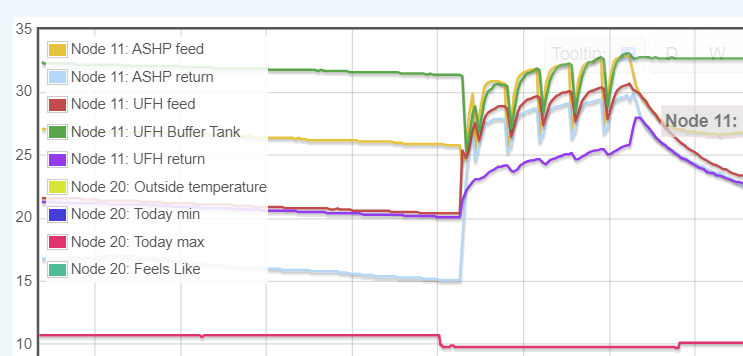
@JamesPa Flow out is about 30C and back is around 25C. The ASHP is set to 35C but even when it's not defrosting, it never reaches this, so it runs continuously for the full 4 hours. When it has to defrost, you can see a dip in both the ASHP output and input and the UFH feed and return. I think we'd set the ASHP setpoint to 35C to aim to get a flow temp approaching that but with the way things work, i.e. the ASHP never really reaching the setpoint, it's actually probably working optimally, in that when the ASHP doesn't have to defrost it runs continuously, so is probably getting a great COP. Sadly can't see this on the Cool Energy units - I'm considering putting one of the open energy monitor ASHP kits in so that we can see what we're really achieving but that means draining down the ASHP loop to put a heat meter in, so will have to be done in the summer. Graphs below to give you an idea of how things work - our build was almost passive house, very airtight, MVHR, insulated slab with embedded UFH loops, so we don't need much heat and when the slab is warm we don't lose heat v fast. Warm night, so a bit above normal, no defrost. Cold night with defrost. Given it was very cold, the immersion in the UFH tank we use for a boost when it's below 5C was probably also on.
-
@JamesPa This is exactly what we did. We'd had enough of the daft quotes for ASHPs, especially those that insisted that they would have to do a full heat analysis, when we already had that from our M+E consultants.... And then of course there was the MCS markup... So we went ahead with the cylinders we'd specced in the M+E report. 300L DHW with 2 immersions and an UFH buffer tank also with 2 immersions. Both with about 3m2 coils. The DHW tank is also heated from a solar PV diverter. The plan was to use Octopus Gos 4 hour 9p window for both the DHW (if not enough solar the previous day) and for the UFH. When we realised that the BUS grant was also available to new builds, we looked around again at ASHPs - in the end we had a Cool Energy 9kW installed which cost us a couple of hundred quid. They were happy with the heat analysis from the M+E report and the tanks that were already in place and did the grant submission as well as the MCS certification. So for us a no brainer. We now run the ASHP on heating for 4 hours at night instead of the immersions which except for really cold days is more than enough heat. The DHW is still on the immersions. We worked out that having the ASHP on heating only for 4 hours was the most economic way of doing things. If we ran it for hot water outside the 4 cheap hours it would be more expensive than a scheduled run of the diverter for the 4 cheap hours.. @Bruce you should contact Cool Energy in Grimsby about a price for one of their 9kW ASHPs Simon
-
That looks like it will. But most hybrid inverters seem to have this capability - some more flexible than others. Our system with the 5kW inverter handles all our daytime needs, we charge from solar and Octopus Go cheap rate at night if needed. Simon
-
@Caddy - that looks expensive. You need to add an inverter as well. Also, watch out for the larger batteries - that Lemon one must weigh about 150kg if it's 15kWhs. We recently installed a Sunsynk 15kWh system bought from ITS for just under £5k, including the inverter and with VAT and delivery. This was a self install, so we had to pay the VAT. Don't forget if you want to take advantage of the zero rating for VAT, it means that you will probably have to have an MCS installer do the work and that bumps up the whole bill by quite a lot - generally a big chunk more than than the VAT you would pay on a self install. Simon
-
@Alan Ambrose We were advised to install an anemometer - which we did - as well as the master controller that would raise the blinds when the wind was too much. As I said earlier, it triggered once but we decided that given the blinds are effectively our curtains in the master bedroom that we'd risk of turning off the automatic wind protection. That was over a year ago and we've had some pretty ferocious storms since then and we haven't had an issue. That's with blinds that are down and closed as well as down but horizontal. It may be different with the interlocking versions which would create a large closed surface but with the ordinary ones, there's plenty of gap between each slat for the wind to blow through. And thanks - we're very pleased... 😄
-
Same here. @Alan Ambrose if you want to see what the overhangs and the blinds look like, take a look at our architects web page -> https://lhc.net/projects/ashcroft-creating-a-low-energy-family-home/. Be careful with comments, the architect is our son 😉 🙂 . It's also worth noting that with the width and spacing of the blinds, from about the spring equinox through to the autumn equinox the blinds when horizontal block out all the sunlight. It's only from the autumn equinox to the spring equinox when the sun is lower, that the sunshine gets through - so a great solution.
-
Tiltable venetians. They were supplied through hallmark blinds - but essentially they are made somewhere like Poland to order. Here's the link -> https://www.hallmarkblinds.co.uk/external-blinds. Scroll down to Trojan exterior blinds. We looked at quite a lot of other suppliers, who either weren't interested or were stupidly expensive. We also hate curtains but these work effectively for our master bedroom at night. I think there is an interlocking version but we just went for the standard version and they are fine. There are various Somfy controls, either hard wired or wireless and there's an automatic system to raise the blinds if it's too windy outside - we've disabled that - it's not a great look looking for the switch to bring the blinds back down again when yr stark naked - fortunately we're in the countryside though. Simon
-
We have the MBC 0.14U walls as above and blown cellulose vaulted roofs - think we got up to between 25 and 30 degs during the hot weather but it wasn't enough for us to wish we'd put a cooling system in. One thing we do have are lots of sliding patio doors. The ones on the south elevation all have overhangs and external blinds. So in the summer the sun never really reaches the doors and in the spring and autumn when the sun is lower in the sky, we can tilt the blinds to reduce the solar gain. In the winter it's great, the sun streams through the doors giving great solar gain. Bit more expensive than silver foil but a little more versatile.... Simon
-
Internet switch - recommendations
Bramco replied to Moonshine's topic in Networks, AV, Security & Automation
Yup. Make sure that the mesh wifi points also have at least 2 ports - one to connect back to your Virgin router and another that you can stick a switch in, so you then have local ethernet connections where the mesh wifi point is. We have one wifi point in the garage connected to the router (EE 4G) with a 4 port switch. This then connects to the plant room by cable. There's an 8 port switch in the plant room and a mesh wifi point outside. The switch connects (cable) to another mesh wifi point in the lounge/dining/kitchen and then there's a mesh wifi point on the landing (no cable). Everything works very smoothly, obvs we've turned off the ee router wifi, so only using the mesh wifi. Tried all the wifi extenders etc in a previous house and they are very flaky - you'll regret going there... Simon -
I don't think EDF will care whether the inverter is replaced or not - as you say, they are only interested in what you generate. Personally I wouldn't inform them. I don't think the DNO would be interested either, especially if you are under the 3.whatever limit. If your array is larger than the limit, then they would ask for a G100 compliance certificate. So look out for a replacement inverter that includes an export limit manager and has a G100 certificate. Lots of them do. When we submitted ours for approval, the DNO asked for an electrical certificate but weren't interested in any MCS twaddle, we just said it was a self install. I don't think this is a legal requirement, just them making sure that it has been installed according to the regs. So if you have a tame sparky who would do the certificate if you were to do the replacement, then maybe this is the way forward? If not, it's a pretty quick job, so shouldn't take a competent sparky long. Simon
-
This could also be the input rating as well, so it would take a long time to charge up the 15kW capacity. Also the 4000 cycles might mean that the Fogstar batteries are recycled cells, which might account for the pricing. Most of the other battery suppliers are at least 6000 cycles, afaik, Tesla is unlimited. Key things on battery specs are obvs the size but also, cycles, DoD and the output. Hopefully the transport co will be delivering our Sunsynk batteries today - then the fun starts with the installation - although it all looks pretty straightforward. We'll be charging on the Octopus Go 9p rate for 4 hours at night unless of course the sun has been shining in which case the batteries should be almost full. Simon
-
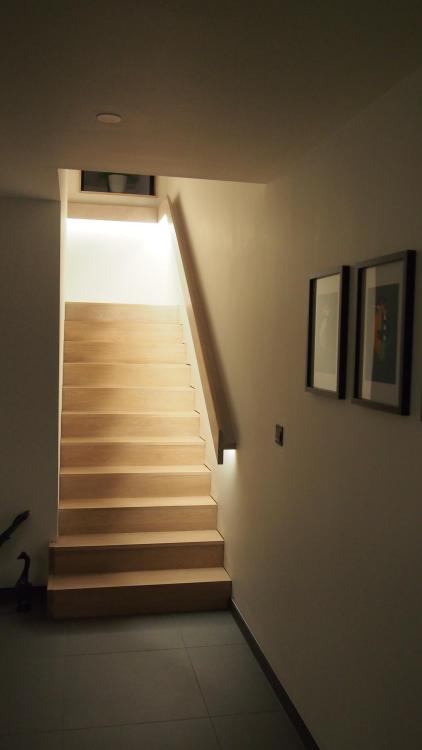
Certainly not taken as criticism. Everyone to their own as they say. We have some pet hates - one of them is hand rails and spindles - which freed us up to do the lighting - or rather allowed our architect (our son) to come up with the great solution in the photo.
-
Agree - but you've missed out candles.... 😄 That always seems to be a lot of expense when you can just walk across and use the inline switch on the floor or table lamp - or just have it always on and use a wifi switch. Agree - we also have some under the banister on the stairs - very effective..
-
That's the look we were looking for 😄 We also didn't want spots or chandeliers - too busy. We're happy with the flat look, I'm sure you're happy with the spots. I'll have to try to take some photos when it's dark to show that there are plasterers around that know their business. Simon
-
Fortunately ours were brilliant. Looks great during the day and also at night when lit. Maybe we were fortunate. Simon
-
What happens when power comes back?
Bramco replied to puntloos's topic in Kitchen & Household Appliances
You can't get away with tongue in cheek here can you....... But while you say it's impossible - it's also important to do the homework - how many appliances might be on - can the inverter and batteries handle that and how long can they handle the demand. As @ProDave says - most modern appliances will simply give up the ghost and go into standby - so not a problem - unless your washing is sitting in a vat of warmish water. Simon -
What happens when power comes back?
Bramco replied to puntloos's topic in Kitchen & Household Appliances
Surely the switchover will be handled by your inverter and it will be imperceptible as far as the appliances are concerned. Also on having too many power hungry devices running when the switchover happens will again not be an issue, because you'll have done the analysis to make sure that the battery and inverter can supply more than enough to supply all the appliances you might have running - surely. -
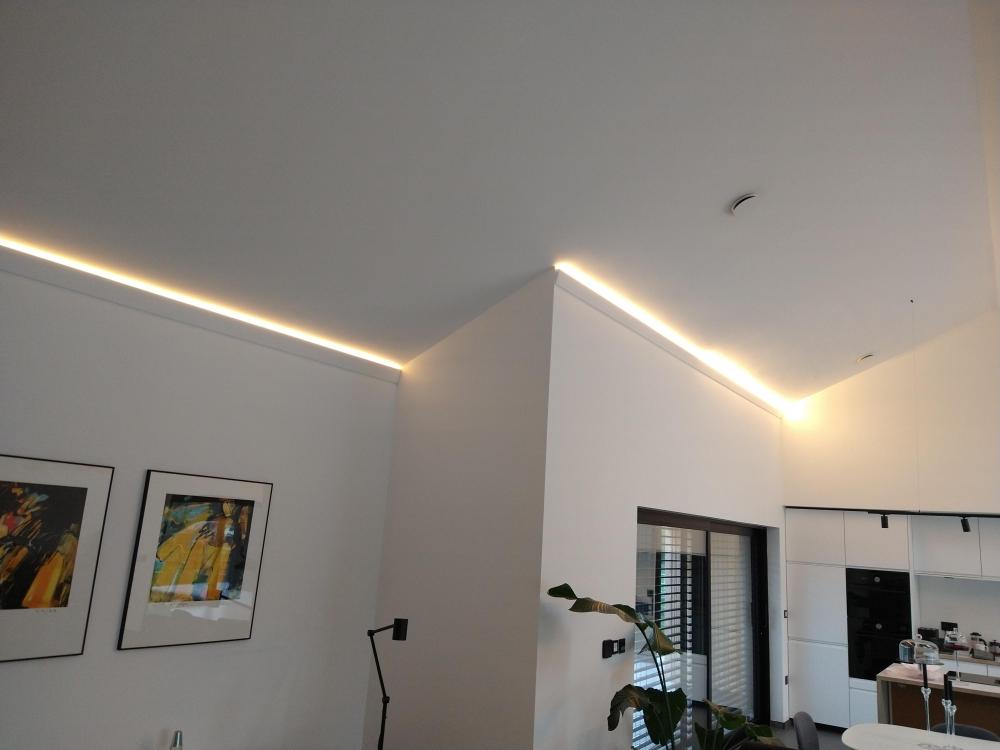
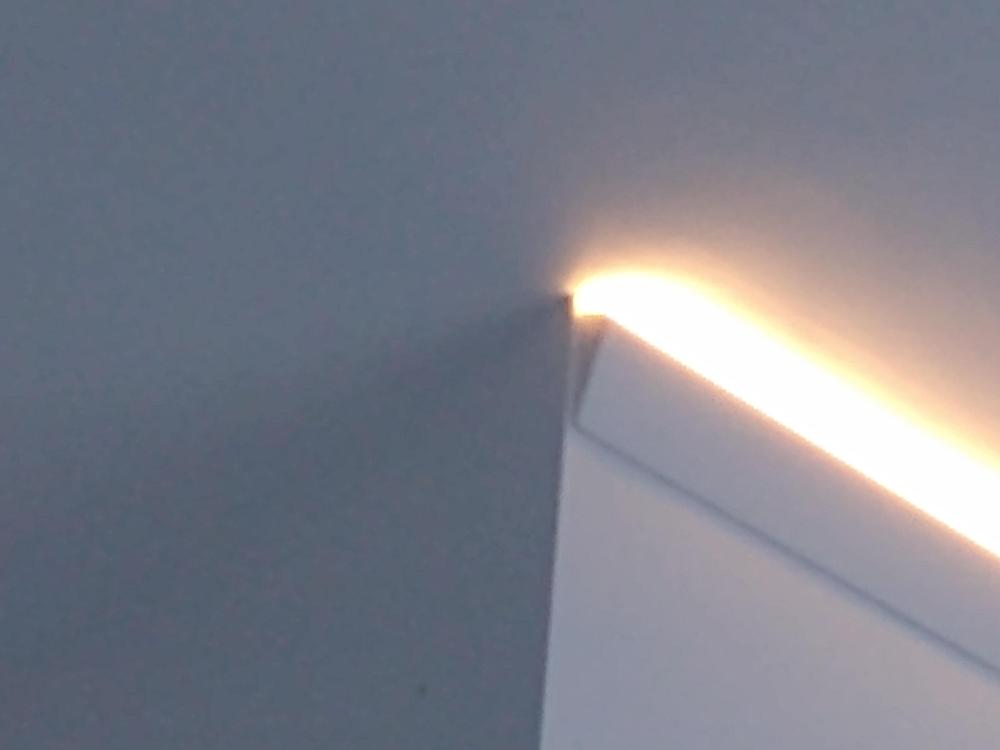
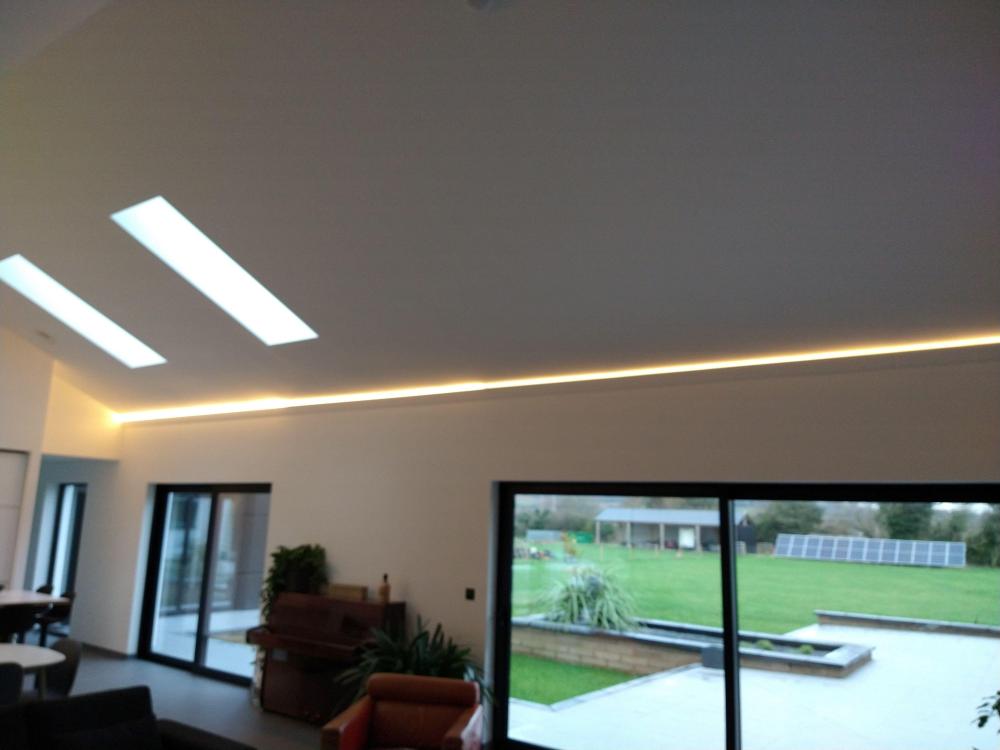
@JackofAll Hi, below a few photos - in the big kitchen, dining living space, we split this into 3 areas, each on/off and dimmable seperately. In the evening we'll only use the living space leds. You can see this on one of the photos, where I've set different levels on each of the sections. On one of the photos, you can see the end of the coving - the sparkies specced this and supplied it - it was incredibly lightweight. To put it up, they lasered a line in and tapped some pins in every 50cm or so and then simply 'no nailed' it to the wall. The end of the coving you can see has had the slot at the back disguised - essentially there's a step down from the edge and the led trough and diffusers sit in there. We used the ARC Led controllers -> https://arc-led.co.uk/controller/1689-arc-led-universal-12-24v-4-channel-receiver-with-push-dim-input.html They now do a wifi version but we're happy enough using a remote - you can can program 3 scenes on the remote -> https://arc-led.co.uk/controller/917-arc-led-single-colour-4-zone-remote-control-black.html. We also put in an RF wall controller but never use it - similar to this one -> https://arc-led.co.uk/controller/1278-arc-led-4-zone-single-colour-battery-operated-touch-wall-panel-black.html. Actual drivers and led strips were all specced and supplied by the sparkie. The leds are simple warm white - no fancy colours..... Here's some photos - let me know if you want any more info - I can probably get the spec for the covings if you need that. Also, in the bedrooms with vaulted ceilings, we did the same but also have 3 spots on the long side of the vaulting (they're uneven, i.e. come down further on one side). Again I can send photos of this if you are interested - we used BG wall touch dimmers for these. The 3rd image is a bit blurred, had to reduce it's size to be able to attach all 3. Simon
-
Changing the angle to vertical might not be worth it. Ours are set to about 45degs instead of the ~33degs to get maximum output. But the maximum output is in the summer when you've got more than enough, you need the panels more vertical in the winter to get the most out of the winter sun. Go on to PVGIS and try out several different angles - for us the overall production wasn't much different between 45 and 33 but the curve for 45degs was flatter, so less maximum output in the summer and more output in the winter. As for rotating the panels, that sounds like too much complexity...... Simon
-
Solar - Where to start?
Bramco replied to DazRave's topic in Energy Efficient & Sustainable Design Concepts
You can't sell your house without a solicitor - or at least your buyer would be daft not to use a solicitor. So don't underestimate the ingenuity of solicitors in making both your life and theirs difficult. When we sold our house 18 months ago, the buyers solicitor wanted not only the invoice for the solar (from 15 years previously) but also the quote from the company that did the install.... Recently sold a BTL flat and for that one, the buyers solicitor wanted a copy of the s106 agreement with the council from 20 years ago. Both box ticking exercises which they no doubt added to their list of 'important' details not to be missed from some other solicitor who had thought it up. I'm sure they all basically add things to their box ticking lists if they've not come across the idea before without asking themselves if what they will be asking has any use to their client. If you've bought a number of properties you have the nous to tell your solicitor to stop being daft and get the contracts signed. If you're selling, your at the mercy of the seller idiots... Simon -
Yes, this all based on working out how much we use and how much the Solar PV has generated and we've exported over the last year. We already have PV which was a self install but didn't do the batteries then, so the order for the batteries was with VAT - but see above, batteries will be zero rated from February next year, so we'll wait... Simon
-
On another forum someone pointed out that retrofit battery systems will be zero rated from Feb next year. So we'll hang fire until then... https://www.gov.uk/government/consultations/vat-energy-saving-materials-relief-improving-energy-efficiency-and-reducing-carbon-emissions/outcome/summary-of-response Simon
-
There's no quarter given is there for typos at dawn.....





