


Alan Ambrose
-
Posts
3392 -
Joined
-
Last visited
-
Days Won
15
Everything posted by Alan Ambrose
-
Of course, the 'Home Energy Model' is coming along in 2025 to 'replace epc'...probably another black box. Personally I would be happy for us to all adopt PHPP as it is auditable and I believe the background calcs and assumptions are all in proper research papers (but the ones I've seen are in German). Maybe the 'Home Energy Model' will correct some of the more daft epc quirks - but the targets are not at all ambitious (see below). I think BuildHub needs a political wing . I would like to see the algorithms published with rationale and research data - instead of some hidden professor's ramblings under a tiny consultancy's control then watered down by the big housebuilders. Then some for-profit software vendors with software put though an opaque 'validation process'. I'm having a bit of a grumpy day today - but if you check into Part O, that's exactly what you'll find.

-
The problem afaik is that it is not clear how the epc number is calculated - the algorithm seems to be a total black box - which is properly dumb. In contrast to PHPP, for instance, - where if you take enough trouble you can see how every little bit is calculated.
-
Nice, congrats.
-
Wow, I like the idea of that a lot. For good quality planning applications and for developer’s marketing materials. The easiest way would be to take an architect’s existing cad and ‘trace’ it creating a watercolour overlay - that way the dimensions would be correct. Either the plan and elevations drawings, or perhaps 3d perspective drawings instead of photo-montage. A few contacts with architect’s or architectural technicians might bring in all the work you want. You might like to fish around on your local LPA’s planning site to get the lie of the land. There must already be somebody offering services like that as you often see watercolour-like drawings for £million projects.
-
‘Small sites’ are apparently the same as ‘minor sites’ i.e. less than 10 houses, including the usual BH case of one dwelling.
-
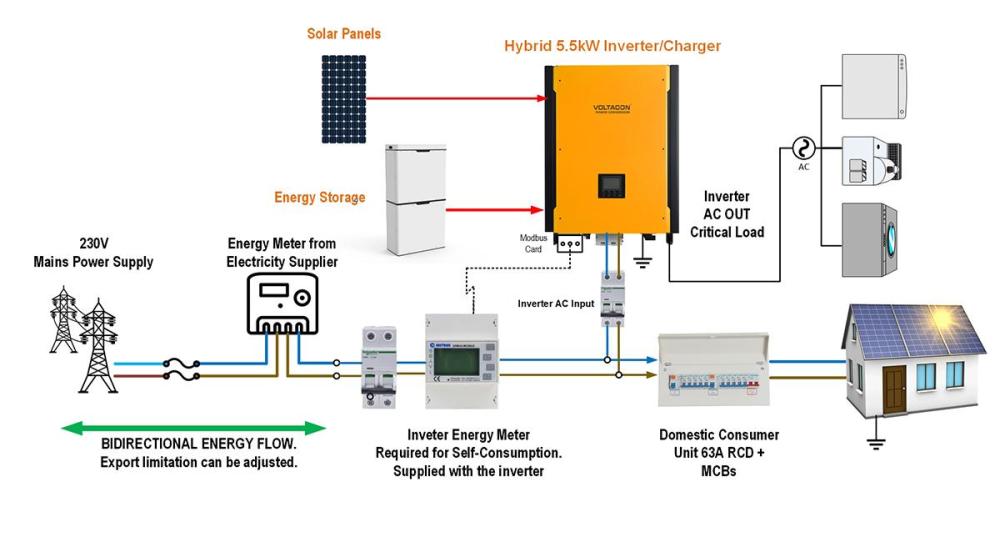
>>> The OP is trying to avoid running another cable out to the outbuilding. Yeah, I am saying I think that's unrealistic. >>> That's the way all grid tied inverters are connected as they shutdown when they loose their grid connection. That strikes me as iffy. I much prefer the layout for non-grid tied e.g. I think that set-up needs a bit of work too - presumably you would want the 'critical loads' on their own little CU. I guess the outbuilding supply could come off the house CU or (better in my view) before it. And I don't see an RCD on there for the inverter. I see some RCDs and RCBOs are bi-directional. Also, in most cases, there's clearly some work to do re earth protection.
-
Extra storeys by permitted development?
Alan Ambrose replied to Alan Ambrose's topic in Planning Permission
On reflection I'm thinking that the various versions of the 'build upwards' idea is a government pipe dream and can't be realised in most cases. Duh, apart from anything else, the foundations were not designed for the extra load. -
Unless the planners are going to give positive uplift to applications with proper eco-credentials and use this information in their balanced opinion - I think I would be happier if planning stuck to look-and-feel and neighbour issues and left the materials and insulation to building control.
-
Energy Efficient Water Heater
Alan Ambrose replied to jack benson's topic in Boilers & Hot Water Tanks
The technology isn't often seen in the UK, so it would be good to make it available here. Weirdly enough I visited a property with something that looked like it today. Are you importing existing European tech? No harm in that btw. The self-build and PH magazines and shows would be obvious targets. Here's the list of drain heat recovery tech in PHPP right now. BTW getting your product in the PHPP spreadsheet would be helpful too - there's isn't much UK stuff in there.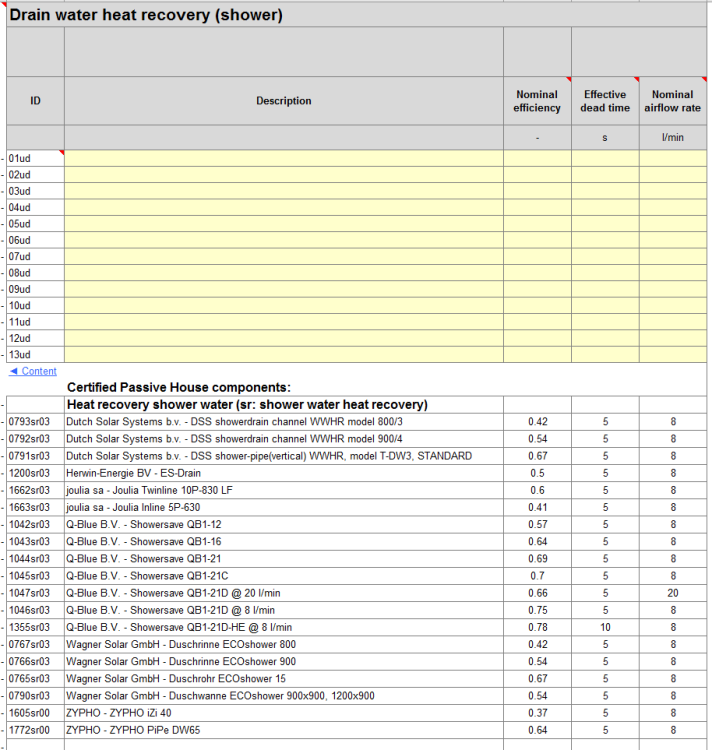
-
>>> If the previous PO is still not taking on applications, yours will be allocated to another. But obviously note the clock starts again. @DevilDamo - Ah, I see, it sounded to me like you were suggesting that the clock starts again if a new planning officer was allocated the case following the absence of the initial one.
-
https://blog.planningportal.co.uk/2023/12/19/biodiversity-net-gain-details-required-from-january-2024
-
>>> If I was you, I’d just email the Planning team weekly for updates and just sit it out. Well my neighbour's simple unopposed application took 54 weeks start to finish. My LPA seems to totally ignore the 'agreeing timescale' part past 8 weeks. At what point would you choose another path? >>> But obviously note the clock starts again. I'm sure you know that the law doesn't give the LPA the option of re-starting the clock whenever they feel like it.
-
Octopus Energy tariffs
Alan Ambrose replied to Adsibob's topic in General Self Build & DIY Discussion
In theory you can't beat the market by locking in fixed prices as you need to be smarter than the bulk of the traders participating in the futures market. It may suit your particular circumstances though if the sweat of higher prices is more than the benefit of lower prices e.g. if you're on a very fixed budget. Also, the active hedging will cost the providers in manpower and they'll pass the cost onto you. In theory the floating rates should be easier and cheaper for them as they don't have to hedge - they just pass the risk on. Whether that's all born out in practice would need a very detailed analysis. -
There was a similar thread on here recently. From brief research, I came to the same conclusions as above - the majority of people run DC back to an inverter near the house CU, with the inverter not so very far away from the CU that a current clamp can't monitor the overall DNO supply. Lastly, I think the power can't go from the outbuilding into the house CU via the RCD/MCB that it is currently hanging off. First, it'll make the house CU live even when the CU isolator switch is operated - which is 'not great'. Also, the house CU may very well have the wrong RCD - it needs a more grown-up one (forget which, type B maybe) for the inverter. (FFS there are 6 or 7 RCD types these days!) A question for @ProDave - why do we generally put outbuilding CU's hanging off an MCB/RCD in the house CU rather than straight from the DNO supply (i.e. in a similar fashion and 'parallel' to the to the house CU)?
-
>>> an appeal. But then that takes another 6 months Actually another 9 months from the point you submit. You can contact the case officer's boss in an attempt to move things along. Ours delighted is telling us 'to FO' in as many words - so we took both applications to appeal for non-determination. The councillor might be an alternative and more subtle route. I assumed our problem was lack of LPA resources but a councillor I met recently said that the council are swimming in cash due to Sizewell C. It doesn't help progress the matter, but you can check out your LPA's performance in these government tables here: https://www.gov.uk/government/statistical-data-sets/live-tables-on-planning-application-statistics You want table P153 for speed of 'non-major' decisions by LPA, and table P154 for 'quality' of decision i.e. % overturned at appeal.
-
But isn't it just a repeat of part L, part O etc which have actual numbers in them? Now I think the LPA should use some measure of sustainability as a material factor in weighing up permissions. If they did, that would give an advantage to most self-builders over the mass-builders / minimum regs lot. In my limited experience, they don't at all though - there'll be guff in the local plan about 'sustainability' but the majority of new house permissions will be for low quality / minimum regs houses.
-
Well that's a weird thing as at least some of those are covered by BC already. As there are no hard-and-fast targets written there, maybe one or two pages of eco-waffle? Most people on BH are far ahead of the curve on these items, so I'm thinking probably you will be too.
-
Extra storeys by permitted development?
Alan Ambrose replied to Alan Ambrose's topic in Planning Permission
>>> Was constructed between 1 July 1948 and 28 October 2018 Ah, I missed that. Presumably a bureaucrat came up with that time span. So that excludes a lot of old Victorian and Georgian city houses. Goodness, you're invited to make sense of these... https://www.legislation.gov.uk/uksi/2020/632/contents/made https://www.legislation.gov.uk/uksi/2020/632/regulation/22/made https://www.legislation.gov.uk/uksi/2015/596/schedule/2/part/20/crossheading/class-ad-new-dwellinghouses-on-detached-buildings-in-use-as-dwellinghouses?view=plain -
Does anyone have any practical experience of how 'permitted development rights for extra storeys' works? e.g. https://www.planningportal.co.uk/permission/common-projects/additional-storeys-extending-upwards/planning-permission Seems too good to be true . For instance, could I build a bungalow with a plan to 'simply' lift the roof up and build under it?
-
>>> So for me it doesn't make sense for this to be refused Ah, you were not expecting the regulations to make sense, surely? You do know that we did away with all common sense in the '60s (and it was rarely used then)? Obtuseness and fragile, opaque and confusing laws are the order of today. Welcome to 2024. >>> the proposal exceeded the building area of the original building that was there 15 years ago? Sounds like you are falling foul of: Conservatories (including previous extensions) and other buildings must not exceed 50% of the total area of land around the original house. Sheds and other outbuildings must be included when calculating the above 50% limit. Given that: The term ‘original house’ means the house as it was first built See e.g. https://ecab.planningportal.co.uk/uploads/miniguides/conservatories/Conservatory.pdf Perhaps you can work backwards to figure out he max sized conservatory you could build under PD rules and then see whether that works for you? Or go with the awning if you prefer - as that doesn't 'count' at all? Otherwise, a full planning application if you're set on the initial size you have in mind. Was the LPA guidance formal response to a pre-app or a confirmation of PD rights ('certificate of lawful development') or what?
-
Well you've come to the right place . Lots of knowledge and help. Whereabouts are you in the process?
-
Congrats, score +1 for the team.
-
Basement redesign: Issue with structural engineer
Alan Ambrose replied to JGR's topic in Building Regulations
>>> if there is a design change from another consultant (e,g, mechanical consultant changing plant details) i don't commence with my re-assessment until i have had a chat with the end client (who is paying my bills) in relation to the design change/implications and their agreement on my additional fee (where its required). <<< Yes, that's what you would expect grown-ups to do. It suggests both the SE and the contractor are at fault for not getting the cost increase agreed in ample time. Leaving it until the last minute doesn't count. So, both were either negligent or devious. The SE didn't apparently have anything to gain which suggests negligence, the contractor could be either. It could be that both were negligent though and you have still ended up with the right solution, just 'cos RC was the right answer in the first place. But that suggests the SE made a misjudgment to begin with. -
SY cable is not really ‘armoured’ - it’s usually used in light industrial settings for yeah some protection but mostly noise screening. As sites are a risky-ish environment, so you probably should use your own judgement re physical protection (swa / conduit / risk of damage etc) but probably also a decent sparky re correct earthing (i.e. TT with measured impedance), correct rcds, testing the bonding etc.
-
Heating / hotwater systems -self build
Alan Ambrose replied to cairstiona's topic in Central Heating (Radiators)
>>> heat a 185m2 house with a single plug in radiator. Does that heat circulate OK?





