


Alan Ambrose
-
Posts
3392 -
Joined
-
Last visited
-
Days Won
15
Everything posted by Alan Ambrose
-
Glazing a Green Oak Framed entrance structure
Alan Ambrose replied to peekay's topic in Windows & Glazing
Ah yes, I saw an image - actually with glazing on the outside and it looked great - you just reminded me.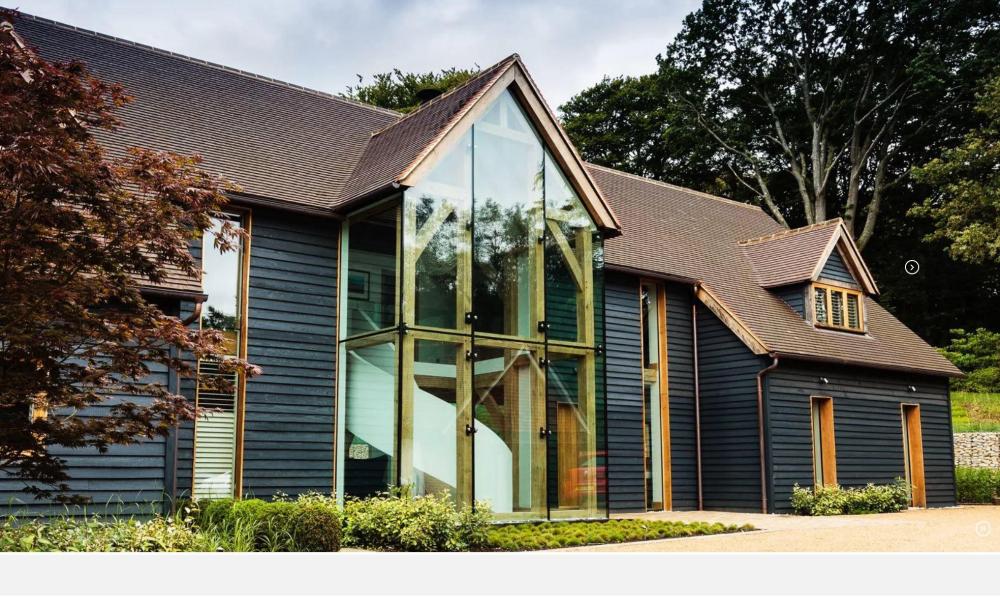
-
>>> Custom and self-build development produces more than a doubling of the beneficial local economic impact of mainstream housing when labour and materials are viewed together. This is based on an analysis that tested a model against five areas with different rural/urban classifications and differing regions, providing a robust set of illustrative data. Data from Energy Performance Certificates (EPCs) demonstrated that CSB homes typically have reduced energy consumption of between 8-42 per cent lower and CO2 emissions of 7-43 per cent lower than typical new-build EPCs. The model draws on EPCs in the same five case study areas. <<< Obvious to us, but helpful that somebody else has noticed this. I'm not sure who NaCSBA are though - yet another 'industry organisation' with unclear objectives and ownership?
-
contemporary house with basement
Alan Ambrose replied to sheelg's topic in New House & Self Build Design
Ah we have some vegetation outside some of our west facing windows. Not only does it look good from inside but it loses leaves anyway in the winter and we trim it in the autumn - so it provides lovely seasonal sun screening. If you choose the right plants, they'll love it also. There's a bunch of useful info here on BH re outside blinds btw. -
https://www.planningportal.co.uk/services/weekly-planning-news/planning-news-22-february-2024#custom-build-provides-double-the-benefit-to-local-economy-report-finds https://www.planningportal.co.uk/services/weekly-planning-news/planning-news-22-february-2024#short-term-lets-to-be-subject-to-planning-permission
-
contemporary house with basement
Alan Ambrose replied to sheelg's topic in New House & Self Build Design
re: + West glazing into Bed 2? I was meaning - maybe you might want west glazing into that bedroom too? Regarding solar gain: + you might want to get a part O calc done to see how close you are. There are other possibilities for the calcs but part O is easy and quick although a bit basic - for instance, it won't allow for your brise soleil. + the solar gain mitigation I'm leaning towards is: - solar control glass - brise soleil - outside Venetian / roller blinds (both can be mechanised so they can be controller electrically) -
Removing a name from property title
Alan Ambrose replied to Moonshine's topic in Party Wall & Property Legal Issues
I believe that @GaryChaplin said a while back that you can file this with land registry directly yourself. I did a little transfer like this recently and it was about £1K with solicitors. -
Presumably you have some step detail outside? Bit of a bodge, but can you get some ~1mm stainless sheet under the frame. If so, a custom cut and bent cill sealed with and embedded with the right mastic? Even better if you can get dpc and 1mm SS under.
-
contemporary house with basement
Alan Ambrose replied to sheelg's topic in New House & Self Build Design
Ah, I forgot - I wonder whether that west wall is expensive to build with all those corners, especially the basement? Could it just run at an angle parallel to the path in one line? Run the design past a builder or two and see where they suck their teeth? -
contemporary house with basement
Alan Ambrose replied to sheelg's topic in New House & Self Build Design
Looks v good to me. A couple of thoughts, depending on your lifestyle: Basement + Larder? + This is your 'entertaining space'? That is, it won't get so much use. Duplicate all the kitchen stuff, fridge etc? + Possible to get light into loo/utility? + Guests get to walk through utility? Ground Floor + Bigger & separate desk workspace / book shelving etc? Maybe I missed your second desk space? In the gym / 2nd bedroom maybe? + Do you have a problem when one wants to work in the evening and other is trying to watch tv? Or when you both want to be on calls? + Video calls? Looking back onto the living area? Top Floor + Won't get much use either? You wouldn't prefer one of the top bedrooms as the 'master' with the better light/views? + West glazing into Bed 2? + Security problem with the external stairs? + Roof More solar? - might just as well maximise it. Garden + Outside storage for lawnmower etc? -
contemporary house with basement
Alan Ambrose replied to sheelg's topic in New House & Self Build Design
Wow, very classy . I can't quite see how much has basement under - ah, the whole thing? And a lift, nice . -
I thought we covered that, no? Also, should really be a bi directional class B RCD as inverters often have dodgy output waveforms.
-
Glazing a Green Oak Framed entrance structure
Alan Ambrose replied to peekay's topic in Windows & Glazing
No, I think you'll have to sort out the detail yourself. If I remember rightly, for that kind of detail, an Oakwrights frame I saw had the glazing unites mounted on the outside of the frame and then some full width oak 'trim' pieces mounted over that. Unless you looked very carefully, the effect was as though the glass was mounted in the 'frame'. I think the trim was held by counter-bored A4 SS screws but with little oak dowels over, so the whole thing looked through-dowelled. Having said that, I'm not sure why you couldn't mount the glazing units within the frame, allowing plenty of room for the frame to move, and then mount trim pieces inside and out over the units. Maybe you can mount one big triangle somehow in the apex to avoid dealing with the curved braces. Actually it's not clear which parts you're planning to glaze and which parts not. -
Anyone have a lift? Thoughts? Pros & Cons? Suppliers? We have a couple of designs in planning and I am sweating the design detail. I would like to at least prep for a lift so that we have the opportunity to install one when we get (even more) decrepit. Without actually selecting a model at this stage, I wonder if it's possible to design for (a) the footprint, and (b) for any pit required? e.g. I'm seeing pit depths from 10-30cm atm.
-
Something like this? What rating are the main fuses? 63A? https://www.superlecdirect.com/cables/steel-wire-armoured-cables-bs5467-pvc/?&conductor[]=10mm²&conductor[]=16mm²&conductor[]=25mm²&cores[]=5
-
@Raine FYI - see https://www.gov.uk/government/statistical-data-sets/live-tables-on-planning-application-statistics Look up table P153 and then your LPA - you should see the '% processed within 8 weeks or agreed time' number.
-
Wifi current clamp meter
Alan Ambrose replied to Cyberfruits's topic in Air Source Heat Pumps (ASHP)
How to identify a Conformité Européenne mark vs a China Export mark https://starfishmedical.com/blog/conformite-europeenne-mark-vs-a-china-export-mar -
>>> the inherent need to have something done right. +1 much easier if we could just buy some dodgy old house and get on with our lives, no?
-
Electric Underfloor heating and SPC
Alan Ambrose replied to MikeGrahamT21's topic in Underfloor Heating
I've done 3 of these floors in kitchens / bathrooms so have some experience but not lots. Yeah, suggest 10mm insulation board (thicker if possible) and then 'self level' screed over the mat. You can also use simple heating cable instead of mat but ensure it's a shorter length than the max needed to you don't need to cut it - as the suppliers won't warranty it otherwise. Buy the best stuff you can find. Other tips - ensure you can get at the connections reasonably easily and put in a spare thermistor in case the original one goes bad. What controller will you use? -
By and large all electrical heaters are 100% efficient. That is, they produce the same amount of heat energy as electrical energy consumed. That's just life (and physics). There's a bunch of bogus advertising around atm: world beating efficiency using new technology etc sometimes suffixed with they don't want you to know this etc etc etc. Now you might feel different and have a different 'comfort rating' from different appliances and technologies. For instance blow heaters heat the air up and circulate it quickly, but they also create a bit of a breeze which feels a bit cooling. Temperature gradients across a room and draughts from leaky windows etc will make it feel chillier than it might be if you just looked at the thermometer. Suggest any heater that she feels comfortable and safe with. Maybe a storage heater if she has economy 7. You may a good results also from addressing the obvious draughts. Yes, 'air con units that heat up' i.e. heat pumps use different technology and can have an efficiency of 3-4x - look for SCOP i.e. average efficiency and/or COP i.e. max efficiency. They generally whirr a bit of course.
-
Wifi current clamp meter
Alan Ambrose replied to Cyberfruits's topic in Air Source Heat Pumps (ASHP)
The fact that neither Corui nor Shelley specify accuracy suggests they are not that accurate. Suggest better than 5%? But given that we're often interested in the trend or difference rather than the absolute value it may not matter too much. -
>>> The cynic inside me suspects they are not sold in the UK because there is more profit to be made from selling mulitple inverters or a solar edge system Possible but it could just be due to the very low numbers of domestic properties in the UK with 3P.
-
Yeah Fischer is a good brand.
-
Remove tile & replace? Have a spare tile to practice on? - maybe try hydrogen peroxide with suitable precautions. Otherwise I’ve had custom ss parts laser or waterjet cut - generally you need to supply a drawing and a dxf - but there may be someone out there who’ll do the little bit of cad for you on the fly. Of course you’ve replaced any other similar steel fixings…
-
Ah I thought I had explained - the planners want our buildings to be 'subservient' (i.e. as small as possible above ground) and even though we have 1/3rd acre that means we either have to have a house smaller than we want or build a basement. Property values are high in Suffolk and the economics work out. In the Highlands you may have as much land to build on as you care to and maybe your planners are not so fussed and would happily let you build out rather than down. Fantastic. But the circumstances are different here. We could put in more planning applications for more footprint, but (a) they don't have a high probability of being approved and (b) that would set us back 18 months. Unlike Germany, we don't do basements much in UK, so they're expensive and more risky than space above ground. But just like building over 2 storeys, building down is a way to get what we want. There's one other economic factor - with clay our founds are likely to be deep-ish. Beyond a certain point, you might just as well have a basement anyway as the incremental cost is not going to be so high compared with say building on good ground.

