
JohnMo
-
Posts
12467 -
Joined
-
Last visited
-
Days Won
179
Everything posted by JohnMo
-

Multipipe Maxima FM 16-port manifold (..and 13, 14, & 15)
JohnMo replied to mikeysoft's topic in Underfloor Heating
Pretty much don't agree, constructive comments about balanced design via Loopcad, you never explained you had it. 17mm pipe is just a waste of money 16mm is more than adequate. Running at low temperature from boiler, gains quite a bit of efficiency and therefore is cheaper to run. Being able to run without mixers saves a fair amount from costs to purchase and additional pump cost extra to run. I am saying it makes the heating system more expensive to run than say radiators. Simple maths, in both an UFH system or radiator system your floor has the same U value, but with UFH your floor could be at an average of 30 degs. With radiators it would be at 20 degs. Ground temp is circa 6 degs. So delta for radiator floor temp is 14 degs, and with UFH 24 degs. So getting close to twice heat loss. The worse the U value, the bigger the magnitude of the losses. All the subsequent comments from my initial and follow up ones, have been further amplified by others. If your not interested in my input, I will not bother with any further input. You obviously not interested in practical experience driven feedback. -
replacing existing floor with new slab - minimum excavation
JohnMo replied to Bemak's topic in Floor Structures
There are two ways to do UFH, loads of insulation or no insulation at all - the middle ground between the two means high running costs. Both systems work using different mechanisms. Loads of insulation stops downward heat losses, as the downwards heat flow breaches the insulation it never come back, as heat will allow try to move towards cold and the ground will always be cooler than a heated floor, so you want really good insulation. You can run intermittently if you need to. No insulation uses the the ground as a buffer for heat, the zero insulation allow what goes down to come back up. However you just let the heating tick away all heat season. If you switch off the heat is dispersed and you need to rebuffer it all again. -
DIY MHVR as total newbie
JohnMo replied to Silly Man's topic in Mechanical Ventilation with Heat Recovery (MVHR)
I found the same, but it did a week ago. -
Something like this

-
Multipipe Maxima FM 16-port manifold (..and 13, 14, & 15)
JohnMo replied to mikeysoft's topic in Underfloor Heating
Sounds like you are making it up as you go. Get a free trial of Loopcad and design it so each room is balanced correctly before you start. Sorry 100mm centres and 17mm pipe and then running your boiler at 50+, to then mix the flow temperature down to supply UFH makes zero sense. Really isn't suitable for UFH. Your downwards heat losses are going to big. -
Multipipe Maxima FM 16-port manifold (..and 13, 14, & 15)
JohnMo replied to mikeysoft's topic in Underfloor Heating
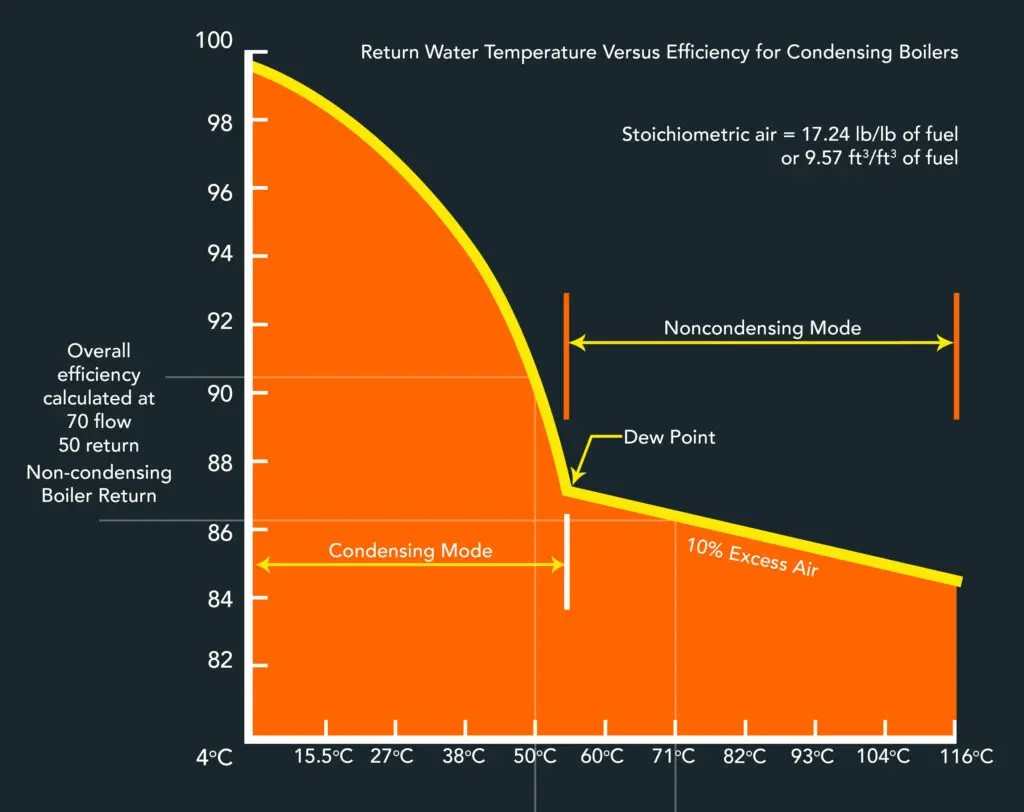
Is a normal way plumbers install boilers with hot water cylinder and it's the least efficient, so everything is run at a set flow temperature. They use either two normal closed valve or a mid point valve. Priority domestic hot water, uses a diverter valve and runs a higher temperature with DHW and with a decent boiler can then run weather compensation for the UFH without mixing valve. Effect of flow temp on efficiency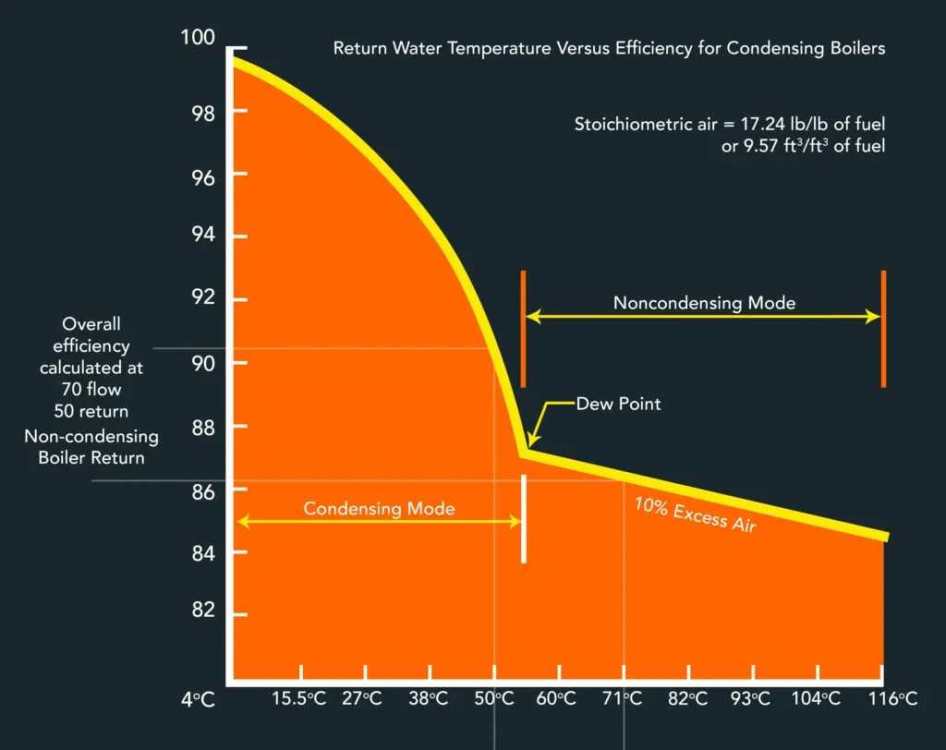
-
Multipipe Maxima FM 16-port manifold (..and 13, 14, & 15)
JohnMo replied to mikeysoft's topic in Underfloor Heating
So assume you are actually going to make the most of condensing mode for the boiler to get very low flow temperature for the underfloor heating and run a second set point for DHW heating - so no S or Y plan? -
DIY MHVR as total newbie
JohnMo replied to Silly Man's topic in Mechanical Ventilation with Heat Recovery (MVHR)
MVHR isn't really worth the effort and cost at that airtightness. It will just add to the natural ventilation and increase actual heat losses -
Type of timber on these summer house doors ?
JohnMo replied to MattD1's topic in Garages & Workshops
Suspect nothing fancy, so just pine. -
DIY MHVR as total newbie
JohnMo replied to Silly Man's topic in Mechanical Ventilation with Heat Recovery (MVHR)
First let's step back a little Airtightness, what airtightness measures will you have in place, are you aiming at better than 3m³/m² at 50Pa airtightness? If not don't waste your money on MVHR. So let's assume you are going airtight Zehnder is(n't?) the only make, Titan make good basic units, plus many others. eBay can save to loads of money. Basics are MVHR to plenum/manifold, semi flexible duct, room terminal via a 125mm to flex duct adapter housing. You can get smart with through flow, instead of direct flow into rooms depending on house layout. Also known as cascade. Second if not going airtight, do demand activated MEV or dMEV. Fan units run at higher loads when needed and low when not. Silent in operations. Add to this humidity activated trickle vents in all dry rooms. Works at very low base flow, as you generate humidity the system will react. Very little additional ventilation heat loss. Easy to install and pretty cheap, no filters to change out (can get pretty expensive) half the running costs as only extract. -
Just need to made a little more straight and tidy. Not sure what you did with your lead work than needs putting back where it should be. Maybe add a hopper or similar at the corner and then feed down and across to the other gutter and down pipe.
-
Posi joist - This install feels rubbish, thoughts?
JohnMo replied to boxrick's topic in Roofing, Tiling & Slating
Yep. A hammer would knock that apart, technical term is pigeon sh!t. Deffo need your structural engineer to visit - be prepared to sack your current builder, I doubt they have the skills to put things right, even when pointed in the correct direction. -
Stainless ring grooved nails. Make sure insects can not get in as well as mice etc. Any gaps at corners joints between panels mean wasps can nest. 1. and 2. We just used 50mm battens, easy, no splitting if nailing near ends. Easy to get and cheap as chips. Nails for cladding have plenty of wood to get a grip in 3. We did two nails at each batten. Using standard nail gun. Mainly to limit wood from moving, any warping etc. 4. Whatever looks correct.
-
Have you not answered your own question - if the controller thinks there is a thermostat it is seeing open connection somewhere. So there must be connection for external thermostat? To get the system to work those terminals need to see continuity, so need a short across the two terminals. Or system needs to be configured within the controller not to look for an external thermostat.
-
Didn't bother
-
Either your structural engineer, you must have one?, or the structural engineer of the posi joist supplier/manufacturer should be supplying full set of drawings with all supporting calcs, These should be reviewed and approved by your structural engineer. What I like about the Scottish system, is you cannot get to this point, no structural design drawings, no building warrant, no warrant, no build.
-
Have no rads and no zone valves. You can run circulation pump (within ASHP) in several modes, continuous, when ASHP compressor runs, and in a mode called sniffer mode (pump runs a couple of minutes every so often or when compressor is on). So circulation is controlled by ASHP. Heating is never off, unless in cooling mode, cooling is never off unless in heating mode. As described in my initial reply, I have a 3 port valve in the system and that's it.
-
Pretty much. Floor surface temp is approx 2 degs hotter than room temp, sometimes way less. So solar gain increases room temp. The closer the room and floor temp get the less energy the floor adds to room. Once at same temp floor no longer adds energy to room. Cooler rooms will continue to take energy from floor. Different story altogether, you have controls. As mentioned there is nothing related to ASHP except flow and return pipes in the house - it doesn't know directly the house temp - but does indirectly via return temp. Just using a WC curve. Cooling is basically a single set point but heat pump just modulates or switch the compressor off as needed.
-
How does that work then?
-
This is true, we are now programmed to think a heating systems must have thermostats and time switches, to work. But if make that step and actually leave the heat source manage this for us, it seems to work and does it pretty well. Our heat pump has zero interactions with the house except the flow and return pipes. It's a bit of a leap if faith mentally at first. Even hot (solar gain) and cold sides of house even themselves out pretty much with no input especially when you have UFH.
-
I have zero thermostats. None. Some of my rooms have sensors, but they are just there so I can see what's going on easily, they are not connected to anything for control.
-
Do you have twin stud walls? If no do you need a Tony tray? If on hangers do you need to something else
-
We are the same @Kelvin, French doors. Wind is an issue. We have restrictions built in to doors to stop it going past 90 degs open, but is utter rubbish. Now have a hook and eye to keep door open at 90 degs.
-
Can't connect the SWA cable. Practical help please.
JohnMo replied to saveasteading's topic in Power Circuits
You can also use an adjustable pipe cutter, this gives a nice straight score on the wires to then be snapped off - works better with larger cables (6mm² and above), not so good on small ones as they are too squishy. -
Economics of DIY and Self Building
JohnMo replied to Gus Potter's topic in General Self Build & DIY Discussion
I'm with your other half on this issue. We have cat5 points in all rooms, socket next to aerial, they go to simple 8 way switch unit, cost £18. Not sure what the complications add.