


JohnMo
-
Posts
13292 -
Joined
-
Last visited
-
Days Won
200
Everything posted by JohnMo
-
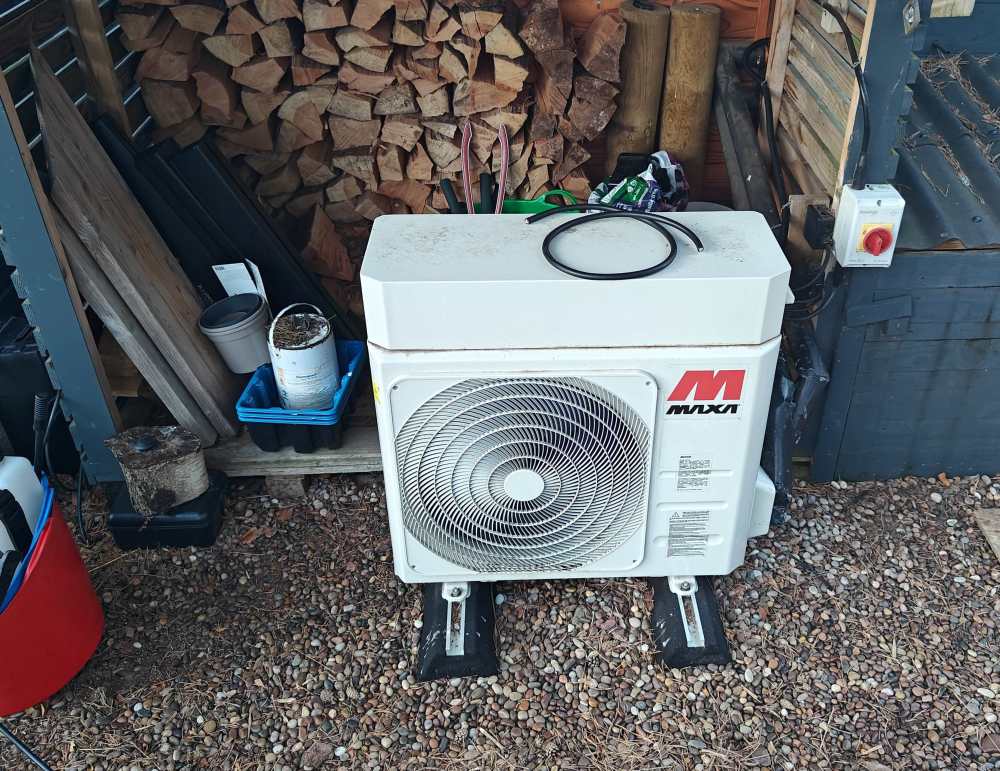
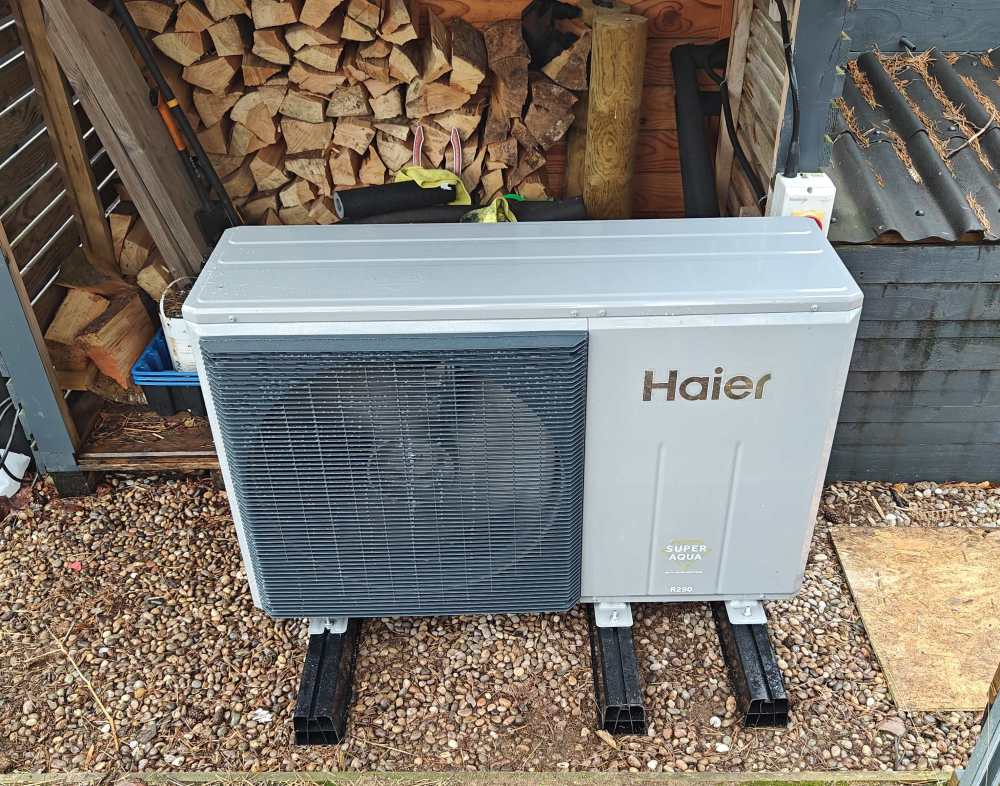
That's the heat pump up and running 4.5 hours from switch off to switch on. Been running for a couple of hours. It seems to testing how the heating system responds. It's keeping return temp, rock steady stable but adding and reducing load, first hour slowly ramped down to 1700W output, then ramped up to 3000W. Now its got a cycle time between peaks of around 30 mins. Pump flow rate is also slowly being decreased at about 8L/mine it was at 20L/min when it first started. Before and after, Haier unit quite a bit bigger and heavier. Issues during switch on, an error code E12 - Zone 2 mixing valve temperature sensor Twzone_2 abnormality. So zone 2 switch off for now. May revert to my first idea of doing smart grid switching for second set point. Will sleep on it
-

X3 Immersion heaters on a single radial
JohnMo replied to RedSpottedSev's topic in Consumer Units, RCDs, MCBOs
Physics of a house energy out (lost to atmosphere) is the energy required for heating. A simple adjustable hysterisis thermostat, such as Computherm Q10RF or one with WiFi access if you want, use that to control House temp and switching on/off of an immersion relay. Get a wireless thermostat, then you can move to best place for the house temperature setting. Set the immersion in buffer to a set temperature, say 37, driven from the relay. Any 20A relay will do. -
If you have issues just email them, they are super helpful. It's worth using a CT clamp on the diverter valve power feed, then the data is split for heating and DHW. Also unable auto cooling detection while you through the settings.
-
£xx on every electrical bill for ever more
-
X3 Immersion heaters on a single radial
JohnMo replied to RedSpottedSev's topic in Consumer Units, RCDs, MCBOs
I just use a Sangamo PSS2 time switch. Paid £17 for it. Connected direct to CU dedicated fused outlet, then 2.5mm² cable, to an isolator switch near the cylinder, then direct to immersion - all standard stuff, any electrician can fix, any day of the week, with bits from local electrical factors. -
X3 Immersion heaters on a single radial
JohnMo replied to RedSpottedSev's topic in Consumer Units, RCDs, MCBOs
Still think you are making things way more complex than you need. Main water cylinder top immersion, if you are a low water user just use that set the thermostat and a charge window. If you are a heavy user ignore the top immersion and set thermostat on the bottom element and use a simple immersion time switch. Hot water sorted now get on with your life. Change from £30. Buffer immersion - depends what you empty the buffer into, UFH or radiators. But just do simple. You don't need any of this "smart stuff" I doubt very much you really do and doubt it will save a penny over a sensible simple to run system. -
ASHP low pressure help pls
JohnMo replied to canalsiderenovation's topic in Air Source Heat Pumps (ASHP)
I would be very careful deleting, as your warranty will very likely be void. Almost every manufacturer states you must have a strainer of a given mesh size. So add the filter to catch all the rubbish, but keep the strainer there just in case and keeps your ASHP warranty. -
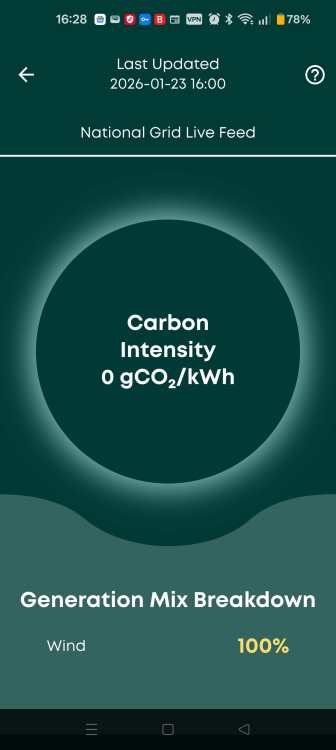
Wind wonderful stuff, just charged the battery from the grid. In Singapore, there a law which means "for the greater good" so basically NIMBY's, just get ignored. We on the other hand engage with them and listen, which just encourages them to be more vocal.
-
I lived in hot country where AC was a must, the thing that drove me mad after few months of the novelty, was the continues breeze. But looking for something else the other day I notice Haier do a coanda effect wall mounted room units. This encourages air the follow the ceiling (rather than being shot towards you) and then around the room when in cooling mode, heating mode does the opposite air is direct down to the floor https://haierhvac.eu/sites/haierhvac-eu/files/2024-06/Haier_RAC_Catalogue_2024_ENGLISH.pdf see page 31 If the aircon stuff is as good as the A2W appears to be it will solid and well made, plus a very competitive price point.
-
I decided to change this wiring and use zone 1 and zone 2 control via 3rd party thermostat control. This gives a few advantages Heat and cooling is switched manually, so use a simple light switch to trigger seasonal changes, it's connected to ASHP and UFH controller, so both are always in exactly the same mode - this is hardwired. Hydraulically the system runs fully open, zones is purely for different running points and flow temps. Zone 1 terminals are fitted with a jumper wire, so always on pure WC, so runs in heat or cool depending on seasonal switch position. Zone 2, is a wireless switch controlled by UFH controller, in winter it allows me to boost summer house temp (only if needed via manual setpoint change on UFH controller), increased flow temp being buffered in to house slab (been doing this for the past year, works well). In summer it allows two set points for cooling, 19 degs flow background via zone 1 temp, if house goes above 23, it moves the flow temp to 17 via zone 2 setpoint. It also includes control set point for humidity, so if house goes above 60% it removes boost function via zone 2 (this will require tuning). A further advantage is zone two has its own WC curves for heating and cooling. Certainly for heating it allows me to fine tune the boost temp uplift required at different outside temps, for summer house which runs a fan coils and not UFH.
-
Damp Bungalow
JohnMo replied to Potatoman's topic in Mechanical Ventilation with Heat Recovery (MVHR)
If you go Greenwood CV2 or CV3 you just need mains power to the fan, nothing else. Then set to smart humidity control and it sort everything else out. If you don't have existing fans get the electrician to tap in to lighting ring main to powers, they draw a couple of watts. For dMEV to work correctly you NEED vents in dry rooms, AND door under cuts. -
Depending really on if you want to grant harvest or not. I haven't bothered. One plumber should be able to do ASHP x2 and UFH and radiator upgrades. Just be sure you aren't being sold a pup, when only need a 6kW or less heat pump and they want to sell you a 12kW one. PV and battery should be one contractor. ASHP and plumbing another.
-
They are not even that size. Well confused me when I first started buying timber.
-
Yep But not BTU's or inches for that matter.
-
Is anyone actually building at the moment?
JohnMo replied to flanagaj's topic in General Self Build & DIY Discussion
Our foundations were complete in the November, walls up by Christmas, was f...ing freezing. Many a morning we would have to bail out the water accumulation before we started work proper. But ICF walls allowed concrete pours even in sub zero temps. Roof on in January. Then it was 99% dry even without the windows, just still cold. Our main issue was the floor was insulated before the walls went up, had 100mm concrete above the insulation, so if there was a sub zero night ,the house floor remained frozen all day -
Is anyone actually building at the moment?
JohnMo replied to flanagaj's topic in General Self Build & DIY Discussion
Isn't an insulated concrete slab better, for anything. At least you have only ground temp (6 degs) below you rather than a ventilation void that can be a cold as the air around the house. -
I must be doing something wrong, I have to wait until temps drop to about -5 before I feel warm floors. Until then they aren't cold but certainly aren't warm.
-
I would do all to can in PIR and where needed apply spray foam to fill gaps.
-
Steel, connected to ground will be a cold surface. Wrap in PIR and tape the joints, this gives vapour barrier. 25mm is normally enough but the more the merrier. Or insulation and wrap and tape a vapour barrier. Condensation will only form from constant contact with air
-
Don't have to have a charger on the wall, a 13A plug will do it. If you have a heat pump, would cosy maybe cheaper overall?
-
Sorry, you just clump it all in one sentence, can only respond to what I read. But as I said a well designed ASHP system is suitable for any property. But also not mentioned a piss poor design, can be be very bad in any property new or old.
-
Sorry this statement alone is just utter nonsense. A heat pump is suitable for any property, when correct designed. Why does it cost a fortune to install a heat pump in a new build? You already have to install low temp heating system to comply with BR. A 35 deg system isn't even going to much of a cost premium. If I can buy a new heat pump for £2100, a large organisation will buy for half that! Scotland banned gas boilers a while ago and whole building industry came to a standstill - not. ASHP, no gas standing charge, a single zone system, without hydraulic seperation, SCoP of 4 plus easily. Cheaper for the house holder, get over it.
-
My view, is do due diligence on anything you read. Who is writing it, what is their background - where is the money coming from, that allows the research and pays the bills. If you can't easily find these details ask yourself why not! Most likely it's going to filed in the nonsense pile or pile of, most likely sponsored, by some organisation with a view to spin.
-
Contractor drilled through Electrical Cable
JohnMo replied to Jothetaxi's topic in Electrics - Other
We had a similar issue where contractors hit a mains water pipe, they got a fine and cost the repair. Bottom line they are the professional, they are the ones that made a mistake, or had an unavoidable incident, it's their issue to sort out, they are or should be insured for such events, if they aren't that isn't your concern or problem. Don't get involved, anyone comes and starts asking or telling you stuff is your issue, pass the contractors details to them. It's not your issue to question, it's the contractors - getting involved just gets you in the middle of stuff you need not be in the middle off. Tell the contractor to deal with it - it's the issue. -
It takes all sorts - all opinions are good, even wrong ones. Deleted the rest of the comment, it's not worth the effort.





