


JohnMo
-
Posts
13294 -
Joined
-
Last visited
-
Days Won
200
Everything posted by JohnMo
-

Upstairs UFH new build - best system for suspended timber floor
JohnMo replied to build_a_bear's topic in Heat Insulation
With posi joists, you cannot notch, so you whole really needs to sit on top of the joists. You need to insulate below the UFH upstairs as well downstairs. By the time you've finish you are likely to loose 40-50mm room height quite easily. If I did it again I would just install rads in the bedrooms and electric UFH in any upstairs bathrooms. Slow heat up time and bedrooms don't really work in my head. Carpets will only add to the heat up times -
No I am saying get all the information first, condensation analysis is the key part of any decision.
-
MVHR install in renovated bungalow
JohnMo replied to murr_walker's topic in Mechanical Ventilation with Heat Recovery (MVHR)
A useful table and comparison for different ways to calculate flow rates. Notice you have different flows rate totals for supply and extract, these should be the same (the higher of the two rates), so the house pressure is balanced. Extracting more than you supply will lead to smoke from your fire coming into the room each time you open the door, or even the flue leaking into the house. Carbon monoxide leaks can and do kill. You mention only 4 supply, what about the office? If the other two bedrooms are doubles the flow rate needs to be about 11 l/s in those also. Calculate all the flow rates for each room, before you start, then you can do the pressure drop and velocity calcs, to ensure you have enough duct runs to each terminal and size the MVHR unit correctly.
-
If your doing a self build for yourself to live in, you cannot be construed as being a developer. If you were building one for self plus other properties on the same land that may be a different story. I took a couple of years off work to built our house. Now back at work, did not get paid for the work I did, but obviously paid the contractors used. If I was some how making a profit and sold it soon after it was completed, then it falls under capital gains I believe, not being a company or a contractor.
-
I would be careful going with anything closed cell. If your tempted you would need an interstitial condensation study completed, prior to any payment or work commencing.
-
What can go wrong with an immersion water heating system?
JohnMo replied to LeanTwo's topic in Boilers & Hot Water Tanks
We have a thermal store, with immersion. When heated by electricity only, it would only get to about 48 degrees, even with the thermostat set at 70. Replaced the thermostat the same outcome. In the end I wired in an external thermostat and all was fine. -
Or would a dMEV fan be better option. A slow trickle all the time, no reverse flow at any time and almost silent.
-
Amazing how a photo can mislead you. Looks good.
-
Combining Seperate ASHP and Oil Boiler
JohnMo replied to ChrisDL's topic in Boilers & Hot Water Tanks
You could manage the ASHP, with something that could make or break a relay from the battery based on available power, and have the relay within a thermostat loop back to the heat pump. So a good signal from battery would initiate the relay and if there is a thermostat call for heat, the heat pump would be allowed to start. Conversely, if the relay is not made, due to battery not being available the thermostat call for heat doesn't make it to the heat pump. -
Working similar to mine also. You may be able to trim the boiler firing temperature so the boiler is condensing all the time, to a couple more percent efficency.
-
Just looking at the position where your pump is mounted does not seem to comply with Grants defined clearance requirements. Which are, to the left 100mm that looks ok, but to the right they are looking for 600mm. The issue you could have the heat pump is constantly recycling cold air which will affect the performance. I would also make sure you don't have too many zones (areas with thermostats). Did the installer, also install a buffer?
-
Best solution I see is ditch the idea of electric UFH, not cheap to run, no matter what anyone has told you. With a few mm of insulation board you will loose quite a bit of energy downwards. It will be less efficient with energy than your central heating, but also cost more to run as it runs on electricity instead of gas, lpg or oil.
-
Closing space between roof joists at solar overhang
JohnMo replied to phatboy's topic in Heat Insulation
If you zoom in you will see how I did mine. Basically lots of PIR off cuts, tight fitted into the gaps, plus spray foam. Did mine before the roof was plywood sheeting over, so it was quite easy to do and get at.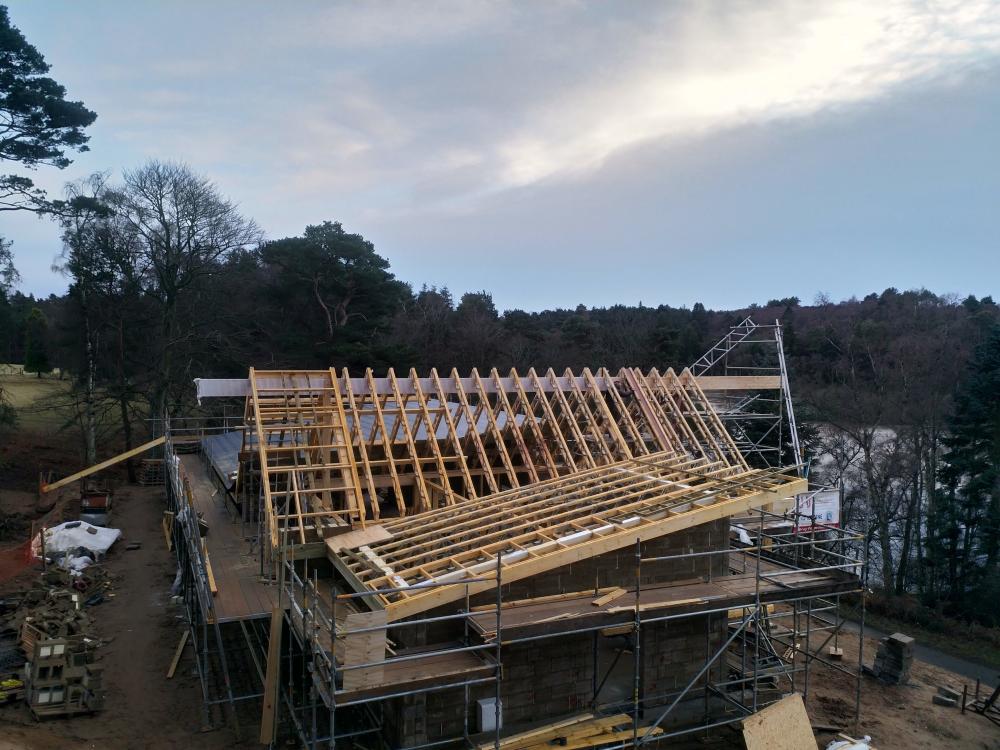
-
Little confused why you are doing WC and then adding expensive thermostats? Sort of missing the point of WC. Nighttime and most of daytime you will be on setback, only a couple of degrees though. You may want to read the Chofu manual, that is original manufacturer's and their manual has all the functions not included in the Grant manual. The controller is the thermostat in an original install etc. Chofu-Operating-Installation-Manual.pdf
-
There can be issue if the pump started and had a closed head, as eventually everything would start to get hot. I assume you are just operating on a single zone. The auto balancing actuator will have the flow rate quite stable when everything is up and running. Why not remove one and make that loop manual, set the flow rate the same as it is with the auto balance actuator. Then there is always an open route for the pump.
-
Balancing Query - Replacement MVHR
JohnMo replied to TimCx's topic in Mechanical Ventilation with Heat Recovery (MVHR)
You should not be on boost. First are all the terminals in rooms fully open, if not, open them all. Start from the furthest thermal, leave that fully open and adjust MVHR speed to get the flow rate you require. Then work you way back to the mvhr unit adjusting the terminals. Work on supply only or extract only get that one right first. It will take a few goes to get it correct. When you have both supply and extract correct, set the boost flow rate. The kitchen extract should be circa 45m3/h. Cooker hood rates can be ignored. -
Not sure it would, the HepVo is downstream of the tundish.
-
If you discharge in to a slightly pressured or blocked, stack blanked at either end with aav, that could have been installed years ago, if you have an event, the flow will take the easiest route which may be out the open part of the tundish. ie not safe. The pressure relief operates on an assumed differential pressure, any blockage, or increased pressure on the unpressurized side, will increase the lift pressure on the valve, so will open later/ at a higher than designed pressure. The worst case is, it doesn't open at all and your cylinder explodes. Sounds a bit dramatic, yes, but the only purpose of the pressure relief is to protect against a run away heat source that hasn't been tripped by the temperature switch.
-
Why don't you talk with the person signing your install of. If he's not happy no sign off, if is happy you get a cert. If he signs and something goes bang and someone get injured, it's him that ends up in court. Pressurised hot water can easily expand into steam when you drop the pressure quickly. Hence all the rules and regulations and a need to be qualified to install. If you don't know what or why you are doing it, pay the money and get someone qualified to do it. There's some jobs you do yourself others you you give to someone else, this is one of those jobs. If you think a 20mm hole is the end of the world, go invented or thermal store.
-
You mean the now normal price, everyone else is paying
-
As Dave says, your flow temperature from the boiler will need to at 80+ to get the cylinder up to 75. Also insulation is needed on the pipes, the heat loss will be huge when your cylinder gets to 75. I would get a roll of loft insulation and pack around the cylinder and fill the cupboard with it.
-
But how long will that rate last? Then you will pay the same as the rest of us. On Micro inverters, they will only work if grid tied. If you have a battery system that is not grid tied, what do you plan to do with it winter, when you are only generating a couple of kWh per day? One advantage of off-grid is the system can be huge, with no input from DNO, if you want and any planning rules complied with.
-
Pump speed will change anything other than you will use slightly more electric drive the pump. You flow rate is set on the manifold, as long you meet the flow rate you want the pump setting is fine. Just open the flow meter some more, up to 2. Are you still running just one loop? If so make sure all the room doors are closed, otherwise the heat will be lost to the other rooms. What is the floor coverings, we have carpet in the bedrooms and the UFH is useless.
-
The mitsubishi unit seems to have a very large flow rate, assume you will be just 20m3/h, this unit delivers a min flow of 61m3/h, which is about 3x what you need. Europlast one looks ok size wise but looks like the cost is too low, so may be questionable quality. Prana seems smart enough to only ventilate when you need it, and can turn down far enough, with a min speed of 12m3/h
-
Only thing to careful of, is, do the units give the required flow rate to comply with building regs. When I started sizing for the house I needed so many units, the cost was stupid high.




