
JohnMo
-
Posts
12469 -
Joined
-
Last visited
-
Days Won
179
Everything posted by JohnMo
-
I would echo that, we have a stove in our lounge, it's a little over 6m X 6m, but with a cathedral ceiling 6m tall. First time we had our stove on, we filled as we were told by the installer, spent the next 4 hours trying to dump the heat, windows and front and back doors open, it was cold outside. If we light it now it's the bear minimum logs in the stove with minimum air.
-
You could also dual fuel the towel rad, add an electric element to the existing towel rad. When you rads are on the heat is supplied by ASHP, or when off by electric element.
-
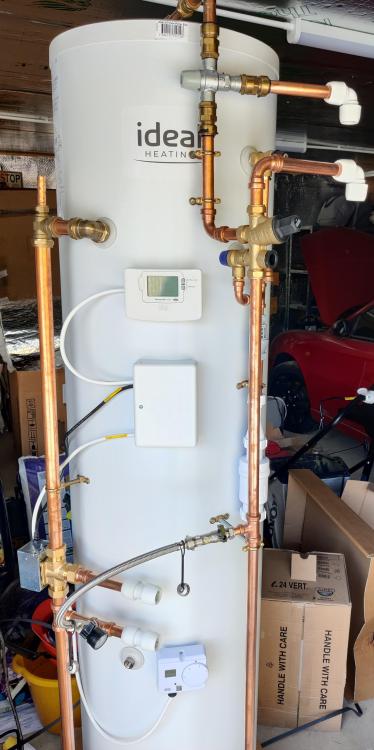
Two versions are available Sprint and classic. The sprint ones are single use. Only had one issue, where I tried to fit in a tight space, and got it miss aligned, had to cut the fitting off. Other than that, no issues. Have some classic fittings on the new cylinder, they come apart again, which can be useful. No leaks so far. I like them as the are a nice radius curve, instead of a tight bend. Cost would be an issue if you used loads of tectite, I.e. full time plumber and availablity can be iffy. My new cylinder, starting to be plumped up, incorporating a few Tectite fittings, but transitions to Hep2O after the copper.
-
I think with battery, my utilisation has jumped to about 99.ish percent. Today I kicked the ASHP in to heating mode and set the house thermostat slightly high for the PV production period. Not sure I need the heating on, but it's just about free due to PV and starts to heat the floor up slowly after summer UFH cooling. So combining dumping heat into 60T of concrete (my floor) and when heat pump in an off cycle, any excess goes to battery. As @SteamyTea missed your mistake, I will correct it, 1600kWh not kW, as in energy usage not power.
-
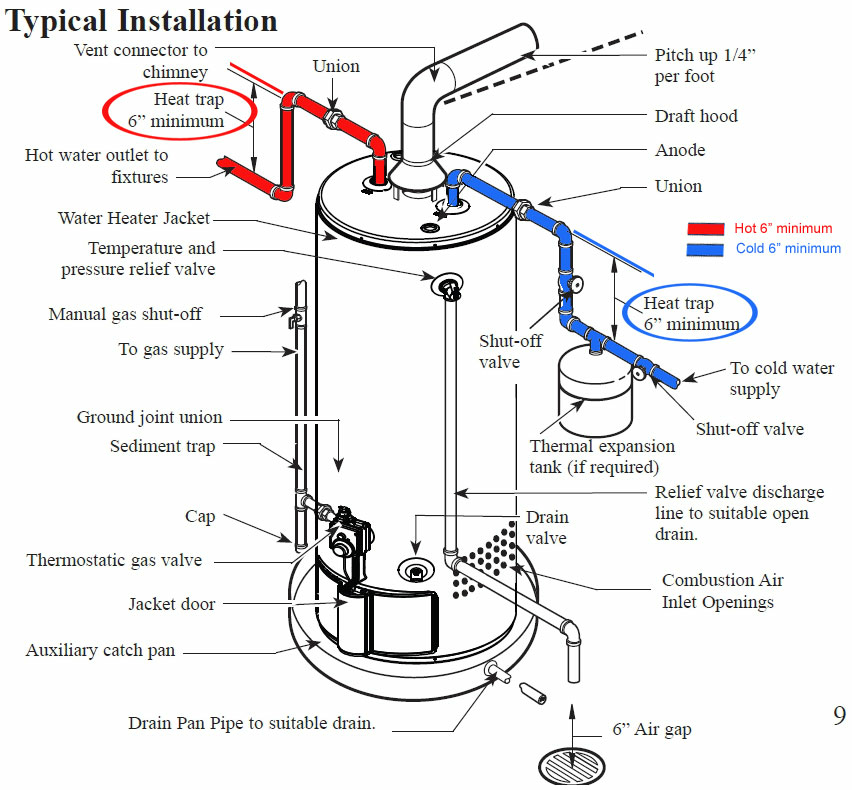
Wasn't talking about the correctness of the other aspects of the sketch. Just the heat trap. A video https://www.youtube.com/watch?v=W5LWjhj098c
-
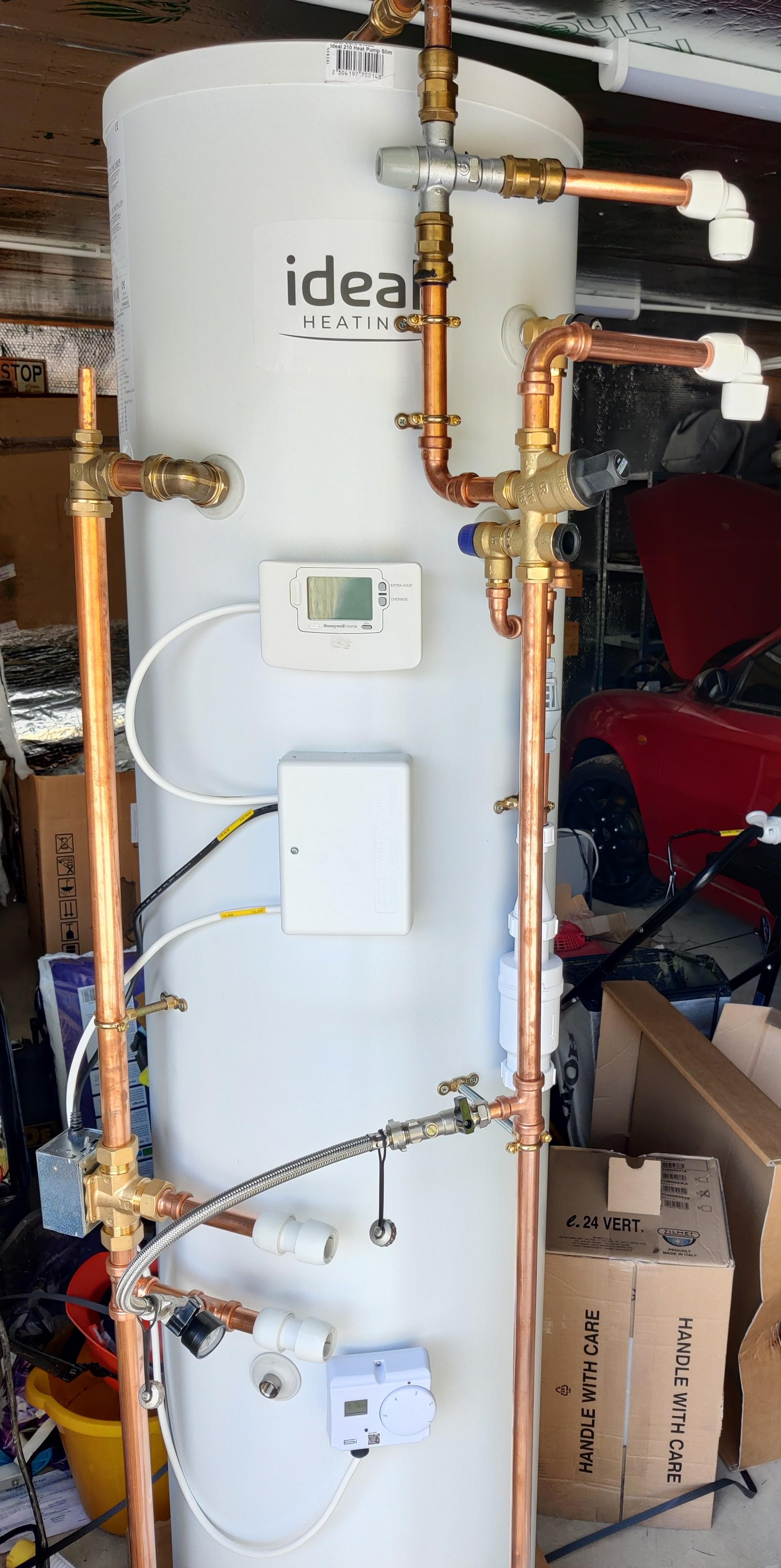
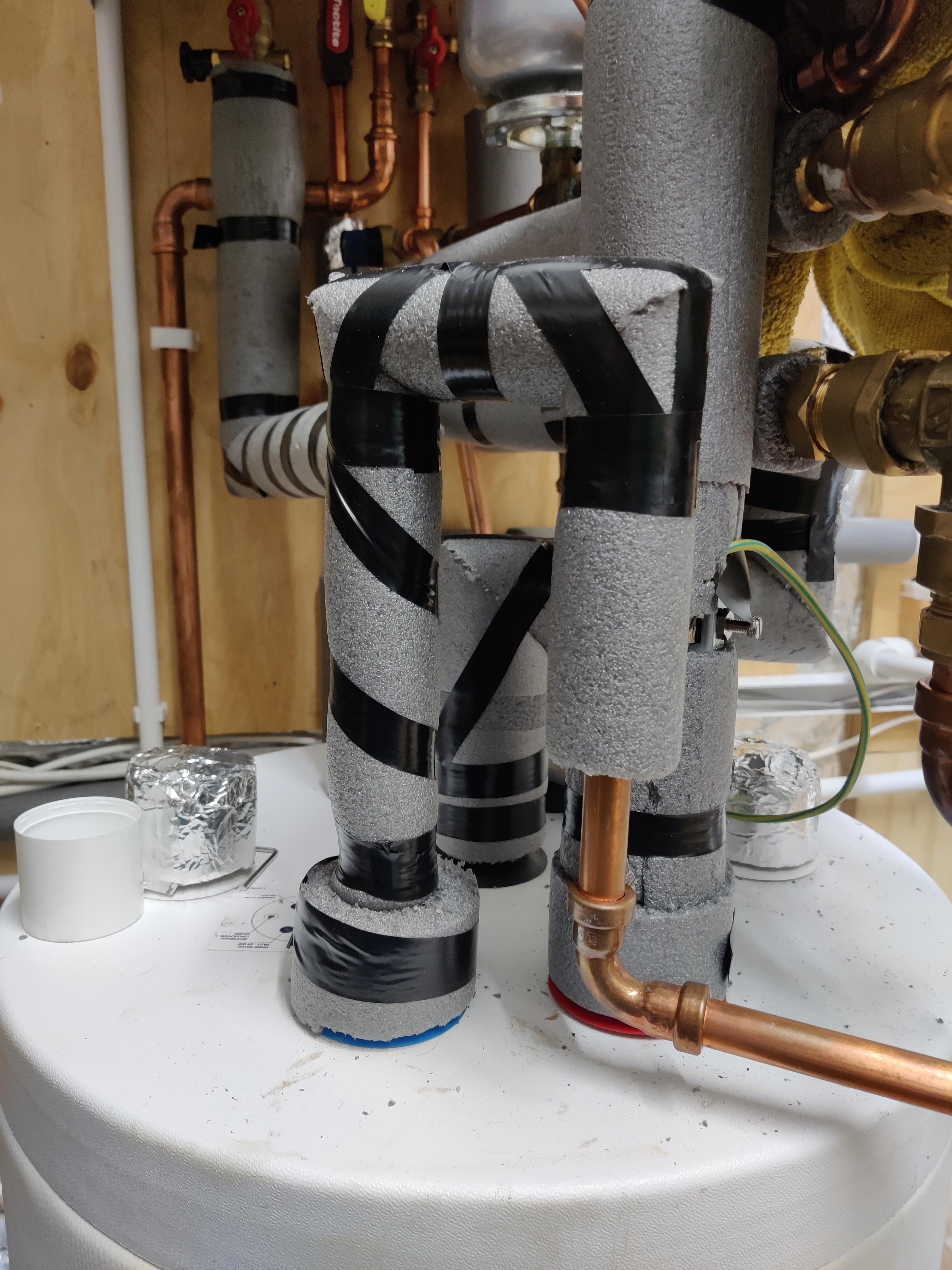
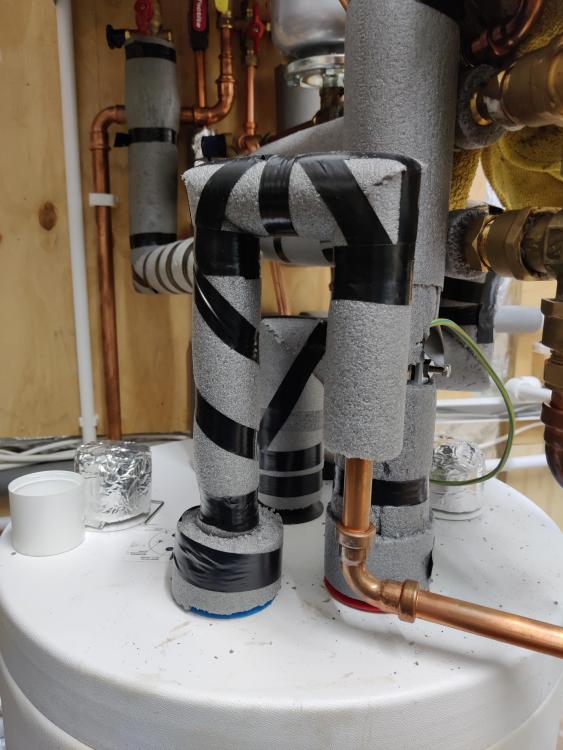
Basically hot water rises, due to density, it can only rise to the high point, the deliberate vertical fall arrests the heat rise. I tried it out on a temporary cylinder I have installed, its the cold water feed in to a DHW coil. At top of the cylinder the pipe exiting the cylinder is 46 degrees, while bottom of the insulation/vertical section to horizonal section is 23 degs.
-
When we were planning our layout, we went to the beach, with tape measure and a stick. Marked in the sand, the real size of the building and doorways. Checked how things flowed, or didn't, made changes in the sand. You can add things like dining table, bed, sofa etc. Did this a few times, worked well for us. Also for room sizes, use you current house, fiends houses and show houses, to compare your proposed room size, to see how it feels, big or poky, also take account of furniture you want move to the new house.
-
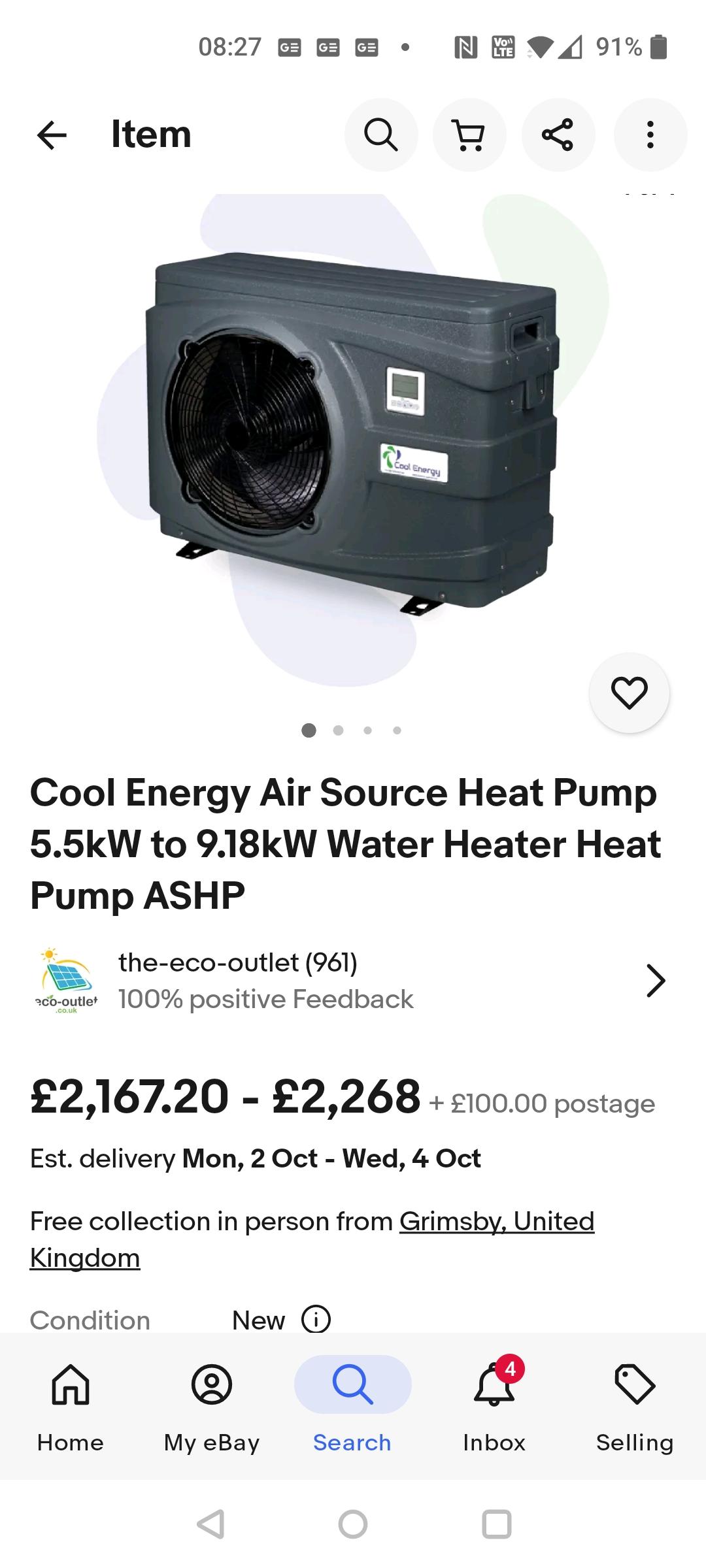
 A two minute search on eBay, brand new cool energy unit, for around £2k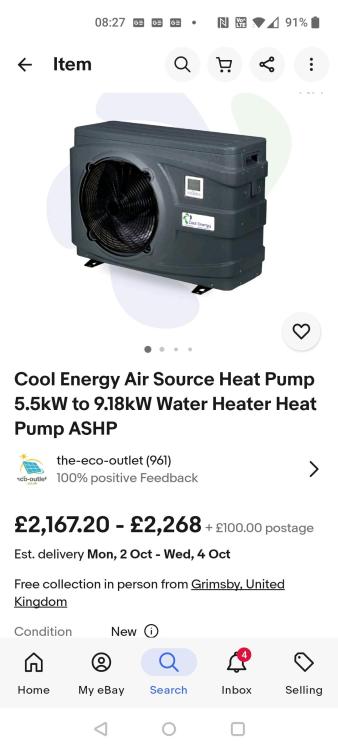
-
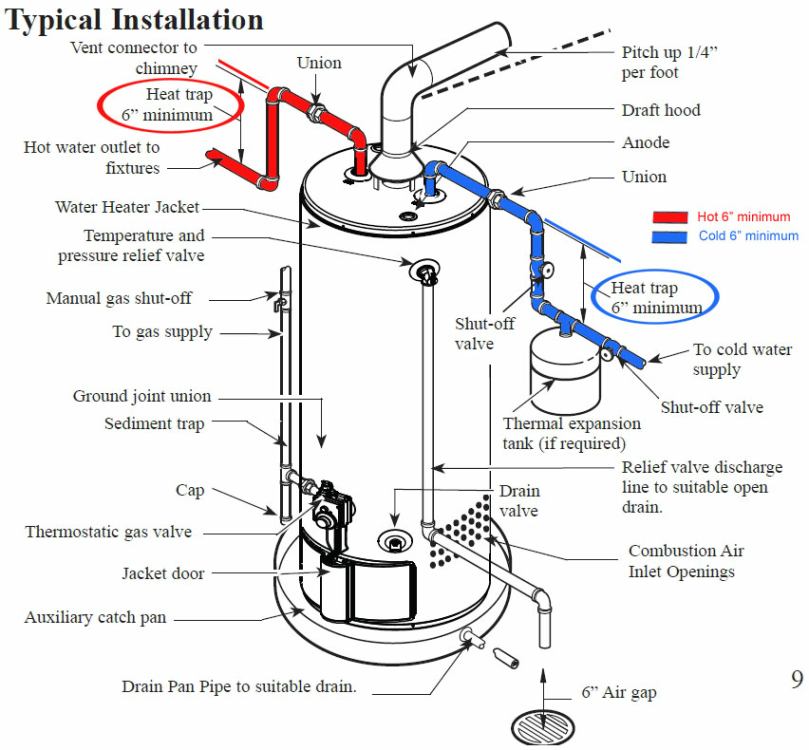
Would agree with that, I was looking for some info the other day and found some info on a USA site, and it reminded me you don't see many heat traps these days on cylinder installations.
-
Think you need to sit down and calculate the house loss. Oversizing the heat pump can have advantages and disadvantages. It is only an advantage if you are batch charging the floor with off peak electric. Disadvantage it's too big nearly every day of the year and prone to short cycling. A buffer in simple terms is there to increase the water capacity of a system. So if your min turndown of a boiler/ASHP is 6kW you need around 50L of water engaged to keep away from short cycling (running less than about 10 mins). So if you zone the house in to lots of controlled areas, you take the smallest capacity zone, say it's 30L, then you need to add 20L, this is done with a buffer. There are several ways to install a buffer. 4 port, this requires a pump either side of the buffer and can be prone to mixing of the flow and return water leading to a low CoP. A 2 port can be installed directly in to the flow or return piping or be tee'ed into both the flow and return. A 2 port buffer doesn't require an additional pump. An ASHP, doing long run hours just doing UFH, should yield a SCoP of over 4, so running costs will be 1/4 of your current costs. If you batch charge (E7 or similar), your run hours are less, say 7 hours, but over those hours the CoP is lower (3-3.5) due to higher flow temps, but overall the running cost should be way cheaper.
-
Lots of different sizes are available. City plumbing are good prices, and have a range of sizes.
-
You need check the temp the testing is done at, it is always the same temperature, introspective of storage temp. It will be done to a defined standard.
-
Bet it cost £12k - they've got to fleece you. Bus info, new build, no you don't get the grant, self build you do. https://www.ofgem.gov.uk/environmental-and-social-schemes/boiler-upgrade-scheme-bus/property-owners
-
I would check your building regs on the requirement for ventilation. Unless your ICF build is really badly done, your airtightness is very likely to be better than 3m3/m2 @ 50Pa. Certainly in Scotland that mandates balanced mechanical supply and extract (MVHR). The point to find out is now, then you can plan for it.
-
There isn't a self build form. You just allowed to have the grant. The MCS installer does all the paperwork and gets the grant, you pay the bills
-
Duct locations
JohnMo replied to mickeych's topic in Mechanical Ventilation with Heat Recovery (MVHR)
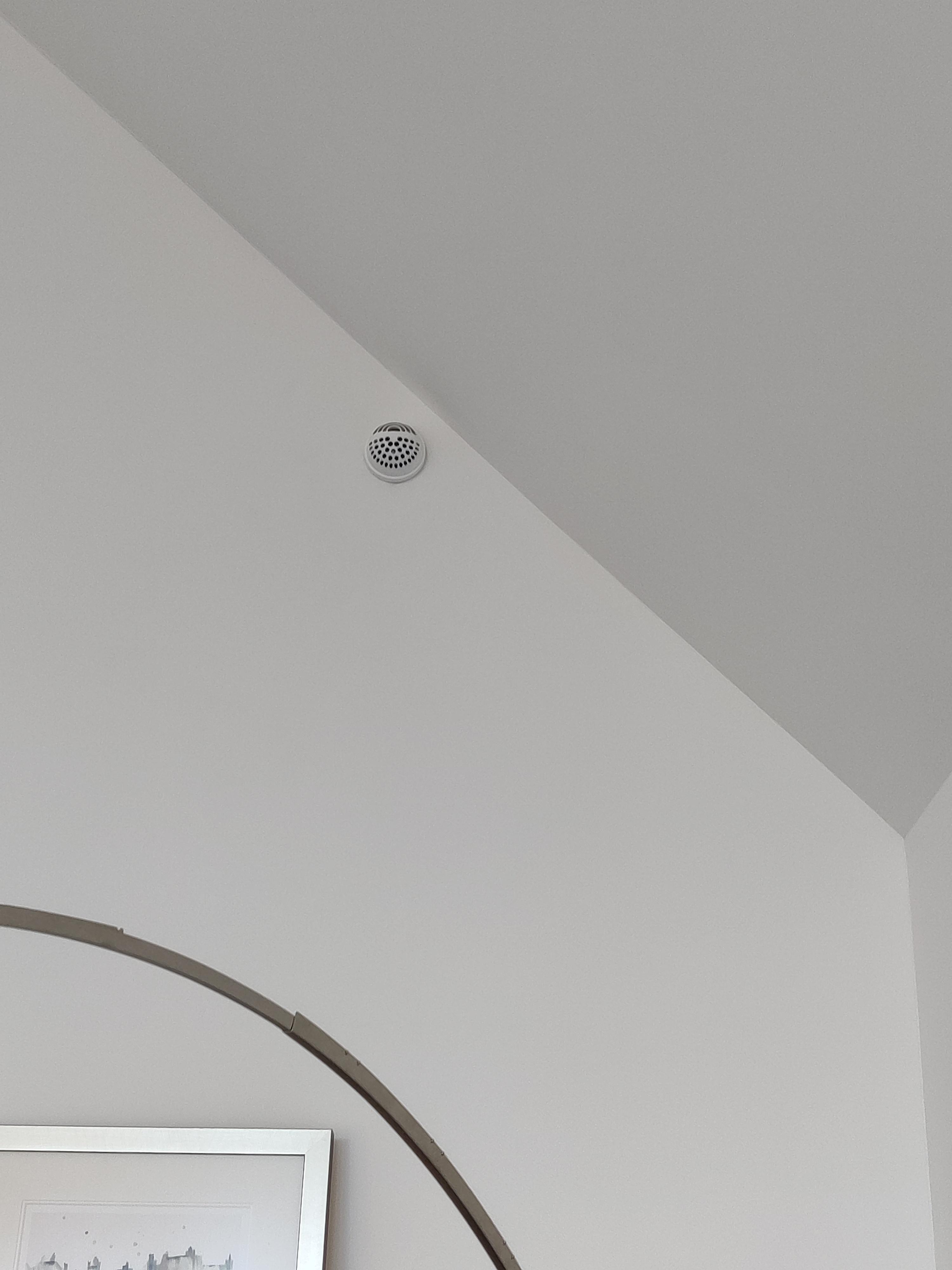
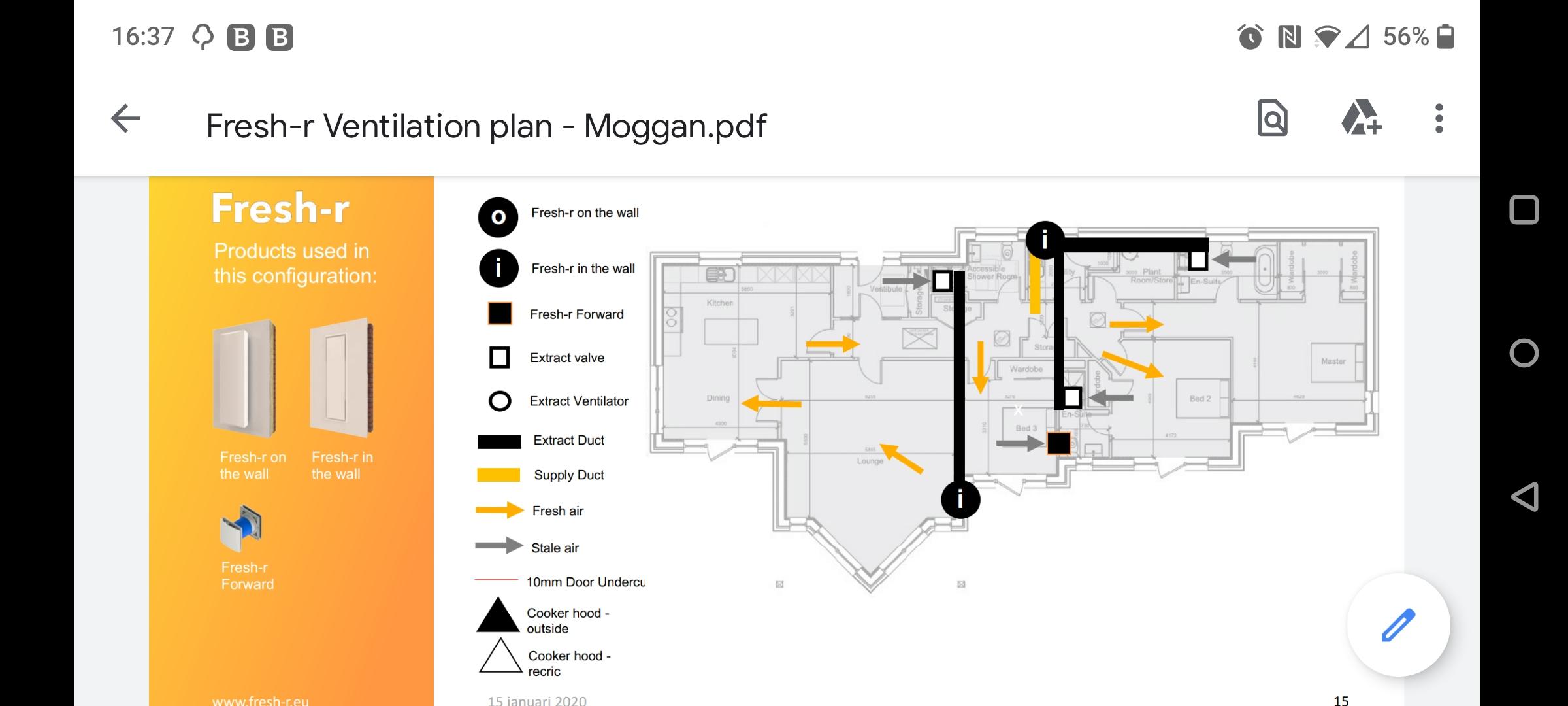
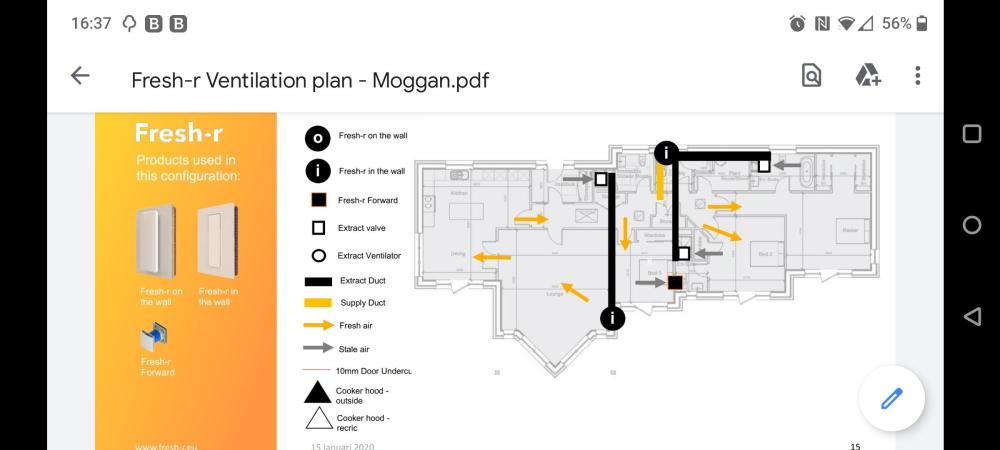
This is one of our coanda effect terminals, the air comes out, following the cieling, and drops down around 6 to 7m away. We use them in each bedroom and lounge, cutting the amount of duct required by around 30 to 40m. They are made Zehnder and work really well, they are about 100mm dia. Below is a plan I got when I was looking at Fresh-r, they proposed two units. The thing to note is how cascade ventilation work, just two supply outlets, one room to room transfer fan, and three extract points.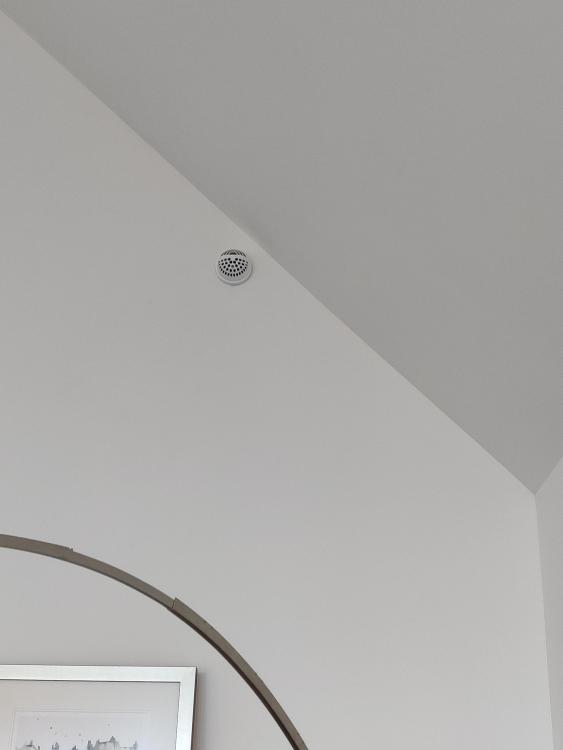
-
So you have 2x3kW Willis, confused why you think you need 11kW heat pump? Unless you have poor insulation and are using additional heating not mentioned you should need no more than a 6kW heat pump. Most manufacturers seem to use a lot of common parts on a 4, 6 and 8kW units, but when you get to 11kW you are looking a big unit. A new ASHP doesn't need to cost much, I paid £1300, from eBay. I elected to DIY install and do what I wanted, not be pushed in a direction I didn't want to go, like loads of zones buffers etc. If you can set up a Willis heater, an ASHP should be easy enough.
-
Hi a few comments below Some odd sized room and lots of wasted space. Lounge looks very small, hall looks to have a similar area. Dressing room is huge, and what's a powder room? Your master ensuite looks tiny? I think the door going into the bedroom needs a bit of a rethink, I would design the bedroom around a super king bed, there looks to a normal double used in the drawing. Is the sink going to useable in the guest bathroom? You seem to have several chimneys? If you are putting in fires these need to be room sealed. So plan where the air duct is going through the wall or floor. An ICF build will have a good airtightness. If not room sealed you will need to add wall vents in each room to comply with building regs. Are you having an MVHR system? If where is it going, same for hot water cylinder. How are you heating and where is the boiler or ASHP going?
-
Duct locations
JohnMo replied to mickeych's topic in Mechanical Ventilation with Heat Recovery (MVHR)
Look in to cascade ventilation (passivhaus institute is a good source of info) and coanda effect. You can easily have an outlet one end of a room and the effective ventilation the other end, using coanda nozzles. Two MVHR units work well doesn't have to cost much, just shop around. -
Looking for help installing my network
JohnMo replied to Triassic's topic in Networks, AV, Security & Automation
There's more wires there than I have in my whole house. -
The way they are made there is alway flow mixing you cannot stop it. I tried two different makes before I realised. I have no mixer and no pump, just use circulation via the ASHP circulation pump.
-
No, it doesn't care, mine was run through insulation space by the gas engineer.
-
Certainly looking at the annotated photo, you have hot water going through the flow meters and return water at the bottom. How the mixing occurs doesn't matter as @ProDave says. It looks to be doing what it should be. With all UFH mixers there will be a higher temp going into the mixer than out to the UFH loops, 10 to 15 degs is pretty normal and that's what you have. The mixer takes some hot water from the boiler, adds some return water. So if you have 10l/min around the loops, you may take 6 to 8l/min from the boiler supply, the rest is reused return water. If you want to remove the pump and mixer and direct couple, you would put the flow in at the top and flow out at the bottom. Switching the pump of will give you zero flow, as the pump pulls the water through the mixer, the mixer acts as hydraulic sepereration.
-
Hot normally goes to the flow meters. DeltaT looks large for a heat pump, normally around 5 to 6. Are you running rads and UFH at the same temperature?