
JohnMo
-
Posts
12470 -
Joined
-
Last visited
-
Days Won
179
Everything posted by JohnMo
-
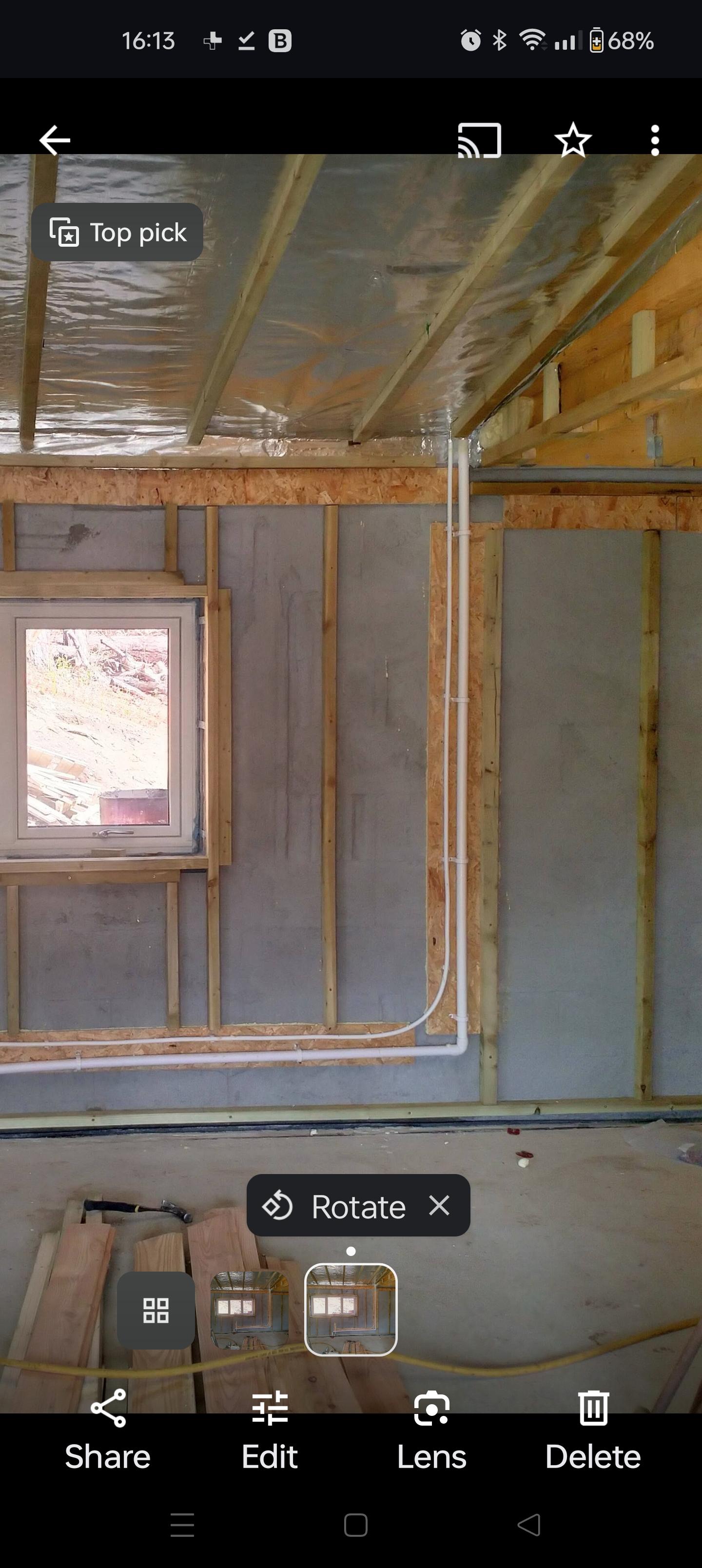
Doesn't really answer your current need, but for anyone reading, I used 50mm service cavity and added a sacrificial strip of osb to the wall so the electrician could pin to their cables if they wanted. Made it thick enough to take the pins and not go through where I didn't want them. Used expanding foam adhesive to stick the osb in place. Used the same method for the plumbing also. Thought why fight what they will do, as soon as I am out the room, just tell them where the wires have to go. Osb strip at top of wall for wiring.
-

Opinions please on this quote for substructure & drains.
JohnMo replied to Tony L's topic in Foundations
I would get a second quote, to me it looks expensive, but have no idea if you local day rates. My foundations were twice that size, way more complex and half the cost. Done at the height of the COVID price hikes. -
Never took advantage of it anyway. Not sure I agree that new build should have been eligible anyway.
-
Just found I can generate weekly, monthly and annual reports from the battery/inverter. This week has been cloud, rain and occasional sun, so not really the best for solar. But: House consumed, 124.69kWh of electricity Generated from PV, 125.31kWh PV self consumption is recorded as 92% (however with water heating closer to 100%) Exported (really went to hot water immersion diverter) 6.73kWh Imported around 6.5kWh Current cost for electric £3.70 plus standing charges (E7). On normal rate electricity £31 plus SC, if I had no battery or PV. So some cost savings, compares battery, PV and E7 to normal electric and no PV or battery. Oct 23 £30 (not on E7 otherwise savings of around £80) Nov 23 £40 (part month on E7) Dec 23 £50 Jan £60 Feb £80 Mar £120 Apr £125 May £110 June - Sept about £100 to £120 per month. So annual saving around £1000+ expected. Would expect around 10 year pay back based on cost to install. With no paid export.
-
Level door access disaster. Advice needed
JohnMo replied to Paene Finitur's topic in Doors & Door Frames
So about 2m with a fall of 1 in 12. Isn't all this detail not shown on your drawings from the architect for planning? -
What worked for me Being the self builder, I was on site at all times and doing a big lump of work myself. Used CDM Wizard (Phone app) for all risk assessments, these were stored until house was signed off. One contractor company on site, at any time. They controlled their own work, as they were independent companies, so under my control. They worked to drawings I provided and they quoted for work against these drawings. I did quality checks to ensure work complete satisfactory manner, if not they rectified at their own expense, prior to invoice being paid. My manhours were free, so not deemed as employed on site. That could be me then. But was also the project manager. My engineering background is managing jobs way more complex than house. I read and digested building regs knew as much or more than any contractor we had on site. I was in the review process for all architect drawings, none were complete until I had reviewed and or commented and given a green light. Fell out with the first architect as he didn't like it, so found one that would accept a two way design process and me as the client, as someone that would actively review and comment on drawings, make changes and say no when not happy. I come from a different field, but all relevant experience. You work to drawings, contractors quoted against drawings and specifications, if something is not clear, you ask for clarification - this occurred during quote process and at the work site. If a contractor didn't want to play ball, he didn't get the work. I didn't bother, didn't meet the 500 person day or numbers on site criteria. No point putting head above the parapet to get shot for no reasons.
-
Is just like eps, but rock solid, just treat it as structural insulation. If you were specified 400mm centres for the wood, just do like for like.
-
Double or triple glazing options, what is the difference?
JohnMo replied to JohnnyB's topic in Windows & Glazing
We have triple (argon) and double (krypton) in the same frame next to each other you can't see the difference. Other option - French doors and fixed either side? -
Sort out your insulation and airtightness, get it to a decent SAP score. Then you will. If you need assistance ask. PIR in a block cavity may look good on paper but typically is badly installed because difficult, wider cavity, eps beads, better U value, easy to install, better result for less faff.
-
Double or triple glazing options, what is the difference?
JohnMo replied to JohnnyB's topic in Windows & Glazing
Another thing I found useful this winter as an adjustable door catch. The door sealed well when locked, but was drafty when not. A quick adjust of the catch airtight again. Loosen the two silver screws and the stepped piece can be moved in or out. Adjusting the door to seal compression.
-
If you need a remote for a toilet, shower or bath or to replace a light switch, the words "more money than sense", come to mind.
-
You can never do enough planning for your build. Looked at your house it looks a great layout for a cascade MVHR system, look into that and plan a design, Fresh-R, blumartin, good source of information on how the layout works, so is passivhaus institute. You can do it with any MVHR unit.
-
Think you have too much time on your hands.
-
Double or triple glazing options, what is the difference?
JohnMo replied to JohnnyB's topic in Windows & Glazing
It's about 10 degs here at the moment and back of the hand feels slightly cooler on the krypton double glazed compared to triple. But not much in it. -
Double or triple glazing options, what is the difference?
JohnMo replied to JohnnyB's topic in Windows & Glazing
Passivhaus have the criteria for triple glazed, but not for heat loss, but mostly for comfort factor. It's the internal skin of the glazing temperature which is important, the closer it is too room temperature the lower the room temperature can be and still feel comfortable. We have a big bay window fully triple glazed and at -9 outside I can sit right next to the window in my tee shirt. We do have a couple of wooden framed double glazed doors, but these are krypton filled units, which reduces the U value very well. They have a Uw of 1.0. So midway between decent double glazed and triple glazed. So you can have the windows you want, good comfort and reduced heat loss. Krypton come with a price hike, but you get what you pay for. -
? Just install a check valve on the discharge side of the pump, no reverse flow, no reverse rotation!
-
SIP wall thickness: diminishing returns?
JohnMo replied to joshwk's topic in Structural Insulated Panels (SIPs)
People will say this is quite black and white, but it's not. One thing often missed is house form factor. So a house that is a cube is great, you need very little insulation to heat a low W/m2 heating required. However my house is rubbish it's long and thin, single storey, with vaulted ceilings in every room. So although all surfaces are insulated to better than advertised PH requirements it's energy inputs are way higher. Your house as far as form factor goes is about as bad as it gets. Lots of external walls, roof and floor for a given m2. So cram as much insulation in as you can get away with. Aim for 0.1 U values or better everywhere. -
Me also, but used only during the thinking process and getting ideas on paper. Once I had my plan it was frozen, think during the build we only changed the shape of a cupboard in the hallway and moved a few lights. Stayed offline (buildhub) during the whole build, so as not to get diverted, on many tangents and over thinking decisions that had already been made, for me that was a good decision. Did lots of the build myself with hired help when needed, a year from starting foundation (late 2020) we were sleeping in the house (mostly finished). Then came back to contribute once the bulk of the house was complete. Have I found things I would change, a few. Have since installed an ASHP (mostly for cooling) and unvented cylinder, I could have made the house slightly smaller and changed a couple of windows for smaller sizes. Things I learnt during the whole process Have a plan for everything before you start, down to where you want light switches etc. Airtightness is good. Have a ventilation strategy and stick to it, make sure every room is ventilated. MVHR will reduce your heating requirements. Understand how you route ducts and pipes before you start building You can never have enough insulation Hot and cold water distribution manifolds are good and make life simple. Low energy houses and big boilers are not a mix made in heaven. Do not listen to anyone that uses rules of thumb, they are generally wrong and screw things up. Do the calculations yourself and make your own decisions. If it's difficult, move on to something else and come back to it the next day. Ways to get around a problem come when you are thinking about it (it's how the brain works). Shop around, big variations in pricing. MCS and ASHP equals being ripped off, unless you are very careful. Forgot to mention - don't work everyday, you will burn yourself out. I worked from 7.30 until day light stopped me during the winter and a out 5pm when it didn't. Treat it as a job, if doing it yourself.
-
Stainless Steel Slate Hooks or Copper Slate Nails?
JohnMo replied to JamieK's topic in Roofing, Tiling & Slating
Whatever is done locally, anything thing else may look strange. -
Rigid vs Semi-Rigid
JohnMo replied to joshwk's topic in Mechanical Ventilation with Heat Recovery (MVHR)
All depends on the quality of the system design and implementation. Both can be good both can be rubbish. It's all about keeping flow velocity low and duct run pressure drops low, so fan speed is low. You need to consider room cross talk with a rigid branch system you don't with a manifold system (rigid or semi flex). Semi flex generally easy to install no joints. Where does that info come from? Not saying it's correct or not, but sounds.... -
MVHR New Install advice - Ducting in cold loft space insulation requirements
JohnMo replied to Olu's topic in Foundations
There are a lot of inlet and outlet terminals going on, looks overkill. 4 extracts in a kitchen and 2 in most bathrooms is just daft. It's fine running multiple ducts to a single terminal to keep the pressure drops in check, but you just don't need all this terminal points littering your ceiling. You only need one extractor or supply to each room. I would. You will need to seal the terminal manifold to the plasterboard once it's complete. I would have a single supply thermal in your master bedroom and only one extract in each bathroom to reduce the number of points to make airtight.- 6 replies
-
- 4
-

-
- mvhr
- mvhr ducting
- (and 1 more)
-
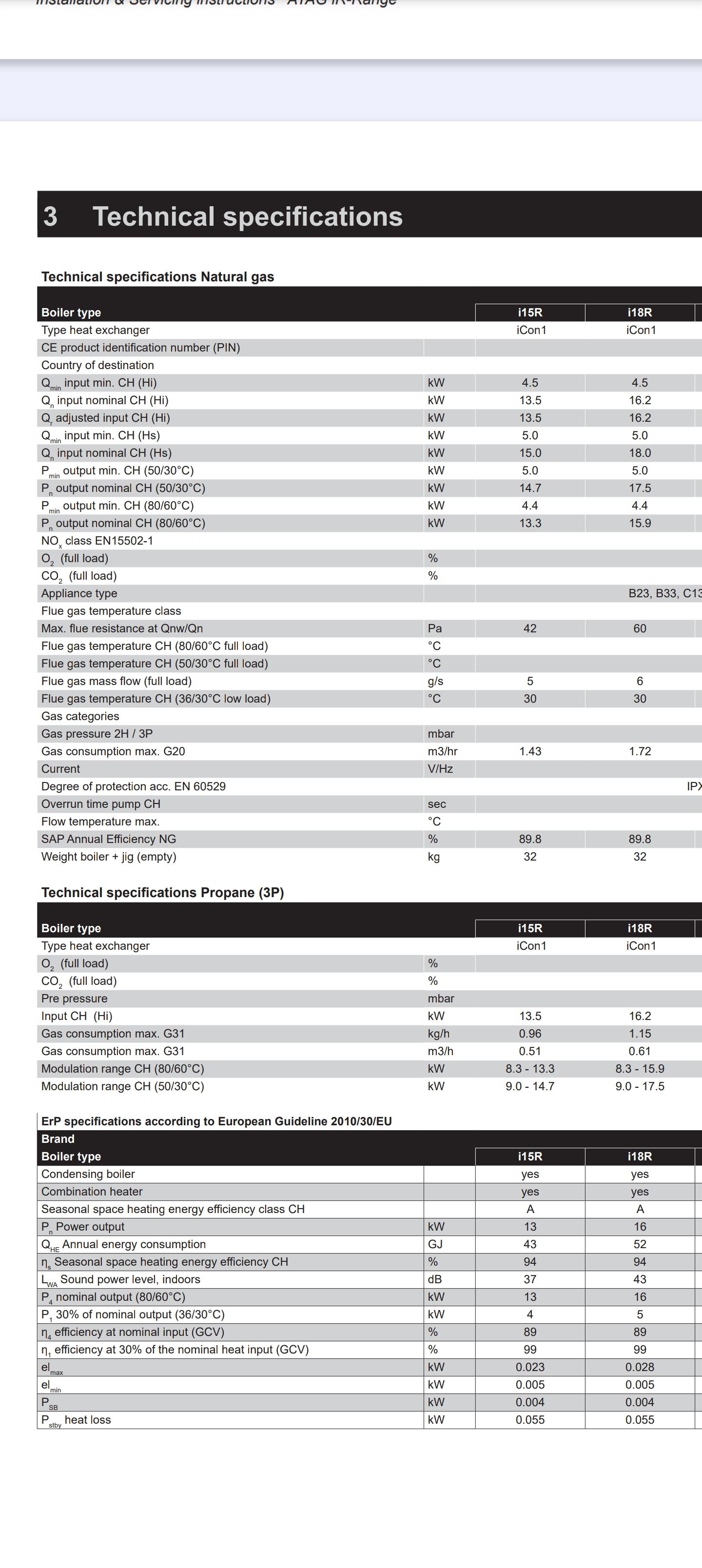
Page 8 of the install instructions Turn down is not quite as good as the Viessmann. But having used an Atag, they are super quiet and work well. The way to keep any heat source happy is enough engaged water capacity, you need about 50L to support 6kW so it doesn't short cycle.
-
Another boiler to chuck into the boiler options is an Atag boiler.
-
Or should say 4.3kW. which is very good While doing that you really need to take a look at pipe sizes to make sure your required flow rates matches the pipe sizes. When you reduce flow temp the dT across the radiator also reduces. 40 deg flow and a decent boiler may be looking to control at 5dT. So your flow rates through the radiator may increase. Or a Viessmann 200 boiler will go down to 1.8kW and not need to switch on and off in mild weather. A system boiler will control the circulation pump and modulate it's speed for better control. So able to run two different speeds for hot water and heating. Where a heat only boiler will more than likely be a fixed speed pump compromise. Did find a setback energy calculator, must be on the old phone, but worth a play, as the saving from setback is extremely small. Due to the hotter flow temps required to catch back up - but every house is different.
-
But doesn't your loan to cost ratio move more towards your favour. Say you want to borrow £200k, the QS say cost is £800k you are only borrowing 25%. Lower risk for the mortgage company. Or am I missing something?