
JohnMo
-
Posts
12465 -
Joined
-
Last visited
-
Days Won
179
Everything posted by JohnMo
-
My view, is do due diligence on anything you read. Who is writing it, what is their background - where is the money coming from, that allows the research and pays the bills. If you can't easily find these details ask yourself why not! Most likely it's going to filed in the nonsense pile or pile of, most likely sponsored, by some organisation with a view to spin.
-

Contractor drilled through Electrical Cable
JohnMo replied to Jothetaxi's topic in Electrics - Other
We had a similar issue where contractors hit a mains water pipe, they got a fine and cost the repair. Bottom line they are the professional, they are the ones that made a mistake, or had an unavoidable incident, it's their issue to sort out, they are or should be insured for such events, if they aren't that isn't your concern or problem. Don't get involved, anyone comes and starts asking or telling you stuff is your issue, pass the contractors details to them. It's not your issue to question, it's the contractors - getting involved just gets you in the middle of stuff you need not be in the middle off. Tell the contractor to deal with it - it's the issue. -
It takes all sorts - all opinions are good, even wrong ones. Deleted the rest of the comment, it's not worth the effort.
-
And if you have solar, no solar no export payments, unless things have changed in the last 3 months.
-
It does even with my 300mm pipe centres, its way more powerful when you get down to 100mm centres. Uber simple to get working, set flat WC curve, say at 19 degs, let that run 24/7, to keep floor slightly cooler than rooms, have cooling thermostat to switch to second set point say 16-17 degs flow temp, when room temps hits 23 deg. I will be using the smart grid terminals within the ASHP to demand a reaction of 2 Deg in flow temp. My UFH controller is switchable between cool and heat and so is the ASHP, so use a single repurposed light switch connected to both (used to provide a volt free open/closed signal), one position changes both to cool the other position to heat. Pretty much a no brainer, very cheap to run, when between 10 and 25 outside the CoP is between 7 and 9 in the tick away mode, you still get a CoP over 4 running flat out in boost mode when its 35 outside.
-
Don't assume the heat loss is correct check for yourself. I have been told by two companies I needed a 10kW ASHP, will be installing a 4kW on Saturday. Certainly don't install anything bigger than you need as part load performance (average winter day) will suffer. Do you have PV?
-
China? So we are ok, aren't we! Was in a Scottish ship yard, a year or two ago, full of wind turbines for offshore, all had been shipped from China
-
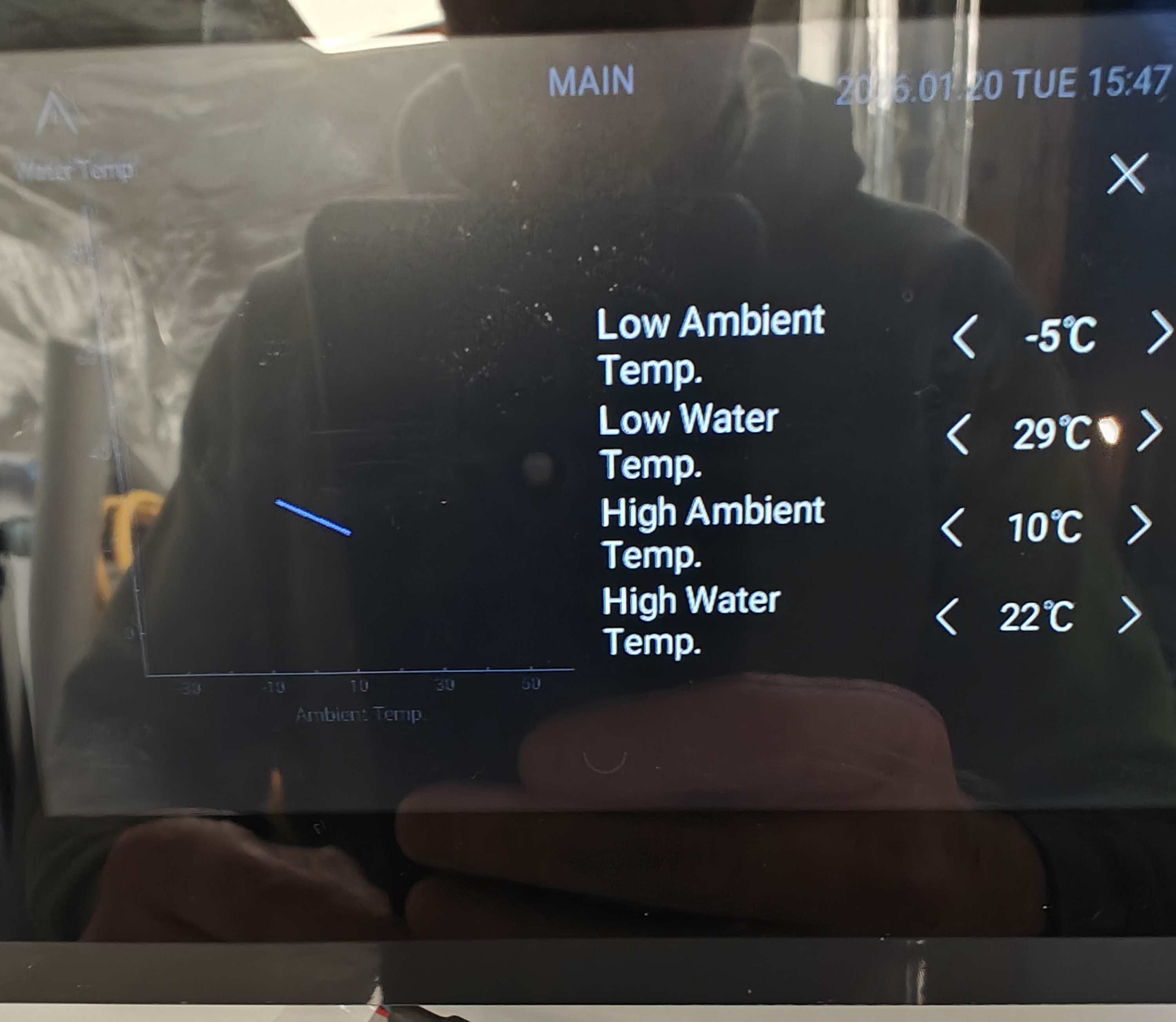
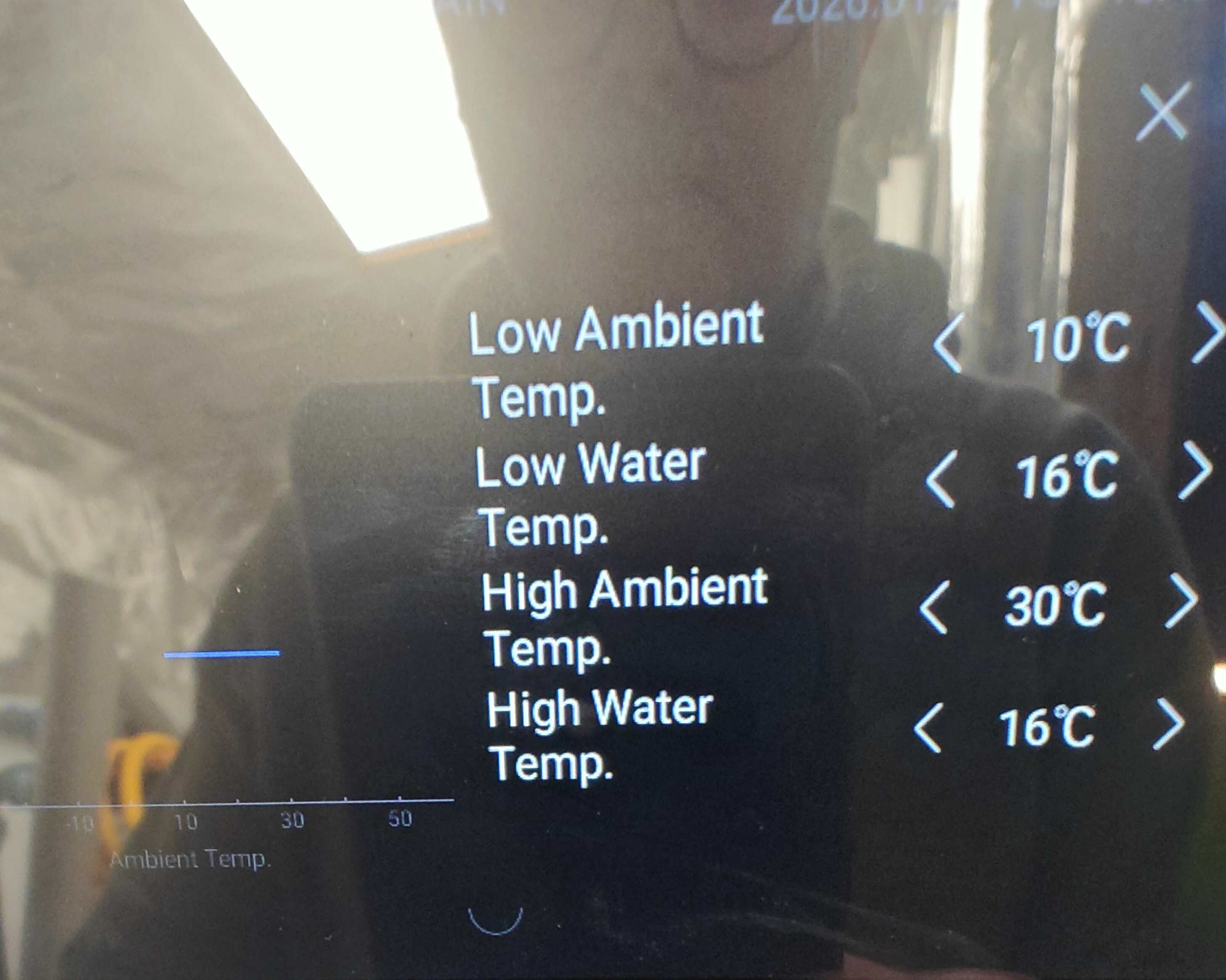
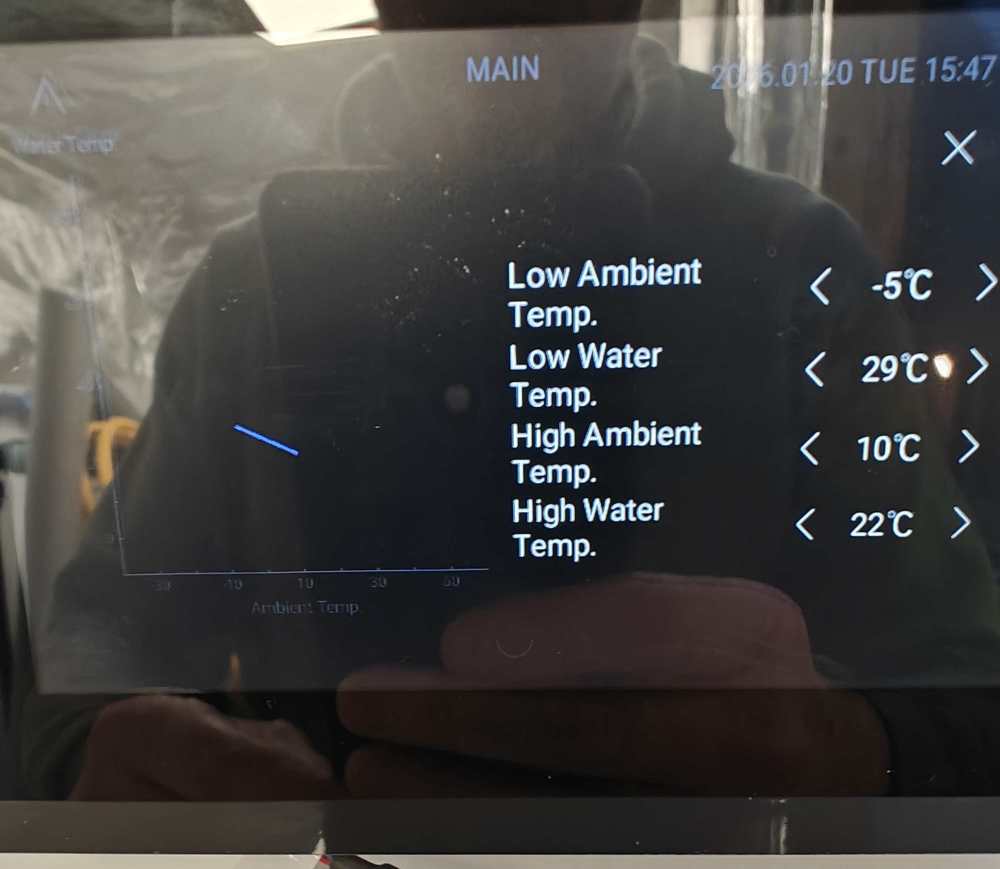
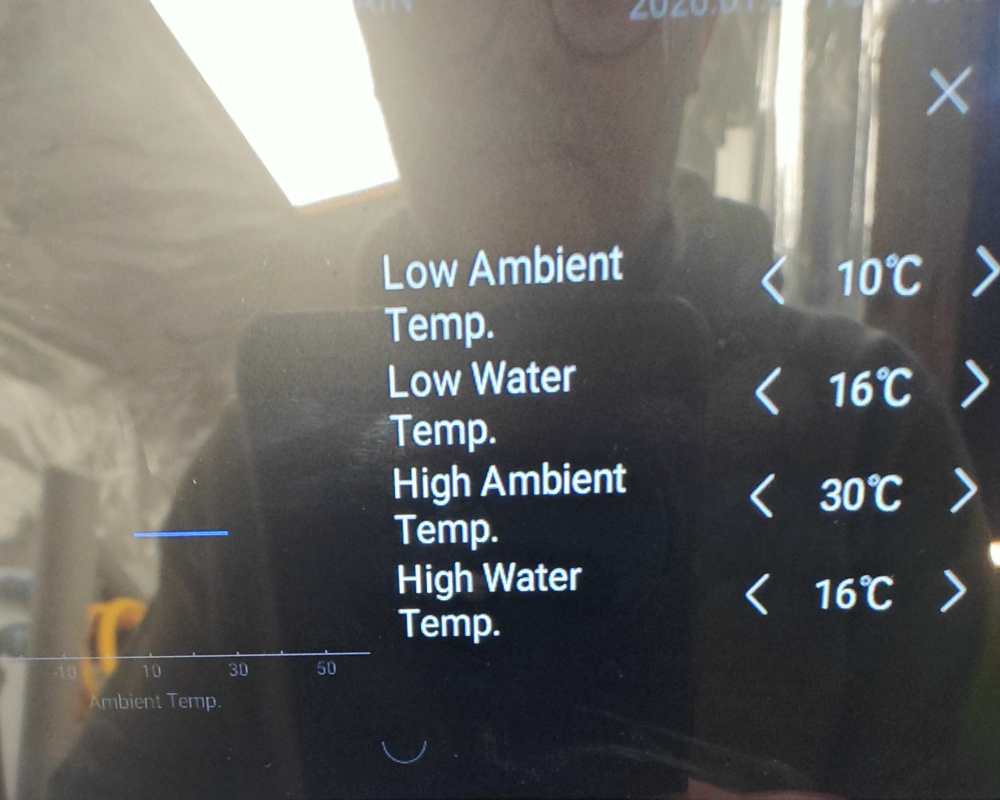
Been scratching my head how to set WC curves, one for heating the other for cooling, however I found because the unit was set to auto (auto switching between heat and cool) the menu wasn't visible. However switch to heat or cool and WC menu pop up. Very easy to set, so set a flat curve for cooling 16 deg (well above dew point) flow temp and heating the more normal curve. Will most likely need some adjustment once up and running.
-
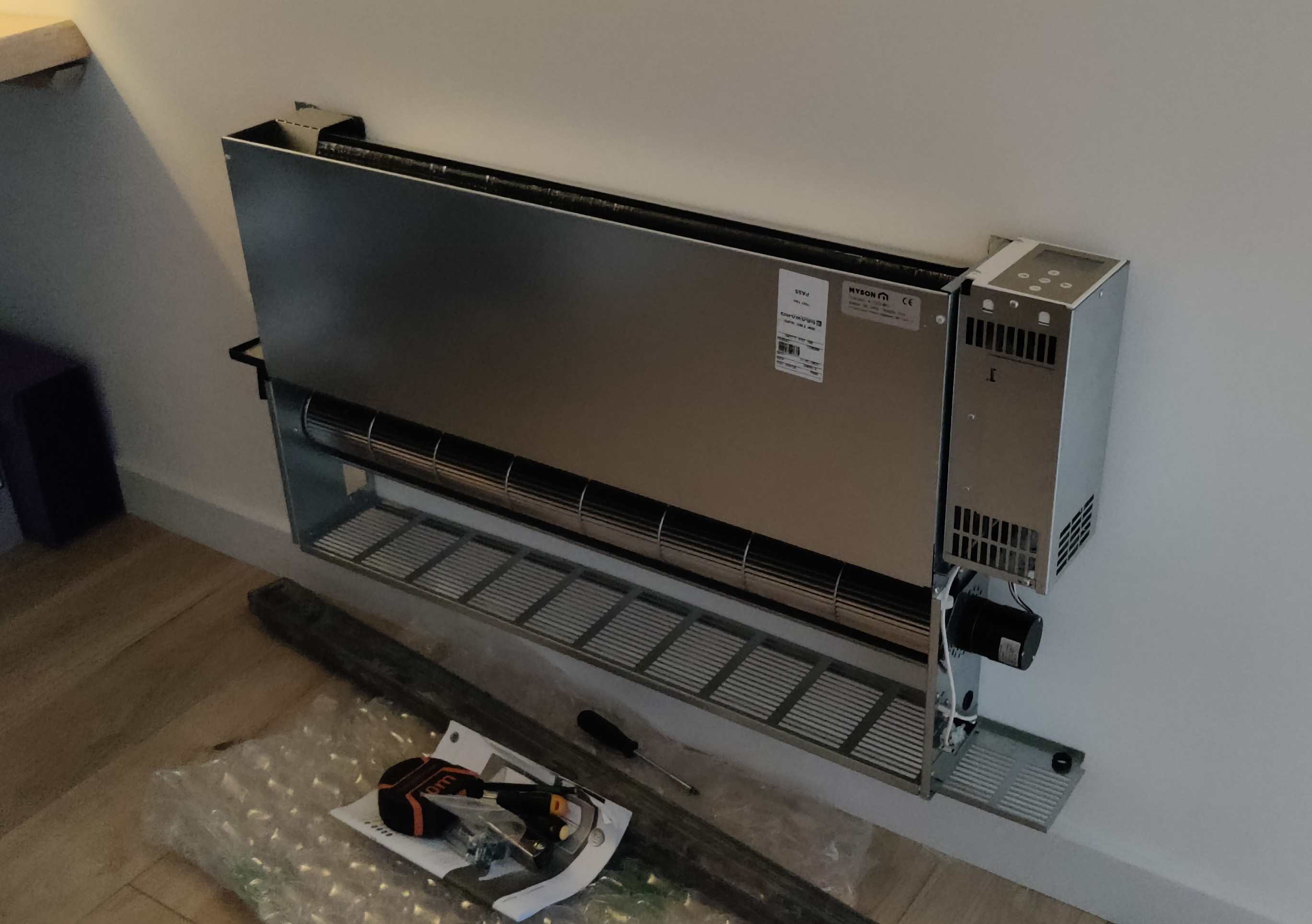
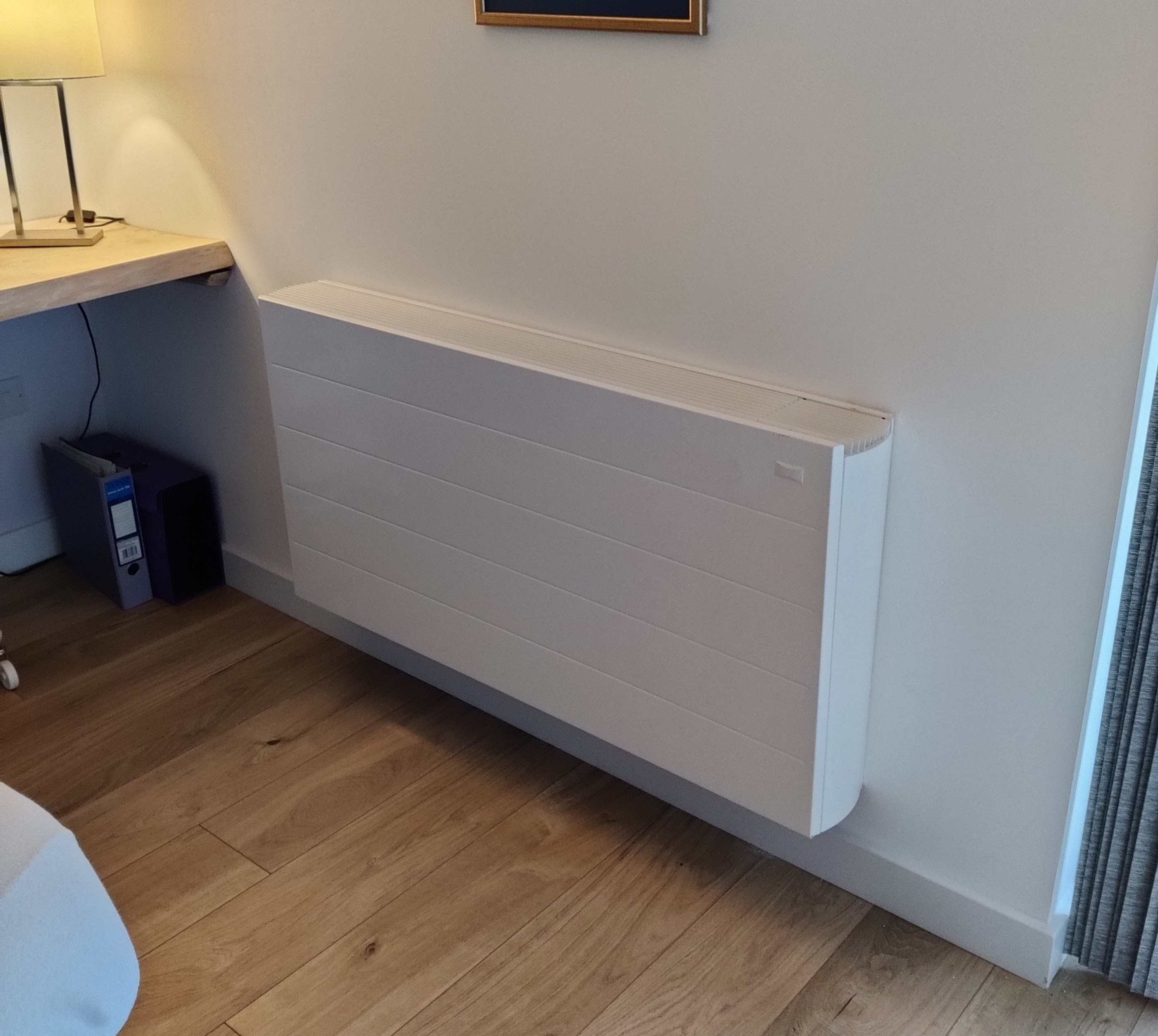
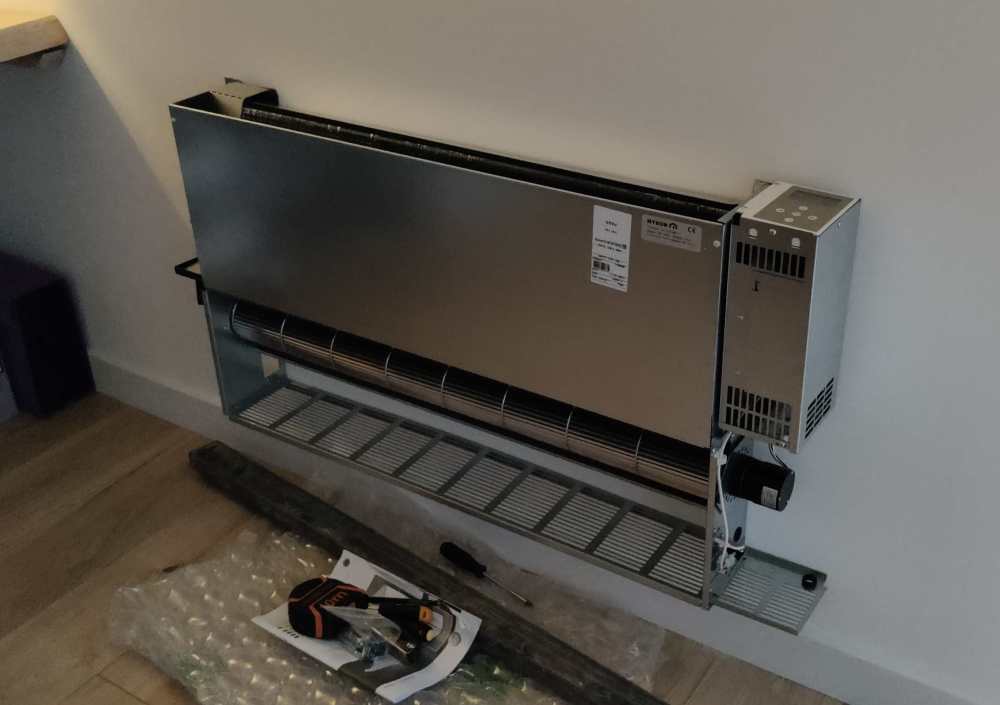
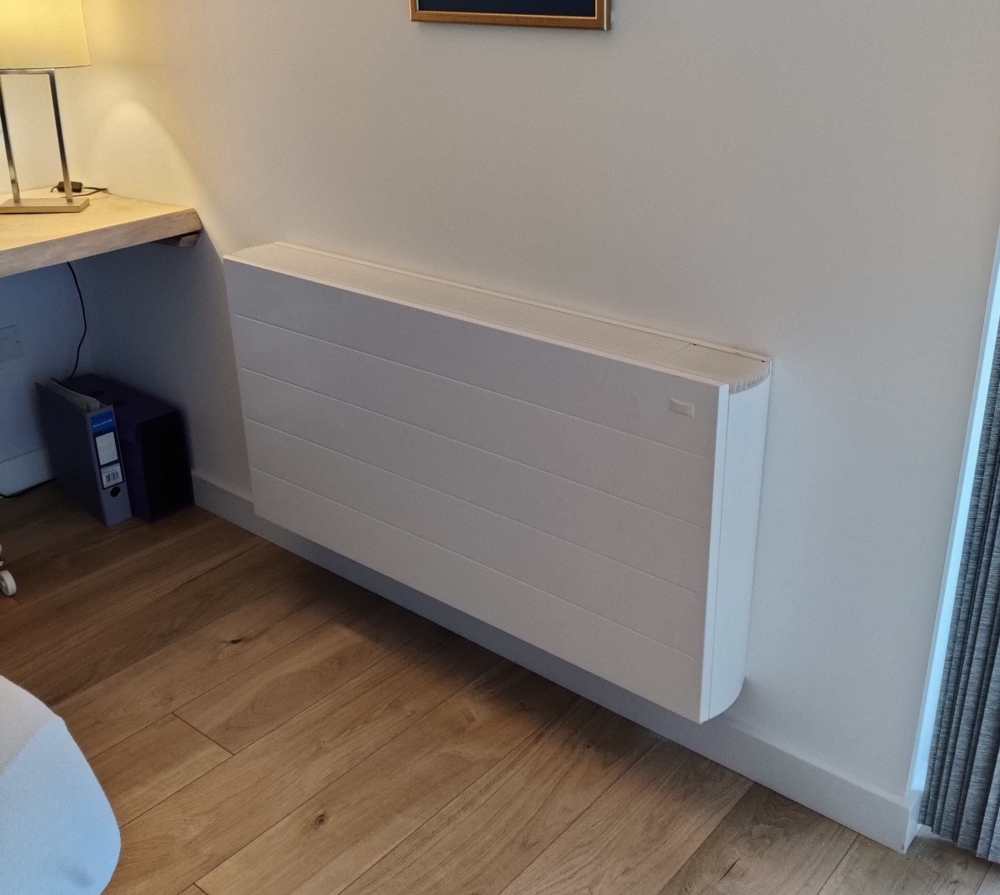
https://coolenergyshop.com/collections/radiators-fan-coils?srsltid=AfmBOoo2Jwpa28-xTPSwQCmxyskK6onq3GBoEW004T_AV7JvfWtJQvZo Here are a couple of photos of ours which heats a summer house (a Myson unit). First is the unit without the cover installed, controller is on the right, a finned radiator panel behind the sheet metal and a linear fan below it. It basically modulates the fan speed to maintain a a set room temp. Way smaller than an equivalent radiator.
-
With it being upstairs and if doors are open you are likely to have warmer bedrooms, like it not, I would keep it simple. Just install panel heaters in bedrooms or the provision for them, keep the electric UFH in bathrooms. But if you are going for a grant (I just wouldn't bother) they will require all heating by ASHP. But to mess your head up more, are you likely to need cooling upstairs? If so just do fan coils for heating and cooling in bedrooms and bathrooms. Cool Energy do bathroom fan coil towel rails. Do mild cooling keep the water flow above dew point then no need for drains to be added.
-
Mostly a long run of piping, although getting what looks a good CoP, generally 3+ it wasn't really that good, as we got a big slug of cold water hit the cylinder coil and it cooled the vessel. So small recharge needed to add a disproportionate amount of energy. So will just leave heat pump to tick away, doing heating and cooling.
-
Damp Bungalow
JohnMo replied to Potatoman's topic in Mechanical Ventilation with Heat Recovery (MVHR)
Plenty of companies do MEV. You want one that automatically adjusts fan speed for humidity levels with extract vents that open and close automatically also. Then couple that with humidity activated inlet vents either in window or through wall. Do some reading via Google Passivent, Deco, to name a couple. You need to have air movement with cross ventilation dry areas to wet and out the house. To allow this you also need door under cuts or through wall vent grills. I would keep it simple and do dMEV, with all the features mentioned above. -
I've just simplified and started to do DHW direct via immersion only. Left all the piping valves etc in place so could revert later, if I wanted, but over the last 3 weeks haven't been shocked by electric usage.
-
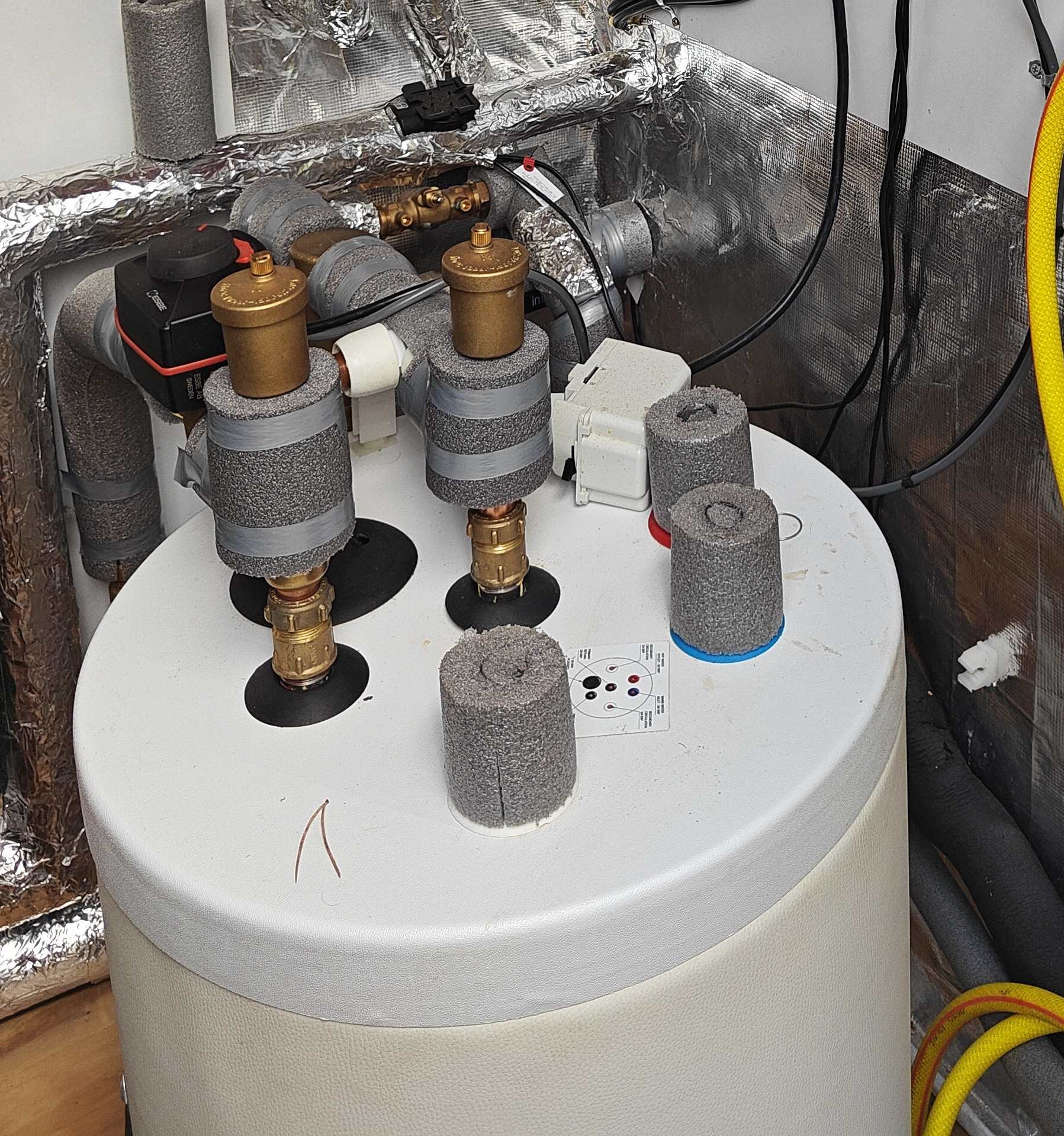
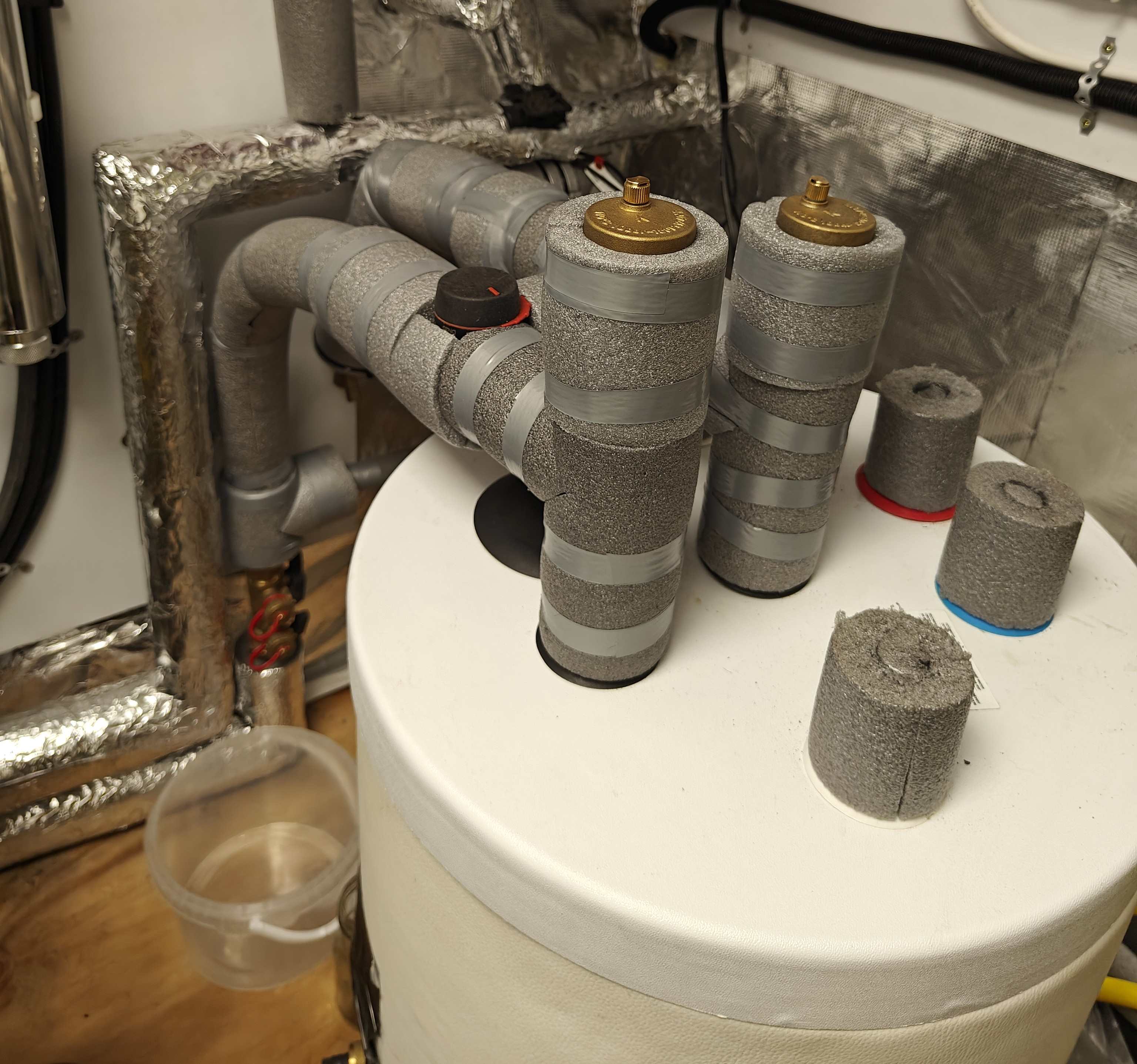
So will be keeping the volumiser, it's in the return line, but after the diverter valve due to because retrofit. So it also had an ESBE diverter, which allowed the volumiser to be bypassed during the production. That bypass isn't needed, so actuator removed and all the insulation tidied up. Before After Not perfect but much better than it was. Still a filling/flushing valve to sort out, but in the difficult basket
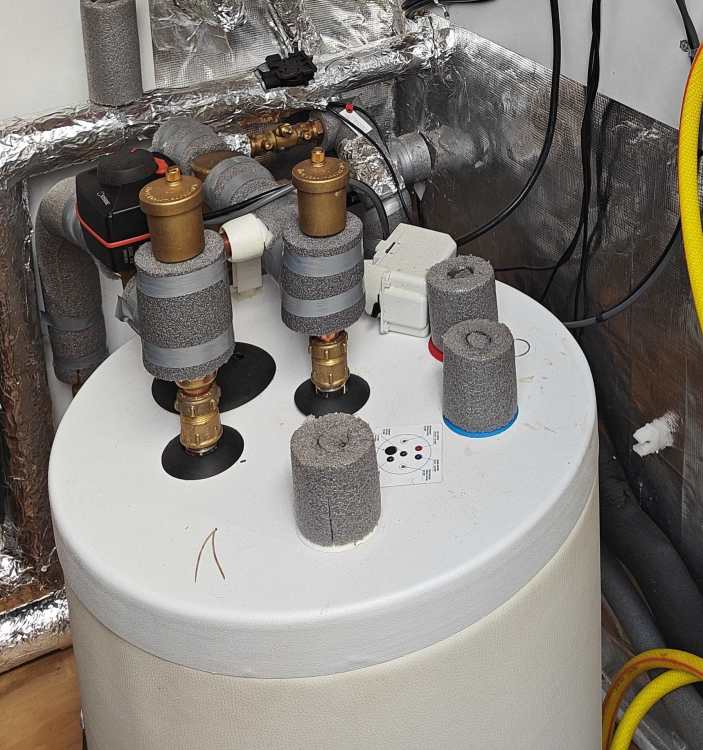
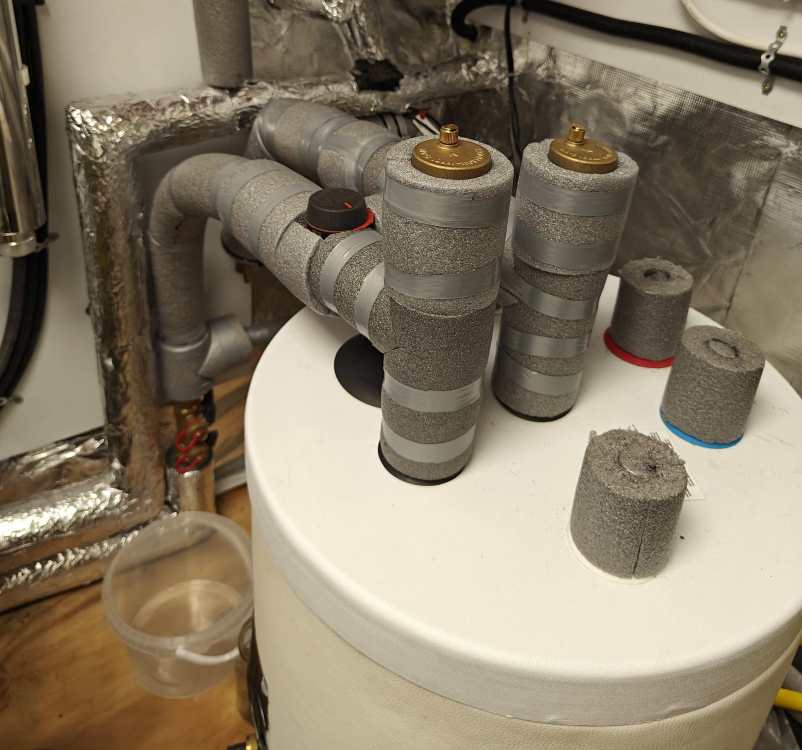
-
Nothing like a good bargain.
-
I don't have green fingers, what to do?
JohnMo replied to Post and beam's topic in Landscaping, Decking & Patios
I would clear the rubbish that's there already make flat, then leave until spring, then kill every that pokes it head up with an agricultural weed killer. Level as required, leave for 4 weeks and kill everything again. Then try not to disturbed soil to much or more annual weeds will come up. Brambles will keep coming up for so you will need to keep on top of those over time. Then do what you will with it. -
No not used one, but I have a pump with a thermostat and a simple timer. Works fine. We have a manifold in the centre of the house, from UVC, then to each wet room. Secondary circulation is only to the ensuite which is furthest away from the cylinder. But with the secondary return off the shower is flowing hot by the time I have undressed a d ready to get in - 20m pipe run in 15mm.
-
I have some marine ply outside for 5 years, apart from discoloration no real issue. Mould and rot, can all be controlled by good ventilation. If you are off the ground I would add a waterproof layer below the wood as it will not get ventilation and will rot if it gets damp etc
-
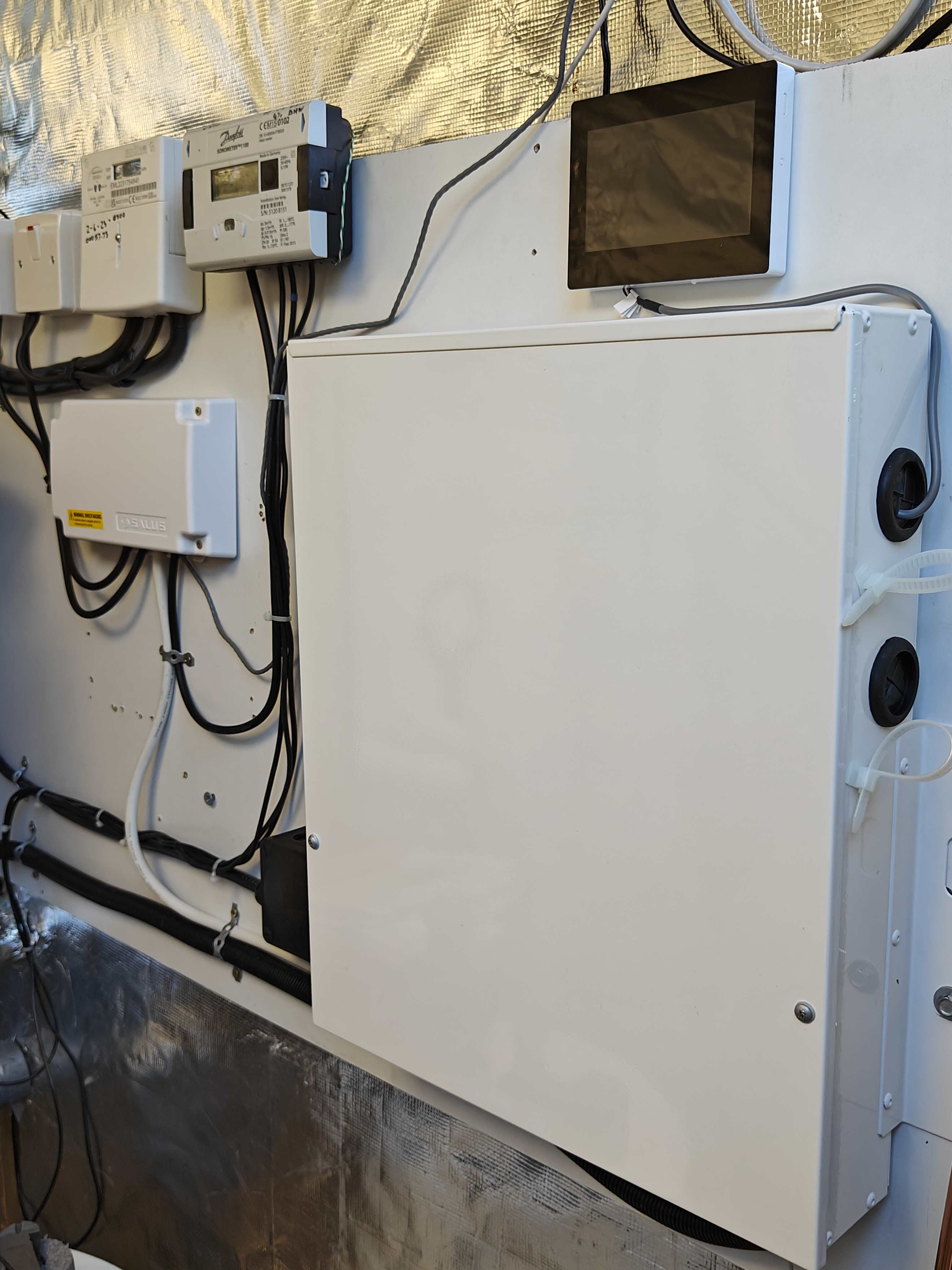
Decided after all to stay simple, DHW by immersion, will have plenty of excess solar in summer that will not be generated due to export limits. So better to use it via immersion than loose it. So wiring is complete. Have retained the smart grid switching to allow flow temp boost if I need it for the summer house, have retained the open source monitor system (energy and performance monitoring). So wiring actually done by me, power cable, SG switching 2 core cable, which then connects to inside house via existing trenched SWA cable (already in place for existing HP), this connects to UFH controller, so I have remote (hardwired) manual temp over-ride for summer house temperature. Once outdoor unit in place it's just power cables and shielded comms cable. A some basic pipe work mods. Image below left to right, isolation switch wiring center and performing), electric meter for heat pump, heat meter for heat pump, Hiaer controller, below that, simple wiring center, then the main control/wiring center for Hiaer heat pump.
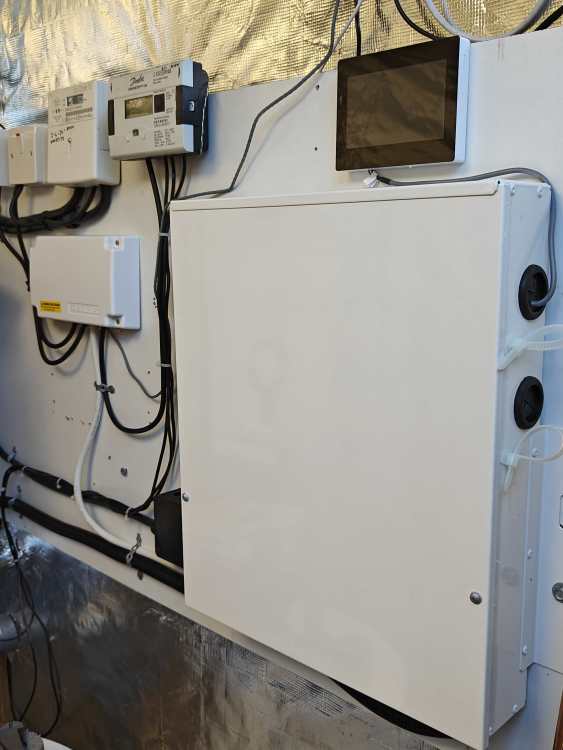
-
Proctor Roofshield is supposed to be UV stable
-
That's the avoided answer - it's cycling because it's too big. If I'm reading the numbers correctly the 10kW at 7 degs and 35 flow a min output of 5.8kW. When running cop will be 5.8, but then the impact of cycling will bring this down. The 7kW min output at 7 degs is 3.2kW, so will still cycle but only a couple timescale day, the chart indicates a cop of 4.9. which is pretty rubbish. By way of comparison a Haier R290 35 flow, for a max 6kW demand at -2 and at 3kW at 7 degs A 6kW is suitable putting out 6.4kW at -2, at a CoP of 4.17, at 7 degs CoP is 5.4 and is mid range of it's output, it's min modulation at 15 degs is 1.8kW at a cop of 7.24. So should run none stop from start of heating season to the end for almost any house.
-
The additional heating is either a relay output to fire an immersion in the central heating system, or an additional boiler. These can be needed for extreme weather cases, where the heat pump cannot cope.
-
As @Nickfromwales is aware my real life view of woodcrete ICF is very different from his. We have never had any water come through the walls, no damp issues period, 5 years and counting since the walls went up. Yes we did parge coat to the inner wall for airtightness, 2 days work. We then attached 50mm battens (service void) and then plasterboard. Out of all the systems (Durisol) was easiest for me, no special props required etc. Just simple had tools.
-
Forgot to mention DHW, this was to be by immersion only. Have rethought this, as all the hardware and cables are in place, to switch the 3 port valve. But gone a much simpler layout than previously. Immersion is standalone and not connected to heat pump at all. Any issues with heat pump, just flick immersion on. Routing was always difficult to sensor probe from heat pump to cylinder but that has been solved by repurposing a cable or two not in use, that running through the house. But includes the cable I was going to use for the smart grid switching. One problem solved, one created.
-
Jobs done today The feet I bought to go underground the heat pump were 1m long, so trim them down to a more manageable length of 800mm. Moved the heat pump from patio to closer to the final location. Used a simple garage trolley located under the manufacturers pallet. Next job is to cut off the pallet away at the light end (condenser end) and affix a foot. This will give something to lever against so when in final position the remaining pallet can be removed and the other two feet added. Completed all wiring as far as possible. So 3 core cable for power, 2x0.75 screened cable to outside unit and further 2 core to the smart grid connection (can't complete this as cable from house is currently connected to other heat pump. I heat the summer house as part of the same zone as the house, it runs at 18 to 19.5 normally, but sometimes we need it warmer, so I normally use a thermostat to trigger a second setpoint for the heat pump, which works fine and floor just buffers the heat. The Hiaer unit, I will utilise the smart grid connection, and set a 2 Deg uplift in flow temp when the connections across terminals for SG2 (EVU signal) are closed. The same connection can reduce the cooling flow temp should I need it. Also made some covers out of excess OSB from the house build, to cover some gravel I need to travel over. Looks like next weekend to do the heat pump change over.