
JohnMo
-
Posts
12469 -
Joined
-
Last visited
-
Days Won
179
Everything posted by JohnMo
-
I use a simple assumption You allow two hrs for DHW. So on the coldest day you need 4.5kW for 24 hrs, so 108kWh. To do this in 22 hrs you need 4.9kW of energy. So you need at heat pump that can put out 4.9kW at your lowest design temp.
-
No, but on a good airtightness house it is very small. If you want to calculate If the volume of a house is V m3, and the air change rate is n ACH (Infiltration rate) then the total amount of air passing through it per hour will be n × V m3. This air needs to be heated up through the temperature difference ΔT between the external temperature and the internal temperature. The energy required to raise one cubic metre of air through one kelvin is 0.33 watt-hours, i.e. its heat capacity per cubic metre is 0.33 Wh m–3 K−1. Thus the total ventilation heat loss, Qv , will be: Qv = 0.33 × n × V × ΔT watts Do not use the AP50 figure in this calculation, replace n for Infiltration rate in section 2 of the SAP.
-
No they are different things. The figure on the spreadsheet is ventilation rate via the MVHR. There is an additional not heat recovered leakage rate, this will also be in the SAP report near the airtightness score, it's about a 1/10th of the AP50 figure
-
Cell B39
-

Any one have grant aerona HP settings they could copy
JohnMo replied to andyj007's topic in Air Source Heat Pumps (ASHP)
I would be tempted to start a new thread titled with issue, most people will not bother looking with your current title. Everyone will see Grant setting and move on. The issue is relevent to any ASHP really. Your issue isn't you need to copy someone elses settings, you have an issue with defrost. -
I would try calling them to check customer service. Do they answer the phone, do they even have a phone. Thing about Octopus is, I have never not been able to speak someone, that person is in the UK, and they are always willing to help. After my experience with OVO and BG, I will be sticking with Octopus.
-
Do your own heat loss calculation. You don't need to do room by room just the overall house. Actually calculate for own education and comfort that you know you are doing the right thing. Yes from the info presented I am saying 6kW not 16kW. Here a spreadsheet I did for mine. Was borrowed from Boffins Corner. Plus in your numbers and see what pops out. Heat loss calculator - Sleepieshill house.xlsx
-
Any one have grant aerona HP settings they could copy
JohnMo replied to andyj007's topic in Air Source Heat Pumps (ASHP)
So random question, your heat pump isn't recycling the air the condenser fan moves. So heat pump located as per manual, nothing in front of compressor to deflect air back etc. -
They (MCS installers) will exclude MVHR and your airtightness, they use a standard set of air changes per hour based on a leaky house. If you provide certificates for air test and MVHR install, they should accept your figures and calculate correctly (should but may not). I just didn't bother with grant, glad I didn't. Really you are looking at a 6kW unit, that will leave of headroom for DHW heating. I like everything here about Panasonic units, so that would be my first port of call.
-
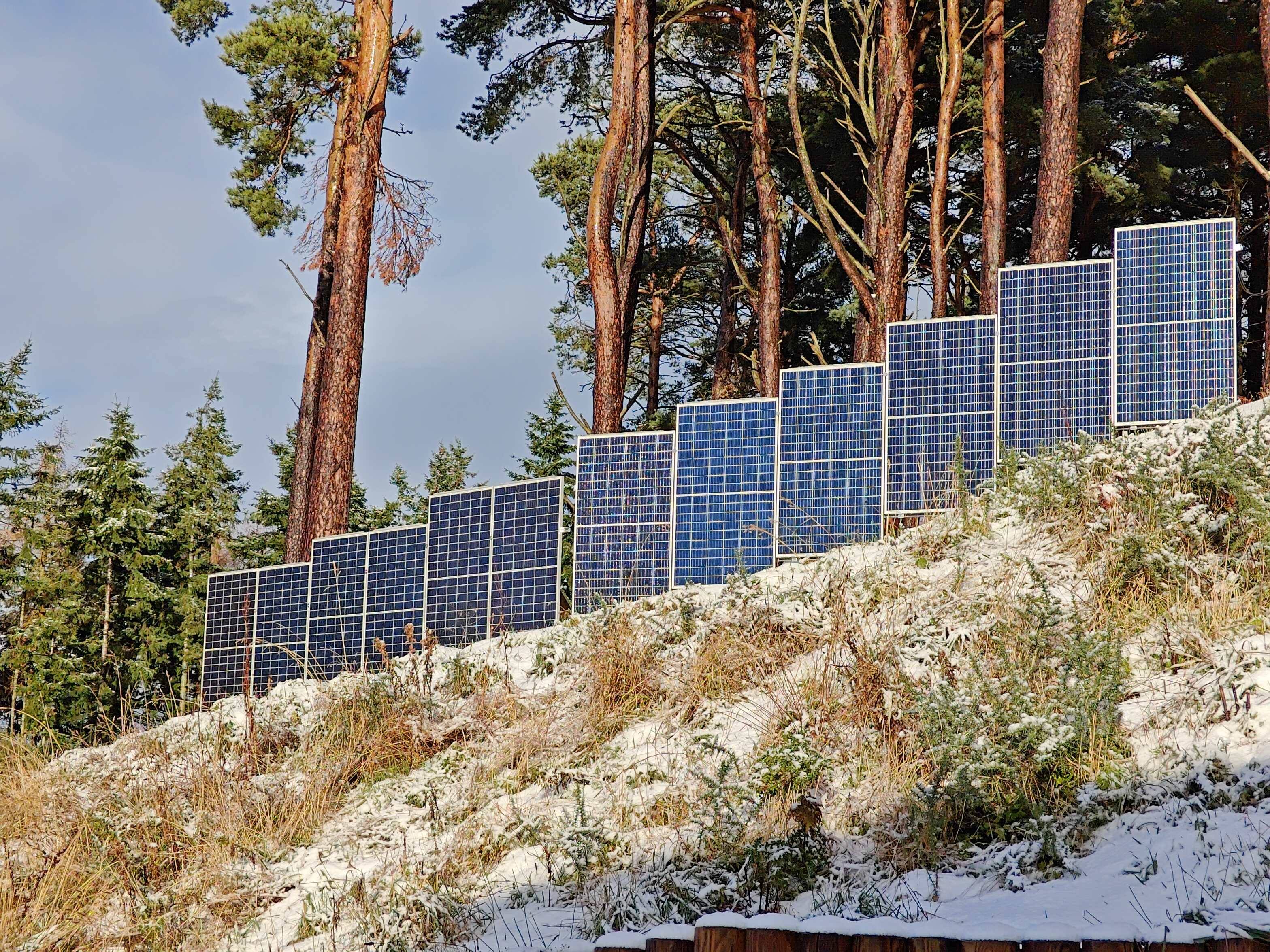
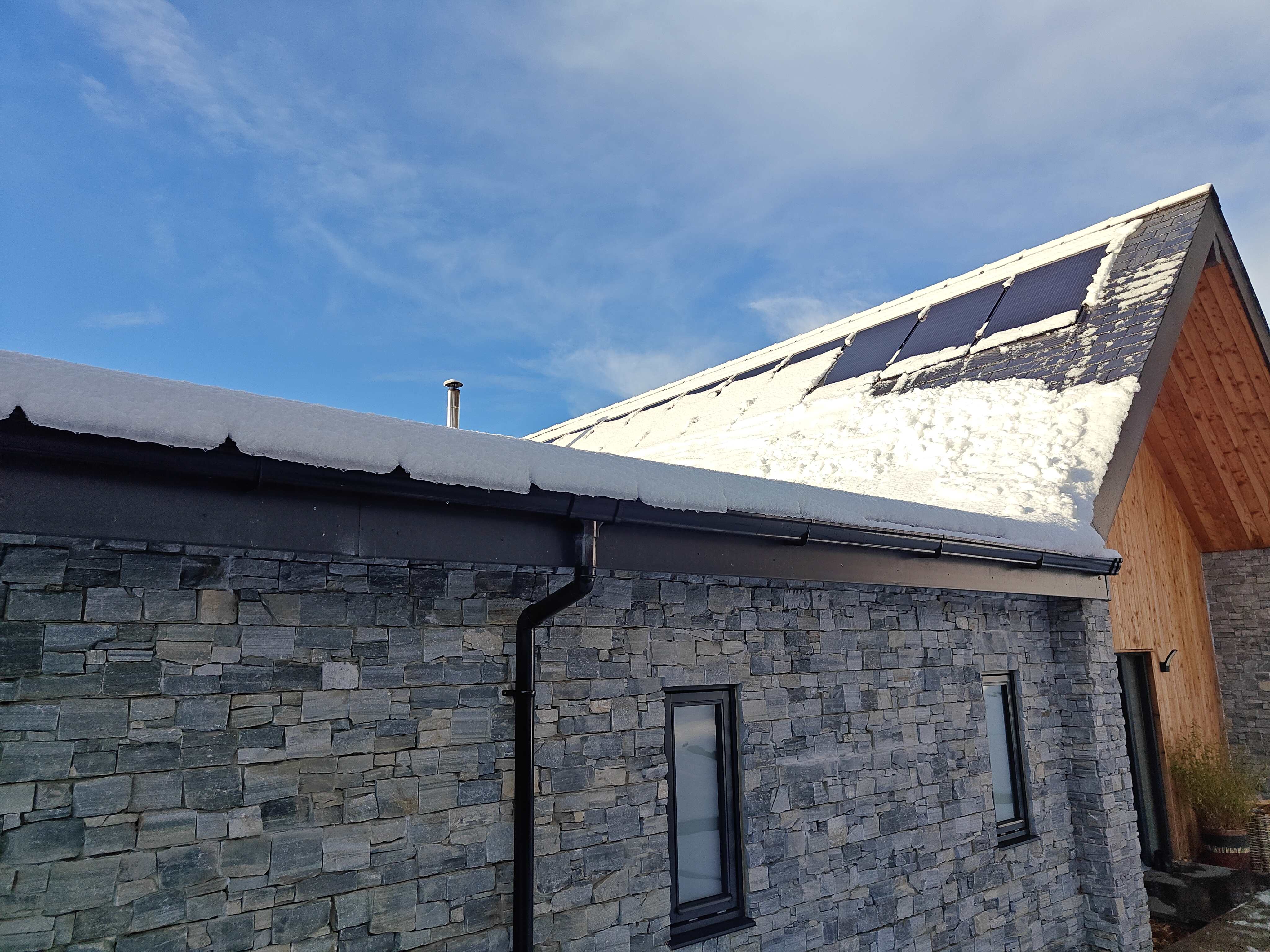
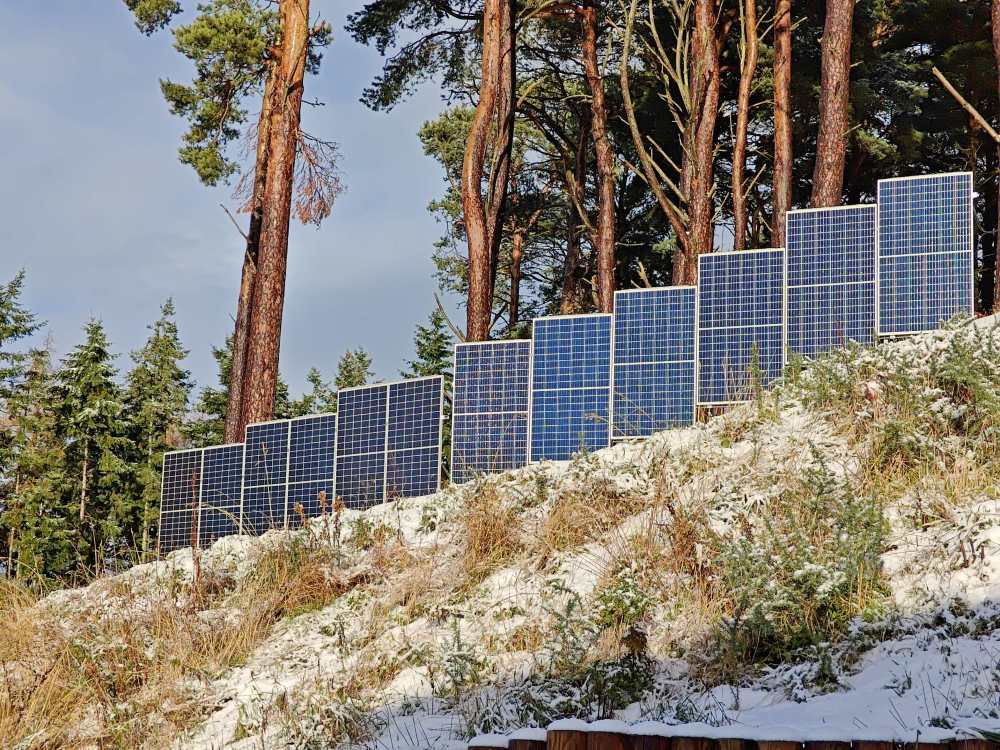
Difficult to really compare as they face different directions, we get some shading also on the roof, the roof panels have optimisers due to the shading, but quite happy with the vertical.
-
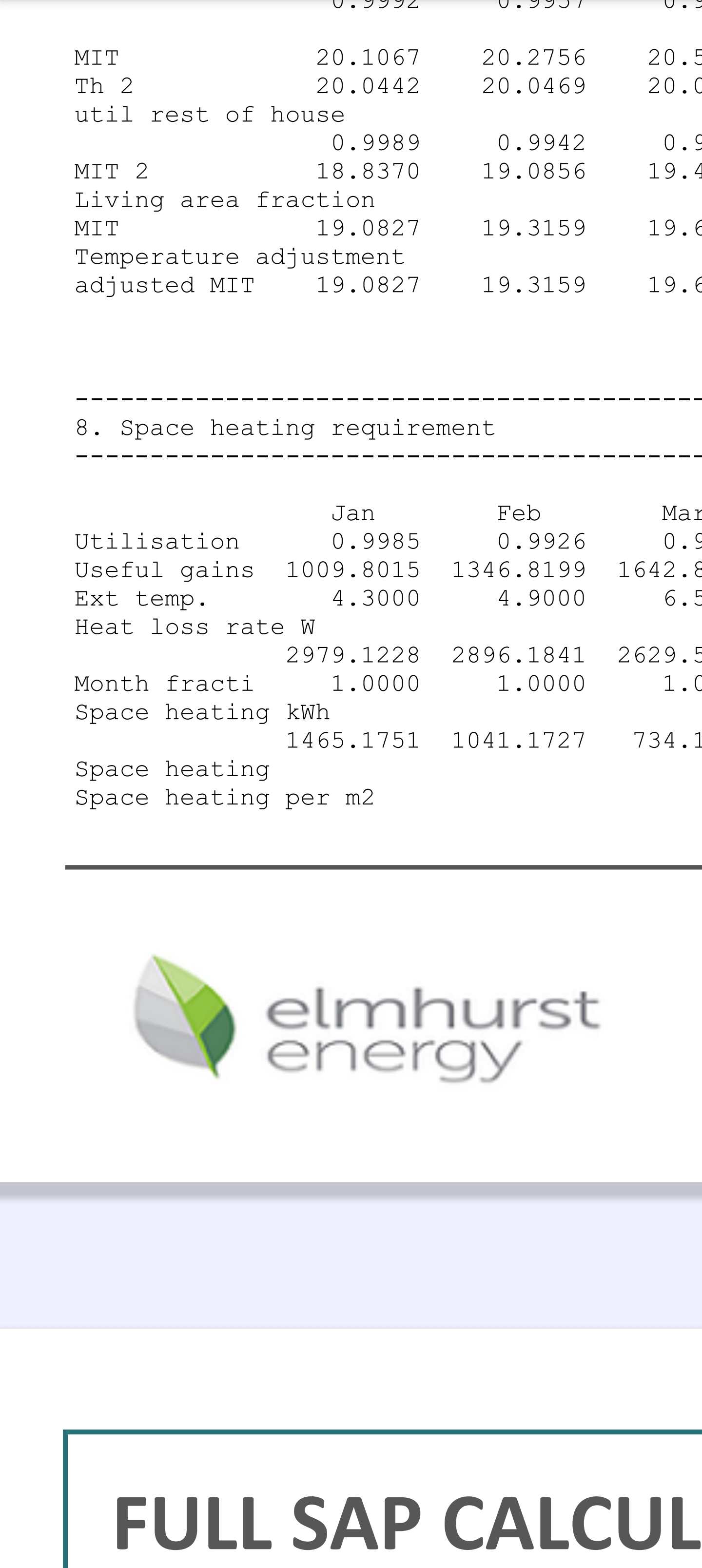
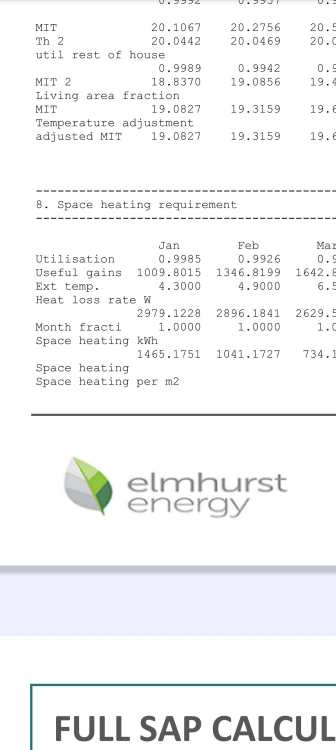
Form factor affects heat loss, so how much you have of the inside exposed to outside walls. The closer to a square box you get, the better for heat loss, everything else being equal. Next is ventilation heat loss, with MVHR you basically half your heat losses. You don't give enough information to make a call. We are just under 200m², with MVHR as bad a form factor as you can get, long, thin, single storey all vaulted ceilings. Our heat loss is about 3kW at -9 outside. So double that you are at 6kW, if you don't have MVHR you are getting close to 12kW worst case. 2 storey, MVHR you could be closer to 4kW at -2. Meaningless figure for heating system design. You will have a figure in the SAP that states the heat demand for each month in Watts. Use the January one, that maybe close to your heat loss. This my figure - heat loss rate W. Look in the same place in your report. You need a proper heat loss calculation, nothing else is really good enough. Too many variables to make a guess. If it's a definite, 100% going to get done size for it, if it's really a maybe don't, you will end up with an oversized heat pump.
-
The ASHP install. Lots of heating on/heating off then fingers crossed.
JohnMo commented on TheMitchells's blog entry in Renovation of Ellesmere Bungalow.
So obvious question why not Weather Compensation, then who gives a stuff about the thermostat? Your trying to use the ASHP like a boiler, running against the thermostat. A simple timer/cylinder thermostat switches between CH and DHW, because of the stupid way Grant wants to install as S plan. -
actually does a 0-10V output to would provide modulation of output Is this really the case? I suspect not, maybe if you added every user together, and switched them all on at the same time - but doesn't happen in real life.
-
Perhaps a new thread, may be interesting
-
Be careful here. Most thermostats are really rubbish with with UFH as the hysteresis is huge and you end up with big under and overshoot of room temp. When we first build I had loads of issues and found it unmanageable, and uncomfortable. Running weather compensation without thermostats works best for us. That sound huge with MVHR and your U values are you sure, have you calculated the heat loss. I am not impressed with UFH in bedrooms, would do fan coils, way better cooling also, plus response time is good. Hate hot bedrooms, once the bedroom is warm its staying that way with UFH. Sounds a waste of good money No restriction come with grant that says you cannot cool. It is related to permitted development, but you will have express planning permission with a new build so, make sense to go with option for heat and cool. Another waste of cash, it doesn't do much in the UK, check the datasheets for you flow rates you will get about 0.5kW max at super low flow temps. Install in bedroom instead of UFH. Fun UFH and fan coils on same WC flow rates for heating and cooling. No additional piping needed. So standard MVHR (its ventilation only) ASHP with cooling ability Heat pump cylinder Fan coils in bedrooms, they will manage room temps in auto mode or you can run in manual fan mode on WC UFH on ground floor and upstairs wet room. Electric towel rads in wet rooms also. If you can add more insulation to floor. Keep ventilation separate from heating - different suppliers, installers, they are vey different things Think simple not complex, simple is easier to run, cheaper to buy and run
-
E7 ratio would be 7/14, cheap/expensive.
-
Increase to 3
-
You can also get a shelly 0-10v output relay. That would integrate directly in to HA. I just run it fixed speed 24/7/365, so it gets heating and cooling. The cooling in house (via UFH) is a very flat WC curve and I leave that on all the time during summer and the heat pumps just seems to run when the sun's out.
-
To change the energy diverted by the floor, you adjust the flow rate to the loops. The flow meter is on the manifold, so increase heat output you increase flow rate. Increase the bedroom loops 1 l/m and see what changes. We found our bedrooms UFH is also rubbish, mainly due to carpets. If we want the bedrooms warm we just open the doors. Your flow temp is too high. Extending the curve to -3, from 0, will lower the flow temperature generally. But the 35 degs looks way to hot. Try leaving it with the -3 change, then tomorrow if still bouncing of the thermostat drop the 35 to 33. Then reassess.
-
They can take an external thermostat and recommend them doing cooling. Think you need 0-10v thermostat and they are generally hard wired connection. We have a iVector in our summer house and it is supplied with water from the heat pump based on the house WC curve and just have the fan speed fixed at its lowest setting. Which works pretty well. Our summer house although insulated has a very different heating characteristics to the house but seems to cope well, so in a bedroom it's an easy job. But with a heat pump, do you need any smart controls? For UFH you definitely don't and they really are a waste of time and money, due to the time lag involved, with the mass of the floor and low temp heating.
-
Our hill vertical panels. No snow Currently generating 2.4kW
-
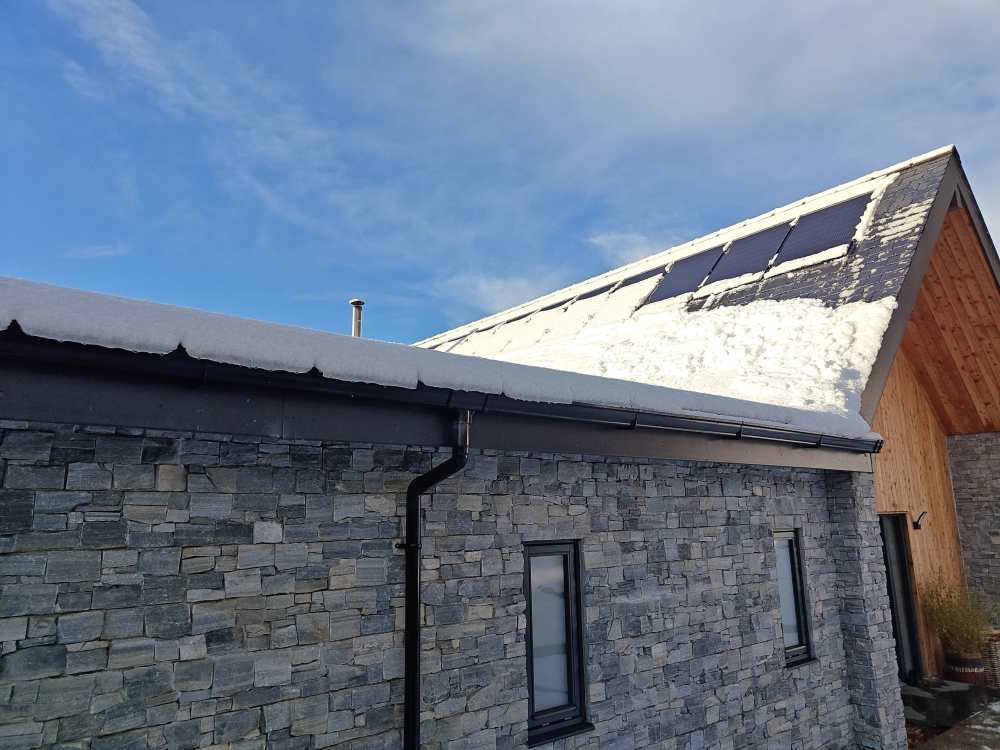
Our roof is 45 degs had a few days of snow and cold weather. Best part of no generation.
-
So an average of about 18p kWh? My E7 works out at at 25p so don't go there without a battery or time shift heating. Many tariffs out there you just need to calculate the best average for you. If you come home and have the oven on for two hours and electric hob on all during the expensive period you need to consider this also.
-
Any one have grant aerona HP settings they could copy
JohnMo replied to andyj007's topic in Air Source Heat Pumps (ASHP)
That's a strange one. Normally wouldn't start to defrost until below 3. Defrost settings are normally factory set and cannot be altered. The only thing that makes it frost prematurely is running flat out and very high humidity levels. I have attached to original manufacturers manual - Grant bypass a lot of settings, to make installer proof. But you should be able to do a compare to factory setting and hopefully make some sense of what is our of place settings wise. Chofu-Operating-Installation-Manual-R32.pdf -
Any one have grant aerona HP settings they could copy
JohnMo replied to andyj007's topic in Air Source Heat Pumps (ASHP)
You may better listing which settings you have issue with or would like clarification on, to get a response that is meaningful. Asking for a list of 30 to 40 setting most of which are never changed is a big ask, asking for a couple of settings is easy.