MortarThePoint
-
Posts
2294 -
Joined
-
Last visited
Everything posted by MortarThePoint
-
Considering PIV
MortarThePoint replied to MortarThePoint's topic in Mechanical Ventilation with Heat Recovery (MVHR)
Doing a similar calculation for humidity C_eqm = 0.8% by mass based on 50%RH at 21C [1] C_out = 0.64% by mass based on 80%RH at 10C [1] Sources adding water to the air: Human breathing up to 1l/day, four people --> 4kg/day [2] Ignore sweat Evaporation about 3kg/m2day so guess as 3kg/day to cover water left in shower, basins and loos [3] Cooking and kettle, guess 2kg/day (ignores extractor or this amount gets round extractor) Bathing guess 250g/person/day --> 1kg/day (after extractor effects) i = 10kg/day total based on above list which is hopefully an upper bound. I could imagine it being half this, but can't imagine it being much more unless clothes are drying into the air which is a bad idea. q = i / (C_eqm - C_out) = 10kg/day / (0.8% - 0.64%) = 6250kg/day of air Density of air is around 1.2kg/m3 so that flow rate equates to 5200m3/day which is about 220m3/hr or 60l/s. Coincidence? Both calculations assume that the air leaving the house is representative of the house as a whole, i.e. good mixing. -
Considering PIV
MortarThePoint replied to MortarThePoint's topic in Mechanical Ventilation with Heat Recovery (MVHR)
This is interesting. Resting human breathing rate <8 l/min, so 4 people well less than 1l/s. Don't need >10l/s of ventilation for breathing then. Wrong: C_eqm = equilibrium CO2 concentration C_out = background CO2 concentration = 0.04% q = air exchange rate = 60 l/s air i = CO2 influx rate = 8l/min * 4people * 4% CO2 = 0.02 l/s CO2 At equilibrium: i - q.(C_eqm - C_out) = 0 So, C_eqm - C_out = i/q = 0.02l/s / 60l/s = 0.03% C_eqm = 0.07% which is 700ppm or +75% over outside CO2 concentration Thresholds vary by standards organisations, but 1000ppm is often seen as the upper CO2 limit for good air quality. https://en.wikipedia.org/wiki/Indoor_air_quality https://www.velux.com/what-we-do/research-and-knowledge/deic-basic-book/ventilation/indoor-air-quality?consent=none&ref-original=https%3A%2F%2Fwww.google.com%2F -
Considering PIV
MortarThePoint replied to MortarThePoint's topic in Mechanical Ventilation with Heat Recovery (MVHR)
I'm inclined to disagree*. Unless I am missing something, trickle vents are 100% inefficient just like PIV, so for the same amount of ventilation (m3/h) you'll have the same amount of heating cost. However, it's hard to know what flow rate your actually getting from trickle vents (e.g. effects of wind etc) so it is less controllable. If the trickle vents cost your heating less it's because they are exchanging less air with the outside. * the caveat to this is if the air is so still that it is driven by diffusion in which case air will be coming and going in the same vent and so exchanging energy. This feels unlikely however. -
Considering PIV
MortarThePoint replied to MortarThePoint's topic in Mechanical Ventilation with Heat Recovery (MVHR)
That's why I like the look of PIV. It doesn't distribute the air as well as the multiple outlets of an MVHR system would, but it is fresh filtered air coming in. It's not heated by scavenging 90% or more of the outgoing air's energy, but those economics are discussed elsewhere. -
Considering PIV
MortarThePoint replied to MortarThePoint's topic in Mechanical Ventilation with Heat Recovery (MVHR)
The PIV system sucks air out of the ventilated loft space -
Considering PIV
MortarThePoint replied to MortarThePoint's topic in Mechanical Ventilation with Heat Recovery (MVHR)
Makes sense, though I'm looking at not having window trickle vents so that is the only difference to what you say -
Considering PIV
MortarThePoint replied to MortarThePoint's topic in Mechanical Ventilation with Heat Recovery (MVHR)
>> The volume of air in just the hallway is around 50m3 which is something like 10 minutes of the PIV's maximum flow rate I don't fancy delving in to the mathematics of diffusion, but I would expect to be able to smell a fart in the hallway within a number of seconds which is much less than 10 minutes. Consequently, the air mixing due to diffusion should be plenty good enough for the PIV to work effectively. -
Considering PIV
MortarThePoint replied to MortarThePoint's topic in Mechanical Ventilation with Heat Recovery (MVHR)
@Cpd I'm hopeful there would be enough mixing with the air already in the hallway. The volume of air in just the hallway is around 50m3 which is something like 10 minutes of the PIV's maximum flow rate. I could investigate the option of a trickle extract on the kitchen extractor fan which would help draw the air through more of the house. -
Considering PIV
MortarThePoint replied to MortarThePoint's topic in Mechanical Ventilation with Heat Recovery (MVHR)
They both look a bit Noddy (or should that be NooNoo) but the Drimaster and Pozidry both cost around £300 https://www.fastlec.co.uk/ventilation/nuaire-dri-eco-hc-drimaster-eco-positive-input-ventilation-unit https://www.fastlec.co.uk/ventilation-extractor-fans/vent-axia-lo-carbon-pozidry-pro https://www.fastlec.co.uk/vent-axia-lo-carbon-pozidry-pro-fd-with-heater-multi-storey https://teletubbies.fandom.com/wiki/Noo-Noo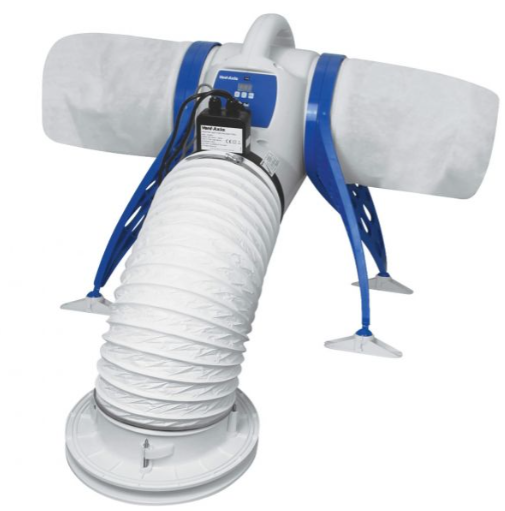

-
Considering PIV
MortarThePoint replied to MortarThePoint's topic in Mechanical Ventilation with Heat Recovery (MVHR)
You're a maestro at finding a bargain. -
Thanks. I think you're right, they miss the human consequences sometimes. I hope you and your parents get there soon
-
Composite Wall Ties - Worth the extra cost?
MortarThePoint replied to Matt60's topic in Brick & Block
Take a look at the thread below. I don't think they're worth it. Thermally broken lintels probably a better choice https://forum.buildhub.org.uk/topic/15192-dont-forget-thermal-bridging/ -
They're a law unto themselves. My over 70 father approached the planners asking about replacing the bungalow he grew up in now that my grandmother has died. She had expressed her hope that he would. They said they would expect 3 or 4 houses to go in a plot of that size (3/4 acre in middle of village). Consequently it has been more of a fight than he's been subconsciously prepared to take on and now 5 years later he said to me, after reflection during Covid, that he realises he'll never get to live there. Sad, he could have been living there by now, but he doesn't handle stress. He has dutifully mowed the lawn regularly for all this time.
-
That's a lot of Joists....like A LOT!
MortarThePoint replied to SuperJohnG's topic in Floor Structures
It's a lot of a short span, but on a long one its pretty small. Bear in mind its not going to be deflecting up and down on a daily basis but is going to get loaded out and deflect. I think you'd fall over if a floor deflected by 12mm whilst you walked on it. @SuperJohnG could probably hold River Dance lessons on that floor. -
That's a lot of Joists....like A LOT!
MortarThePoint replied to SuperJohnG's topic in Floor Structures
I'll hold my hand up as a bit of a hypocrite here as I got my garage RIR trusses designed based on 2.5kN/m2, but they have a clear centre of 4.5m and overall span of 6.5m I am surprised you have ended up with so may joists as those attic trusses are 222mm on 600mm centre. Shows the benefit of those vertical members in an attic truss -
That's a lot of Joists....like A LOT!
MortarThePoint replied to SuperJohnG's topic in Floor Structures
Yes, I think 8mm is probably too strict for longer spans. I know the normal guidance is 12mm (and 0.003x span) and for longer spans it's probably less important to tighten that figure. -
I know that MVHR can divide opinions, but the numbers don't work for me as my house has been conceived (having ASHP and not hyper insulated). I respect that it works well for some people's use cases. I had planned to use window trickle vents, but take exception to how they look and how they would likely be lived with (I think most people just leave them closed). Trickle vents act as a point of ingress and egress for fresh, but cold, air from outside. They are often perceived as 'free' but will of course have a cost when included in a window quote. Though some have filters to keep out insects etc, I suspect they are not very effective. I think if I was starting from scratch I would consider airbricks with internal gratings, but that ship has all but sailed now. PIV looks to offer a happy middle ground for my needs: It is relatively low capital cost and actually likely to be cheaper than or similar to window trickle vents. It has reasonable filters, so should provide good air quality It is centrally controllable so I won't find all the trickle vents closed It only has a single eyesore Benefits from solar gain in unheated loft space (dubious) I don't perceive it as any more expensive to run than trickle vents except for the power consumption of the pump itself ~5W --> ~45kWhr/yr --> ~£9/yr. Both waste warm air in the winter. Key concerns: Egress: My main concern is where does the warm air egress and does it cause condensation there. I'm not timber frame so am not bothered about OSB walls. If it is in the cavity that would likely be OK as it would drain. The graph below suggests that if the humidity in the house is at 50%RH and the temperature is 18C, then condensation would occur when that air is cooled down to about 8C. For the vast majority of the year it shouldn't be an issue then. [Please challenge this if you can think of why, I don't know much about dew point]. Draught: It creates a centralised point of draught rather than a distributed one like trickle vents. The plan would be to put it in the 2 storey hallway that would make it >1.5m from people and have a direct 'drop' to ground floor level. I wonder about detecting peoples movements (plan to do it for lighting) and turning off the PIV when people are on the landing or stairs. You can have heated PIV, but the efficiency would be rubbish. Summer Heat: The PIV would be drawing hot air from the loft and so heat the house. We can counteract this by opening windows and I suspect the heat gain in the loft would be less due to the air being pulled through it. We'll have conventional extractor fans in bathrooms that will likely turn off based on %RH. Why not MEV: Where is the air coming in from and what is it bringing in with it No filter (similar to above) Multiple points of extraction so ducting required (and multiple eyesores) Draws in moist air so mould growth and mechanical consequences possible I'd love to rant about how I'd design and build my own system but contrary to the playground quip, we don't live in a free country.
-
That's a lot of Joists....like A LOT!
MortarThePoint replied to SuperJohnG's topic in Floor Structures
But I expect the 8mm specification is excessive for large spans as I have calculated. It's probably vital for a feeling of quality at lower spans, e.g. <=4m -
That's a lot of Joists....like A LOT!
MortarThePoint replied to SuperJohnG's topic in Floor Structures
If you'd doubled up again you wouldn't need any OSB3 ? It'll be nice a firm though -
That's a lot of Joists....like A LOT!
MortarThePoint replied to SuperJohnG's topic in Floor Structures
In terms of people walking on a floor and a perception of bounce less deflection is always going to help, but a short span that has 8mm of deflection will bounce much more than a long span with a deflection of 8mm. I presume the deflection figure is based on 1.5kN UDL live load. You'll effectively have a mass/spring/damper arrangement and with a larger span you'll have more mass, spring and damper. That may or may not help from a resonant frequency perspective. Hand waving and most importantly ignoring effects of resonant frequency: A 6m beam with 1.5kN/m2 * 0.4m UDL applied has a peak moment of 2700NM [1kN/m2: 1800] - Adding a 1kN point load midspan increases that to 4200NM, so 56% more [3300, 83%] A 5m beam with 1.5kN/m2 * 0.4m UDL applied has a peak moment of 1875NM [1250] - Adding a 1kN point load midspan increases that to 3125NM, so 67% more [2500, 100%] On that basis, if both floors are designed to have the same max deflection, a 5m span that has the same deflection specification will feel 20% more bouncy. I suspect it's more important to understand floor dynamics (which I surely don't) than set a specific maximum deflection value. However, setting a maximum deflection figure is probably more important with shorter spans. -
You've bags of room to get insulation in there. If you've used EPS there up until now it could be replaced with PIR and that's 2/3 the thickness for same performance. You could research spray foam as may work well to fill the gap. Likely 20mm of PIR plus spray foam a nicely workable solution.
-
@Bobo just double check they have used the correct sheet material for the membrane as well since they may not have understood what was required and I can't see any red membrane showing in your photo (actually some Radon membranes look to be green as well). I expect joints would need to be overlapped and taped as well which may not be the case for DPM. Potentially a bigger problem if they have used the wrong membrane, but it may make for an easier solution as it potentially narrows down your options as you'd probably have to have a fresh membrane over the top of the concrete slab. It would be a pain to live with during the build though, so you may prefer to go a 'perimeter and infill' approach where you put gas proof DPC in all the walls sticking out enough (e.g. 100mm) and then later, when less likely to get damaged, you stick in areas of gas proof membrane attached to the DPC using that gas proof tape. Hopefully obvious, but that gas proof DPC would have to be under ALL walls, so include internal walls. You'd be making a continuous barrier out of the DPC and later applied membrane. You don't seem fully convinced you need a Radon barrier. Double check that as I don't think there are any grey areas in it from a regulations perspective. Maybe you wanted it as you are outside (but near) a required area, but is it in the existing house and if so how are you joining to it?
-
No worries, happy to try to help. I've found these bumps in the road can be stressful, but are part of the journey. Solve them promptly and completely so they don't come back to haunt you and cost much more to resolve
-
The suggested fix in green is likely to be the most pragmatic solution. They will have to scrap out the perimeter insulation a good depth (e.g. 75mm), tuck in some double sided butyl tape and the attach the green portion. Pig of a job unfortunately I think this is the sort of tape you'd want. https://www.permagard.co.uk/radbar-double-sided-tape-dpm-tape
-
I think your idea would work against the damp as the perimeter insulation may not wick water, but it wouldn't satisfy the Radon requirement as far as I know, but my knowledge there is very limited.