


MortarThePoint
-
Posts
2294 -
Joined
-
Last visited
Everything posted by MortarThePoint
-
Plasterboard on 600mm centres
MortarThePoint replied to MortarThePoint's topic in Plastering & Rendering
I wasn't clear in my original post. I was planning to use 12.5mm plasterboard, but wondered if the plasterer's concerns were based on experiences from when plasterboard was more often 9.5mm. Would stepping up to 15mm, from 12.5mm, negate the concern and give a good stiff ceiling? It's the first floor ceiling and we have attic trusses above with living space. The service gap could be handy for running pipes and electrical cables, but I can route those OK near the eaves on top of the trusses I think. -
I need to attach plasterboard to the bottom chord of trusses that are on 600mm centres. The plasterboard will then be wet plaster skimmed. The plasterer has recommended adding counter battens (e.g. 22x100) at 400mm centres. That works out as a lot of metres of batten to install. Is his concern reasonable or more based on 9.5mm plasterboard than the usual 12.5mm? I could go up to 15mm if that helps.
-
Confused by Triple Glazing Justification
MortarThePoint replied to MortarThePoint's topic in Windows & Glazing
Windows will hopefully last a long time, but glazing units don't do they? Does anyone have data on the life expectancy of glazing units. Naively, one could assume a triple glazed unit has half the mean time to failure of a double glazed unit if there were two independent points of failure. They won't be independent though, but I'd be interested to know how they compare. My calculation only considered the carbon cost of the glazing unit. -
Confused by Triple Glazing Justification
MortarThePoint replied to MortarThePoint's topic in Windows & Glazing
I see this as were triple glazing comes into its own. This approach is about eliminating weaknesses and that would invariably be the windows if not more than double glazed. In a house that is designed to be less thermally performant, something like an ASHP is needed in which case the windows can be evaluated on their own merit rather than trying to minimise there impact on a broader passive house type objective. -
Confused by Triple Glazing Justification
MortarThePoint replied to MortarThePoint's topic in Windows & Glazing
? I don't fancy living in a house with all the charm of nuclear bunker Lots of manufacturers appear to use the same frame and hardware for double and triple glazing meaning that 3g may actually be more 'flimsy' as the frame and hardware are working harder. Feels a bit like a Gillette advert and look where that's ended up. Are they on 5 blades now? In countries with <0C for prolonged periods of time it makes a lot of sense. If you double the dT in my calculations the COP of the ASHP suffers and so the 'carbon' payback time will come down a lot, perhaps to ~3 years. Also the apparent warmth will be more significant too. -
Confused by Triple Glazing Justification
MortarThePoint replied to MortarThePoint's topic in Windows & Glazing
You wouldn't be required to meet the prevailing building regs at that point, but are you thinking it would make the house more sellable if you did? -
Confused by Triple Glazing Justification
MortarThePoint replied to MortarThePoint's topic in Windows & Glazing
I have wondered about the perceived value in the market if the house was up for sale. -
Confused by Triple Glazing Justification
MortarThePoint replied to MortarThePoint's topic in Windows & Glazing
My wife mentioned that she read an article that said a triple glazed (18C) unit is about 2C warmer than a double glazed (16C) unit when a single glazed unit would be at 1C. It was based on a 21C room temperature, but didn't say what the outside temperature was. That means it's 3C colder than room temperature on the surface of the triple and 5C on the double. I can see that would affect convection and the feeling of warming if right up near the window. -
Confused by Triple Glazing Justification
MortarThePoint replied to MortarThePoint's topic in Windows & Glazing
We have our own bit of woodland and will likely mostly be burning fallen timber that would rot in a less environmentally friendly fashion otherwise. -
I'm confused by the motives of going for triple glazing as I like to do the maths behind these sorts of things. I see two primary reasons economic, reduced energy bills, and environmental, reduced 'carbon footprint'. I am pro green tech so start from a bias of wanting to include them. Improved U-value: The U-value of a 1m2 window might typically improve from 1.2 W/m2K for double glazing to 0.8 W/m2K and so an improvement of 0.4 W/m2K. Based on heating the house for the coldest 6 months of the year (October to April inclusive): Difference in U-values, dU = 0.4 W/m2K average temperature difference across window, dT = 13 K (around my area for these 6 months, 19C inside, 6C outside) Duration, t = 183*24 = 4392 hours Window Area, A = 1 m2 Average heat flow, Q = A.dU.dT = 1*0.4*13 = 5.2W Annual thermal energy, E = Q.t = 4392*5.2 = 22.8kWh per year [Ignored: A double glazed window lets in more light (8% nominally) so there will be more solar gain in those months. That might work out as (guess) 50W/m2 and so an 4W difference between the two windows, but only for a fraction of the time so may amount to 1W average]. Ecomonic If heated by ASHP the 'efficiency' will vary, but I pick a value of 3.5 to be representative. With an electricity price of 14p/kWh that equates to a cost of thermal energy of 4p/kWh. That makes for a cost saving of 4p/kWh * 22.8kWh = 91p per year. Electricity prices could go up, but the cost uplift of triple glazing is >100 times that annual figure. The cost is all upfront as well. Environmental A triple glazed unit contains many extras, but most obviously includes an extra sheet of glass. Energy required to make glass, 21.9MJ/kg [1] Density of glass, 2.5kg/(m2.mm) (2.5g/cm3) Area of glass, 1m2 [overestimate as neglects frame width] Thickness of glass, 4mm Mass of glass 2.5*1*4 = 10kg Entrained energy in glass, 21.9MJ/kg * 10kg = 219MJ = 60.8kWh Energy debt payback time based on oil heating, (60.8kwh / 22.8kwh) = 2.7 years Energy debt payback time based on ASHP(SCOP=3.5) heating, (60.8kwh / (22.8kwh/3.5)) = 9 years There will be other uplifts in manufacturing 'carbon cost', but 9 years is a significant payback time and all that 'carbon' is upfront in manufacture and doesn't consider renewable sources of power generation that will come online over the next 9 years. Also, I would guess that glass manufacture is less likely to be using renewable sources of energy than the domestic electricity suppliers. I could believe that payback time heading beyond the lift of the unit. What am I missing here? Are the perceived benefits different? [1] https://www.sciencedirect.com/science/article/abs/pii/0166309781900614
-
I'll be using mine so infrequently I'm not concerned about the virbration H&S concern. If it was a concern about vibration causing issues to materials etc I would be more worried.
-
Harming the user's hand?
-
Just bought one as it was on my wish list and I do have a specific job in mind for it.
-
I saw an interesting video about stick build (or balloon framing) which I have copied below. Don't get me wrong, you can make them well and have a high quality house, but the factors that affect the US housing market are interesting. https://www.youtube.com/watch?v=wpxLLCdW_Gc
-
Yes, the Simpson CSA screws aren't cheap but they are a nice product. Milwaukee do a nice looking battery palm nailer: https://www.amazon.co.uk/Milwaukee-C12PN-0-Compact-without-Batteries/dp/B008ETLI0A Personally, I can't justify the cost. Looks like you can get a pneumatic one for around £30-£40 though if you have a compressor. I am tempted by this one: https://www.woodfordtools.co.uk/Bostitch-PN50-E-Pneumatic-Compact-Palm-Nailer/P19887/
-
Anchoring studding sole plate to concrete
MortarThePoint replied to MortarThePoint's topic in Timber Frame
For reference, below is what the Structural Engineer specified for the top of partition walls: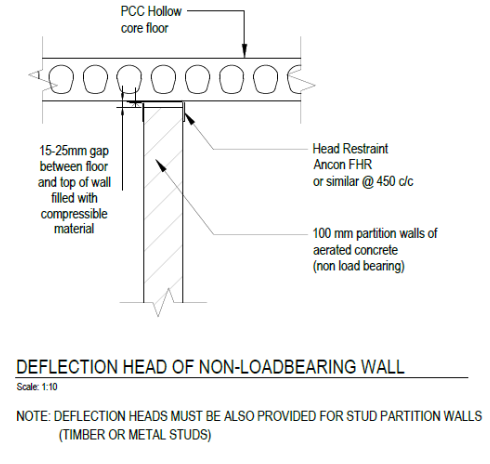
-
Anchoring studding sole plate to concrete
MortarThePoint replied to MortarThePoint's topic in Timber Frame
This is great news. Blue Peter taught me how to do that sort of thing years ago. -
Anchoring studding sole plate to concrete
MortarThePoint replied to MortarThePoint's topic in Timber Frame
I was thinking it would be anchored to the walls at its ends using L-brackets or welded on flange plates. -
Anchoring studding sole plate to concrete
MortarThePoint replied to MortarThePoint's topic in Timber Frame
I'd be happy to, but I still need a plan ? -
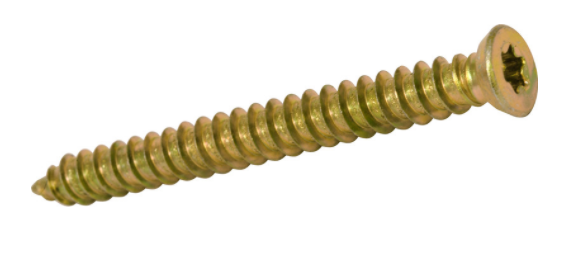
The vast majority of my walls are blockwork, but I wanted some walls as timber studding for the benefit of possible reconfiguration. None of the studwork walls is structural. We have precast concrete on GF and FF, insulation below the concrete. Anchoring the studwork wall sole plates on the first floor (FF) will be easy I expect. Either before or after screed, I envisage using a Masonry Torx Frame Fixing Screw (e.g. below at 7.5mm x 122mm) through the 4x2 and into the concrete. 600mm c/c? On the ground floor (GF) it's more complicated. Immediately on top of the precast concrete we have a gas membrane. That means I can't drive a screw into the precast concrete. Thankfully there are only a few places I need studding walls. Below are extracts showing them. The screed will be 40-50mm thick so doesn't feel substantial enough to screw to (and I'd have to stop before the membrane). The WC is the hardest I think and there is an almost 3m section. Before applying the screed, I could put a couple of timbers (4x2 flat laid) at right angles that follow the lines of the studwork walls. These timbers could be anchored to each other and to the walls at the ends. The timber has to be thin enough to pass under the WC door and Study door. I could do similar for the plant cupboard. Either side of the chimney is easier as I can just anchor to the walls at each end and it's only 1.6m. Does all this sound even vaguely sensible? I'm worried that there are long unconstrained sections that could bow or shift like a diaphragm. If I flow the screed up to the timber it is constrained but puts a lateral load onto the screed. I wondered if there is a good approach using steel (e.g. RHS 100x50 laid flat) I could put along under these studwork walls with bolts pre installed to then tie the studwork down to. The steel would end up flush with the top of screed (but isolated from it by expansion strip).
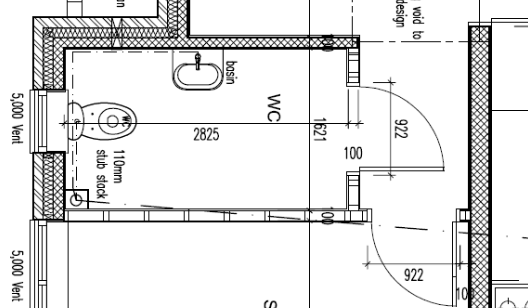
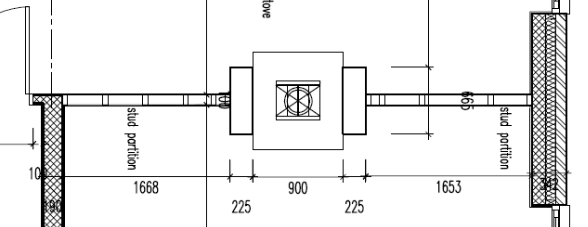
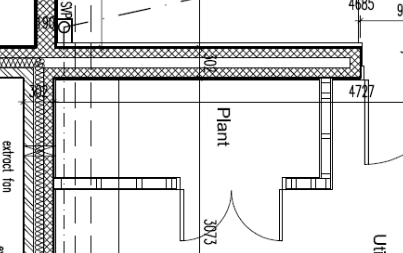
-
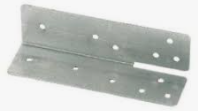
I was windy about using screws and spoke to the technical guy at Simpson StrogTie who put me at ease. To paraphrase (so don't quote me on it) you should be able to use the CSA 4.0 x 30mm anywhere you'd normally use a 3.75x30 twist nail. He said they are hoping to do a paper on it. I needed to add some frame anchors to tiny truss infill that had already had tiles fitted to so didn't fancy hammering. Worked a charm. Don't use an impact driver and set your combi or screwdriver to low torque so as not to strip the thread when tightening. It even looks really nice when done, semi architectural. I wouldn't mind having brackets covered in these on show but I would be less keen on having brackets covered in twist nails no show. I'd be more nervous using them on a big girder truss, but I think that's just me being old fashioned. Screws are the future I think, as long as it's the right screw! A wood screw would be a shocker.
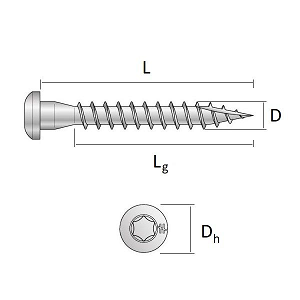
-
Polypipe bought Nu-Heat in February this year (link). Nu-Heat's other literature says 50 years.
-
Wunda say "18% higher heat output than ordinary Pex and Polybutylene pipe" as well. That could be a concern, but as long as the manifold fitting is a standard thread it won't matter will it?
-
The big one there is the 50 year warranty on the pipes which also covers the full cost of the remediation. If that covers the floor finish replacement as well (which I'll check) then your potentially looking at insurance against a worst case of ~£15k. Unlikely I'd hope, but still has a value, to me of perhaps 10% of the UFH cost which works out as 1.5% of that worst case. Mechanicals wear out and are easy to replace as long as fittings are standardised.
-
Nu-Heat use a 14mm PE-Xc tube whereas most places I compare to would be based on a 16mm Pert-Al-Pert tube. Does anyone know the difference and which is better? Fastflo® PE-Xc tube Nu-Heat’s Fastflo® tube is a PE-Xc pipe. It is extremely strong and cannot be damaged easily – it would have to be physically punctured on-site to suffer from a leak. PE-Xc is a high-density polyethylene tube that is made up of five individual layers before being physically cross-linked. Cross-linking is essential as it enables the tube to remain strong whilst being flexible, helping to prevent kinking or damage to the tube during installation. https://www.nu-heat.co.uk/blog/a-closer-look-at-fastflo-tube/

