
joe90
-
Posts
13570 -
Joined
-
Last visited
-
Days Won
139
Everything posted by joe90
-

LVT flooring VAT free on new build?
joe90 replied to Balou's topic in General Self Build & DIY Discussion
I claimed for it ok! -
With mine I put spacers under the corners so it could not drop too much.
-
Urgent - Any pro upvc window fitters here in central belt Scotland?
joe90 replied to Pord67's topic in Windows & Glazing
on the straw bale builds I have been on a timber frame was used for both doors and windows and don’t see any other “solid” solution. -
Says the man who already bought a heavy tray!
-
Just remember the COP for the ASHP should be around 3 or 4 so a third or quarter of using direct electric heating!
-
Is it the screw or push fitting you don’t like?, I have come across loads that are many years old and still ok. Just make sure you use the right pipe as push fit and solvent weld are different diameters!!!! If the rest of the pipework is solvent might be worth finding a trap with both joints screw type? (Mine are but came with the tray so don’t know the make).
-
Depends if you care about global warming/pollution .
-
Is there moving water in the ditch Or does it not go anywhere It is wet most of the year and eventually ends up in the Tamar (so the environment agency tells me).
-
Not having a tumble drier was part of my low usage strategy, yes @SteamyTea it is, do you need it back?
-
I am watching the highlights on channel 4 later, so turned the radio off so I don’t hear which Mercedes won!
-
You're underground what did you expect ?
joe90 replied to Pocster's topic in General Self Build & DIY Discussion
Never seen those before. -
With ours I even argued a soakaway or attenuation was a waste of time and granted permission to dump straight to a ditch.
-
I found this bit interesting from @MikeSharp01 post. ..Rights to Light Calculations A common myth is that rights to light can be assessed using this ‘45 degree rule’. The 45 degree rule is often used to assess planning applications but is not used in legal rights to light cases. The so called ‘50:50 rule’ is generally accepted as the appropriate way to measure light levels for rights to light cases. The 50:50 rule involves calculating the percentage of a room’s area which can receive adequate light. The calculations are undertaken at a working plane 850mm above the floor. A point on the working plane is considered adequately lit if it can receive at least 0.2% of the total illumination received from the sky. An injury is generally deemed to be caused where the area of a room receiving light from at least 0.2% of the sky is reduced to less than 50% to 55%. its the last sentence that I find difficult to fathom how to work out! ?.
-
Depends on the “soakability” of your soil. Crates or soakaway only work if the ground will take it (unlike our solid clay ?) you need to dig a test pit.
-
But why should you pay to sort someone else’s cock up. I would get building regulations involved.
-
Replacing boundary wall with side of house - neighbour issue
joe90 replied to Adam2's topic in Building Regulations
as per my post above, Yes you do have building regs approval, ask her which building regulation it falls foul of? -
Replacing boundary wall with side of house - neighbour issue
joe90 replied to Adam2's topic in Building Regulations
You have building regs approval!, tell your neighbour this. My only point would be youre footings would extend out from the wall under their ground surely? -
You're underground what did you expect ?
joe90 replied to Pocster's topic in General Self Build & DIY Discussion
Or http://djlfabrication.co.uk/services/ -
You're underground what did you expect ?
joe90 replied to Pocster's topic in General Self Build & DIY Discussion
A bit posh for what you want, you need a backstreet welder. -
You're underground what did you expect ?
joe90 replied to Pocster's topic in General Self Build & DIY Discussion
Then, a short length of angle iron bolted down the back of the wall to take the load ( I need a lie down now ?) shame I am so far away, I could knock this up fir you.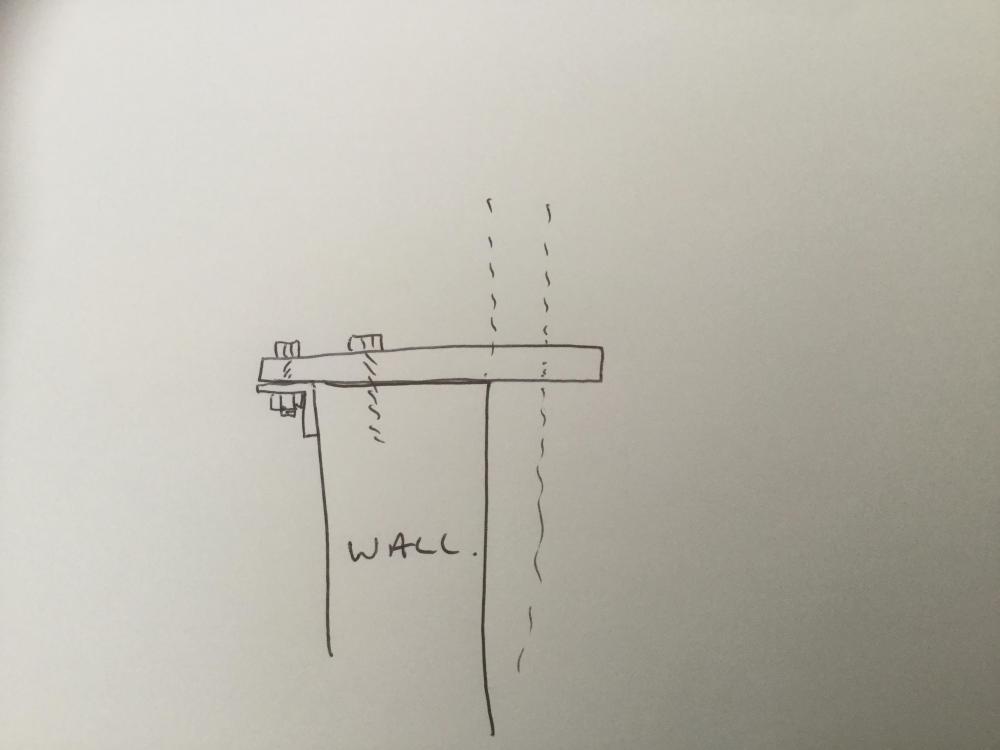
-
You're underground what did you expect ?
joe90 replied to Pocster's topic in General Self Build & DIY Discussion
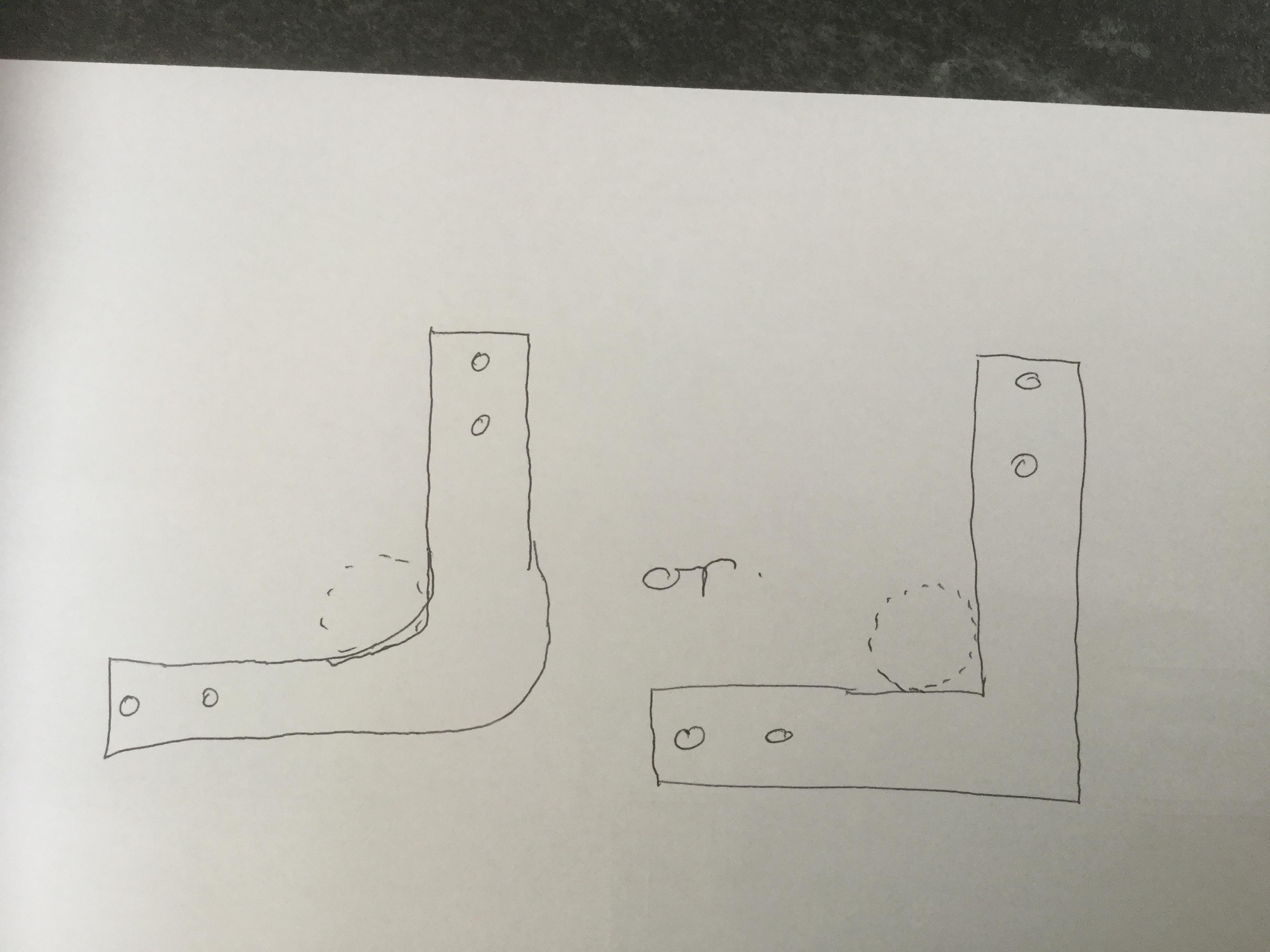
Problem with that is no room for both clamps on the vertical pole, ideally you need this (but need a welder to make It) flat plate say 5mm. Do you have a welder or fabricators near you (Avonmouth) would not take them long at all.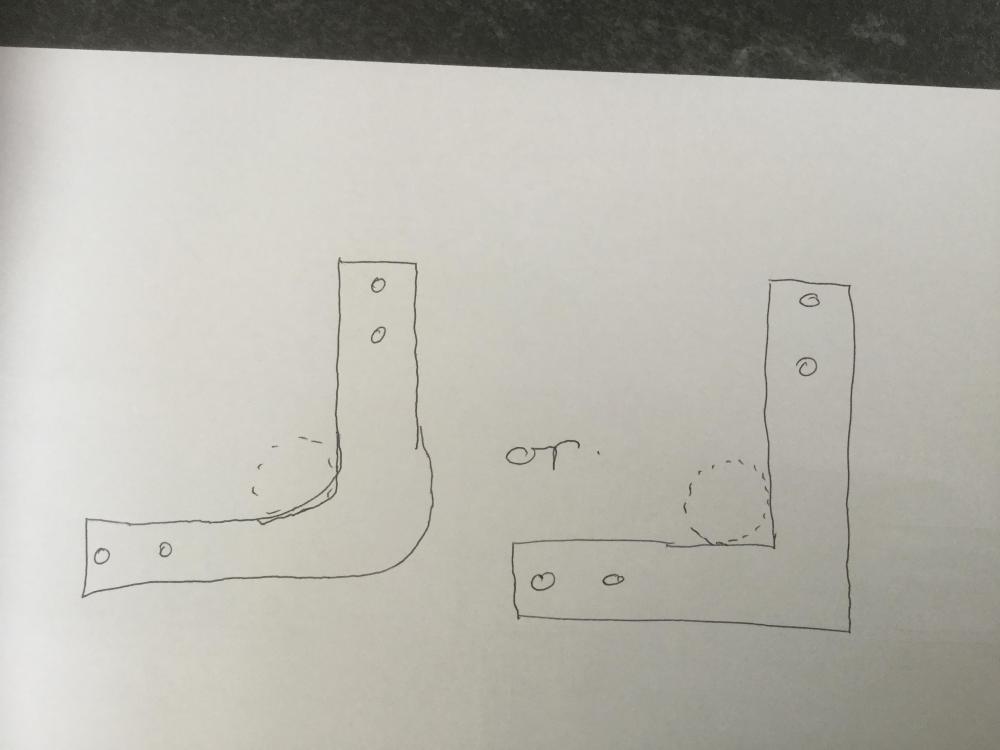
-
You're underground what did you expect ?
joe90 replied to Pocster's topic in General Self Build & DIY Discussion
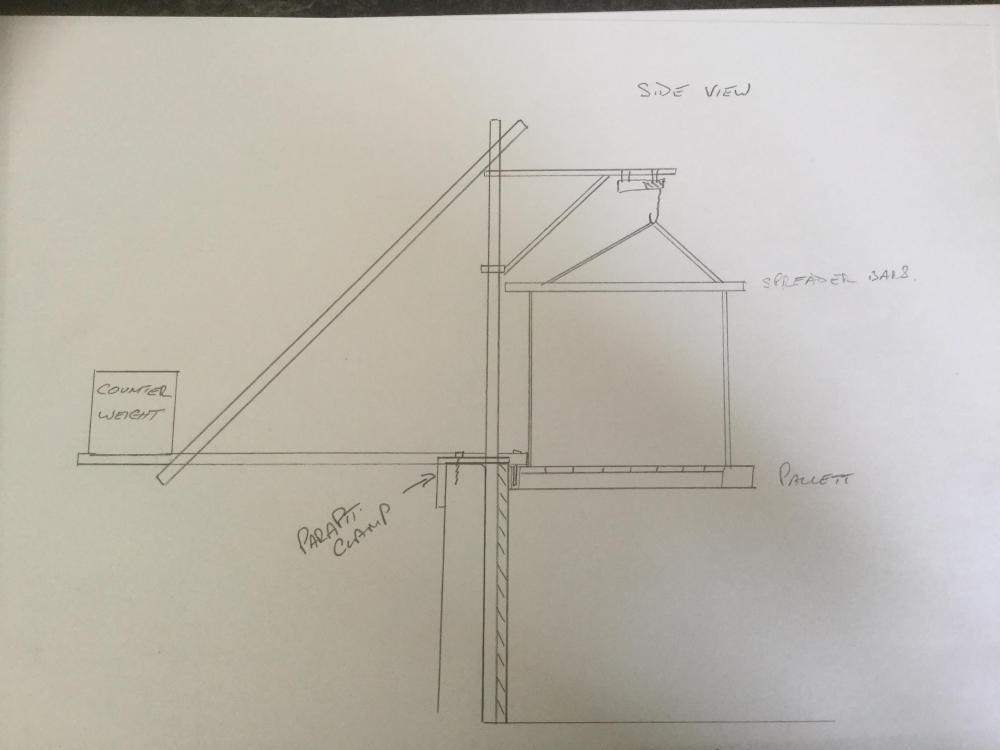
Distance from vertical pole to hook on winch = half diagonal dimension of pallet. If horizontal pole is = this length then counter weight to just exceed max weight you intend to lift, if half this length you need double this weight! just realised my clamp may get in the way of the horizontal pole ?????? -
You're underground what did you expect ?
joe90 replied to Pocster's topic in General Self Build & DIY Discussion
can you not make it, angle iron and angle grinder!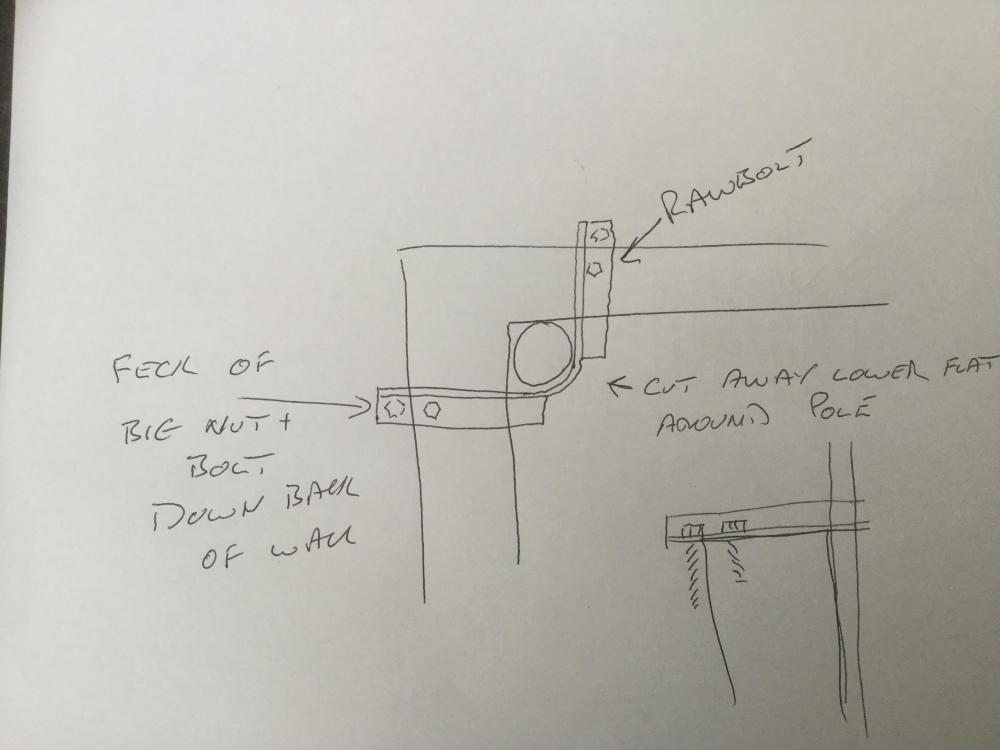
-
You're underground what did you expect ?
joe90 replied to Pocster's topic in General Self Build & DIY Discussion
Ha, just cross posted with @pocster, I will volunteer to be the first to “ride” your lift. (Subject to close inspection of work done). ? -
You're underground what did you expect ?
joe90 replied to Pocster's topic in General Self Build & DIY Discussion
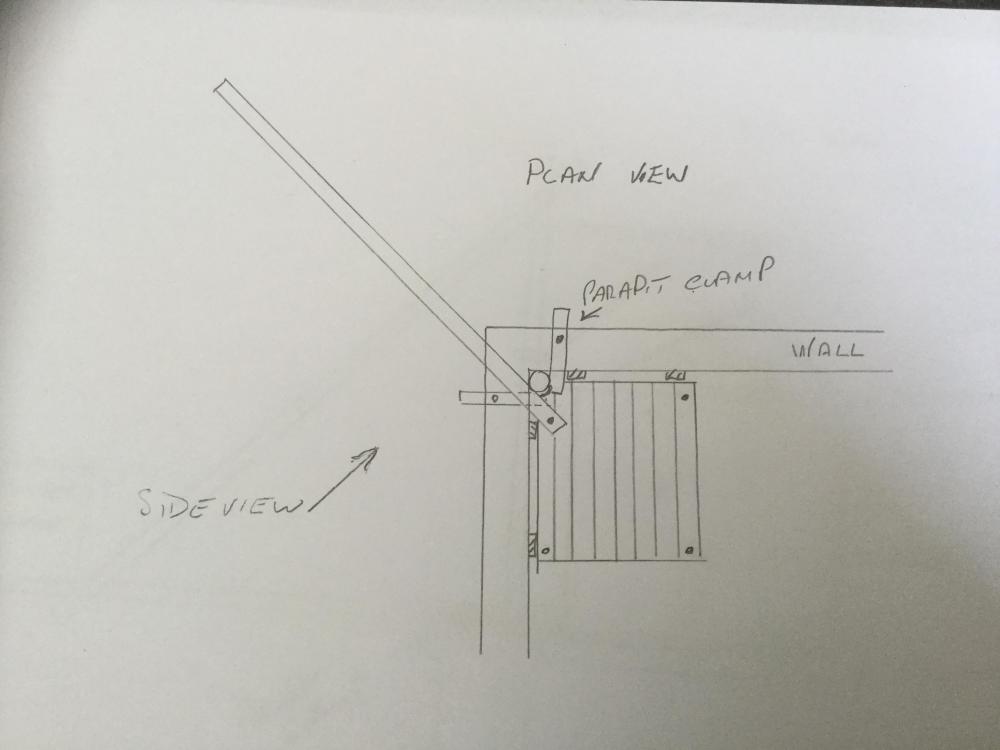
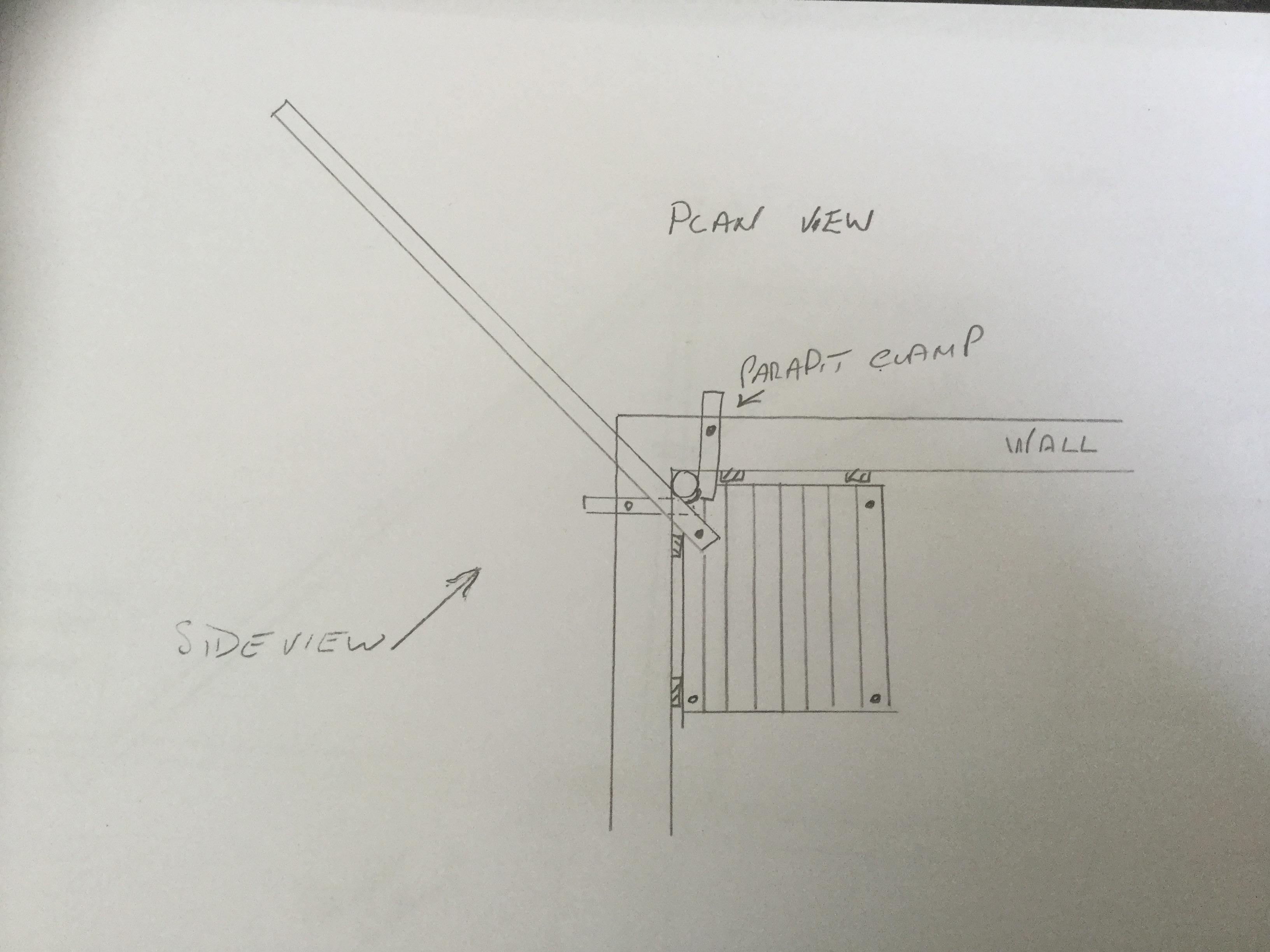
At the risk of repeating myself, here are my (rough) drawings of what I would do. I would not use saddle clamps for the upright pole as any load is pulling the fixings out of the wall (not ideal). The parapet clamp as @Onoff posts above is my idea for a bracket of some description over the top of the wall so the load is on the whole wall not just fixings (the reason for me asking the construction of the wall). The bottom of the pole needs no fixings as any load simply pushes the pole into the corner. Timbers up the wall to rub the pallet up and down. Horizontal pole extended a little over the pallet with a long bolt which locates in a hole in the pallet to stop it moving around when at the top being loaded. Straps or cables through spreader bars from pallet four corners to winch hook. Auto stop on the winch set to when the pallet is at ground level and horizontal pole touching pallet. Joints for poles being scaffold clamps. The spreader bars to be at the max height for whatever load you require.