
joe90
-
Posts
13570 -
Joined
-
Last visited
-
Days Won
139
Everything posted by joe90
-
Yes plastic is not allowed indoors in case of fire melting it, mine had to be converted to copper as it entered the house.
-
Yes, yellow stuff, just ran it round the house in a Trench, sand and dig tape over the top. Local gas guy connected it up and signed it off.
-
my gas pipe for the hob had to run around the outside .
-
Whatever boiler you use insulate as much as possible, you only buy insulation once. My other half insisted on gas for the hob, 19kg bottle lasts nearly a year. Instal a large DHW tank and PV ready for an ASHP if you decide on gas for the short term.
-

Minimum height of rafter end for fascia/gutter
joe90 replied to WWilts's topic in Roofing, Tiling & Slating
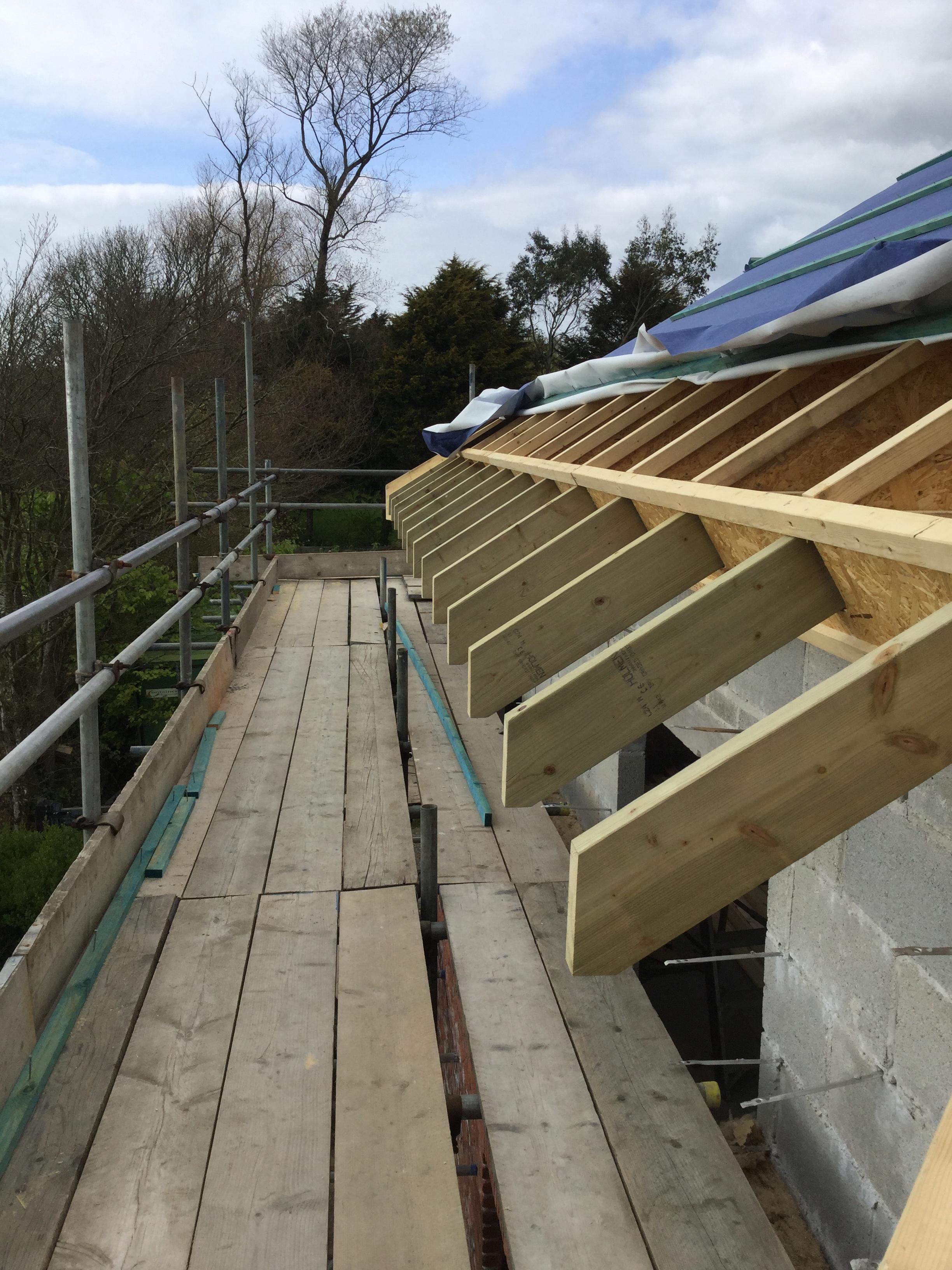
I did similar, 6 x 2 rafter tails (bolted to my i joists) with tongue and groove above to look like an old roof structure, 150mm facia looks fine.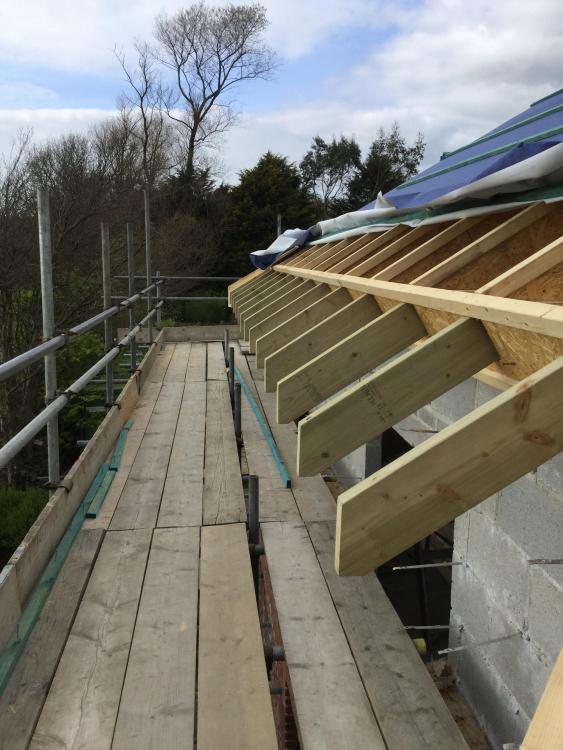
-
Not that I am aware of, which is why I did all mine in plastic and from manifolds to give more control and less interference (drop in pressure when under the shower!). My only gripe with our new build is sound transference between floors if I did it again I would double board and use sound bars and pay more attention to sound holes.
-
Hooray, it’s fixed. As I suspected the “bypass valve” built into the manifold is pants, it allowed way too much cold so the loops never got up to temp and it’s not adjustable. I have blocked the internal bypass and installed a separate blending valve and it all works. All I have to do now is play with the flows and temps. Many thanks chaps ?
-
My builder did a firm quote fir founds, shell, roof and plastering and I did all the rest.
-
Interesting as nearly everyone here said my large south facing conservatory would over heat, but it has not, in fact it contributes a lot of heat to the house in the shoulder seasons. On a sunny but cold winters day my heating rarely comes on. Yes mine is outside the heating envelope and has large doors and windows that can be opened. P.V. can be used to run air conditioning as the sun shines when it’s needed!.
-
That’s been my thought all along, it more a relief valve than temp controlling. The threads etc are different so can’t mount the pump directly, however I could mount the new blending valve in the feed 22 mm pipework and use cool from the return pipework ???, means blanking off the existing valve (like I did before to prove a point) and leaving the TRV valve but removing the head so it stays permanently open.
-
I heard back from Wunda very quickly….. “What I think is happening here is the thermostatic assembly is mixing the temp down whereas with the preregulated flow temp from the heat pump we don’t actually want it to do anything. Our advice would be to remove the assembly completely and mount the pump in line with the flow (top bar). Then, when the water returns to the manifold it is sent back to the heatpump for reheating. This would require the left hand side of the return (bottom) bar to be capped off. I would expect this to completely solve any issues that are occurring. Kind Regards,” then I asked them if they meant removing the TRV as well?….. “What we are really looking for is to use the preregulation of the flow from the heat pump. Then the floor limitation probes will be used to monitor floor temperatures and then switch the heating off accordingly to prevent damage to wooden floors and similar. Kind Regards,” I have no floor limitation probes, just a room stat. ? so they sold me the wrong stuff? If the bypass was adjustable I could solve this.! What to do next?
-
part 2. after having a weekend away to clear my head I have come back to this. Thanks to @PeterW and @Nickfromwales I have replumbed the buffer tank to be a direct rather than indirect (using the internal coil) tank. The tank now heats up nicely but I am still not getting warm enough water to the UFH pipes. When the buffer tank is heating, the manifold (after the TRV, and pump) temp goes up to 40’ (the temp of water coming from the ASHP) but there is no flow because the manifold pump is not activated because the room stat is not calling fir heat. When the room stat calls for heat the manifold pump starts and the temp at the top rail (after pump and TRV) goes down to 25’. The TRV head has been removed at the moment to help diagnoses. I still believe the built in bypass valve from the return rail to the pump is too weak and the manifold pump pulls water from the return rail rather than the buffer tank, if I reduce the pump speed I don’t get enough flow through the UFH pipes. I am tempted to ask Wunda what they propose as a solution. I cannot block the bypass again like I did before because when I re instate the TRV head again to control the temp the pump will overload when the TRV shuts. ?. thoughts please chaps.
-
I too recomend parge and wet plaster fir airtightness. I believe one of the major “leak” areas is timbers in blockwork, timber shrinks and moves so difficult to mitigate this potential leak area. Attention to detail here is a priority.
-
Thanks @SteamyTea, yes sounds about right, yes I wanted under 1, I remember now, it probably is now I have fettled the windows etc
-
Ooh er, can’t remember and my house docs have disappeared, was fairly good, @SteamyTea can you remember? I made a note of where any leaks were and have rectified them but never got to have another test.
-
Permission granted but its not what we want to build
joe90 replied to RichyC's topic in Planning Permission
After 3 planning applications were denied we applied for what the planners wanted, the ground floor was exactly the same!! So we started building but went to appeal on application number 1, we won at appeal (planners told they were not abiding by their own policies) and the builder had not got to first floor level so we ended up with what we wanted. Appeal is easy to do, I did my own, planners even told me o would probably win if I went to appeal. So if only the top floor is different this approach will enable you to start at least. -
Have you been reading my thread “UFH manifold problem”? My problem was not getting warm enough water to the manifold and it appears using an indirect buffer was the problem (the ASHP connected to the coil was not transferring enough heat to the buffer). I am still trying to get mine to work properly with thanks to @PeterWand @Nickfromwales and @ProDave.
-
Actually I remember now, I left a gap between a few trench blocks to stop water building up under the floor.
-
Foundations below the water table are not uncommon, I had to pump mine out before pouring but i did back fill around the outside with drainage stone to act as a French drain then extend it to a ditch nearby, my water table in winter is about 100mm below garden level ?.
-
If the foundation slab was designed by a structural engineer such as William Hilliard (who has designed passive slabs for a few here) then why would the BC not accept it?
-
Coming to this late but could you consider a raft and timber frame build, less ground loading and probably less than the existing build which I guess has not moved so far?
-
That is my view as well. Some self builders, like myself, know exactly what they want, know how to do it so don’t need an architect, I employed one purely to convert my pencil drawings into CAD for the planning application but he even got that wrong. Others need the “artistic touch” and that’s what architects do. On television they tend to get budgets so wrong it’s frightening.
-
VAT evidence to HMRC
joe90 replied to Moonshine's topic in Self Build VAT, Community Infrastructure Levy (CIL), S106 & Tax
@TomFurtherField several here have used them and found them good, he even claimed stuff I did not know I could, more than covered his reasonable costs and easy to deal with https://www.vat431.co.uk -
Is a cooker extractor necessary with MVHR
joe90 replied to SBMS's topic in Mechanical Ventilation with Heat Recovery (MVHR)
I have a recirculating hood with grease filters and an MVHR extract in the next corner and had no problems whatsoever and we do fry occasionally. -
Raised beds around the ends? But as you say no one is going to see it anyway.