Russdl
-
Posts
1763 -
Joined
-
Last visited
-
Days Won
6
Everything posted by Russdl
-
@Roundtuit & @Makeitstop I’m inclined to agree, the humidity is higher than I expected it to be (based on nothing other than a SWAG) and it is seldom below 60% and normally closer to 70%. I’ve no idea what I should expect it to be and I’d be interested to hear what the humidity is in other Buildhubber’s houses for comparison, especially if they’re down here in the southwest.
-
Clearly I have a problem
-
@IanR Ah! With you now. Yes, ours are the same. I was on about the thermal breaks that the spacers between the panes provide, poor terminology on my part.
-
Sorry, I don't understand that bit?
-
Also, there are three different types (standard windows, frameless and sliders) all of which have had condensation on them.
-
@IanR they're timber frame, ally clad, Internorm windows. In theory the thermal breaks should be up there with the best.
-
@IanR Thanks for those figures, interesting. I'll see if my IR thermometer can give me an answer on the pane temperature. On the windows/sliders with condensation it's all along the bottom where the pane meets the frame.
-
@joe90 I've ramped up the MVHR as well, but maybe not for long enough. It wasn't part of my master plan to have condensation on the inside and aside from ramping up the MVHR I'm out of ideas.
-
I thought I was going to hear that ? The house is currently around 20° and the humidity is around 63% (a degree/percent or two different in different rooms)
-
On the last two mornings where its been pretty cold outside I've found a small amount of condensation on the insides of some of our triple glazed windows, I promised the good lady this would never happen!! The house is built to passive standard, has good airtightness and MVHR. Should I be getting condensation on the insides of the windows, and if not, what is going wrong?
-
I’m pleased to report that is not mould, just crud (flies, seeds, dust etc).
-
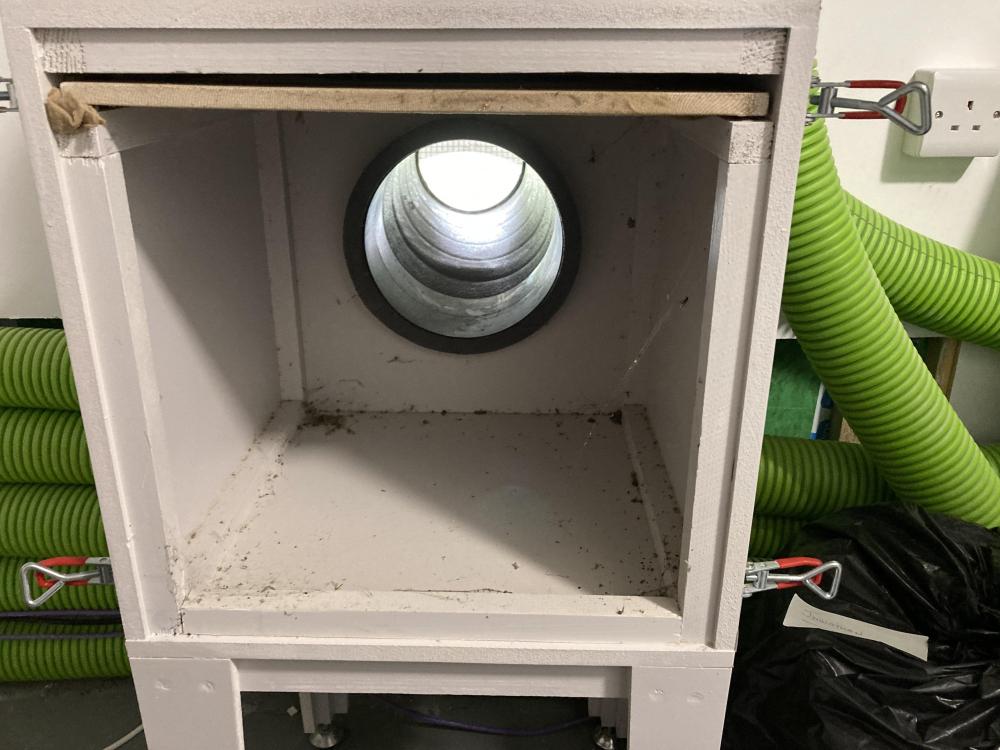
I guess that may have helped but the condensation is on the outside the box. Mainly on the top and down the back of the box. My aim now is to make the problem go away by insulating the inside of the box. @PeterW’s suggestion of a cut up yoga mat sounds like a good idea because I don’t want to restrict the flow and that should be thin enough to achieve that. I wonder if it’ll be too thin to be effective? I guess I could always do two layers.
-
I can answer my own question here. My ‘pre-filter’ MDF boxes are in a warm loft and work a treat at pre-filtering however I am getting plenty of condensation on the outside of my ‘supply side’ pre-filter box, the ‘exhaust’ side is fine. I’m thinking the easiest fix will be to insulate the inside of it. any suggestions as to what would be best to use?
-
Didn’t realise you were MCS certified Nick, is that a new thing for you?
-
@hendriQ I can’t offer too much insight to the Combimate performance, save to say it’s been in a year now and: There are no unusual noises coming from the Quooker (I’ve not opened it up yet to look inside, so it may just be well silenced). There is no limescale on the Quooker and we are in a very hard water area. Drinking water has no discernible taste to it. Finally, I haven’t changed the balls yet because it doesn’t seem like they need changing (based on no limescale anywhere). It only provides drinking water to the Quooker so it’s only a ‘half charge’ anyway. All the rest of our water goes through the water softener before it gets to any outlet.
-
Kalispera and welcome. Has the PHPP been done? You’re not going to need a wood burning stove I’ll wager.
-
We're all electric with a Sunamp, and it's the all electric Sunamp as well (we have no ASHP). We charge the Sunamp with PV or cheap overnight electricity, (both of which seem to have disappeared). Generally speaking it works very well and up to about a month ago we had paid nothing to charge the Sunamp as our solar export more than covered the cost of any electricity we had to import. I suspect October will be a different kettle of fish but we are in credit with our provider so I'm kinda hoping the credit balance will see us most of the way through the winter months until we start producing more than we use again next spring. Regarding reliability of the Sunamp, we had a thermistor string fail early on which was very quickly replaced by Sunamp and it's been fine since, it just sits there and silently does its thing. One of the early issues reported by Sunamp users on here was that it wouldn't charge until it was fairly well depleted. That is not the case now, our's will take a charge anytime we let it.
-
@Woodward we had exactly the same issues as you, the only quotes we got were insane. Eventually we found HomeProtect who had absolutely no qualms insuring us and at a price I would have expected for a ‘conventional’ build. In other words very cheap compared to the previous insane quotes we had.
-
MVHR commissioning
Russdl replied to CC45's topic in Mechanical Ventilation with Heat Recovery (MVHR)
@dpmiller so you reckon ‘ventilation’ in 5.1b is the same as ‘extract ventilation’ in 5.1a? I guess you’re right, I think most people here who refer to the “0.3 l/s per m2” section have all bumped up their extract rates to hit the target, and many of them are far wiser than me. -
MVHR commissioning
Russdl replied to CC45's topic in Mechanical Ventilation with Heat Recovery (MVHR)
@dpmiller yep, mine are pretty much balanced. My question is in relation to Table 5.1b which specifies ’Ventilation’ rates (not ‘Extract Ventilation’ rates, that is in table 5.1a) Note ‘a’ of table 5.1b requires minimum ‘ventilation’ rate (not ‘extract ventilation’ rate) to be 0.3 l/s per m2 of internal floor area which would be 57.9 l/s for us. So the question is, do I combine my extract rate and supply rate to get to a figure above 57.9 l/s or do I have to ramp up the extract rate so that my extract total is above 57.9 l/s My view is that ‘ventilation’ is air in/air out whereas ‘extract ventilation’ is just air out. -
MVHR commissioning
Russdl replied to CC45's topic in Mechanical Ventilation with Heat Recovery (MVHR)
I have a question regarding MVHR commissioning and Approved Document F. Document F, Table 5.1a is titled ‘Extract Ventilation Rates’. Document F, Table 5.1b is titled ‘Whole Dwelling Ventilation Rates’. To my mind ‘Ventilation’ is extract + supply and not extract only. It seems most on here are hitting the 5.1b ‘ventilation’ requirement by upping the extract rate to hit the 0.3 l/s per m2 of internal floor area. Is that necessary? What am I missing? Thanks in advance. -
And, for what it’s worth, the flush plates are different sizes for the different models so make sure if you do get a Geberit you get the correct flush plate for that model.
-
@SteamyTea. Yep. I described it as a ‘conditioner’ not a softener. (And I’ll update when I do take the Quooker to pieces)
-
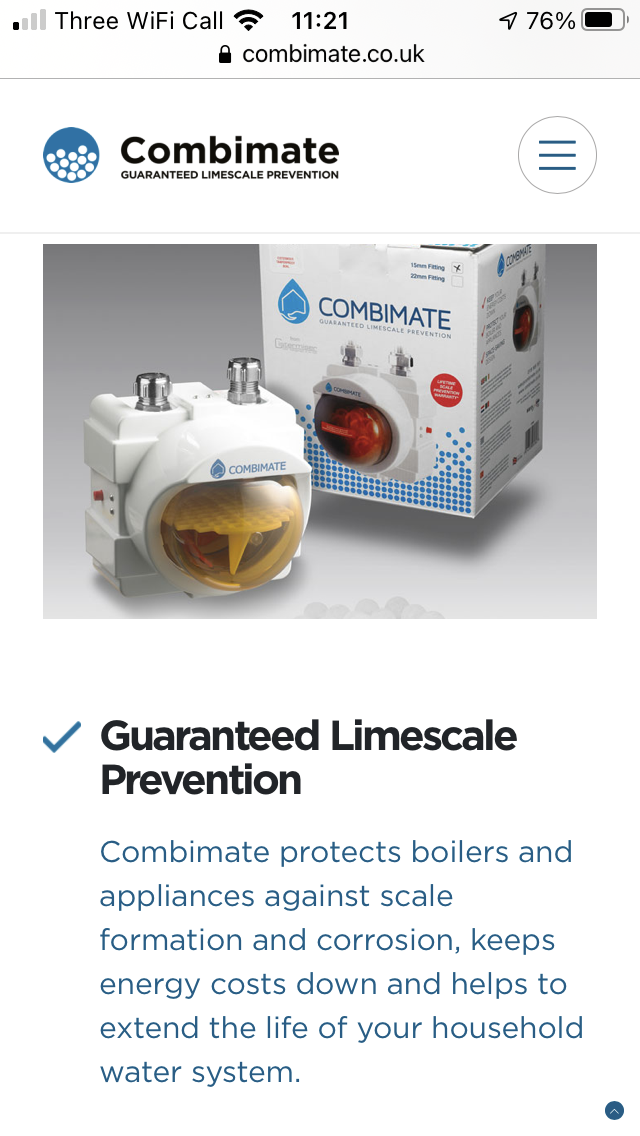
Have you considered a Combimate? We live in a very hard water area and all our water is softened except for the cold supply to the Quooker. That single cold goes through the Combimate which is a water conditioner not a softener. We are the best part of a year on and there is no sign of scale on the Quooker tap itself, I’ve not opened up the Quooker to look inside yet. The Combimate may prevent your problem recurring once you’ve cleaned that tap up again.

-
@PeterW the Shelley 1PM is in control of the Sunamp, just need to sort out the IFTTT side to things so that it has full control. Thanks again for the ‘heads up’ on the Shelly stuff, brilliant kit.
- 12 replies
-
- 1
-

-
- sunamp
- octopus agile
- (and 2 more)