
Radian
-
Posts
2586 -
Joined
-
Last visited
-
Days Won
15
Everything posted by Radian
-
Unless there was so much rain that it purged the cement from the sand, it'll be fine. The mortar sets through a slow chemical reaction that takes place in the presence of water. Drying out before this process is complete is the main danger. Also freezing which makes the water expand, so wrecking the matrix - but you have neither of these concerns. Covering with a tarp won't have any adverse effect. One thing it can help with is to retain the heat given off by the exothermic reaction as it sets. Mortar can remain quite soft for a few days but actually achieves good compressive strength nonetheless. In fact, its load bearing abilities can appear within hours. It will depend greatly on the ratio of the mortar mix. What was yours? e.g. 5:1 sand/cement?
-

Insulating between rafters and joists in barn conversion bathroom
Radian replied to vagrantly3893's topic in Heat Insulation
You definitely need a second opinion on this. It's certainly always been the case that with rigid insulation a 50mm air gap must be left to transport any water vapour away from the structure - I can't see how mineral wool would be any different. While you may have a vapor barrier above the plasterboard, vapor from the outside can make its way into that area, and if it takes a long time to clear (due to inadequate ventilation) the temperature may drop in the meantime causing interstitial condensation. I think that the objective with ventilated (cold) roofs is to make sure the RH & temperature of the interior voids equalise with outside conditions as rapidly as possible. -
Cost of Landscaping. Does this seem a reasonable quote?
Radian replied to patp's topic in Landscaping, Decking & Patios
Having a bit of trouble parsing that one. What you need to ensure is that they bed the slabs on a full bed of mortar - not spot dabs. Very important! I see the word "full" there but not able to make much sense of it. To justify that price it should be nothing short of top-notch work. -
They look great. Did you oil them? I priced-up Oak and the extra expense didn't strike me as being a show-stopper but I noticed that a 2.4m sleeper weighed in at 50Kg and decided against it! Cutting and machining are all much more difficult and I understand that you need to use stainless-steel screws otherwise the resins eat them. Apart from that they look beautiful and last a lot longer.
-
What about heat emitters - UFH? Radiators? May be able to work with 'only' 24kW I would consider PDHW with a heat only boiler that will accept separate demand for HW and space heating. Radiators sized to allow flow temperature at or below 50oC, HW flow at 70oC for quick recovery with cylinder stat set to 60oC
-
Look good to me! Not sure where you have them as upper left looks like it might be an asphalt drive? Mine are going at the front of the house in a forgotten corner to the side of the drive. Does everyone just plonk them down directly on the soil or put in gravel or some other barrier to slow the rot?
-
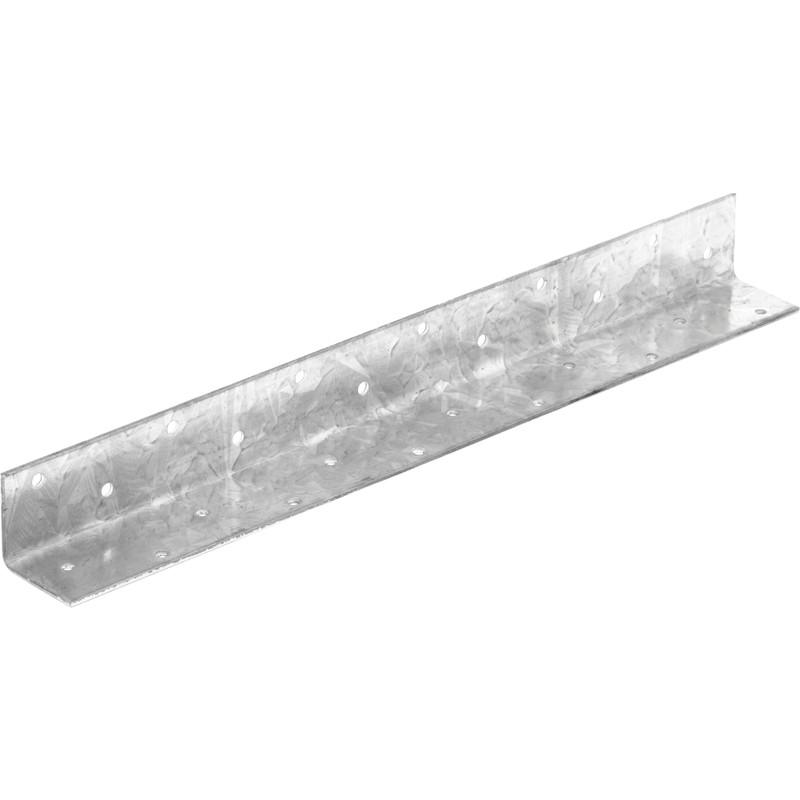
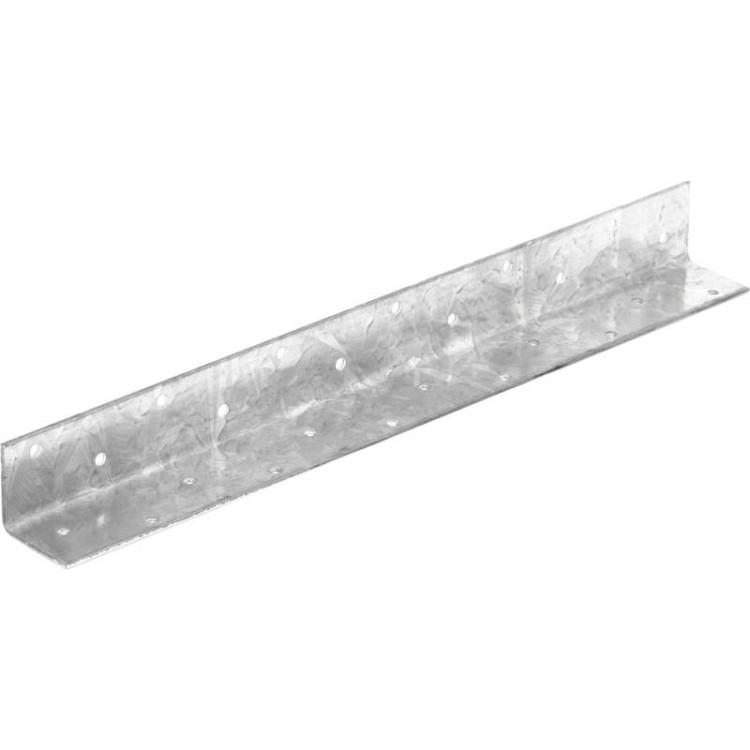
Sounds good and chunky. I like the idea of using angle iron. If you can hand-pick railway sleepers to get decent ones you can't really beat them but if at the mercy of what gets delivered then I've seen plenty that I wouldn't want to grow food in! I'm thinking of using these 300mm x 32mm angles on the inside to hold it all together while gunning Waterproof No More Nails onto the mating surfaces. and of course plenty of:

-
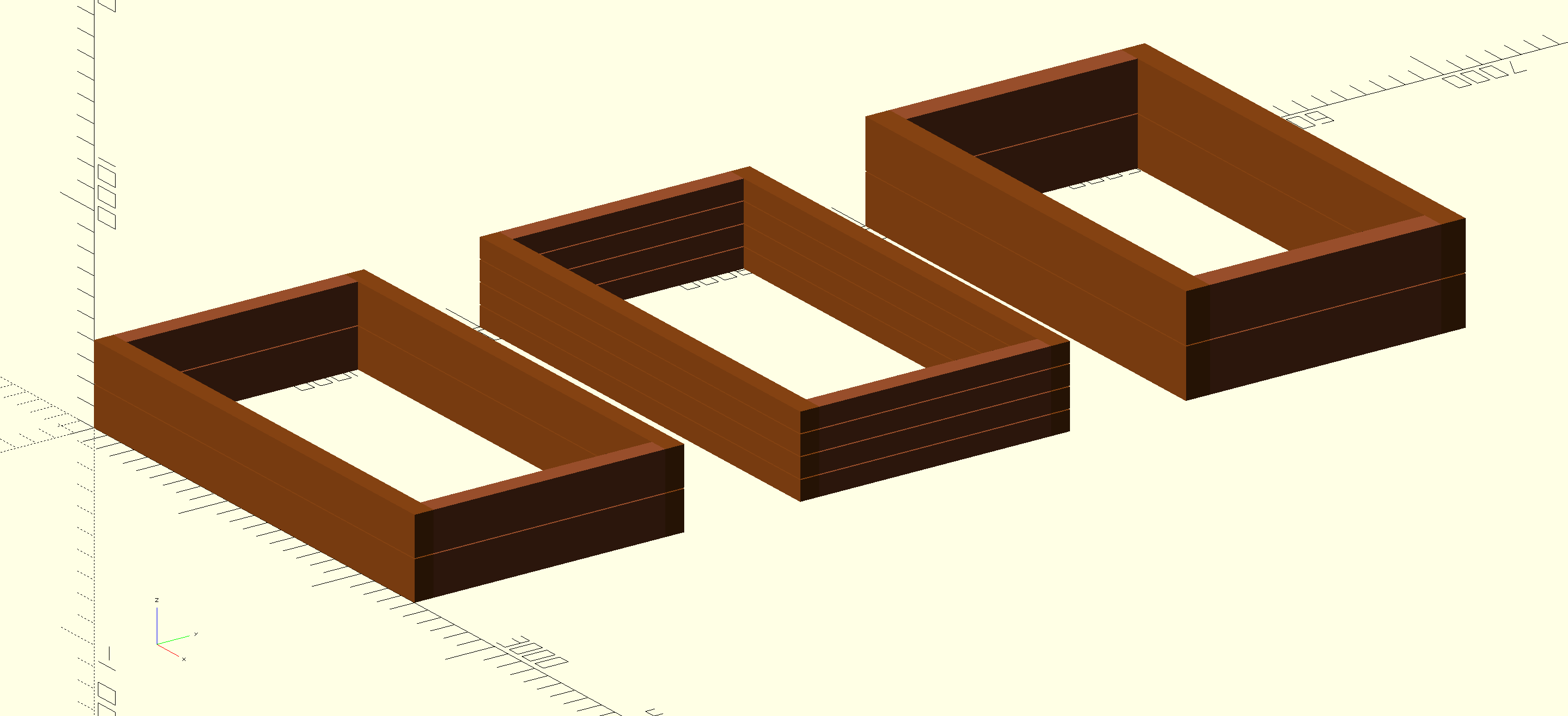
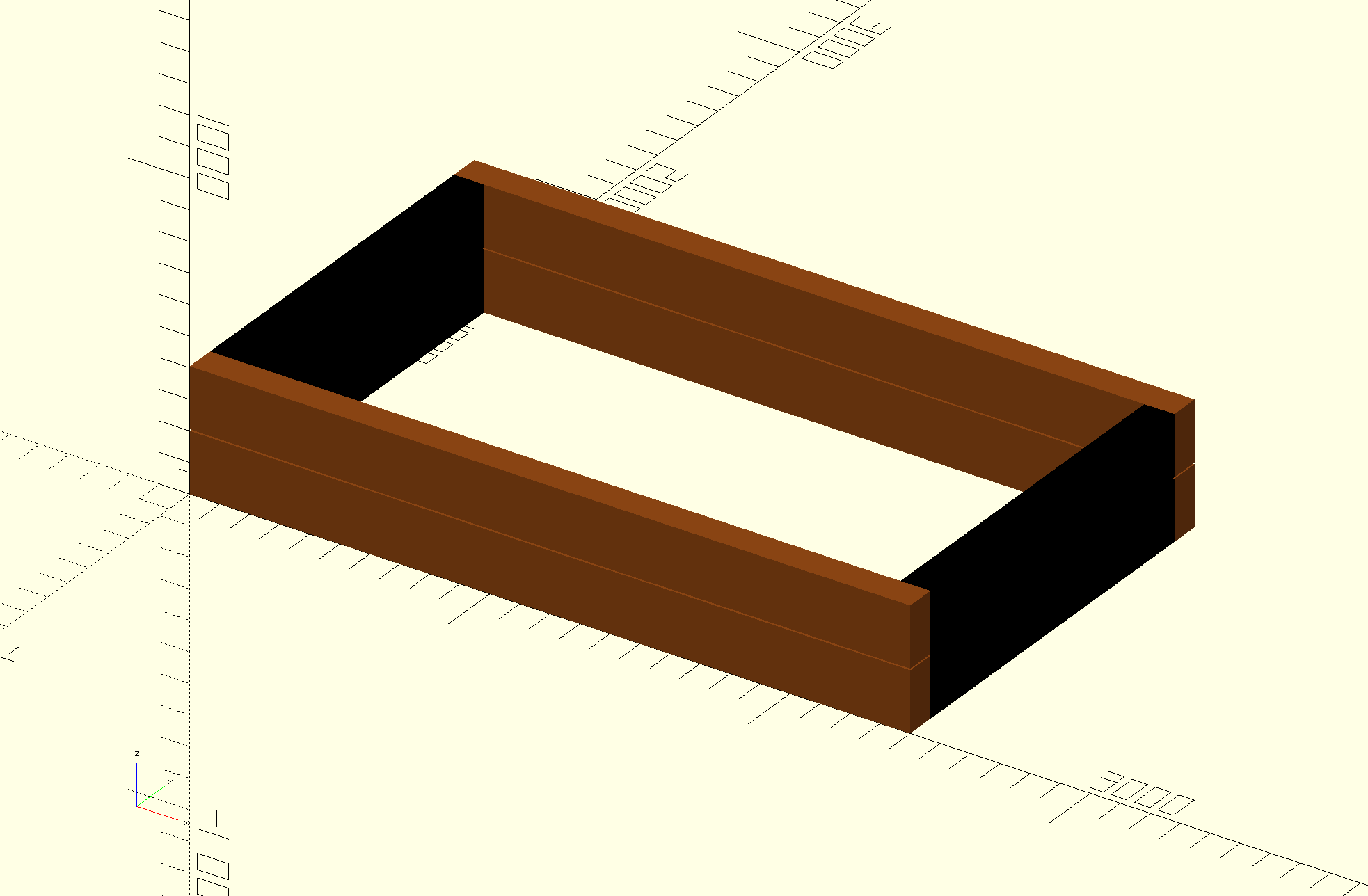
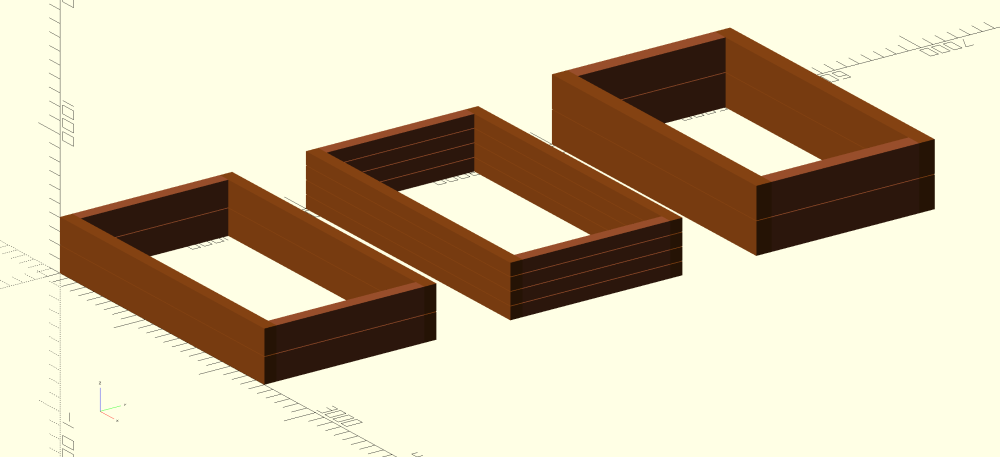
Just a tip about using a halfway post - if they're just driven into the ground it won't do much. The trick is to tie across from the other side with galvanised steel strap between the posts. This goes under tension and holds the sides in. I'm beginning to conclude that there won't be too much flex without extra retention anyway so probably not needed. Interesting, that's something I hadn't considered - I could use standard 0.1m square fence posts. I like the idea of being able to screw down each layer to the one below. I've modelled that as well as the jumbo sleepers (which I'm ruling out now): Annoyingly, the price of using two 0.1m square posts is generally more than that of a single 0.2m x 0.1m sleeper. I hoped the volume sales of fence posts would help here but evidently not. It's pissing me off that all these timber products are more than twice the price they were the last time I did any hard landscaping🙄
-
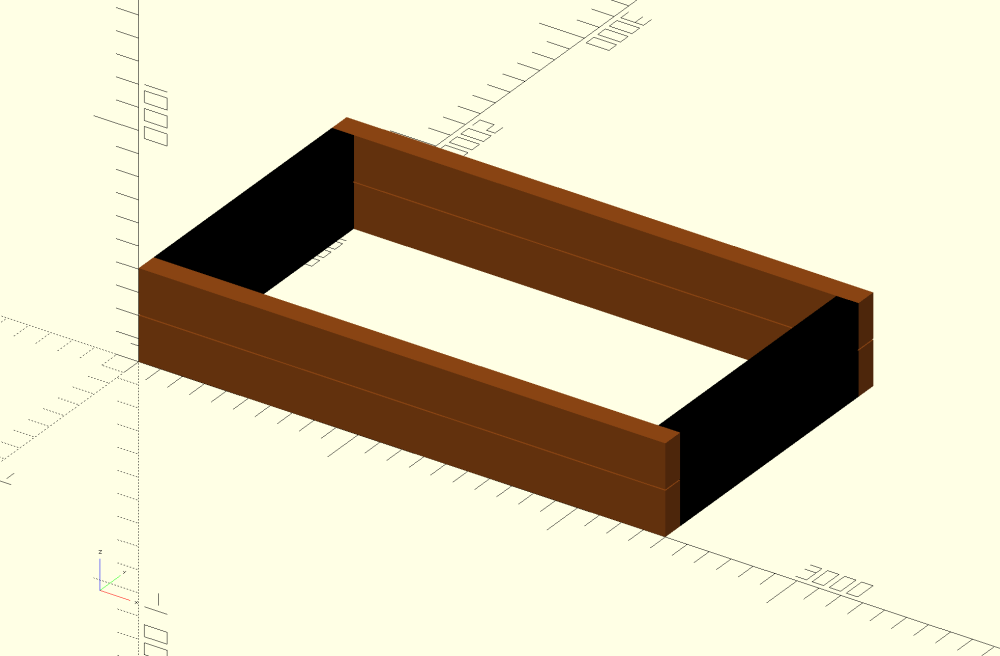
I'm planning to make some raised beds for growing veggies and the current thinking is to make 1.2m x 2.4m frames by cutting one 2.4m x 0.2m x0.1m tanalised 'sleeper' in half to make the ends, with two more sleepers for the sides and stack two frames to create a 0.4m high bed out of six sleepers. The first question on my mind is would the 2.4m sides 'give' too much when filled with soil? I could use chunkier 0.25 x 0.125 sleepers but they're £45 each rather than £30 Seems like such an obvious design, I wondered if anyone else here had already built something similar?
-
Do you have curtains or blinds on the windows? I'm wondering if you're experiencing 'radiative cooling' where you physically feel the heat from your body radiating away to a cold surface like a window pane. An air temperature sensor won't register this effect. If you can pull a curtain across the window you might feel the difference as the curtain will block the path to the cool surface.
-
So what's the condition of the lining in the gutter trench? It looks like the two sections there have a marginal overlap. This makes me think the gutter is open across the join between houses. If water can get between the linings it may find its way into the brick and subsequent freeze/thaw cycles may explain the evident leverage that's pushing the brickwork over. It seems to have been repointed at least once before but without stopping the water ingress, the joints will keep on failing after every winter.
-
a new form of heat exchange equipment?
Radian replied to Adsibob's topic in Energy Efficient & Sustainable Design Concepts
Yes... ...With a Teflon coated heat exchanger? 🙄 Not even Teflon then. I wonder if this could be enhanced by electrostatic repulsion? -
Sure thing Vladimir, but the DNO does!
-
In order to push the amount of power you would like to push into the grid, your inverter(s) have to raise the voltage at your connection. People nearby will have that extra voltage appearing at their connections too.
-
Advice needed on beautifying an ugly retaining wall
Radian replied to Paene Finitur's topic in Landscaping, Decking & Patios
Attach a geocomposite drain sheet to the back of the wall then just backfill right up against it. Water will drain to the lowest point so have some way to discharge it. -
It's more like a case of 'when you've got a hammer, every problem looks like a nail'. If I'd been smarter, I would have just redesigned a mechanical paddle to replace the original that had a hook to lift the syphon. 😆
-
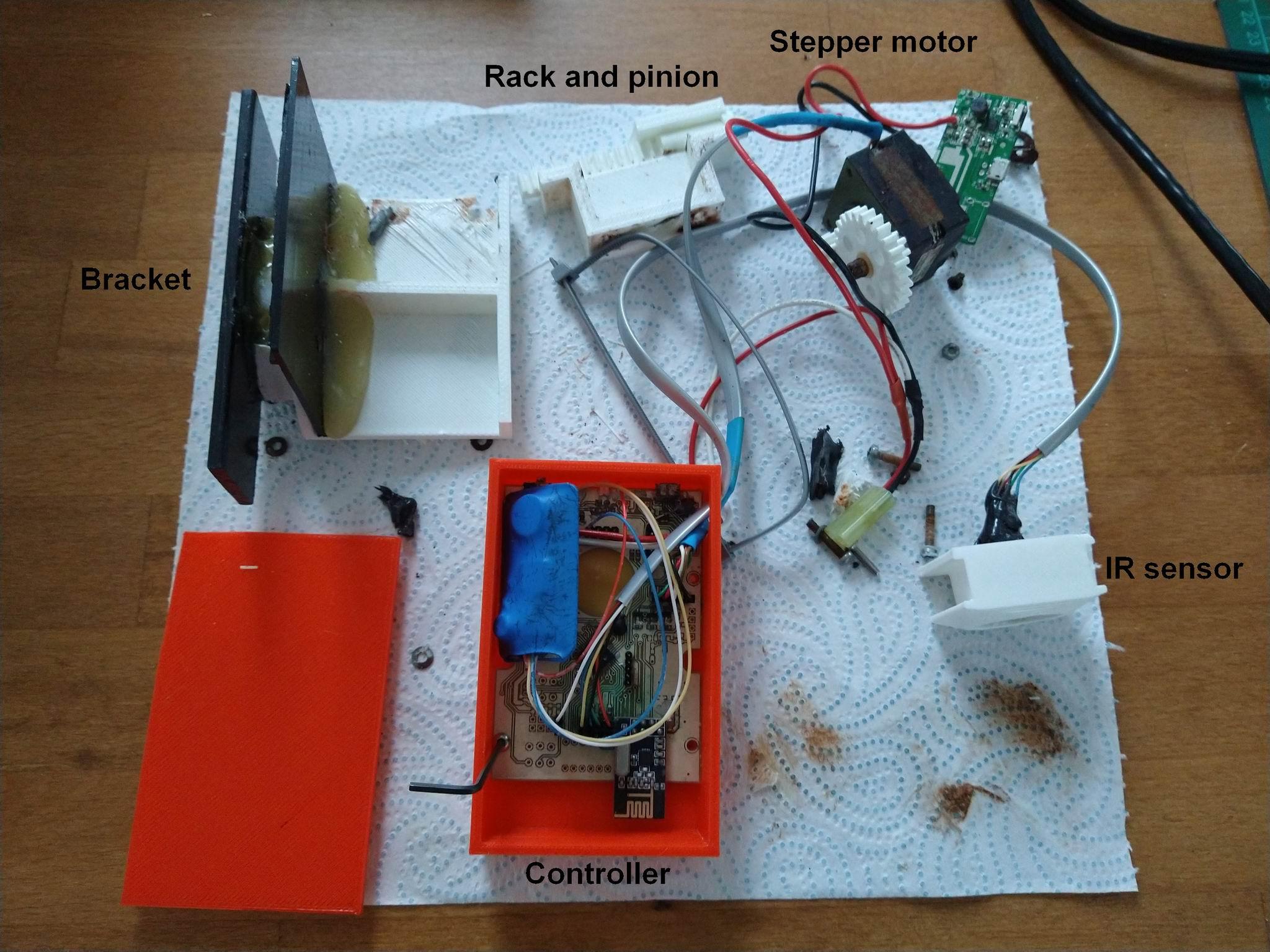
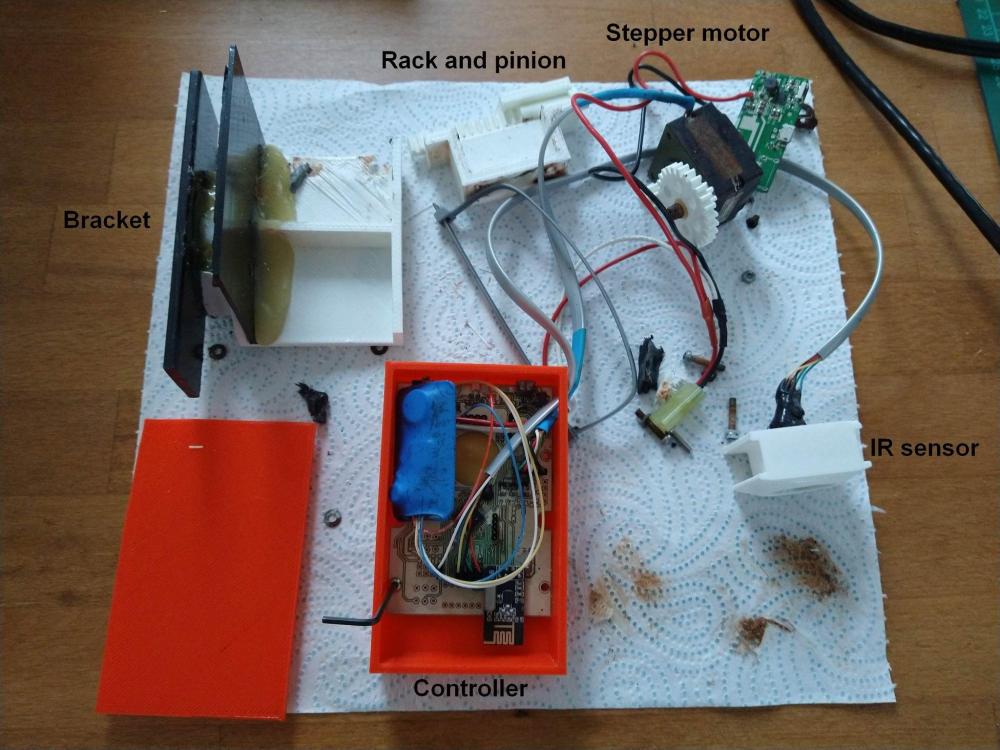
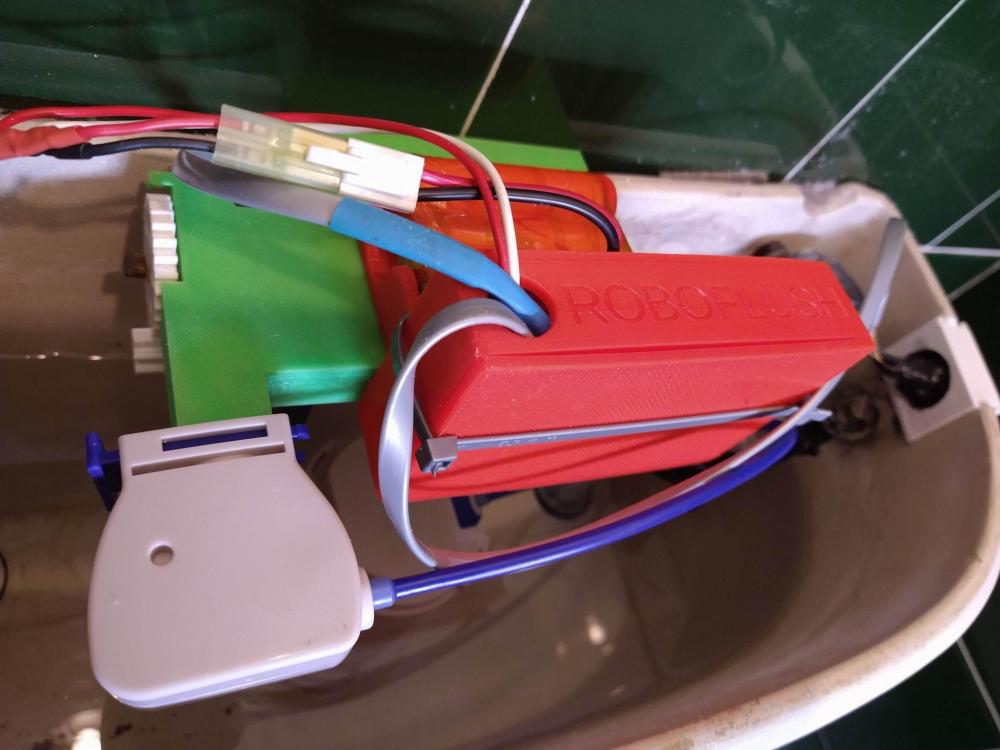
I thought some of you might be entertained by something I made earlier. Back in 2015 the original flush valve in our downstairs loo packed up so I replaced with a cable operated one. Unfortunately the push button it came with wouldn't fit in the recess on the side of the cistern so I was faced with a dilemma over how to operate the Bowden cable release that was left dangling down the side of the loo. Inspiration soon came from a visit to a restaurant with a non-contact hand-wash basin tap. This inspired me to design a non-contact electric drive for the new valve. This involved a stepper motor rescued from an old inkjet printer, an adapted controller prototype from a TV show that I'd been commissioned to design and some 3D printed parts. One of these houses a pulsed IR source & sensor in a module that fits where the original flush paddle sat. It's been working reliably ever since - except for the 3D printed parts (PLA) that have slowly been delaminating. Several emergency bodge repairs with odd bits of plastic and hot-melt glue later, I finally got around to redesigning and printing a new integrated bracket today. Old parts dismantled (that's rust not 💩😞 New assembly (printed in green) connected up to bowden release mechanism in situ: Here's hoping we get at least another 8 years out of it!
-
New build design - thoughts welcome!
Radian replied to AppleDown's topic in New House & Self Build Design
I would also add that in our drive to reduce carbon emissions, a chimney - even a fake one - sends all the wrong signals into the future. I only mention this to assist you in 'letting go' of the idea. -
Anything that creates a 'skin' is likely to peel eventually. Hence the better option being oil. However, oil won't give a deep colour finish so, noticing how 'watery' fence paint just faded over time rather than peeling, I tried painting a deck with fence paint. Sure enough it fades and weathers after a few years but you can just quickly go over it again after a hose down i.e. minimal prep.
-
As you probably know, range ratting it down will only restrict the maximum modulation value. This will make it take longer to reach the point at which it cycles off but what about your DHW? You might need the 12kW to get a decent reheat. Why have you settled on a 55oC flow temperature? If you go lower, the boiler controller will self-impose a lower modulation level from the get-go and leave 12kW available for DHW (which I assume has its own flow temperature)
-
You can't of heard about the housing crisis then. Those retired people have 'kids' in their 30's also living at home + their kids 😉
-
"As built" is rarely as good as "as designed". Sloppy detail, airtightness etc. make a spreadsheet analysis liable to inaccuracies.
-
In the quest for automation: For installations with a DCC feed from a smart meter, all you need is the owner's permission to read the GUID/MAC/EUI off the back of the IHD, along with their postcode and you've got a treasure trove of data to work with potentially covering several years. A single bit of code could take this info as input and spit out a sizing while you wait.
-
I guess this is radiators only? Your return temperature spends most of its time below 50oC which is good but the cycling suggests they're controlled by TRV's so even at minimum modulation the boiler is delivering something like double the amount of energy required. Have you looked at other variables like pump speed? Reducing the speed might extend the run time a bit.
-
What's the consensus on legionella and dhw storage temps
Radian replied to SimonD's topic in Boilers & Hot Water Tanks
I'm talking about a vented stainless steel cylinder with 23kW coil that I installed two years ago. I considered getting an unvented cylinder at the time but didn't think it was a DIY option. Still not sure if it is or not. I'd agree with that but still do a regular sterilisation program to be sure. Maybe once a fortnight. Cold storage tanks in lofts for vented cylinders like mine are just looking more and more of a liability though. Mine were even doubled-up on the recommendation of the plumber because we had power showers installed when the house was built so goodness knows how stale the water gets. And the loft regularly gets heat soaked in the summer. No amount of lagging will keep all the water at ground temperature (which I said above can be in the mid-twenties then). There are also hot taps like the one in our downstairs loo that barely run warm by the time you've finished washing your hands (sentinel taps in the HSE doc - used for worst case measurements). Realistically these are going to be found in large numbers of homes and rarely ever see sterilisation levels of temperature. Perhaps this is mitigated by the fact that the drawn off water at the start of the pipe-run does remain at high temperature, along with any other T'd in outlets that might introduce greater high temperature flows. So the water coming out for the next use is sterile. HSE certainly wouldn't countenance this but it seems to work at an informal level. We seem to get away with all this. But it's all a bit vague.