


scottishjohn
-
Posts
4393 -
Joined
-
Last visited
-
Days Won
23
Everything posted by scottishjohn
-
What energy rating is your HW cylinder?
scottishjohn replied to Adsibob's topic in Boilers & Hot Water Tanks
that does not suprise me If you add insulation to cylinder that will trap any heat loss of the cylinder between it and your better insulation . more important is how much heat can you feel on outside of the insulation layer , that is now your heat loss . so it would be important to make the room all this heating plant is to be very well insulated ,unless you are happy with the heat adding to your background house heating input. -
cpc farnell £2.79+vat per 5 litre half the price of all of my local builder supplies get it before they change the price
-
no I don,t and tongs would neever grip securly a 2-300kg odd shape stone . slings are working fine
-
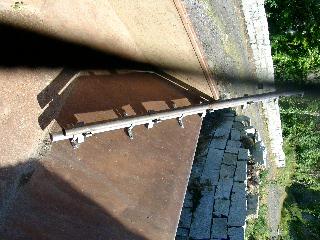
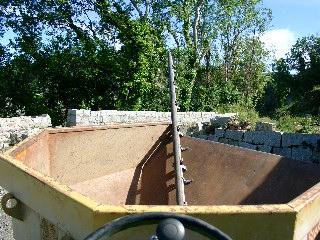
this mornings pictures of dumper and attaxhment
.thumb.JPG.3ab6a5177498404053d4218213618731.JPG)
.thumb.JPG.e2740e7aafdb04f922a784dcf0a339d9.JPG)
.thumb.JPG.b0f55e0e27136736b50d628d9d06021e.JPG)
.thumb.JPG.baf1a77fbed1f3d5abf5336fe70661cd.JPG)
.thumb.JPG.a859ad1e64b108d5c3604d1985652dff.JPG)
-
i gave it a real test today and moved a tote bag of sand --no problem certainly a lot more than a 70year old and his wife can lift off and then replace onto the repaired wall LOL
-
dumper converted and working well consists of a kwickstage upright 10ft with a length of thick walled steam pipe tack welded to the scaffolding pole brackets ,so I can reclaim the pole when done and bolted with brackets to the dumper at one corner -so i can still use it if needed in the mean time dumper can still tip fully ,pole end is close to ground when tipped It lifts every stone i have tried so far with no bending or even flexing average granite stone size I have been moving about is 700mm x 350m x 350mm. the capping stones for my big long wall. taking down wall to repair and rebuilding with morter ,not just dry so far 12t of sand 70bags of cement and only about half way will post pictures at some point
-
please supply name ofr bore hole company by message if you like and how long ago was it done
-
a bore hole is going to be 10-15k
-
at 4k to get mains --then I would get it cost of tank and pumping and uv lamp --at least -which needs changing every year then an acumulator + boooster pumpto give you mains pressure in the house -or your tank qwill need to be inthe loft and all you will get is gravity pressure --no good for showers or any modern type boiler or ASHP but start with getting your water tested --could be lots of other mineral impurities that would need replacable filters etc
-
If I had an old harvey frost hand wound landrover breakdown crane that would be good as could bolt ot dumper --but I don,t
-
I only need to lift approx 3-4 ft from ground for top of wall so trying not to get to complicated and spend a week making something obviously I can as I have all engineering facilites mig tig ,lathe miller -etc etc -- but not a site 9miles away transporting dumper will cost
-
good idea if i had space to get landrover sieways across the road with space to manouvre --but no I,m plotting on some way to use my dumper ,which has swing -side tip maybe a scaffolding pole out front of it with swivel and lifting straps - tilt the dumper bucket to raise and lower the stone and swivel for fine postioing . rummaging about at my garage to see what I can find +buy some web slings
-
looking s/h "lewis pins " or something to lift my granite stone around -new ones start at £200+ rebuilidmg the long wall and its got lots of big granite top stones that I cannot lift -wall is 100+yds long and as I can only get at one side --the other side is a 40ft drop --I need something to attach to a digger to lift them I cannot even find sensible priced stone tongs and no one to hire them from
-
sorry ithought you were using it for UFH Ido not know
-
I maybe be wrong but if you used UFH piping rather than water pipe it has an alluminium core which will make it hold a bend ? no need for formers? or if you want to std water pipe hit it with the hear gun at the corners bend it round a half moonformer made from wood and it will stay bent when it cools
-
Combining an air-water heat pump and solar thermal
scottishjohn replied to Garald's topic in Solar Thermal (ST)
I maybe was not clear the solar system was pressurised and also the 3 coil 300 litre tank was running on mains pressure so 3 coil and unvented so from bottom to top solar coil ,ufh coil dhw coil and lpg boiler connected to main volume of tnak at approx half way and top only thing i would change is to have some sort of baffle inside to stop mixing effect of flow of lpg boiler when it came on ,so solarr part stays as low a temp as possible and can take any solar input there is if using pv+immersion heater there would be little stirring effect as that would be at the UFH coi level and the heat would just rise and would heat down from top with no pump involved -
Combining an air-water heat pump and solar thermal
scottishjohn replied to Garald's topic in Solar Thermal (ST)
system I had which worked very well was pressurised with an expansion vessel I never had a problem in 15 years the failure point was a stupid plastic auto air seperator valve which was mounted outside on the panels on garage roof -which failed when a sensor went down and temp in system must have been close to 150c to melt the plastic or maybe it was other way round temp these unregulated panels could have taken plastic air valve first and then kept rising until sensor failed I obviously replaced that with a metal one and new sensor and it ran for another 6 years till some tubes started to fail ,but to be fair they could have started to be damaged when it got over hot 40tubes and 300litre tank is not big enough to abosrb all the heat the sun can throw at it, even in scotland --so If I go that way again it will be larger storage so I cannot boil the tank on any given day and keep away from silly temps yes it looks good seeing the panels knocking high temps ,but better to have larger storage and never get close to boiling you do not need water for DHW or UFH at anything like those temps I was using a mixing valve on my tank so the whole tank could be max temp and then mix with cold on output fromDHW coil down to 55c taller the tank the better if taking dhw and UFH form same tank -as heat will always rise so DHW coil is at top of tank ,or you could use 2 tnaks and divert as required ,especially if using solar PV to run an immersion heater or heaters -
old buildings wooden lintels
scottishjohn replied to scottishjohn's topic in RSJs, Lintels & Steelwork
that calculator does not list OAK or teak ,probably from old sailing ships and things at 14" wide and 6" deep maybe me ,but I can,t make any use of it and how do i calculate the load of the granite stones on top of it -- Iwas looking for a rtaight foreward com[parison . will probably just replace wood oneswith pre stressed lintels to make up same dimensions ,maybe 3 or 4 wide where needed -
Combining an air-water heat pump and solar thermal
scottishjohn replied to Garald's topic in Solar Thermal (ST)
you could do it in an analologue fashion with multiple temp stats -if panel above 50c then divert to DHW and when bbelow go to unbderfloor and when dhw reachs max required temp another one to divert it to underfloor tank,I,m sure there will be a controller out there by now that can do that -was not one when i did my system 20 years ago in last house -
old buildings wooden lintels
scottishjohn replied to scottishjohn's topic in RSJs, Lintels & Steelwork
the original wooden ones seem to about 150mm and 300mm wide what Iwas looking for is if anybody knew of a comparison of wood to concrete -
Combining an air-water heat pump and solar thermal
scottishjohn replied to Garald's topic in Solar Thermal (ST)
Combining an air-water heat pump and solar thermal this is very possible as it was what I did a long time ago mylimitations was lack of computers and knowledge for ideal control system - I,m sure that is all doable easily now assuming modern insulation valves -but to get best from any solar thermal you need large storage volume - 30c+ from solar panel will be availbe virtually every day of the year -- if underfloor and insulated well it will run that the calculations that I came up with -- do your own was 10000litre storage for all your heating year round assuming 40-50c tank temp and plenty of extra heat will go to DWH tank you are not trying to get very high temps --just a large volume -you will get high temps with good panels to do DHW as well --I could send my 300litre tank from 17c in morning(as it run underfloor overnight ) to boiling by 13.00 hours on a good sunny day ,-40 thermmax unregulated tubes yes you could use it on most days reasonable days for HW -- but that would mean more complications in valving -so it always heats HW tank first then when that is full or temp is not high enough it reverts to heating your main lower temp heating storage tank I am contemplating the system for my house and maybe less tank size +PV panels to eun elec heater and maybe 1000litre tank tank would have at bottom solar coil then underfloor coil in middle and DHW at top not sure with price of panels +tank whether it would be any cheaper than a ASHP still plotting -
how would you equate wooden lintel sizes to concrete ones as they all need replacing
-
something to remove cement from granite
scottishjohn replied to scottishjohn's topic in Bricklaying, Blockwork & Mortar
yes and that also needs a compressor --Iknow the one Iused have at work used about 10cfm --so small compressor would not do the std calc is 4cfm per hp for compressors-and would need a fairly big tank to smooth it out depth of cement render is up to 20 mm inplces --I,m sure they used the same granite sand as they did with the pointing -they would have any amount of it from crushing rocks hard as hell--- -
something to remove cement from granite
scottishjohn replied to scottishjohn's topic in Bricklaying, Blockwork & Mortar
that will require a large compressor and I do not have power on site other than a generator --so will go with chemical attack first -
something to remove cement from granite
scottishjohn replied to scottishjohn's topic in Bricklaying, Blockwork & Mortar
the reply form SIKA techn ical is yes but it might take a few applictions to take it off in layers so we,ll give it a try and report results
.JPG.ebb60789606b1036f19d36e15b97eae2.JPG)
.JPG.43563b41e505e78fd54fd38ad9b05ff3.JPG)
.JPG.92eac09992d2b8ce8b781dbb063d2d86.JPG)
.JPG.ab03a4eb285e582ea3c5127dfbd8e6f8.JPG)
.JPG.18d3273f9db24d7a35d7e254864b8998.JPG)
