


mvincentd
-
Posts
495 -
Joined
-
Last visited
-
Days Won
1
Everything posted by mvincentd
-
I have been amazed at the complexity of the shuttering process. I'd be sure this task is placed in the hands of properly experienced contractors. A lot can go wrong...with massive consequences.
-
I used a 2 man Stihl petrol auger like on this page http://www.sydenhams.co.uk/gardening.aspx which took about 20 seconds per 1 metre hole into chalk (which was already excavated to 1m below where the chalk started). Only 1 hole caused issues but we just put a smaller diameter auger on to create a starter then went back to the correct size. If you're right against a boundary the splayed handles will push you maybe a foot away. The hire price versus man hours...no brainer. For amusement, when i needed a slightly bigger deeper hole I got this;
-
UFH pipe literally sandwiched between mesh...a problem?
mvincentd replied to mvincentd's topic in Underfloor Heating
Ok 1 week on and I still have good pressure in the pipes (varying with weather between 1 & 6 bar) so it seems we got through the pour. I couldn't find a single visual example online of my configuration so I'm attaching a pic & video here incase useful to anyone in future.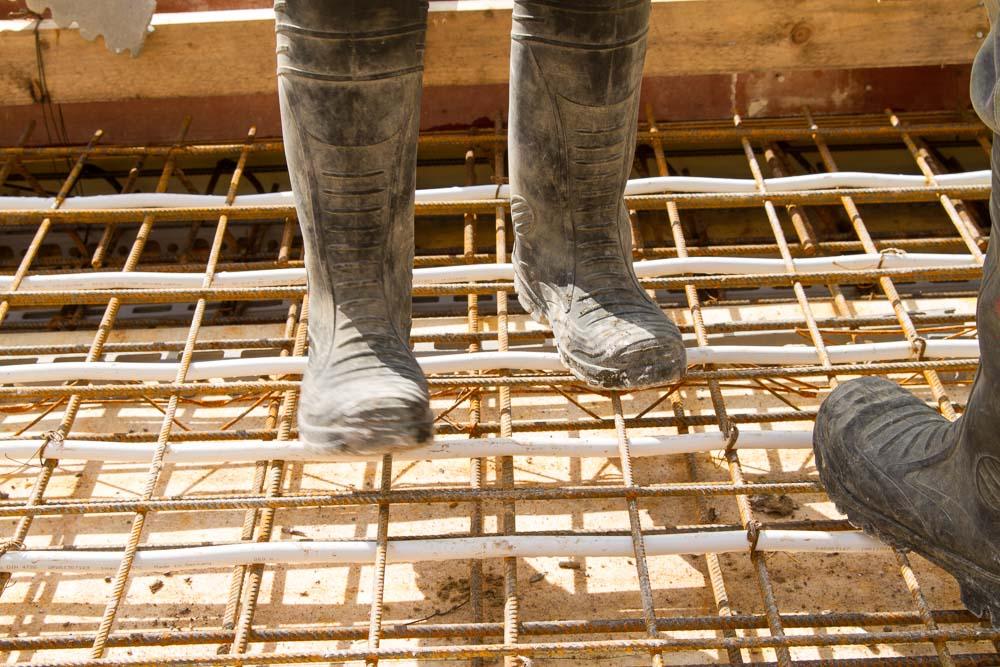
-
Hi I'm also building a mostly single storey grass roof into a hillside. You might find your building methodology provides a lot of the excavation for free that you would need for gshp and so be drawn to it. I found in the end that this wasn't a significant enough factor to sway it.
-
UFH pipe literally sandwiched between mesh...a problem?
mvincentd replied to mvincentd's topic in Underfloor Heating
-
UFH pipe literally sandwiched between mesh...a problem?
mvincentd replied to mvincentd's topic in Underfloor Heating
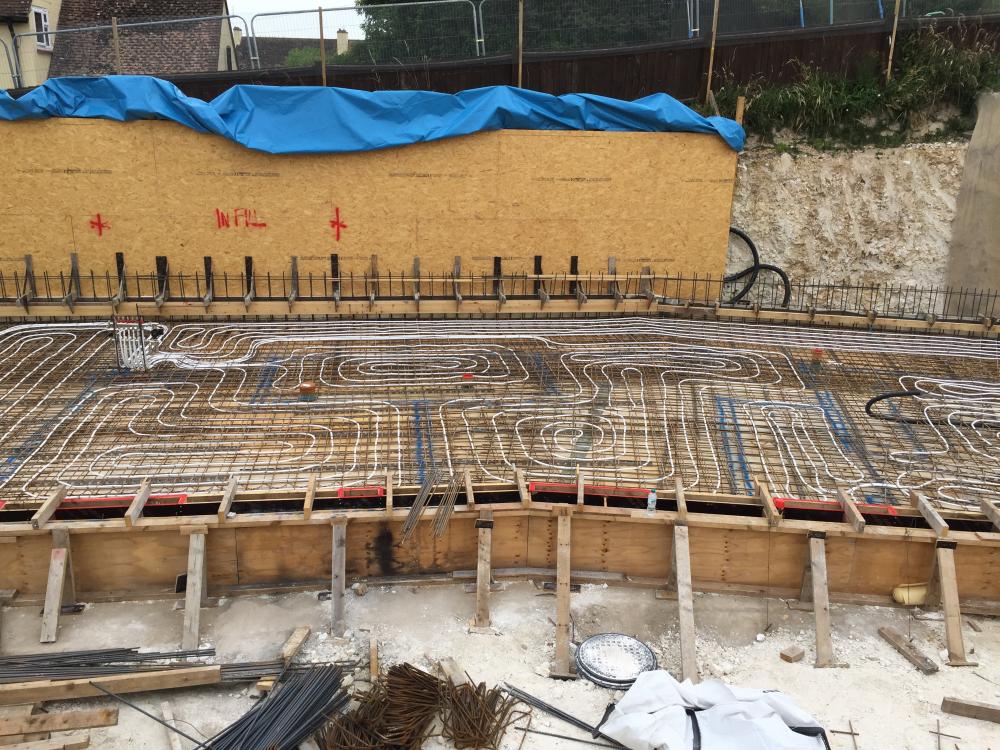
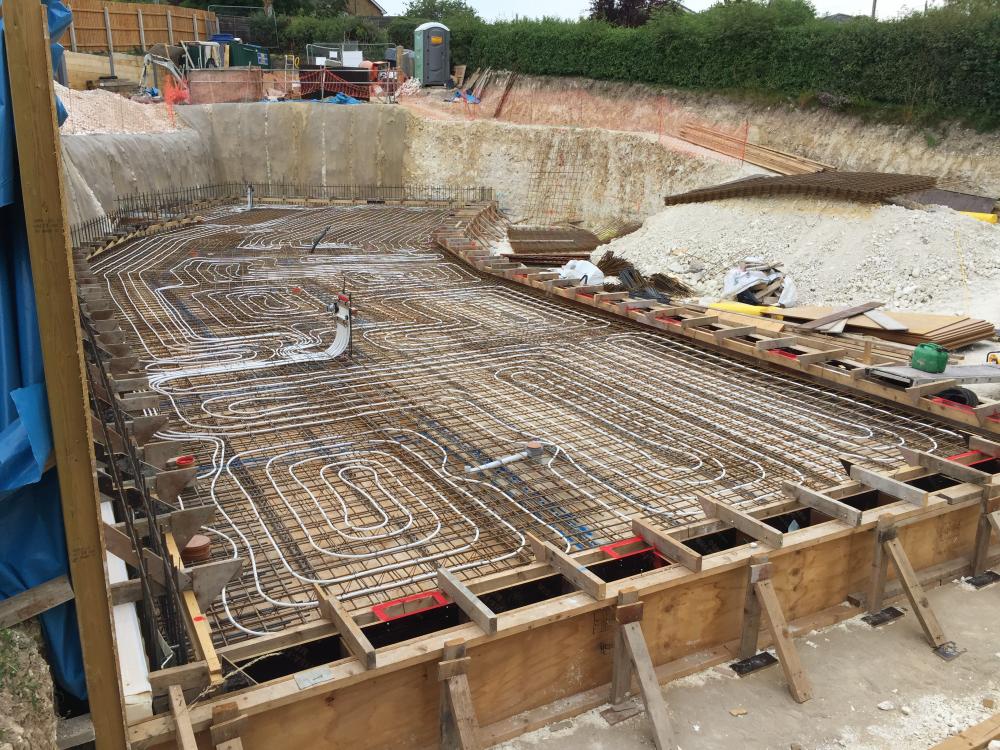
Ok, so I went with 16mm pex-al-pex on the assurance of the installer that it could handle the crushing risk of my mesh-pipe-mesh configuration. It was laid yesterday and pressurised with water to 4bar mid morning in the midrange of a hot day that got progressively hotter until approx 3pm. At one point I told the installer the first manifold was reading zero pressure, but when he checked we realised the needle had gone off the scale beyond 6 bar and around to hit the underside of the zero stop-bar on the gauge (It's a serious sun trap of a site) ! The other manifold had also climbed to over 6bar. This morning following a wet and much cooler night both manifolds were reading below 2bar and have (along with the weather) remained there through to this evening. Tomorrow is pour day. I want to add some pressure back but the ufh contractor is reluctant even though tomorrows forecast is cool. So far as the mesh sandwich is concerned i've a feeling it's almost a good thing - the greatest vulnerability so far has been where a foot can land on pipe that spans a 200mm square void in mesh as per photo here. The top mesh significantly reduces these instances and does also seem to distribute the weight of foot traffic fairly effectively. That said we are treading as carefully as viable. At this stage i'd say pex-al-pex is probably ok tied to mesh that sits directly on insulation but (to my surprise) I'm so glad I didn't ditch the anti crack and leave it tied to suspended mesh...if this were anyones scenario i'd say ensure every inch of the pipe follows directly along the line of mesh bar (including the loop turns....so impossible I think). So it's a tense day tomorrow but if we get through it the fun really starts; The pic showing the wall of osb....thats single sided shuttering along there which will require around 24 push-pulls to support it in that walls pour which will exert around 20 tons of pressure. All the push pulls will have a minimum of two thunderbolts 150mm into the slab. So we're drilling circa 50 holes betwixt the pipe maze!!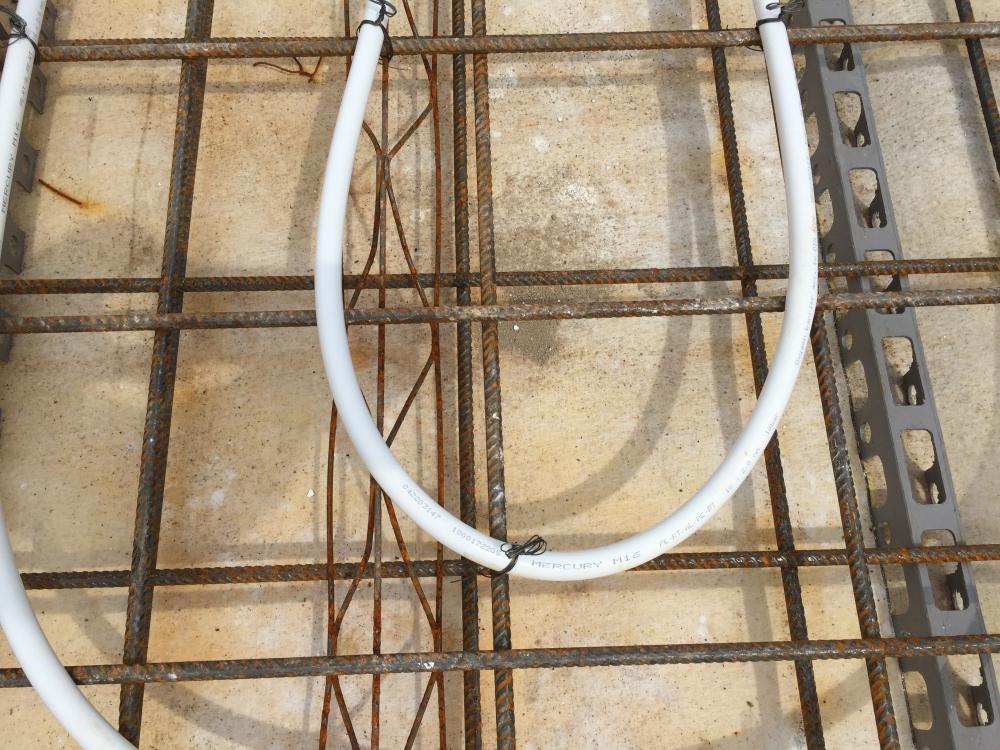
-
UFH pipe literally sandwiched between mesh...a problem?
mvincentd replied to mvincentd's topic in Underfloor Heating
There is no planned induced cracking and no control joints or sawcuts. It's not like a screed bounded by fixed wall structures, which is where I believe these things tend to be more relevant. I'm told that some cracking is almost guaranteed and the power floated surface will serve to make even a 1/3mm crack visible, but the cracks could easily get up to 2mm thickness....the mesh is merely to limit any cracks spread in a great long fissure. Final conclusion on this has been to stick with the anti crack mesh as the ufh contractors have satisfied themselves that the pipe will hold up to the in-construction scenario ok. I'll report back after the mesh-pipe-mesh sandwich has been danced on by the concrete gang. Meanwhile thanks all. -
UFH pipe literally sandwiched between mesh...a problem?
mvincentd replied to mvincentd's topic in Underfloor Heating
Yes @JSHarris , that makes a lot of sense. Equally @Temp I did cut and paste into my notes a while back this counter-argument (I think might actually be @Nickfromwales comment originally); Ok - the only way to damage a pipe in this way is to cause the damage during installation - PEX is good to 10 bar, UFH is 1-2 at most and to get PEX to expand more than 0.5mm needs around 4 bar. Pumps are circulation pumps not pressure pumps so there is no way for a pulse to be created unless there is a fast actuating manifold valve and even then, that would be a sub second pulse only when it closes. I think in my situation the green layout creates so many more chances for the full weight of a worker to end up effectively tight-rope walking on the pipe (as the mesh will be more open now i'm scrapping the anti-crack layer. Thanks -
UFH pipe literally sandwiched between mesh...a problem?
mvincentd replied to mvincentd's topic in Underfloor Heating
Further research is now making me think the fact i'll not be firing up the ufh for probably a year after the slab is poured, that anti crack really isn't necessary. Thank you. -
UFH pipe literally sandwiched between mesh...a problem?
mvincentd replied to mvincentd's topic in Underfloor Heating
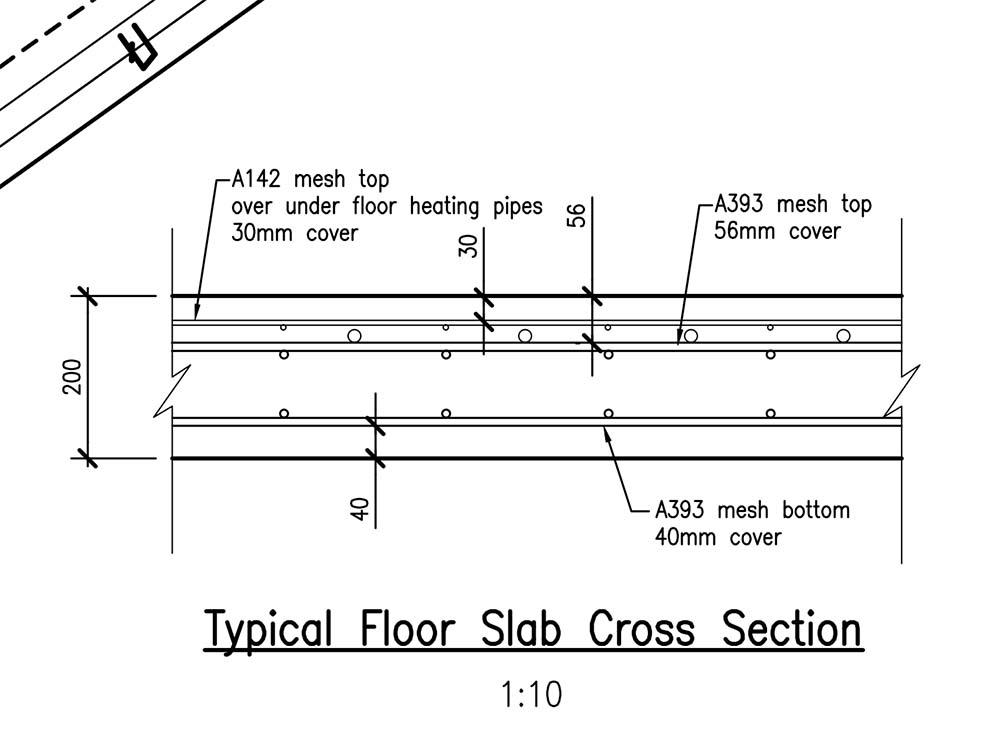
I'm encouraged to pursue the theory of doing away with the anti crack mesh so thanks for the comments. I too was, and continue to be, shocked by the engineering on the slab (and house in general) but the RC guys say it doesn't look out of the ordinary for the scenario (see pic)...the house recedes fully underground so the slab is supporting and tied into 2.7m high retaining walls....hence it has similarly wide edge thickening to 300mm with 3 layers of a393. How well the ufh will work in such a volume of concrete remains to be seen but my mind is more on summer cooling anyway...the plot is essentially a chalk pit hell hole in the hot weather.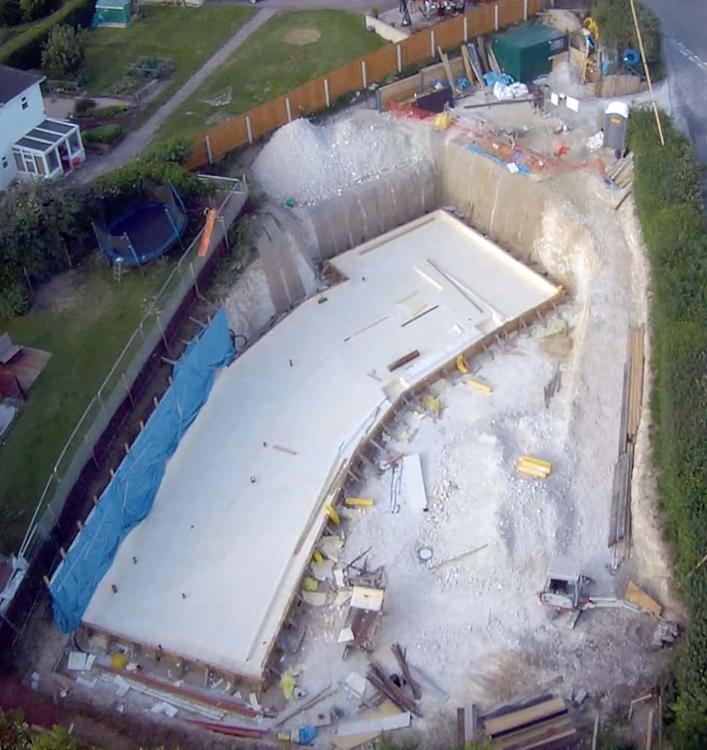
-
UFH pipe literally sandwiched between mesh...a problem?
mvincentd replied to mvincentd's topic in Underfloor Heating
The concrete contractor, SE and the ufh people are all ok with the cover of 30mm. I originally proposed fixing to bottom a393 temporarily then lifting to underside of top a393 but reinforced concrete contractor felt it would be a practical nightmare to achieve....it's an absolute maze, as per attached photo (the a393 is double layered in places and lapped to close the grids from 200 to 100mm)...the top layer is now fixed so I can't take that approach anyway. Spacers such as 20mm rebar alongside the pipe to give 4mm seems a decent idea yes, except for that flex.....i can't realistically follow all 950 metres of pipe but doing some maybe is viable. This was our first thought but with so much bar in there already i'm wondering where the concrete fits...I hoped to gain enough confidence in the ufh pipe strength to render this unnecessary. Binning the anti crack is a risk in the view of the RC contractor as its an exposed power floated aesthetic so i don't want to have any cracks of significance on show. I don't think fibres in the mix is acceptable to the Sikaproof-A waterproof membrane which mechanically bonds to the concrete. It's reassuring to hear though from @JSHarris that perhaps people are over-stating the crack risk. Thank you.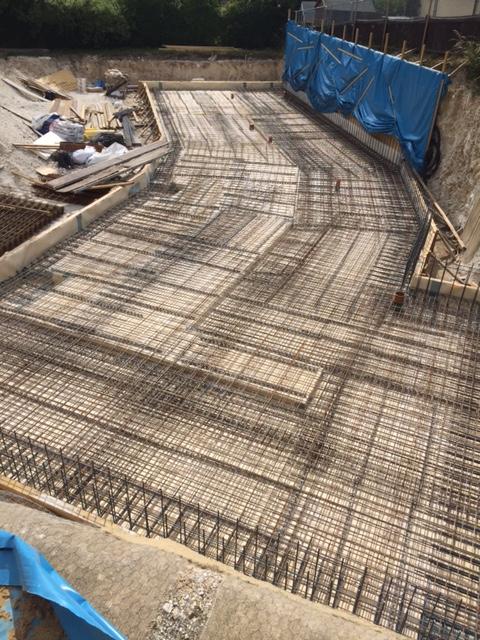
-
So for better or worse i've ended up with a scenario where my ufh pipe must zip tie to the top mat of a393 mesh but then have a142 mesh as anti-crack sit directly on top of the pipe. My concern is that during the concrete pour a workmans welly on the a142 (6mm) mesh becomes somewhat more of a point load on the pipe.....certainly on a test piece not under any water pressure it leaves a dimple depression. One supplier isn't concerned for the robustness of their pert-al-pert pipe during the pour and its inevitable foot traffic (but is concerned about expansion/contraction having a wearing effect on pipe against mesh over time....i've seen enough counter-argument to that to not be concerned). Nuheat feel a pipe without the metal content such as PE-Xc would suffer less 'dimples'. Wunda feel their hdpe-al-pex would be a better solution than their standard pert-al-pert pipe but aren't saying with certainly that its adequate. Does anyone have any real-life experience of this mesh-pipe-mesh sandwich situation? Many thanks
-
Isolohr use Styrodur xps. My supply and fit price from them was double their supply only price...which was (almost) double what i've ended up paying for my chosen alternative, Hexatherm Xfloor from Cellecta. I did go to insulationforless to price Styrodur but they directed me to Fibran xps as a cheaper equivalent anyway.....that was the cheapest xps I found.
-
Well during my risk assessment of using icf in a basement I spoke with various people who collectively left me with sufficiently diminished confidence in it that I moved to RC. That's all about my personal risk threshold...yours might differ. I suggest you speak with engineers, surveyors, builders and particularly waterproofing experts.
-
I was absolutely determined to use icf, insisted the SE calcs and drawings were done based on Nudura, and went on the Nudura 1 day course. To cut a long story short I tried my best to resist every argument against it and wasted a lot of time as a result, but in the end could not ignore the risk it represents when used in a basement scenario. Talk to surveyors that do lots of remedial work on basements. Also if you want a guarantee thats worth having from a waterproofing system expect to pay plenty......ask for a quote for icf versus maybe in-situ RC and spot the difference! If you're using every inch of your plot how will you safely put a man between your excavation and the icf to apply an external waterproofing system. Your ground type will likely steer the best system for you. Above ground i'd use icf happily.
-
CIL Charges
mvincentd replied to Vel810's topic in Self Build VAT, Community Infrastructure Levy (CIL), S106 & Tax
So I phrased the question to my planners as follows; "There is no mention of CIL levy on the permission. As a self-build for my own occupation I believe I would be exempt anyway from CIL, however I also believe that exemption requires an application to be made on the attached form before I commence the build.Where i’m confused is that it seems i’d be applying for exemption from zero levy, so perhaps this step isn’t required of me?Could you clarify please." They answered as follows; "There would be no CIL requirement for this proposal. You need take no further action." -
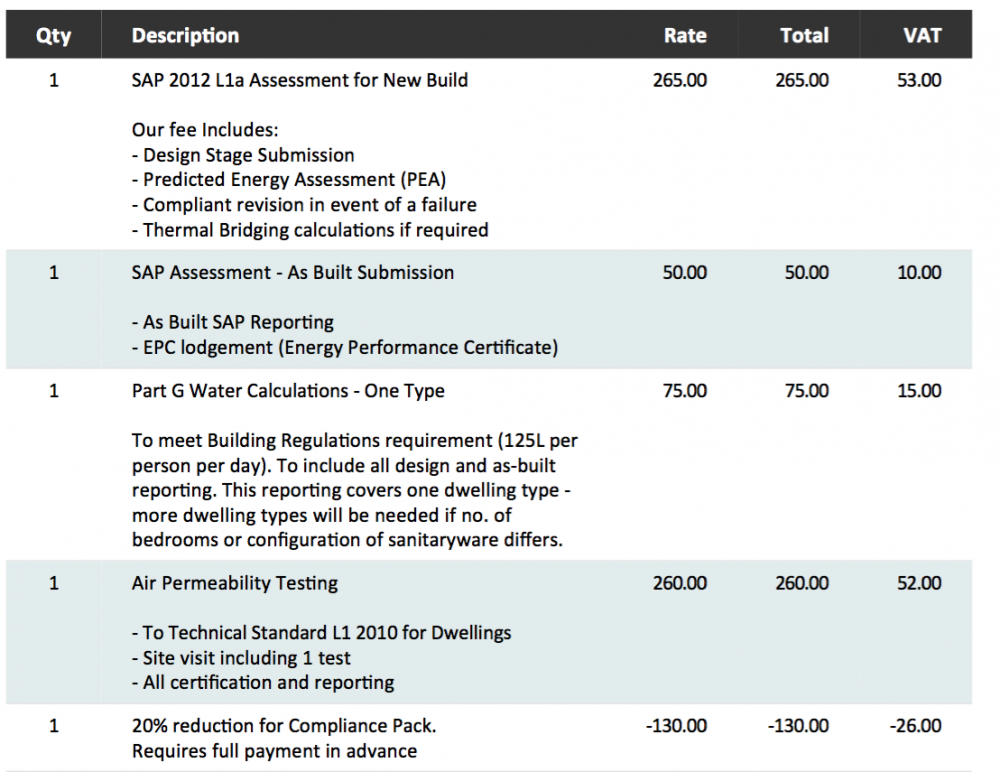
my quote 1 month ago;
-
That's what the forms were entitled that I used....1st submission took 24 hours to discharge, 2nd submission took a month and some back and forth dialogue.
-
Thank you, that's generous. It's difficult to only write a little on this messy and far from clear cut subject without further muddying the waters....and even more difficult not to end up challenging what appears to be some very determined viewpoints based on messed up thinking....so good luck. Rather than 're-presenting the content of this thread' might it be better and easier to draw a line under it and just revisit the core question afresh - as a self-builder what do I do about CDM and the PD, PC roles? (I'm no expert and can offer nothing with authority. My own experience is inconclusive as I had to argue with and ultimately bypass 2 H&S professionals before finding one that was willing to interpret CDM in what I felt was a pragmatic, consistent and rational way....so consulting experts also has its problems.)
-
I used Amanda at Certaservices in Bournemouth on 07773 817258. She's a former building surveyor and understands the application of the role, whereas pure H&S specialists who were not in construction struggled to interpret the CDM regulations.... and even argued that there was no way an inexperienced self builder like me could fulfil the PC role (but that's another story). It's apparently common an architect won't want the role of PD.....so you get an independent....someone who understands both construction design and h&s legislation....they sit in on main design meetings and are kept up to date on design development so that they can wade in with questions like "thats nice but how will you fit a workman in that space and keep him safe while he's building it?" The PD will produce a folder of pre-construction information that passes onto the PC so that h&s considerations first spotted during design are fed forward. If there are differences in what gets built to what was designed, the PC must ensure the folder is updated. So the PD pretty much hands over and quits once construction starts. If your house is already 'designed' and passed by planning, that won't negate the necessity for a PD.
-
I paid £525.00 for an independent to act as Principal Designer, including an initial site inspection and design meeting, prepare Pre-Construction Information and Health and Safety File at completion of the project. The same person also will give (for additional fee) assistance with the Construction Phase of the project, advise the Principal Contractor and help prepare the Construction Phase Health and Safety Plan. As I am being the main contractor and in reality have no credible prior construction experience I have taken the option of their preparing the Construction Phase Plan...add a £395 fee. Their involvement has heightened my awareness that I still won't be in compliance without passing EFAW (emergency first aid at work) and SMSTS (site managers safety training).....so allow 6 days of your time and about £750 for that lot. If you use a great little local builder with 50 years experience of doing it right but not knowing how to leave a paper trail, you might have to also ask this independent to help him produce method statements and risk assessments too.
-
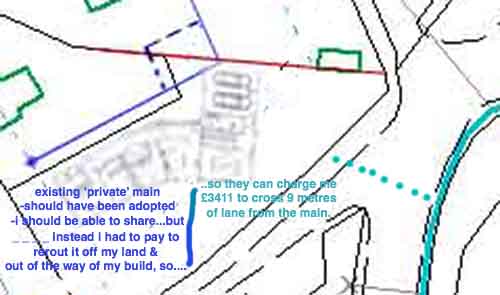
Does seem hard to second guess the water co's....the maps can be woefully inaccurate, the precise ownership status of the pipe can be 'unclear', the size/material/age of the pipe can be unknown....along with the ability of the pipe to supply an additional dwelling without an all-round negative effect on water pressure. I didn't disagree with the strategic conclusions they reached for me in the end, but I don't like the price of the connection.
-
I'm finding Velfac and idealcombi to be at the cheaper end of my quotes, around 20% below my highest quote so far which for 33sqm is £420/sqm +fit (£90sqm) + vat.
-
What constitutes start of development?
mvincentd replied to hmpmarketing's topic in Planning Permission
12.Before any other operations are commenced the visibility splay areas as shown on Drawing Number 03A shall be cleared/excavated to a level not exceeding 0.6 metres above the relative level of the adjacent carriageway. The splay areas shall thereafter be maintained and kept free from all obstructions. Thanks for telling me, I was about to misinterpret how my LPA actually answered -"You can discharge the highway conditions now before any others". (I thought it was a highway condition as it's full wording includes; "Reason: In the interests of highway safety....") . Aren't I a Klutz, just like you pointed out Sensus in your post prior to edit. -
What constitutes start of development?
mvincentd replied to hmpmarketing's topic in Planning Permission
...maybe obvious reading that advisory in isolation but if I take any one of several conditions that begin with the words "Before any works commence on site...." and assume the same explicit intention of the english used then a single condition can act as a unilateral brake on commencement. So I can't do 12 before 3 is discharged (below); 12.Before any other operations are commenced the visibility splay areas as shown on Drawing Number 03A shall be cleared/excavated to a level not exceeding 0.6 metres above the relative level of the adjacent carriageway. The splay areas shall thereafter be maintained and kept free from all obstructions. 3.Before any works commence on site precise details of all new tree, shrub and hedge planting (including positions and/or density, species and planting size) shall be submitted to the Local Planning Authority. Any such details shall require approval to be obtained in writing from the Local Planning Authority.



