

.jpg.c21f3ac78c9b7efd90cbdcb312744dc5.jpg)
jack
-
Posts
7460 -
Joined
-
Last visited
-
Days Won
41
Everything posted by jack
-
.jpg.c21f3ac78c9b7efd90cbdcb312744dc5.thumb.jpg.7adcad4c0e384f5ecd7d56b0618df6e5.jpg)
Appliances: brand new or brand name?
jack replied to Crofter's topic in Kitchen & Household Appliances
They're lovely. My wife wanted me to buy one of the full size commercial Elektras, but I really don't need a large hot pressure vessel of that size in my house! -
The only assumptions that went into ours were a couple of junctions where worst case, rather than actual, values were used. I doubt it made much difference to the final number. The assessor did say that we had the highest EPC he'd ever calculated, which was nice. I got the feeling he does a lot of stuff for developers though, so perhaps that result isn't so surprising! No idea - certainly not that I've ever heard of.
-
Appliances: brand new or brand name?
jack replied to Crofter's topic in Kitchen & Household Appliances
I spend most of my time in the cheap seats. Coffee is one of the few areas I'm willing to pay a bit more. -
If it's for an as-built SAP, that's a more than reasonable price. It's so low that I'd be making sure everything will be done properly. For example, what happens if you don't reach the required numbers on the first run through? Is there a surcharge for each round of recalculation? I paid quite a bit more to get ours done, because we had a lot of "odd" (according to most SAP assessors!) features on our house (PV, waste water heat recovery, triple glazing, unusual twin-stud construction technique, etc). I'm sure I could have had it cheaper, but they'd have cut corners and made a lot of assumptions. Having spent a lot of time and effort trying to reduce the amount of energy we used, I wanted to get a SAP assessment that took all of that into account and gave us a nice high number!
-
No, but I'm also not an autocannibalist.
-
So this is interesting. I gave the product one star, and provided a detailed basis for my score along the lines of what I wrote above. I've just received an email from John Lewis with the following: "Thank you for your recent product review. Your feedback is very important to us, but we're sorry that we had to reject your review on this occasion and won't be posting it on johnlewis.com. We do take safety issues very seriously, and our Customer Services team will be in touch with you on this matter if you haven't already contacted us by other means.Thank you for taking the time to write a review, Customer Reviews teamJohn Lewis" John Lewis is the last company I'd expect to reject (ie, censor) negative reviews!
-
Ours is inside - the main supply comes up through the slab in our plant room. Our DNO (SSE) moved it there without question. If they admit that they're "reluctant", then they admit that they'll do it. If they could stop you, you can be sure they'd say so!
-
Zero rated VAT
jack replied to Vijay's topic in Self Build VAT, Community Infrastructure Levy (CIL), S106 & Tax
As long as what is supplied is properly expressed on the invoice, I suspect it doesn't matter. What you don't want in either case is an item saying "hire of concrete pump". We were advised (far too late, unfortunately) that a telehandler and operator for our window installation should have been zero-rated. -
Appliances: brand new or brand name?
jack replied to Crofter's topic in Kitchen & Household Appliances
I actually started writing something the weekend before last about coffee, but we were away on the Isle of Wight, and reception was spotty so I gave up. I use an Aeropress most days at home. Amazing bit of kit, but a bit of a learning curve for people unfamiliar with them. I think a decent cafetiere is very worthwhile though. My wife laughed at me when we unpacked the car on the Isle of Wight last weekend and I pulled this out of the boot: As usual, lots of laughing at me about the efforts I make to ensure we have decent coffee when we travel, but no shame about accepting the resultant lattes! (Just to be clear, I only brought the La Pavoni to steam milk. I did the coffee in the Aeropress.)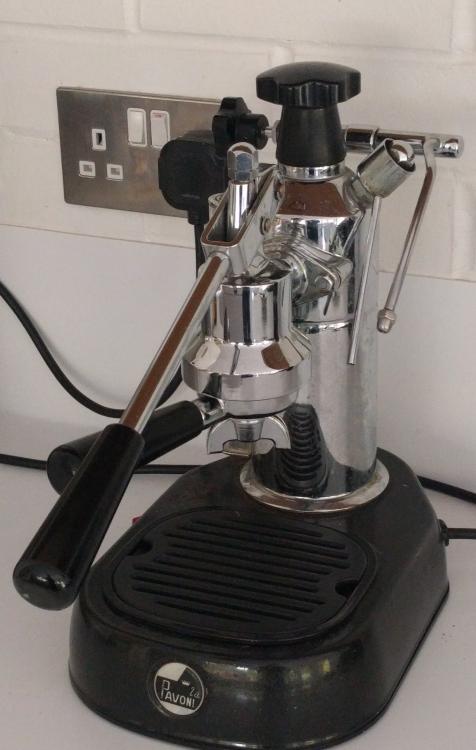
-
Zero rated VAT
jack replied to Vijay's topic in Self Build VAT, Community Infrastructure Levy (CIL), S106 & Tax
The issue here, as I understand it, is that having the pumping company supply may not work. The question is therefore whether it's possible to have the pump supplied separately and still zero rate it. @Vijay, is there any reason the concrete company can't just hire the pump themselves (using the pump people you've spoken to) and roll up the cost into their invoice? -
On pots and pans for induction, we bought this set from John Lewis just over a year ago. I've just written a review (which may not appear for a bit apparently) on the JL website, but short version is that the exposed aluminium along the top edge of all the saucepans appears to have eroded, possibly due to the dishwasher. The result is a pair of thin stainless steel edges sticking up. The inner one is very thin, so is very sharp - so sharp that it cleanly sliced off a layer of skin the other night while I was wiping it out! It's out of stock online at the moment, but I'd caution against buying this set in-store or if it becomes available online again.
-
Zero rated VAT
jack replied to Vijay's topic in Self Build VAT, Community Infrastructure Levy (CIL), S106 & Tax
Is the way around this to characterise the situation on the invoice as paying a company to pump concrete? You then aren't hiring anything - they are using their own plant to perform a building service as contracted. -
Did you see this thread: Your problem might be something similar. We have the same problem with some corn bulbs (a term I hadn't seen before!) in our hallway, which I hope, one day, to get around to looking at.
-
I agree with @Ferdinand Even informally approaching the tree officer in my local council would likely result in immediate protection orders being placed on whatever you're enquiring about! They slapped TPOs on all the trees in my front garden when another potential buyer enquired about the tree situation before we bought the house. We later learned that none of the trees is of sufficient quality for a TPO to be appropriate. As it happened, we didn't need (or indeed want) to take them down, but if we had, and there hadn't been TPOs in place, talking to the tree guy at the council could well have started a long and potentially costly battle. Also, if you get a decent local tree dude/dudette, they'll have experience with the council and know how best to approach what you want to do. The guy we ended up using when we needed to trim a tree with a TPO on it was excellent.
-
It's possible.
-
I've been to many car shows and never bought a new car, so I guess not. What am I doing wrong!?
-
I hate it when that happens!
-
If you're already having UFH, perhaps just wire for a towel rail but don't install it unless you find you need it?
-
Help please balancing specification with budget
jack replied to JohnW's topic in General Construction Issues
But why are your windows opened frequently? If it's because the house is stuffy, then with MVHR you likely won't have that concern, because the air is always fresh even when the heating's on. The only time I ever open windows is at the end of the day after a long hot spell, to let cool air through the bedrooms for a couple of hours before we go to bed. I can't imagine any reason to open the windows in winter - the air is fresh and at a comfortable temperature, so the windows can just stay closed and do their job. Even if you do periodically open windows, the MVHR doesn't care. You lose some efficiency due to the lack of heat recovery, but it isn't the end of the world. We've been living in our new house for a bit over a year. It's the first place I've ever lived have MVHR and I now wouldn't be without it, simply from a comfort point of view. I'd have thought you could get a decent system supplied and installed by your main contractor for £3-5k, depending house size and the quality of the system you buy. I have no idea where the £10k figure comes from - even with a top end unit from someone like Paul, I can't see how you could spend that much. -
Help please balancing specification with budget
jack replied to JohnW's topic in General Construction Issues
You're welcome! -
Building Merchant Self-Builder Accounts
jack replied to Ferdinand's topic in General Self Build & DIY Discussion
Methinks the lady doth protest too much. -
Building Merchant Self-Builder Accounts
jack replied to Ferdinand's topic in General Self Build & DIY Discussion
It could well have been a brick. Nothing would surprise me with @Ferdinand -
Building Merchant Self-Builder Accounts
jack replied to Ferdinand's topic in General Self Build & DIY Discussion
We had one two mins walk from the house we were renting when building, so it would have been really convenient for them to be competitive. Unfortunately, they were often twice the price we were getting at TP and Jewsons, even for cash. I just assumed self builders weren't a market they were interested in. -
Tilt and turn inward opening windows - how to dress them?!
jack replied to readiescards's topic in Windows & Glazing
We're going for this option in our bedroom, now that the ceilings are being re-done anyway following our leak. I HATE pelmets with a passion. -
Tilt and turn inward opening windows - how to dress them?!
jack replied to readiescards's topic in Windows & Glazing
Yes! Especially if you intend, as we did, to have a sleek modern look to your rooms. We made the mistake of believing that our external venetian blinds would avoid the need for other window coverings. We were wrong. They let light through the holes in the slats (for the control/support tapes) and side gaps, which means the rooms aren't properly dark in the evenings or mornings during the summer months. Had we known about this, we'd have left more space in the recess above each window to allow for recessed window coverings. At the moment, we're trying to choose whether to attach window coverings to the windows themselves or go for coverings that cover the entire window and reveal. The former approach brings all sorts of complications with added weight and clutter. With the latter approach, we can either mount something like roman blinds to the wall above the reveal, or run ceiling mounted tracks for curtains. We aren't big fans of curtains, so roman blinds are currently the lead choice.
.jpg.c21f3ac78c9b7efd90cbdcb312744dc5.thumb.jpg.7adcad4c0e384f5ecd7d56b0618df6e5.jpg)

