


Adam2
-
Posts
793 -
Joined
-
Last visited
-
Days Won
1
Everything posted by Adam2
-
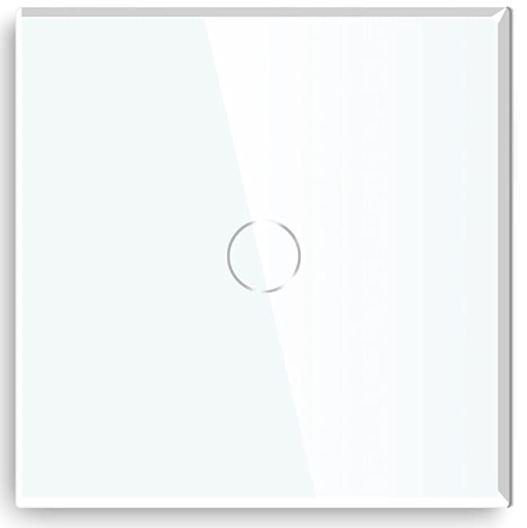
Planning to use a z-wave based HA solution (Hubitat) for lighting etc and looking at lighting switches. Switches can be quite simple as they won't be dimming - just triggering the z-wave module to run a scene (most places the zwave module will drive the lighting circuit) . Idea being that we'll have in some rooms a lot of circuits so pressing the right side button on a switch will activate a scene. BUT we want to have switches for all circuits in case of some HA meltdown and accept in the meltdown scenario that the switch operation will be basic circuit control. So, the question is what switches! We've bought a bunch of different white or grey glass touch switches like image below. They look fine and will do the job bit the issue is they change colour to show their state which is a problem as the circuit state will change without pressing the switch so the colour will end up being random! So what we'd like I think is a simple version of this style switch that just has a constant colour/intensity -have looked and looked but can't see any - welcome suggestions if anyone has already got one of these or has other thoughts. Switch link
-
I have the UFH, screed and manifolds all in so now looking at control. Will be using an inverter driven ASHP in a well insulated new build with low ventilation losses + couple of MVHR units. Hoping for roughly a consistent temp across all of the house but with solar gain, heat from people and animals there will of course be some variation. The temp control units/local zone programmers from wunda I plan to install in a cupboard as aiming for not needing to use them very often and want to minimise wall devices where posisble. For in room temp sensors I was going to use the Wunda supplied floor probes installed into small boxes near a plug socket for each zone - something like this from Heatmiser - just a simple plastic box with holes in. Does that seem reasonable? The Wunda programmer has the option for using the inbuilt temp sensor or an external (or both). Do I just use any wire I like (similar gauge) to extend the 3m floor probe cable length? I'll be using a buffer + UVC so was thinking if I want to use cooling I could set temps to higher say 30 degrees so would always call for "heat" during the programmed "on time" but switch the ASHP to cooling mode so when there is a call for heat it produces cold water ~15 degrees. Will this kind of approach work or should I do something more elaborate? I figure that we'd only need cooling when we're in July or Aug (no chance of needing heating - will have electric UFH mats in bathrooms) so it would just be twice a year that we need to visit the programmers to change the temp and maybe the "on-time".
-
Thanks - I did see some impossibly small writing in the corners! Will take a camera and a piece of paper so hopefully can get a clear image of that
-
We have a lot of glazing! Half of it was specified to be Pilkington Suncool opti-white 66/33 or equivalent with self-cleaning. The glazing co of course says that is what we have provided by Guardian Glass. Any ideas on how I would go about ensuring this is 100% the case? The shading effect was v important and I'd like the warm glow of reassurance ? Is there a practical way to check? I did ask for confirmation and got sent some specs from Guardian that were hastily produced in the last couple of days so clearly not something taken from my supplier/installer's order with them which was months ago.
-
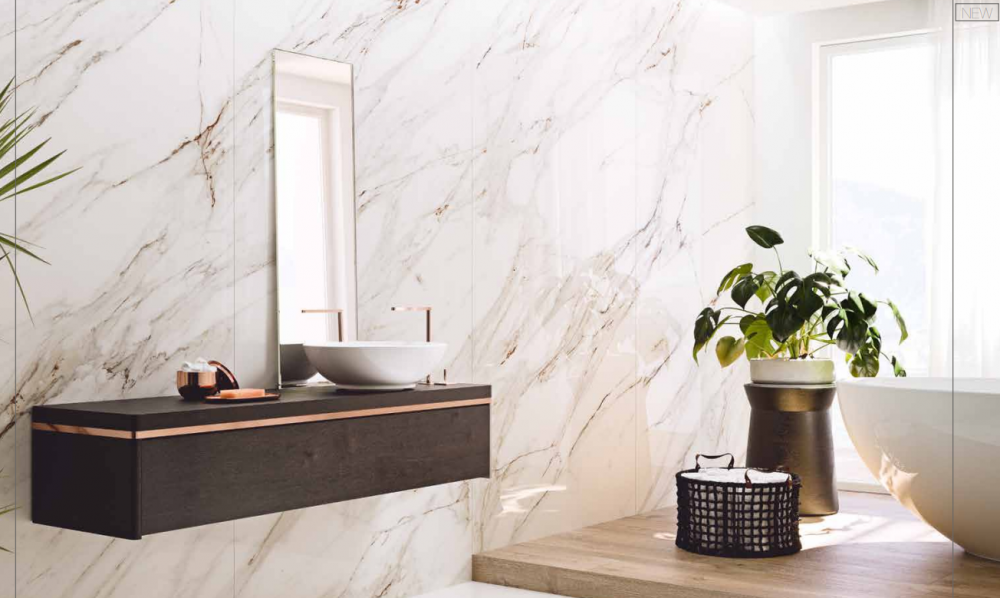
Quite interested in some of this, well maybe quite a lot for exterior feature cladding use and also interior - mainly shower walls. Providing the base is sound and flat you can use a 3.5mm thick tile up to 1m x 3m in size. It may well be a bit of a budget breaker but the look especially of the continuous design across multiple large format sheets is something we've seen and now will find it hard to walk away from. Any previous experience on here with this? They have some good Youtube videos showing installation etc. Will have a chat with my tiler see what he thinks but good to hear if any good/bad points from you all. Only looking at walls and fixing to MR board in showers or to 12mm cement board on the outside to ensure a very flat stable base.
-
Try CNM in Cheltenham
-
Looks like my buffer has no coil (Cool Energy Inverter model 18) so I won't have that specific issue but plenty more things can go awry ? Glad all is working as you want it to now - electric start next week and hopefully ASHP install just after!
-
Thanks for sharing, about to install ASHP/Buffer/UVC myself so reading all I can. I'm curious about weather compensation and using a buffer for UFH as I'd expect the buffer to just call for heat and you'd want that as fast as possible with a good COP. So does the weather comp assume that the rate of heat loss in the house will be higher with lower outside temp and work itself harder to heat he buffer tank faster anticipating this higher overall demand? I think I kind of answered my own question ? maybe incorrectly. In this case then time spent tuning the relationship and factoring in wind (if in an exposed area) could pay dividends
-

DIY balancing of MVHR
Adam2 replied to Olly P's topic in Mechanical Ventilation with Heat Recovery (MVHR)
Hi Olly lots have done this, do a search and there is plenty of info including a handy spreadsheet to help you out with building control. Can also borrow the forum gadget to help with balancing. Sorry on my mobile so not easy to search and paste links but you'll find the info easy enough- 1 reply
-
- 2
-

-

-
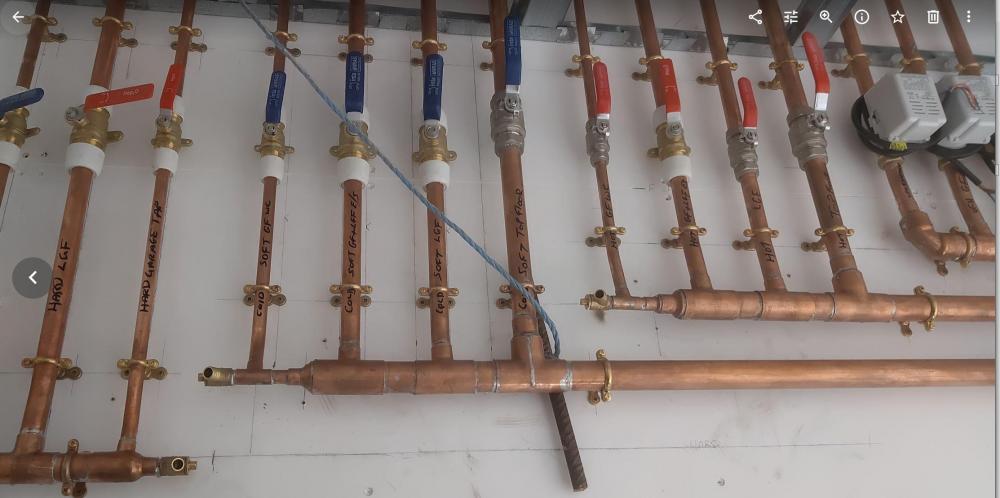
From the street meter it's about 25m to the plant room - gentle curve in the pipe downhill where we end up with 3bar static pressure Good idea now to do the flow rate test and I guess we could easily enough do a dynamic pressure test as well - plumber is back in tomorrow. I saw on the GreatWater website that they claim 31 l/min at 1bar on the 1400 model and 45l/min at 1 bar on the 2300 model - see what pricing is like for them, looks like electric operated so can get recharge outside of normal shower times. @jack thanks for that - yes that sucks. As we have 3 bar and the softener we're looking at (probably like others) is OK with 5bar incoming I'll see what the plumber says- either no PRV or just a 3bar one after the softener. Actually having said that we have our hard water supplies of course before that so may be useful to have a PRV on the incoming or on the hard water manifold. The plumber enjoyed making my manifolds - he didn't like my Hep2O idea in the plant room and wanted it to look sharper - above ceiling level copper transitions to plastic so we can have nice ceiling cut-outs around the straight pipes.
-
Yes we've tried to keep that all as big as reasonably possible hence not wanting to potentially undermine those efforts with the softener. From meter it's 35mm into plant room then 28 then 22 for most distribution of any importance with 28 going to top floor (furthest away from plant room) before getting smaller. UVC with 28 fittings.
-
Which if is the only benefit of a twin tank I guess a small amount of hard water isn't such a big deal if it means it's a lot cheaper to get single
-
Ha ha ha - they are so expensive ? but I like the thinking. I'd be happy just having real stats eg 3 bar at 30l/sec will deliver 3 bar at 28l/sec - it's not so hard is is ( well aside from the water of course ? )
-
Cheers will do
-
VAT on blinds
Adam2 replied to Olly P's topic in Self Build VAT, Community Infrastructure Levy (CIL), S106 & Tax
Interesting, will have to get blinds and add motors later! -
Seems hard to get real info on this topic so asking you enlightened people ? Manufacturers eg BWT quote things like max flow rate but don't say what the input flow rate needs to be to achieve that meaning you can't easily compare the options. Is there likely to be much difference across Harvey / BWT / Kinetico in terms of their impact on flow rates? Should I just go for one with min 22mm connections. Or, would a single vs double chamber one have an impact on flow rates? I'd like to maximise the flow rate from my mains supply so looking at softeners with larger connections eg BWT WS555 model with 22mm connections that seems quite good value and is stated as suitable for 4+ bathrooms. Only £645 which seems pretty good but flow rate says up to 22.7l/min vs others stating up to 57/80l/min such as Kinetico Maxi and Harvey XL1
-
We have a regular supply here already from the original house so will stick with that. We have duct in place if we needed to replace so should be ok
-
Thanks Dave, it's the Coolenergy 8-18kW Inverter model. So not 22kW. I understand the diversity aspect just wasn't sure if necessary to prepare for a worst case scenario. Will leave things as they are for now then. Cheers
-
Currently have single phase 100a supply but planning on ASHP 32a fuse Ev charger 32a fuse Induction hob 33a fuse I guess as potential load will be high Dual immersions in UVC + 1 in buffer Plus the usual 4 bed house lighting HA, pumped foul water. This looks quite a lot for 100a even if the chance of exceeding that current is low should I be discussing an extra phase maybe for ev charger + plant room (UVC and buffer and pumps)?
-
Many thanks - I had hunted around but not seen this, looks really perfect for our needs
-
I'm looking for 2 back doors, not very visible so not that bothered about looks (1 will be back of garage and 1 near the utility at side of house). Perfect would be a ready made aluminium triple glazed door that is glazed clear or obscure in top half and solid bottom half ideally in anthracite (RAL7016). standard ish external door size - we can flex the aperture at this stage. An alternative could be something composite like this from Screwfix but not sure how great they will be in terms of air tightness. Not a disaster at 1.3 U and it's a small area of underperfomance so not an insulation disaster. Cost is of course attractive - anyone see/used these? Would like to get off the shelf vs design/order but will go that route if we have to.
-
Thanks @Nickfromwales for the detailed reply re the use/position of blending valves
-
What one did you go with? Also looking at that for back wall of a wine room - should look great backlit. Also thinking about it for outside but apparently have to coat it and periodically re-coat it so not sure can be bothered (+ issues re accessibility )to do that vs tiling and leaving it alone
-
Just did ours, maybe we were lucky but no issue with liquid screed (Longfloor) over insulation without fixings. As mentioned above, we also used dry sand to fill any voids beneath insulation - laid on concrete planks so plenty of undulations at joints and of course a bit cambered. Taped across all insulation sheet joints and a thin membrane as per normal process. @Thorfun that price looks v similar to mine per m2 - mine wasn't the cheapest I could find but was recommended and only ~5% more than cheapest so happy to pay a bit more for a bit of reassurance
-
OK @Nickfromwales thanks for clarifying that then. So given that there is generally no need to adjust flow temp per floor what is the benefit in having a blending valve to recirculate the return directly at the manifold? If I just take all returns back into the buffer and install one blending valve at the buffer I'll be pushing the same temp to all manifolds. I appreciate some small heat losses in the returns going back to the manifold but if well insulated that should have be minimal. For clarity - still keeping the pump at each manifold and possibly one at buffer if also beneficial as UFH on top floor is 2 floors above the buffer tank position.

