Bitpipe
-
Posts
4118 -
Joined
-
Last visited
-
Days Won
53
Everything posted by Bitpipe
-
If you're doing a new build then you will need to have done a SAP calculation to satisfy building control that you'll meet the minimum standard. You can do this once you have decided the fabric and design of your floor, walls, roof and windows, plus your heating system. This is where you can see how improvements to the fabric impact on heating requirements etc. and figure out whether its a good investment or not. As Declan says, a standard raft is reinforced concrete, with additional strengthening where there are load bearing points, usually cast onto a compacted layer of type 1 with a membrane on top. Normal shuttering methods used to cast it. It is a cold slab, directly connected to the ground below so any heating upon it (UFH) needs to be thermally disconnected from it by means of insulation, usually 100-150 XPS. The UFH pipes are clipped to this insulation and a screed is poured on- top of that. When the UFH comes on, only the screed layer heats up which means response times are quicker but you tend to need to run the system hotter and the insulation under the screed is isolated from that in the walls, so less thermally efficient all round. However you can still get a decent standard. An insulated raft is built out of 200-300mm thick EPS formwork which acts as both insulation and shuttering. the UFH pipes are connected to the slab reinforcement steel (whether bar or mesh) and the concrete is taken up to near the finished floor level - sometimes power floated to give it a finished surface. This is a warm slab, completely insulated from the ground and with good design, the perimeter insulation can be tied into the wall cavity insulation to give a highly insulated envelope for the whole house which will greatly reduce energy requirements. The UFH is usually run at a low temp (usually 35o) as one big zone and the slab has a slow response time, but if very little heat is required then this is not an issue. if you're using an ASHP vs gas, this can nicely drive the slab heat requirement and some people here run it in a cooling mode in summer, keeping the slab just above dew point. Even when heating is not required, running the UFH pump can distribute heat away from areas that get direct sun and even out the temp. Downside of an insulated slab is the increased cost of the formwork and labour to place it properly, plus additional excavation. You save on avoiding the traditional screed sandwich though so needs thinking through.
-

MVHR - New build with basement
Bitpipe replied to mike77's topic in Mechanical Ventilation with Heat Recovery (MVHR)
Another basement owner here - 120m2, more or less square, with passive standard house on top - total of about 400m2. Suspended timber ground floor made it easy to fit the MVHR (and other services). We have one Vent Axia Sentinel kinetic High Flow unit (from BPC) in plant room in basement and it's more than enough for the whole house - 13 supply points and 7 double ducted extracts. I didn't put any extract in the basement as there are no damp services in there, so all supply only. We also have our MVHR to one side of the house so balancing the system was fun but managed to get there ok. Basement is a comfortable temp year round, has no heating but is very well insulated externally (sits on 300mm EPS, 200MM EPS to the walls) as it ties into the passive structure above. It has a few fridges and the kids TVs etc, was getting a bit warm yesterday with a few teenagers in there but usually fine. We also have a external door for fire regs which can be opened if more ventilation requires. Per previous comments, MVHR is not effective for active heating or cooling as the airflows are designed to be low, I only notice ours when boost is activated. As air is a poor carrier of heat, this would be insufficient to noticeably heat/cool a space but can act as a trim in a highly efficient dwelling. My suggestion is to make provision now for a split AC unit (i.e. ducting & power) when it's cheap and easy to do and then make a call later if you need to invest in the units. -
This is why you look after the clever technical bits of BuildHub and I do the occasional backup
-
A nice feature would be if the MVHR could detect smokey air on the intake and temporarily shut down (bit like the humidity sensor on the extract triggering the boost feature). I'm sure someone handy on here could suggest how you could re-purpose the detector on a smoke alarm to do this....
-
MVHR filters, especially F1 can certainly remove pollen, not sure if smoke particulate would be too small. But the external air is the external air, if it's smokey then it's coming into the house one way or the other. In a non MVHR house, what do you think happens when you run the bathroom or kitchen extractor for 20 mins? The fan will cause external air to enter the house via trickle vents and general building fabric, gaps around doors etc. smoke and all. Extraction fans usually only come on when you've just used the bathroom (15/30 min timer) or cooking in kitchen. He finds that a continuous low level of filtered air coming to every room has improved the air quality and reduced humidity, especially in bathrooms. He's aware that the efficiency, especially heat recovery, will be much lower than a new build but says that it makes a noticeable air quality difference - especially in winter.
-
I don't get this - you still need to ventilate your house - air needs to come in from outside irrespective of the means - smells and all. If one of my neighbours has a smokey bonfire, I turn off the MVHR for a few hours - same as I would have closed windows in the past. A friend has an 80's developer box and built a sizeable 2 story extension, added MVHR and says it has made an improvement to air quality and humidity (bathrooms & showers) but appreciates that the heat recovery element is probably not doing anything due to poor airtightness on the original fabric. This is a sensible approach - however you'll still need external vents for your kitchen and bathroom mechanical extraction to meet Regs so you can't completely eliminate them. I've also seen MVHR vents built into the roof so pretty much invisible. My system cost about £3800 all together (ExVAT) and I self installed - probably larger than most due to basement, 20 ceiling valves in total and 350m of internal duct. So not cheap but I do not see how I would have efficiently and effectively ventilated our house by traditional means without.
-
The problem there was your neighbour, not your MVHR. Suggested Rationale: External air needs to enter the house somehow (MVHR, upon doors / windows trickle vents, leaks) and stale (usually damp) air needs to exit the house somehow (extractors). If not, you will suffocate and the house will be damp and smelly. B Regs also insist on this and you need to satisfy them, so you need to choose something. Now that the 'need to ventilate' principal is established, you can decide if you want an efficient system that, when you want to, will preserve the internal heat you've paid for or just flush it our and you pay again to replenish it. You can also decide if you want to filter the air that comes into your house or let all the dust, pollen and other stuff come in with it. I'll send you a pic of my next filter change and you can see what didn't make it into the house. Now, whether you keep every door and window closed year round is up to you. During the summer months, we tend to have the living room slider cracked open as the cat likes to come and go, as do the kids, plus the atrium Velux windows and the wife occasionally will open the bedroom balcony door at night if she's feeling warm. If it's particularly hot out, we'll 'cold purge' ventilate at night and try to keep closed during day to keep cold air in, winter obvs we're sealed up. MVHR also helps clothes dry quicker inside. MVHR is NOT very efficient at drastically raising or lowering room temperature as the airflows are, by design, low and air is a poor conductor of heat. They can be used as a 'trim' but if you want central air cooling then you need to use a separate system that has much higher air flows. However the MVHR will play its part as it will help keep that nice cold air you paid for in the house vs have it escape out trickle vents etc.
-
Completion process - for dummies, please!
Bitpipe replied to Bored Shopper's topic in General Self Build & DIY Discussion
That's pretty much it. Electrician issues a final testing cert, plumber does similar for their certifiable items (boiler and pressurised cylinder?). BC will give you a cert after their final inspection and when all open items have been addressed to their satisfaction. You don't need LA BC in addition to independent. Is valuation board to do with Council Tax? That can become due much earlier in process as soon as your LA deem the property habitable - i.e. before BC makes the same determination. If you've managed to elude them for now then well done. -
Great to see it underway Dan! It all rockets along from here
-
I have a friend who is very handy with soft furnishings,, makes her own cushions & curtains etc. Tried to re-upholster some standard dining chairs and found it way more involved that she expected and went to a local firm to complete the job. I had used them previously to repair (broken in delivery) and re-upholster my wife's gran's carver chairs that had sentimental value. I'd look into local restorers, especially if the piece has great sentimental value as you suggest. Get customer testimonials and do your research. If you're an aficionado of Repair Shop on BBC (as I am) you notice that most of the trades have odd specialist tools for specific tasks, plus home made compounds to restore materials etc. There is also a lot of skill in restoring something but keeping it's character and making it look brand new, which may not be what you want.
-
I considered Thermohouse - decent product and it has floor and roof elements as well as wall, however you will be building a passive standard house from an airtightness and insulation point of view so you need to think carefully of the implications on heating and cooling - including glazing and orientation - too much solar gain and your units will be like ovens year round, even when it's cool outside. If you're off mains gas then solar PV, ASHP and low temp UFH are going to be the way to go - assuming decent windows & doors, those houses will need next to no heat in winter and you may need active cooling in summer (air con). If the house is inherently airtight then you'll need active ventilation such as MVHR to meet building regs, trickle vents in windows may not be sufficient. Do you have plans drawn up yet for this development, planning etc? If not then I think you're putting the cart before the horse wrt build system, lots to consider before you get that far.
-
Depends what you mean by high spec - do you mean things that are tangible to the purchaser (like a kitchen) or stuff that's inherent in the house fabric? Many of us here who have self built a home for life will have invested in things that do not provide a compelling ROI but materially improve our standard of living. Whether that makes sense in a commercial development is a different decision but if you use ICF you'll have a well insulated and airtight shell which is a big step towards creating a low energy environment. I'd think carefully on the ventilation, cooling and heating requirements & strategy for these houses as if a bog standard heating system with lots of rads is thrown into a low energy envelope then they will not be required even in the lows of winter and you risk significant overheating from spring to autumn. However will buyers be comfortable with a house that has UFH and no rads in bedrooms? MVHR is worth considering but you need to ensure it does not become a turn off for purchasers (majority of people will not understand that filters need to be changed etc...).
-
No reason you can't use another firm, provided you have the full report from phase one. Are you getting any other benefit from the ground investigation aside from contamination, such as data to help the SE design the foundation system?
-
Property usually sells on location, space, fancy kitchens and bathrooms, council tax band etc.. As long as a mortgage can be raised against it, there should be no issue. No-one will ask about the build method. Good SAP ratings (e.g. A or B) and energy saving investments will probably not drive interest from a sale perspective as purchasers will not place much value on them - if you can express them as 'low running cost' then maybe they'll notice but if they're marketed as 'eco houses' then expect that to turn some people off as there is a perception that they require a lifestyle change (e.g. 'you can never open the windows' ' 'too many complicated gadgets to manage' etc...). Sad as it is, a load of LED strips that can be controlled from your iPhone will be more of interest than a decent heat recovery system, low airtightness etc..
-
Building Control, Private vs Local Authority
Bitpipe replied to PipM's topic in General Self Build & DIY Discussion
We went with a private BC firm, was very happy. They did not visit that much much (basement formwork, frame erection, cavity closing and final) but were on the ball and saved us doing unnecessary things but did not let important things slide either. Given we were their first passive standard build, they were very open minded on the construction method. e.g. prompted us to make a formal start in April 2015 way ahead of the actual works planned for later that year so we could comply with the previous years regs - we did some drainage connection works required anyway for the caravan and that qualified. Later in the build they agreed we did not need a soil vent pipe, as both neighbours had them, which saved penetrating a flat roof at the rear and all the hassle of making that watertight etc. Very happy with us DIY the BC submissions without an architect (they were recommended by our architect) and kept us to deadline of getting the certificate out. -
You're underground what did you expect ?
Bitpipe replied to Pocster's topic in General Self Build & DIY Discussion
If setting fire to a live cow is your idea of BBQ, remind me never to come round for dinner -
You're underground what did you expect ?
Bitpipe replied to Pocster's topic in General Self Build & DIY Discussion
He can build an A frame and use @joe90 's electric hoist -
You're underground what did you expect ?
Bitpipe replied to Pocster's topic in General Self Build & DIY Discussion
I would have thought a genie lift would do the job? They go up to 4m and 180kg. We used one to get two heavy (150kg) stone baths up to the first floor as, like you, I did not trust the mdf temp stairs to take the weight of that plus two blokes given there were 4 screws holding it in. -
Examining the 'house sandwich' - working with 8250mm
Bitpipe replied to puntloos's topic in New House & Self Build Design
Thanks. Sadly this all only becomes apparent when you're finished the process My personal 'architect folly' is two balconies at the rear of the house for main and guest bedroom. Look nice and break up the rear wall, were a pain to build and cost quite a few ££, never used as they face west so out of sun in morning and not really required in evening. A simple Juliet would have done the job and given us more bedroom space. You live and learn. Build issues were my omission - I did not ensure that the MBC outer skin had sufficient or regular fixing locations for wall mounted balcony glass. Also GRPd the flat roof over the living area in that spot so could not drill into it. Ended up with a very nice but not cheap aluminium deck sitting on the GRP section with composite decking on top and a clever cantilevered glass system that fixes to the deck itself. The deck is secured into the surrounding wall sideways vs down through the GRP. Not cheap. Architect render below is from our initial planning app - in the 'as built' version the composite cladding on the side of the roof was replaced with render, two velux per room became one big one, sliders not bifold, no bris soleil and there is a mezzanine deck about 1m below patio level where I'm shown as standing which forms part of our exit from the basement.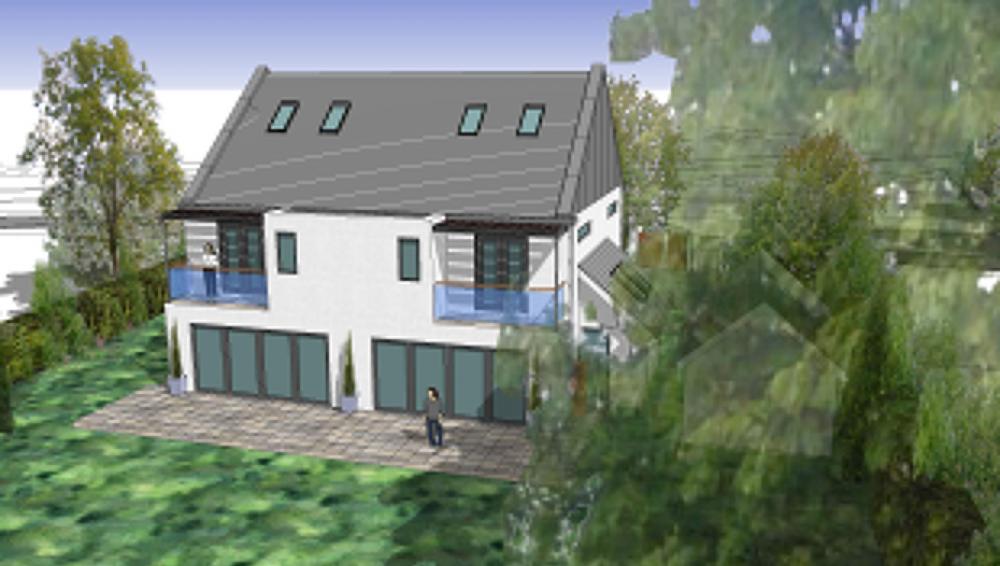
-
Mvhr inlet and outlet location
Bitpipe replied to Jimbouk's topic in Mechanical Ventilation with Heat Recovery (MVHR)
I have the Vent Axia Sentinel - pleased with it. Easy to self install and easy to clean/change filters and the condensing unit. Just watch taking the front off - if you use too much force or a high torque driver you can strip the screw heads. Manual screwdriver and slow and steady is best! -
Examining the 'house sandwich' - working with 8250mm
Bitpipe replied to puntloos's topic in New House & Self Build Design
I don't think any individual spans were greater than 4-5m - there was a surprising amount of steel in the GF structure as we have that cantilevered bathroom and an open plan U shape ground floor. Remember that you won't have a continuous run of foul drain point to point, you'll step through a series of ICs, ideally 10m apart (to allow for rodding) and you loose some invert at each IC. Also, you want to think carefully where each IC is - they are easy enough to hide in patio / driveways if you use the Clarke covers but avoid anything straddling hard surface and grass for example. You'll probably need a sump & pump arrangement to ground level foul drainage. -
Examining the 'house sandwich' - working with 8250mm
Bitpipe replied to puntloos's topic in New House & Self Build Design
Would you consider reducing your GF ceiling height? Going above 2.4m incurs additional cost when it comes to plaster boarding as the sheets come in 2.4m so lots of cuts? High ceilings are always impressive but it could be a compromise worth considering to make another floor viable. For floor buildup, you need to allow 15mm for pb & skim on the ceiling underside and whatever your floor covering is upstairs. The floor deck is likely 18mm OSB so the rest is joist. Rule here is that the longer the span the deeper the joist to provide stiffness. The other consideration is any steel that you have in your roof structure to create large open span areas - these will be as deep as the engineer dictates (same principal as joists) and will need to be battened underneath to allow PB to be fixed to them.400mm is decent allowance - mine are 340mm surface to surface. Do you know your sewage invert levels (if you're connecting to a mains sewer)? You work backwards from here to get the necessary fall (between 1:40 and 1:80) and then see if you're high enough for the ground floor drains to gravity flow to the main sewer. If invert levels allow, your house can sit lower than the surrounding ground but you'll need a landscaping / drainage strategy like ACOs around the perimeter to intercept ground water. We have an imperceptible slope up from the house to the street boundary - did not need ACOs as the basement perimeter backfill acts as a giant French drain and also used a water permeable resin bound gravel/tarmac driveway. One more consideration for that basement, what's your drainage strategy for it? If you're putting services or plant down there then you'll need some arrangement to extract water - e.g. the UVC tundish or MVHR/boiler condensate. Worse, if you had a flood (burst pipe, washing machine disaster etc) that's where the water may end up. -
Examining the 'house sandwich' - working with 8250mm
Bitpipe replied to puntloos's topic in New House & Self Build Design
Here's your challenge. Planners deal with planning law. Building Control (whether LA or private) deal with adherence with building regs law. SEs ensure the dwelling will be structurally sound (and their work/calcs feeds into BC), QS will give you an estimate of what the dwelling could cost to build based on SPONs etc... Planners will happily give you permission to build a dwelling that fails to meet building regs. They will even give you planning permission for a building on land you don't own as that's a legal issue, not a planning issue (see also covenants etc..). Building control will happily tell you why the building you have planning for does not meet regs for a dozen or so reasons and needs modifications (e.g. extra insulation in roofs / walls, windows needing moved, fire provisions not being met, disability access etc..) SEs will happily tell you why the architects design is not buildable or that you need lots of steel to make it viable. QS will happily quote you a number you can't afford or one that you can afford but can't find a builder who will do it for that price. One of your architect's roles should be to straddle these domains and design you a dwelling that will get planning, will pass building control and is buildable to your budget. There may be some esoteric issues that they are not super familiar with which you can query them on but significant issues like fire regs etc should be familiar to them. At a min they should be all over the building regs, QS and SEs are usually outsourced (and may be provided by your builder / contractor). If they really are not engaging with you on these things then you need to be very wary as you may pay them handsomely and then pay again to have it all redesigned to keep SE, BC and even QS happy. Regarding basement, yes planners do need to be aware as they impact the gross internal area which is a planning consideration. If there are street side visible elements like light wells then that factors in also. Note if your basement is a dark windowless hole at the centre of your house with no independent means of exit then you could have issues depending on other fire suppression methods (sprinklers, FDs etc). Whatever you plan to use it for, if it has stairs down to it then BC will be interested. i.e. if you're down there storing something when a fire starts and can't get out then you may die. That tends to get BCs attention. A loft that could be converted to habitable use in the future but is just a windowless space with a hatch upon completion is probably not going to get attention as you would need to get permission to convert it in the future and would need to get BC to sign off any future works. -
Examining the 'house sandwich' - working with 8250mm
Bitpipe replied to puntloos's topic in New House & Self Build Design
Nope, its what we did, dropped the GF level by 100mm - just need to make sure that you don't compromise your invert levels to main sewer. Re fire regs - if you're planning to make your loft at all habitable at completion - occasional play space etc, then you need to make sure that you're good on the fire regs - that's all. You may consider a particular space as 100% non habitable and use it for some domestic purpose, even occasionally. You don't need to be sleeping overnight in it for it to count. Only bathrooms and hall cupboards were exempt from our FD30 regulation. If the house is signed off and the loft is not considered a room, then you may be ok as any future change of use would be considered as a conversion under PD. However if you build the loft as a room in roof from the outset then BR will probably be all over it. -
Examining the 'house sandwich' - working with 8250mm
Bitpipe replied to puntloos's topic in New House & Self Build Design
Fire regs are one thing I'd never skimp on to get round BR. It's your life you're playing with if anything goes wrong - they are written that way for a reason.