


MikeSharp01
-
Posts
5693 -
Joined
-
Last visited
-
Days Won
16
Everything posted by MikeSharp01
-
They cannot sort the bottom gap because of the inward opening window. The problem there is the lack of sill packer - they should not have solved that with expanding foam if not a sill packer, but rather with and insulating block such as sold by Green Building Store then render over and make good. Overall the install looks awfull and the compriband should go all around and match the system requirements from Internorm which will specify depth, recess etc then the Illbruke foam goes behind that from the back. If you paid with your credit card I would put them on notice seek immediate replace / refit from the supplier.
-

My Heat Pump Experience 2022-2024
MikeSharp01 replied to Green Power's topic in Air Source Heat Pumps (ASHP)
I think we need a political wing to Buildhub who can ask questions. I mentioned yesterday that installers should be asked how many degrees in Engineering they have in the company. This because, given the sophistication of the systems they are selling, I think they will need 1x mechanical engineer for the thermodynamics, 1x Electrical / electronic engineering for all the power and control systems and another in software engineering / computer networking to handle that aspect and finally a systems engineer to deal with the integration. If they are chartered engineers then you can seek redress from their professional body and either they or their company will carry professional indemnity (PI) which could be claimed against for inappropriate installs. The trouble is that too many of our engineering graduates go into finance and traditional plumbers don't want to grow in the graduate skills direction anyway. To be fair our daughters favourite plumber is a graduate and very happy plumbing in Dulwich. -
MVHR installers or alternatives?
MikeSharp01 replied to Swampy's topic in Mechanical Ventilation with Heat Recovery (MVHR)
Can you make a feature of the pipes. In a new build, yes it was a new build so perhaps more possible, I was the end user for we decided to have all the services on show everywhere we could. -
My Heat Pump Experience 2022-2024
MikeSharp01 replied to Green Power's topic in Air Source Heat Pumps (ASHP)
Climate is as important as my heat pump that's for sure we are trying to do our bit building a wooden framed house to passive standard, trying to keep waste to a minimum, paying attention to details like air tightness. The fact is climate is a wicked problem and although we can all do our bit individually, we need to do so much more collectively and recognise the cost this will be across the piece. Still what price can you put on your great grandchildren' great grandchildren? -
My Heat Pump Experience 2022-2024
MikeSharp01 replied to Green Power's topic in Air Source Heat Pumps (ASHP)
Great blog. -
Solar panels without batteries
MikeSharp01 replied to Russell griffiths's topic in Photovoltaics (PV)
Nice place to panic in! -
Looking at the pics again I can see that they either forgot to add the packer at the bottom or were expecting that the wall would be higher beneath them as they open inwards they had to clear the sill.
-
If they use the right foam it is OK as it stays flexible and is designed for airtightness. E.g Illbruck FM330 Air Tight Expanding Foam. How are the windows held in? Through the frames or with straps as this makes a difference to the air tightness detail.
-
Alto Energy ASHP spec seems wrong?
MikeSharp01 replied to BotusBuild's topic in Air Source Heat Pumps (ASHP)
Does have a whiff of that - ask them which university gave them their degrees in Thermodynamics perhaps. I think that all these companies have spreadsheets which don't look at the thermodynamics at all but just at demand and the double the size of the heat pump. There must be a sweet spot where the cost to them of the bigger heat pump is proportionately lower so more profitable and they can sell it you as faster reheat times. However 11kW going into 200L starting at 10 deg and going to 50 deg C with 80% efficiency is 1h 3min 25.2sec so that bit is about right and if you go down to 8kW it will be 1h 27min 12.6sec. Then you are into worrying about modulation depth for great chunks of the year anyway as @JohnMo says. -
No, just trying to work out what might have happened to cause the problem in the first place.
-
Good points Nick although my concern is not with security but with giving away my data and having, eventually, to pay to have my equipment generate electricity for me. Look what British gas did to Hive - you need to oay £5 PCM (or some such figure) for the pleasure of keeping all the features you thought you had paid for when you brought the device in the first place.
-
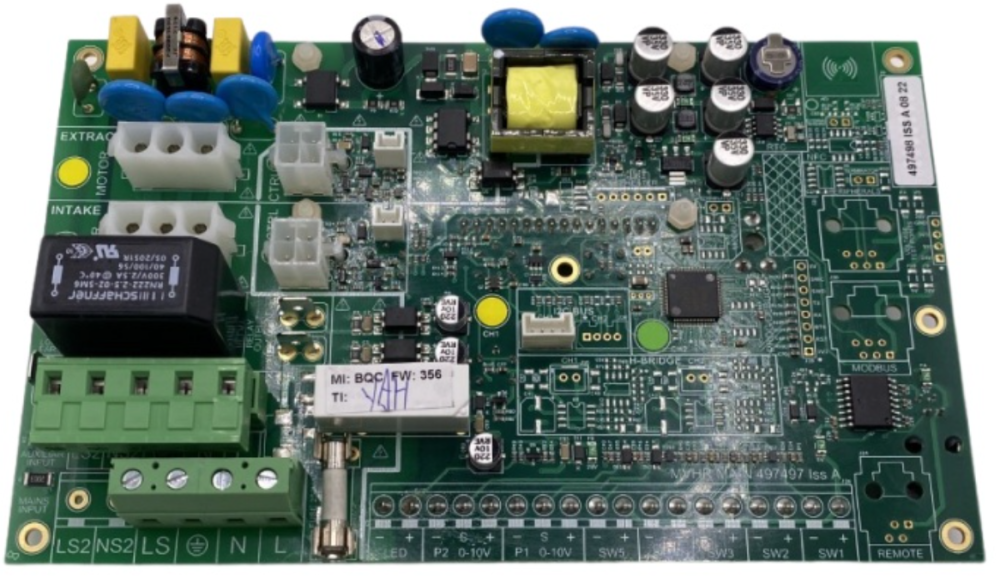
That's a relay - the black block, so assume it is turning on and off very fast if its making a noise - won't let me watch the video for some reason. The chip that blew up is part of the low voltage power conditioning circuit I suspect. The little yellow block close to it is a giveaway for that. The if we could know the number of the chip replaced we could confirm that.
-
OK so what blew the PCB one wonders. Does your board look like this: Found this here: www.uk-spares.com/ventilation-spares/heat-recovery/vent-axia/441486/vent-axia-497808 but not worth getting unless we can identify the cause of the blow out!
-
Wall hung toilet in a stud wall
MikeSharp01 replied to SB2023's topic in Bathrooms, Ensuites & Wetrooms
Those double timbers make for very stiff uprights and the frame itself + screws from @jayc89will mean you have a very firm seat! If you look at the turning moments around the screws that attach the WC and the long reach up to what looks like solid fixings at the top of those double studs you shouldn't need additional support unless its a disabled WC in which case other things need to be taken into account, such as the support rails and if any users might have bariatric issues. -
Are you sure - that is an awful lot of Watts for a LED illuminated house these days. Even if all your LED lamps were 5W you would be lighting 192 of them. LED strips can be quite power Hungry I suppose - whats the mix?
-
I guess, in terms of value, the trick is to work out the life length of the gear. The Solar panels have long guarantees, 25 plus years, but do we seriously expect the company to honour them, let alone still be around, in 23.5 years? There is always the challenge of us still being around then to worry about it. So with the inverter which have much shorter guarantees anyway. Is it disposable equipment if so do the sums and work out how long it needs to last. Also if a few inverter manufacturers switch to a monetised model - they all will and nobody will be able to get one that is not cloud connected.
-
What is the Cork doing?
-
Current limit driving of the LEDs is, as @jack says, perhaps the best way forward as you can keep the voltage well above the forward voltage lower limit and just control how much current the LEDs receive and therefore drive them right down to off. Sadly it requires more infrastructure to manage it. Perhaps the best way is to get intelligent bulbs as they rectify the AC and then current control the LEDs so can go down to off but require communications, Wifi, Zigbee, Z-wave, Bluetooth ... to control the brightness, and often colour. Alternatively you could stick with mains dimming and: have fewer lamps on at all if you want lower light, get lower output bulbs so they are not bright at full power or live with the lower limit.
-
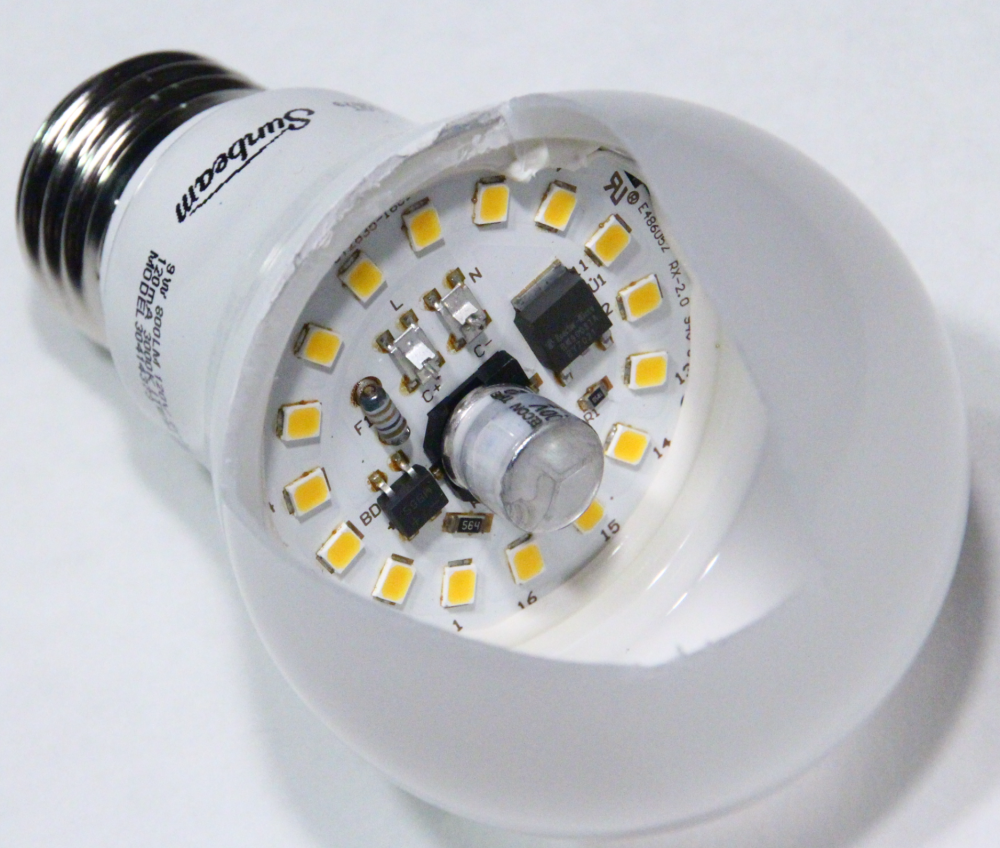
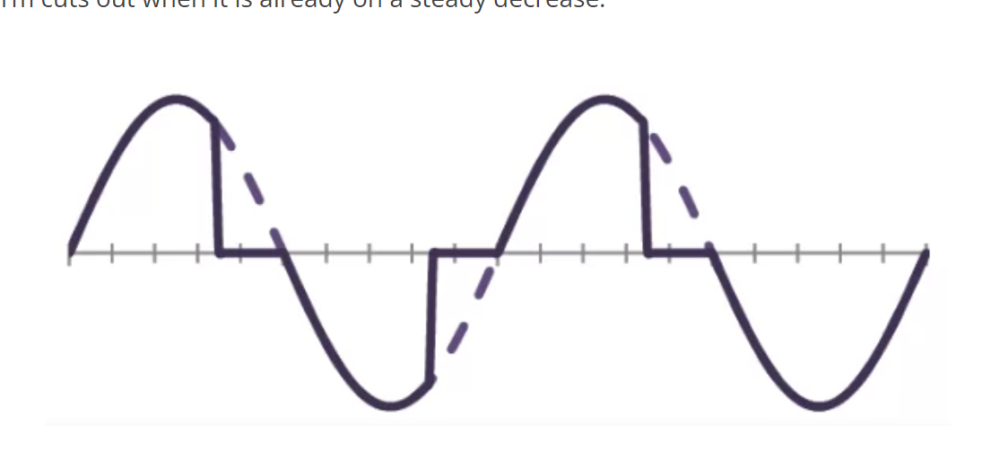
The challenge with mains dimming LEDs is the forward voltage of the LEDs themselves, the circuit configuration of the LEDs, the rise across the rectifier, the passive current limiting, and the dimming strategy used. In mains driven off the shelf LED bulbs the best we can expect it a floor in the dimming level for smooth operation. Each LED in the bulb will need a voltage across it, known as the forward voltage, before it will turn on and if they are wired, in the lamp, in series - which is the preferred choice because parallel needs very closely matched LEDs, then those voltages add up so you need at least that voltage to turn them on. Given that the forward voltage of an LED varies by colour - because the band gaps needed varies by colour and manufacturer so the turn on voltage varies. White LEDs have the highest forward voltage of most LEDs (UV LEDs are higher) at over 4.5V if driven hard (which you will when used in lighting) so if you have 16 of them all in series then you are going to need 72V to turn them on. (Image Source Wikipedia) When you rectify - turn it from AC to DC you get approximately 1.4 x the AC voltage out so 240V AC in becomes approximately 330V DC out (in a perfect world) - its a thing so don't worry about it. So we have 330V to play with, carefully, but we also have a lower limit of 72V if we want the LEDs on at all. So this gives us 72V as a percentage of 330V which is approximately 22% (Where I got my expectation of the 20% in the above post) but it is not as simple as that. Trailing edge dimmers, the ones most admired in this application, cut the AC cycle off to a varying degree so for most of the cycle the peak, although truncated, is still above that required to provide 72V after rectification but as it gets towards the end of the wave form the peak remaining is not enough to generate the 72V after the rectifier and the whole thing falls to bits. Image source: www.ledsupply.com/blog/dimming-leds-guide-how-to-tell-if-your-lights-are-dimmable/ The fact that the lamps get a bit jiggy when you approach this point is down to a combination of a heap of factors which I won't go into but include the fact that the forward voltage required to turn the led drops as the available current drops, as it must when the voltage drops across a fixed current limiting resistor and the ability of the smoothing capacitor to bridge across the tops of the spikes given the now very limited charge voltage and charge times.
-
Seems quite high, and somewhat disappointing, I was hoping they would get down to about 20% - they won't fade to / from black with a trailing edge system as @jack says. I suppose it could be a function of the bulbs you are using - the circuitry won't be common to them all and perhaps some are better than others.
-
Yes but heading for robots and all kinds. The ones I have seen in UK and Germany have robots assembly cells, CNC wood cutting etc. Old shed won't cut it, pardon the pun. going forward. We need to invest in automation so fewer people can get more done - for the mass market. I am the robots on our build.
-
Just started a self-build in Dorset. Exciting times!
MikeSharp01 replied to NailBiter's topic in Introduce Yourself
We went for Stick built with 300mm I beams, filled with blown cellulose, and added a thin layer of PU on the outside which meant we got our target U value with a small amount of oil based product and a bit thinner. So far this winter without heating it has never dropped below 8 deg C and we still don't have the outer cladding on some of the walls and none of the plaster board inside both of which will further improve it. So our total thickness when all done is 460mm. -
If they have half a commercial brain they will have an encrypted connection you can't break without enormous effort so when they want to monetise it they will hold all the cards.
-
The output of the dimmer driving the SSR sounds like a problem as the dimmer won't be plain on/off it will be a series of pulses / a shaped waveform unless you can set it to be just on/off - it might get upset being turned on / off at 1000 times a second. It won't draw any /much current either. Is the SSR OK to get a 24v signal?
-
Why on earth are you using a dimmer channel to drive a blind? Why not just a relay or a straight SSR controlled from a Loxone output.



