Iceverge
-
Posts
4384 -
Joined
-
Last visited
-
Days Won
31
Everything posted by Iceverge
-
Good work. Are they build "dry"?
-
 I did ours with a 9" grinder. It should be reserved an alternative to hardened criminals facing "the chair". I think most would choose death .
 -
Neighbors are tricky. There's a few types of troublesome ones. Type 1: Francis the Frowning. They assume they own everything they can see out their window. To stereotype this is normally someone retired, listens to LBC, reads the telegraph or the mail, has never ran a business and has had little dealings with officialdom or the law. Their understanding of the world hasn't altered since they were 8 despite that being sometime in the 1950's. These are easily defeated. Polite and professional you should be, but don't waste too much energy. They will object all day long so long as it doesn't cost them anything beyond token money. They can't understand why they loose the objections and come to the conclusion the law is wrong and go back to bitching to their children and long suffering spouse as to why it's a disgrace and this country has gone down the pan. Type 2. Patricia the power tripping Parish councilor. This person is a more worthy adversary, somewhat versed in the rules and regs and perhaps with access to the ear of those who make the decisions. They know everyone in the street, and the next two streets despite this often being a one way relationship. They harbour mild political ambitions but will never will pursue them, because they know that would mean dealing with the scruffs from the council estate rather than the more tasteful residents of "middle income crescent". Luckily for you the planners detest them, but being civil servants cannot ignore the points of local authority planning document A.1.6.7.3(d).6.iii that's being fingered under their nose by Patricia's wagging finger. Proceed with caution, get your good professional to dot the eyes and cross the tees. Smile, but I would shy away from engaging. Play their own game only mumbling vaguely about the "trusting the system to do its work" and " following the correct processes". Patricia will soon see what way the wind is blowing and pretend she was in favour all along, before diverting her valuable attention towards whatever cause for humanity affects the residents of "the crescent" next. Type 3. Charlie the Chancer. A law whizz kid in his own eyes, well he would have been had it not been for they pesky law course kicking him out for plagiarism. He's had dreadful luck with trips slips and falls in the past few years, and despite just being an "honest bloke trying to make a living mate" ends up in court regularly on a no win no fee basis. The local Tesco defends a grape that causes him to tip over and suffer emotional damage needing 2 weeks in the Algarve to recuperate. He'll send you a very official and terrifying letter, crafted deep within the halls of "we've taken down governments" law halls. All your troubles would go away if you were willing to come to a financial accomodation regarding the development with him. Pass it to your solicitor, who, if they're worth anything will send Charlie's letter on a one way trip to the bin. Enjoy the build as much as you can and keep us updated! Good luck.
-
Hope it works. Our "plumbers" tossed the bath in from the far side of the room so I had to similar to ours. I didn't use any sealant however. I put a careful double layer of (@Nickfromwales close your ears) airtightness tape around the bath perimeter. Onto the OSB on the wall. Ran the plastic bath panels down over it and siliconed it to finish. A bit gash but no leaks after 2 years. Not a reccomended method I'm sure but I was completely burnt out at the time and just wanted it done.
-
Softening the feel of a concrete slab floor
Iceverge replied to Sparrowhawk's topic in Floor Structures
Time over again I would avoid a concrete floor. 150mm concrete plus 200mm EPS here. We have some with LVT and some with good carpet and thick underlay. Mainly to keep things as soft as possible but you know it's still down there. As it's a passive standard house the floors never get cold. They're don't have that nice warm UFH touch, but they don't suck your will to live out through the soles of your feet either. Socks are the normal order of the day with no complaints. I gather from those who run low temp heating in low energy houses that you don't get a hot UFH under foot feeling either. Please write in with the answers subscribers ? @joe90 @TerryE @IanR@JohnMo to name a few. @ProDave has a screed over an I joist floor from memory. Does it chip a little bit off your spine every time you take a step like concrete floors? @JohnMo has recently put UFH over insulation below 2 x layers of OSB floating. I am very interested in this approach. No wet trades. No crucifying hammering of your joints. Another (slightly hippy) idea is an adobe (earth) floor. A shed in my parents house had a floor of exposed earth. It was a lovely surface. Similarly in a garage workshop near me there's an area of 2m2 near one of the car lifts where about 60mm of earth has become congealed after falling off car's over the years and got too stiff to be brushed out. Everyone stands on it subconsciously while shooting the breeze. -
I have no idea. If you have a SE engaged then ask them for a required spec. Similarly if you ask the BC for a spec for the lintel they expect then there's some online designers that would allow you to design a pour in situ beam.
-
Plus one. Just avoid any complex designs. Every corner adds £10k they say. Likewise a roof gets massively more expensive the more complex it gets. Try not to let the architect do the thing where they stretch the ground floor plan to be fatter than the upstairs. This means that you have to breach the thermal envelope to support the first floor walls and it's expensive to get right thermally.
- 9 replies
-
- 1
-

-
- timberframe
- timber frame companies
- (and 1 more)
-
Here's a bit of a gash suggestion. Fill the bath and cut and scrape out all the existing grout and silicone in place. Empty the bath. Take off the bath side cover. Cut battens to the right size for the width and length of the bath and push up from below as a dry fit. Make vertical supports to keep it pushed up against the base of the bath. These will ensure a tight fit. Next remove the dry fit batten and cover it in CT1 to seal the gap from below. Really heap it on there. Then push it up from below and wedge it there with the pre cut timbers. Put in a few screws to hold them in place if you can. Fill the bath. Apply as much CT1 as you can from above to meet that pushed up from below. Silicone later on. Beware it'll be tricky to put in the battens and potentially very messy with the CT1. It might get you through to a proper job when you can retile.
-
You could chuck in some rebar and pour one in place. Very cheap.
-
Global warming is in fact entirely natural and has already peaked
Iceverge replied to ProDave's topic in Boffin's Corner
All the more reason to start thinking about it. For a future us, activity managing a planets climate will be no more complex than turning up or down the thermostat. Tiny tweets over several millennia will keep it "just right". At least in the climate zone of whoever's controls the dial. With the correct equipment I imagine we could probably do it now. I don't know where we're going to find a space mirror large enough however. -
Global warming is in fact entirely natural and has already peaked
Iceverge replied to ProDave's topic in Boffin's Corner
Long term, I wonder if we should proactively engage in some kind of climate management to keep the planet habitable, prevent ice ages etc. I wonder how this could be done, cloud generators, orbital dust clouds in space to shade the sun for cooling, maybe a provoke an eruption of a few volcanoes to block out the sun. For heating maybe maximising the water vapour in the atmosphere with huge hydro products with the aim of atomising water as a greenhouse gas. Maybe bio engineering some black fungus to colonise the ice caps and prevent so much sunlight being reflected back to space. -
Pipe banging, don't want to have to lift floorboards.
Iceverge replied to mickespite's topic in General Plumbing
Impossible to know. It could be scraping across a sharp edge every time it moves or just banging harmlessly against the plasterboard. It could break today or outlast the house. -
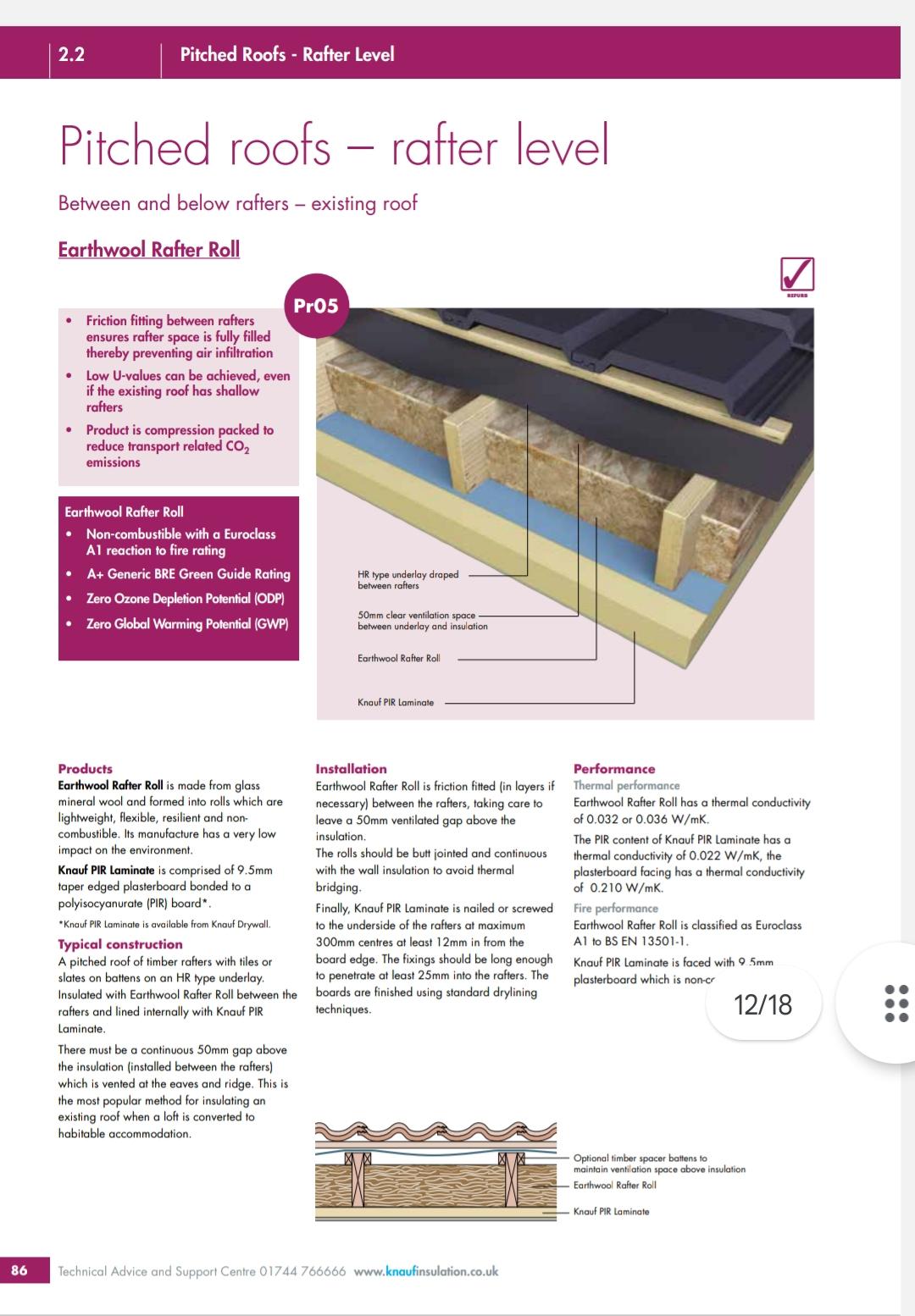
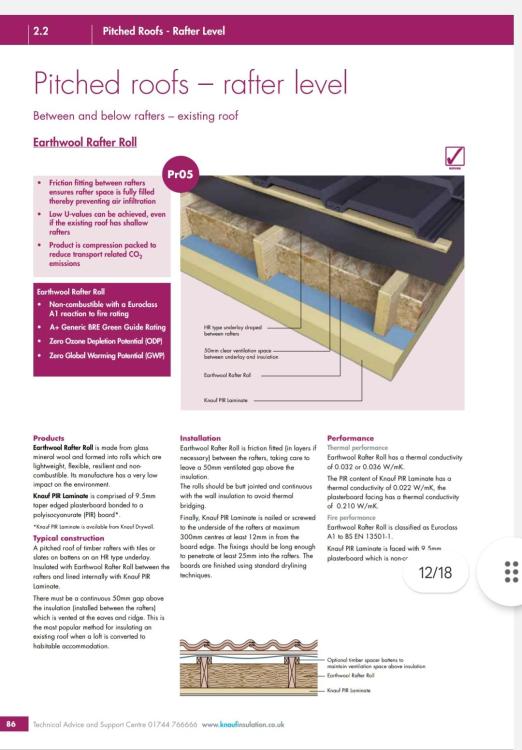
Why? Here's a detail from Knauf showing just this.
-
Pipe banging, don't want to have to lift floorboards.
Iceverge replied to mickespite's topic in General Plumbing
The lazy man in me says this is the best solution. However adding some kind of "shock absorber" to the pipe would be easier than pulling down the ceiling IMO. Others might be able to advise on the best products/methods. -
Global warming is in fact entirely natural and has already peaked
Iceverge replied to ProDave's topic in Boffin's Corner
If the world continues to warm we'll just have to move to Siberia and Northern Canada. However if the CO2 keeps rising we're in trouble. It's double the average for the last 800,000 years. https://climate.nasa.gov/vital-signs/carbon-dioxide/ Soon we'll all be idiots. Quote : In fact, at 1400 ppm, CO2 concentrations may cut our basic decision-making ability by 25 percent, and complex strategic thinking by around 50 percent, the authors found https://www.news-medical.net/news/20200421/Atmospheric-CO2-levels-can-cause-cognitive-impairment.aspx
-
Pipe banging, don't want to have to lift floorboards.
Iceverge replied to mickespite's topic in General Plumbing
If you have any light fittings that can be removed maybe you can have a look. Jam a phone with the video and torch on in there and see what you can see when you cycle the tap. Once you see it you may be able to jam a bit of foam or work a piece of string to stop it annoying you. If this doesn't happen when the two is closed slowly another option is to fit a hammer arrestor on the pipe near the tap. -
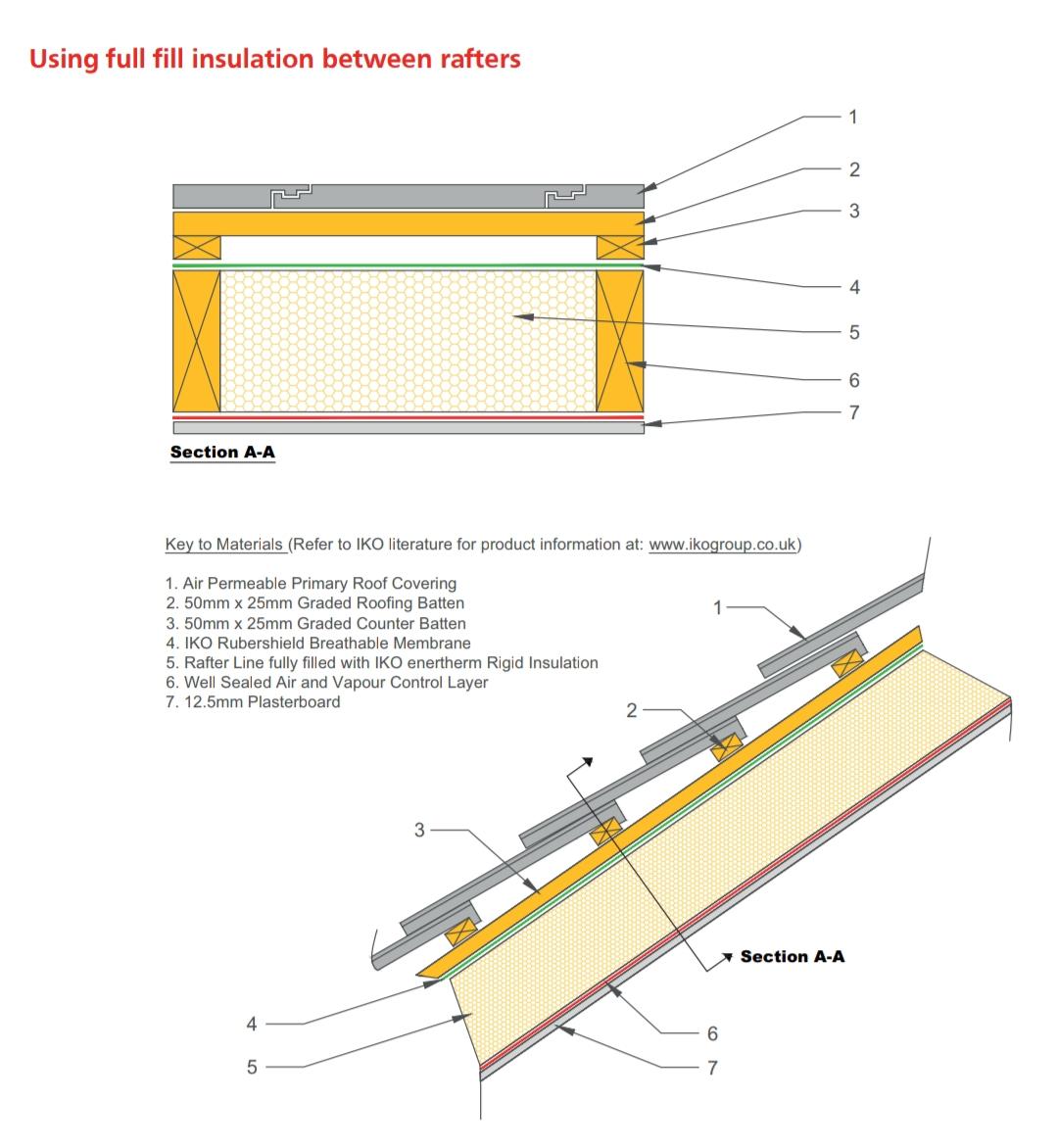
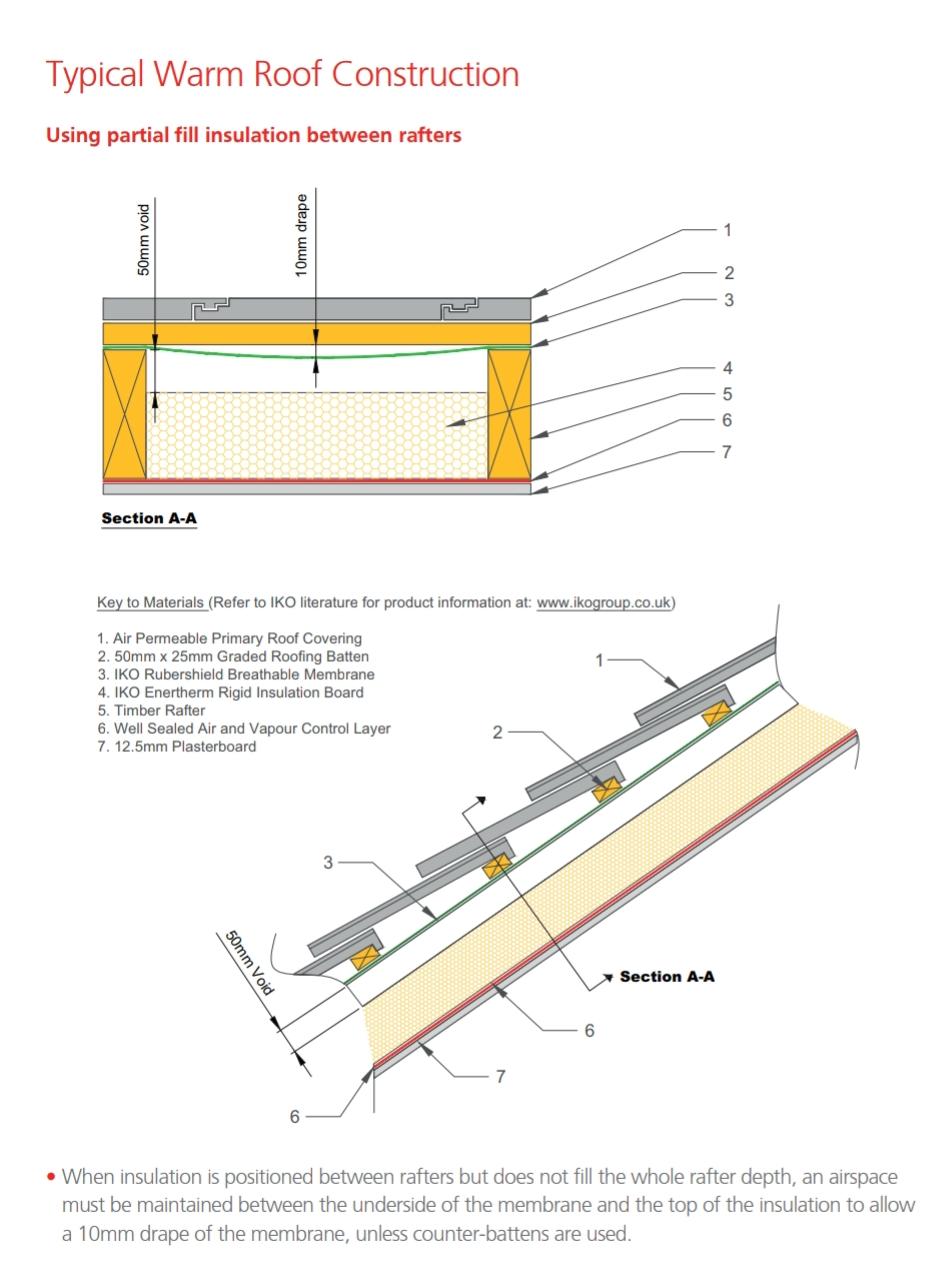
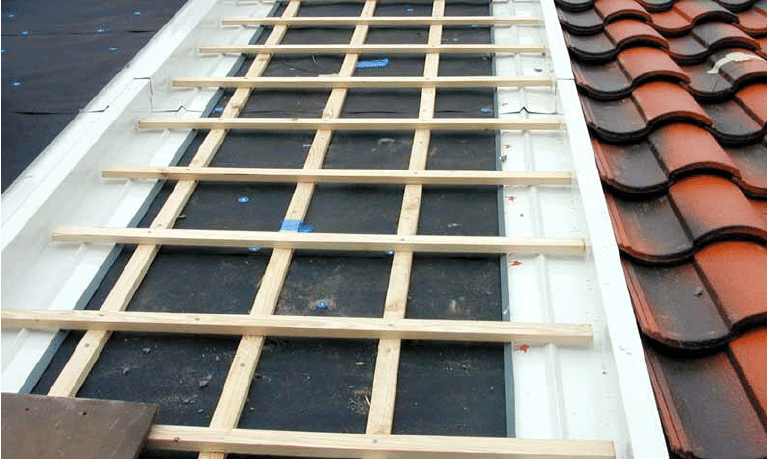
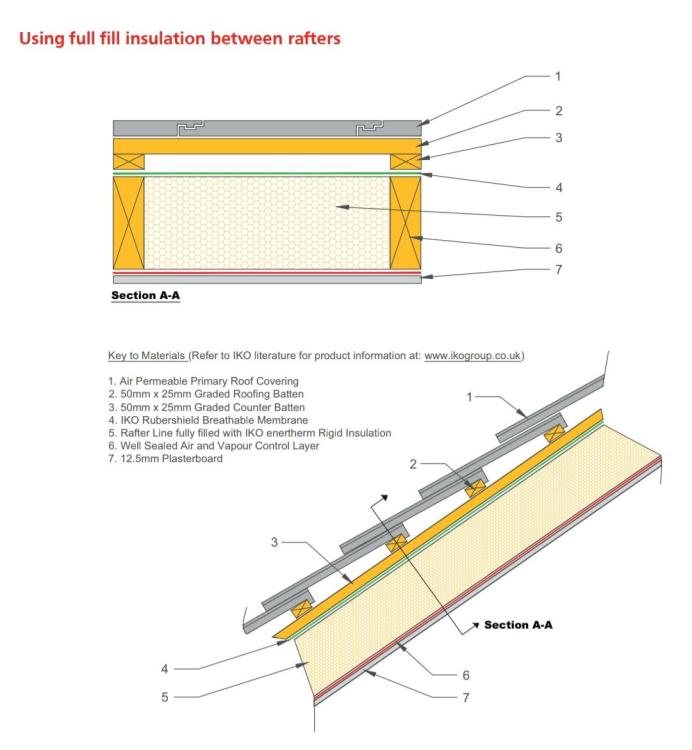
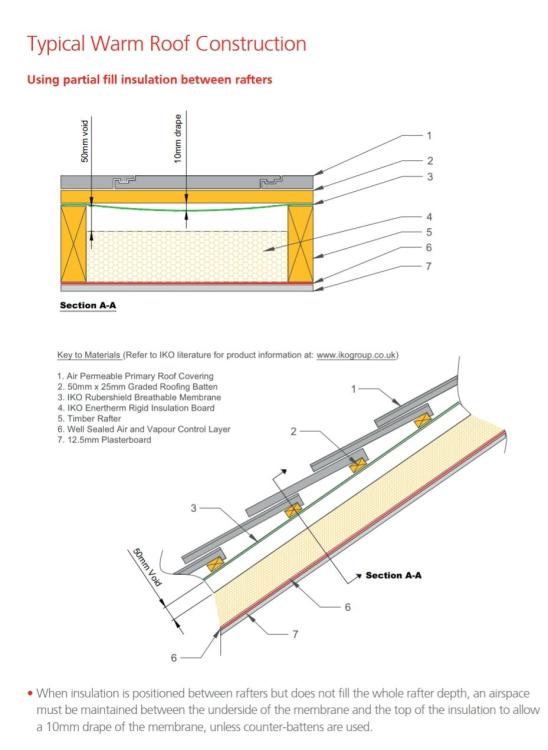
It's approved for unventilated roof construction. However like @Temp says there is a risk of trapping moisture against the back of the tiling battens. This can be overcome with counterbattens above the membrane but if your tiles are on you don't have this option. If the roof covering is on then you're in this position an you'll need ventilation below the membrane. https://www.ikogroup.co.uk/wp-content/uploads/2022/11/IKO-Breathable-Membrane-A5-Nov22.pdf
-
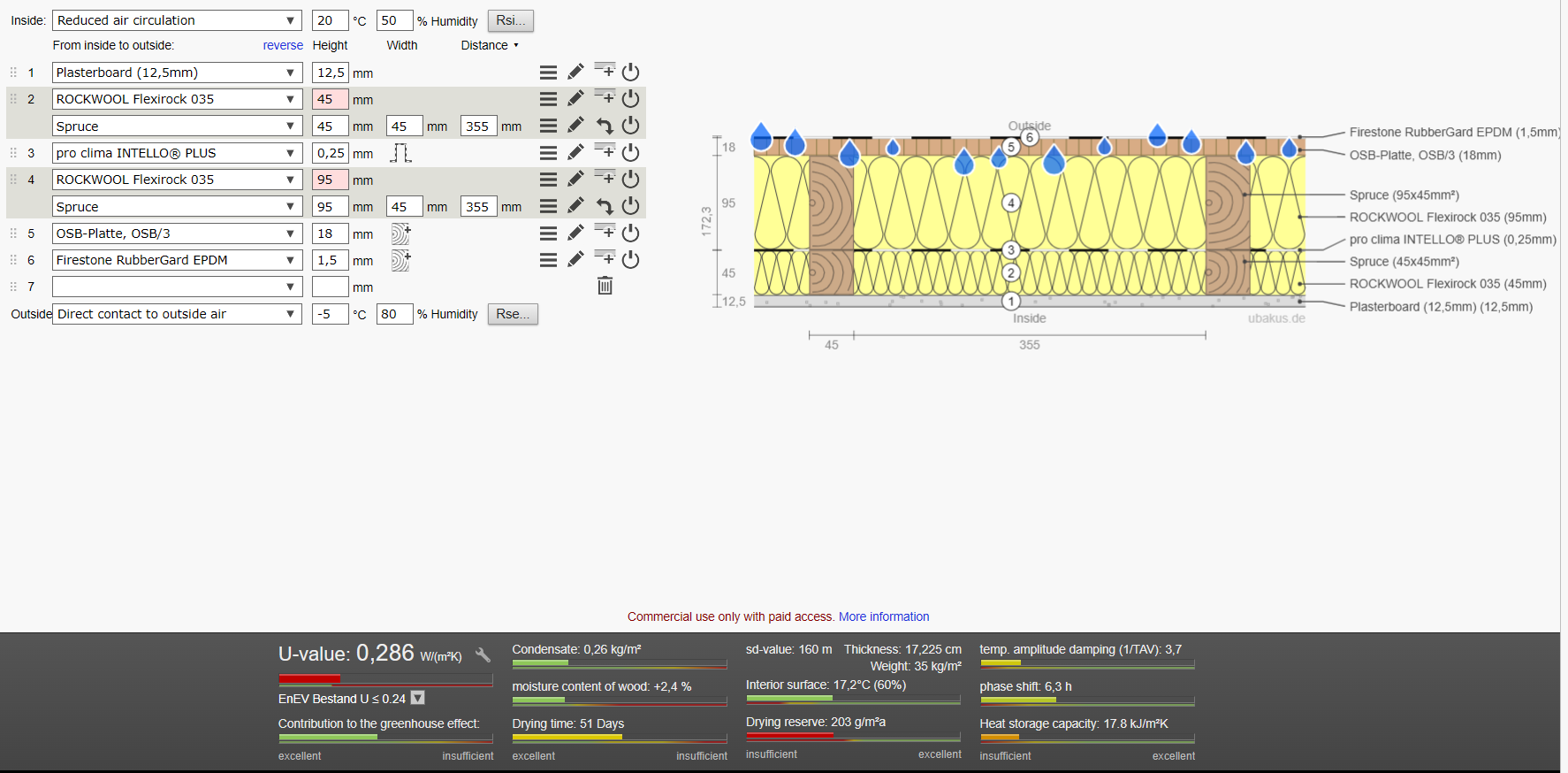
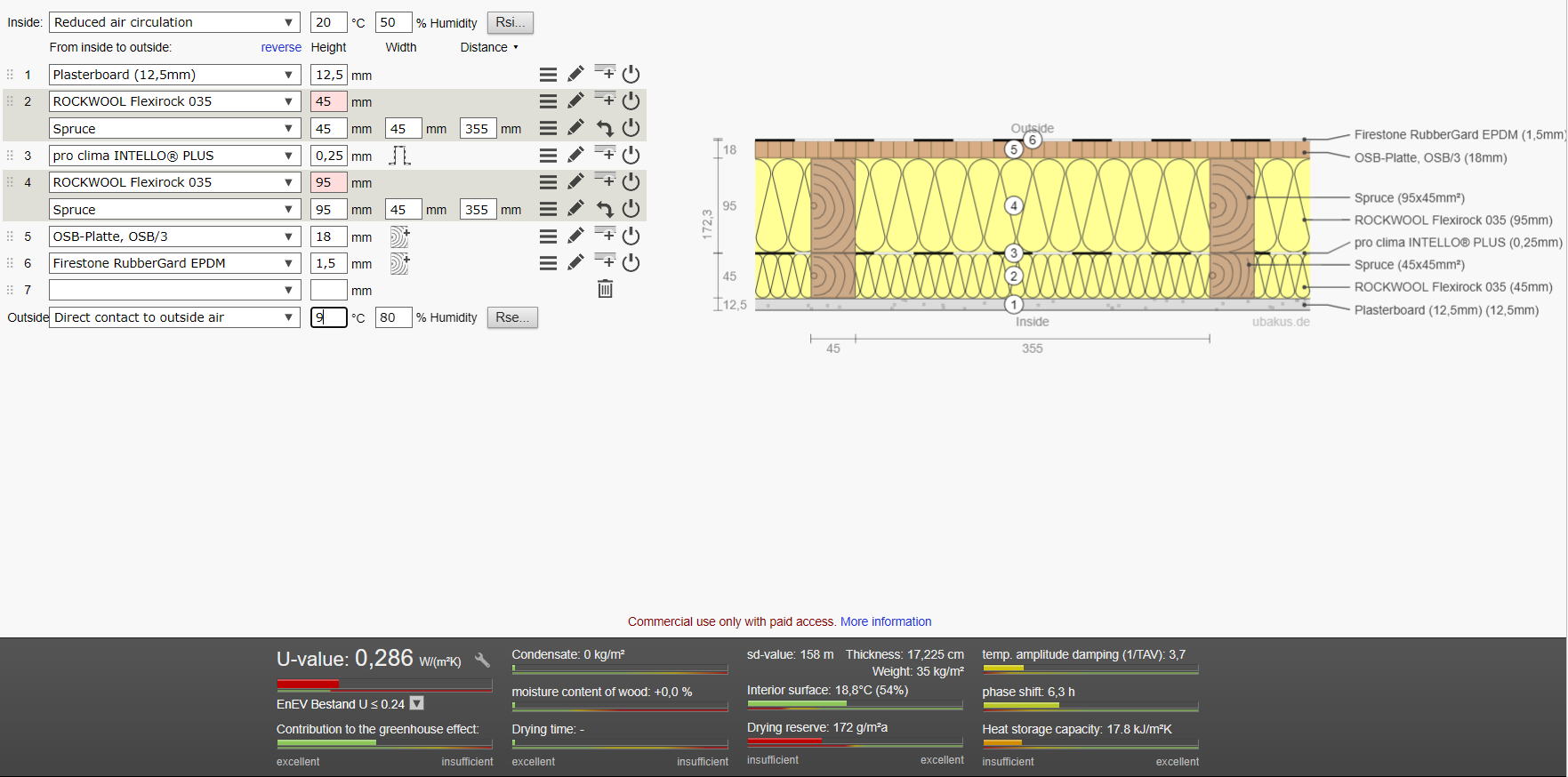
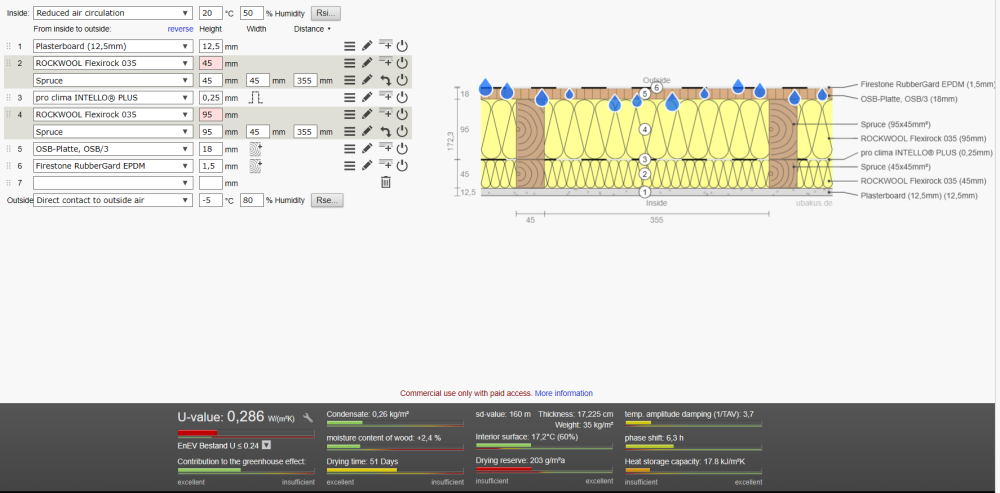
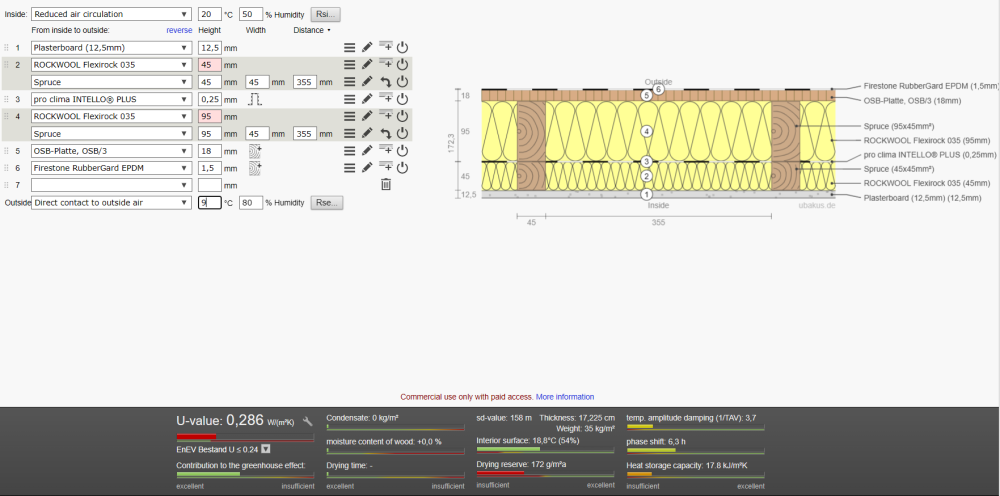
Here is a suggested build up. Worst case as it's the roof with the impermeable EDPM outboard. There is some condensation but note the outside temperature of -5. I suspect you are getting some in frosty weather as is. As soon the outside temperature picks up to something reasonable any condensation dries again. This model will show that if you put an impermeable layer inside the studs there will be no condensation, BUT it assumes there's no moisture trapped there during construction, no pinholes in the EPDM , no tiny faults in the taping of the membrane etc etc. You appear to have first fixes the electricity wires, I would pull them out and put them inside the membrane in the 50mm service cavity. If you run the 45*45mm battens horizontally too you will eliminate almost all repeat thermal bridging. Here's one I'm going to get finished some time soon..........any day now.............. 150mm Studs @600mm cc with rockwool. Membrane, 45*45mm battens @ 400mm cc . Lessons learned. Insulate the roof before the walls, and maybe put the service cavity battens at 600mm cc for 15mm plasterboard.
-
I would be cautious of trapping moisture in the structure, especially at the roof with the membrane, so no to the impermeable layers inboard for me. No matter how perfect a job you do moisture will get inside a structure, the important thing is to allow it to dry. I would fill between the timbers with a batt insulation and use a variable control layer like Pro Clima Intello plus or Siga Majrex. Tape all penetrations diligently. These should allow all moisture in the cavity, timbers, ply etc to dry inwards only preventing a trapping of moisture. inside this you can put a layer of battens with batt insulation between and then plasterboard/osb. I would stay away from foil faced PIR in all cases her, especially on the roof.
-
quote Roof replacement and insulation install
Iceverge replied to Matt89's topic in Roofing, Tiling & Slating
I can't comment on the price,how big is it? There is a lot of work involved in this however. The spec for Insulation and airtightness isn't great . U value of about 0.5 with 75mm PIR between rafters. Do you know what the spec of the roof is at the moment? How deep are the rafters etc? Any pics? -
First Floor air tight membrane advice
Iceverge replied to richo106's topic in General Construction Issues
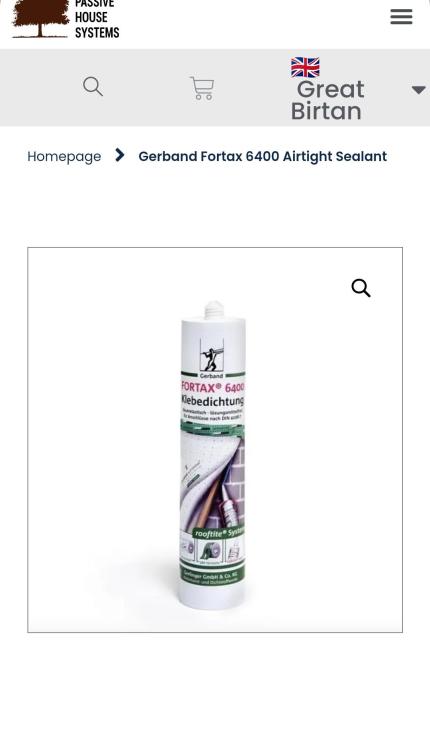
No, it won't stick to blockwork. Membranes, OSB, Foil faced boards, metal all ok. If you tried to stick it to block it'd just pull off a thin layer of dust. With boarding you'll be depending on the board adhesive to seal around the edges of the boards and any penetrations like sockets etc for airtightness. I would tape a strip of membrane to the bottom PIR board and stick it to the blocks with some airtight sealant like this. Then make sure the boarders cover the joint between the blocks and membrane with a continuous bead of boarding adhesive, it's as important to prevent any damp air escaping from the house to your roof and rotting it, as it is for energy saving and comfort. It can be easier to leave the membrane too wide, then seal and then trim back to 50-100mm once done. This is the stuff. Wear gloves as it's like permanent chewing gum.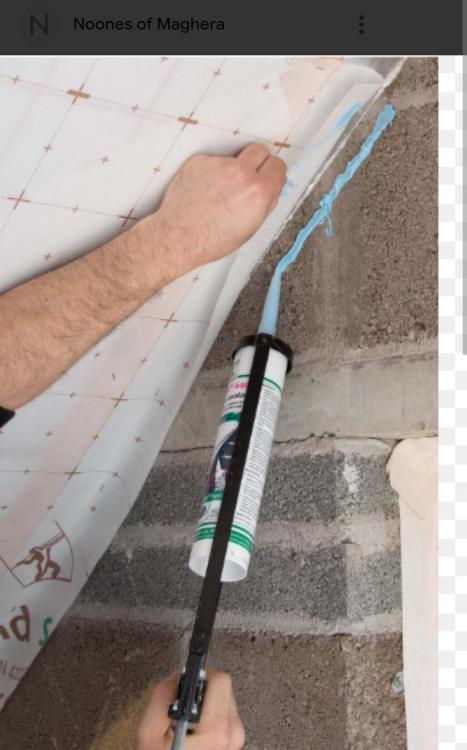
-
First Floor air tight membrane advice
Iceverge replied to richo106's topic in General Construction Issues
This is the stuff we used by another name but it was a bit cheaper. It was excellent. It was cheaper than the Soudal Equivalent and tougher. We used a little bit of tyvek too but it wasn't even close to being straight.
-
First Floor air tight membrane advice
Iceverge replied to richo106's topic in General Construction Issues
If it's the membrane you're speaking of then yes. Regarding the tape so long as its one designed for purpose it'll be ok. Maybe buy one roll each of a couple of types and see what you think. Its generally only as good as it is easy to use. Regarding sticking the last sheet of the PIR to the blockwork. What is your wall finish going to be? Boarded or wet plaster?
-
Welcome welcome.
-
Underground workspace - how to shore up and waterproof?
Iceverge replied to BodgeBodge's topic in Garages & Workshops
It'd be easier to just install a post lift on flat ground and drive another car underneath I'd have thought.