Iceverge
-
Posts
4485 -
Joined
-
Last visited
-
Days Won
32
Everything posted by Iceverge
-
 https://www.obadis.com/en/villeroy-und-boch-rechteck-badewanne-ubq180lib2v-01-180-x-80-cm-weiss.html It's made from "Quaral" whatever the hell that is. It's fine but standing in the narrow end is of limited enjoyment, too narrow. It holds a fantastic quantity of water too. I would just get a normal acrylic bath with a flat middle and put the shower head along the long wall next time. Bracing it properly underneath is about 90% of the battle of any bath I think.
 -
Should be banned! Infact ban toilet paper too. Bidet, bidet toilet seat or shattaff and a day of sewer cleaning for anyone who blocks it subsequently.
-
Crane pad thickness
Iceverge replied to Lincolnshire Ian's topic in General Self Build & DIY Discussion
I would sway towards the crane contractors side on this one. -
Shower Enclosure - Extraction
Iceverge replied to richo106's topic in Bathrooms, Ensuites & Wetrooms
Or put a large concrete block behind a few doors in the house to limit them to 400mm opening. See how it goes down. We have one much like yours above, 1500x900mm. A 300mm flapper panel on the gap of 400mm. It's forever wetting the bathroom floor. I'd opt for a complete enclosure door and put the shower head on the long wall which we did down stairs. Much more elbow room and you can splash to your heart's content and no wet bathroom floor. -
Windy weather gives me extreme anxiety.
Iceverge replied to gavztheouch's topic in General Construction Issues
I gave up the news entirely, except the FT occasionally and some economics and political podcasts. They're without exception tremendously boring. My worrys have decreased proportionately. I check a weather app ( or aviation weather) with plain numbers and no other sensationalist garbage. The world is determined to feed out fears as it sells but you can opt out of you choose. -
I'm out of ideas. Polyfilla?;
-
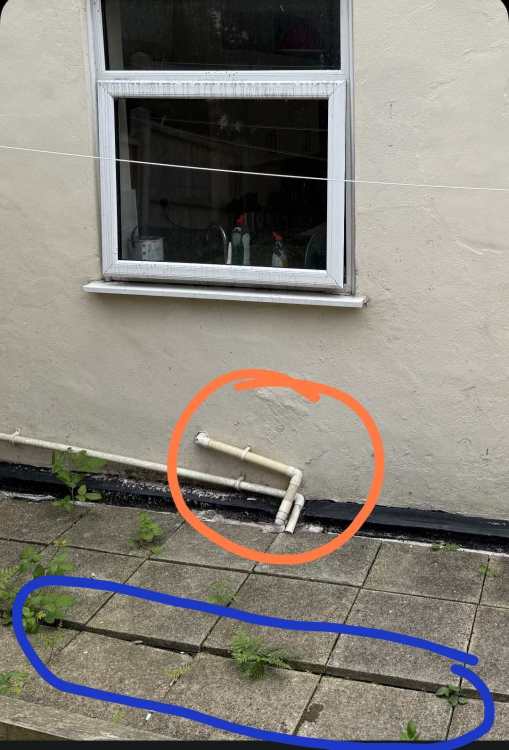
Where do these pipes go and why are these slabs lower? A miss directed pipe might wash out the fines under a foundation faster than you think.
-
Outside pics please. Something tells me this is a "bottom up issue rather than a "top down". Is there bad guttering or drains eroding under the foundations?
-
Fine tuning my IWI Solid wall (Warm Batten) design
Iceverge replied to Annker's topic in Heat Insulation
True, I reckon you could literally scrub it off the walls if you had a scourer. -
Best Way to Insulate a Timber Floor in Older Homes?
Iceverge replied to Sarahtalkstimber's topic in General Flooring
As above. Mineral wool between the joists, not PIR. Otherwise dig it out and pour a new floor on as much insulation as you can fit. I like EPS. Better still knock and rebuild the entire house if it's a big renovation. -
Fine tuning my IWI Solid wall (Warm Batten) design
Iceverge replied to Annker's topic in Heat Insulation
I'm a fan of this for allowed walls to dry. Resembles a thin layer of chalk almost when dry. Easy to touch up too and it's dirt cheap.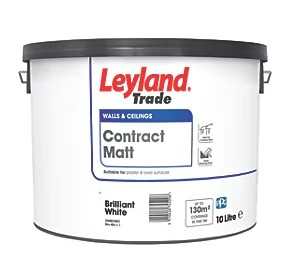
-
It's possible they forgot about it and/or run out of money. In any case of it's not causing an active nuisance I'd forgot about it, lest they actually start lighting it. Perhaps take the time to gently remind your mum that she doesn't own everything she can see from the kitchen window, no matter how much of an arsehole the neighbour is.
-
Anyone got a WUFI Pro licence?
Iceverge replied to Drellingore's topic in General Self Build & DIY Discussion
I wish they did a mobile version of ubakus. It's my favourite game. -
It could be a "I'll finish this later" job with no wood burner connected inside or they went entirely overkill on a kitchen extractor. Unless it was at risk of setting the house on fire or activity causing a smoke nuisance I would leave well enough alone. You may not improve the situation
-
Fine tuning my IWI Solid wall (Warm Batten) design
Iceverge replied to Annker's topic in Heat Insulation
Correct, no gap. It's a bad idea as it will allow internal air to circulate freely and condense on the internal face of the existing wall causing damage. Espically at joist ends. -
Anyone got a WUFI Pro licence?
Iceverge replied to Drellingore's topic in General Self Build & DIY Discussion
I wouldn't get too hung up on WiFi or any other modelling tool. It is powerful software but it is only as good as the build of the house. The golden rule is that a building must consistently dry faster than it accumulates moisture. In priority order: 1. Eliminate bulk water infiltration from gutters, roof leaks, driving rain, high water tables etc. 2. Establish proper ventilation to control internal humidity levels. Mechanical is best, eg DCV or MVHR. 3. Airtightness. Drafts carry moisture laden internal air into the structure where it condenses and causes issues. It out weights the effects of diffusion driven moisture by over a factor of 100. 4. Take care with layering vapour impermeable materials. They really hinder drying if done incorrectly . Permeable and "breathable" materials are not a Panacea. They will not compensate for ignoring the above principles. -
Posi joist - This install feels rubbish, thoughts?
Iceverge replied to boxrick's topic in Roofing, Tiling & Slating
The scaffold appears to have no cross bracing and the nearest leg is a stiff breeze from slipping off the footpath and see-sawing on 3 legs or falling over. It's a serious hazard to the public. I wouldn't them play with my Lego. There's a worrying lack of the fundamentals. It's really disappointing and I'm sorry it's happened. Can you tell us more about the contractor? Do any of the following apply? 1. Avail at quite short notice. 2. Cheaper than any other quotes. 3. References were in writing or over the phone, not in person on site of an existing project. 4. They dismissed the need for independence oversight from your Architect or Engineer as unnecessary. I fear they'll disappear into the ether when challenged. For now the utility connection is a very small priority and I would prepare mentally that this debacle may set you back the full cost of the roof and months of delay. Again, it's unfortunate to see such unscrupulous operators out there chancing this. -
Are you sure and certain that you entirely own the wall? How about the existing footings? Surely they belong to your neighbours on their side of the wall. In any case it's a technically simple(ish) problem to solve. I'd remove the existing wall and footings, pour a reinforced concrete wall tied into a L or T shaped foundation. Then face it with whatever you want on your side. The tricky point is deciding who will pay for it. My suggestion is shake hands on 50/50 and stay well away from any legal disputes which will cost much more.
-
Ecobrix Self build with Isoquick Insulated Slab
Iceverge replied to CJO's topic in Introduce Yourself
Hand in your "real man" card immediately. f0e7ca71-76c0-45df-9b70-5857ffdba13a.mp4 -
Ecobrix Self build with Isoquick Insulated Slab
Iceverge replied to CJO's topic in Introduce Yourself
@CJO welcome to the site. Always nice to see new blood coming in and good luck with your build. Sometimes about the phrasing here made me think "here we go, someone else shilling their wares". I imagine this is what @Gus Potter picked up on. I had a look at the channel and clearly you're just two more usual victims for hardship like the rest of us. Internet forums are a blunt comms platform and giving the benefit of the doubt to the other posters works well, not only in posting but also in retort. Hopefully we can carry on in that spirit. -
The timber intel over the door looks to stop about 150mm over the pillar. That would need to be propped removed and extended before hacking the pillar done. More pics the better. Show outside too.
-
Sweet spot when buying a digger
Iceverge replied to Post and beam's topic in General Self Build & DIY Discussion
https://www.gumtree.com/p/plant-tractors/hitachi-digger/1499766158 -
Sweet spot when buying a digger
Iceverge replied to Post and beam's topic in General Self Build & DIY Discussion
Sweet spot is where they leak oil slower than you can pour it in…. Get organised, hire somebody with a 13t and dumper or heavier to get everything roughly in the right place. Then do a few days hire yourself of a 3 tonner for the fine tuning. Or else buy the very best you can afford, it’s frustrating moving soil with a digger though. Wrong machine for the job. -
Could you perhaps label the materials in the drawing please and also draw the neighbours conservatory and pipes. In my experience nothing deals with water long term better than gravity. This would always be my first port of call. Establishing a low drainage plane for any liquid to flow harmlessly away. Failing that mass concrete is an option. I'd be tempted to pour a 200mm reinforced retaining wall at the boundary line of your property and forget all about the neighbours pipes. Maybe something like ICF could actual work with the concrete core acting as the support for the outer leaf of your extension.
-
Getting better at digging with an excavator?
Iceverge replied to Alan Ambrose's topic in General Self Build & DIY Discussion
Nope! Just get it in a position that you won't need to move it for a stroke.