Jeremy Harris
-
Posts
26430 -
Joined
-
Last visited
-
Days Won
360
Everything posted by Jeremy Harris
-
 Thanks very much indeed for picking out these threads and copying them over here, it's very much appreciated and I know just what a pain it is to have to cut and paste all this stuff over to here.
 -
All I can say is that there are some really rubbish ones round - don't touch the Screwfix ones (FloPlast?) for example, they are ones I've had to replace, as one by one their seals have failed (they use a lip seal, rather than the O ring most use - not good in my experience). I've settled on one local supplier to me, Pipestock in Romsey. Not the cheapest, but they stock Plasson fittings that are absolutely bomb-proof, probably an order of magnitude better than the crap sold elsewhere. They do a reasonable mail-order service too, but for me it's quick to just pop down and pick stuff up. Their website is: https://www.pipestock.com/plasson
-
Drilling the bottom chord of a posi joist.
Jeremy Harris replied to ProDave's topic in General Structural Issues
I can't see a problem at all with drilling vertically through the lower member. There's no tension in that lower member as the joist isn't in bending, so there's only a compressive load through the webs to the bit of the lower member that's resting on the ground floor wall frame. There will be vertical loads around the nail plates, transferred from the member above, so best to drill holes for cables, pipes etc away from those, but other than that it should be absolutely fine. -
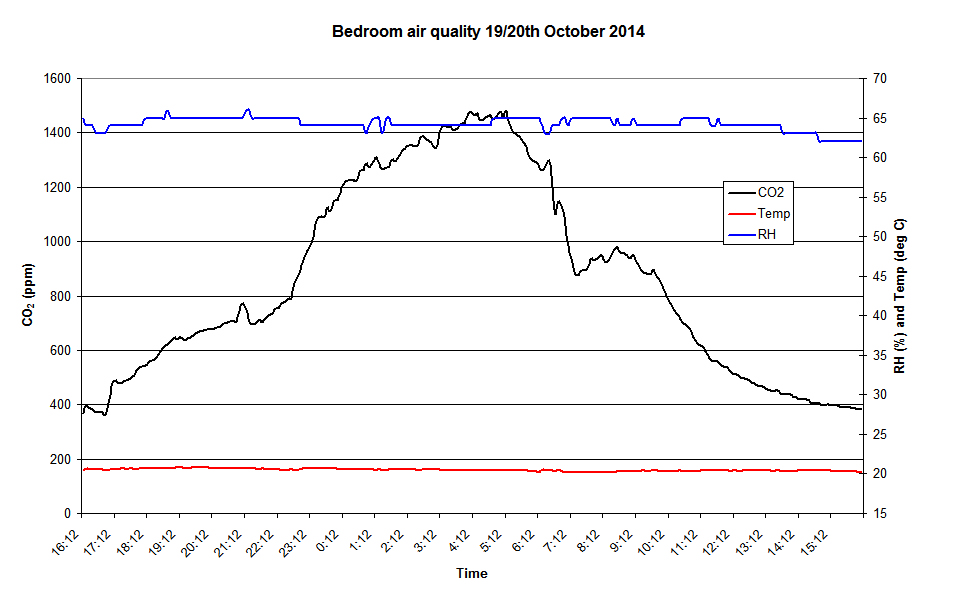
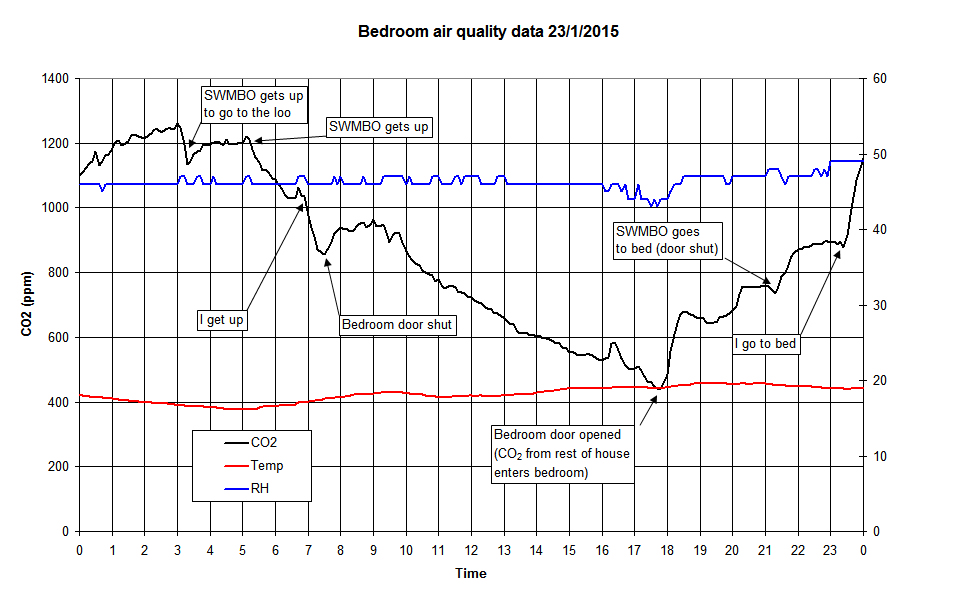
Thanks for digging that out. I have the graphical data from that bedroom air quality measurement: and also a later measurement I took where I annotated the plot with some event details:
- 1 reply
-
- 2
-

-
MVHR with active cooling
Jeremy Harris replied to worldwidewebs's topic in Mechanical Ventilation with Heat Recovery (MVHR)
Yes, that's exactly the sort of thing, except I think that one is intended to run on a refrigerant circuit, rather than a water circuit (both are available and are similar internally). Typically these units are OK for a couple of kW each, some up to around 4 or even 5 kW, so a lot more powerful in a room than an MVHR cooled fresh air feed. Our Genvex can deliver around 1kW of cooling to the whole house, maybe at best 200W to a single room. -
I think the general definition (although I've not seen it written down) is that waste water only becomes waste after the trap. If this is the case, then there is scope for making a single-walled version. It may well be how the Heat Squirrel ( http://esavep.com/index.php/air-source-products/waste-water-heat-recovery.html ) got away with it, as that definitely did not have a twin wall pipe system when I looked at the cutaway drawing that they had on a stand at a show years ago. It was just a tank to hold waste water with a conventional coiled pipe heat exchanger in it that the incoming cold feed went through. Maybe it was also a big trap, and worked by not having a trap on the feed to it. I discussed it with the ESP people a few years ago, as I was very interested in it (and in their Ecocent and the other Chinese ASHPs they were selling), and they assured me that it was legal, even though I couldn't see how on earth it could be. Then again, very nice and helpful people as they are, I'm not at all convinced that ESP are really that ethical; one look at their use of images and diagrams taken directly from the Genvex manual, and the use of a photo of a Genvex in their advert for their Chinese-made copy of a similar unit, has left me wondering a bit about whether they are overly concerned with the fine detail of laws and regulations.
-
MVHR with active cooling
Jeremy Harris replied to worldwidewebs's topic in Mechanical Ventilation with Heat Recovery (MVHR)
This Daikin brochure has some info: www.daikin.co.uk/binaries/ECPEN13-410_Fan%20coil%20units%20with%20BLDC%20technology_UK%20version_tcm511-291488.pdf Most seem to be unhoused units, intended to be built in to spaces, with just a couple of grilles for the inlet and outlet air, but there are some around that look very much like conventional split air con internal units. A search for "fan coil" units will probably find load of industrial looking things, but there are some that are sized so they could fit in a floor/ceiling void, for example. -
It is odd, but I looked into it, to the extent of making up a prototype short version, using just an annular water jacket, before I discovered the quirks in the regs. IIRC I may have partially documented it on the GBF, as it was several years ago. I bought short lengths of pipe from ebay and brazed the thing up. The bit I had to play around with was getting the tangential inlet to work. It's essential that there is a lot of swirl in the waste water, so that it both contacts the side of the waste pipe and to slow it down, vertically. There was a bit of playing around to get the water to swirl enough that it would stay stuck to the inside face of the waste pipe. Just dumping waste water down the thing meant it barely touched the sides, and heat transfer efficiency was pretty low.
-
The Recoup units don't have smooth walls where they are pressed together, there are longitudinal grooves so that any leakage can flow down,escape from the lower vent and be seen, which slightly reduces the contact area, but allows compliance with the regs. There used to be a cross-section graphic showing this, but I've had a look and cannot find it, it may have been taken down because others were copying it. I agree that a failure is both unlikely and even less likely to result in contamination, but then the regs were not designed to be flexible enough to cover waste water heat recovery, and haven't been amended.
-
There has to be an air gap. The regs prevent you from having what amounts to a single wall between a pipe containing potable water and a waste water pipe, so brazing or soldering the cold water pipe to the waste water pipe would be a breach of the regs. It's why the efficiency of the commercial units is rarely better than 50% or so; they have to comply with the regs and leave a tiny air gap and also provide a visible indication that either pipe has failed, by means of drips coming out through that air gap drain space.
-
IIRC, the carbon block filter fixed the problem originally, didn't it? They have a finite capacity for absorbing H2S, so in all probability the cartridge needs replacing. As it's not that long since the filter was fitted, I suggest that for your permanent supply you look at fitting a proper H2S oxidation system. The system we have works OK, and uses an air space above a backwashable sand and oxidising catalyst to remove both the H2S and ferrous iron. It should work OK to just remove H2S, but if in doubt give the UK supplier (GAPS Water) a call and ask, I've found that they are very helpful. The kit is American, purely because a very large number of homes in the US use private wells, and a lot of them (particularly in places like Florida) have high levels of H2S in the water. The filter we have is on the large side for our requirements, and knowing what I know now about the needed backwash flow rate to clean the filter I should have opted for the next size down. Ours is the 12" x 52" Aquamandix iron and H2S unit, with the air draw kit (this one: http://www.gapswater.co.uk/acatalog/Aquamandix---sand-mix-Simplex-system-with-Autotrol-Logix-263-740-digital-TIME-controller-2968.html#SID=241 ), but for just H2S removal they offer a similar system, here: http://www.gapswater.co.uk/acatalog/copy_of_Hydrogen_Sulphide_Filters.html that uses a different media and is focussed more on removing H2S rather than iron and manganese.
-
There are commercial units. The people that sell the Ecocent were selling a thing called the Heat Squirrel a while ago, and may still sell it. It sounded dodgy to me in terms of compliance with the water regs, but it was a chamber in the main drain into which the waste water was fed. It had a heat exchanger coil in it and that was connected to the incoming cold water feed to the hot water system, as a pre-heat system. There's also at least one waste water heat recovery unit on the market that's designed to be fitted vertically. The Recoh-Vert was probably the first : http://shower-save.com/products/recoh-vert.html but there are a few others around now. http://www.ithodaalderop.com/products/heatinghot-water/shower-heat-recovery/ http://www.recoupenergysolutions.co.uk/products/ I looked at making one, but the required air gap between the twin walls needed to comply with the separation of fresh and waste water in the regs was a potential problem. I was going to just use a length of 50mm copper waste pipe wrapped with four parallel coils of copper microbore pipe, with a for way manifold at each end to join the microbore back into 15 or 22mm. 50mm copper waste pipe will fit standard 50mm waste pipe compression fittings, but you need to fit a swirl unit at the top to get the warm waste to stick to the inside face of the waste pipe. A tangential pipe brazed at right angle to the top of the vertical waste should create enough of a swirl to work.
-
MVHR with active cooling
Jeremy Harris replied to worldwidewebs's topic in Mechanical Ventilation with Heat Recovery (MVHR)
First off. MVHR air cooling is pretty ineffective in practice. It may well be rated at a reasonably high cooling capacity, but the air flow rate has to be high in order to deliver that, and the MVHR just cannot usually deliver enough cool air to make a significant difference. The suggestion of cooling the kitchen and letting the MVHR cooler extract handle the distribution is just daft, on a couple of levels. In summer the MVHR will be on bypass, so all that will happen is that the cooler air will be blown straight outside. There's also the point already made that even if the cooler air was magically made to flow around the MVHR system somehow, then it would have very little effect because of the low flow rate and low temperature differential. The suggestion itself shows a staggering level of ignorance by the PHPP chap that would have me concerned enough to doubt every other thing he's done or said. It really is a very fundamental flaw in his understanding of core principles of heat transfer and the way MVHR operates. As above, duct coolers are the same in performance terms as an active MVHR, like the Genvex Premium range. On the other hand, there are wall or ceiling mounted fan coil units that have a massive greater cooling capacity, because they recirculate room air at a very much higher flow rate than the MVHR. Floor cooling certainly works well for us, where we have a significant area of stone flooring that would otherwise get heated by solar gain and transfer that heat to the air in the house, but it may well not be a universal panacea, as it will depend on whether the solar gain is heating a significant floor area, or whether it's mainly heating walls, kitchen surfaces etc. If it's the latter, then floor cooling may well not be that effective. -
The building regs relate to the habitable floor area, or are meant to. This means you should be able to argue that your loft space is not habitable floor area, does not need habitable space levels of ventilation, and therefore should not be included in the floor area calculation for Part F. I excluded the area of the unventilated eaves storage areas from our house when doing the Part F compliance report and it was passed without question.
-
MVHR with active cooling
Jeremy Harris replied to worldwidewebs's topic in Mechanical Ventilation with Heat Recovery (MVHR)
It might also be worth looking at what is going on in this thread (towards the bottom): where I'm currently looking at the effectiveness of external films applied to glazing to significantly reduce the solar gain (as in by 60 to 70% or more). External blinds would very definitely have been a better option, but weren't possible for the gable and would have caused further planning problems on other windows, whereas the film doesn't. -
MVHR with active cooling
Jeremy Harris replied to worldwidewebs's topic in Mechanical Ventilation with Heat Recovery (MVHR)
Yes, it would do the air cooling. Recently I was looking at fan coil units, as these are designed to take chilled water (from an air-to-water ASHP) and work pretty much like conventional split air con units. Many are commercial-looking, but there are some around that look like any other wall or ceiling mount unit. -
Sealing a masonry "pond"?
Jeremy Harris replied to Jeremy Harris's topic in Landscaping, Decking & Patios
It's called a cock-up, when you put the Bradstone in the wrong way around.......................... (they are faced one side, or both sides, and either one or both ends, sort of randomly) -
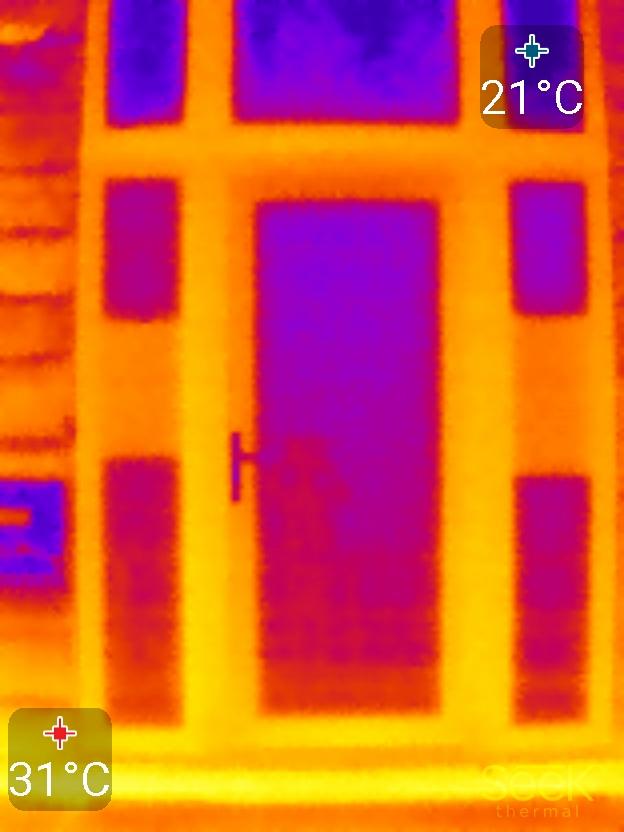
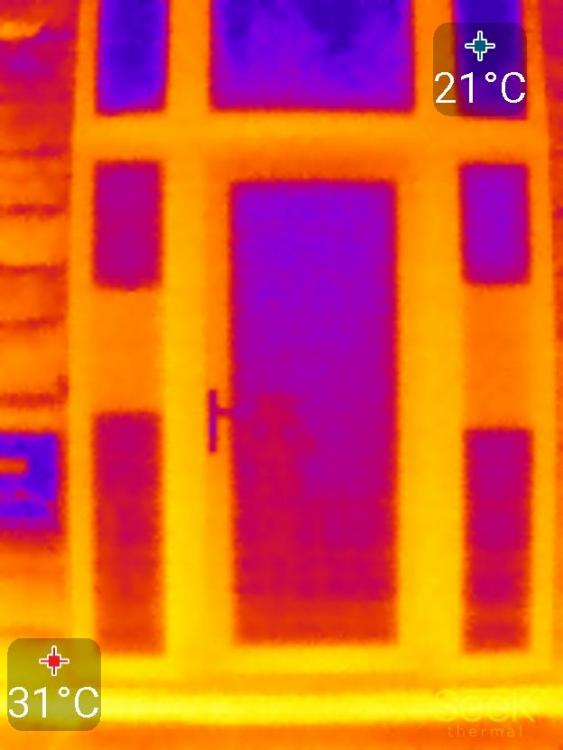
Not yet, the chap is sending me all the details next week, together with a thermal analysis of both systems when applied to our glazing. The warranty is longer on the 3M stuff (12 years IIRC) as it doesn't need edge sealing. Apparently the Sentinel Plus does need edge sealing, as it uses a metal sputtered internal film layer and this can corrode unless the edges are sealed after fitting. The 3M stuff has no metal coating, it's a multi-layer construction, that presumably relies on mixing film layers with differing refractive indices to get the performance. It's also more expensive. As soon as I have some more details I'll post them here, but based on the thermal image above I doubt that there's any significant practical difference between either film. The chap was saying that the almost clear version of the 3M film is very nearly as good thermally as the medium tint, as it really only reflects IR, and allows a fair bit of visible light through. Our choice will probably come down to the privacy enhancement, given the similarity in IR reflectance. Both of these films block around 95% plus of UV, which may be a consideration in some applications (although I think that triple glazing probably blocks a great deal of UV on its own). What I found interesting in the thermal image is that the plain glass was allowing the thermal imaging camera to read the room temperature from inside, so there was virtually no IR reflection from it at all from outside in (which fits with the spec for the glazing). You can also see how the floor inside the hall has warmed up, with the lower part of the glazing seemingly warmer than the upper part which is looking at the temperature of the wall to the rear of the hall. You can just make out the thermal reflection of me holding the tablet with the Seek Thermal camera up to the right of the door handle, and also the thermal reflection of the post and rail fence behind, so there is some IR reflection from the standard glazing, but not a great deal.
-
Sealing a masonry "pond"?
Jeremy Harris replied to Jeremy Harris's topic in Landscaping, Decking & Patios
Assuming 400mm depth (it'll probably be around 350mm depth in practice) then the static pressure at the base of the wall will be 0.0392 bar, or about 0.576 psi in imperial units. That's roughly 15% of the pressure an air bed might be inflated to. The pressure from filling it with pea shingle would be very roughly 50% higher, allowing for the internal friction angle and increased density of rounded shingle. The fibreglass skin won't increase the strength to any significant degree, as the wall will be far stiffer so will take 99%+ of the resistance to overturning, but priming with G4 and then laying up a GRP skin, finished with a gelcoat with added wax to ensure a tack-free cure (gel coat being a resin that will only properly cure under anaerobic conditions) does make a great deal of sense. I've not used G4 before, but a nephew worked at CFS for years and gave me masses of info on it, and other stuff, when two of us decided to do a garage roof in GRP (easy, tough, long-lasting, probably the best way, bar none, of doing a flat roof IMHO). I still have a big folder of info he gave me from all those years ago and looking through it nothing much seems to have changed. -
Sealing a masonry "pond"?
Jeremy Harris replied to Jeremy Harris's topic in Landscaping, Decking & Patios
I did look at using an EPDM liner, but because it's an annular space I'd have to have at least one welded joint, and it didn't look at all straightforward to fit. There would have been a lot of wastage, too, and I'd have had to bond the EPDM to the concrete, as there's no easy way to hold it in place. I'd also need to do a fair bit of work to get the inside smooth enough to not damage the liner, so thought that if I was going that far I may as well make whatever the smooth layer was, watertight. -
I've just been out and taken a thermal image of the glazing. Not ideal, as it's warm and overcast, with no direct sun, but the contrast between the glass and the patches of heat reflective film is marked: The cooler thing at the far left is a stainless steel mailbox.
-
Yes, downstairs is bonded with Sikaflex 95 directly to the concrete slab, with UFH (although the UFH never gets above about 23 deg C, so a much lower temperature than "normal" UFH). Upstairs the bamboo is bonded with the same adhesive directly to the timber flooring. Given that a new build is unlikely to run UFH at anything like the temperature that may have been required to heat older houses, it's probably not really an issue with many types of flooring now. Floors will get pretty hot with the sun shining on them, so it's hard to see how low temperature UFH could be a problem.
-
Sealing a masonry "pond"?
Jeremy Harris replied to Jeremy Harris's topic in Landscaping, Decking & Patios
I was thinking of just standing the mesh on some left over blocks (wasteful, but they'll probably be bigger jumper blocks of that Bradstone Buff, as I still have around two pallet loads of it left over). Somewhere I have some galvanised gratings that I could probably cut to fit; they are the stuff often used as elevated walkways and I scrounged some years ago and stacked it somewhere at home. That would be ideal, as it would take the weight of some cobblestones and also being walked on. There will be some sort of bird feeder nearby, along with some nest boxes, probably on the garage at the end of the garden in the shade, up near the eaves. SWMBO isn't keen on the resident ducks, because of the mess they make, but I'm just thankful they now crap on the newly laid lawn, as before that was laid they used to sit on the steps to the front door and crap there, so I had to clean it up practically every day. -
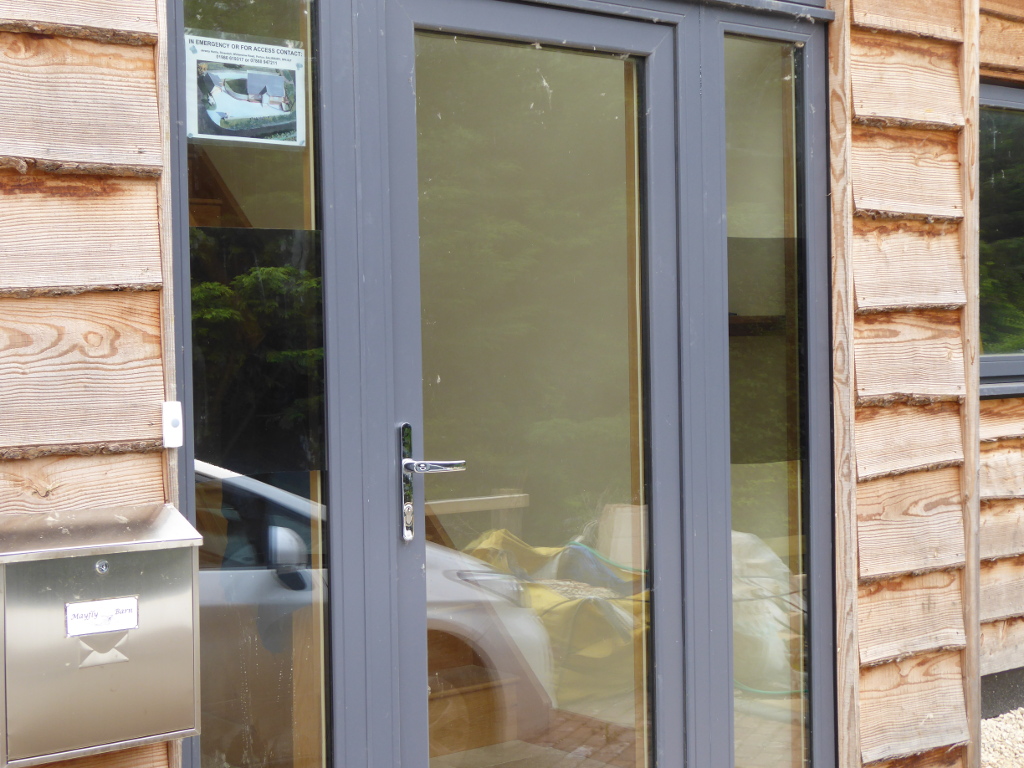
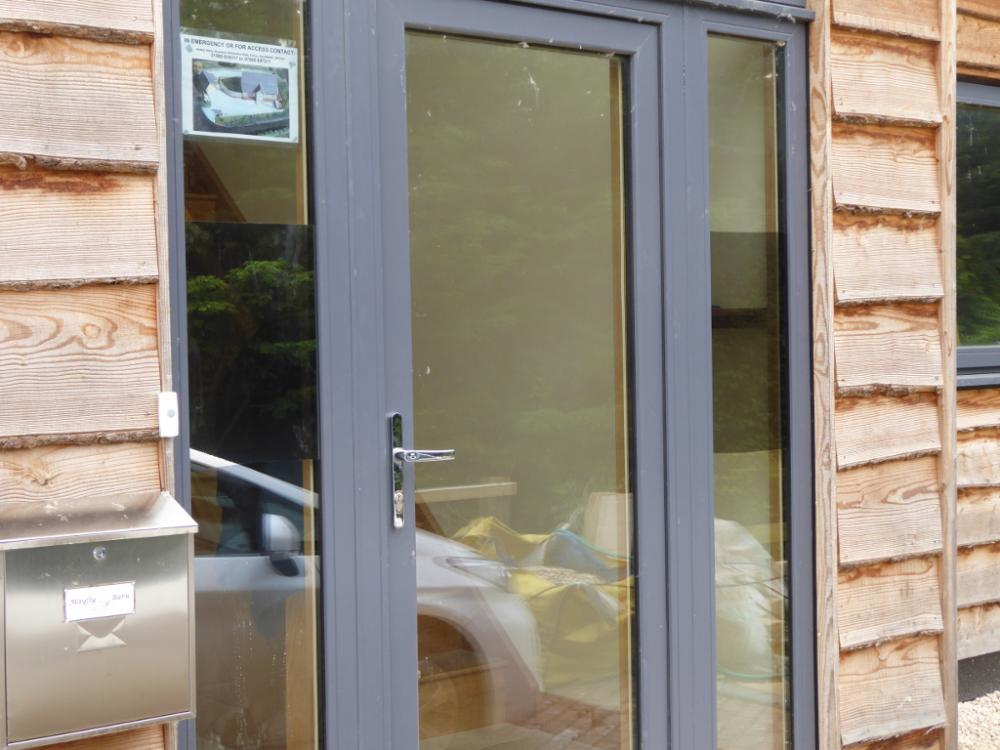
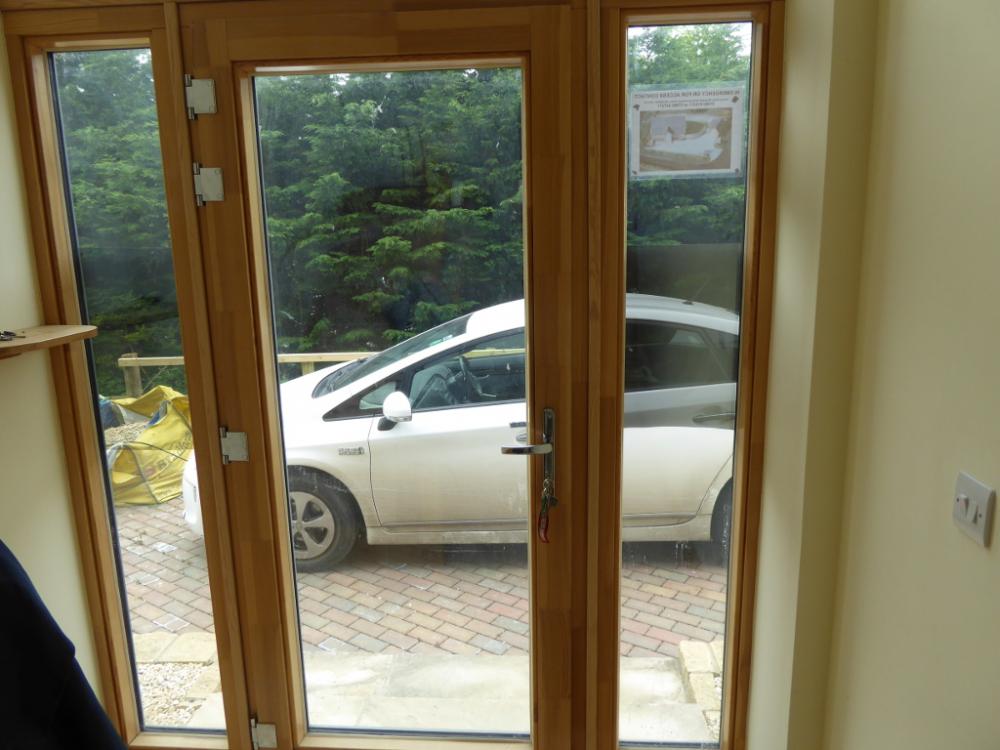
The chap's just left, having stuck a couple of samples on to the glass so we (well, more like SWMBO) can choose which we prefer. I have a sample of the Sentinel Plus Stainless Steel, which wasn't one I was interested in as in photos it looks very reflective. However, when stuck on the glass it looks less reflective than the plain glass; the advertising images are very deceptive. I also have a sample of 3M Prestige on the other side, a non-reflective, non-metallised, multi layer film than lets more light through than the Sentinel Plus. TBH, from inside the house you can barely notice either film visually, even though they are just squares stuck on to the windows. The Sentinel Plus is slightly darker looking, whereas the 3M Prestige is a bit lighter, and in terms of privacy the Sentinel Plus is definitely better. It's very hard to photograph this stuff, but here's a photo taken a short time ago from outside. The Sentinel Plus is on the left, the Prestige on the right: And here's a view from inside, with the Sentinel Plus on the right (please excuse the dirty windows - the whole house needs a damned good clean!):
-
Sealing a masonry "pond"?
Jeremy Harris replied to Jeremy Harris's topic in Landscaping, Decking & Patios
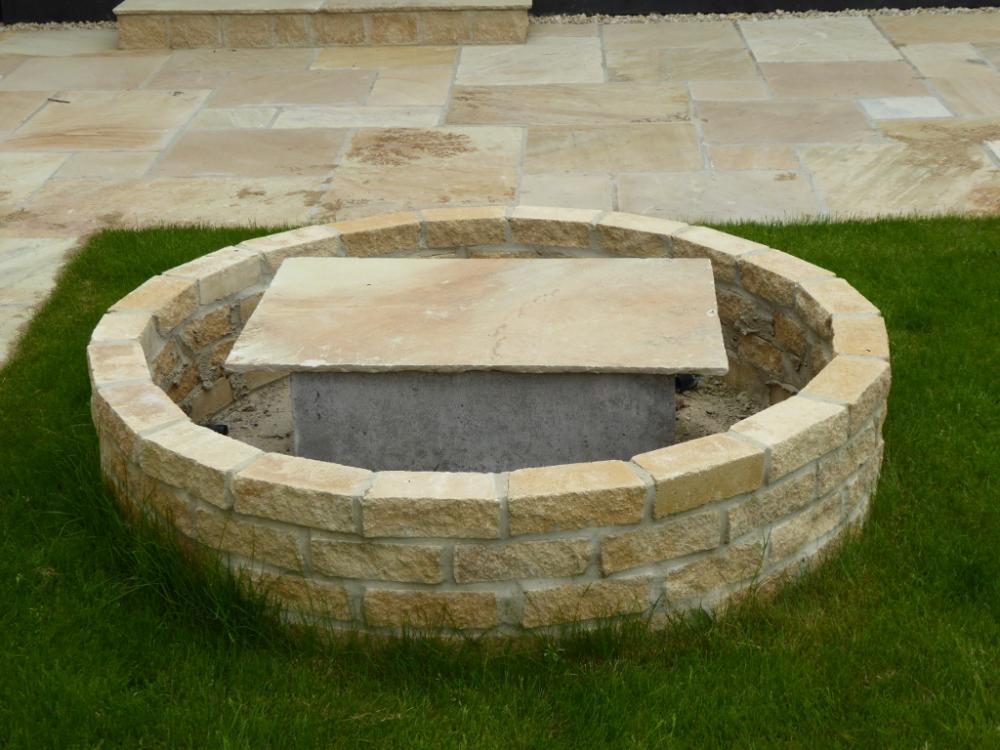
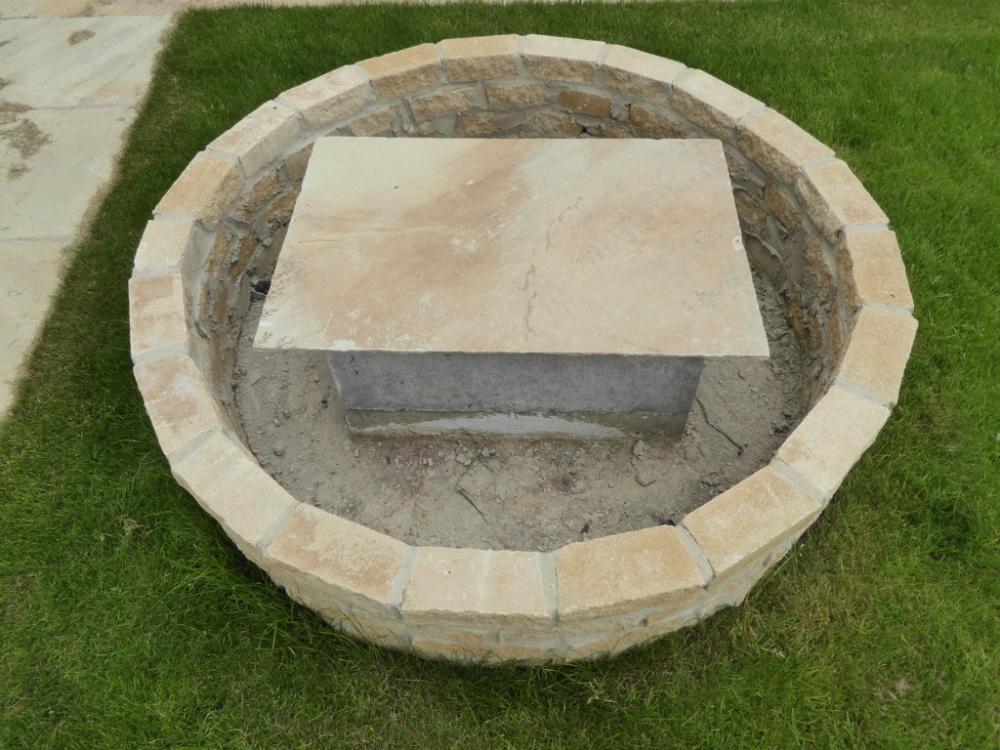
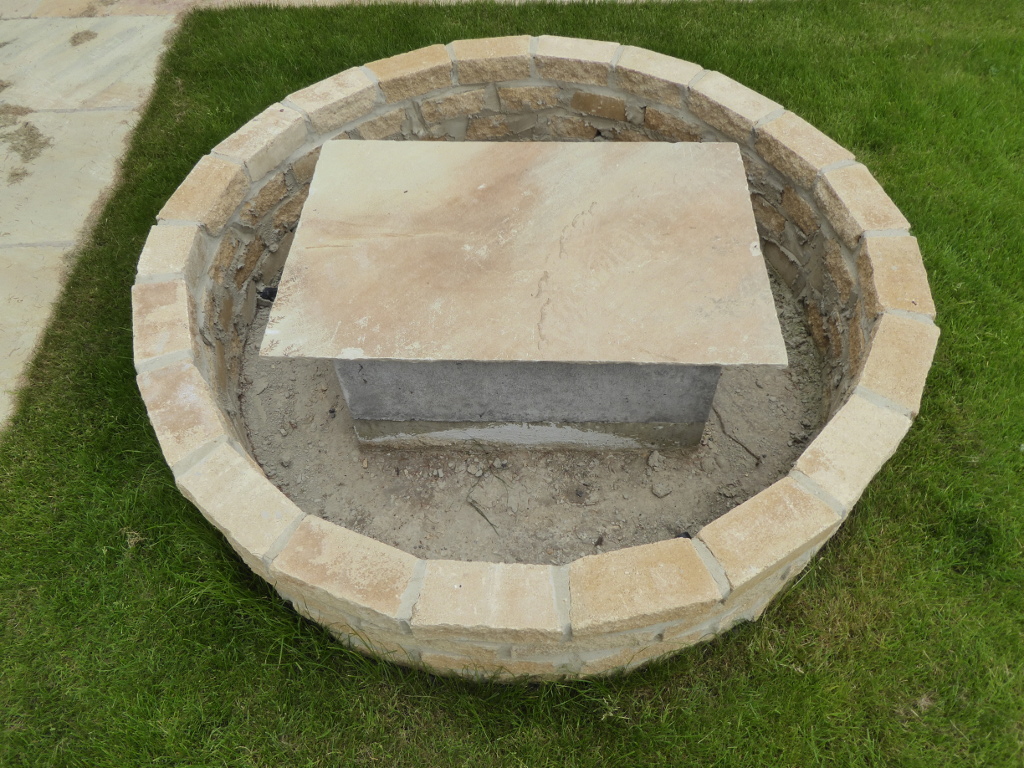
Thanks for the thoughts, they are much appreciated. Lining the inside with GRP may well be a better bet, especially as I have rolls of CSM and glass cloth in various weights, left over from boat and aircraft building, so all I'd need is some resin and concrete primer (as, IIRC, polyester resins are cure inhibited by alkaline materials like concrete). The drop in pond idea won't work because of the 600 x 450 chamber that pokes up in the middle, unfortunately. This is what the thing looks like now I've added another chamber section and put the sandstone slab over the top as a lid over the borehole head chamber: The pond is on the small side, so it may well be better to look at a non-pond water feature, using the annular space as a water reservoir with a small submersible pump in it. It'd be pretty easy to put a layer of heavy duty mesh in there, spaced off the bottom, and then have something like some rounded cobblestones interspersed with planting. I would like to make a small drilling rig, with a fountain spraying over a couple of models of drillers, but that would not go down at all well...................... Whatever we put on the stone slab needs to be removable, to gain occasional (as in every few years) access to the borehole head chamber, and a fountain type thing would probably look a bit naff. Something like a bird bath that gently overflows all around the edge and trickles over the stone slab and back down to the reservoir would work OK. I could easily drill a hole in the centre of the slab and seal a pipe in it for a water feed. In fact I could go one better if I fibreglass the inside of the reservoir, as I could also make a lipped GRP lid to fit under the stone slab (with a moulded in vertical pipe in the centre) and that would ensure that no water ran back under and into the borehole head chamber. Sadly it's not going to be big enough for our resident ducks: