Jeremy Harris
-
Posts
26430 -
Joined
-
Last visited
-
Days Won
360
Everything posted by Jeremy Harris
-

JCT Minor Works Contract with Contractors Design 2016
Jeremy Harris replied to Tabitha's topic in Introduce Yourself
The contract isn't yet valid, unfortunately. It doesn't become binding until there has been "an exchange of consideration", which would mean work done and payment made. As no work has yet started the contract is just an agreement that either side can walk away from. -
Depends very much on how much heating you need, as that determines the air flow rate needed. A low power unit, like the one linked to above, will work OK for hot water, and only needs ducts that are around 150mm to 160mm in diameter, but even that flows a LOT of air in order to just heat a hot water over a period of a few hours. Heating a very low energy house with an exhaust air heat pump works OK, but it needs careful design in order to ensure that it can work well with the required heat recovery ventilation system. There are units made by companies like Genvex that integrate heat recovery ventilation with a hot water cylinder and warm air heating that can work well, but only for a house that has a pretty low heating requirement. We have a Genvex heat recovery ventilation system that can heat the house with its integral air to air heat pump, but its maximum heat output is about 1.5 kW. That would be fine for our passive house, but it would be maybe a tenth of the heat that our old 3 bedroom bungalow would have needed.
-
Welcome. The volume of air that needs to flow through a heat pump in order to be able to extract enough heat for heating a house and providing hot water is large, so trying to duct air for even a fairly small unit, like ours, would mean using ducts around 600mm to 800mm in diameter, which probably isn't practical. Trying to use smaller ducts with a higher flow rate is going to significantly increase the flow noise, and would probably result in so much noise at the external terminals as to cause a noise nuisance (the flow rates are going to be similar to those from a commercial kitchen extractor). There are hot water only heat pumps that use smaller ducts, typically around 150mm to 160mm in diameter, but they are only really powerful enough to heat a modest sized hot water cylinder over a period of a few hours.
-
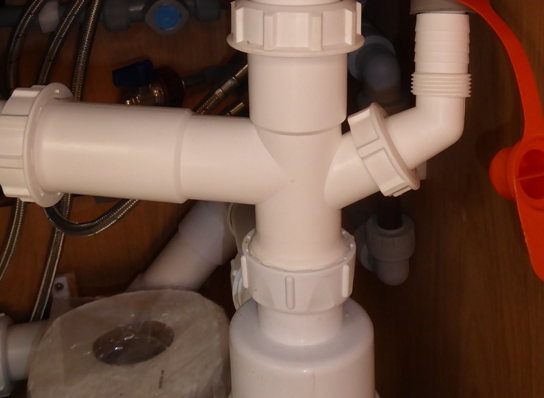
The smell may be unrelated to the fact that you recently had the treatment plant emptied. One thing I've noticed is that our kitchen sink sometimes gets a bit smelly. Having taken things apart under the sink, it seems that the culprit is the dishwasher connection (on the right here): It comes in above the trap, and "stuff" seems to build up around the point where it joins the smaller, vertical, sink drain pipe. I think that what might be happening is that stuff that gets washed down the main sink drain (the pipe on the left) gets splashed up the dishwasher drain and then turns smelly. The dishwasher only gets used every two or three days, and doesn't seem to use enough water to keep that pipe clean. I can usually fix things by just sluicing some diluted bleach down both sink drains, but have had to resort to taking the fitting apart once, in order to get the thing clean.
-
Temporary heat source for UFH: Willis heaters
Jeremy Harris commented on oranjeboom's blog entry in Kentish RenoExtension
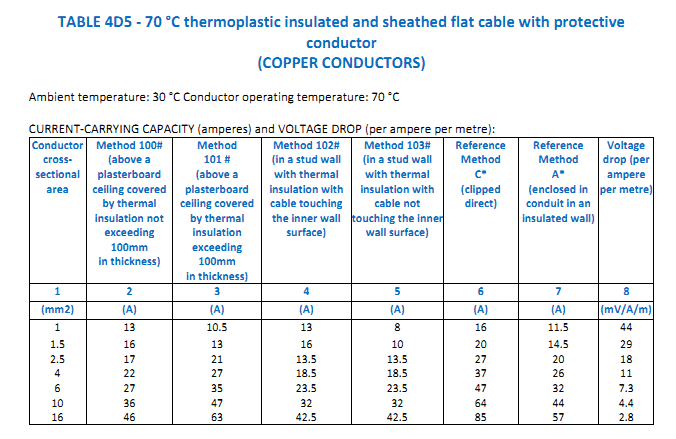
If I have understood correctly, then you're having 2 off ~3 kW Willis heaters, plus 2 off ~3 kW Sunamp heating elements. You could either run 4 off 2.5mm² radials (two for the Sunamps, and two for the Willis heaters) or two off 6mm² radials (one feeding two Willis heaters, the other feeding two Sunamps). The first option means using 4 ways in the CU, but does give the advantage of having each on a dedicated circuit, the second means using 2 ways in the CU. If you have room in the CU I'd be inclined to run 4 separate radials if it were me. Either is fine in terms of cable size when covered with insulation, voltage drop, etc, as in this table from the blue book, method 101, especially as only a very short length of cable will be under thick insulation anyway: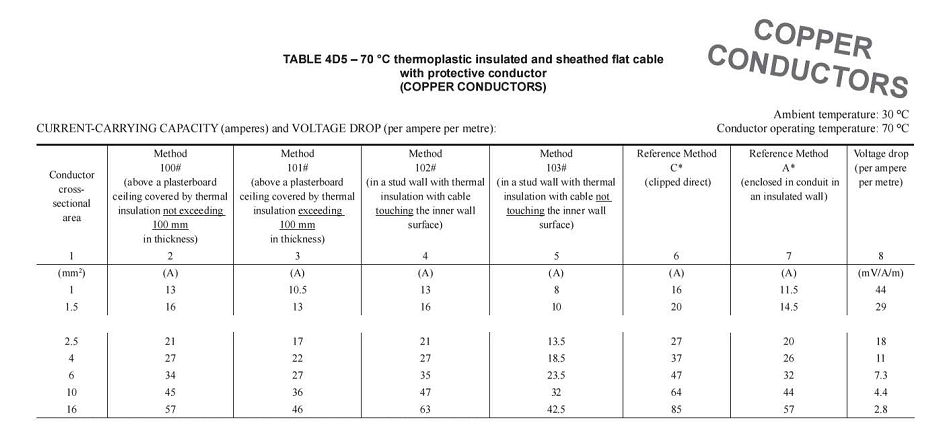
-
Puff the Magic Dragon, lived by the sea. . .
-
Komfovent MVHR
Jeremy Harris replied to Russdl's topic in Mechanical Ventilation with Heat Recovery (MVHR)
The Genvex we have is the GE Premium 1L, which has the following spec: GE PREMIUM 1 1L Iss 7.pdf The closest Komfovent unit to this seems to be the RHP 400, but the data sheet seems a bit sparse: RHP_400_V_EN.pdf The prices seem roughly similar, at around £5k, from what I've been able to glean from a quick search. -
Komfovent MVHR
Jeremy Harris replied to Russdl's topic in Mechanical Ventilation with Heat Recovery (MVHR)
No combined MVHR and exhaust air heat pump should ever freeze up, really. Certainly our Genvex doesn't, and that uses a normal plate heat exchanger. It's really hard to see how any heat exchanger could ever get both cold enough, and moist enough, to freeze up, as it's always being heated by the outgoing air from the house, which will typically be well over 20°C. Incoming air that's well below freezing will also be pretty dry, as most of the water vapour will have already condensed out. Hitting the warmed heat exchanger isn't going to cause any small amount of residual water vapour to condense. -
Komfovent MVHR
Jeremy Harris replied to Russdl's topic in Mechanical Ventilation with Heat Recovery (MVHR)
Rotary vane heat exchangers are common in larger, commercial, heat recovery systems. They can work well, but don't tend to outperform other types of heat exchanger. It looks as it these units have a heat exchanger efficiency of 80%, plus a heat pump, a bit like the Genvex unit we have. Our Genvex uses a plate heat exchanger, with an efficiency of about 88% (varies from ~83% to ~92%) -
I've often wondered how they deal with plumbing, as pretty much the whole of Europe uses Imperial BSP (British Standard Pipe) threads on fittings.
-
It does seem that Tesla have at least one Cybertruck demonstrator that they've taken people for rides in, so they must be a fair way on with development: It's clearly not based on any existing Tesla floor plan, as no Tesla has a tri-motor option, the only options are dual motor. It's also pretty clear that it's not using the Model X platform, as none of the numbers are comparable, plus the Cybertruck seems to be based on some of the much smaller Model 3 hardware (we already know that the Model 3 motors are probably going to go in the next generation Model S, and the dash on the Cybertruck looks very like that on the Model 3). These are the approximate Cybertruck dimensions: Wheelbase 149.9 in (3,807 mm) Length 231.7 in (5,885 mm) Width ~ 82.0 in (2,083 mm) Height 75 in (1,905 mm) And these are the Model X dimensions: Wheelbase 116.7 in (2,965 mm) Length 198.3 in (5,036 mm) Width 78.7 in (1,999 mm) Height 66.3 in (1,684 mm) The Cybertruck is way bigger than the Model X, and the Model X is a pretty big car.
-
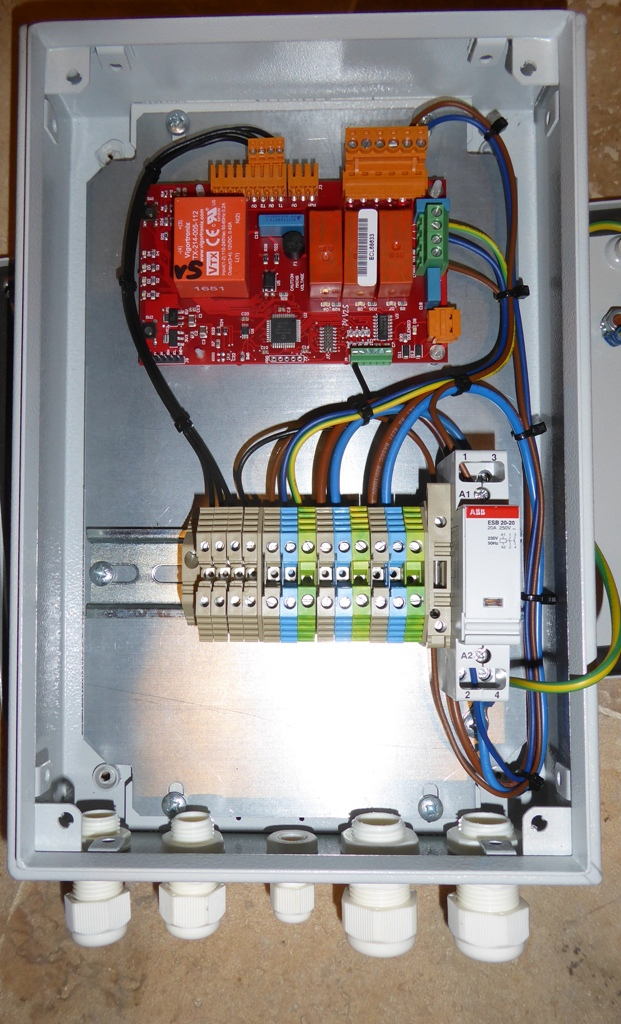
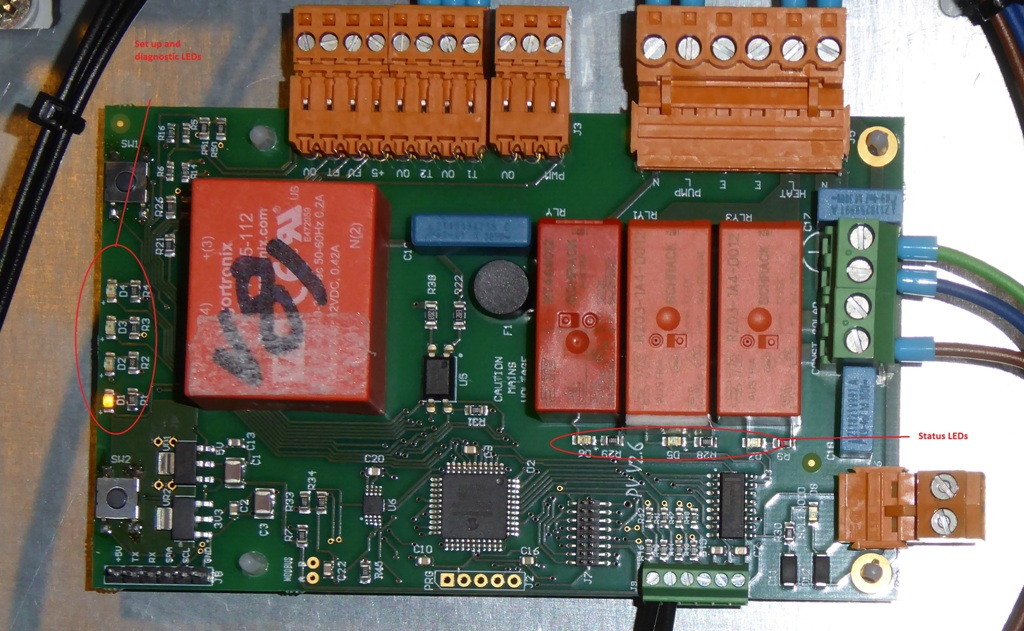
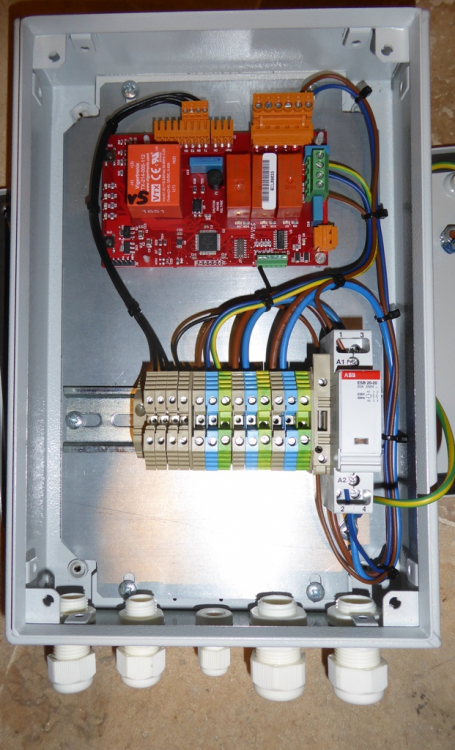
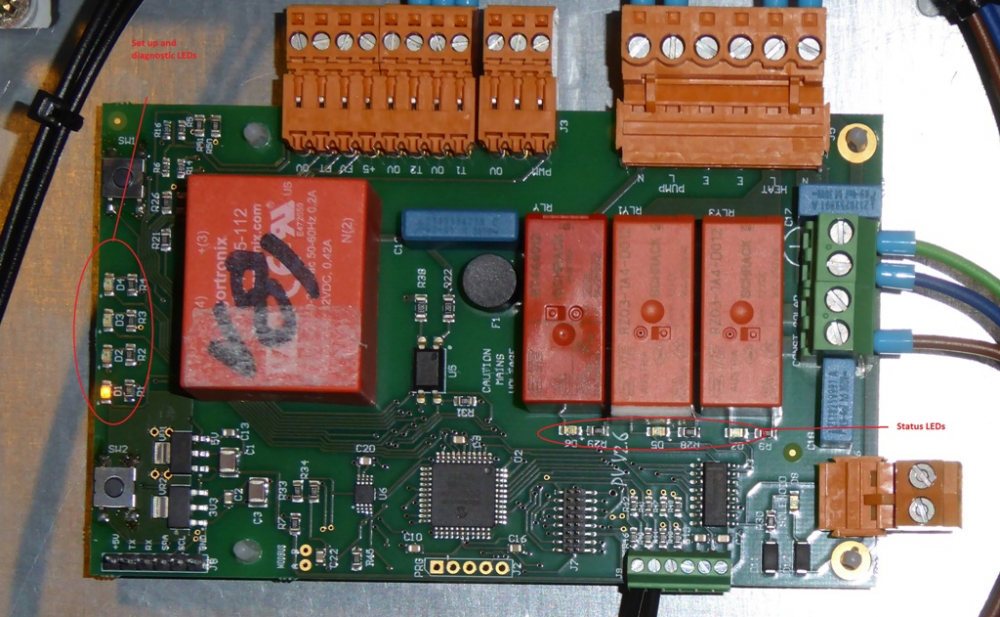
As you have two Sunamps, could it be that one is charging and the other isn't? There are a couple of known problems that can cause a Sunamp UniQ to stop charging. First is that on the early models the over-temperature cut-out could be prone to tripping. This is located behind the terminal cover at the base of the main unit, on one side. The cover has a couple of socket screws holding it in place, and the reset for the cut out is at the end, a push button that should click when pressed in if it has popped (make sure the power is isolated when checking this, as there are potentially live terminals behind this cover). The other know problem is one that I had, which is that the contactor in the controller can fail. The only way to check this is to remove the cover from the controller, and do the following (it's OK to remove the cover and power the unit on, as long as you take care not to touch anything inside). First check to see if the controller is calling for heat. There is an LED under a relay to the right that will be on if the unit is discharged and calling for heat (one of the status LEDs in the photo below, usually the middle one of the three): If this LED is on, yet the Eddi is indicating that the Sunamp is charged, then that pretty much proves that power is not getting to the Sunamp heating element. If the over-heat cut-out hasn't popped, then the next thing to check is to see if power is getting to the Sunamp controller heating circuit. Set the Eddi to boost, and with a meter carefully check to see whether power is available at both the incoming and outgoing sides of the contactor. The contactor will probably be a Finder one, and look a bit different to the ABB one in the photo below, but the connections should be the same (the Finder contactor in our controller failed, hence the ABB replacement): Terminals 1 and 3 at the top of the contactor are the incoming mains power from the Eddi. Terminals 2 and 4 at the bottom of the contactor are the power feed to the heating element in the Sunamp. If the contactor is energised then there should also be mains voltage across terminals A1 and A2, as these are the contactor coil. Only do these tests if you feel confident in using a meter around mains voltage, and don't try to check voltages with one of the voltage detector pens, as it almost certainly won't work reliably for this task. For more information, this is the point in the other Sunamp thread where I found that the Finder contactor had failed and replaced it: and this thread has more info on fault finding that may help, including a very useful tip about the Eddi settings that may be useful in your case:
-
I wonder if we could leverage the "power of BuildHub" to try and highlight the unfair way that HMRC are seeking to undermine rules intended to create a level playing field? We have a lot of members, and it seems clear that HMRC are using "bully boy" tactics to try to avoid their legal obligation to ensure that self-builders are treated in the same way as any other house builder within the UK. Not sure how best to tackle this, but it might be worth starting a thread, perhaps with a poll, to see just how much support we may get for lobbying government.
-
Not that surprising, given the way the Model 3 has been selling here. The Tesla Model 3 was the third best selling car here in August last year, behind the Ford Fiesta and the VW Golf.
-
Welcome. I had no self-build experience when we started out, either. I designed our house, once we'd bought the plot so could understand all the inevitable plot related, and planning related, constraints on the design (these always apply, as so much depends on location, orientation, access, services, planning restrictions etc). I had a fair bit of project management experience, but not in the domestic building environment, so I didn't feel confident enough to manage the risky ground works stage of the build, especially as we needed a lot of work to level our site and build a big retaining wall. I placed a firm price contract with a ground works company, to do all the work needed to get the site level, put in the services and build the retaining wall and temporary access drive. I then contracted with a frame supplier who also laid the foundations, as doing this reduced the risk of the foundation dimensions not being an accurate match for the house structure dimensions. This company provided the watertight, insulated shell, and I contracted separately for the supply and fit of the doors and windows, roofing and guttering, and external cladding. I did pretty much all the first fix work myself, plumbing, heating, ventilation system, and some of the wiring. I contracted a plastering firm to plasterboard and skim the interior. I also installed the kitchen, bathrooms, WC, flooring, etc. This saved a fair bit of money, but did take a fair bit of time, as it's not quick, working on your own. Our build came in at a bit under £1,350/m², which is fairly cheap, but this was a few years ago. Today I'd guess that around £1,500/m² might be closer to the cost, perhaps more if you aren't able to do much yourself, maybe less if you are, or if you live in an area where costs are lower.
-
Best to use bonded EPS beads, these are blown in with a light coating of PVA adhesive, so once they are in the cavity they all bond together and form a solid, but water permeable, block of EPS. This means there is no risk of loose beads settling or flowing out of any hole (although there shouldn't be any holes, as there needs to be a vapour control layer on the inside of the house with no holes in it).
-
Once you get a house down to where the heating requirement is around 1,500 to 2,000 kWh/year, it may well be possible to build an inter-seasonal heat store to meet the heating needs, but would it be cost effective? Our heating requirement is around 1,500 kWh/year, and with an ASHP running with a COP of 3 (in reality it's more like 3.5), run from off-peak electricity at 8.148p/kWh, the annual heating bill is around £41. An inter-seasonal heat store would have to be very cheap in order to make sense. We find that if our floor slab gets too hot it can take several days to cool down, and all the time the floor is too warm the house will be too warm. I would guess that a trombe wall would behave similarly. We take care to stop the floor slab getting too warm, by running the UFH pump to circulate water around and transfer heat from the warmer areas to the cooler areas. We also fitted solar reflective film on the windows that tended to allow sun to shine on the floor, to reduce the problem a bit.
-
Trombe walls as an idea have been around for a few decades, but tend to take up space and are far from being the best way to increase the thermal time constant (which is largely what they are doing). It's much simpler and easier to just design the structure to have a long decrement delay, be well-insulated and airtight. Solar gain is a mixed blessing in a low energy house in the UK. We find it's just a bloody nuisance, as all it does is make the house too warm. If you have a house that only needs a tiny amount of heating, the ability of the sun to chuck maybe 500 W to 800 W of heat per square metre into it becomes a real PITA. The real issue we have is getting rid of heat, not keeping the house warm. As a case in point, it was sunny here yesterday, our heating hadn't been on for a couple of days and despite all our measures to reduce solar gain, the house was close to 24°C by late afternoon.
-
We didn't, if by "register" you mean get an address put on the PAF and your local authority street and house naming register. Our electricity supply address was "The Plot" with the electricity supplier, with bills sent to the address where we were then living whilst we built the house. The only slight snag with this was that it took about three or four attempts to get them to change the supply address when we did give the house a name.
-
Woodworking tools have always been available in Imperial sizes, much like timber, some of which seems to have stayed Imperial in real terms, but just changed the labels to make it seem as if it's made to metric dimensions. I've just had a look at my set of Stanley chisels, bought around 20 years ago, and all are marked with Imperial widths. Even a Chinese-made "12mm" chisel I have here is really 12.7mm when measured, so is really a half inch wide, masquerading as a metric one.
-
I've seen a Twizy. More like a motorcycle than a car, with no glass in the doors, it's wide open to the elements.
-
Temporary heat source for UFH: Willis heaters
Jeremy Harris commented on oranjeboom's blog entry in Kentish RenoExtension
It's much more subtle that that, as the manufacturer's higher ratings for a cable in insulation show (and it's not just Batt, other manufacturers have their own specs and ratings). There has long been a debate about the way heat is dissipated from cables, and one factor that the rough and ready guidance in the OSG ignores is that most of the heat built up in a short insulated section of cable ends up getting conducted out of the insulated section, as the thermal resistance of the copper is massively lower than the thermal resistance of the insulation sheath and surrounding insulation. The result is that short sections of cable within insulation don't run anywhere near as warm as might be expected. The time factor is also very important, and the ratings assume continuous use at the rated current, whereas in a domestic installation it's rare for any circuit to be taking its rated current for more than a few hours, often a lot less. It's one reason why, despite it being commonplace for loft insulation to be laid over cables years after they were installed, including cables feeding things like electric showers, it's not that common to find a cable that's overheated in the middle of a run. Part of that is that the cable can safely operate at a fairly high temperature, usually higher than the stuff connected at either end (the classic being SWA, that is often rated by the manufacturer at 90°C, whereas switchgear etc is rarely rated above 70°C). It's reasonable that the guidance in the OSG errs on the side of caution, but the OSG is not regulation, or law, it's just rough and ready guidance to how the blue book might be interpreted, in short form, as an easy to reference guide. If someone chose to use, say, Table 4D5 from Batt, as they were installing Batt cable, then it would be perfectly legal to do so, as Batt have provided a clear specification for their their cable, showing that it complies with the requirements when used within their stated ratings. -
Looks like it, as in that last photo the tails are not connected, as there is no meter yet, they are just tucked away at the top left ready for the meter fitter to connect them to the meter. Worth noting the ownership of the various bits, as this may help. The incoming cable and head, with the company fuse, is owned by the DNO (Distribution Network Operator). The meter and the cable from the head to the meter is owned by the electricity supply company. The meter tails from the meter, and all consumer side wiring and equipment, is owned by the consumer. This is why the consumer side needs to be installed before the meter fitter arrives, as the tails need to be available, and safe, for the meter fitter to install and connect the meter.
-
Yes, in our case it's just an indication that the Sunamp controller has turned on the power relay that allows current to flow to the heating element. When the Sunamp controller senses that the unit is fully charged, this relay opens and the LED is turned off, indicating that the Sunamp is charged.
-
Temporary heat source for UFH: Willis heaters
Jeremy Harris commented on oranjeboom's blog entry in Kentish RenoExtension
Even applying a very conservative derating factor 6mm² is fine. The cable could be buried deeply in any non-EPS insulation and not have a slightest issue with over-heating. 4mm² would be OK if only covered with 100mm of insulation, and if not covered with any insulation, but clipped direct, 2.5mm would be just about OK (not that I'd recommend going down to this small a section cable for this sort of application). I well remember chatting to a chap from Batt during a break from an LV Directive Working Group meeting years ago, who was literally getting hot under the collar at the way cables were being very conservatively derated by the IET. There's often a fairly big discrepancy between the ratings that the cable manufacturer's publish and those in the tables in the blue book. I've never been sure why (and the Batt chap didn't know either). For example, this is Table 4D5 from Batt: Note that it gives a current carrying capacity of 27 A for 4mm² T&E when covered by more than 100mm of insulation above a plasterboard ceiling. By contrast, this is Table 4D5 from the current edition of the blue book: That gives the current carrying capacity of 4mm² T&E as being only 22 A when covered by more than 100mm of insulation above a plasterboard ceiling. Given that, in general, MIs should over ride anything else, and as BS7671 isn't law, it's just guidance, there is an argument that supports the view that we should use the manufacturer's data, as they are the ones that have tested and certified their own products.