
Nickfromwales
-
Posts
30328 -
Joined
-
Last visited
-
Days Won
296
Everything posted by Nickfromwales
-
Yup, that all makes good sense. . "Carry on"
-

WH toilet frame and MBC stud frames
Nickfromwales replied to ryder72's topic in Bathrooms, Ensuites & Wetrooms
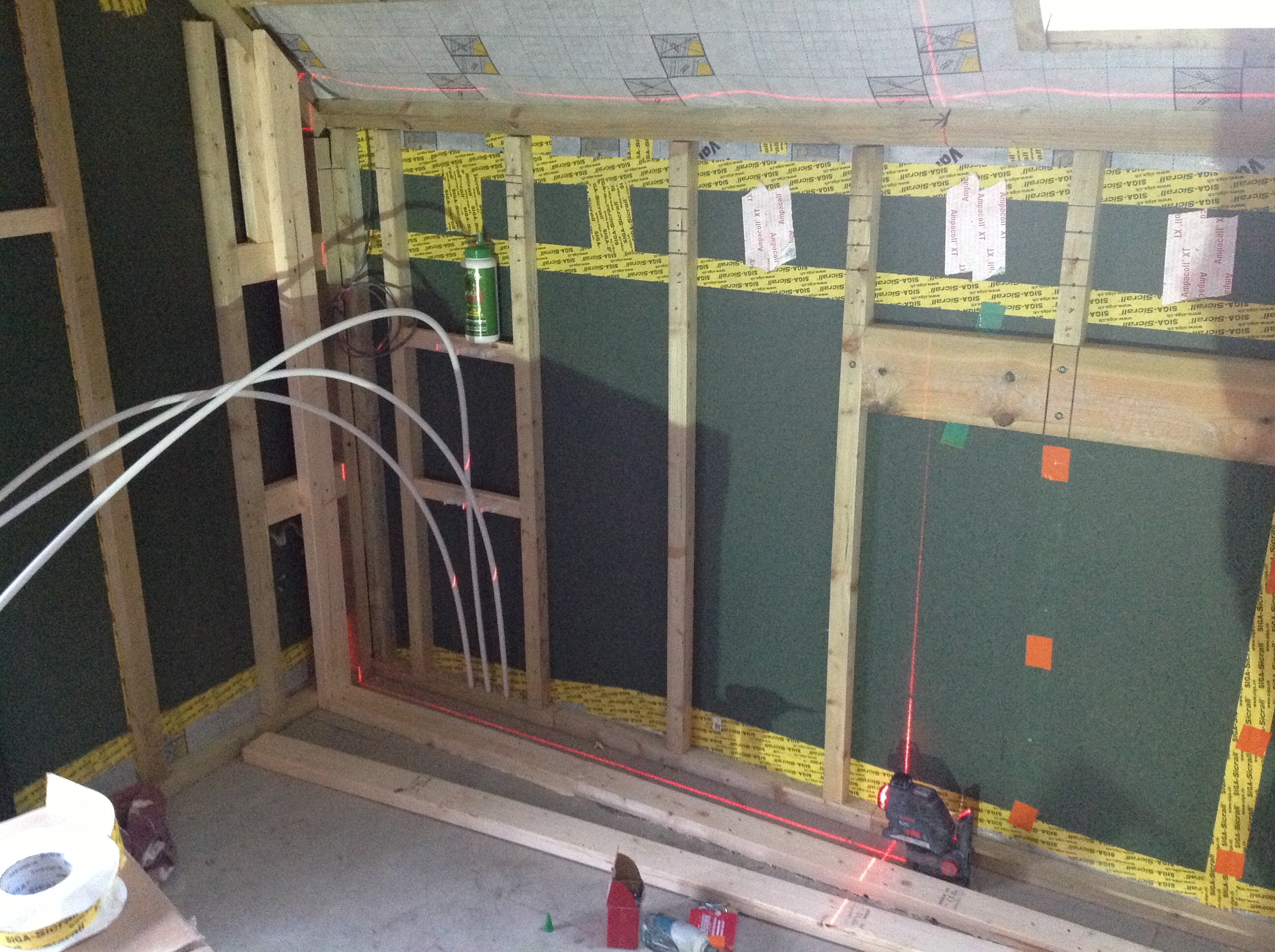
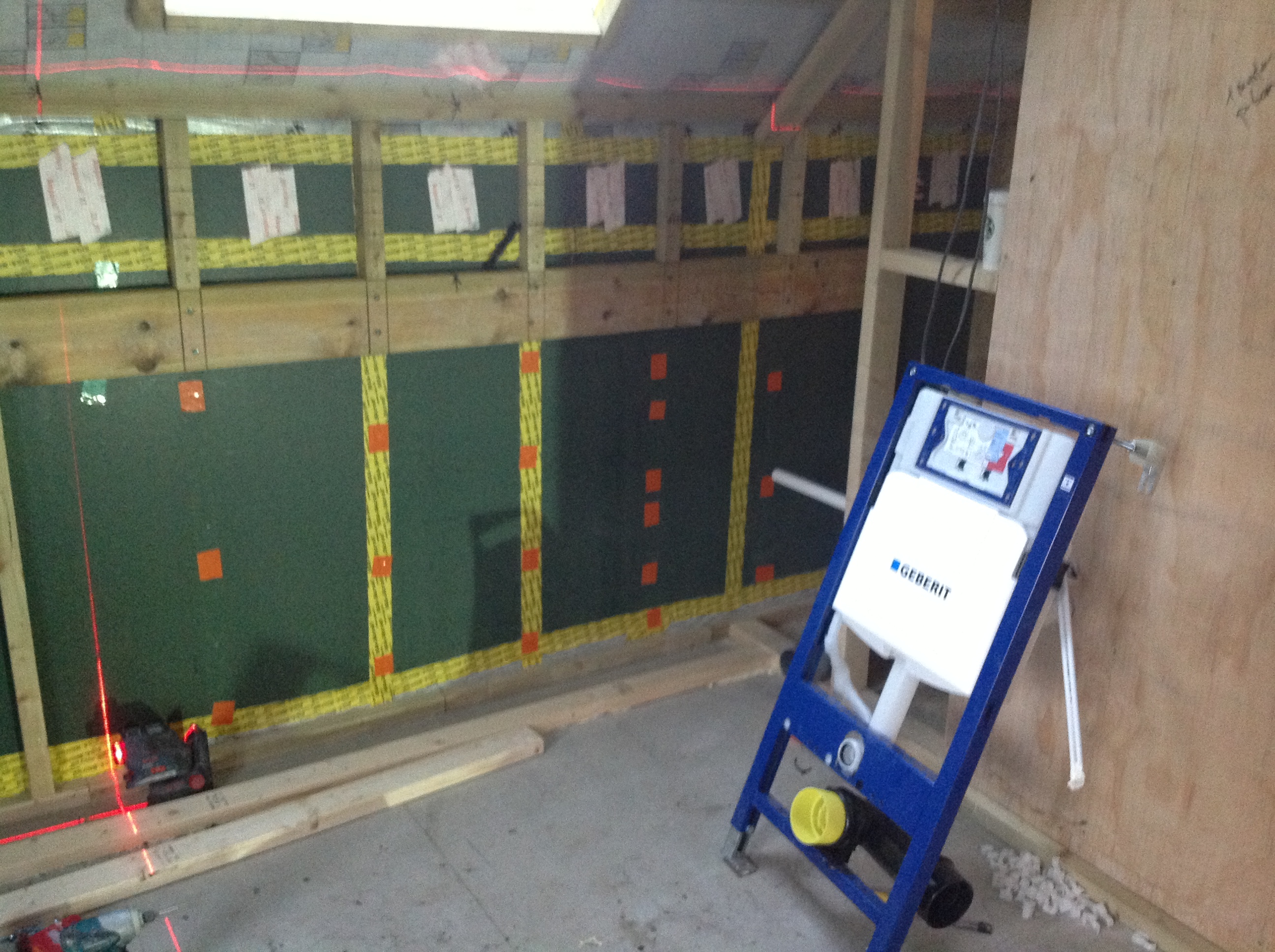
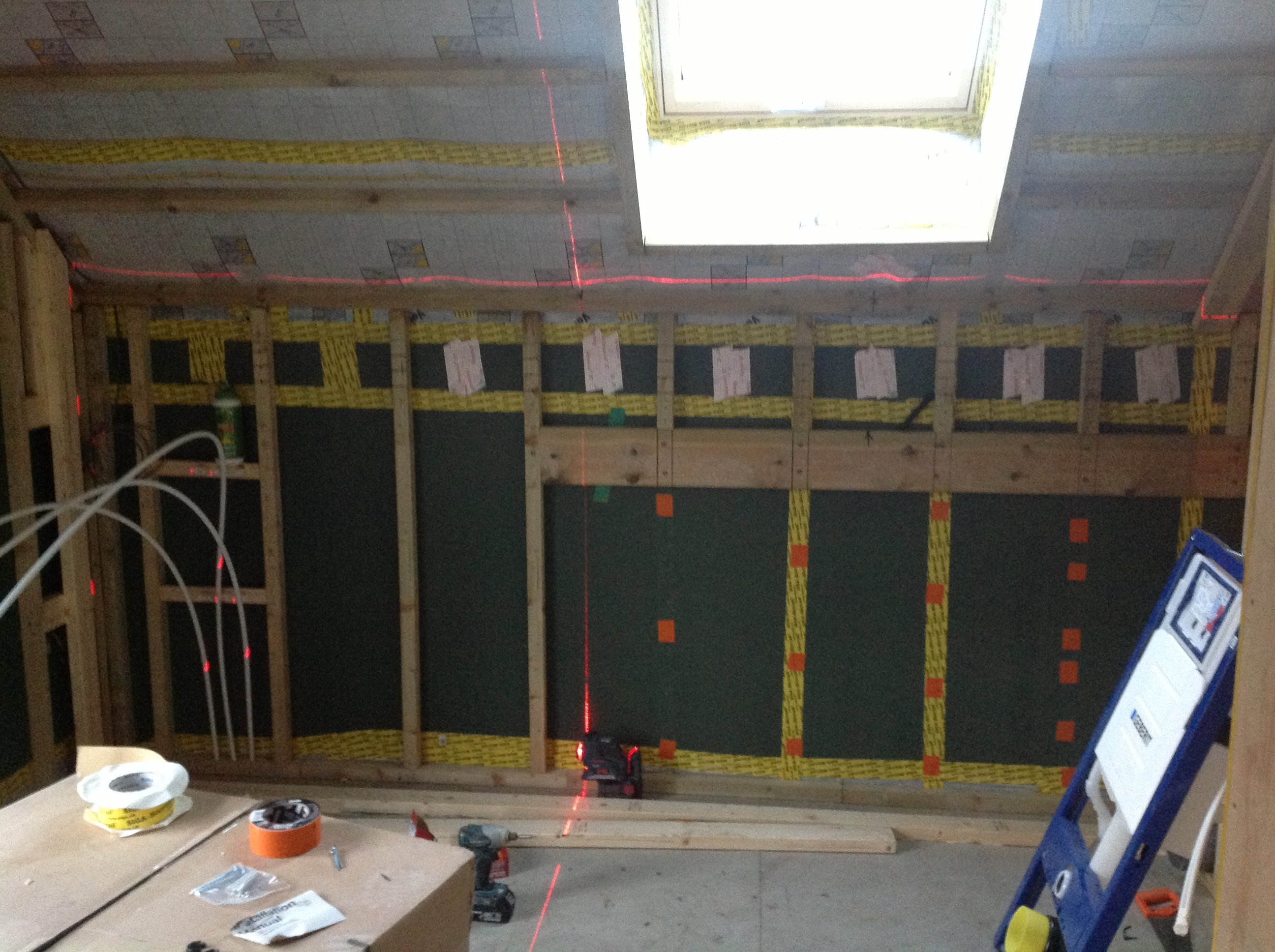
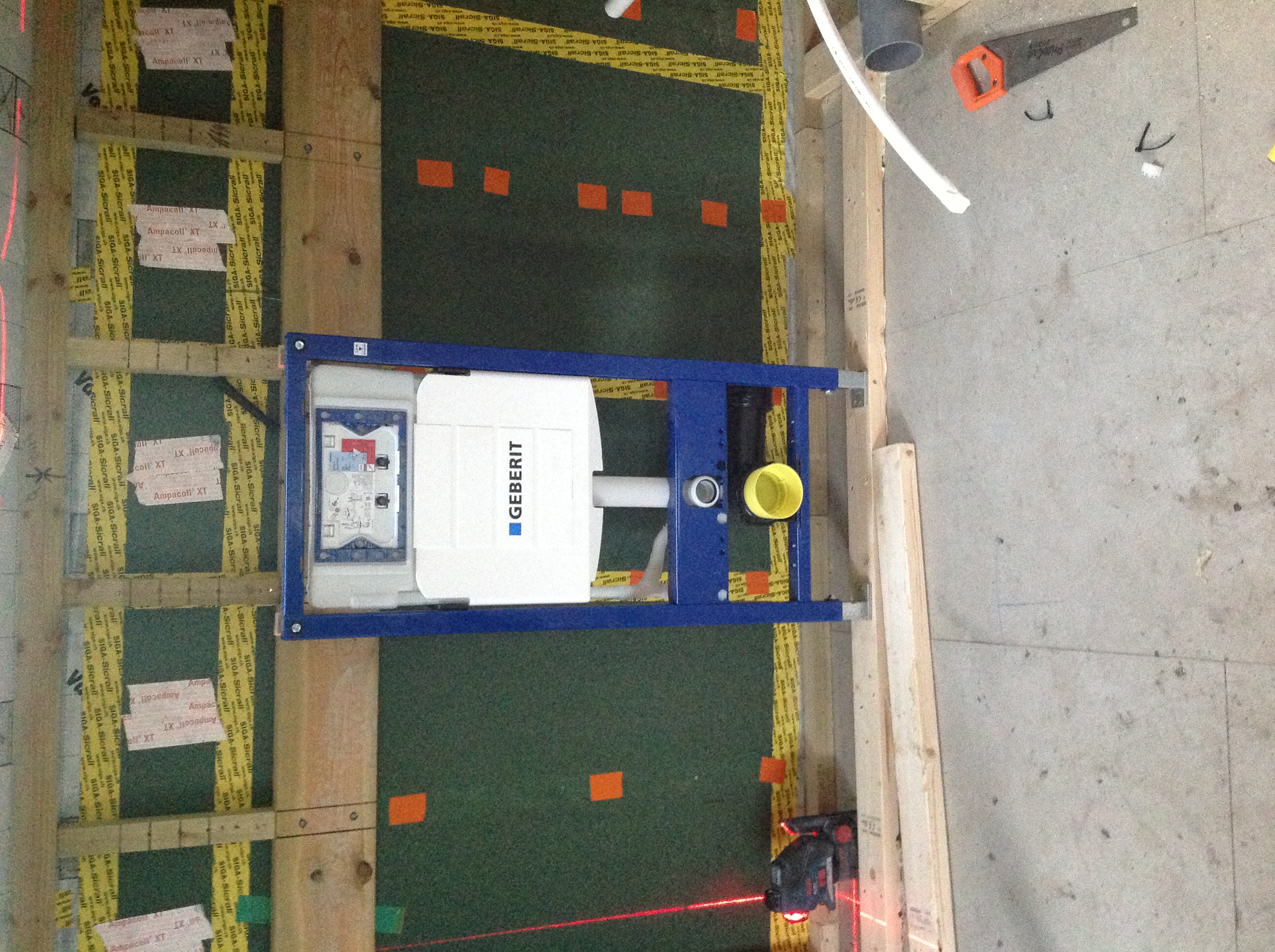
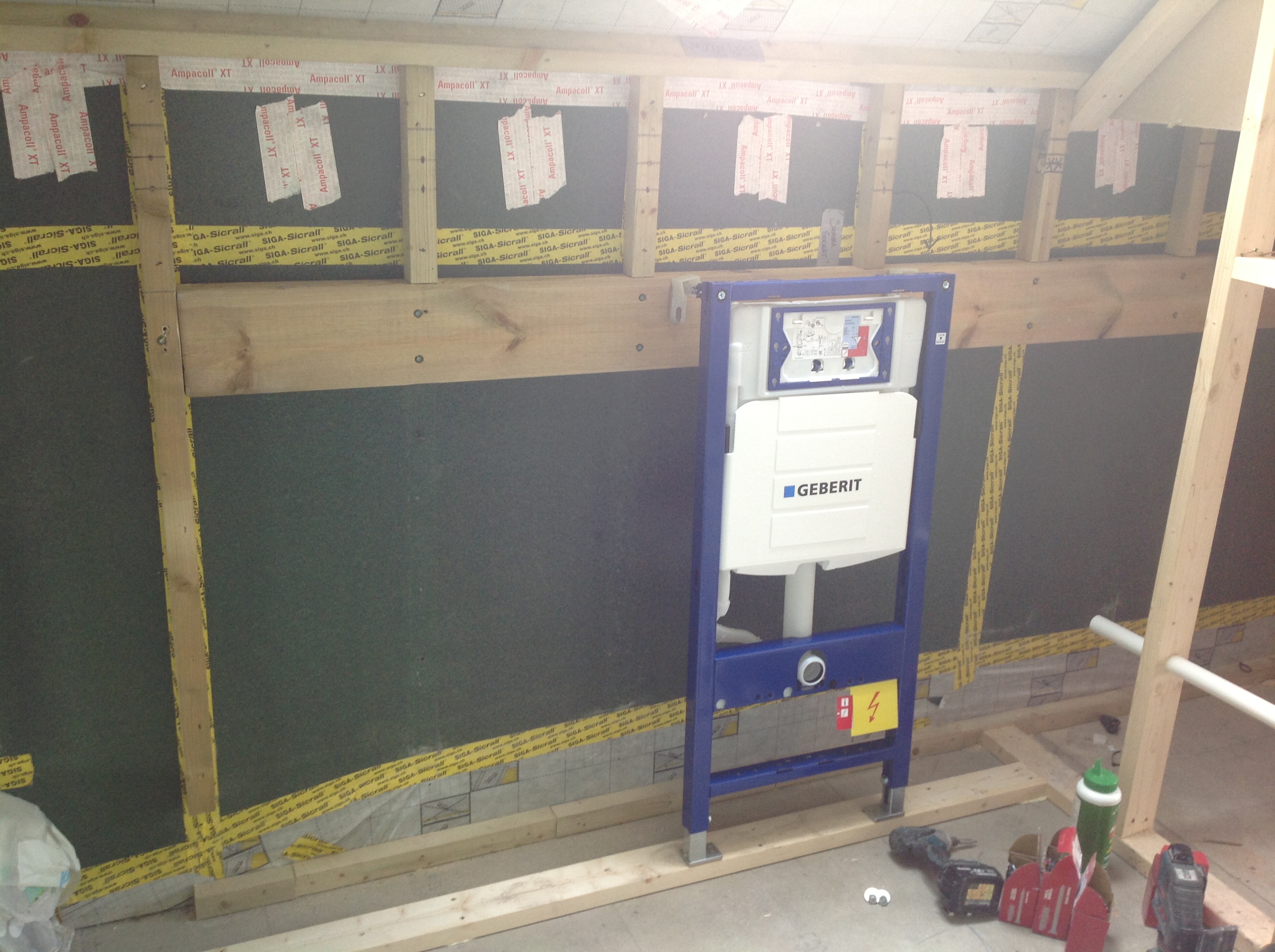
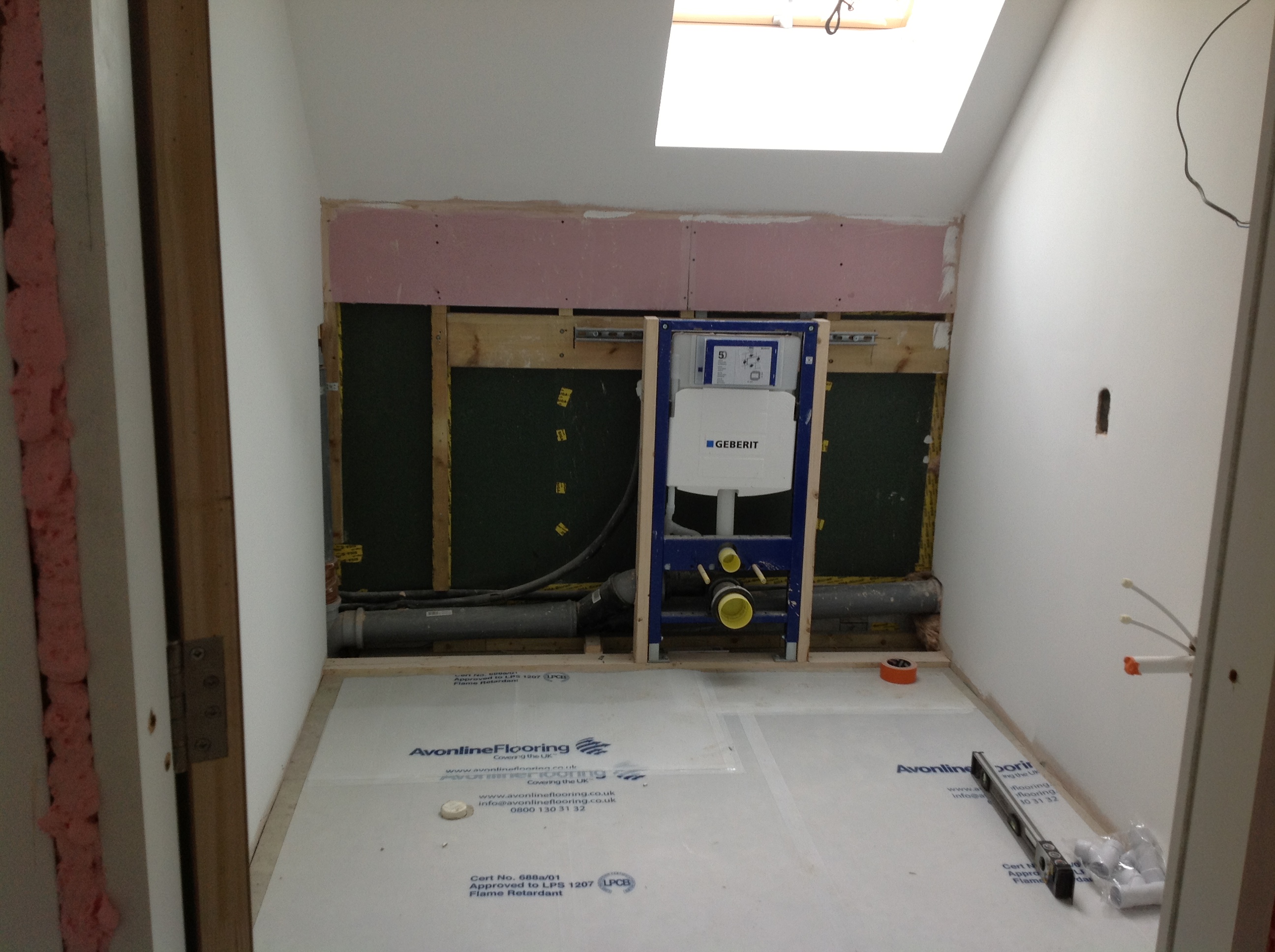
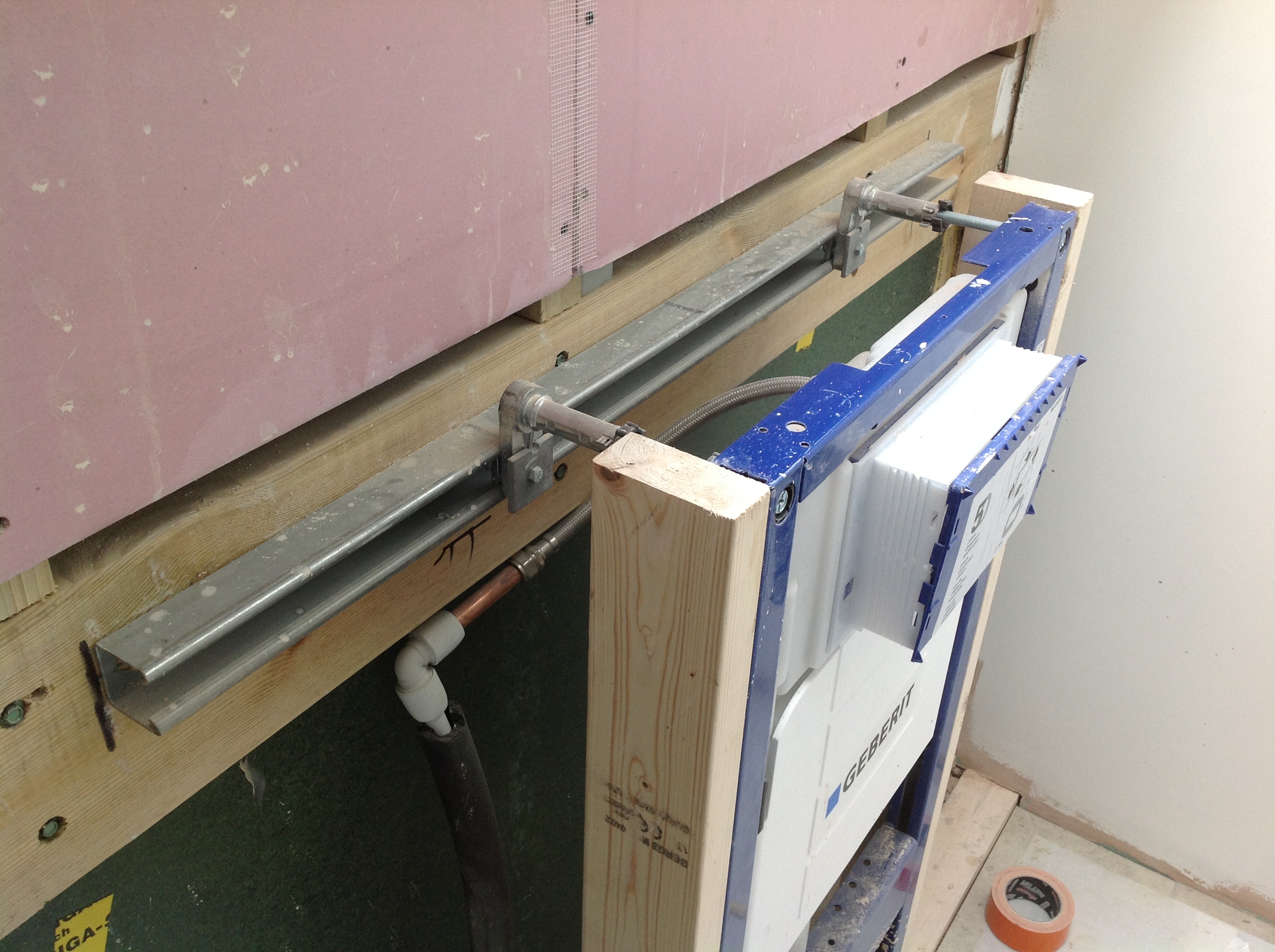
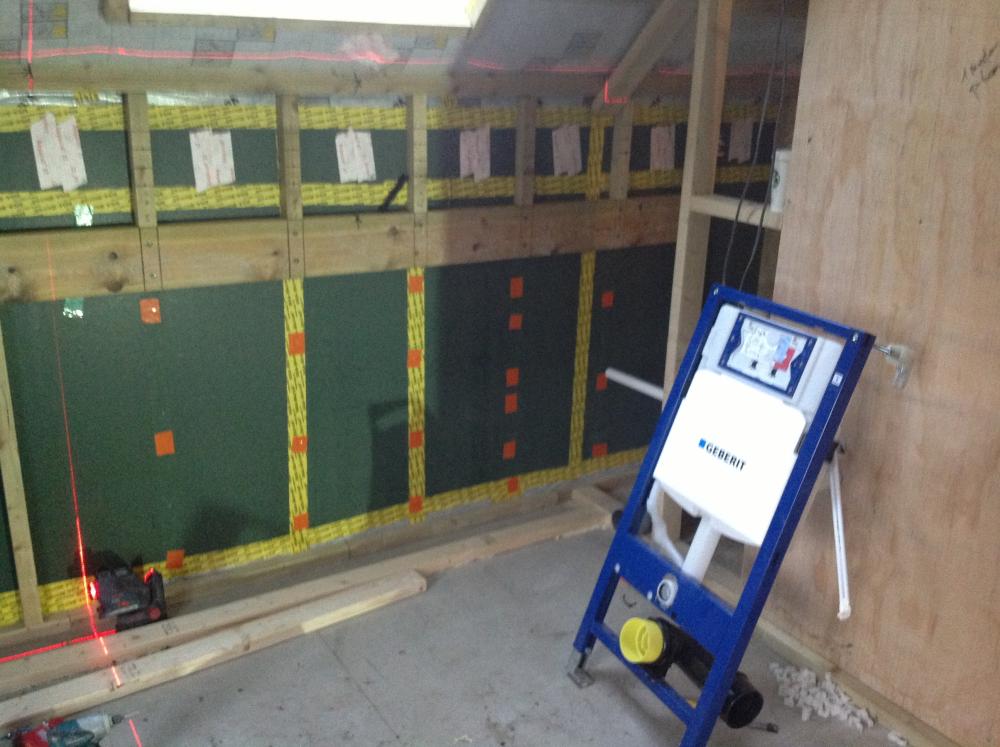
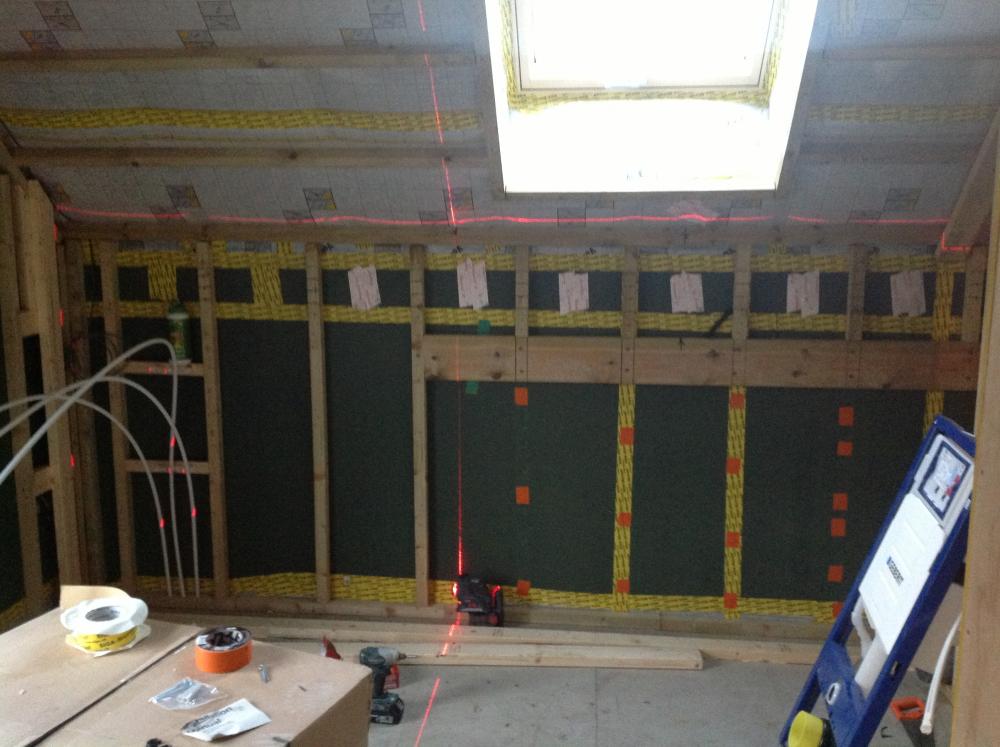
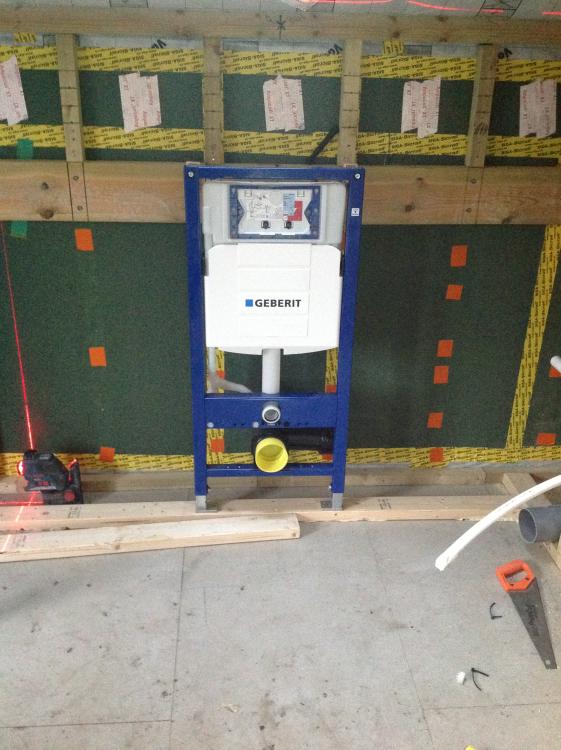
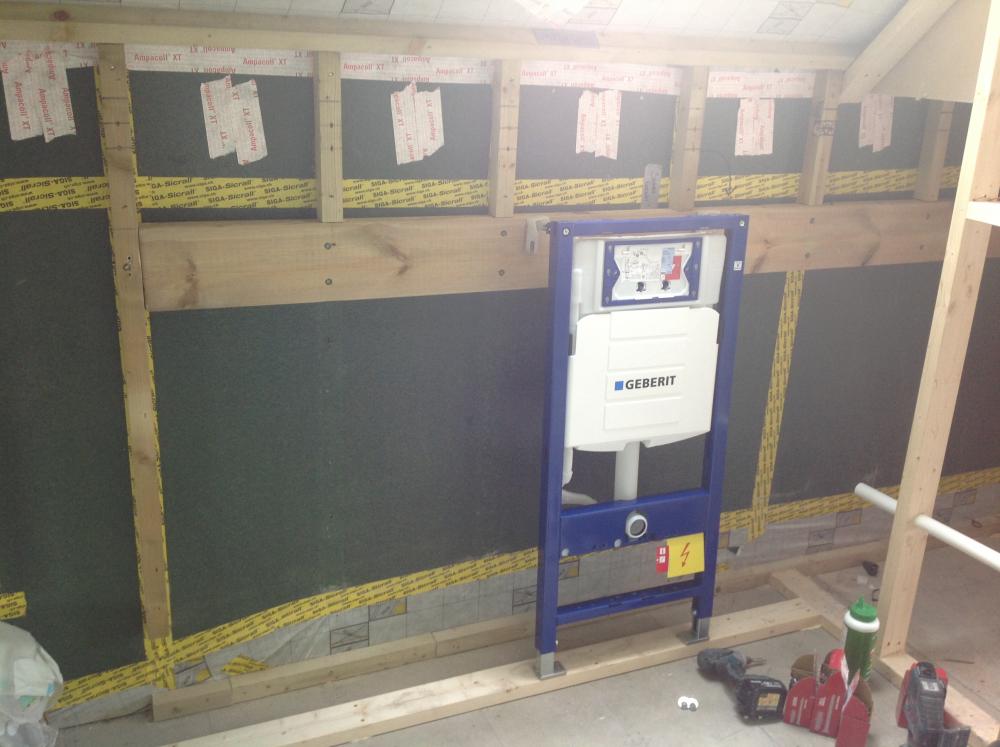
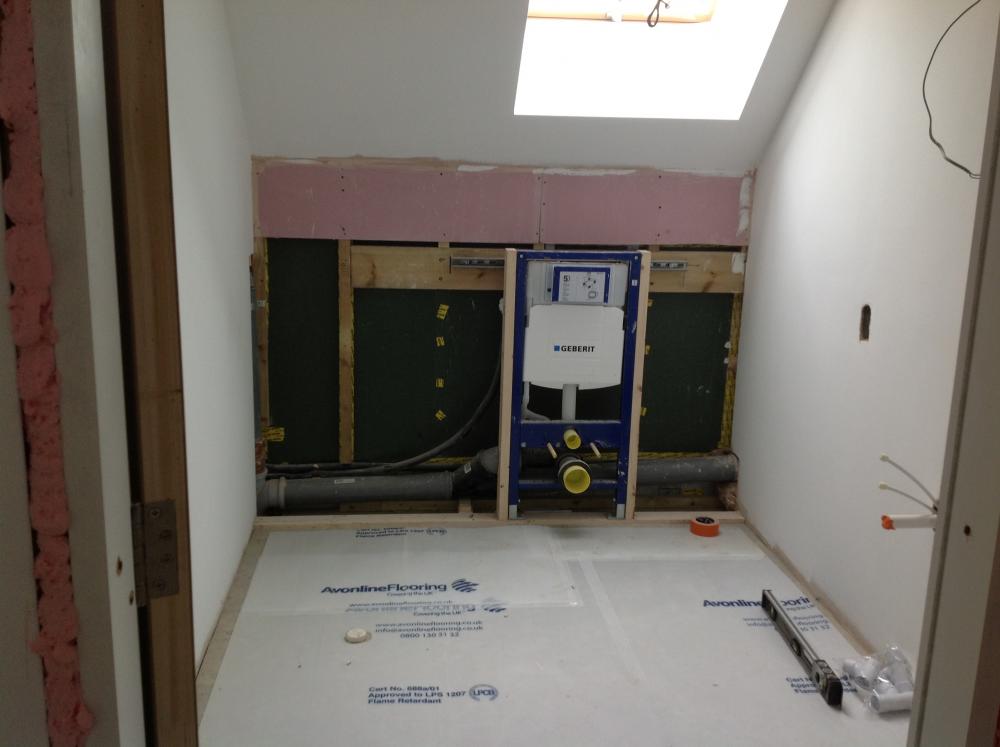
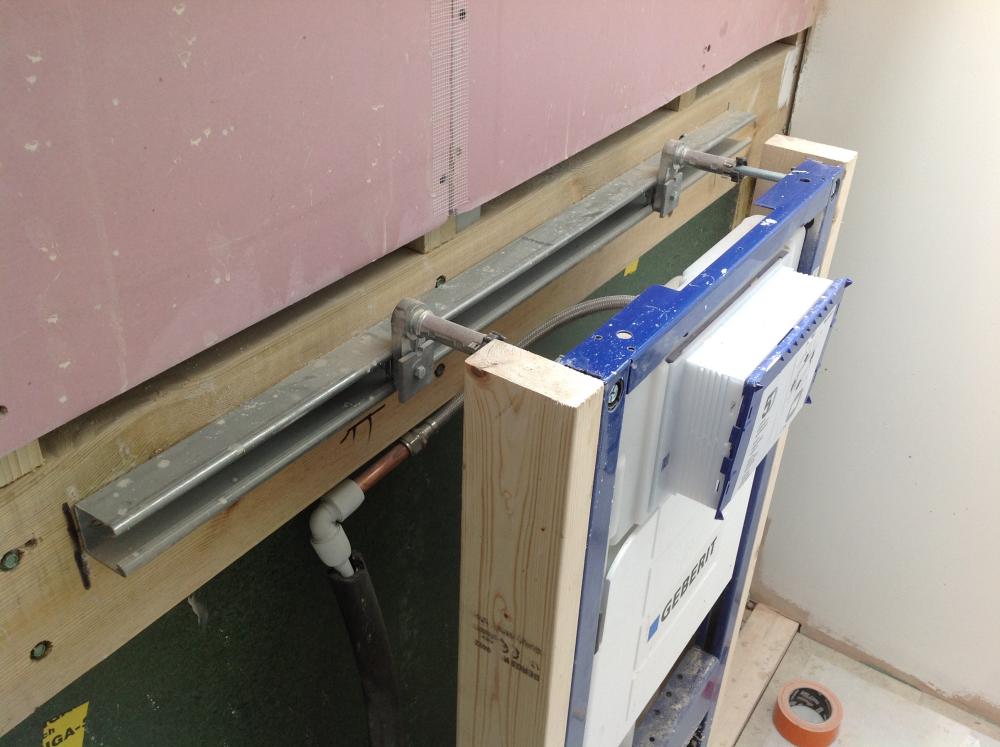
@ryder72 Will your WC's be as I've pictured, eg, part height with a shelf top, or will your framework be floor to ceiling ? Do any cables or other services already reside in the counter batten spaces in the bathrooms ? I need those questions answered tbh so I can advise further, without going off down the wrong route, but at the moment I'd be looking at removing the 70mm PIR and removing all the 38mm counterbattens, and then over boarding the whole wall with 25mm ply, screwed through to the 140mm frame with 120mm self cutting heavy duty wood screws, repeated at 200mm centres. Then fix the frames directly to the plywood. ( The point that takes all the stress is the top fixings of the frame which go back to the wall, and there's a lot of 'pull' on those. If those dont get fixed properly then the frame will move and the plasterboard and tiles will move with it ). After the frames are fixed, refit the 70mm PIR over the plywood, around the WC frame, and you'll then gain around 83mm of floor space back to the room too. Is that an option? -
WH toilet frame and MBC stud frames
Nickfromwales replied to ryder72's topic in Bathrooms, Ensuites & Wetrooms
This is how I did them . Have a look, and I'll add some details tomorrow.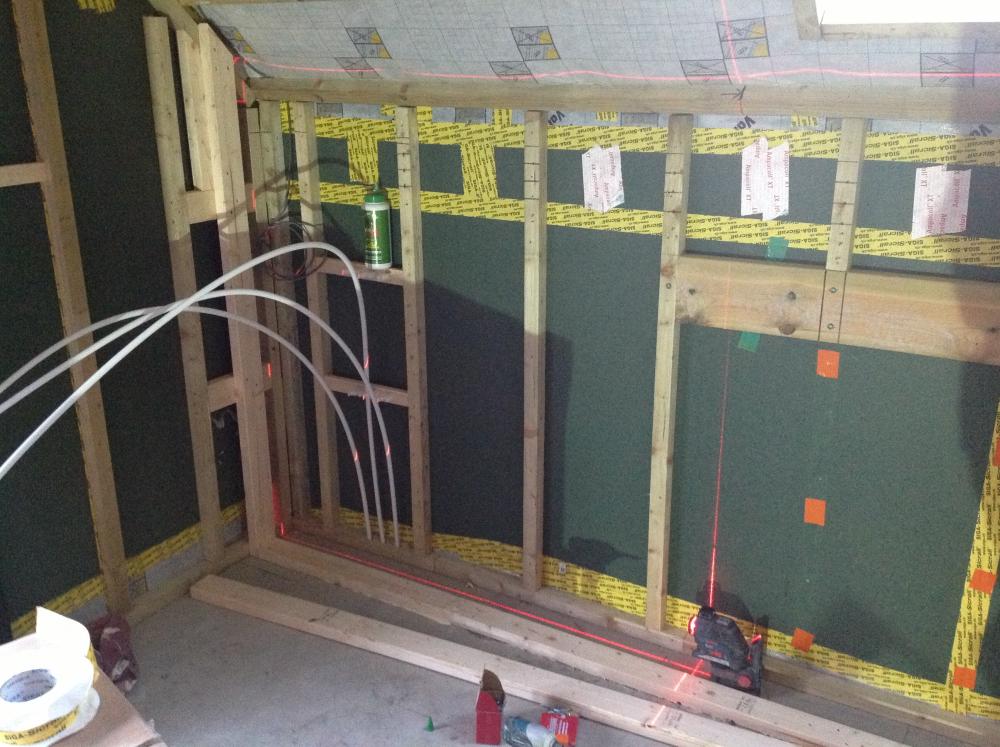
-
MVHR and boiler flue outlets
Nickfromwales replied to ryder72's topic in Mechanical Ventilation with Heat Recovery (MVHR)
Page 20 for flue optuons Page 23 for distances / clearances etc ? -
Bugger. Forgot about those. Any sensitive stuff between the stopcock and those? Softener is, isn't it?
-
By the time you get the reading, the 'damage' would be done. Thats why they're mandatory on a multi-block / control group for an UVC. . SAPV's aren't cheap, a PRedV is ? For £15 I'd want to cover my install. Just saying
-
£15
-
WH toilet frame and MBC stud frames
Nickfromwales replied to ryder72's topic in Bathrooms, Ensuites & Wetrooms
Those pics aren't free FYI. Worth every penny though . -
WH toilet frame and MBC stud frames
Nickfromwales replied to ryder72's topic in Bathrooms, Ensuites & Wetrooms
-
WH toilet frame and MBC stud frames
Nickfromwales replied to ryder72's topic in Bathrooms, Ensuites & Wetrooms
Meeting -
WH toilet frame and MBC stud frames
Nickfromwales replied to ryder72's topic in Bathrooms, Ensuites & Wetrooms
Business -
WH toilet frame and MBC stud frames
Nickfromwales replied to ryder72's topic in Bathrooms, Ensuites & Wetrooms
Powered -
WH toilet frame and MBC stud frames
Nickfromwales replied to ryder72's topic in Bathrooms, Ensuites & Wetrooms
High -
In that case, I'd be happy with no PRedV, but I'd fit a 5 or 6 bar cold mains prv as a failsafe if it were me. That's a good recourse-mitigation measure against manufacture based warranties being refused .
-
WH toilet frame and MBC stud frames
Nickfromwales replied to ryder72's topic in Bathrooms, Ensuites & Wetrooms
I've got some pics on the iPad. I'll post them later + method after my "high powered business meeting" ? -
MVHR and boiler flue outlets
Nickfromwales replied to ryder72's topic in Mechanical Ventilation with Heat Recovery (MVHR)
Consider a plume management kit... Many different configurations are possible. ?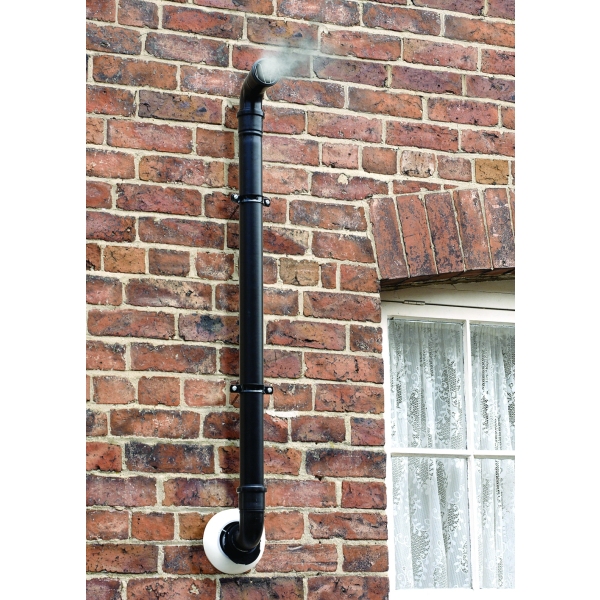
-
Annular 50's are what I use in the gas nailer to put flooring down if I'm on site on day rate. But, I make sure the glue is swimming, and that I stand, both feet, either side of where each nail goes in so the deck is tight to the joist. I prefer screws hence my patter in the Ebuild link. .
-
'Gassing' the appliance makes it a lethal device. You 1000% cannot and should not do this, REGARDLESS of how competent you consider yourself. Interrupting the gas supply is an offence, unless you can demonstrate that absolutely NO other 3rd party, including family, will EVER set foot inside that property. There is some bullshit loophole that people keep quoting about being legal when its 'just for yourself', but unless you have one key to the property and you can fully assure the H & S E that no other individual can enter then it's as I said, bullshit. Take a reality check, please, and go and do something else instead. Get your LPG GSR'd engineer out and pay him to do it. Anything else is lunacy.
-
MVHR and boiler flue outlets
Nickfromwales replied to ryder72's topic in Mechanical Ventilation with Heat Recovery (MVHR)
What boiler is it? Assuming oil or a WB High-Flow heat store combi if it's a floor stander ? Make and model please . -
MVHR and boiler flue outlets
Nickfromwales replied to ryder72's topic in Mechanical Ventilation with Heat Recovery (MVHR)
Your GS guy was right to strive to get those dimensions, and yes, it's usually 300mm from any adjacent opening in the fabric of the property, regardless of whether it's an inlet or an exhaust. The mvhr may be turned off or break down, so you cannot rely on it being an exhaust as if there is a failure it then becomes an inlet ( as far as the boiler products of combustion are concerned ). -
Pay him with a big smile on your face. £113 for commisioning and adjusting the boiler is cheap. The guy has ALL of the liability of the install and it's not worth doing TBH for that money. WTF. Tell him to carry on wiring. Bloody muppet.
-
Dead right. For £10 you get a sticker, nowt else. The Vaillant is LPG ready, just a screw to turn ? Thats why I like, and champion them.
-
It's the shank of partly / poorly driven nails or screws that causes the squeak . Im a bit sceptical of glue only as it expands quite a bit, but if you are used to it and are walking on it during curing time then it will stay 'down', so agreed that you can lay it 'floating' e.g. no mechanical fix with good results. Nice to hear of someone thinking outside the box .
-
Wales had to wave his boy off from school today as he's off for an 3 day outdoors jolly. Coach going at 09:30. Yay ? You shouldn't really be coming across tapered fittings in a domestic plumbing install TBH as they're typically only found in true iron fittings, but some weird and wonderful bits of equipment come as such, now and then, but rare. For BSPP the humble roll of PTFE tape is the weapon of choice. You can use fibre washers and wind the fitting right home, but I find the rotational force combined with compression of the two meeting ( washer and opposing mating surface ) chews the washer unless your absolutely spot on with the number of turns and torque applied. With PTFE you don't have to turn the fitting completely home, and you have to be pretty hard done by not to get a reliable joint. 13-18 turns of tape for rad valves Everything else needs a minimum of 21 turns, but if the dry fit is slack then don't be afraid to shove a good 26-28 turns on. What the fittings doesn't want will get displaced anyhoo but the number one thing to do, after applying the tape but prior to assembly, is to grab the taped fitting in a clenched hand and squeeze the tape down whilst giving a slight clockwise rotation ( turning the tape on in the correct direction is paramount of course otherwise it'll twist off as you do the fitting up ).
-
A quick copy n paste from our old vehicle http://www.ebuild.co.uk/topic/12584-no-squeak-weyroc-flooring/page__fromsearch__1