
Nickfromwales
-
Posts
30335 -
Joined
-
Last visited
-
Days Won
297
Everything posted by Nickfromwales
-
 Hosepipe bans happen in extended periods of drought, so the water in there would be used quickly and not replenished. And ironically, to keep the pump healthy, if you run short the tank will take perfectly good potable water from the cold mains to satisfy its thirst. Cheaper to spray potable water on the ground is just the bones of it, unless you can bury 10,000L of storage or more. Better off diverting rainwater to above ground IBC’s and using a £100 hippo pump until it fails and then replacing it when it does. RWH pumps are stupidly expensive and fail as quickly as <2 years. Buy solar PV instead. Cant remember the last hosepipe ban either so I’ll not be investing 1000’s to protect myself……
 -
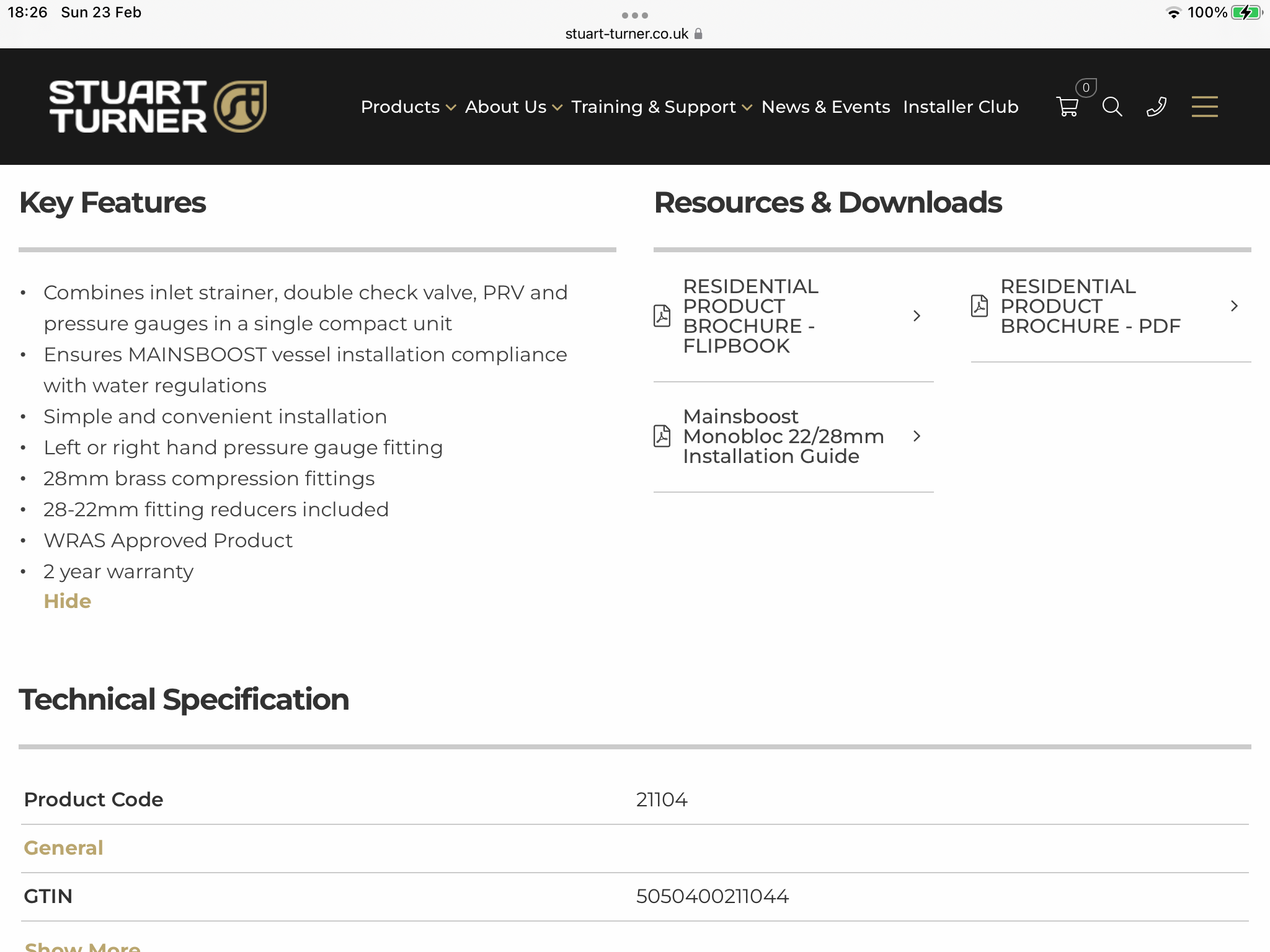
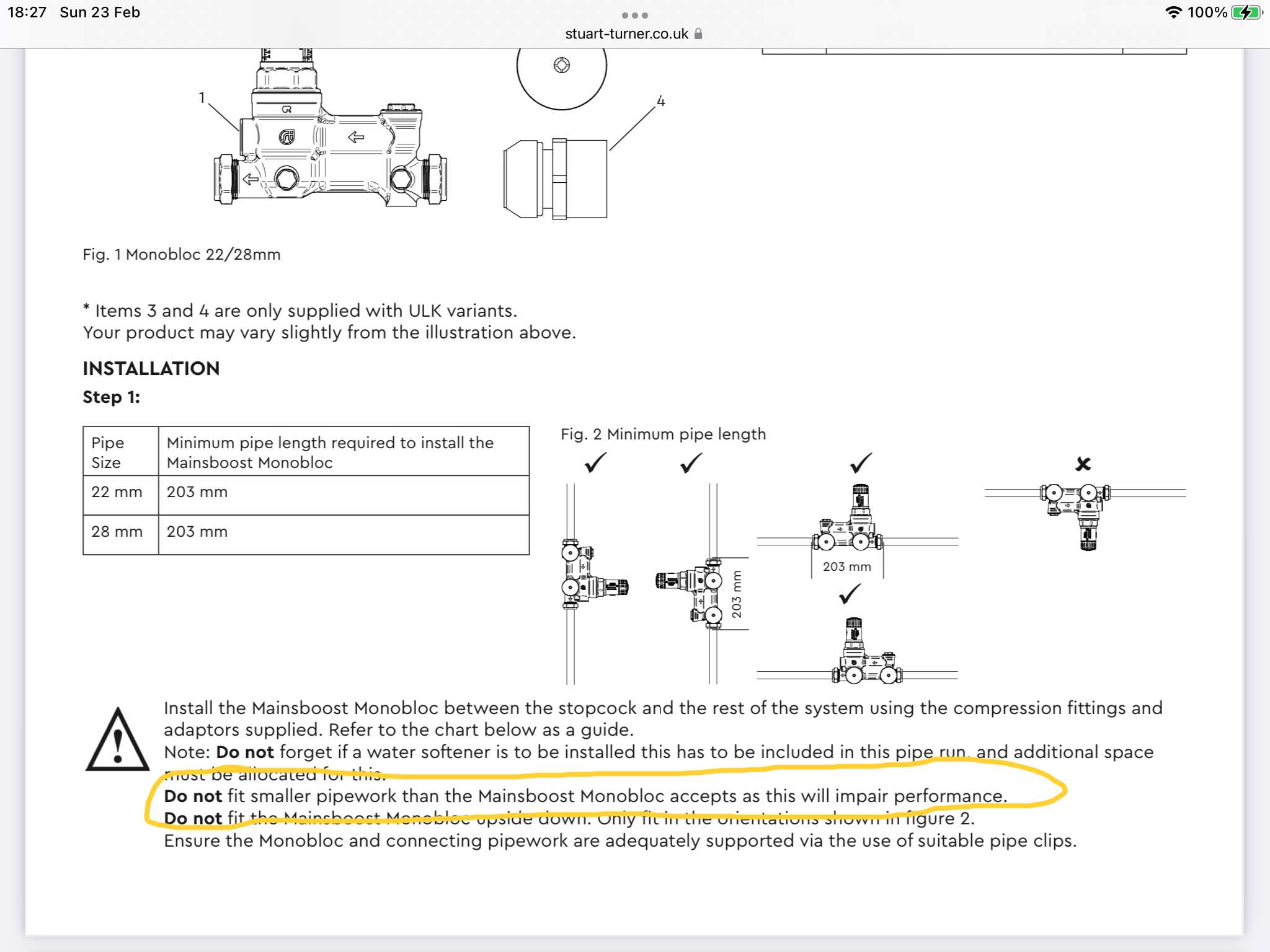
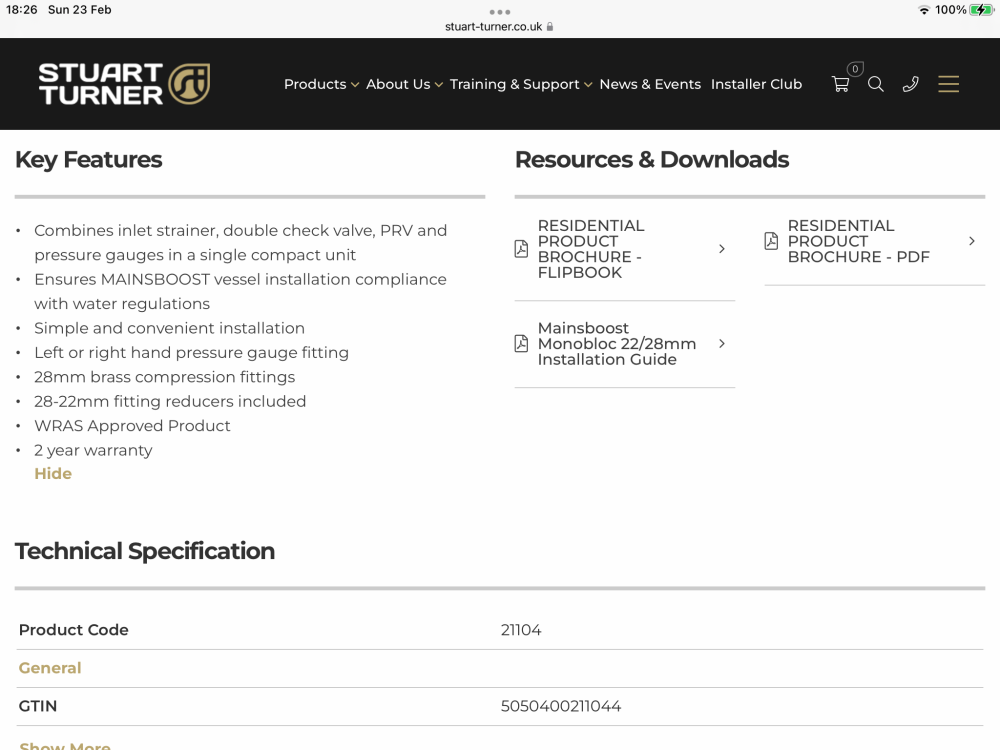
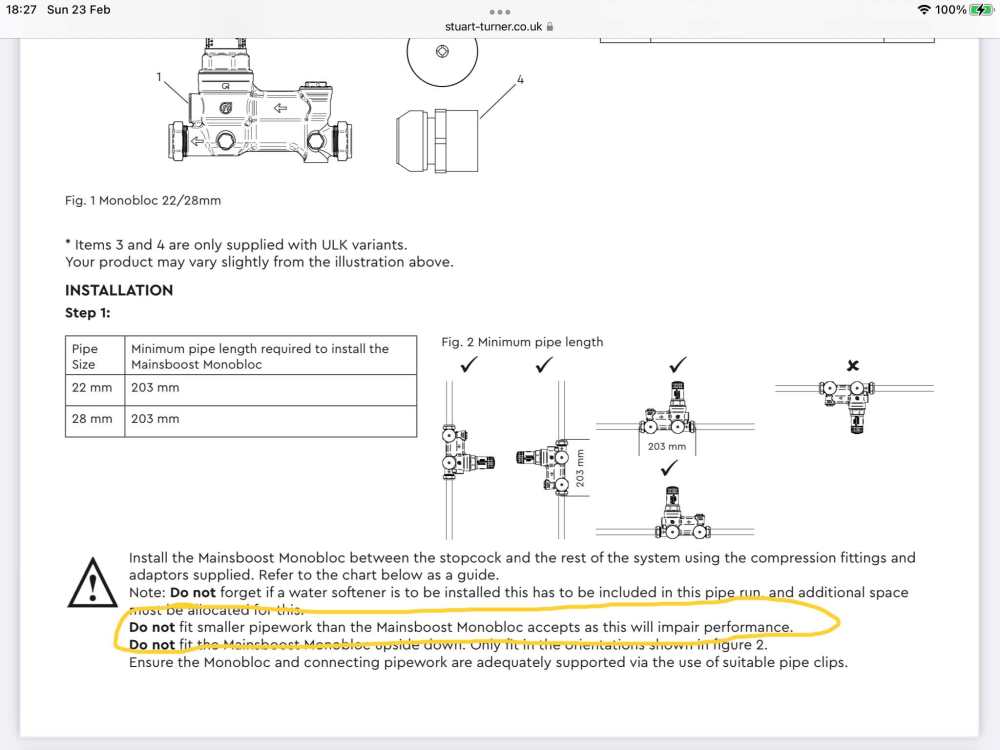
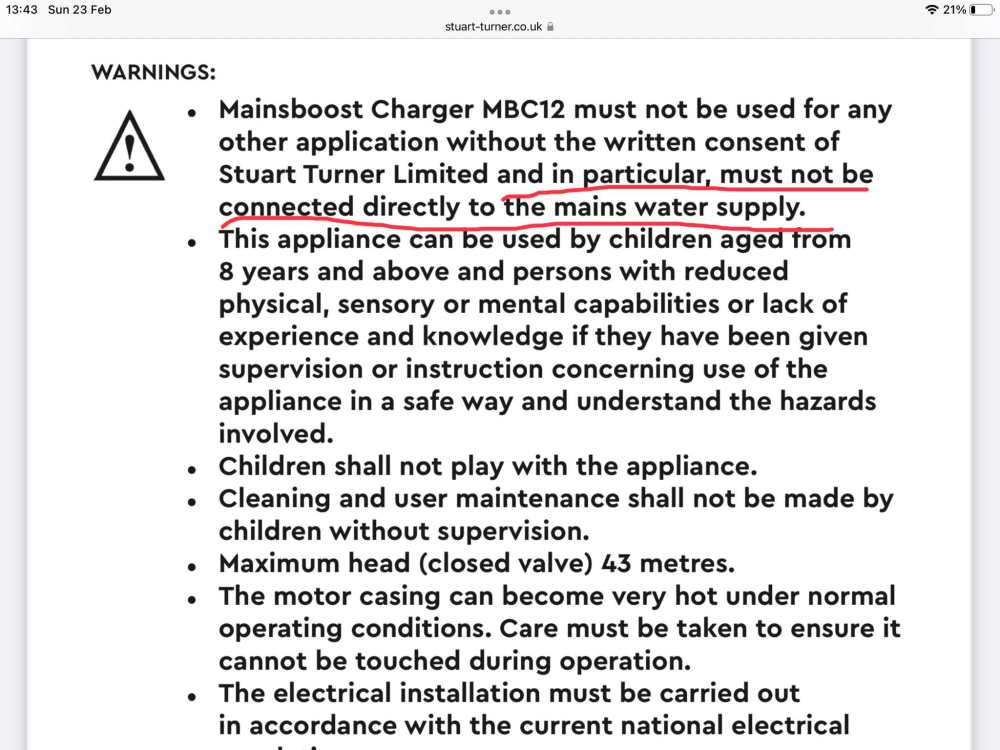
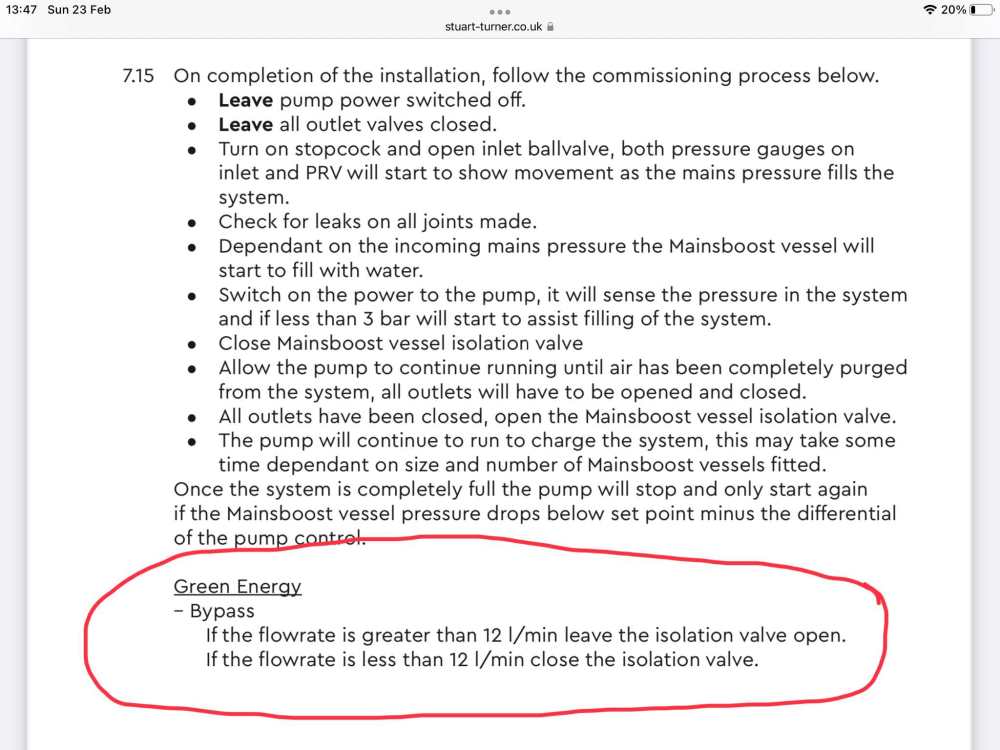
https://www.stuart-turner.co.uk/contentfiles/Mainsboost-Monobloc-IG.pdf

-
Please browse the forum as this has been discussed quite comprehensively, with most in agreement that it costs more, long term, than it saves.
-
Advice needed, new build basement finishing
Nickfromwales replied to Mat1's topic in New House & Self Build Design
Ok, so you have a heat source for the UFH, that’s good. If you do go A2A AC heat & cool then you can get one outdoor unit that will do up to 4 or even 5 indoor units, so maybe kills a few birds with one stone to ditch UFH and go that route. The caveat is, that they’d all be either heating o4 cooling not a mix, if fed off one outdoor unit. -
You ever head the phrase “too good to be true”? Not going to improve your situation with that I’m afraid. That’s the kind of thing you’d use on a conservatory roof to keep the sun from cooking you alive, largely by reflection vs insulation.
-
Not the foggiest. Can you find reference to it in any paperwork you have there? I am assuming it has been “recreated” by the plumber in the previous post.
-
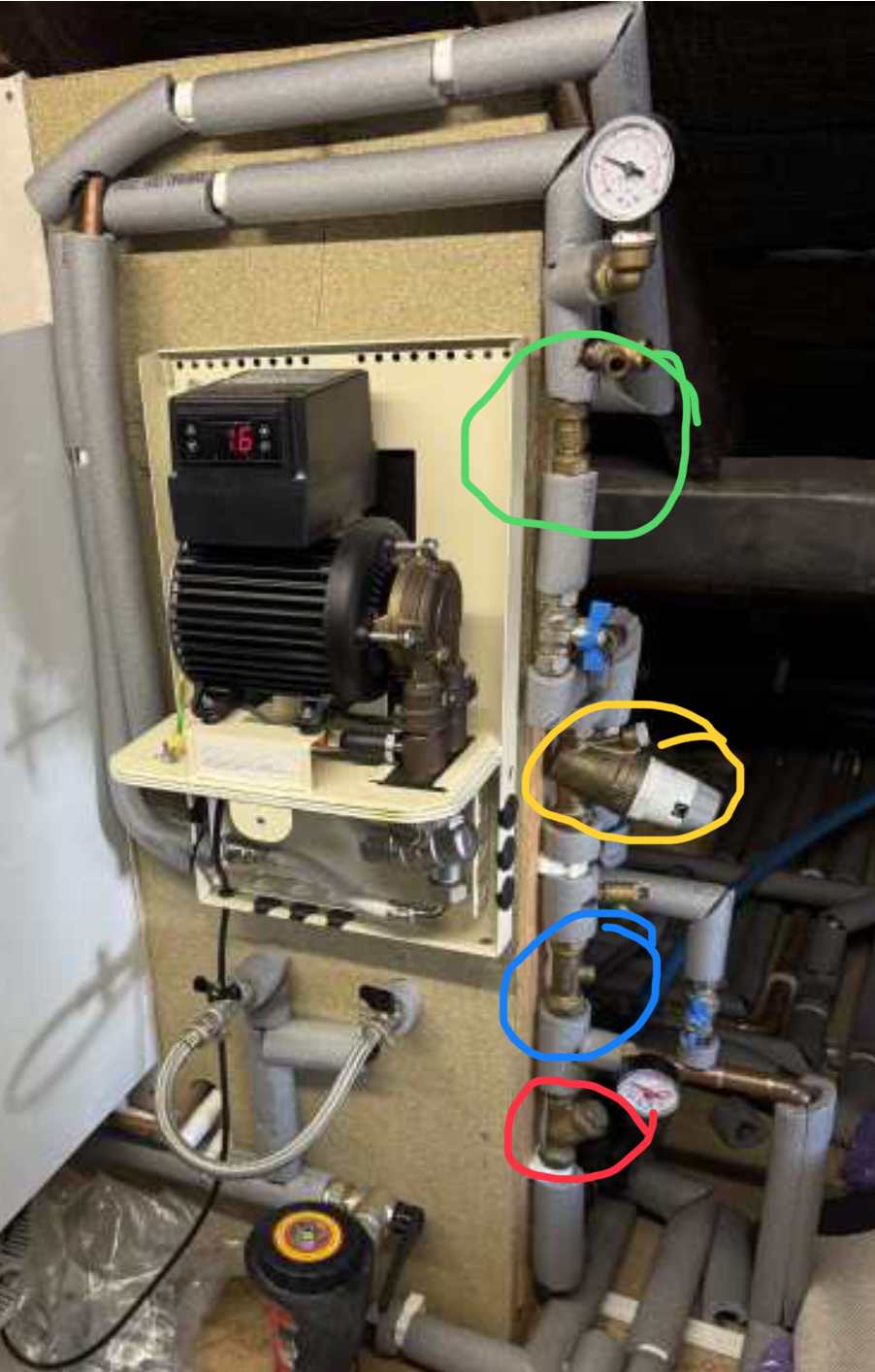
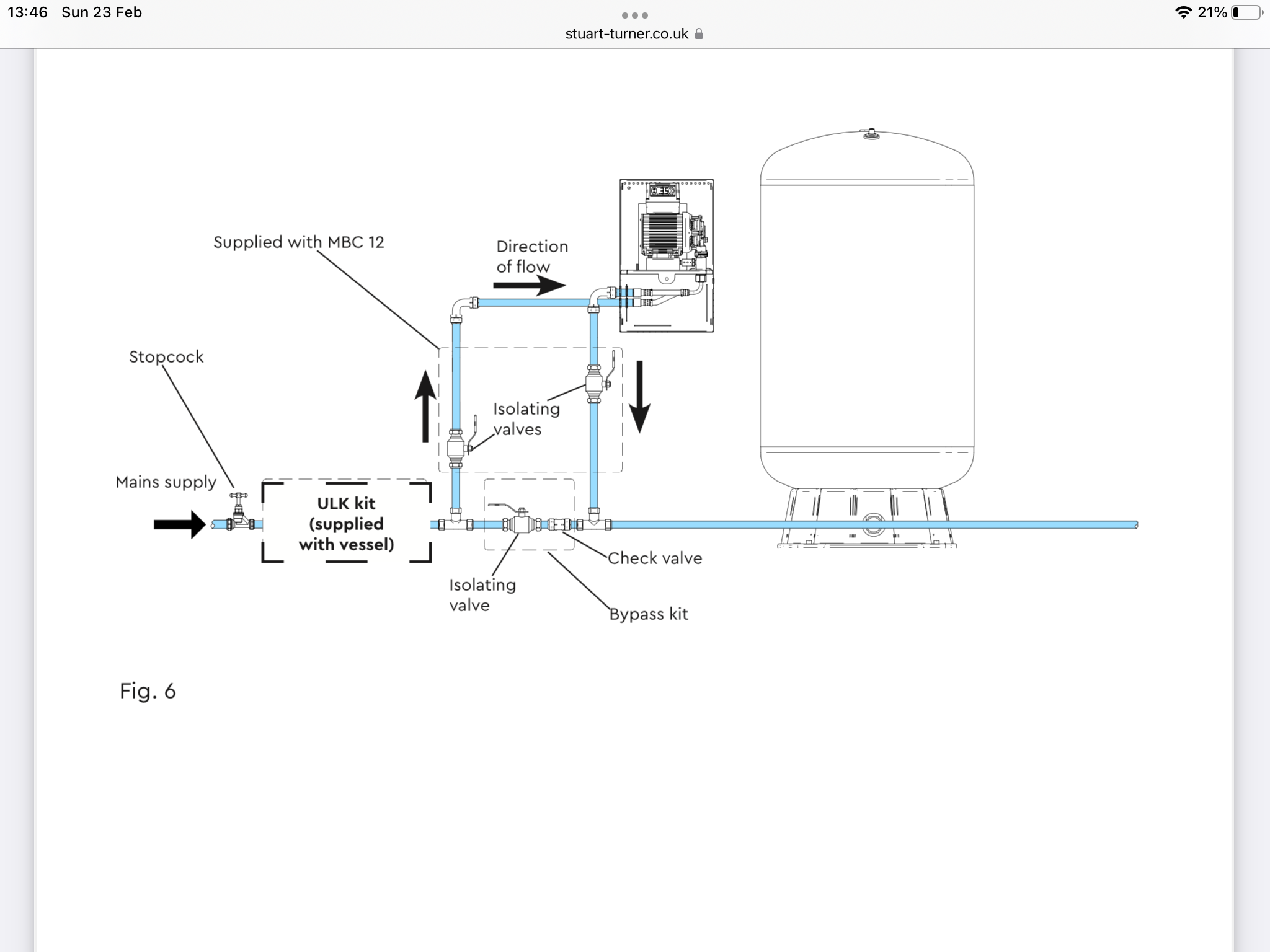
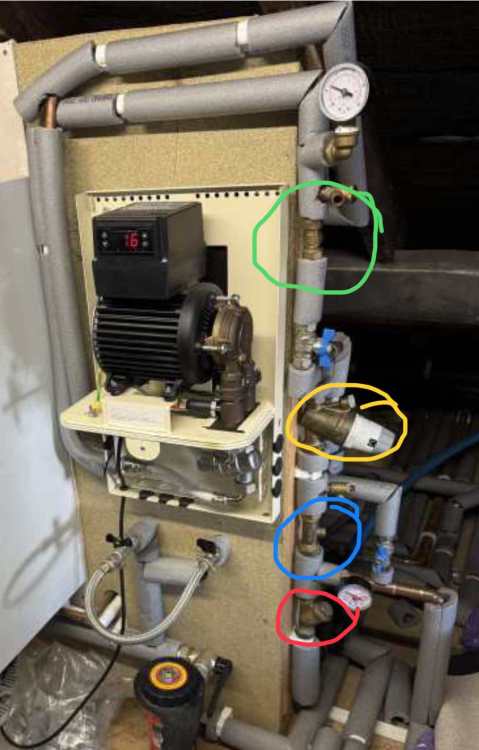
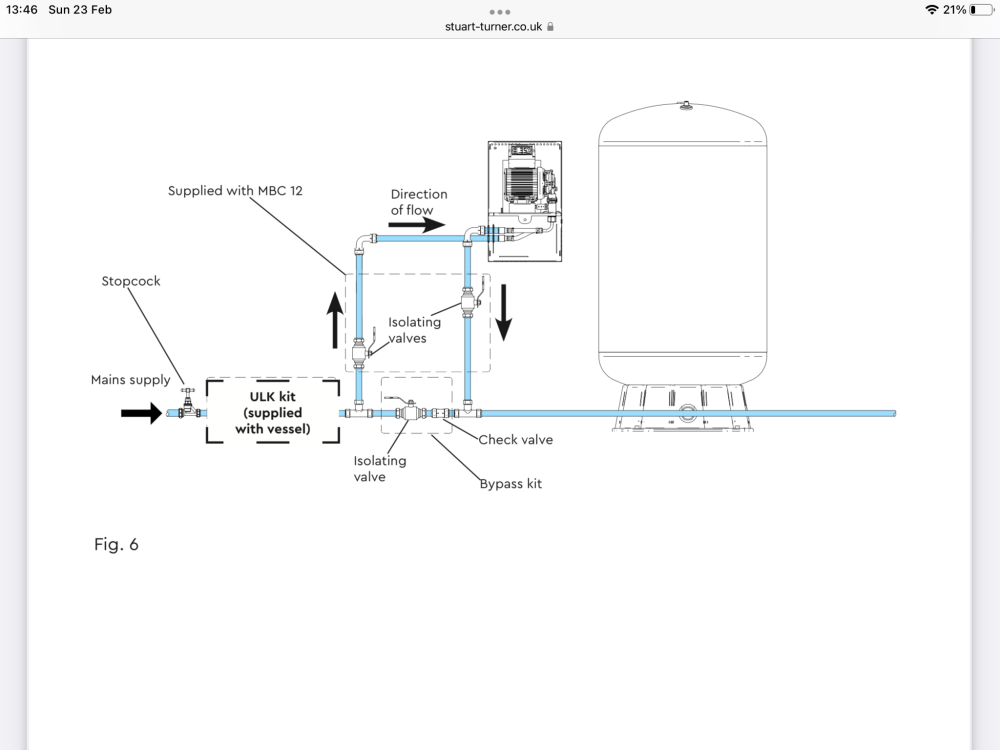
I don’t see any pressure reducing valves in the installation guide, so I’m now curious as to why you have them and why they’re set so low. I see what I think are non return valves (green defo, but not sure about blue), a Y strainer (red), and a PRedV (yellow), so we need to find out what’s supposed to be there, what’s not, and what could be causing issue.
-
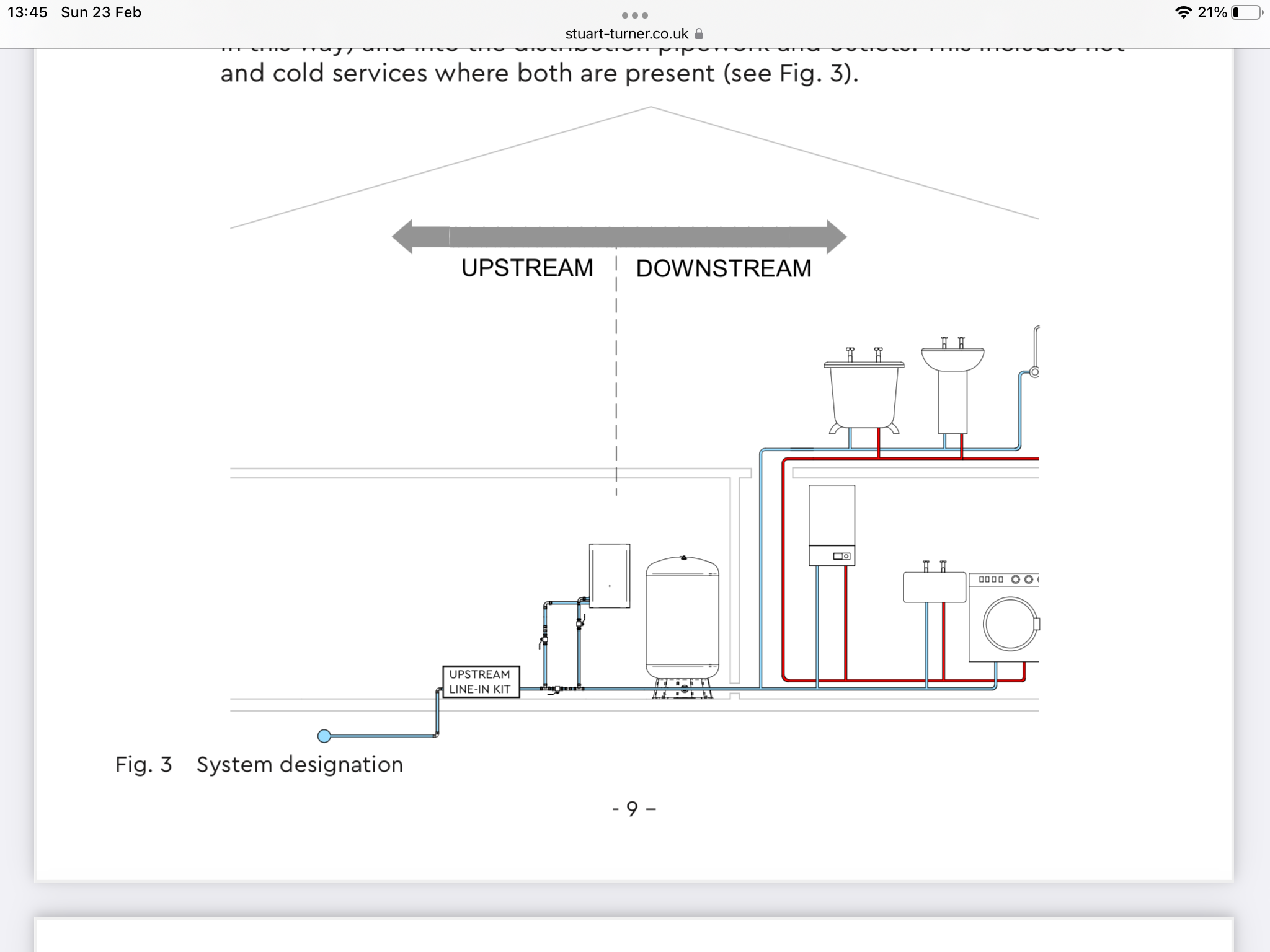
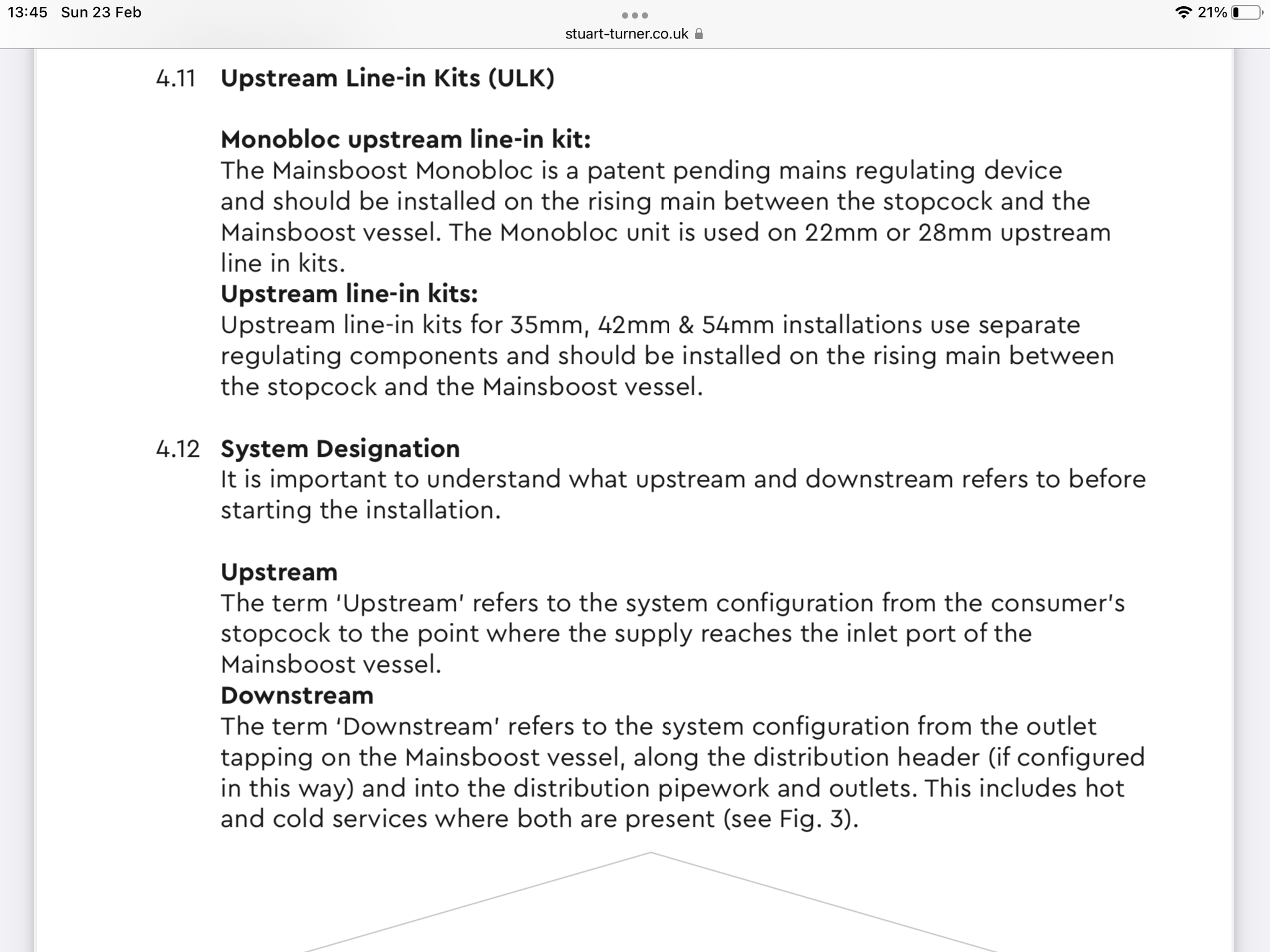
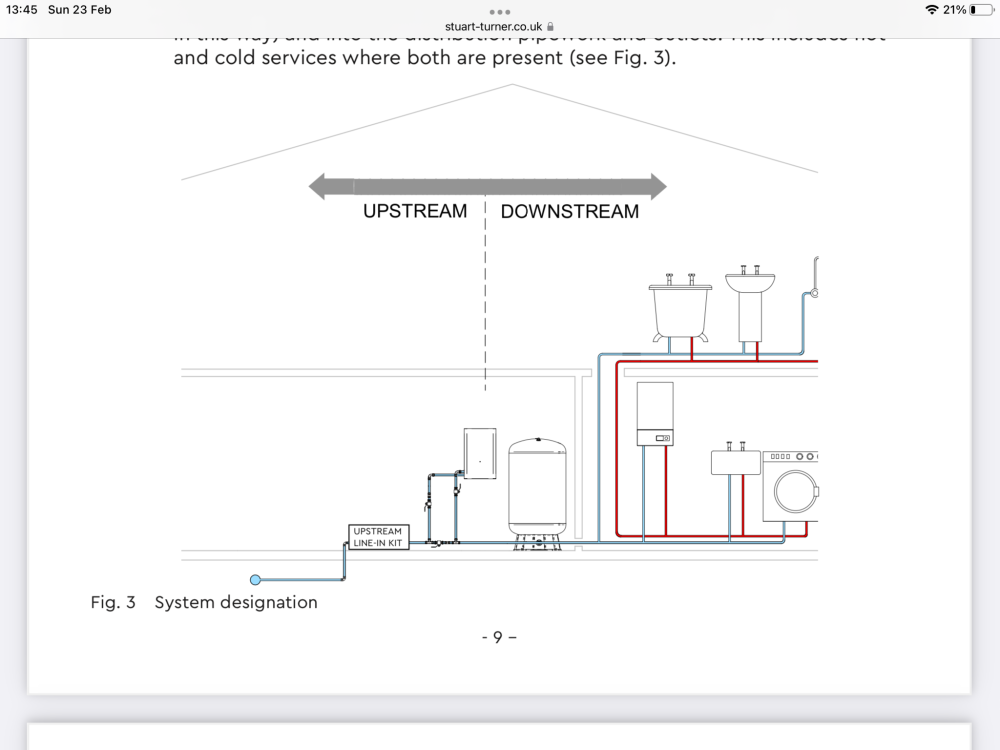
Can you confirm if this upstream ‘line in kit’ is present / installed?
-
Ok.
-
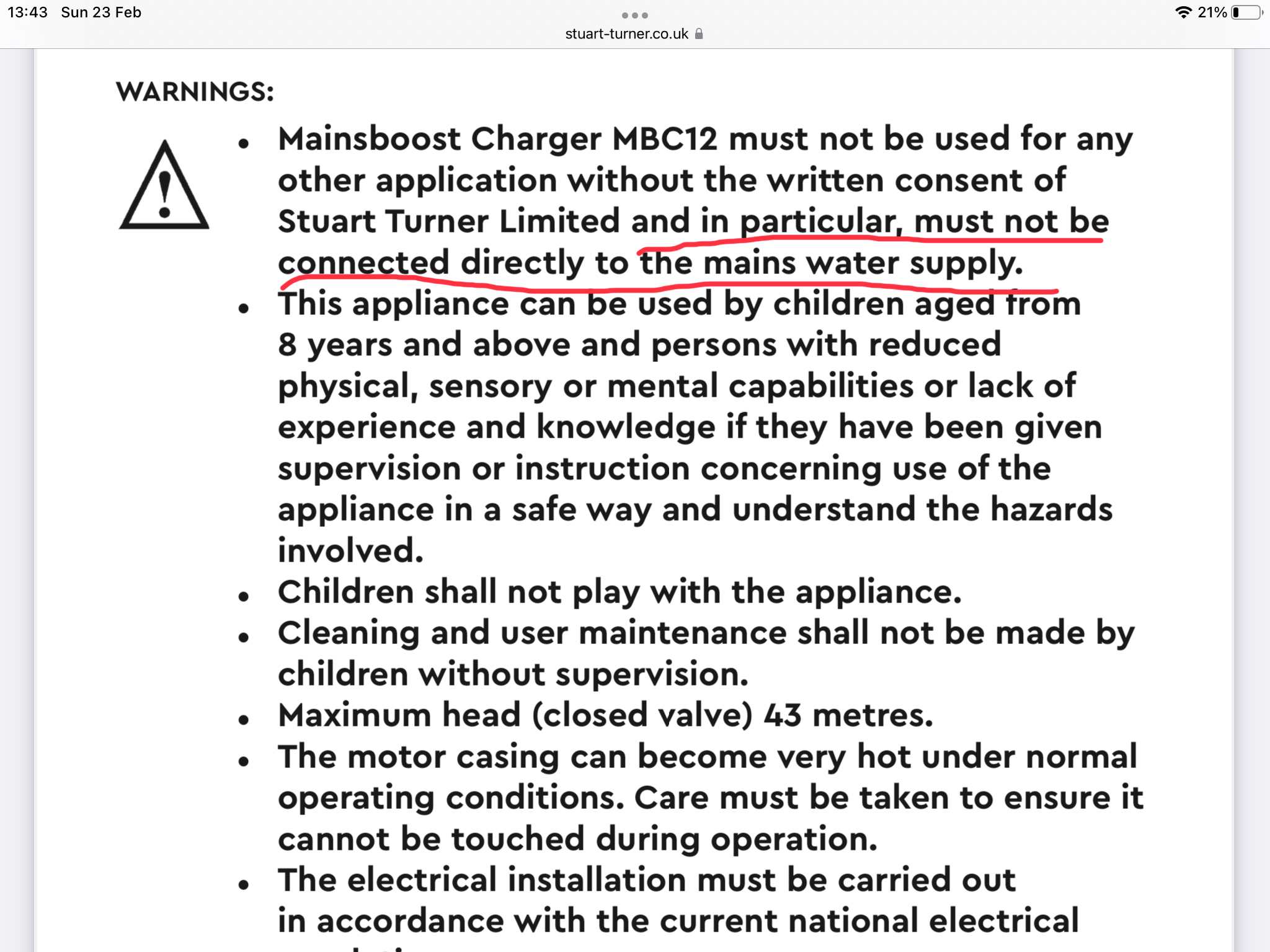
Ok. If it is off the cold mains from the street, then it can give you the first bit of info we need, eg the max static pressure you have prior to the booster / attic plumbing. From there we can make suggestions to maybe increase the pressure to the supply going to the pump. Even an uplift of 0.5bar would be a major jump, and should see the pump run time reduce massively whilst improving the recovery time from when the stored capacity is near to depleted. I’ll have a look at the installation manual and see what that says about “tweaking”. Grab that pressure gauge from screw fix and it should screw onto the outside tap. Take a reading with nothing drawing water in the house, and then take it back for a full refund. 👍
-
Advice needed, new build basement finishing
Nickfromwales replied to Mat1's topic in New House & Self Build Design
That’s been written by someone in a padded cell, totally bonkers advice 👎 Defo the best advice here, even more so if there’s solar PV, but depending on budget and the noise of this running, even electric panel heaters shouldn’t be ruled out. Is there already a central heating system (gas boiler) in the property? -
Thanks. Yes, if you zoom in you can see the 15mm copper pipe with MAINS written on it, so I assume that converts to blue pipe (MDPE) and goes to the attic uninterrupted. If you’re not comfortable messing with plumbing then please don’t! We don’t want your next thread to be about “which are the best wellies I can buy” lol. Best you get a plumber in and you /we put together a list of the things that have been requested or suggested, and then go for a day of finding out what is going on and what is best to do to resolve it. Do you have an outside tap that you could test the mains from the street with? I can only assume that the installers wouldn’t have put the outside tap after the booster.
-
Largely what the pub is for, someone else cooks and does the dishes, and you get some flavourful lubrication to boot. Mac ‘n cheese is the bomb, especially if it’s homemade. Enjoy.
-
Not really an overstatement, just physics says that the different downwards heat losses will give you two different results. I’m happy to comment on doing this vs not doing it, whichever you find most helpful. FWIW, I would have UFH in a heartbeat, even if it was less than great to use (running cost wise), but that’s me and I don’t assume people who come here want duff advice from any one person. I am a fan of the Wunda stuff tbh, but their sales patter on the website oozes positivity and doesn’t really address the pitfalls of failing to prepare. I guess their designers would be the ones to give you more of an assurance, and more importantly offer an underwritten solution for heating output and controls, so I guess start there and see what their feedback is. When you factor in the SLC, I’d defo stay at 10mm or a bit more if possible. I ‘Wunda’ how good their support will be regarding overall methodology. The floor will get warm, that’s a given, it’s more about whether or not the spaces be sufficiently heated. The suspended area should be a cold ventilated space so this will need improving before laying the UFH over it, if possible, with some additional draught-proofing to prevent any airflow from the voids up into the rooms. This will pay huge dividends regardless of how you heat the spaces. I think the overlay boards get bonded down, so if the joints are all foamed then this should deal with any residual infiltration. Foam all around the perimeter too, whilst the skirting boards are off, but I’m sure you’ll need to do this to create a moat for the SLC anyways; any gaps you leave for air to travel up is where all the SLC will end up disappearing down. That’s real fun to solve half way through a big pour!! I’m not plucking my comments out of thin air btw, I’m just saying what I’ve seen (and had to rip out and redo) over 30+ years of installing heating and hot water systems in many different arenas . I’ve seen UFH done poorly more times than well, especially retrofit solutions or systems installed by “turnkey builders” with robot plumbers who just need to plough on to get a pay cheque every Friday. If it’s an overlay then you’d have to go over the original section anyway to keep the floor levels the same, so you may as well install the UFH there as well so the floor is at least warmed as the difference where it goes from heated to un-heated would be obvious and likely something you’d find intolerably cold when stepping on one or the other, even with LVT. If going with the SLC option ( Wunda say 5-10mm wish they’d be a bit more specific) I’d recommend using the Mapei construction screed with fibres vs the Ultra 2-part. I used both regularly and they’re both excellent, but I think the fibres would be a good idea where the system goes over the suspended floors. As you’re installing LVT the effect between heated / unheated areas should be minimal, lesser again if you walk on it wearing socks, but this will be the worst covering choice for getting heat into the room from the water in the UFH pipes so you need to understand this fully before proceeding. It’ll just be a lot of money and effort to do, but it can be done, so we’re just replying to you here to prepare you for the journey ahead if you do decide to go down this route. It’s better to discuss this to death here (for free), beforehand, than be coming back to find out how to resolve it and to be told “you can’t”.
-
Ok, first job is to get a pressure gauge on the end of the blue pipe bringing cold mains up to the attic. Do you have a pic of the other end of that blue pipe, eg at the ground floor stopcock? Turn that off, disconnect the cold feed in the attic, put a pressure gauge on it and see what the static standing pressure is on the mains. Let’s start there. https://www.screwfix.com/p/monument-tools-mains-water-pressure-test-gauge-11bar/82412?gclsrc=aw.ds&gad_source=1&gbraid=0AAAAAD8IdPy5YHYzsMfKRwsac1otIxnYQ&gclid=EAIaIQobChMIwO6Vm87ZiwMVv5FQBh2ahwdrEAQYAyABEgK5bvD_BwE
-
Yup, get the basics worked out and then look at adding capacity. DO NOT just add another pump though!
-
Ahhhh, the relaxing calm of the sabbath. Ok folks, this has been decided to be genuine enough, and anyone who isn’t interested please just click on something else, simples. No more head shaking, please. The mods will decide what stays or goes and what is or isn’t spam. We’ve been doing this reasonably well for many years, and our regular members report improper content and it gets flushed as required, and this means that this forum is quite a nice place to hang around on. All good, chill out folks, go get a roast beef dinner, and……………..“breathe” The management.
-
Looks good! The pipe bends (formers) do help get the pipe to go nicely into the fittings after a change in direction. Every day is a school day, as I didn’t know they made those brackets did the last one ‘stood off’ with Munson rings / bases / and threaded bar. Thanks for that, I’ll defo look into those from now on, just frustrating that every merchant I’ve purchased from for the last 10+ years have never had these displayed for sale or in the “people who bought this also bought…….” section.
-
In the security window world, is PAS24 a con? What’s better?
Nickfromwales replied to Adsibob's topic in Windows & Glazing
A bit harsh on the postman lol. 😂 -
What prep on subfloor for glue down LVT?
Nickfromwales replied to YorkieSelfBuild's topic in Wood & Laminate Flooring
Why aren’t you just going straight into the screed? Anhydrite screed has a ‘scum’ that needs to be ground off mechanically, have you or the screed company done this? If not, sweet FA will stick to it. You just use a feathering compound, a SLC that can be laid very thin and gets blocked down to leave absolutely zero imperfections, then your glue + LVT goes straight down onto this. Who has suggested chipboard plus plywood over the screed? Will make the UFH performance a bit worse too, longer heat up tines etc. Not the end of the world but if you can’t screw the chipboard down because of the UFH then you’d be no better off? ? Downstairs joist tops? Eh? -
lol. You’d spend it on a new lift without blinking 😂. Sorry, I meant cubic space earlier, as it’s basically 2.5 storeys high iirc? A rough stab as I can’t remember exactly how big was your manage, I just know it’s feckin massive! Look again at solar, and maybe some job lots of the cheap used panels, with a few squirrel’d away for spares. Lots of those seems the way forward, but probably need a commercial sized battery and hybrid inverter to get you through DNO. Shame about the 3ph issue, but if you can get a cheap remote start gen-set then I guess that’s the way forward. To max it out every time you run it, you’d set it up to dump a load of power into the batteries and heat into a TS or the UFH. You just have an expensive hobby, and a man cave like an aircraft hanger, which I am jealous of btw 😜.
-
Yup, I have to agree as I think this will be an expensive disappointment. I certainly wouldn’t be looking at blowing money on both types of heating, with the UFH being a hybrid mix of solutions, plus this would be VERY difficult to control / balance too. Very good shout about the plinth heaters, as when the arse of winter kicks in you will really feel the benefit of that additional auxiliary heat source. Tall narrow ‘decorative’ or column type rads don’t give off a huge amount of heat via convection, so at the least these need to be as far towards the end of the rooms as possible to cast the heat to where it’s most needed. I wouldn’t rule out putting electric UFH in here if there was a tiled floor, but with LVT you’ll struggle to do this; it would have to be set into the self levelling compound that the LVT needs to be installed over. Can be done and set to not get hotter than the 27oC. If this is the forever home then consider that for comfort with the acceptance of the high running costs, but on the further understanding that it would only be used sporadically. Filling the cavities with blown bonded beads and drought proofing will be very good measures to reduce the actual heat requirements, and would be another life long (and wise) investment. Use the money you just saved by not fitting Mary Shelley’s UFH system
-
Yes, you’d be adding more weight, but my suggestion is the correct solution (to add capacity) and will have a positive outcome; eg add the second accumulator (not more or bigger pumps!). If you read back where I first suggest this, I mentioned mounting the second vessel on a wall mounted bracket, if the floor can’t take the weight. Basically like beefed up gallows brackets. You can also cantilever(?) between a fixing point on the external wall and then a platform that spans over 3 or more joists to spread the load. Are there any structural wall underneath anywhere that you can ‘straddle’? I’ve done that a number of times, I just went and found a steel stockist and asked them to fabricate a pair of BFO shelf brackets out of box section steel, my local place has a chap who does this quietly for a bit of cash from off cuts, and last pair only cost me £40. They were 1500mm long, with tabs to the left and right for fixing back to the masonry. The legs that the cylinder sat on were about 750mm long. You just span between those with a few cut lengths of 40x40 uni strut and sit the vessel on that. You can fortify the existing timber work if there’s no masonry wall, I only do solutions vs problems lol. Have you confirmed if the cold mains can / cannot be improved? The local water authority have a duty to provide you with a minimum flow rate, if they’re significantly under that they’d have to do something about it. If the issue is with your supply pipe from the boundary to the stopcock, dented or full of crud, then that’s on you. It would be the best long term solution to get the supply sorted out, have you explored this at all?
-
But also the efficiency of the unit in terms of % of heat recovery. Some cheap units have very optimistic numbers. @Lincolnshire Ian FWIW, I have been using / installing Brink units (Flair+325 and 400 mostly) and these have done very well in both sound and heat recovery statistics. Never had issues with shutdown during extremely cold weather either, unlike another manufacturers unit (thread linked to above) which is "giving jip". I go to CVC Systems in Oxford for all my units / design / supply & fit whenever I'm too busy, and never missed a beat; in over 6 years of promoting and installing MVHR for self build clientele.
-
I believe you can dial in to the (Brink) units, engineer level programming maybe, to reduce the lowest setting. I can check next time I speak with CVC, prob early next week as they're designing a system for me atm for another clients build 👍