Rishard
-
Posts
177 -
Joined
-
Last visited
Everything posted by Rishard
-
I can send you my engineers annotated plans which he put together for me for the sake of a costing exercise. His final calculations are on going with some of the other calculations for the house. He did recommend some mesh to the top of the slab but like I said previously, only in a few places where there would be hogging moments (I believe he called them)
-
I’m not sure about the air space below a void formed suspended slab. Hopefully someone on here knows… I’m about to crunch some numbers on supply only for both b&b vs void formed slab so will post my results.
-
Sorry, last picture
-
-
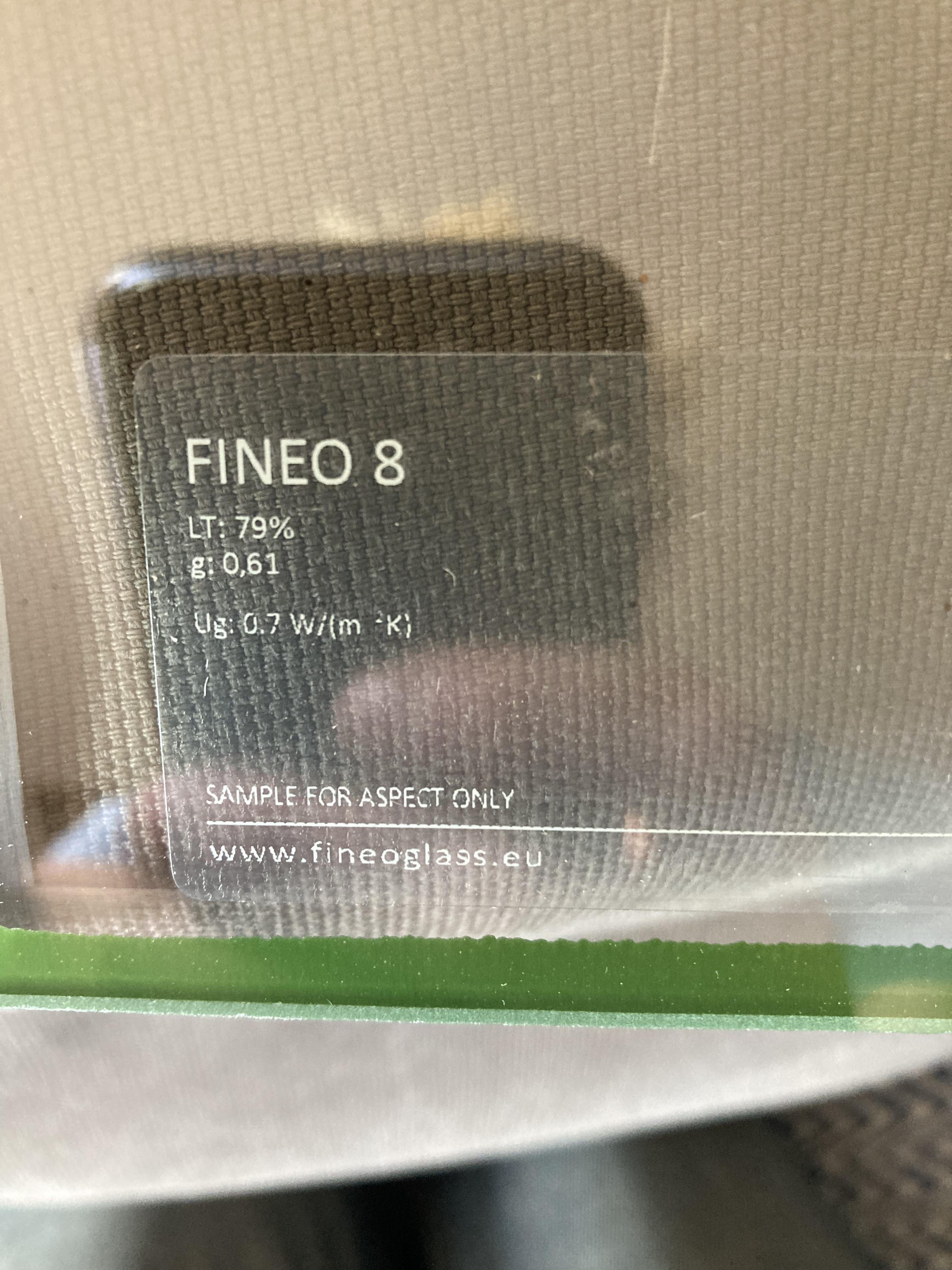
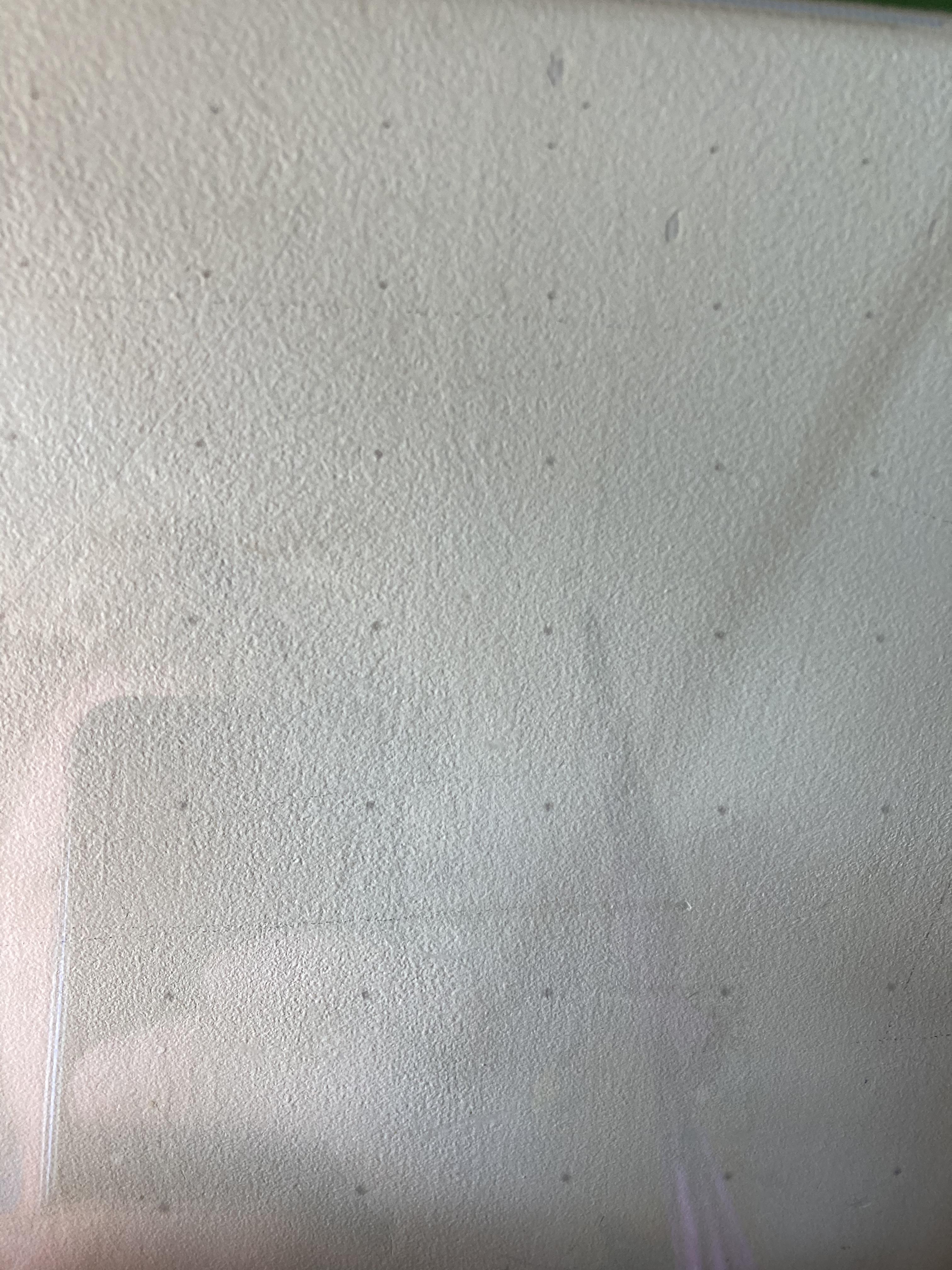
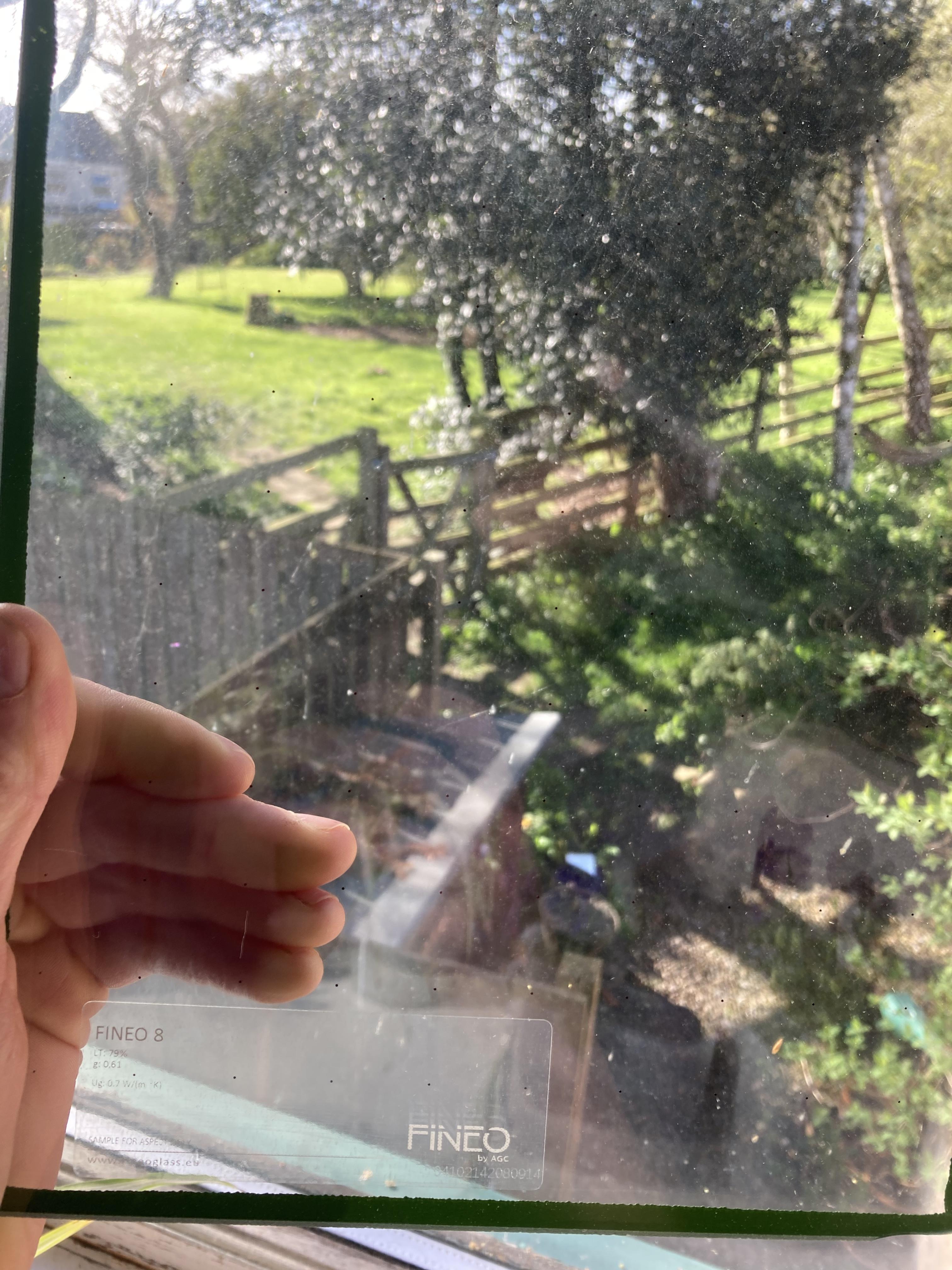
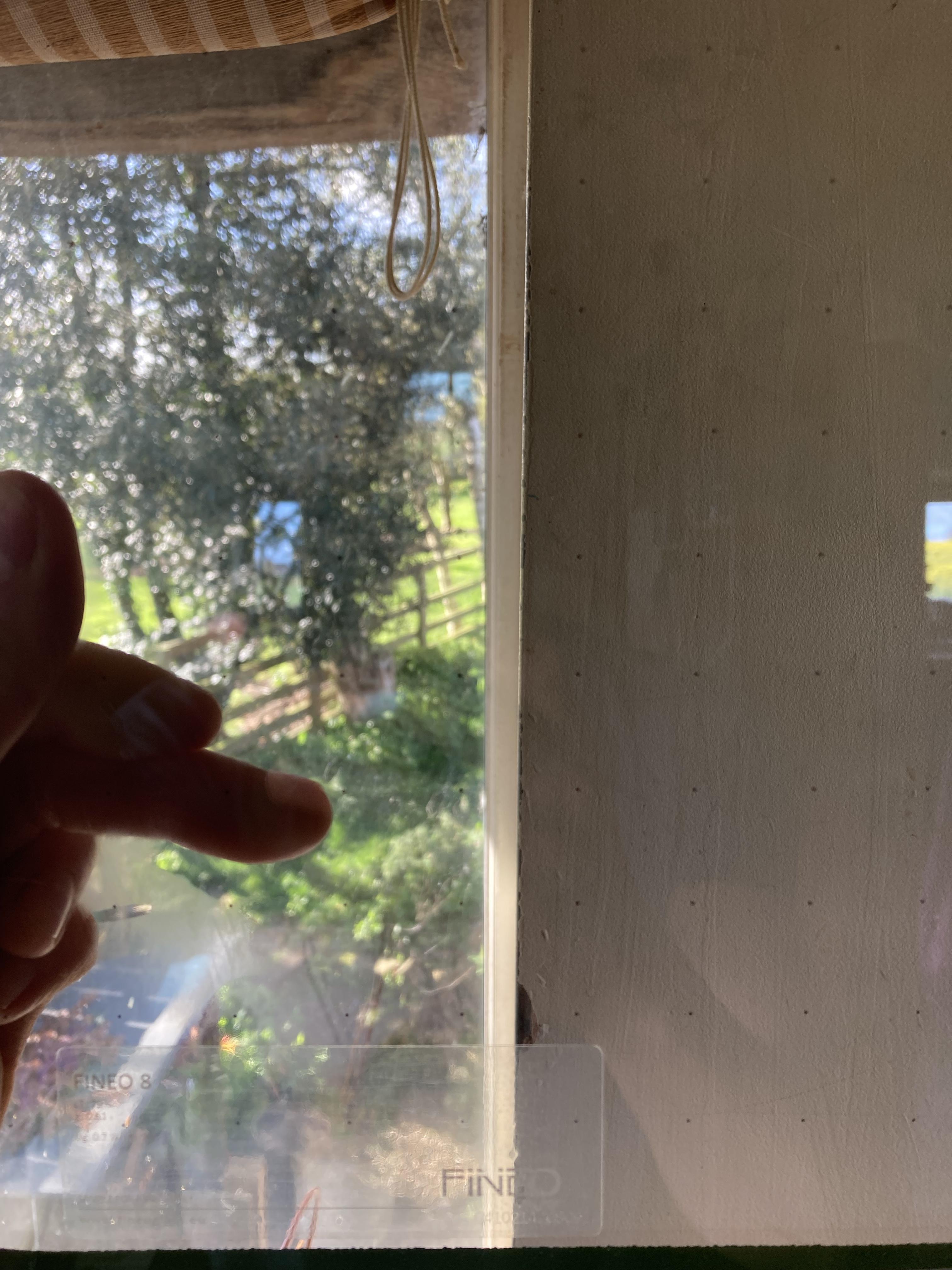
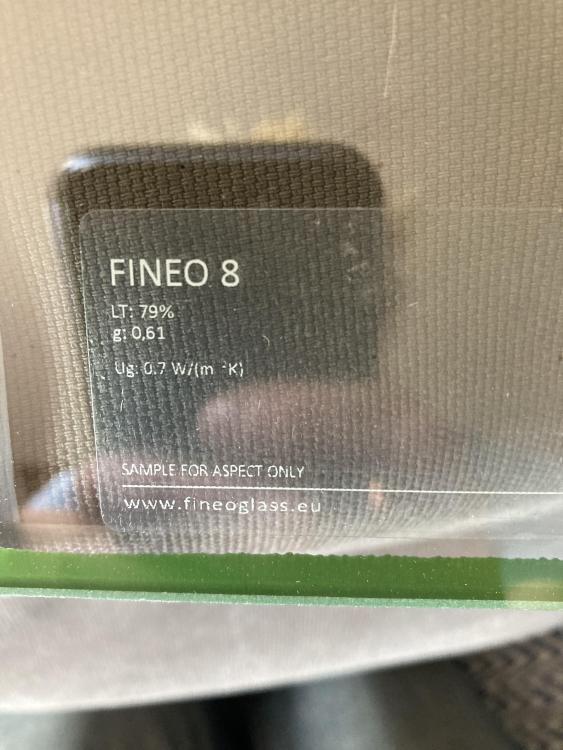
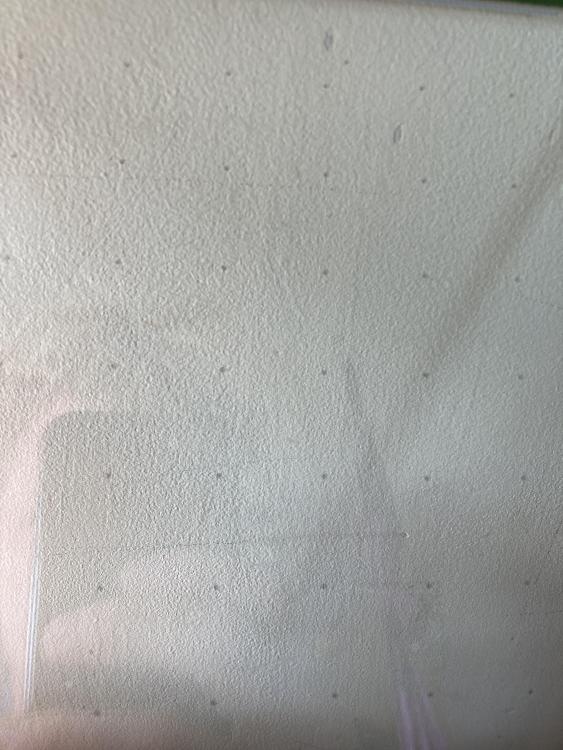
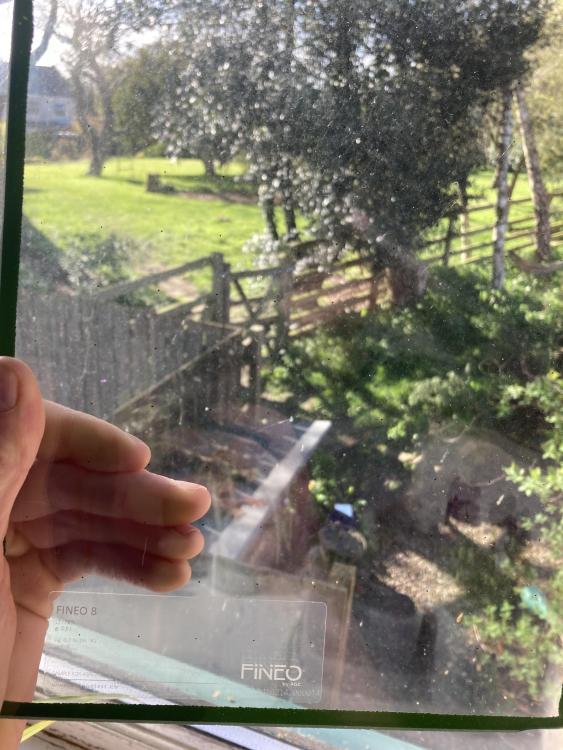
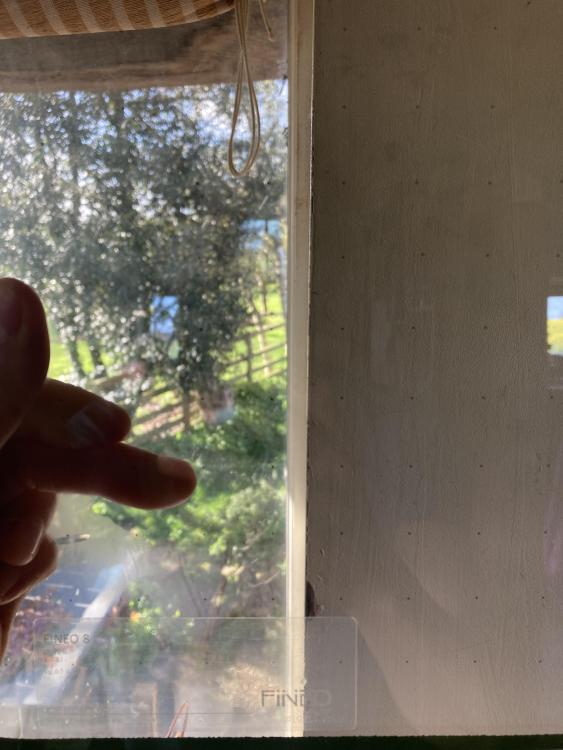
Sample arrived today. The pillars are quite clearly visible to the eye from within 2m off the glass. Maybe made worse by the fact they are black… the sample they have sent me does state the 0.7W/m2k and the unit is 7.7mm.
-
The 4m span is the reduced span due to adding a dwarfwall/footing to help with either b&b or suspended slab. I poured a raft for my double garage on the same site and polished the slab as a test run. It worked well and so far no issues. My plan was to polish the main house floor with the aim to reduce the need for both a slab and a screed. I see this may be harder to achieve now but hopefully not impossible. I’m now looking at the Golcar ph slab design, only difference being the void formers in my case. My engineer spec’d the slab reinforcement so I don’t have too much concern regarding the mesh detail, however this isn’t my specialism and I trust he would be confident in his own design. Which details do you think would require great precision? If it’s just one layer of mesh to the base I think the mesh would be a lot easier than jobs I’ve done with several layers/hystools /overlap build ups. Aiming for ph levels of insulation with mvhr, 3G ect. Wouldn’t a 150mm slab with underfloor heating be better suited than a screed for storing more heat? Happy to change design if I foresee the slab finish not being achievable. I have been looking at the jablite void formers which look to simply compress when the ground does heave. I don’t like the look of the ‘just add water’ ones to create a void. I see the Jablite ones as ground baring up until the ground moves, if it moves. Once the soil heaves, does it retract at all? Although we have ‘medium’ shrinkage clay, the void formers are being used to overcome being close to where we had an old, now removed pear tree. All spec being followed directly from nhbc guidelines.
-
Thanks, my engineers spec is a 150mm reinforced slab with a single layer of a393 to the base. No spans greater than 4m for the slab so I would need to add another footing to help there. We may need to add some reinforcement to the top of the slab above these footings for ‘hogging’. I imagine I would need to add an extra footing for b&b to break up larger spans. I originally planned on a ground baring slab to be used as our ff with underfloor heating within. With the added complexity of reinforcing the slab and potential hogging, does using the slab as a ff seem un realistic with the amount of crack potential. We have several dividing walls we can use crack control joints at but in the larger kitchen/diner it would be a shame to use control joints. My aim was to reduce the need for a screed buy polishing the slab (another discussion has already been had on this) Sounds like the options are: Reinforced slab with void formers (potential crack issues). Block and beam with screed. Timber suspended floor.
-
I have medium shrinkage clay and have been advised to use both heave protection in the trench wall and void formers under a suspended slab. I’ve read on here people dealing with poor ground conditions using block and beam and also the void formers. I’m about to cost out which is going to be best for us. I don’t like the idea of a void below the block and beam but wonder if the void former (cordek/Jablite) is also just creating an airspace below the slab by default. I know the suspended slab is designed to overcome this but is it likely to effect the insulation sandwich above the void former and below the slab? Does ground heave retract, or just heave and stay put? A bit off the original posters question but dealing with a similar issue.
-
Hi Craig. The supplier described the unit similar to how you describe. Laminated with a 0.1mm vacuum. The overall lamination being 7.7mm and achieving 0.7uvalue. I imagine they can also be included in a double glazed unit to achieve better uvalues? As always, the facts are never crystal clear. They recommended these for replacement of single glazed panes in traditional sash windows.
-
Has anyone come across Fineo glazing? Vacuum insulated glazed units claiming to perform as well as triple glazing. Units are coming in at around 8mm with a 1mm vacuum cavity. Sounds too good to be true. Curious to see if it is. They are sending me samples this week along with their pricing.
-
I’ve done several of these floor repair jobs on listed buildings. Often they want very little of the original fabric to change so the work arounds are to patch and repair where necessary. I buy replacement re-sawn old pine boards for any replacements. Issue with replacements is you can’t keep both the tongue and groove on the old board and include a new tongue and groove on the new board. You can half lap one side but it is rather labour intensive and requires nice clean cuts and a router. Many floors we have done where the replacement boards have been fitted all seem to shrink after they acclimatise at the 20+degrees inside the house over a year. If there is any flex in the old flooring, any ‘filler’ material is likely to pop out if it is brittle, like wood filler. If you plan to re-sand the whole floor then using timber ‘slithers’ works very well. 1m long strips of wood cut into a slither sizing from 0mm-6mm/12mm. If the floor is well fixed down the slithers can be glued and hammered into the gaps to make up the gap. These can then be planed flat and sanded with the whole floor. This in my opinion is the best solution. Or, lift the old boards and re fit if it’s an option.
-
Simple answer is yes, you can stop the wall plate either side of lintel and use a ledger board bolted to the masonry and into the lintel to fix your new rafter ends too. You can mount the hangers to the timber ledge. Do you have a valley junction in this area too with it being and Lshape build?
-
Siberian larch vs sweet chestnut cladding
Rishard replied to PeachyBeechy's topic in General Construction Issues
My counter battoning is concrete screwed if going into blockwork. There is no need for dpc, I’ve never heard of dpc behind cladding as it is usually ventilated to some degree. Often there is a breathable membrane when applied over timber frame ect. I fix the cladding with stainless steel pins out of a nail gun. Either surface on wide boards or secret nailed on small profile boards. There is almost no movement across the cladding width or length so I wouldn’t worry about movement with thermowood. -
Vaulted roof insulation condensation risk?
Rishard replied to LinearPancakes's topic in Heat Insulation
I had the same feeling about the pir being taped acting as a vcl. My supplier of insulation did a condensation risk analysis of a similar build up to what you described. All seemed well. Does anyone know the benefits of an intello style membrane with pir if it’s being taped as a vcl? Is it double insurance for reducing moisture from the room? Or is it better targeted at more vapour open insulations? -
I use HMT drill bits on steel. Cheaper than a mag drill but more than regular hss bits. I paid about £40 for a bit years ago and it still ploughs through steel beams without much effort. Use a good drill or they even do impact bits. Watch any of their videos to see them in action. I would definitely recommend these. https://holemaker-technology.com/collections/metal-drill-bits
-
Dimensions also would be helpful.
-
Passivhaus window suppliers to UK - recommendations
Rishard replied to markharro's topic in Windows & Glazing
How are your quotes stacking up against each other? -
Now this might put the cat amongst the pigeons, And I will state I am no expert nor have I mvhr installed, yet it is certainly on my plans for our near passive build house. I heard a podcast discussing just this point. To mvhr or not? The conversation was between the host and a ventilation supplier/manufacturer who also produces and supplies mvhr systems. He referred to a study on 270 European passive houses, half with mvhr and half with on demand ventilation. The study looked at the indoor air quality, heating load on heating system and primary energy to run the ventilation system. They drew on indoor air quality. Mvhr was top for heating load on heating system with a 6% saving on energy. However when they looked at energy usage to power the ventilation systems mvhr required 5x more primary energy. As I said I’m no expert and I imagine you guys will have some lived experience of running mvhr and be able to talk of its benefits. Would be interesting to hear views on this. I will link the podcast with the time segment for your own listening. I’m sure it’s been discussed plenty but I found it surprising. I also haven’t done any greater reading on the subject. https://www.buildingsustainabilitypodcast.com/ventilation-and-timber-futurebuild-2022-vince-house-matt-stevenson-bs077/ report discussion @ 9:00
-
Cold bridging at cavity reveals and floor slab detail
Rishard replied to ruggers's topic in Brick & Block
This could be used for retro fit possibly. https://www.illbruck.com/en_GB/product/tp601-compriband-e/ -
Cold bridging at cavity reveals and floor slab detail
Rishard replied to ruggers's topic in Brick & Block
I’ve used compriband tape for a lot of green oak frames. It’s great at adjusting to the movement of the oak. Once you have opened the roll you can cut off what you need and tape the roll together to stop it expanding. Keep it flat and stored well as once it gets uncoiled it’s worthless. They come in varying widths and expansion thickness to suit all sorts of applications. I used to apply it to the frame and compress the glass on to it. On the outside I would stick it to the cover board and compress it onto the glass. You have a few minutes to get it stuck on before it starts expanding. Easy enough when your prepared. Haven’t tried retro fitting into gaps but don’t see it being an issue. -
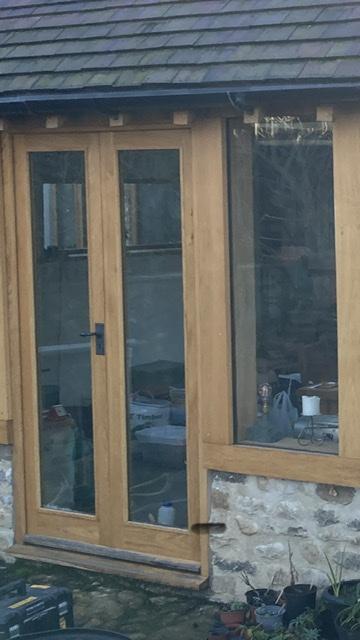
See the weather bar on the french door cils. These doors are 6 years old.
-
Oak doesn’t ‘need’ finishing. It’s often an aesthetic choice. The lovely golden colour of milled oak soon goes when exposed to the elements. If you oil it, generally it stays golden for 5 or more years but you set yourself up for a life time of maintenance to try keep that golden colour. Osmo is good for this but I have found it is useless on any surface which isn’t vertical. Horizontal weather bars seem to flake, peel and start the greying process.
-
Battening - getting them flat and true - how?
Rishard replied to Dreadnaught's topic in General Self Build & DIY Discussion
All of the above is good advice on fixings, especially if your lats are wet as they are likely to dry out and lose that initial bite they have on a screw . I typically start by finding the furthest out bulge. Once this is established I set up a string line horizontally from the furthest points. Practically impossible on your own as you need a person at each end of the string and someone eye’ing the string so it is just off touching the lat at the bulge point. You now have a straight line to pack and fix your lats to. I use plastic shims as they don’t compress. From here you can plumb up your vertical lats and pack at the fixing points. Sadly in your case it might mean starting again, or finding the bulge point and packing everything else. 2mm tolerance would be fine for most claddings but with a nice long straight edge and plenty of time you could get it perfect! Hope this makes sense. -
Siberian larch vs sweet chestnut cladding
Rishard replied to PeachyBeechy's topic in General Construction Issues
Thanks @SteamyTea is there a feature somewhere to do that? -
Siberian larch vs sweet chestnut cladding
Rishard replied to PeachyBeechy's topic in General Construction Issues
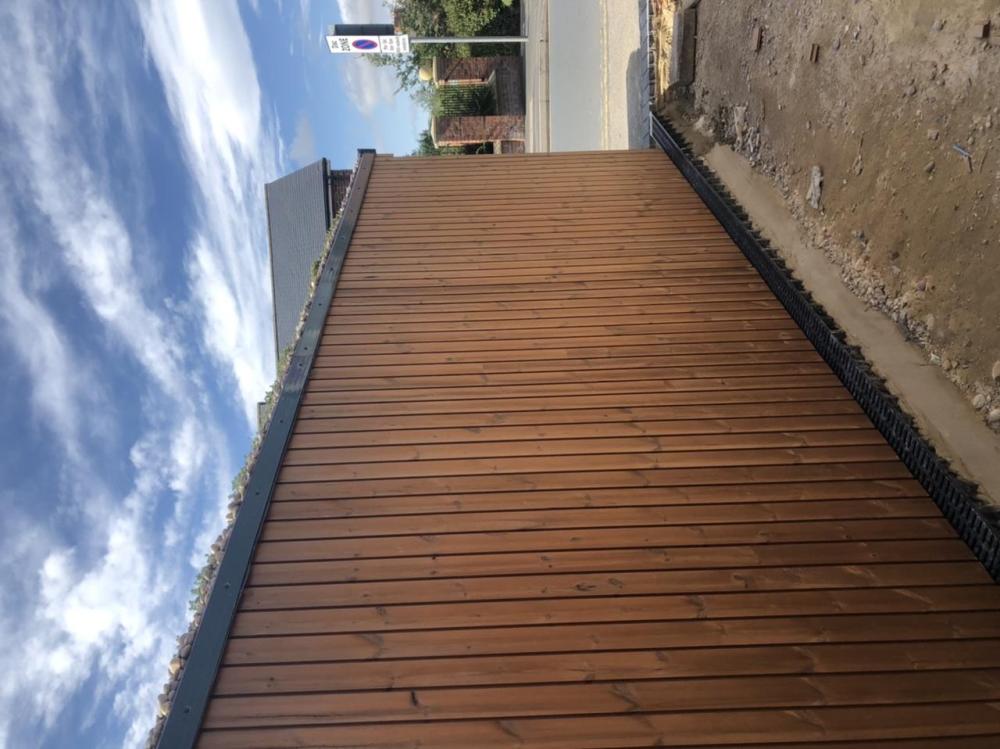
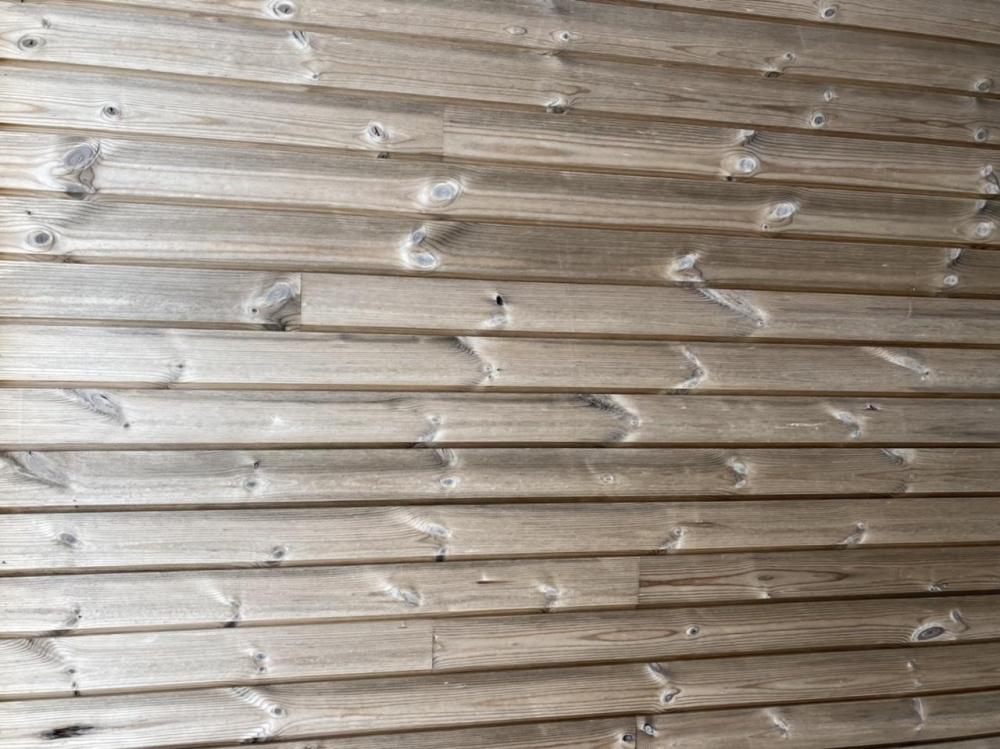
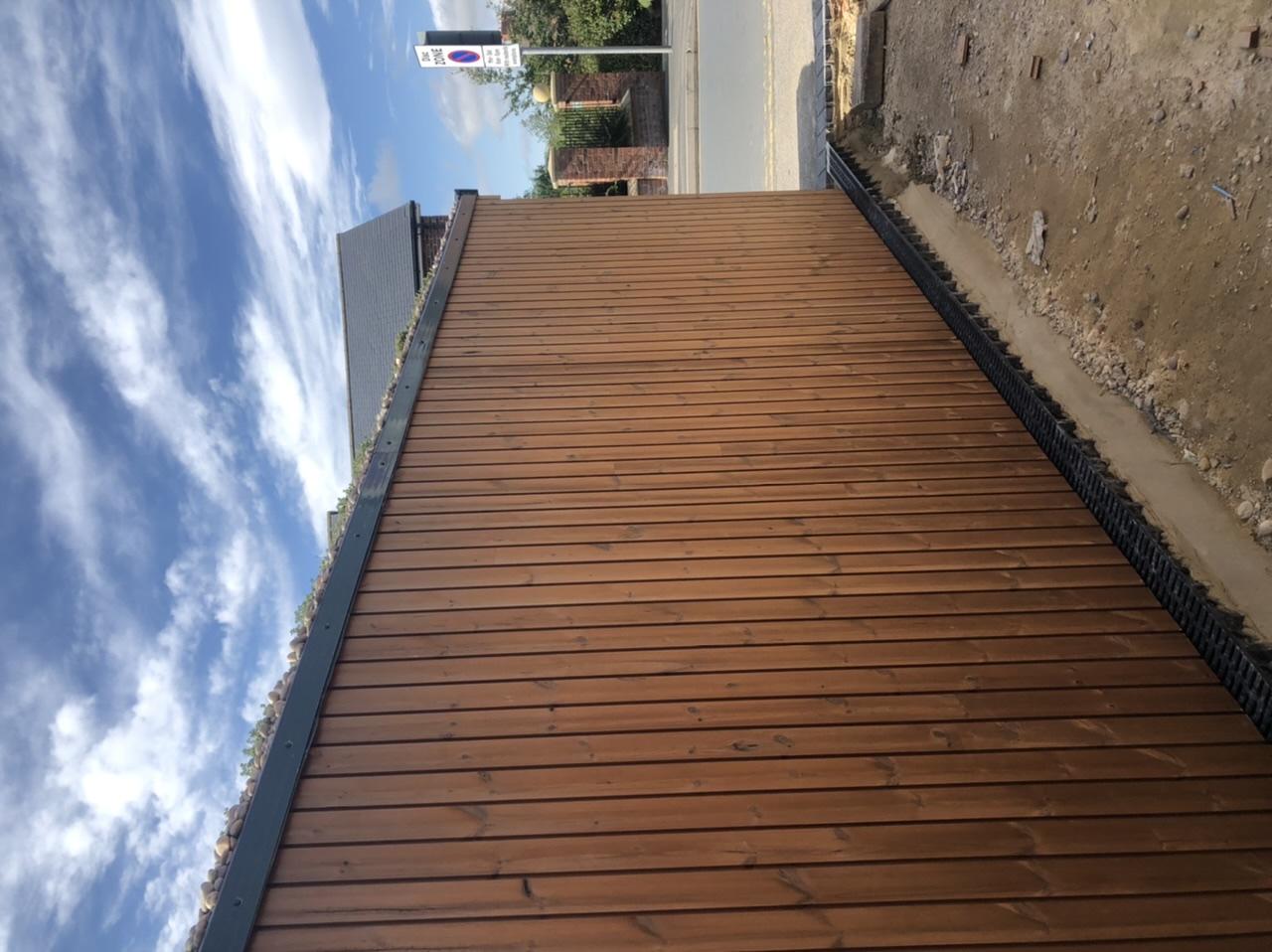
I’ve only really used Siberian larch and never Scottish. Mainly due to the supplier I use but they do produce good quality profiles. Duffields timber in North Yorkshire if you wanted to check them out. They might not come in the cheapest but always good to compare costs. I recently re-clad a clients gable with thermowood ( radiata pine) I’ve done plenty of jobs with it now. What I will say is it is super stable… I did some vertical shadow gap cladding for a shed 3 years ago with some square cut butt joints meeting on the counter batons and the stuff hasn’t moved 1mm. It works really well for contemporary looking finishes I would say. When I used it with a more traditional feather edge profile, I was a bit shocked at the grain or more the knot quality of the wood. It’s not particularly attractive when looking at such wide boards I don’t think. One good thing is it stays where you fix it. The initial colour is quite soft unlike fresh larch but un-treated they all end up that lovely silver colour. Not sure why I can’t turn these pictures the right way round. But this is 3 years apart. Thermowood. I have tons of pictures of western red cedar jobs, thermowood and larch if I can find a way to turn them the right way round on here?