AliG
-
Posts
3211 -
Joined
-
Last visited
-
Days Won
11
Everything posted by AliG
-
Absolutely beautiful house today. I have said so many times that I don't understand why there are not more houses on the cost in the UK. Clearly in this situation building was hard, but there are lots of less exposed places still with very few houses. As ever it wasn't clear how much effort went into insulation, but it wasn't that big a house and is part buried so probably won't cost too much to heat. I would have thought that 3G windows were warranted in the situation, but there may be issues with installing them at those sizes.
-
Looks like you have a good choice there. To answer the previous question, the Velux vent is integrated into the handle. So you twist the handle to its first position and it opens the vent and then twist it further to open the window. I find it quite annoying as the vent doesn't ever feel securely closed. It just seems to be pressure from the handle.
-
I just had Kevin's Grandest Designs on in the background. I was very pleased to see that the Huf Haus couple from 2003 were still going strong and living in the house.
-
The triple glazed one is actually more expensive than the higher spec U6 window https://www.roofingsuperstore.co.uk/product/fttw-u605-white-centre-pivot-triple-glazed-window-78cm-x-98cm.html Is it possible to take a pine one and paint it white? https://www.roofingsuperstore.co.uk/product/ftp-r105-pine-centre-pivot-sound-reduction-window-78cm-x-98cm.html Actually here is the equivalent painted one £309. The FTW P2 the rep recommended and this the FTU R1 both use 6.8mm laminated glass, this partly explains the higher price. The P2 is listed as anti burglary and the R1as noise reduction. I don't know why he didn't recommend the noise reduction unit as it comes with no vent as standard so is cheaper. https://www.roofingsuperstore.co.uk/product/fakro-ftu-r1-05-white-centre-pivot-sound-reduction-glazed-window-78cm-x-98cm.html
-
Even relatively modest houses often have a master en suite nowadays. If there is space for one then you really should fit one. I made the doors to en suite fire rated doors which are heavier to reduce noise transfer. The funny thing is our master en suite doesn't have a door at all and TBH if my wife is running a bath the noise is annoying but I don't notice anything else. All our WCs use in wall cisterns, they are vastly quieter than open cisterns and you basically cannot hear them. Similarly with MVHR you do not have annoying noisy extractor fans. Other things you can do are to make sure that anything noisy doesn't share a wall with the bedroom and try and put the door round a corner so it doesn't face the bed. But it is unlikely someone will be having a bath or s shower when you are sleeping unless you and your partner keep very different hours. I have never had steam or smells from an en suite as an issue ever in a house.
-
The two main makers of wooden garage doors seem to be Woodrite and Cedar doors. See here for more information. https://arridgegaragedoors.co.uk/wooden-garage-doors http://www.cedardoor.co.uk/documents/ww/Cedar Door 8pp Price List 2011.pdf However, I am not aware of anyone who makes sensibly priced matching wooden garage and front doors. To get a good match though you may have to down the Hormann infill route. Urban front would make you matching door and front door, you would be looking at the best part of £15-20,000
-
I have the velux centre pivot 3G windows. One issue I have is that if they are high up or above something you have to stretch over you cannot reach the handles which are right at the top, so I would watch for that. I got them more for the noise reduction than U-Value. Not having vents makes a big difference to that anyway. I think you have nailed it, the only thing I might consider is the vents are useful if the windows are in an area prone to overheating, we use them in the windows in our games room which is in the roof and can get hot. If you want more noise reduction and a better U-value I would consider the Fakro U6, most of the benefits of the U8 and not as crazy expensive. https://www.roofingsuperstore.co.uk/product/fttw-u605-white-centre-pivot-triple-glazed-window-78cm-x-98cm.html
-
A recess without grooves would be like this. TBH we just leave things on the flat surface to dry and it seems fine, although we very rarely handwash anything, if it was a lot there might be too much water. I think some people just put a dishtowel down on a flat surface and it soaks up the water.
-
We previously had worktops with grooves cut into them for drainers. They didn't work that well and were difficult to clean. A steep sharp groove in stainless steel as above might work, but then it would not be useable for anything other than water drainage unless you put a cover over it. In the current house we have just flat quartz worktops with no drainers cut in. Small amounts of water have too much surface tension to flow on a shallow slope and will bite happily just sit there, so even with a slope you still need to sweep the water into the sink. As the water will sit there anyway, a flat surface is better the rest of the time and easier to clean. What we do have is two sinks, a smaller one in the island and a larger one at the side, that way there is always somewhere to sweep water, crumbs etc into. It works really well. If you wash lot of stuff by hand then you might want a recessed area to hold the water, a recessed area is easier to clean than grooves, but in that case I would recommend a dishwasher ?
-
Is an electric combi boiler acceptable now for a new build?
AliG replied to ProDave's topic in Other Heating Systems
I don't know about the SAP but thinking about practicality. My landlord in London replaced the gas boiler with an electric "combi". The gas boiler was in an interior space and the requirements for flue inspections are now a pain. Heating and hot water for just me in a 500sq ft flat is fine with this. But it only has a small tank to hold preheated water and cannot fill a bath without running out of hot water. So would be no use for a multi person household. The "combis" shown are simply electric boilers and hot water tanks in one. Running one of these for a family will not be cheap. I don't know where those energy prices came from. Gas is around 3p/kWh and electricity around 14p. You can get them a bit cheaper. To heat 150l of water a day by 40c is almost 8kWh. So water heating would cost 24p a day with gas or 112p a day with electricity. So around £90 a year on gas and £410 on electricity. Worse again if it say a 4 person household. An ASHP would cost more than gas to run, assuming a COP in the 3 range, around £150 a year for DHW. So direct electric is £260 more than an ASHP. Heating costs would probably increase by a similar amount versus an ASHP . What I don't know is the heating requirement of the house. If it is quite low then it might be similar to DHW. So you could argue that an ASHP would save around £500 a year vs direct electric but cost a few grand more. I doubt the numbers work out if you are building for yourself, but they might if you are building for tenants or unsuspecting buyers.The SAP score/EPC will at least try to highlight this issue. -
50mm should get you there. You need to work in R-Values to add up materials. A U-value of 0.14 is equivalent to an R-Value of 1/0.14 = 7.14. 180mm Frametherm 35 has an R-Value of 5.1 (From datasheet) - The calculation is thickness in m/thermal conductivity = 0.18/0.035 = 5.14. So to get to a U-Value of 0.14 you need to add another 2 to the R-Value. To calculate this you multiply the conductivity by the R-Value that you need = 0.022x2 = 0.044mm. So 50mm will get you there. To do the calculation properly you need to allow for bridging by trusses and small gains from the other materials in the roof. This will be close enough, the supplier should be able to give you an exact value.
-
The spacing is to calculate the bridging losses from the trusses. It will not make a meaningful difference. You can cut Frametherm to width pretty easily whilst it is still rolled up.
-
Are architects all on commission from Kingspan! K107 "Kooltherm" has conductivity of 0.02 W/m K and costs, according to a quick Google, around £28 a square metre at 100mm depth. Cheaper prices may be available. You really should only use this stuff if you have a ridge height issue. As an aside, 75mm is a totally non standard thickness which would be hard to get hold of and be a bit more expensive for any given volume than 100mm boards. 100mm of Celotex GA4000 costs around £12 a square metre. Its conductivity at 0.022 is 10% worse, so it would have be be 10% thicker to provide the same insulation value. You could also substitute the Kooltherm based plasterboard for PIR based which would be about 10-15% cheaper at the same thickness. In this case substituting 100mm Celotex for the 75mm of K107 and PIR based plasterboard would save roughly 40% om the material costs whilst giving roughly the same u-value. I think at this rafter thickness you could also use 150mm of rockwool between the rafters and PIR below and be even cheaper again. You would have to check condensation issues. Alternatively you could use 150mm of PIR between the rafters and plasterboard below. Also if the rafters are 220mm deep is the proposal really to have a 25mm gap then 75mm of insulation then a 100mm gap then plasterboard/PIR below. That seems v odd. Also what do they mean, install vapour barrier on the warm side of the insulation, between it and the plasterboard, half the insulation is attached to the plasterboard, so that is just impossible!
-
Discount Offers of the Week
AliG replied to Ferdinand's topic in General Self Build & DIY Discussion
Quite the party -
Discount Offers of the Week
AliG replied to Ferdinand's topic in General Self Build & DIY Discussion
Looks like I was in there then edited out. Painful! I like the Merc, but I prefer the slightly later model as driven by Bobby Ewing.
-
A bit of searching suggestsI seal around the conduit then tape up the end where the cables come through.
-
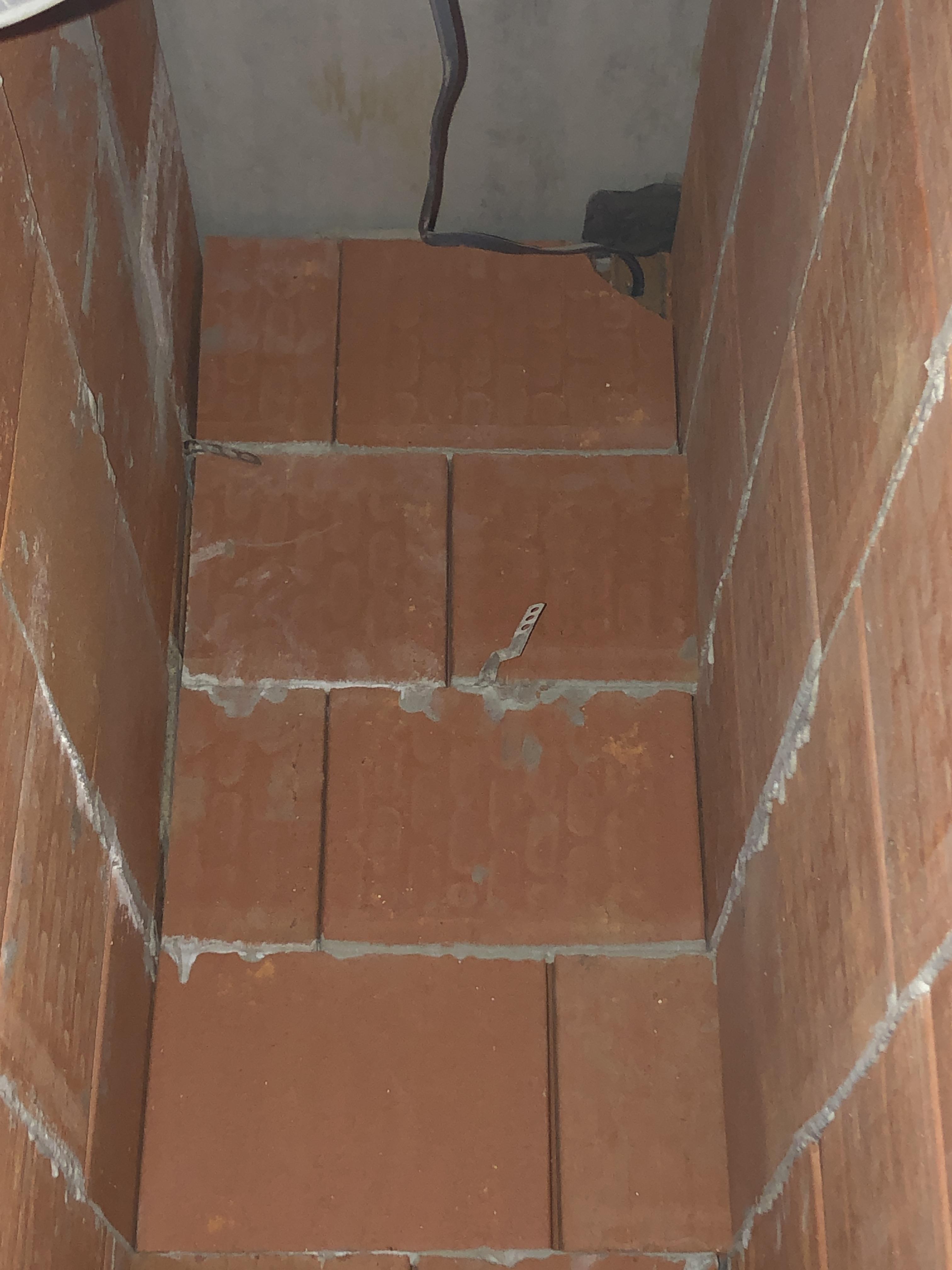
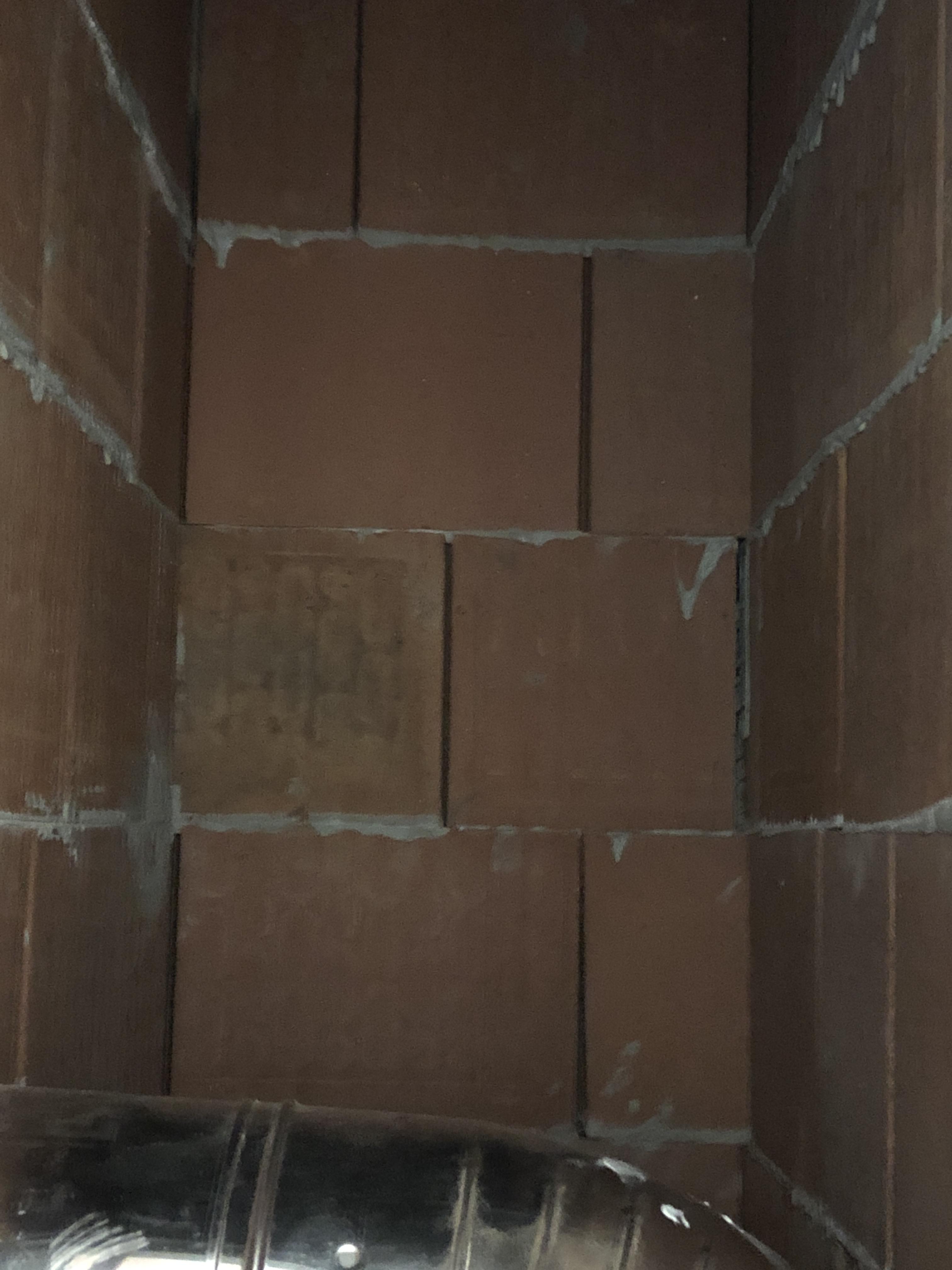
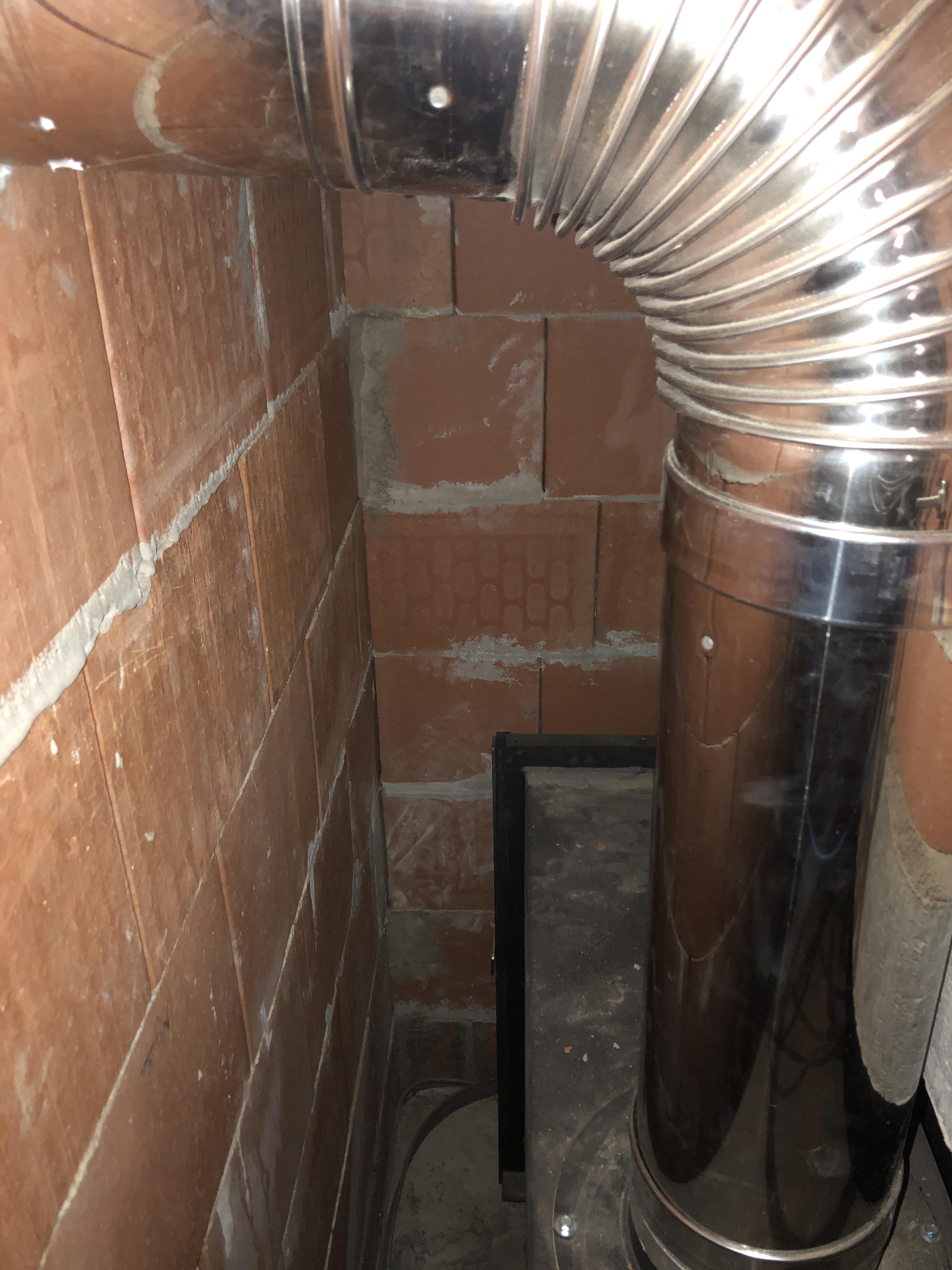
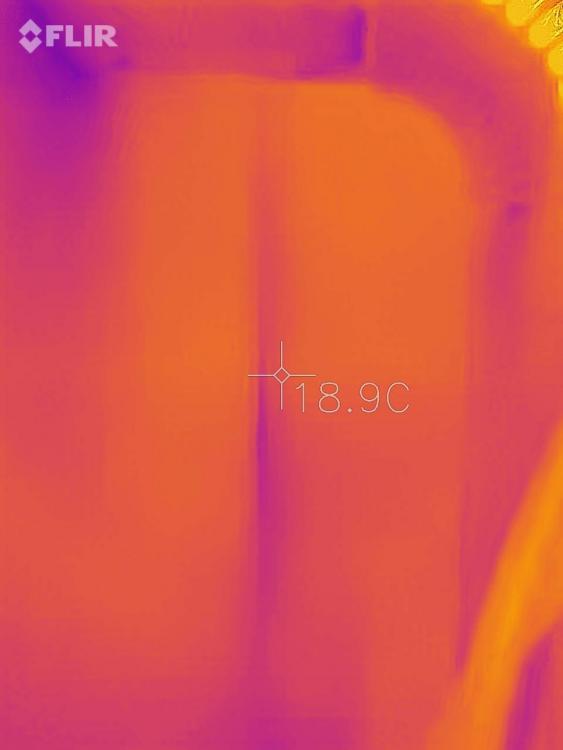
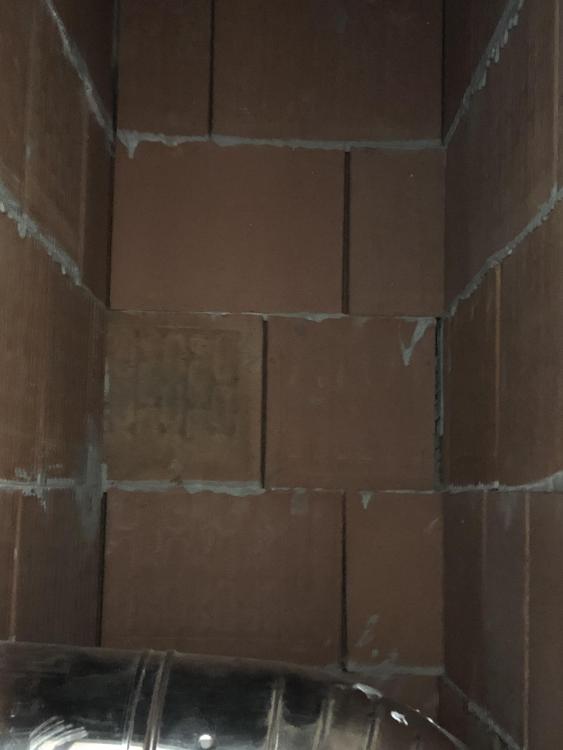
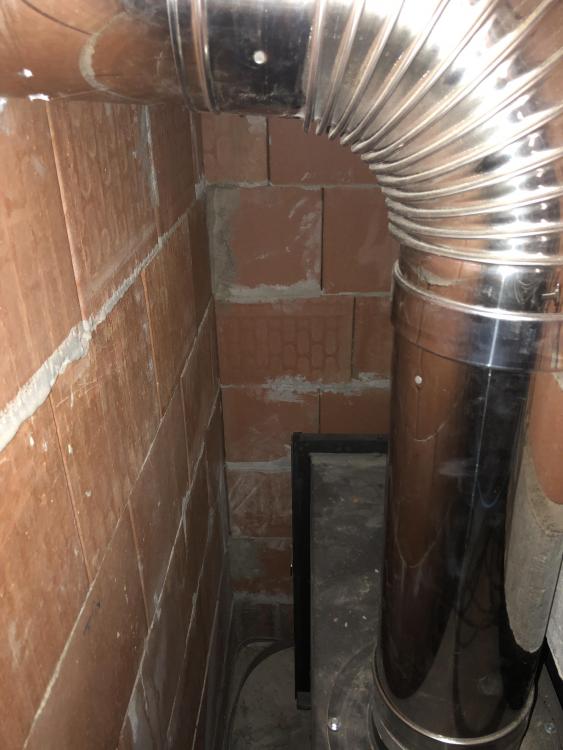
Lol. OK, I have investigated more now that the shelves are out and I can see inside the chimney breast. It would help if it was windier. The mastic around the flue has shrunk a little, so it is not sealed at the top. I can get that filled in. There is a piece of flexible conduit through the wall near the bottom to an outside socket. I can put some mastic around the conduit which is pretty tight in the hole, but do people also seal up the inside of the conduit where the cables come through? I took some IR pictures. Here is the conduit- Here is the back wall and the flue. You can see the cold area around the flue. Also it looks like the large gap between the side of the chimney breast and the outside wall is letting in cold air. Despite not being parged, the gaps between the Porotherm blocks do not seem to be cold, nor is there an issue at the top of the clockwork despite it not being sealed to the slab above. So I will try and get these three areas sealed up.

-
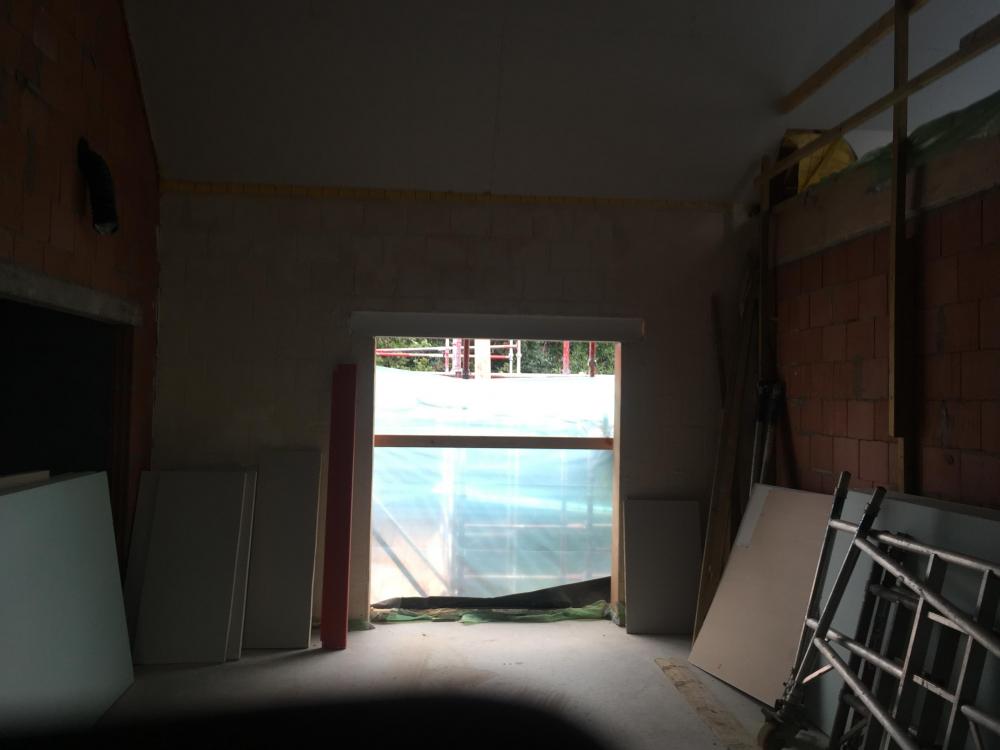
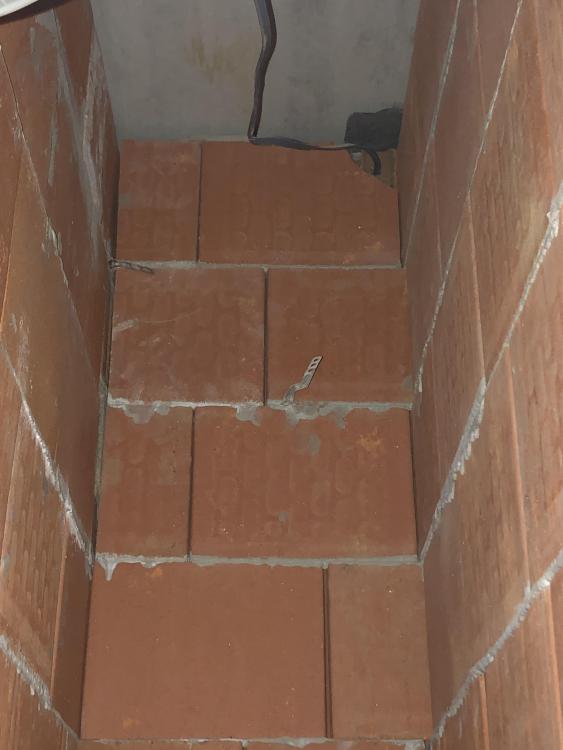
Porotherm just isn’t pointed. Threre is no mortar in the vertical joints. Elsewhere it looks like this - Are you saying there should be no leakage past the plasterboard? That is right in the rest of the house. The problem here is that there are cables through the wall to the tv, there is a removable shelf in the wall for access to the cabling behind and there is a vent and access to the fire controls. All of these are difficult to seal so I need the wall behind to be better sealed. So so I have a combination of the area with the most penetrations in the house and the worst sealed piece of wall.
-
Porotherm doesn't get pointed on the vertical joints, these are normally filled by a parge coat over the whole wall. They should fill any abnormally large joints. I think if you have an internal wall you just butt it up again the outside wall and connect it with wall ties. Because it was internal and being covered by plasterboard I don't think anyone thought that filling the gaps mattered. But this wall has a lot of penetration both to inside the house and outside, so there are a lot of air leakage paths.
-
We have a block (Porotherm) chimney breast in the kitchen. The builders parged the inside walls of the house including the room side of the chimney breast Despite repeatedly reminding them that that was an internal wall and someone had to go inside the chimney breast to parge the outside wall before the fire was installed it never got done. The fire installers never sealed up the flue and I was hoping this was the main source of air leakage but now this has been done it still leaks. Because the chimney breast has the TV and fire in it, there are numerous penetrations into it and these leak cold air when it is cold and windy outside. Seeing that it is still draughty I opened it up today and you can see the gaps in the porotherm. How do we seal this up? The only access is a TV shelf at the side which is around 300x600mm and the far away corners are around 1.5m away. We could try a long handle roller and some kind of parge coat, or should I just stand with a can of spray foam and spray it across the whole wall. Also I was looking for some kind of smoke candle to try and pinpoint the exact sources of leaks. Does anyone have a recommendation? Thanks
-
Yes, the circulation pump is timed. It is set to run for 15 minutes in the morning, at lunch time, after school and before bed, but it has only been set on this schedule for the last week(see paragraph 3 for explanation). Due to the pipes being insulated, the water seems to stay hot enough for a few hours. But I will be testing this new set up this week. I just discovered last week, after a year of being in the house, that the hot water timer and circulation pump timer were switched around in the Heatmiser app. An extra control unit was added after the system was installed and no one told me that they switched around. So instead of the hot water being on all day and the pump 4 times a day, it was the other way around. I only discovered this when I thought that I reduced the length of time the circulation pump ran for and my wife complained the hot water was not hot enough! In reality I was actually reducing the length of time the boiler ran for. So I have around 70m of pipe sitting with hot water in it for the circulation pump, but this only runs 4 times a day. I then have 5m of flow and 5m of return to the pool running through the media room ceiling, plus the around another 6m of each in the pool plant room. The pool heater calls for small amounts of heat constantly. I just checked the manual to see if I can reduce how often it cycles, but I cannot. This has been contributing to overheating in the media room along with heat from the AV gear. This is one reason I would like to run the boiler a little cooler. I have just insulated the plant room pipe work to hopefully reduce this cycling. Then I have 4 UFH manifolds. The way the system has been set up, sometimes water is pumped to the manifolds even if the manifold pump itself is not running(I think this may have been exacerbated by the hot water pump running 16 hours a day until I noticed it was set up wrong). There is probably around 30m of flow and 30m of return to these manifolds. This is insulated, but what I noticed is that the manifolds themselves warm up slightly due to conduction of heat from the warm pipework. This heat in the pipework and manifolds is enough that the heating never needs to be on in the 4 rooms that they are in (one is the plant room). Annoyingly the WC is by far the coldest room in the house, if I had known about the manifolds heating up I could have put one in the cupboard next to it and not had to run the heating just for this one small area that is often cold). To put it all into context, I reckon we now use around 90kWh a day of gas for hot water and pool heating. I think it was around 110kWh before I started optimising it. Around 50-60kWh is for the pool, around 15kWh is for DHW and around 20-25kWh is pipe losses. So that is around £200-250 a year in pipe losses. The one useful piece of advice anyone might take from this is that if you have an area in your house that will obviously be cooler than other areas, e.g. north facing, lots of outside walls/glass then try and put your UFH manifold or anything else that produces excess heat here. Use your heat losses to run your heating less rather than overheat rooms that don't need heating. As we approach winter again I will start to try and make sure all the last air leaks are blocked up. I think we used around 500kWh of gas on the coldest day of the year last year, so close to 400kWh for heating. So improving on heat loss will make a bigger difference. There are already some issues that have been sorted since last winter, e.g the flue for the kitchen fire was not sealed. Also we did not have mastic around all the windows on the outside and inside until March this year. This made quite a difference to air leakage as well as noise leakage. It will be interesting to see if the fixes applied since last winter make a big difference to heat requirements this winter. The house uses a lot more heat than modelled, although still around half what our last house used per square metre. I suspect it will only be modestly less this winter.
-
I have been reading this thread with interest as a - I try to optimise my heating system now that we have been in for a year and b - I consider the heating system for my parents' place assuming that we get planning permission. The discussion here has centred around heat pump, I have a gas boiler. Looking ay my system I have the UVC thermostat set at around 57C and the boiler set in the low 60s. Ex hot water, the boiler could run in the 40s, the highest temperature on any of our UFH circuits is in the low 40s. As I understand it, I need water returning to the boiler below 55C to get it into condensing mode. I should be OK on this. But would there be further savings from making things cooler again. My main question is heat losses, I have a hot water loop in the house as well as 4 UFH manifolds and the pool. Because the boiler needs to be set at 60C+ to heat the hot water, then I am ending up with lots of hot water circulating in lots of pipes at 60C. This is also causing some overheating. The loop will be in the high 50s as it is connected to the UVC, but other water will be at 60C+. If I could reduce the UVC temp to the low 50s and the boiler temp to 55C then I should reduce heat losses across the whole system. It seems from reading that this is an inherent advantage of a ASHP, they produce water at one temp for the DHW and one temp for the heating. A system boiler produces water at only one temperature. Of course this goes into the legionella discussion that people are having. Am I brave enough to set the UVC to the low 50s. It sound like it is likely fine. It seems that an alternative option is changing the UVC thermostat to some kind of timed thermostat that turns up to 60C once a day then 50C the rest of the time. Again this seems to be how ASHP based systems work but not system boiler based systems. Anyway I have thus decided to change to an ASHP for my parents' house as I think it will work well for it. I won't get gas connected up at all which will create a large capital saving as well as saving about £75 a year in standing charges. BTW wholesale energy prices have collapsed in the last few months. Some of the fixed price deals have started to fall in price. Outfoxthemarket who sell gas and electricity on a variable basis (but have a very bad record for service apparently) are undercutting other people massively at the moment. Looking at the drops in wholesale pricing though there seems to be room for more substantial price drops to come through even based on around 50% of the cost of gas and electricity being the wholesale cost.
-
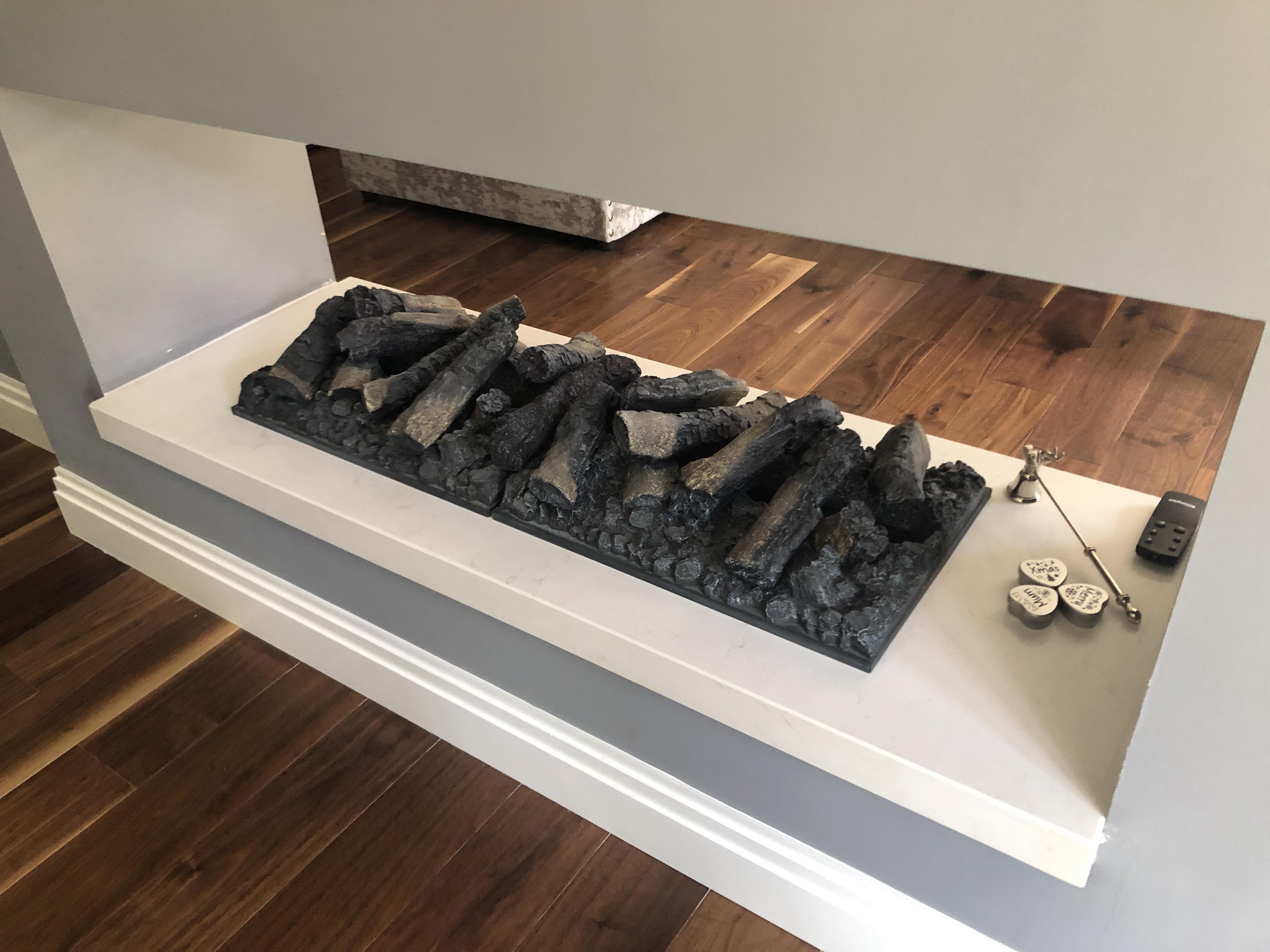
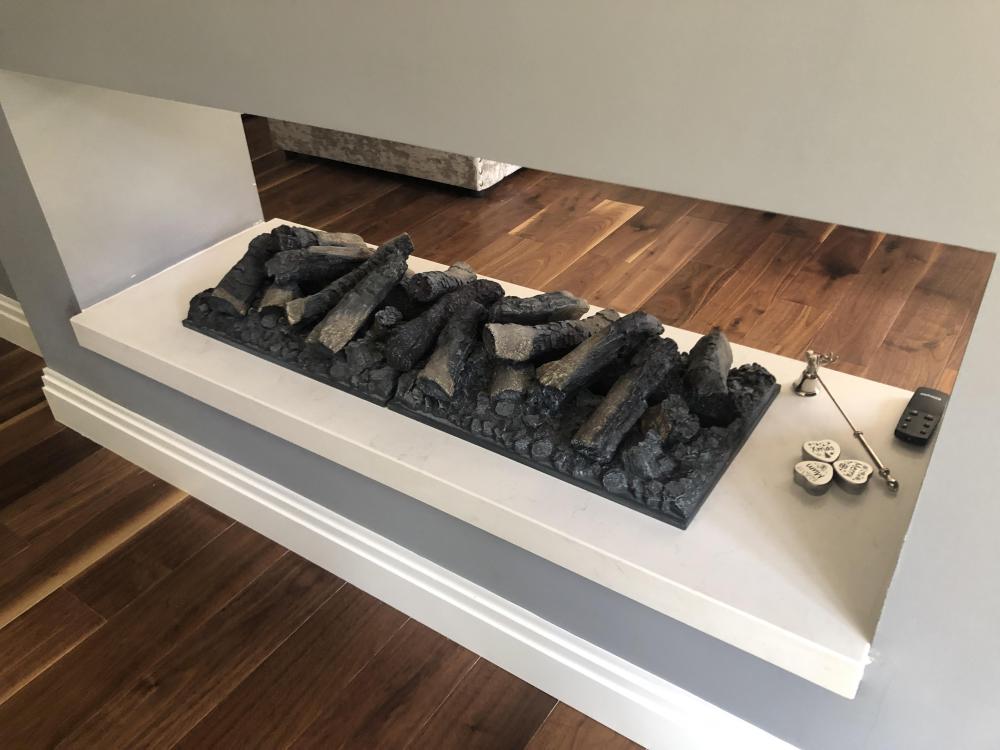
Thanks @canalsiderenovation It is an Optimyst fake fire, we just had the marble surround installed there. I need to touch in where they scraped the paint doing it. I don't know if anyone else can comment, but with no carpets at all in the house and MVHR there is vastly less dust than in previous houses. I don't know if it is the lack of carpets or MVHR that helps. The skirting boards have not needed touched since building work and the related dust ended. Indeed I just do not see the build up of dust anywhere.
-
We went for a stepped skirting board as I hate anything curved. Builders like to use curved skirting as it is harder to chip the edges so they can bash it about. I had always thought we would have wood but I decided I like the contrast between wooden doors/floors and white frames/skirting. It is way neater to put the flooring down first. I did a bit of research and it seems that a lot of the yellowing is due to using oil based gloss which goes on slightly easier for the painter. We used water based gloss which should not yellow as well as making cleaning up a lot easier when you paint. An issue we have had is that the painters did a really bad job on filling and painting the joints. The builders will have to redo quite a few of them at the 12 month point.
-
I think EON was my original supplier who installed the meter. There don't appear to have been any issues with it. The PV quote was based on three phase and I expected one inverter. Looking on line, one 5kW three phase inverter is about £120 cheaper than the three inverters, so I suspect they just had them available. The 1.5kW inverter is odd, although the spec says it will accept 1.8kW of DC input, but with a max output of 1.5kW. It theoretically reduces my possible output, but I would need to know how often I will get the maximum output from the panels. It this is say 10% of the time over a year then I have lost less than 0.5% of potential output so I probably won't argue about it.