AliG
-
Posts
3211 -
Joined
-
Last visited
-
Days Won
11
Everything posted by AliG
-
Is the only way to test this trial and error? There are the various arguments re leaving the heating on all the time running at a low rate versus only heating the house sometimes. I am not sure I have seen good evidence of what is right and I assume it depends on a lot of factors specific to the house. Do all the rooms heat at the same rate under this scenario? I had set up my heating with different rooms warming up at different times depending on their use, so bedrooms would come on first thing in the morning and the study later for example. What I then noticed was that in my case the gas boiler was on for hours heating just one room sometimes. I then adjusted the thermostats so that all the rooms called for heat at the same time in the morning and it reduced my space heating bill by around 30%. So if you have some rooms with a higher heat loss they may be causing the ASHP to run off and on all day when other rooms don't need it, it might be cheaper to heat the floor to a higher temperature and run the ASHP less often. The other thing is whether or not to set the temperature back during the night. Again I had the system set back by 2C during the night, normal overnight heat loss seems to be around 1C as I didn't see the point in heating up bedrooms during the night, in fact I prefer it cooler. But again I found that some rooms, particularly the ones with wooden floors where the heat transfer is slower then take hours to heat up again, causing the heating to run constantly from say 6-10am. I have thus changed the set back to 1C during the night and am considering trying some rooms at 0 set back as the extra time running overnight may be less than the extra time required to heat them up during the day.
-
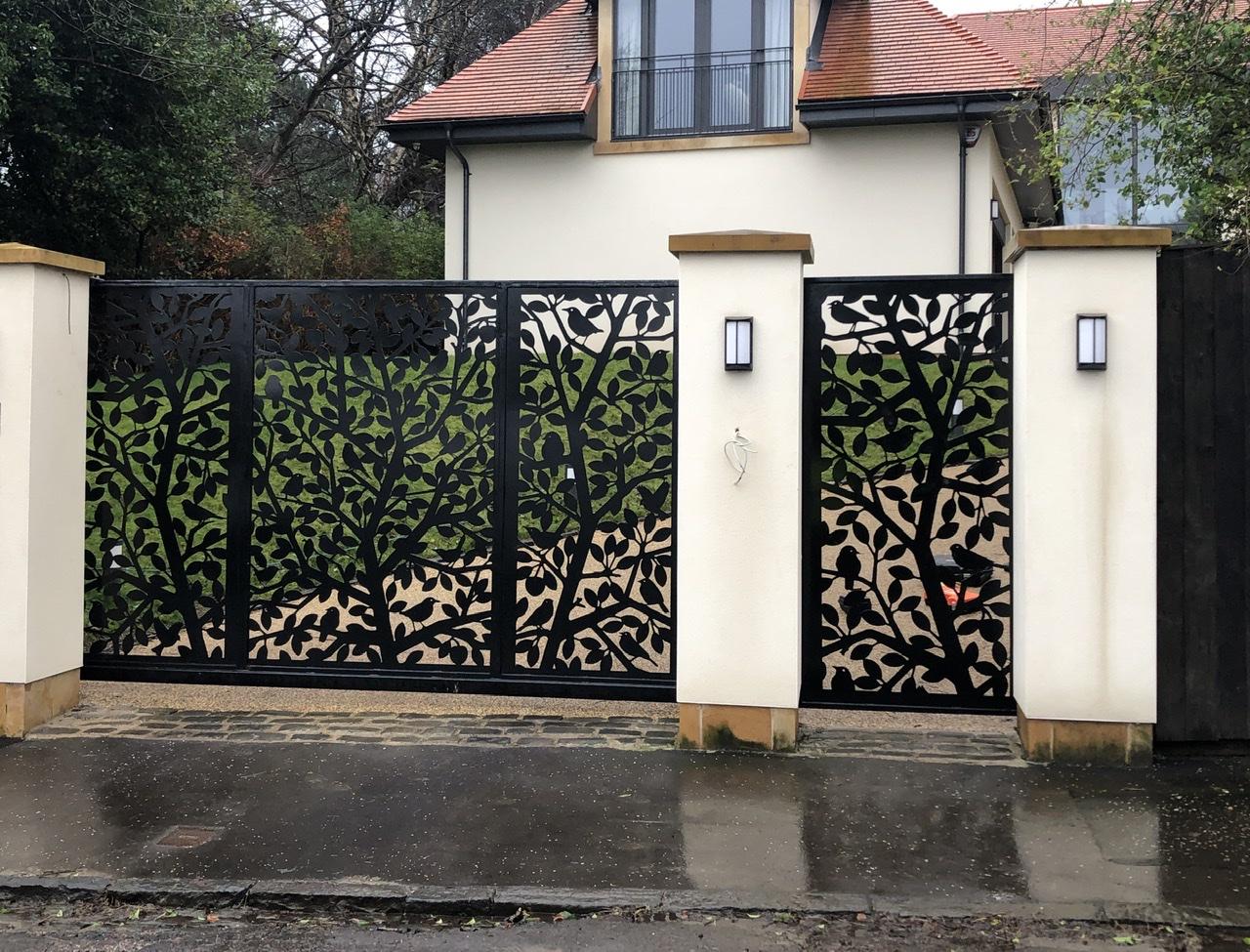
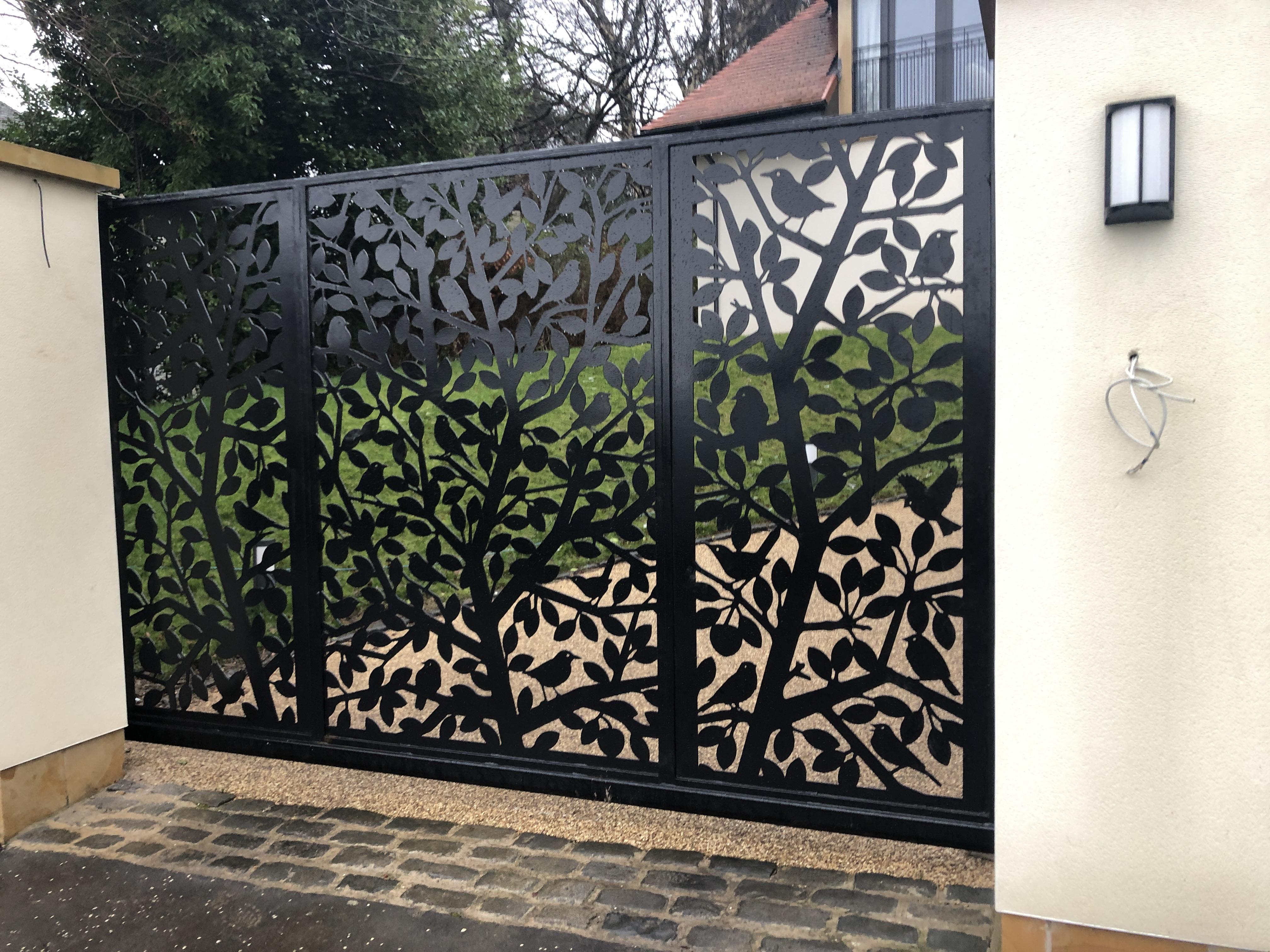
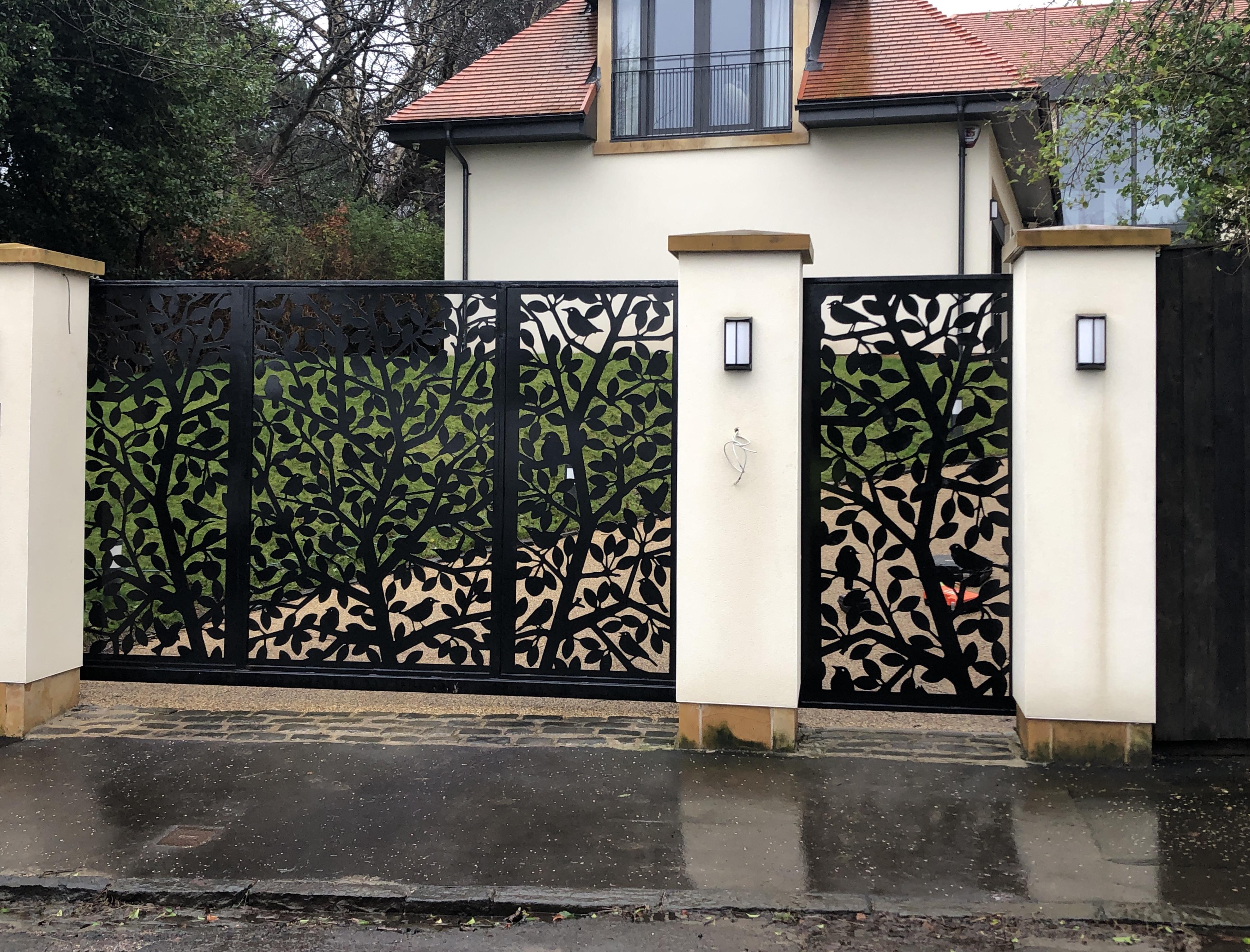
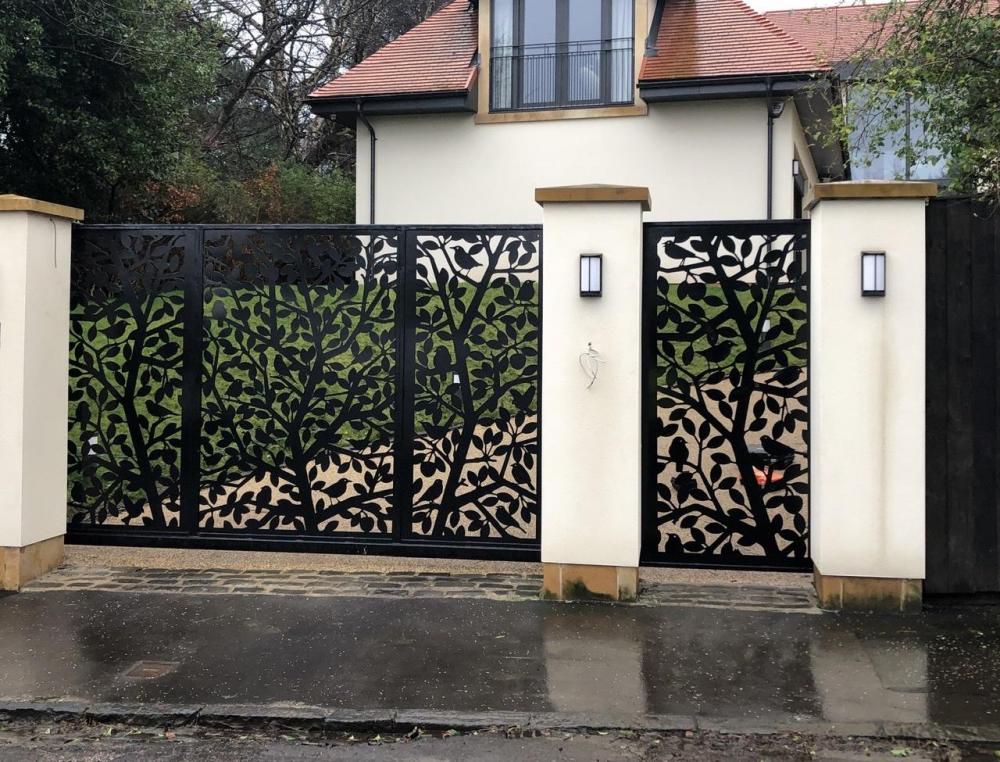
These are our gates. It took so long to get these made it wasn’t funny. I scoured google images for different pictures of gates and found something similar being sold by a company in Canada on Etsy. They refused to sell me the pattern. Eventually I found the owners and paid $300 for 90 patterns as they wouldn’t sell me one on its own. Anyway what you are looking for is a cnc pattern that can be cut from sheets of steel which are then powder coated or painted. I wish I could tell you how much this costs but for us the quote was just for gates and we would tell them how they should look. Etsy is a good place to look or Google images. Lots of people sell patterns for just a few pounds if they have what you are looking for available. Some people do sell this kind of panel on line. If you can find someone selling it ready made it will be a lot easier.
-
We used the leveling compound which from memory was the cheapest solution. A fox then walked through it during the night putting some paw prints in it!
-
As well as cost and complication, the big issue with dormers like that is that you need lots of downpipes for the gutters. As drawn you would need a downpipe in front of the garage door or across the front of the house, I made this mistake on my last house but we managed to put it inside the garage. You would actually need multiple downpipes on the elevations. The Velux windows would not fix this, unless you put gutters in front of them which is not ideal. You could move some of the Veluxes up to just be in the roof. Edit: I could see better with the new floorplan you uploaded. I do think dormers look nicer than the Velux windows. I would lose the one on the stair window as it is not necessary with the window on the half landing. I would consider making the master en suite window just a Velux in the roof. The problem is the two Veluxes at the front of the master bedroom. I am not sure hot to fix that without damaging the look of the house. You could try a double sized one instead of two separate ones, or making the one opposite the en suite a Velux in the roof, but these may not look right.
-
The sizing calculations are quite complicated and also depend on the price of the system. The more PV you install the less likely you can use incremental capacity to offset paying for electricity at 12p/kWh so the lower the incremental returns become. Offsetting this is that incremental capacity also gets cheaper. One thing you can consider is what will your peak electricity usage be and how often will you hit that peak. A 11kW ASHP has input of 3.5-4kW for a start, however your PV system will likely generate very little electricity on days when you run your heating. 11kW is a big ASHP for 160m2. Before you do the calculation though, the first thing is to figure out how much roof space you have for the PV panels. They work best when close to facing due south. On our house we have 5kW as it was quite awkward to fit more than that on the roof which has multiple corners, your barn may just have a large straight roof. You will get around 170-200kW per square metere of roof, so an 8kW array would require over 40M2. My guess on the size of house that you have is that a larger system will be oversized.
-
In the FAQs somewhere they said they would have to see your MCS installation certificate.
-
Weather tight house to minimal viable home for two. The cost?
AliG replied to epsilonGreedy's topic in Costing & Estimating
You mentioned bamboo flooring in the bedroom, but will you need flooring in the kitchen and lounge? You will need some kind of door frames to hang the doors as well as hinges, handles etc. You can just put in a simple hanging pendant light which can always be replaced by a nicer light later. A pendant light will light a way larger area than downlighters. Consumer units are pretty cheap so get one big enough for the whole house, it might only be an extra £20 or 30, just don't put all the MCBs in it. So you don't have to pay to have it rewired later. Sounds like you plan to put the ducting in but not connect the MVHR. Will you need an extractor for the bathroom? Good luck, it's hard when your other half isn't enjoying it. -
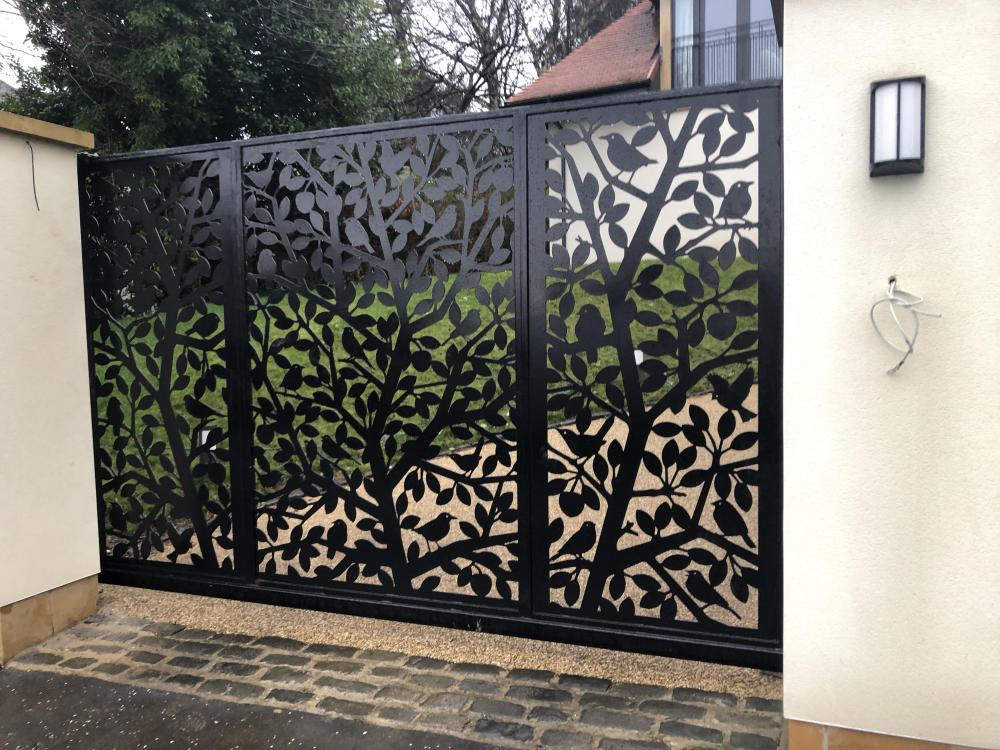
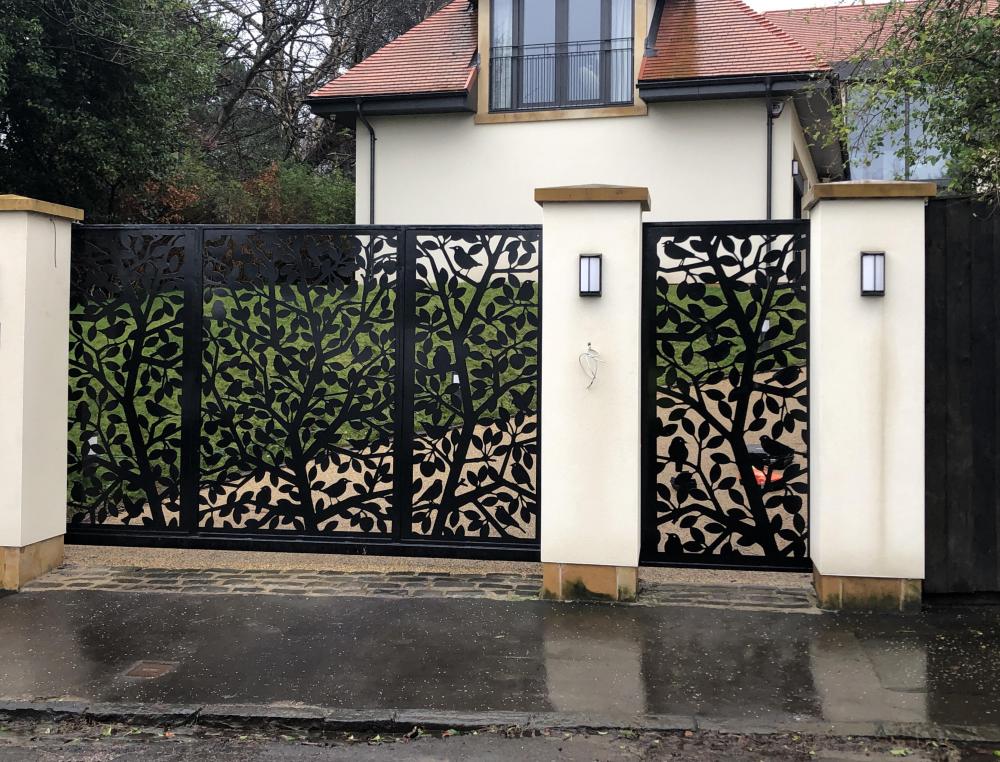
The last job is finally getting done, putting in the gates. They are up but still have to be centred and the electric connected. We think they look great. Then the builders have to come back for snagging. There isn't too much to do. Probably around a week's work. I need to jet wash the garden walls.
-
Is this one reason there is a permanent UK housing crisis...
AliG replied to Bitpipe's topic in Housing Politics
Lots of issues here. I have no idea what can be done about the mental health issue. I see it all the time. My daughter comes home and tells stories about other children at school who plainly have mental health issues and these are affecting other children. I know a few people who have or who have tried to commit suicide. None of these people had any money issues. I really doubt it is anything to do with government cuts. It is clearly a very complicated issue, I don't know if general mental health is deteriorating or it is just more noticeable. In terms of the original question, "Is this one reason the UK is in a permanent housing crisis", I believe that the real answer is because the UK wants to be. The government really doesn't have that much control over large social changes over time. Lots of countries have lots of different government priorities yet society has seen similar changes. In general the weight if people's actions creates the world that they want. In the UK, the majority of people own their own home. They have a massive vested interest in keeping house prices up and do not care a hoot about people who don't own houses. Governments come into power by pursuing policies that the majority of people like. The majority of people in the UK and NIMBYs who don't want houses built because it keeps up the value of their houses which they have often borrowed against. We have all suffered these NIMBYs in planning, their real concern is basically always that your house being built might devalue theirs - whether that is making the street look less nice, or reducing their light and privacy or increasing traffic or indeed HS2 - what they really mean is it will harm their ability to maximise the value of their house. You cannot build a house you would like to live in - tough that is not their concern. In the last 20 years the UK has seen higher inflation than both the USA and the rest of Europe. Borrowers and owners of hard assets benefit from inflation and the UK has higher inflation than many other countries. The other issue as people have mentioned is the inevitable pull of large cities. As more and more people move to the South East, people act like this is a peculiar problem to the UK, but we live in an urbanising world where large cities continue to draw people in. You see this in China, Australia, the USA, Japan, everywhere. Thus these places have a shortage of housing and the rest of the country may have a surplus. The government can fix the problem by freeing up land to build in the places that people want to live, but the people who already own houses there don't like it and will complain endlessly. There could also be limits on the ability to rent and Airbnb houses as well as to stockpile houses for investment purposes. Airbnb is another way of turning houses into an investment and not a place to live. But again this keeps benefitting the 2/3 of people who own a house. It is interesting how popular progressive taxes have become. The more of the tax burden that falls on the fewer people the more popular it becomes to have more progressive taxes as most voters win in this scenario. Strange that this kind of policy is popular whilst policies that obviously would reduce house prices are much less popular. Is the difference simply that a larger percentage of people own houses than pay net taxes. If of course these trends continue eventually less than half of houses all be owner occupied and the pendulum will swing. -
I'll second that. We were tumble drying sheets and duvet covers and they tend to get tangled up and so there will be a damp corner. My wife would just put them back in. I looked into various pulleys, metal bars etc but they were expensive and often too short for a duvet cover. So I just screwed a hook into the wall at each end of the laundry room and strung a washing line between them. Almost halved the number of times we run the tumble dryer. Admittedly doesn't look pretty but it is a laundry room.
-
I have BT in London. I pay £29.99 a month for 50MB broadband, landline and weekend calls(I don't even have a phone plugged in). BT have offered me a new contract on line every time it has run out, I don't even have to speak to anyone. With Virgin Media in Edinburgh I pay £39.50 for 100MB broadband, weekend calls and the basic TV package. I don't use the phone or the TV package as it was cheaper than having broadband on its own when I renewed. Now that BT have 150MB available in my area I will be calling when my contract runs out in June to get a much better price or move to BT which would be faster and cheaper. For some reason Virgin were very unwilling to discount broadband on its own when I renewed and it was cheaper to take a larger package. I can get 140MB broadband fromBT for £30 a month after cash back. For ages I didn't like the idea of calling them up and arguing every year, but now that I am used to it, it is necessary to get a reasonable price.
-
I think people forget it because it is a non cash cost but depreciation on your Tesla probably runs to around £5000 a year. In a similar vein does anyone consider a sinking fund for renovations on their house over time. My brother has lived in a place bought new 17 years ago, but it is falling apart as he doesn't seem to consider maintenance necessary. In my view you have to set aside money to cover replacing your kitchen and most used bathrooms perhaps every 15 years, painting every 7 or 8 years, carpets every 10 years etc. I reckon people probably have to be putting aside around 1% a year of the value of their house to cover this, depending on values in the area to some extent. Another way to look at it might be £1-2 per square foot a year.
-
If I was an unscrupulous type I could sign myself and the wife up for a course and save £4,000 for a year's council tax and water. I have often threatened that when I retire I will get a law degree so that I can sue companies that annoy me. It looks like running a car is the largest household cost, £226/month finance cost and £162/month running costs average for 2018. If they ever get self driving and ride sharing to work it will be an enormous gain to a lot of people (except taxi/Uber drivers). Cars are a ridiculously under-utilised asset at the moment.
-
Actually London is getting like that. I am the only person in the office who washes and irons his own shirts, the only person at my level not to have had a nanny and people do indeed have a list of caterers, personal assistant etc to do things. We have a cleaner 6 hours a week and a gardener to cut the grass. That is considered pretty low maintenance.
-
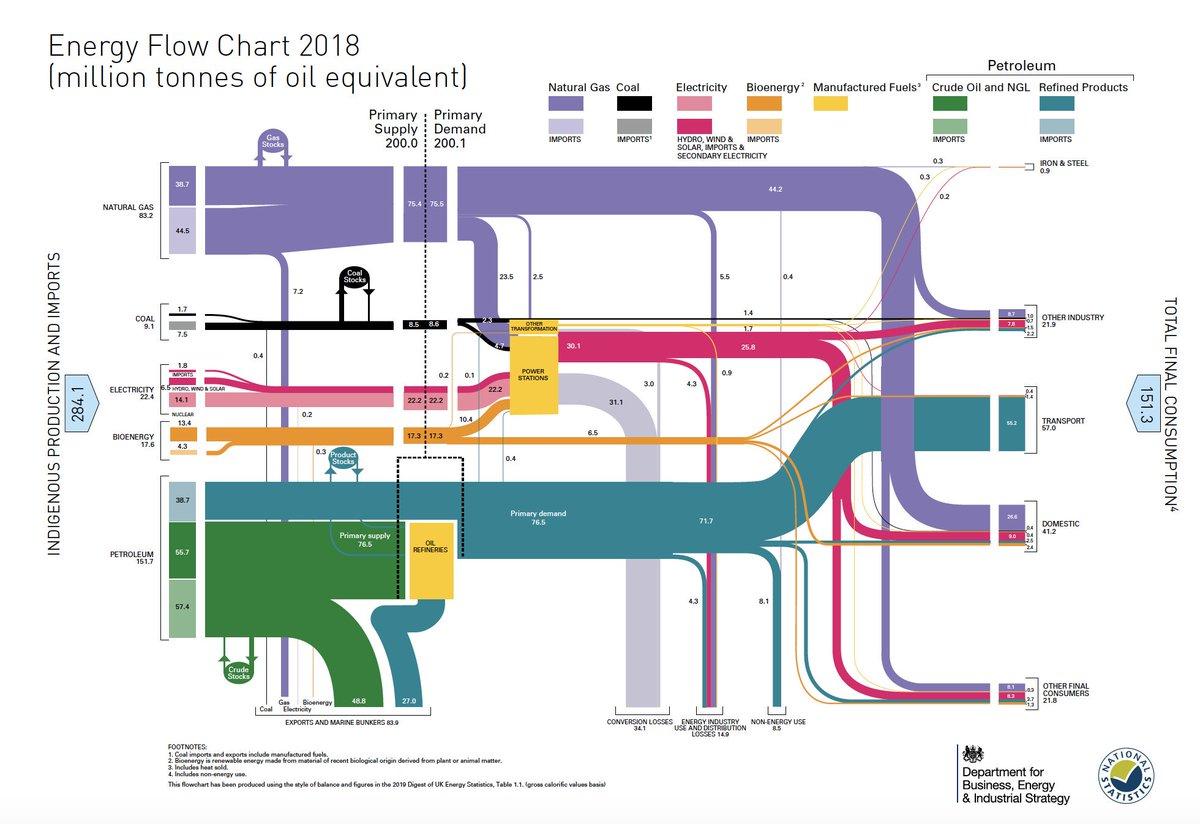
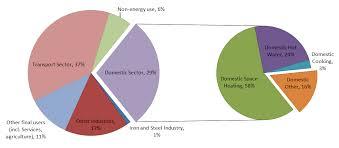
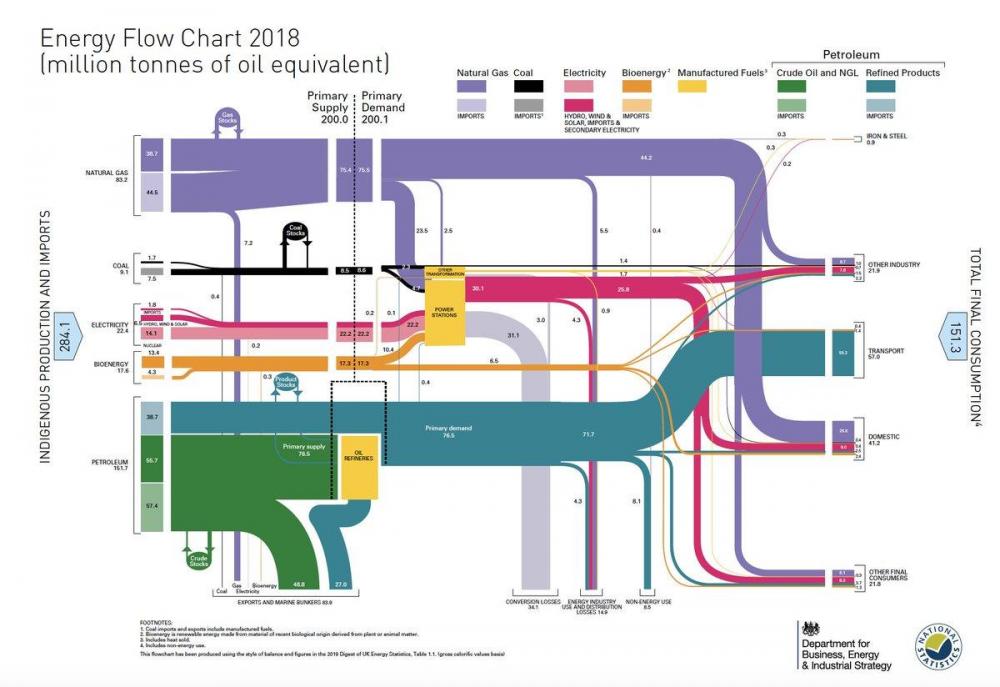
Space heating is the largest home use of energy for most people. They don't notice as they use gas which is much cheaper than electricity. I have a chart for overall UK energy use in 2018 and also a chart from 2009 so a bit out of date showing how home energy use breaks down. The scary thing is flying, I fly twice a year to Australia for work and multiple times to the US. A business class return from London to Sydney generates more CO2 than all the energy we use in the house in a year.
-
Jus with two women, one of whom is American. They value their convenience over most things, so I got serious tried yesterday because I had not put the dishwasher on as I believed I could get more stuff in it whereas they just wanted what they needed to be instantly available. Luckily they do not know how the heating works! I don't know if anyone else has American family, but it really has to be seen how much of an affront saving stuff is to the American way of life. It took my wife a long time to accept that you can figure out how much food people might eat and not just cook twice as much as necessary on the grounds that not to have an excessive amount of food available may make you look tight fisted. Most of them really do have a different mentality. Whenever they come to stay the amount of food and packaging we go through is offensive. We do not have a smart meter due to being on three phase, so I was looking at various appliances in the house to try and figure out what accounts for our large electricity bill. The washing machine plus heat pump dryer use about 2.5kWh between them per load, so that is about 650kWh a year assuming 5 loads a week(I am not here most of the time so this is a guess). One saving I have managed is putting up a line in the laundry room to hang up sheets and blankets rather than put them in the dryer. The dishwasher uses about 1kWh per load and is run easily once a day, so 350kWh per year. My idea of running it every day and a half would save around 100kWh which isn't that much. So then I started looking at the AV equipment. We have started to use the projector like it is a TV. It is half term and my daughter is in there watching The Simpsons on it. It has a 265W bulb in it and a "typical consumption" of 380W. If it is used 7 hours a day on average then that is very close to 1kWh. The scary one os the amplifier. At full power it uses 1.5kW. Now that would deafen people, but I would guess it runs to a similar consumption as the projector. All the other parts such as Sky Q box, ethernet switch, routers, CCTV use very little electricity in comparison to these, but it all adds up as most of these items are on 24 hours a day. Because they run 24 hours a day I had checked them and found their consumption is pretty low. The PJ and Amplifier caught me out.
-
I thought the 8p/kWh export payment might be interesting to you although I think you maybe have to lose your FIT payments to get this.
-
The heating has never been switched on in the cinema room. It was 24c in there at 6am this morning whilst it was about 4c outside. I got them to install an extract in the mvhr in there so it helps to heat the air coming into the house. When it gets too hot I just wedge the door open into the hall which is the largest room in the house and it heats up in there. The amount of heat generated shows how inefficient the equipment is. I can see every time someone turns on the projector when I look at the output from my Heatmiser. i am trying to figure out if I can put some of the equipment on a wireless switch so it goes off at night and also so people cannot accidentally leave it switched on.
-
The saving is because they’d be letting me buy all my electricity at the cheaper rate and there is no standing charge also. We use an excessive amount of electricity. About 4000kWh for the Tesla plus around 15000 for the house offset by around 3000 of solar PV. The main reason our electricity consumption is high is a pool pump and dehumidifier that run almost 24 hours a day. I am always trying to optimise it and get it as low as possible, but getting the family to go along with this is difficult. For example I reckon that the dishwasher can be run every day and a half if properly packed but they want to run it every night. My method would cut a third from it’s electricity consumption. The same goes for washing towels after one use which I reckon accounts for about 25% of our laundry. Yesterday I was checking how much the washer, dryer and dishwasher used though and it wasn’t that much. Then I checked how much the home cinema used and I reckoned that was the second highest user of electricity in the house. Projectors still generally use incandescent bulbs and are very heavy users of electricity. Apparently the EU are going to mandate they change to lasers or LEDs. I reckon the projector alone uses around 1000kWh a year and you can maybe double that including speakers etc. It does cut the heating bills however! Over time I would like to have more PV and less consumption to get closer to neutral but we are well away from that at the moment. Arguably Scotland will eventually be all renewable electricity at least.
-
The Powerwall 2 guarantees 70% of its capacity at 10 years so I think this covers this. When I ran the numbers on the Powerwall 1 it didn't make economic sense as it would wear out before it paid for itself. Even now I think I would probably need a Powerwall 3 with longer lifespan and higher capacity to work properly in my circumstances. Presumably the touted "million mile" battery would work well in a Powerwall.
-
I got an email this morning re the Tesla Energy Plan https://octopus.energy/tesla/tariff/#/new/ Basically if you have a Tesla and PV and a Powerwall, you can sign up to this plan and pay 8p/kWh for electricity. They will also pay 8p/kWH for exported electricity. Presumably they use the Powerwall and your PV to load balance the grid allowing them to provide you with lower priced electricity. I had considered a Powerwall before but I don't think it would pay for itself. Under this plan I would probably save around £7-800 a year which would pretty much pay for a Powerwall. It also says that it will work with my 3 phase supply. So I put in all of my details and it said not available in my area, I don't know why but that is disappointing. Maybe this could work for you @Jeremy Harris
-
@DamonHDFair point, an ASHP probably would struggle assuming that these houses are badly insulated. They should really have insulated them at the same time.
-
Really these people should have ASHPs and not electric combis. They would pay for themselves in 3 or 4 years. It shows up one of the problems of being in a rented place. The landlord (Council) will want to install the cheapest option possible which might cost the tenant money. The tenant won't know until it is too late. Although in this case it seems like the Council actually spent quite a bit putting these systems in, it probably wouldn't have cost much more to put in an ASHP. I think it may be that these boilers have been specifically designed to be an easy replacement for existing systems which may have been the attraction.
-
That is the lowest rate that a Tesla will allow you to set the charging at. So as @Jeremy Harris says you are using 6Ax240V or around 1.3kW to charge the car. In my case I am on thee phase so it charges at around 4kW at 6A. A Model X can go to 24A so I can charge at 17kW maximum. In the summer rather than try and faff around with smart charging I simply told my wife to only plug in the car after the school run in the morning and set the charge rate at this minimum level so that a higher percentage is supplied by my solar panels (5kW system). Looking at the difference between my winter and summer electricity use and considering that we have a quite high level of background electricity use I think we manage to use nearly all of our solar production.
-
The last two times I bought a new house the builder signed it up to ScottishPower. Both times ScottishPower were informed of the meter readings and that I now owned the house yet never billed me. Both times I had to make considerable effort in calls and emails to get them to actually bill me for electricity. I didn't really see why I should have to put enormous effort into getting them to send me a bill. The first time it took over a year from moving in and months of effort on my part before they actually billed me. By this point I argued that they couldn't just send one massive bill after over a year and expect someone to pay it and so they discounted it by 20% or something like that.